Anhui Feichun Special Cable Co.,Ltd Email: Li.wang@feichuncables.com
6491X Cable: The Essential Thread in South Africa's Electrical Fabric
Discover the 6491X cable (H07V-R & H07V-U), a robust PVC-insulated single-core copper wire pivotal for low-voltage power circuits, lighting, building wiring, and earthing applications. This in-depth analysis covers technical specs, practical uses, electrical performance, safety standards, and sustainability, highlighting its role in reliable electrical installations across residential and commercial settings.
Li. Wang
10/24/20256 min read
Introduction
Imagine flipping a switch in your Johannesburg home, and the lights flicker on without a hitch, or powering up machinery in a Cape Town factory where safety is paramount. Behind these everyday miracles lies a network of hidden heroes: electrical cables that ensure power flows reliably and safely. One such unsung champion is the 6491X cable, a single-core, low-voltage wire that's become a staple in modern wiring systems worldwide, including here in South Africa where robust infrastructure demands dependable components.
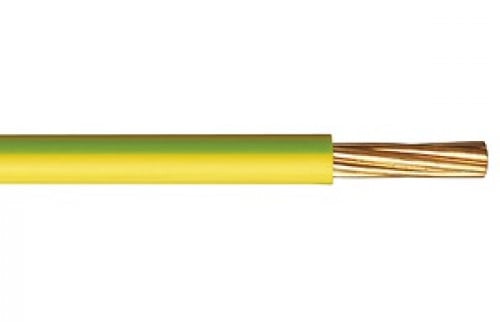
The 6491X, also designated as H07V-R for its stranded conductor variant and H07V-U for the solid one, is a harmonised European standard cable designed for fixed wiring in power and lighting circuits, general building wiring, and even as an earthing conductor. With its polyvinyl chloride (PVC) insulation and copper core, it's engineered to handle the demands of enclosed environments, making it ideal for our diverse climates—from the humid coasts to the arid interiors.
This article delves deep into the 6491X cable from multiple angles: technical construction, practical applications, electrical performance, safety compliance, and environmental considerations. We'll break down complex concepts into bite-sized insights, answering common queries along the way. Whether you're a homeowner planning a renovation, an electrician seeking specs, or just curious about the science behind your sockets, this piece aims to illuminate why the 6491X is indispensable. Ultimately, it underscores the cable's pivotal role in safe, efficient electricity distribution, adhering to international standards like EN 50525-2-31, and its widespread use in both domestic and industrial setups across South Africa and beyond.
What is the 6491X Cable?
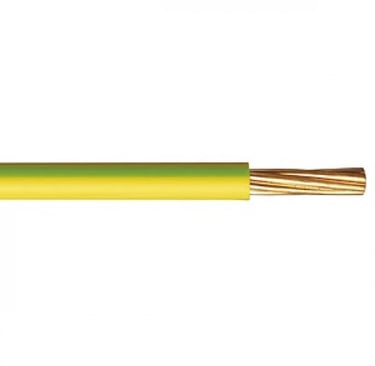
At its core, the 6491X is a low-voltage single-core cable, harmonised under the European standard EN 50525-2-31. It's often called by various names in the trade—singles, conduit wire, earthing cable, or grounding wire—reflecting its versatility. The "H07V-R" denotes the stranded Class 2 copper conductor version, which offers flexibility for easier bending during installation, while "H07V-U" refers to the solid Class 1 conductor, prized for its rigidity in straight runs. You'll sometimes see it spelt as HO7V-R or HO7V-U due to regional variations, but the performance remains the same.
This cable didn't emerge overnight; it evolved from early 20th-century wiring solutions, refined through decades of standardisation. The harmonisation of European norms in the late 20th century led to its BASEC (British Approvals Service for Cables) approval and compliance with the Construction Products Regulation (CPR), ensuring it's tested for quality and safety. In South Africa, where we align with international best practices via SANS standards (which often mirror IEC and EN norms), the 6491X fits seamlessly into our electrical codes, supporting everything from township electrification projects to high-rise developments in Durban.
Key features make it stand out: it's flame retardant to IEC/EN 60332-1-2, meaning it resists spreading fire in a blaze—think of it like a fire-resistant jacket on a firefighter. With a voltage rating of 450/750V, it handles typical household and light commercial loads without breaking a sweat. Its operating temperature spans -15°C to +70°C, akin to a durable coat that shields against frosty Free State winters or sweltering Lowveld summers. Available in colours like red, black, blue, and the distinctive green/yellow for earthing, it's colour-coded for quick identification, reducing installation errors.
In-Depth Analysis: Exploring the 6491X from Multiple Perspectives
Technical Perspective: Construction and Specifications
Diving into the nuts and bolts, the 6491X boasts a straightforward yet sophisticated build. The conductor is annealed copper—either Class 1 solid (H07V-U) for sizes up to 10mm² or Class 2 stranded (H07V-R) for broader flexibility. Copper's excellent conductivity (low resistance) minimises heat generation and energy loss, making it superior to alternatives like aluminium in high-demand scenarios.
The insulation is PVC, providing mechanical protection and electrical isolation. Cross-sectional areas range from 1.5mm² to 630mm², directly influencing current capacity—larger areas handle more amps, like a wider pipe carrying more water. For a visual, here's a table of key dimensions:
Nominal Cross-Sectional Area (mm²)Nominal Insulation Thickness (mm)Nominal Overall Diameter (mm)Nominal Weight (kg/km)1.50.72.9222.50.83.63240.84.15060.84.771101.05.9110161.06.8164251.28.4256351.29.4346501.411.0473701.412.7674951.614.79131201.616.211501501.818.014161852.020.017492402.223.023173002.425.230494002.628.436575002.831.847006302.838.15890
These specs show how weight escalates with size—crucial for logistics in large-scale projects like Gauteng's grid upgrades. Conductor details further reveal efficiency: for instance, a 25mm² stranded conductor has at least 7 wires (circular) and a max resistance of 0.727 ohms/km at 20°C. Stranded versions flex better, reducing breakage in vibrations, while solid ones suit fixed positions.
Practical Perspective: Applications and Installation
In practice, the 6491X shines in fixed wiring for power and lighting circuits, building wiring, and as an earthing wire. It's suited for semi-flush exposed conduits, embedded ducts, or appliance internals in protected environments—perfect for South African homes where conduit systems are common to guard against pests or moisture.
Installation is straightforward: minimum bending radii are 3x diameter for up to 10mm², scaling to 5x for larger sizes, ensuring no insulation cracks. It's easily pulled into trunking, with colour codes aiding compliance—red for phase, black for neutral, green/yellow for protective earth. Custom colours are available on request, handy for specialised setups.
Compared to the 6491B (H07Z-R with low smoke zero halogen insulation), the 6491X is cost-effective for general use but less ideal in fire-prone public spaces like malls, where LSZH reduces toxic fumes.
Electrical Performance Perspective: Capacity and Efficiency
Electrically, the cable excels in current carrying capacity, varying by method. For example, in enclosed conduits (Method A), a 1.5mm² cable handles 14.5A single-phase; clipped direct (Method C), it jumps to 17.5A. Spacing matters—touching cables derate slightly, but spaced ones boost performance.
Nominal Area (mm²)Method A (Amps, Single-Phase)Method C (Amps, Single-Phase)Method F Touching (Amps, Single-Phase)1.514.517.5202.52024274263237... (up to 630).........
Voltage drop is key for efficiency: for 10mm², it's 4.4 mV/A/m DC, with components like resistance (r), reactance (x), and impedance (z) for AC. In long runs, say a 100m farm line in Limpopo, larger sizes cut losses, saving energy.
De-rating factors adjust for temps: at 35°C (common in SA summers), multiply capacity by 0.94 to avoid overload.
Safety and Regulatory Perspective
Safety-wise, compliance with EN 50525-2-31 and flame retardancy minimises risks. BASEC certification ensures third-party testing, aligning with BS7671 (IEE Wiring Regulations), influential in SA via SANS 10142. Earthing variants prevent shocks by grounding faults, while PVC protects in enclosed spaces—but not outdoors without armouring.
Limitations include no direct burial; always consult pros for regs compliance.
Environmental and Sustainability Perspective
PVC's durability means longevity, reducing replacements, but it's not fully recyclable—prompting shifts to halogen-free options. Copper's recyclability (over 80% globally) aids sustainability, and low resistance cuts energy waste, supporting SA's green goals like solar integrations.
Future trends? Eco-variants for renewables, aligning with our push towards net-zero.
Real-World Insights: Case Studies and Tips
Picture wiring a Soweto home: 2.5mm² 6491X for lights ensures safe, efficient runs. In industry, 70mm² earths machinery, preventing arcs.
Tips: Choose stranded for bends; store coiled, away from heat. Pitfalls? Overloading causes melting—size per load.
Frequently Asked Questions (FAQs)
What is the difference between H07V-R and H07V-U?
H07V-R features stranded conductors for flexibility in installations requiring bending, while H07V-U uses solid conductors for rigid, straight applications. Both share the same 450/750V rating and PVC insulation.
Can 6491X be used outdoors?
It's not recommended without additional protection like conduits or armouring, as it's designed for indoor, enclosed environments to prevent weather damage.
How do I choose the right size?
Factor in current load, cable length, and installation method. Refer to current carrying capacity tables; for example, 4mm² suits 32A in clipped direct setups.
Is it safe for DIY projects?
Yes, for simple tasks, but always use certified products and consult electricians for compliance with local regs like SANS 10142 to avoid hazards.
What colours are available, and why?
Standard options include red (phase), black (neutral), blue (neutral in some systems), green/yellow (earthing), and others like grey or brown. Colours ensure quick identification and safe wiring.
How does it compare to 6491B?
The 6491B uses LSZH insulation for low smoke and zero halogens in fires, making it preferable in crowded areas, while 6491X is PVC-based for general, cost-effective use.
What if I need specs for a specific size?
Check the datasheet for details on dimensions, weights, resistance, and capacities—e.g., 25mm² has 1.2mm insulation and 256kg/km weight.
Does temperature affect performance?
Absolutely; hotter environments reduce capacity. Use de-rating factors, like 0.87 at 40°C, to maintain safety.
Conclusion
The 6491X cable embodies versatility and reliability, from its copper core to PVC shield, powering South Africa's electrical backbone. Prioritise quality for safe, efficient systems—consult datasheets or experts for your next project. As we embrace a connected future, these "invisible" innovations remind us: solid wiring underpins progress, blending science with seamless daily life.
Email Address: Li.wang@feichuncables.com
© 2025. All rights reserved.
One-click to Quickly Contact
Products
Contact
Company
Location:
Building A Private Science and Technology Park, Hefei Economic and Technological Development Zone, Anhui Province, China
Heat Resistant Cable
WhatsApp: +86 17333223430
Social Media: