Anhui Feichun Special Cable Co.,Ltd Email: Li.wang@feichuncables.com

A Complete Engineering Guide to Earth Continuity Conductor (ECC) Cables for South Africa’s Electrical and Mining Systems
Discover what an ECC Cable (Earth Continuity Conductor) is, why it is critical in South Africa’s mining and electrical networks, how it improves grounding, prevents dangerous sheath voltage, enhances safety compliance, and ensures reliable operation in deep-level mines and industrial plants. Learn ECC design, applications, SANS standards, bonding methods, and real case studies from Gauteng, Rustenburg, and Mpumalanga.
Li.Wang
12/3/20255 min read
Introduction: Why ECC Matters in South Africa
South Africa relies heavily on safe and dependable electrical systems—particularly in high-risk sectors such as mining, heavy industry, and power distribution. As the country continues to expand underground mining operations (gold, platinum, manganese, coal) and upgrade its ageing electrical infrastructure, proper grounding and continuity conductors have become mission-critical.
This is where the ECC (Earth Continuity Conductor) Cable comes in.
Whether used in a 33 kV underground feeder in a Gauteng gold mine, a 400 V conveyor drive in a coal mine, or an industrial LV distribution board in a factory, the ECC ensures that:
exposed metal stays safely bonded
fault current can return via a low-impedance path
protective relays operate correctly
dangerous touch and step voltages are kept within acceptable limits
South African standards such as SANS 10142-1 (The Wiring of Premises) and SANS 10292 (Earthing of LV Systems) make proper earth continuity mandatory. The DMRE and the Mine Health and Safety Act (MHSA) reinforce these rules for mining operations.
In deep-level mines, grounding challenges are worse due to moisture, long cable runs, mechanical stress, leakage currents, and metallic infrastructure. ECC cables act as the backbone of grounding reliability in such environments.
What Is an ECC Cable (Earth Continuity Conductor)?
In IEC terminology, an Earth Continuity Conductor is the conductor responsible for maintaining grounding continuity across an installation.
In North American terminology, it is equivalent to the grounding conductor.
Definition:
An ECC is a conductor—bare, insulated, or part of a multi-core cable—that bonds all non-current-carrying metallic parts, including:
conduits
ducts
cable trays
distribution boards
enclosures
switchgear
machine frames
motor housings
transformer tanks
metallic cable sheaths
ECC = PE (Protective Earth) in IEC 60364-1.
ECC can be:
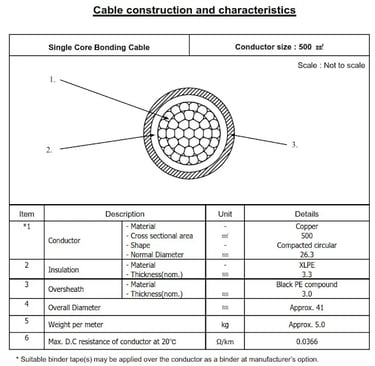
a separate standalone copper conductor
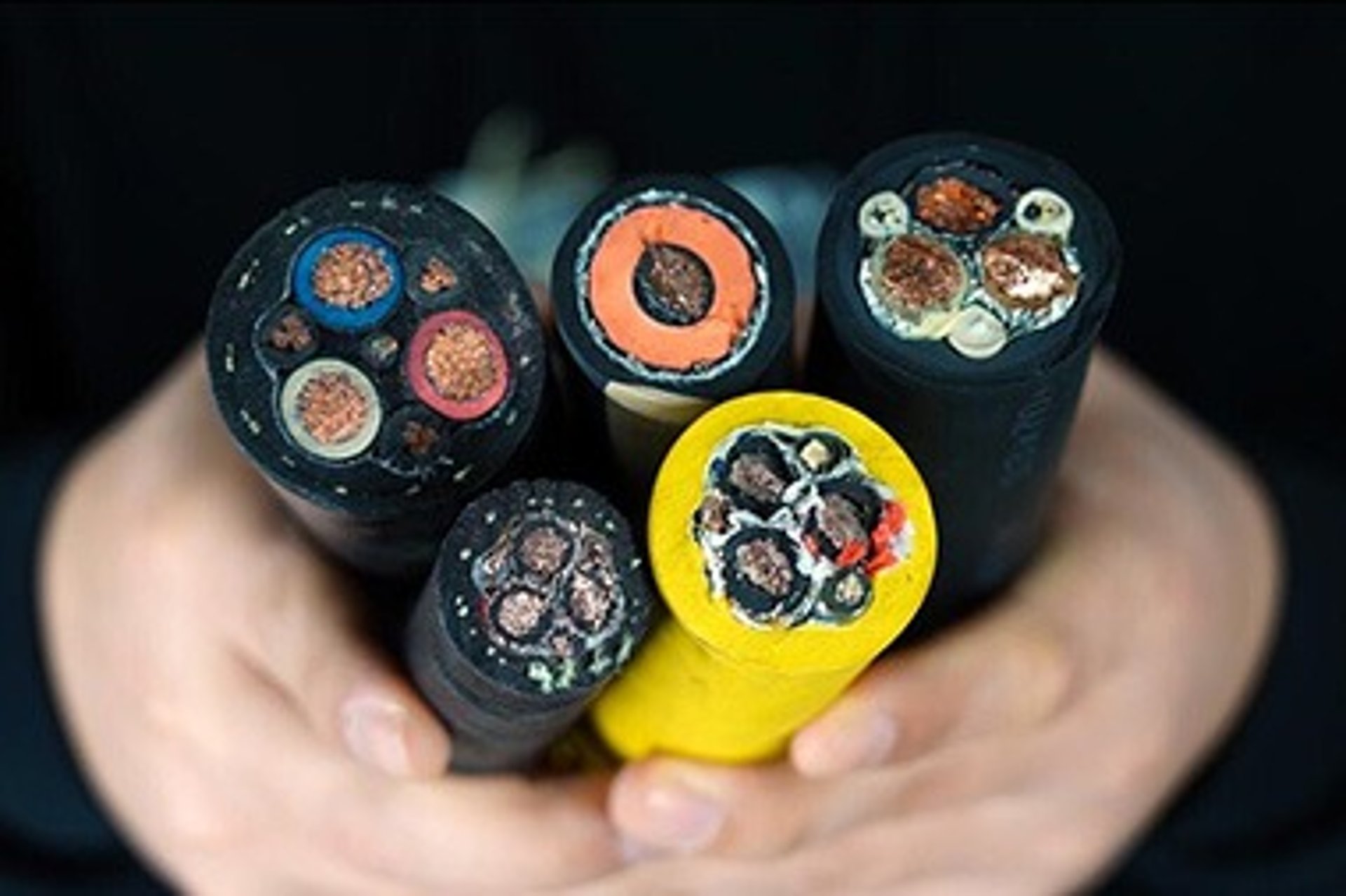
an integrated earth core within a multi-core cable
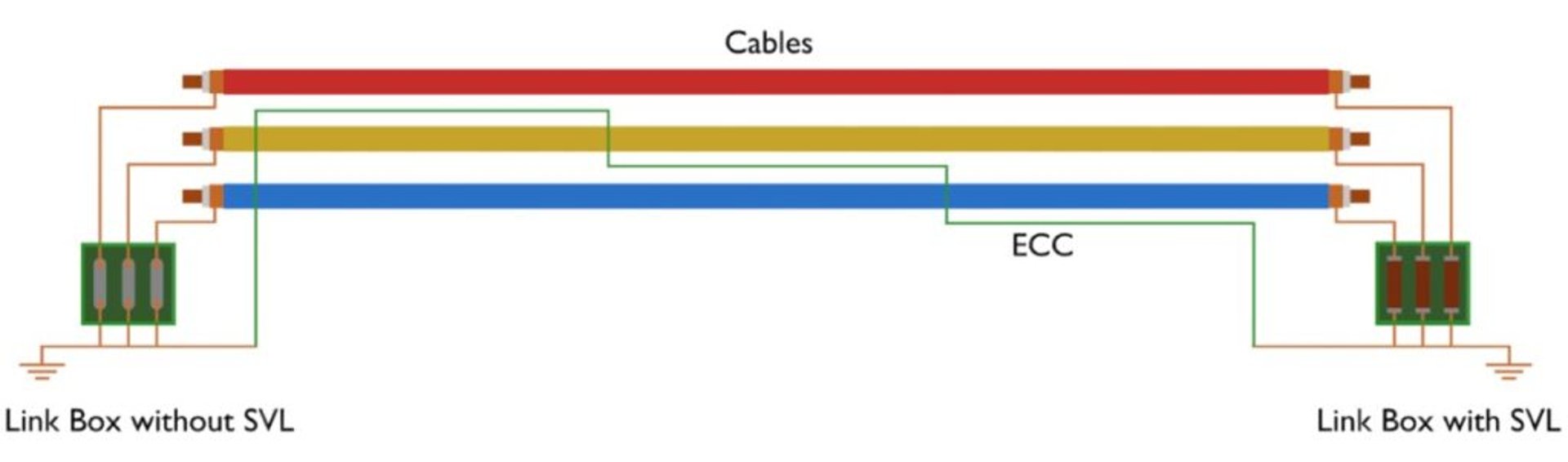
an external parallel conductor installed next to single-core HV cables
Its function is simple but essential:
Provide a permanent, low-impedance grounding path to keep people and equipment safe during faults.
Why Earth Continuity Matters: The Physics Behind It
Understanding ECC requires basic grounding physics.
Low-Impedance Fault Current Path
During faults (earth faults, leakage faults, insulation breakdown), current seeks the path of lowest impedance to earth.
Without ECC, this path may become:
cable sheath
steel pipes
structural steel
water pipes
human body (worst case)
ECC provides a deliberate, engineered low-impedance path, diverting fault current safely.
Reduction of Touch and Step Voltage
When a fault occurs:
voltage appears on exposed metal
ground potential rises around the fault site
personnel may experience dangerous touch voltages
A properly sized ECC reduces potential rise significantly.
Relay Fault-Clearing Performance
Fault current must be high enough for relays and breakers to trip quickly.
If impedance is too high, relay operation may be delayed, leading to:
arcing
cable damage
equipment overheating
fires
ECC ensures fast, predictable fault clearing.
ECC in High-Voltage Underground Cable Systems
South Africa’s HV underground systems (33 kV, 66 kV, 132 kV, 220 kV) frequently use single-core cables, largely due to weight and transport constraints.
These cables have:
thick XLPE insulation
a copper wire screen or metallic sheath
armour (optional)
an outer sheath
The metallic sheath acts as:
an electric screen
a return path for induced currents
a partial fault current path
To limit insulation stress and improve safety, the sheath must be grounded.
Limitations of Bonding Systems
Both-End Bonding
Advantage:
excellent shielding
Disadvantage:
continuous circulating currents
heating
derating
higher energy losses
Single-End Bonding
Advantage:
eliminates circulating currents
Disadvantage:
sheath voltage rises along the cable
risk of sheath over-stress
requires sheath voltage limiters
Cross-Bonding
Advantage:
balances induced voltages
reduces SVL requirements
suitable for long cable runs
Disadvantage:
installation is complex
requires skilled commissioning
Why ECC Becomes Essential in These Systems
ECC provides:
a parallel return path for fault current
significant reduction in sheath voltage rise
protection for the metallic sheath
enhanced relaying performance
increased cable lifespan
Without ECC, the sheath alone may have to carry the entire fault current → extremely dangerous.
How ECC Works in Practice
Fault Current Return Path
Without ECC:
All fault current flows through the sheath → high voltage rise → insulation stress.
With ECC:
Fault current splits between ECC and sheath → voltage reduced → safer operation.
Protection of Personnel and Equipment
ECC reduces:
touch potential
step potential
relay malfunction
sheath voltage rise
insulation breakdown
equipment failures
arc flash risk
ECC in South Africa’s High-Risk Operations
Mining environments have:
long cable runs
moisture
corrosion
high mechanical stress
powerful motors (MW-scale)
massive fault-level energy
ECC is widely used in:
Gauteng deep-level gold mines
Rustenburg platinum mines
Mpumalanga coal mines
It is not optional—it is essential for survival.
Key Design Features of ECC Cable
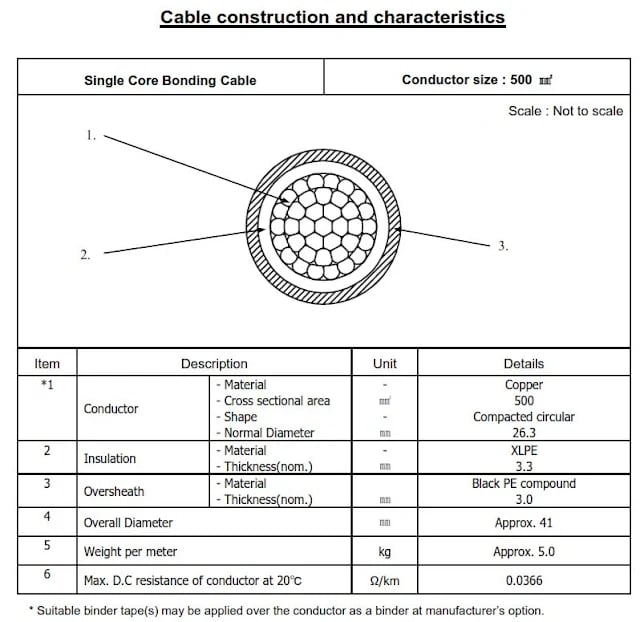
Conductor Material
Pure copper is the industry standard (high conductivity, corrosion resistance).
Copper-clad steel is used where tensile strength is more important.
Stranding & Construction
Fine stranding reduces:
skin effect
proximity effect
AC losses
It also improves flexibility, essential in vibrating, mobile, or haulage equipment.
Insulation
Insulation adds:
corrosion protection
mechanical durability
safety in wet areas
Insulated ECC is recommended in:
corrosive mining environments
chemical plants
coastal installations
Size & Short-Circuit Rating
Sizing depends on:
system fault level
clearing time
conductor material
Example:
A 220 kV system with 40 kA for 3 seconds requires an ECC capable of handling that energy dissipation.
ECC sizing follows:
IEC 60949
SANS 10142-1
SANS 10292
ECC in South African Mining: Real Case Studies
Case Study 1: Deep-Level Gold Mine (Gauteng)
Problem:
A 33 kV feeder with single-end bonding experienced dangerously high sheath voltage. Operators reported:
frequent relay trips
cable insulation heating
audible humming during fault conditions
Solution:
A parallel 70 mm² copper ECC was installed along the entire run.
Result:
sheath voltage reduced by over 70%
relay trips eliminated
insulation temperature significantly lower
improved worker safety
Case Study 2: Platinum Mine (Rustenburg)
Challenge:
Long HV runs leading to repeated insulation failures.
Diagnosis:
Fault current was returning entirely through the cable sheath → overheating → accelerated ageing.
Solution:
Install insulated copper ECC conductors parallel to each single-core cable.
Outcome:
insulation failure rate reduced by over 60%
improved equipment uptime
lower maintenance expenditure
Case Study 3: Coal Mine (Mpumalanga)
Issue:
LV distributed networks had inconsistent grounding due to corrosion and old infrastructure.
Impact:
staff experienced mild electric shocks
inconsistent relay performance
SANS 10142 non-compliance
ECC Integration:
New LV cables with dedicated ECC cores were installed.
Result:
grounding improved instantly
SANS 10142-1 compliance achieved
personnel safety significantly improved
ECC Installation Considerations
ensure proper bonding of all metallic parts
verify correct termination lugs
route ECC away from strong magnetic fields
ensure continuity along entire run
avoid sharp bends
use correct gland and enclosure ratings
perform periodic earth bond tests
ensure compliance with MHSA and DMRE requirements
Compliance with South African Standards
ECC must comply with:
SANS 10142-1 – wiring of premises
SANS 10292 – earthing of LV distribution systems
SANS 60079 – explosive atmospheres
MHSA – statutory mining requirements
DMRE regulations
Focus areas:
conductor sizing
bonding continuity
earthing resistance
routine testing
documentation and inspection
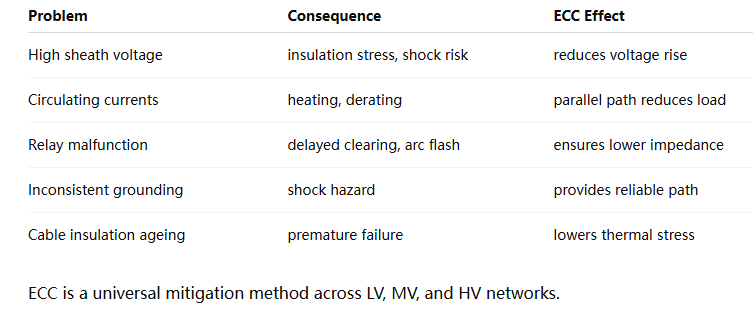
Common Problems & How ECC Solves Them
FAQ: ECC Cable (Earth Continuity Conductor)
Q1: Is an ECC the same as a PE conductor?
Yes. In IEC systems, ECC = PE (Protective Earth).
Q2: Why is copper preferred?
High conductivity, low impedance, corrosion resistance.
Q3: Do ECC and phase conductor need to be the same size?
No. ECC is sized according to fault level, not load.
Q4: If a cable has a metallic sheath, do I still need ECC?
Yes. The sheath alone is not designed to carry full fault current safely.
Q5: What happens if ECC continuity breaks?
Touch voltage may rise to lethal levels → major hazard.
Q6: Is ECC required in South African mines?
Yes. Mandated by SANS standards and MHSA.
Q7: Can ECC be bare or insulated?
Both. In corrosive or underground environments, insulated is recommended.
Conclusion
ECC cables are an essential safety component of South Africa’s electrical engineering landscape—especially in mining and heavy industry. They provide:
reliable earth continuity
reduced grounding risks
improved fault clearing
extended cable lifespan
reduced sheath voltage
improved compliance with SANS and MHSA
safer working environments for personnel
In a country where electrical reliability is directly linked to economic survival—mining, manufacturing, transport—ECC cables form the backbone of safe and stable power systems.
South Africa’s engineers, electricians, mine managers, and plant operators rely on ECC not as an accessory, but as a fundamental engineering requirement.
Email Address: Li.wang@feichuncables.com
© 2025. All rights reserved.

One-click to Quickly Contact
Products
Contact
Company
Location:
Building A Private Science and Technology Park, Hefei Economic and Technological Development Zone, Anhui Province, China
Heat Resistant Cable
WhatsApp: +86 17333223430
Social Media: