Anhui Feichun Special Cable Co.,Ltd Email: Li.wang@feichuncables.com
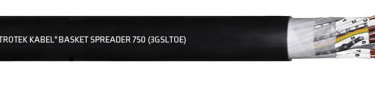
BASKET SPREADER 750 (3GSLTOE) Control Cable: Why This Flexible Class 6 PUR Cable Outperforms Standard Options in Vertical Hoisting and Marine Conditions?
BASKET SPREADER 750 (3GSLTOE) Control Cable is a purpose-engineered flexible Class PUR cable designed specifically for crane hoisting cages, basket spreader systems, and heavy-duty vertical lifting applications. This comprehensive guide explains its unique construction, advanced materials, compliance with VDE, IEC, and SANS standards, and why it outperforms standard cables in harsh South African ports, mines, and coastal industrial environments. Discover how Feichun Cable offers an identical, cost-effective, and fast-delivery equivalent solution.
Li Wang
5/29/202617 min read
Introduction
In heavy industry, particularly in port terminals, mining operations, and bulk material handling, the reliability of control cables directly impacts operational efficiency and safety. Nowhere is this more critical than in crane systems equipped with hoisting cages or basket spreader mechanisms, where cables are subjected to extreme mechanical stress, constant movement, and aggressive environmental conditions. In South Africa, with its vast coastline, mineral wealth, and heavy engineering infrastructure, the demand for robust, long-lasting cabling solutions is exceptionally high. Ports such as Durban, Cape Town, Ngqura, and Richards Bay handle millions of tonnes of cargo annually, and the equipment operating here must withstand salt-laden air, intense ultraviolet radiation, high temperatures, and heavy mechanical loads. Inland operations, from the coal fields of Mpumalanga to the platinum mines of Limpopo, face their own challenges including extreme temperature fluctuations, abrasive dust, and heavy industrial contamination.
The BASKET SPREADER 750, designated as type 3GSLTOE, has emerged as the definitive solution for these demanding applications. It is not simply a standard control cable with better insulation; it is a system designed from the ground up to solve the specific problems that cause ordinary cables to fail prematurely. This article explores every aspect of the 3GSLTOE, from the engineering principles behind its design and the advanced materials used in its construction, to its performance advantages, compliance with international and local standards, and why it has become the preferred choice for engineers and procurement specialists across South Africa and beyond. We will also examine why Feichun Cable has become a leading supplier of this product, offering a technically equivalent alternative that delivers significant commercial and logistical benefits.
Why 3GSLTOE Is Made Exclusively for Hoisting Cages and Basket Spreaders
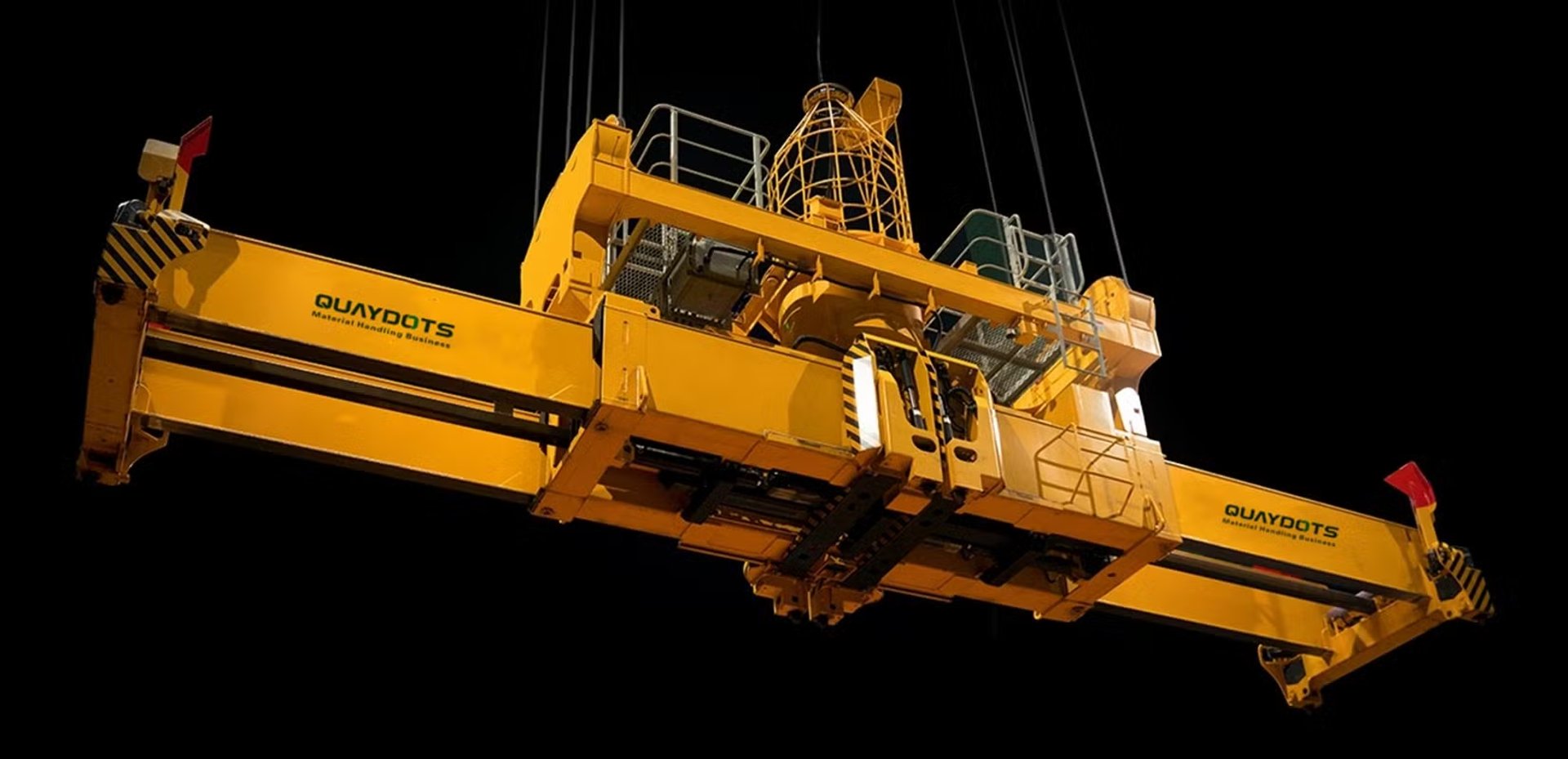
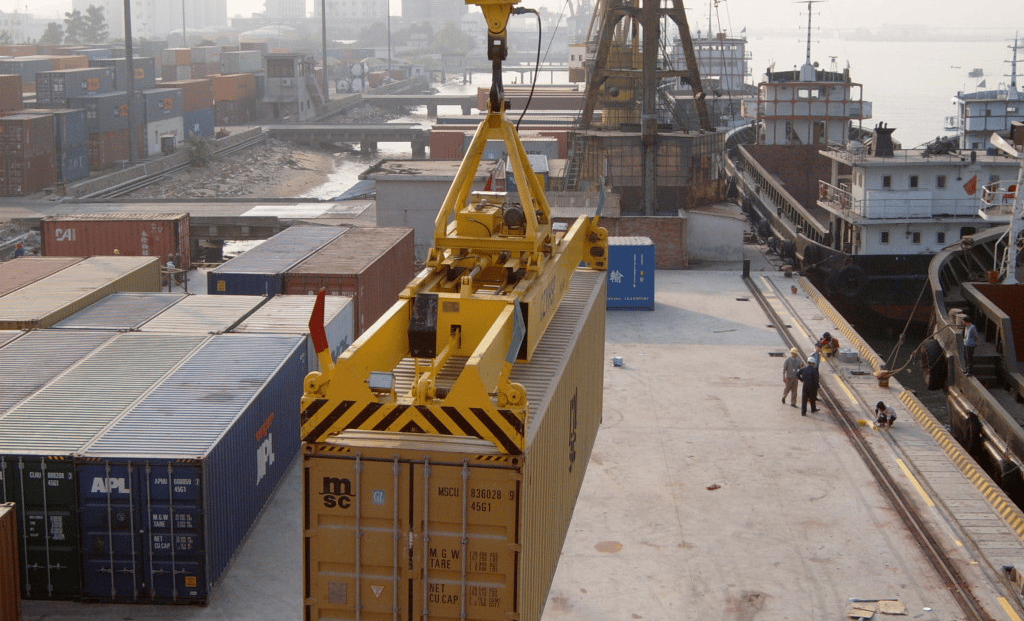
To understand the value of the BASKET SPREADER 750, one must first understand the environment in which it operates. Hoisting cages, also known as gravity basket systems or cable baskets, are mechanical management systems used on ship-to-shore cranes, gantry cranes, mobile harbour cranes, and ship loaders. Their function is to store, guide, and protect the power and control cables as the crane trolley moves along the boom or as the lifting mechanism raises and lowers loads. The working conditions within these systems are among the harshest possible for any electrical cable.
The first defining characteristic of this application is vertical suspension. The cable hangs freely, often reaching lengths of up to 50 metres. Under its own weight, a standard cable experiences significant tensile force. As the crane operates, the cable is constantly being wound, unwound, bent, and twisted. Rotational movements during load handling introduce torsion forces of up to ±25 degrees per metre length. Inside the basket, cables are stacked and pressed against one another, leading to compression, point loading, and abrasive friction every time the crane moves or the load shifts. Standard cables are designed for fixed installation or limited, gentle movement; they are not engineered to handle the combination of self-weight tension, dynamic bending, crushing forces, and continuous flexing found in basket spreader systems.
Second, the environmental profile in South Africa adds another layer of complexity. Coastal locations present high levels of salinity, humidity, and intense solar radiation. Inland mining and industrial sites face extreme temperatures, ranging from freezing winter nights on the highveld to scorching summer heat, combined with abrasive dust, chemical exposure, and frequent hydraulic oil spills. Standard cables insulated with PVC or basic rubber materials degrade rapidly under these conditions. Within 12 to 18 months, they become brittle, crack, swell, or suffer from core migration, leading to short circuits, signal loss, and unplanned downtime. Many operators in South Africa report replacing standard cables two or three times a year, representing a significant drain on maintenance budgets and operational availability.
The 3GSLTOE was developed specifically because standard products failed to meet the service life and reliability requirements of these systems. The name itself indicates its function: Basket Spreader refers to its intended use in the cable management systems of spreader bars and hoisting baskets, while 750 denotes its heavy-duty classification. Unlike general-purpose control cables, the design brief for this product was clear: survive continuous vertical suspension, withstand millions of cycles of bending and torsion, remain flexible in extreme temperatures, and resist chemical and weathering degradation for over a decade.
The fundamental concept that sets this cable apart is functional separation. In a standard cable, the copper conductors serve two purposes: they conduct electricity, and they provide the structural strength to hold the cable together and support its own weight. In the 3GSLTOE design, these functions are completely separated. Mechanical loads are handled by a dedicated load-bearing element, while electrical performance is handled by the insulated copper cores. This architectural shift is the core reason why it works where others do not. It transforms the cable from a consumable item into a long-life component capable of enduring the rigours of the South African industrial landscape.
Why Standard Cables Struggle and How 3GSLTOE Solves Them
To appreciate the engineering superiority of the BASKET SPREADER 750, it is necessary to look closely at how standard control cables fail in hoisting cage applications. Understanding these failure modes highlights exactly where improvements were made and why the 3GSLTOE design is the correct technical solution.
Tensile Failure and Conductor Elongation
The most common failure mode in vertical applications is caused by tension. In a standard cable, the copper conductors bear the weight of the entire suspended length. Copper is an excellent electrical conductor, but it is a metal with limited tensile strength and a tendency to undergo plastic deformation or "creep" under constant load. When a standard cable hangs for extended periods, the copper stretches and becomes thinner. This elongation increases electrical resistance, leading to overheating and voltage drops. Eventually, the conductors break completely, usually at connection points or areas of high stress concentration. Furthermore, as the copper stretches, the insulation material cannot stretch equally, leading to separation, gaps, and eventual cracking, allowing moisture ingress and corrosion.
How 3GSLTOE solves it: By integrating a high-strength central member made of Aramid fibres, the cable carries 100% of its own weight mechanically. The copper conductors are essentially "floating" inside, experiencing zero tensile stress. This eliminates elongation, creep, and conductor breakage entirely.
Structural Damage from Torsion and Bending
Standard cables use simple concentric stranding techniques. When twisted or bent repeatedly, the geometry changes: the inner layers of the cable compress while the outer layers stretch. This creates internal friction and shear forces between cores. In basket systems, where twisting is common during load rotation or boom movement, standard cables effectively "unwind" internally. The insulation tears, cores cross over one another, and short circuits occur. Additionally, materials like PVC become rigid when cold and soft when hot. In the South African highveld, where temperatures can fluctuate by 30 degrees in a single day, standard cables crack in winter and flow or deform in summer.
How 3GSLTOE solves it: The cable uses a balanced, layered stranding geometry. Cores are grouped into bundles, which are then twisted around the central strength member with calculated lay lengths. When the cable twists or bends, all layers deform equally and slide smoothly against one another due to high-friction-resistant insulation and wrapping tapes. There is no internal stress build-up. The materials selected remain flexible and elastic from -50°C to +80°C, ensuring consistent performance year-round.
Environmental Degradation
Standard rubber or PVC sheaths offer limited resistance to ultraviolet light, ozone, mineral oils, and hydrolysis. In marine environments like Durban harbour, salt crystals penetrate micro-cracks and accelerate corrosion of copper elements. In industrial zones, oil from machinery drips onto the cables, dissolving the plasticiser in PVC or attacking the molecular structure of rubber, causing it to swell and lose mechanical strength. Ultraviolet radiation breaks down polymer chains, turning black cables grey and powdery until the sheath falls apart.
How 3GSLTOE solves it: The outer sheath is manufactured from ether-based Polyurethane (PUR), a material chosen specifically for its chemical inertness. It is fully resistant to UV, ozone, seawater, and a wide range of industrial oils and chemicals. Unlike ester-based polyurethanes, the ether type resists hydrolysis, meaning it does not degrade in humid or wet conditions—a critical feature for coastal and underground mining applications. This material remains intact and functional for decades rather than months.
Wind Sway and Mechanical Impact
In tall cranes, wind causes the suspended cable to swing violently. Standard cables are relatively light and flexible, leading to large oscillations. The cable slams against the metal structure of the basket or adjacent equipment, causing abrasion and impact damage. This is a major issue at ports like Richards Bay where strong winds are frequent.
How 3GSLTOE solves it: The central strength member incorporates lead elements. This increases the linear mass of the cable, lowering its natural frequency. Heavier cables swing less violently and are less affected by wind loads. The lead acts as a dynamic damper, keeping the cable stable and reducing mechanical wear caused by impact.
Engineering Principles and Structural Design: Layer-by-Layer Analysis
The superior performance of the 3GSLTOE is not accidental; it comes from a sophisticated construction where every component has a specific engineering purpose. The design follows a principle often summarised as "force takes its own path, electricity takes its own path." Below is a detailed breakdown of the construction from the centre outwards, including the materials used and the science behind their selection.
Central Load-Bearing Unit
At the very heart of the cable lies the central unit, composed of high-strength Aramid yarns combined with lead cores or fillers. This is the most critical component and the primary differentiator from standard cables.
Material Science: Aramid fibres, known commercially under brand names like Kevlar or Twaron, possess a tensile strength roughly five times that of steel by weight and an extremely high modulus of elasticity, meaning they stretch very little under load. Lead is added not just for weight, but for dynamic stability and vibration damping.
Engineering Function: The Aramid takes 100% of the tensile load when the cable is suspended vertically. This ensures the copper conductors experience zero tension, eliminating creep, elongation, and breakage. The lead element increases the cable’s linear mass, lowering its natural frequency. In wind or during movement, a heavier, stiffer cable swings less violently, reducing impact damage against the metal structure of the hoisting basket.
Scientific Principle: This utilises the mechanics of materials (high tensile modulus) and vibration dynamics (damping and resonance control). By isolating the electrical components from mechanical stress, the operational lifespan is extended by a factor of ten or more compared to standard designs.
Electrical Conductors
Surrounding the central unit are the power and control conductors. The specification here is Class 6 flexible copper conductors, manufactured from electrolytic tough pitch copper.
Material Science: Unlike standard Class 2 or Class 5 conductors found in general cables, Class 6 consists of extremely fine strands, each less than 0.2 mm in diameter. These strands are annealed to the highest possible ductility to ensure maximum flexibility. They conform strictly to IEC 60228 and VDE 0295 standards.
Engineering Function: The high number of ultra-fine strands reduces the strain on individual wires during bending. In any bend, the outer surface of a cable stretches. With fine strands, the elongation per wire remains well below the fatigue limit of copper, typically below 1% strain.
Scientific Principle: This relies on metal fatigue theory. Fatigue failure occurs when material is stressed beyond its endurance limit through repeated bending. By keeping the bending strain low through fine stranding, the cable can endure over 5 million bending cycles without failure, compared to the few hundred thousand cycles typical of standard flexible cables.
Core Insulation
Each copper conductor is insulated with a specialised compound identified as GAALTHERM 530, which is an Ethylene Propylene Rubber (EPR) compound, specifically type 3GI3.
Material Science: EPR is a saturated polymer. Unlike unsaturated rubbers or PVC, its chemical structure contains no double bonds, making it inherently resistant to ozone, oxygen, and UV radiation. It maintains its elastic properties across a much wider temperature range than most thermoplastics.
Engineering Function: It provides excellent electrical insulation with low capacitance and high insulation resistance (greater than 10 GΩ·km), ensuring signal integrity even over long lengths. Crucially, it remains flexible and elastic down to -50°C and does not soften or melt until well above +90°C. It also offers excellent tear and abrasion resistance.
Scientific Principle: The use of thermoset polymer chemistry prevents melting or flow at high temperatures, while the low glass transition temperature ensures flexibility in freezing conditions. It is highly resistant to abrasion and tearing, preventing damage when cores rub against each other. Cores are identified by white insulation with continuous black numbering according to EN 50334 standards, plus a green-yellow earth core for safety and easy identification in dark baskets or cable ducts.
Screening and Special Elements
For variants such as the 3GSLTOE-J, designed for communication and bus systems (like Profibus, AS-i, or Ethernet), individual cores or pairs are screened with tinned copper braid.
Material Science: Tin plating prevents oxidation and corrosion, vital in humid or marine environments. The braid structure provides 360-degree coverage and superior flexibility compared to foil screens.
Engineering Function: The screen ensures electromagnetic compatibility (EMC) by preventing external interference from entering the signal lines and preventing control signals from radiating out and interfering with sensitive electronics on the crane. Coverage levels of over 60% ensure optimal impedance characteristics at frequencies up to 30 MHz.
Variants: The design is modular, allowing integration of fibre optic elements (3GSLTOE-O) for high-speed data transmission, making it a hybrid solution for modern automated terminals.
Stranding and Bundling
The way the cores are arranged is a masterclass in structural mechanics. Cores are first bundled together, and these bundles are then twisted around the central load-bearing unit.
Structure: Bundles are formed with precise lay lengths. The direction of twist is reversed between layers to balance the forces.
Function: This balanced geometry ensures that when the cable is bent or twisted, all components move in harmony. There is no relative movement or shearing between layers. Non-woven textile tapes are applied over each bundle and the complete assembly to bind the structure, absorb friction, and prevent the insulation from sticking to the sheath.
Result: The cable retains a perfectly round shape even after years of movement, ensuring it feeds smoothly through sheaves and baskets without jamming or wearing unevenly.
Outer Sheath
The final and most visible layer is the outer sheath, manufactured from ether-based Polyurethane (PUR), coloured black to RAL 9005.
Material Science: This is the defining material for heavy-duty applications. Ether-PUR is chosen over Ester-PUR because it is resistant to hydrolysis—the breakdown of the material in the presence of water and heat—which is a major cause of failure in tropical and coastal climates. It combines the elasticity of rubber with the toughness of plastic.
Engineering Function: It acts as the ultimate barrier against the environment. It is resistant to oil according to DIN EN 60811-404, meaning immersion in hydraulic fluids or diesel will not cause swelling or degradation. It is highly resistant to abrasion, wear, cut-through, and tearing. It remains flexible at -50°C and stable up to +80°C.
Benefit: In South Africa, this translates directly to a service life of 10 to 15 years, compared to 1 to 2 years for standard rubber or PVC cables. It eliminates the risk of water ingress, corrosion, and mechanical damage from stacking inside the basket.
Technical Specifications and Compliance Standards
Understanding the technical data is essential for engineers specifying cables for new projects or replacements. The BASKET SPREADER 750 (3GSLTOE) is defined by rigorous parameters that ensure consistent performance. It is designed to meet or exceed major international standards, making it suitable for use in South Africa where SANS specifications align closely with IEC and VDE norms.
Electrical Specifications
Nominal Voltage: U₀/U = 0.6/1 kV. This rating makes it suitable for both power and control circuits within crane systems.
Maximum Operating Voltage: 0.7/1.2 kV AC systems; 0.9/1.8 kV DC systems.
Test Voltage: 3.5 kV applied for 5 minutes during manufacturing quality control, ensuring high dielectric strength and safety margins.
Conductor Sizes: Available in standard cross-sections of 1.0 mm², 2.5 mm², and 3.5 mm². These correspond to AWG sizes 18 and 12.
Core Count Configurations: Extremely flexible in design, available from 20 cores up to 54 cores. Common configurations include 24G2.5, 30G2.5, 36G2.5, 42G2.5, 48G2.5, and 54G2.5, as well as variations in 3.5 mm² for higher current applications.
Copper Weight: Ranges from 460 kg/km to over 1800 kg/km depending on configuration, ensuring low resistance and efficient power transmission.
Mechanical and Thermal Specifications
Outer Diameter: Typically ranges from 30 mm to 48 mm, with a tolerance of ±10%. The design optimises diameter to weight ratio for basket systems.
Temperature Range:
Fixed Installation: -50°C up to +80°C.
Dynamic / Flexible Application: -40°C up to +80°C.
Conductor Temperature: Maximum +90°C in service; up to +250°C during short circuit conditions (duration <5s).
These ranges cover the extreme climatic variations found across South Africa, from the freezing winters of the Highveld to the humid heat of KwaZulu-Natal.
Bending Radius: Minimum 5× the cable diameter. This allows for tight bending radii around sheaves and pulleys without damage, while remaining robust enough for heavy use.
Tensile Strength: Up to 15 N/mm² of cross-section.
Torsion Capability: Stable operation under continuous rotation of ±25° per metre.
Maximum Operating Speed: Designed for high-performance machinery up to 160 metres per minute, suitable for modern high-speed automated cranes.
Maximum Suspension Length: Rated for vertical installation up to 50 metres, the standard height for large ship-to-shore cranes.
Compliance and Certification
The cable is manufactured in accordance with strict standards:
VDE 0250 / VDE 0295: German standards for industrial cables and flexible conductors, widely recognised as the benchmark for quality.
IEC 60228: International standard for conductor sizes and construction (Class 6).
EN 50334: Standard for core identification by colour and number.
EN 60811-404: Oil resistance testing methods.
Certifications: CE marked for European conformity. GOST-R certification is available upon request for international projects.
Alignment with SANS: These specifications align perfectly with South African National Standards requirements for cables used in heavy industrial and mining applications, ensuring compliance with local regulations and insurance requirements.
Application Scenarios and Industry Relevance in South Africa
The design features of the 3GSLTOE directly address the operational realities of South African industry. While primarily designed for basket spreader systems, its capabilities make it the preferred choice for a range of heavy-duty applications.
Port and Terminal Operations
This is the primary market. In ports like Durban and Ngqura, where equipment operates 24 hours a day, 365 days a year, downtime is measured in millions of Rands per day. The 3GSLTOE is standard equipment on Ship-to-Shore (STS) cranes, Rubber-Tyre Gantries (RTG), and Rail-Mounted Gantries (RMG). The ability to withstand salt spray, high wind speeds, and continuous movement is critical here. Operators report that switching to this cable reduces maintenance requirements by over 70% compared to standard trailing cables.
Mining and Bulk Material Handling
In the coal export terminals of Richards Bay and the iron ore facilities in Saldanha Bay, as well as inland mines, stacker/reclaimers, belt wagons, and ship loaders utilise similar vertical and horizontal cable management systems. These environments are abrasive and dusty, with high mechanical stress. The PUR sheath offers excellent resistance to abrasion and dust ingress, while the ability to handle extreme temperatures makes it suitable for both open-pit and high-altitude operations.
Heavy Engineering and Steel
In steel mills and smelters, ambient temperatures are high, and oil contamination is common. The heat-resistant properties and oil-resistant specification of the 3GSLTOE ensure reliable performance where standard cables would melt or degrade rapidly.
Power Generation
Coal-fired power stations and independent power producers utilise overhead cranes for maintenance and material handling. The cable’s long life and reliability reduce the need for maintenance in hard-to-access areas of the plant.
Why Other Solutions Fail
Attempts to use festoon cables or standard reeling cables in basket spreader systems generally lead to poor results. Festoon systems are designed for horizontal travel, not vertical suspension. Standard reeling cables lack the central strength member and wind damping properties, leading to excessive swing and damage. The 3GSLTOE remains the only solution engineered specifically for this unique mechanical arrangement.
Selection Guide: How to Choose and Specify the Right Cable
Selecting the correct variant of BASKET SPREADER 750 (3GSLTOE) ensures optimal performance and value for money. The selection process involves identifying voltage requirements, current carrying capacity, number of cores, and special features.
Step-by-Step Selection
Determine Voltage: For this family of cables, the voltage is standardised at 0.6/1 kV, suitable for both power and control circuits found in crane systems.
Conductor Size Selection:
1.0 mm²: Suitable for low power signals and small loads, typically up to 10 Amps.
2.5 mm²: The most common size, suitable for general power and control circuits up to 25 Amps. This is the standard specification for most ports in South Africa.
3.5 mm²: Used for higher power circuits or longer lengths where voltage drop is a concern, suitable for currents up to 35 Amps.
Number of Cores:
Count the number of active conductors required, including power phases, neutral, control lines, and safety earth. Always include spare cores (usually 10–15% extra) for future expansion or troubleshooting.
Standard configurations range from 20 cores to 54 cores. Examples: 36G2.5 indicates 36 cores of 2.5 mm².
Special Versions:
3GSLTOE-J: Includes integrated screened pairs for communication buses (e.g., Profibus, Interbus). The part number format might appear as 36G2.5+2x(2x1)C.
3GSLTOE-O: Incorporates optical fibres for high-speed data and video transmission, essential for modern automated and remote-controlled cranes.
Length and Installation:
Specify the suspended drop length. For lengths exceeding 30 metres, the standard design is usually sufficient, but heavier lead-filled versions are available upon request for maximum stability in high wind zones.
Colour is standard black (RAL 9005), but other colours are available on request for identification purposes.
Ordering Code Example
A typical ordering code looks like 03330G7A361M25. Breaking this down confirms the specification: 36 cores, 2.5 mm² cross-section, standard construction. Working closely with suppliers like Feichun ensures that the exact part number matches the technical drawing requirements of the specific crane model.
Feichun Cable: The Equivalent Alternative for South African Buyers
For many years, this specialised cable was only available from European manufacturers, leading to long lead times and high costs. Today, Feichun Special Cable offers a technically identical equivalent of the BASKET SPREADER 750 (3GSLTOE), providing a high-performance alternative that is rapidly becoming the preferred choice for procurement teams across Africa.
Technical Equivalence
Feichun has reverse-engineered and redeveloped this product to meet the exact dimensional, material, and performance specifications of the original design.
Same Construction: Class 6 flexible copper conductors, EPR (3GI3) insulation, Aramid/lead central strength member, balanced stranding, and ether-PUR outer sheath. Every layer and material matches the original specification.
Identical Standards Compliance: Manufactured to VDE 0250, IEC 60228, and EN standards. Test reports for voltage, bending, torsion, oil resistance, and cold impact are identical. It meets the strictest requirements of international engineering consultants and local authorities.
Interchangeability: Feichun 3GSLTOE can be used as a direct replacement or "drop-in" substitute without requiring changes to design, dimensions, or installation methods.
Key Advantages for South African Customers
Cost Efficiency: Feichun typically offers pricing that is 25% to 40% lower than European brands. In large terminal projects involving kilometres of cable, this represents a substantial saving on capital expenditure without compromising quality.
Shorter Lead Times: European suppliers often have lead times ranging from 12 to 16 weeks. Feichun maintains stock of standard configurations and offers manufacturing and delivery within 4 to 6 weeks. This speed is vital for maintenance teams needing urgent replacements to avoid costly downtime.
Logistics and Support: With extensive experience exporting to South Africa, Feichun understands local compliance requirements and documentation standards. They provide full technical datasheets, test certificates, and certifications required by engineering firms and EPC contractors.
Customisation: While European manufacturers often have rigid production schedules, Feichun is more agile, offering custom lengths, special colours, or integrated data elements to suit specific project needs.
Quality Assurance
Feichun operates an ISO 9001 certified quality management system. Every reel of cable undergoes 100% electrical testing and mechanical checks before despatch. A 2-year product warranty provides peace of mind, backed by technical support in English. For South African engineers, this means accessing world-class quality at a price point that aligns better with local project budgets.
Frequently Asked Questions
Q: Can I use a standard flexible cable or a standard reeling cable instead of 3GSLTOE to save money?
A: While standard cables cost less upfront, they are not designed for vertical suspension. Without the central strength member, they will stretch, suffer conductor breakage, and fail within 6 to 12 months. The cost of replacement and downtime far outweighs the initial saving. 3GSLTOE is designed to last 10+ years, making it the most economical choice in the long run.
Q: What is the maximum vertical length this cable can be used for?
A: The standard design is rated for suspension lengths up to 50 metres, which covers the vast majority of STS cranes globally. For applications exceeding 50 metres, or locations with extreme wind conditions, Feichun offers a reinforced version with higher Aramid content and additional lead weighting upon request.
Q: Is this cable suitable for use in saltwater environments like Durban harbour?
A: Yes. The use of tinned copper where applicable, the closed PUR sheath, and the saturated insulation material make it highly resistant to corrosion and saltwater ingress. It is widely recognised as the best available option for marine terminal applications.
Q: Does it work in very cold conditions, such as high altitude mining areas?
A: Absolutely. The cable remains flexible down to -40°C (installation) and -50°C (static). Unlike PVC cables which shatter when cold, the EPR and PUR materials used retain their elasticity and mechanical properties in freezing temperatures.
Q: Can I get this cable with data or bus cables integrated?
A: Yes. The modular design allows for the integration of twisted pairs for communication buses or optical fibres for Ethernet and video. Specify the version 3GSLTOE-J for bus or 3GSLTOE-O for fibre optics.
Q: Does Feichun provide the necessary documentation for compliance in South Africa?
A: Yes. Feichun supplies full technical data sheets, material declarations, test reports, and certificates of origin required by local standards authorities and engineering firms. The product meets all criteria for use under South African National Standards.
Conclusion
The BASKET SPREADER 750 (3GSLTOE) is more than just a cable; it is a sophisticated engineering solution developed to solve a specific set of complex mechanical and environmental challenges. Its unique design philosophy of separating electrical and mechanical functions, combined with the strategic selection of high-performance materials like Class 6 copper, EPR insulation, Aramid strength members, and ether-PUR sheathing, allows it to operate reliably where other products fail.
For South African industry, characterised by harsh climates, heavy usage, and high operational costs, this cable offers a proven pathway to improved reliability and reduced maintenance. It has become the standard specification for major port operators and mining houses because it delivers on its promise of long life and consistent performance.
With Feichun Cable offering a technically identical, certified equivalent solution, the barriers to access have been lowered. Procurement teams no longer need to choose between quality and cost, or quality and delivery speed. Feichun combines the best of European engineering principles with modern manufacturing efficiency, making the BASKET SPREADER 750 (3GSLTOE) more accessible than ever.
For engineers and decision-makers, the message is clear: in vertical hoisting and basket spreader applications, standard cables represent a false economy. The 3GSLTOE is the correct technical choice, and Feichun is the right partner to deliver it.
Contact Information
If you require further technical specifications, pricing, or wish to procure BASKET SPREADER 750 (3GSLTOE) Control Cable for your project or maintenance requirements, please contact the Feichun Special Cable technical and sales team:
Feichun provides comprehensive datasheets, compliance certificates, and quotations tailored specifically for South African and African regional projects.

Email Address: Li.wang@feichuncables.com
© 2025. All rights reserved.
One-click to Quickly Contact
Products
Contact
Company
Location:
Building A Private Science and Technology Park, Hefei Economic and Technological Development Zone, Anhui Province, China
Heat Resistant Cable
WhatsApp: +86 17333223430
Social Media: