Anhui Feichun Special Cable Co.,Ltd Email: Li.wang@feichuncables.com

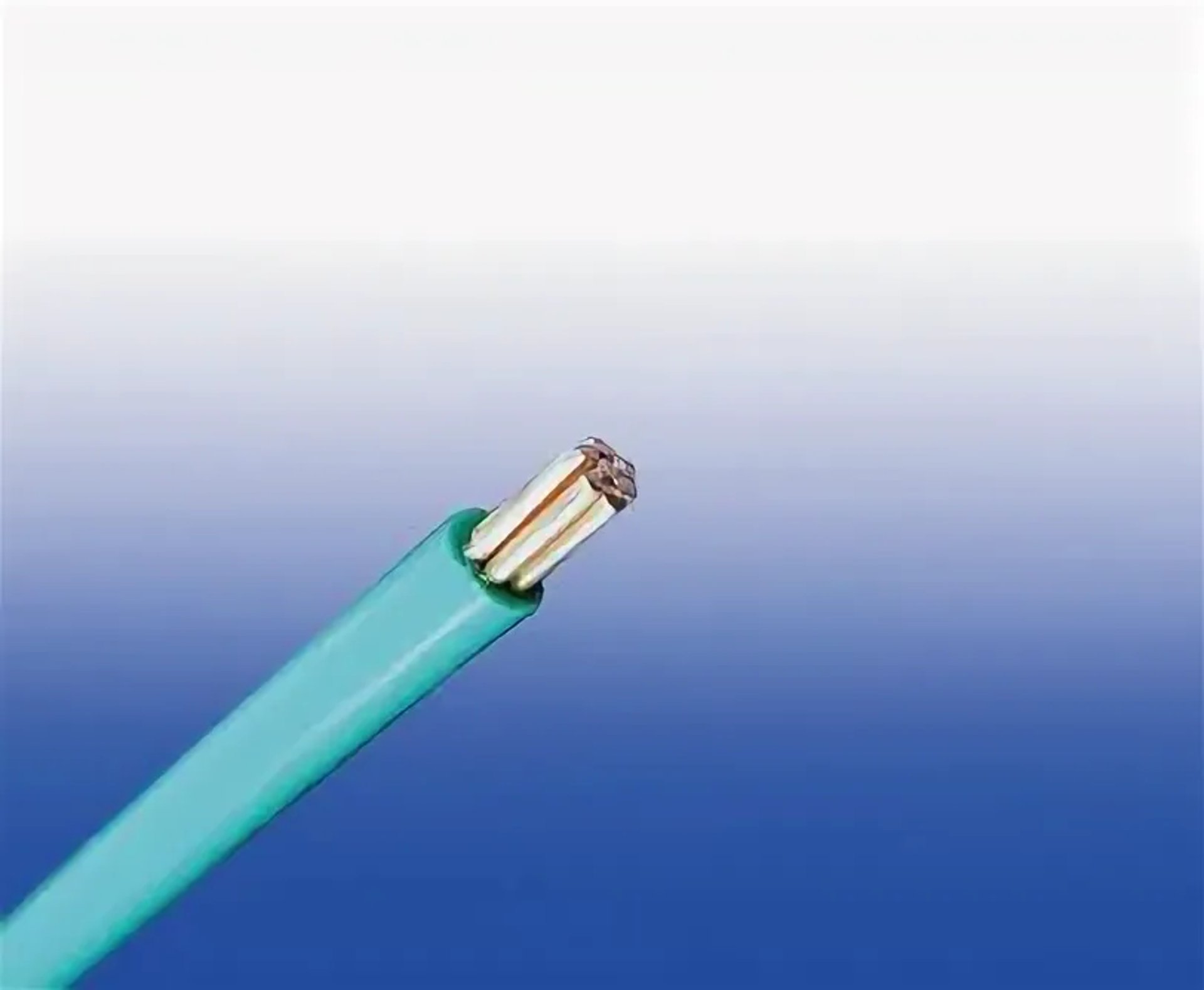
BS 8573 Cables: Enhancing Fire Safety and Reliability in South African Building Wiring
Discover the BS 8573 standard and its essential cables: Single Core 600/1000V XLPE Insulation, LSZH Sheath Cables to BS 8573; Two-core 600/1000V XLPE Insulation, LSZH Sheath Cables to BS 8573; Three-core 600/1000V XLPE Insulation, LSZH Sheath Cables to BS 8573; Four-core 600/1000V XLPE Insulation, LSZH Sheath Cables to BS 8573; and Five-core 600/1000V XLPE Insulation, LSZH Sheath Cables to BS 8573. This in-depth guide covers their construction, fire performance, applications in South African buildings, and case studies highlighting enhanced safety in high-risk environments.
Li.Wang
11/25/20257 min read
Introduction
In the realm of modern electrical installations, few innovations have had as profound an impact on safety as the BS 8573 standard for low-voltage power cables. These cables, featuring cross-linked polyethylene (XLPE) insulation and low smoke zero halogen (LSZH) sheathing, represent a cornerstone of safe building wiring, particularly in environments where fire risks pose a significant threat to life and property. Designed primarily for fixed installations in buildings, BS 8573 cables such as the Single Core 600/1000V XLPE Insulation, LSZH Sheath Cables to BS 8573, Two-core 600/1000V XLPE Insulation, LSZH Sheath Cables to BS 8573, Three-core 600/1000V XLPE Insulation, LSZH Sheath Cables to BS 8573, Four-core 600/1000V XLPE Insulation, LSZH Sheath Cables to BS 8573, and Five-core 600/1000V XLPE Insulation, LSZH Sheath Cables to BS 8573, are engineered to minimise smoke and toxic emissions during fires, making them indispensable in densely populated structures.
In South Africa, where urbanisation and high-rise developments are accelerating in cities like Johannesburg, Cape Town, and Durban, the importance of these cables cannot be overstated. Stringent fire safety and environmental regulations, governed by bodies such as the South African Bureau of Standards (SABS) and aligned with the South African National Standards (SANS), demand materials that prioritise human life and sustainability. For instance, in 2023, a tragic fire in a Johannesburg building claimed 76 lives and left over 175 households homeless, with smoke inhalation cited as a primary cause of fatalities. Such incidents underscore the critical role of LSZH sheathing in reducing visibility-obscuring smoke and corrosive gases, potentially saving lives in escape routes and confined spaces. This article delves deeply into the BS 8573 standard and its cable variants, exploring their technical merits, applications, and real-world implementations in South Africa, all while adhering to professional cable terminology and logical progression.
Understanding the BS 8573 Standard
The BS 8573 standard, officially titled "Electric cables. Thermosetting insulated, non-armoured cables with a voltage of 600/1 000 V, for fixed installations, having low emissions of smoke and corrosive gases when affected by fire," was developed by the British Standards Institution (BSI) and first published in October 2012. It emerged from a growing need to address fire hazards in electrical wiring, building upon earlier British standards like BS 5467 for armoured cables and incorporating advancements in material science. Historically, cable standards evolved in response to major fire disasters, such as the King's Cross fire in London in 1987, which highlighted the dangers of halogenated materials releasing toxic fumes. BS 8573:2012 represents a refined approach, focusing on non-armoured cables suitable for indoor use, and has been widely adopted internationally due to its emphasis on safety.
At its core, the standard prioritises XLPE insulation for its excellent dielectric strength and thermal stability, paired with LSZH sheathing to ensure minimal smoke and zero halogen emissions in fire scenarios. This design not only enhances fire resistance but also aligns with environmental concerns by reducing acid gas release, which can damage equipment and harm ecosystems. In South Africa, BS 8573 is often used in conjunction with SANS standards, such as SANS 1507 for low-voltage cables with extruded insulation. While there isn't a direct one-to-one equivalent, SANS 10142-1 (The Wiring of Premises) incorporates similar requirements for fire-retardant materials, allowing BS 8573-compliant cables to meet local compliance through certification bodies like the SABS. Internationally, it harmonises with IEC 60502-1 for power cables, facilitating global trade and adoption in regions with stringent regulations.
Compliance involves rigorous testing and certification, often by accredited labs like BASEC or TÜV SÜD, which verify adherence to the standard's parameters. For South African installers, this means cables must pass local inspections under the Electrical Installation Regulations, ensuring they contribute to sustainable and safe infrastructure development.
Key Performance Characteristics
The performance of BS 8573 cables is defined by a suite of fire, electrical, and mechanical attributes that make them superior for high-risk installations. Fire performance is paramount: Flame retardance is tested per BS EN 60332-1-2:2004, involving a single vertical wire test where the cable must self-extinguish within specified limits, preventing flame spread. Reduced fire propagation follows BS EN 60332-3-24:2009 (Category C), simulating bundled cables in vertical mounts to ensure limited char length and no sustained burning. Halogen-free properties are confirmed via BS EN 50267-2-1, measuring acid gas evolution to below 0.5%, while minimum smoke emission is assessed under BS EN 61034-2, requiring light transmittance above 60% in a smoke chamber. Additionally, spark testing per BS EN 62230 verifies insulation integrity against defects.
Electrically, the 600/1000V rating suits fixed installations in low-voltage systems, handling phase-to-earth voltages up to 600V and phase-to-phase up to 1000V, ideal for commercial and residential power distribution. Physically, XLPE allows continuous operation at 90°C, with short-circuit tolerance reaching 250°C for 5 seconds, enabling resilience in overloads. Minimum bending radii vary: 4 times overall diameter for circular copper conductors up to 25mm², 6 times above that, and 8 times for shaped conductors, facilitating installation without damage.
Optional enhancements cater to South African challenges, such as UV resistance for exposed sections in sunny climates, hydrocarbon and oil resistance for industrial sites, and anti-rodent/anti-termite formulations using repellents like capsaicin or armoured additives, crucial in termite-prone areas like KwaZulu-Natal.
Construction and Materials
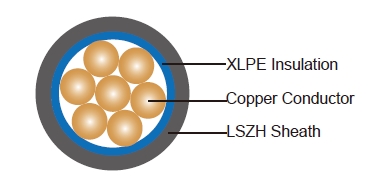
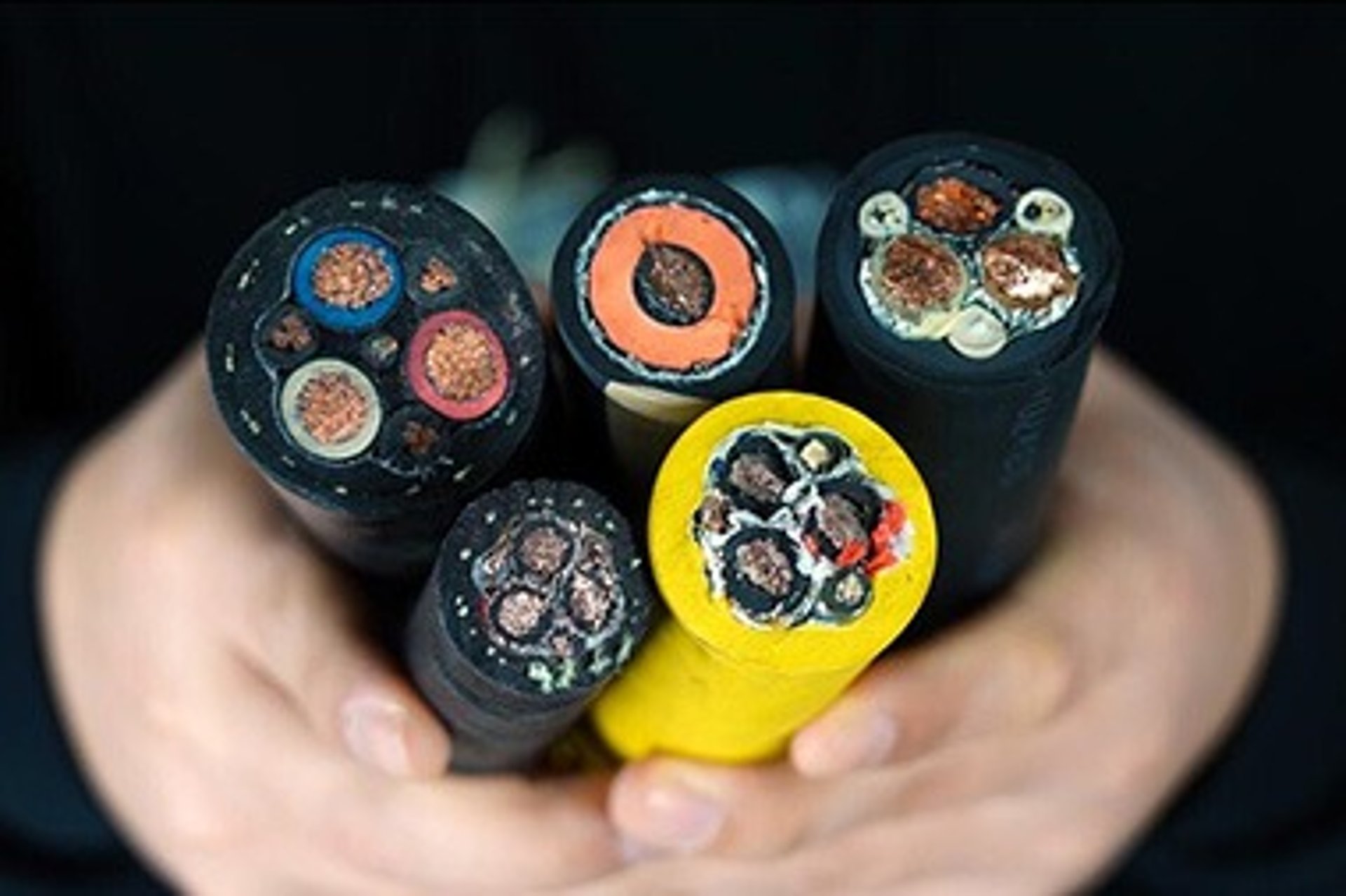
BS 8573 cables are meticulously constructed for durability and ease of use. The conductor is annealed copper, stranded to BS EN 60228 Class 2, providing flexibility (multi-strand configuration) and high conductivity, reducing resistance losses in long runs.
Insulation employs thermosetting XLPE: Type GP8 (BS 7655-1.3) for general purpose, GP6 (BS 7655-1.2) for enhanced flexibility, or EI5 (BS EN 50363-5) for elastomeric properties, offering superior resistance to heat, moisture, and chemicals compared to PVC.
An optional inner covering—extruded thermoplastic or separating tape—facilitates core separation during termination, preventing adhesion. The outer sheath is thermoplastic LSZH Type LTS 4 (BS 7655-6.1), ensuring low smoke and zero halogens.
Colour coding aids identification: Single-core uses brown or blue; two-core brown and blue; three-core brown, black, grey; four-core blue, brown, black, grey (or with green-and-yellow for earth); five-core green-and-yellow, blue, brown, black, grey. Sheath is typically black, with custom colours available.
In-Depth Specifications by Core Configuration
Single-Core 600/1000V XLPE Insulation, LSZH Sheath Cables to BS 8573
These cables span cross-sections from 1.5mm² to 1000mm². Nominal insulation thickness starts at 0.7mm for smaller sizes, increasing to 2.8mm for 1000mm²; inner covering 0.4mm to 1.6mm; sheath 1.4mm to 2.4mm. Ideal for earthing or single-phase circuits in tight spaces, they excel in switchgear connections.
Two-Core 600/1000V XLPE Insulation, LSZH Sheath Cables to BS 8573
Cross-sections 1.5mm² to 120mm², with insulation 0.7mm-1.2mm, inner covering 0.4mm-1.2mm, sheath 1.8mm-2.0mm. Duplicates for shaped conductors note variations. Suited for lighting and balanced loads in domestic wiring.
Three-Core 600/1000V XLPE Insulation, LSZH Sheath Cables to BS 8573
Similar ranges, insulation 0.7mm-1.2mm, inner covering 0.4mm-1.2mm, sheath 1.8mm-2.1mm. Optimised for three-phase systems in industrial power supply.
Four-Core 600/1000V XLPE Insulation, LSZH Sheath Cables to BS 8573
Cross-sections up to 120mm², with green-and-yellow option for neutral/earth. Parameters mirror above, versatile for three-phase plus neutral in buildings.
Five-Core 600/1000V XLPE Insulation, LSZH Sheath Cables to BS 8573
Up to 120mm², including dedicated earth core. Insulation 0.7mm-1.2mm, inner covering 0.4mm-1.4mm, sheath 1.8mm-2.4mm. Used in control circuits or multi-phase with extras.
Each configuration maintains Class 2 stranding for consistency.
Applications, Installation, and Best Practices
BS 8573 cables are for fixed building wiring, avoiding burial, and thrive in South African high-rises where smoke hazards are acute. Installation follows SANS 10142, respecting bending radii and using trays/ducts. Advantages include superior fire safety over PVC, longevity in humid coasts, and eco-friendliness.
South African Implementations
Johannesburg Hospital Retrofit
In 2022, Chris Hani Baragwanath Hospital upgraded using three-core and four-core BS 8573 cables. Replacing old PVC, they reduced smoke risks in wards, complying with health regs. Post-install, fire drills showed 30% better visibility, enhancing evacuation.
Cape Town Commercial Building Project
The Foreshore office tower in 2023 employed single-core and two-core variants. In high-traffic areas, they cut costs by 15% via durability and performed well in drills, minimising fume risks.
Durban Industrial Facility Expansion
A chemical plant in 2024 integrated five-core cables with anti-termite options. In humid conditions, they withstood pests, showing zero failures over 18 months, boosting reliability.
Frequently Asked Questions (FAQ)
What makes BS 8573 cables safer than standard PVC cables in South African buildings?
LSZH reduces smoke and halogens, vital in fires like Johannesburg's.
Can these cables be used outdoors in South Africa, and what options protect against UV or pests?
With UV/anti-rodent options, yes for exposed areas.
How do I select the right core count and cross-section for a typical three-phase installation?
Three or four-core, sized per load (e.g., 25mm² for 100A).
Are there SANS equivalents or adaptations for BS 8573 in South Africa?
Aligned with SANS 1507 and 10142.
What maintenance is required for LSZH sheathed cables in high-temperature environments?
Visual inspections, no special beyond standard.
How do XLPE insulation properties handle short circuits compared to other materials?
Better at 250°C tolerance vs. PVC's 160°C.
Conclusion
BS 8573 advances cable safety with XLPE and LSZH, crucial for South Africa. Engineers should adopt for sustainable practices. For more, visit BSI or SABS websites.
Feichun’s technical engineers bring extensive expertise in the design, manufacture, and testing of cables compliant with BS 8573. All our cables undergo rigorous Quality Assurance procedures in our Cable Laboratory to ensure they meet the performance requirements of various installations and applications.


Email Address: Li.wang@feichuncables.com
© 2025. All rights reserved.


One-click to Quickly Contact
Products
Contact
Company
Location:
Building A Private Science and Technology Park, Hefei Economic and Technological Development Zone, Anhui Province, China
Heat Resistant Cable
WhatsApp: +86 17333223430
Social Media: