Anhui Feichun Special Cable Co.,Ltd Email: Li.wang@feichuncables.com
BUFLEX® SEM OFE Integrated Optical Fibre Power Cable for Smart Ports in South Africa: Enabling Predictive Maintenance and Industrial 4.0 Crane Monitoring
Discover how BUFLEX® SEM OFE integrated cables revolutionize port operations in South Africa. This engineering analysis covers real-time monitoring, predictive maintenance, IoT integration, and a detailed comparison against traditional separate cable systems.
Li. Wang
4/29/202617 min read

Introduction
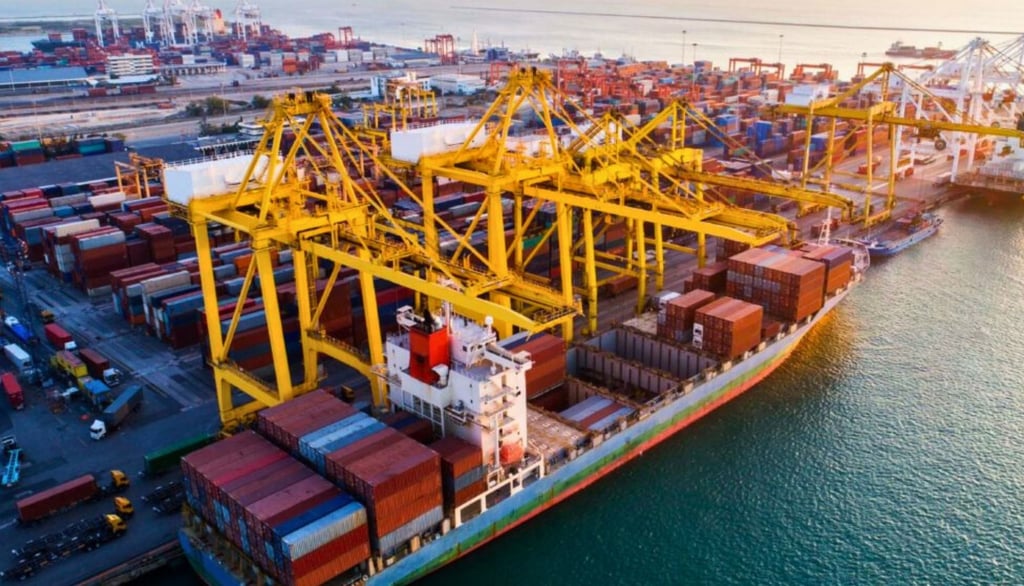
The logistics and maritime industry forms the backbone of South Africa’s economy, with major hubs such as Durban, Cape Town, and Ngqura handling millions of containers annually. As global trade volumes expand, the pressure on port infrastructure intensifies. Modern container terminals are expected to process upwards of 50,000 TEUs (Twenty-Foot Equivalent Units) per day, demanding machinery that operates at peak efficiency without interruption. At the heart of this operation are Quay Cranes (QC) and Rubber Tyred Gantry (RTG) cranes, whose reliability directly dictates the terminal's throughput.
However, maintaining these massive structures presents significant engineering challenges. The environment is harsh, characterized by heavy mechanical loads, constant movement, salt spray, and wide temperature variations. Traditional infrastructure often struggles to keep pace with the demands of Industry 4.0, where data is as valuable as power. This article explores the technological shift represented by the BUFLEX® SEM and BUFLEX® SEM OFE cable platforms, examining how the integration of power transmission and optical communication within a single hybrid cable solves historical problems of reliability, maintenance complexity, and operational cost.
The High Cost of Downtime in South African Port Operations
In the context of South African trade, time is unequivocally money. Ports operate on tight schedules dictated by shipping lines, and any delay can have a cascading effect on the entire supply chain. When a quay crane fails, the consequences extend far beyond the immediate repair bill.
Operational and Financial Impact
The most immediate impact of equipment failure is the cessation of loading and discharging operations. For a vessel waiting to sail, every hour of delay incurs costs, including vessel detention charges and overtime payments for crew and stevedores. In a high-volume terminal, the loss of just one crane can reduce the overall handling capacity by 10% to 15%, potentially leading to ships being forced to anchor offshore while waiting for berth availability.
Beyond the direct operational costs, there are significant penalties involved. Contracts between port operators and shipping lines often include strict Service Level Agreements (SLAs) that impose financial penalties for failing to meet agreed berthing and handling rates. Furthermore, repeated failures damage the reputation of the port, potentially leading shipping lines to divert their services to more reliable hubs in the region.
Safety and Structural Risks
Equally important is the safety aspect. Crane failures are rarely minor events. A breakdown caused by structural fatigue or electrical fault can pose severe risks to personnel working nearby. There is also the potential for collateral damage to the cargo, the ship itself, or other terminal equipment. The legal and insurance implications of such incidents are substantial, making proactive risk management not just an operational preference, but a necessity.
The requirement for uptime is therefore not merely about convenience; it is about maintaining the financial viability and safety of the entire operation. This reality drives the need for a fundamental change in how equipment is monitored and maintained.
Evolution of Maintenance Strategies
For decades, the approach to maintaining port equipment followed two primary models: reactive maintenance and preventive maintenance. Both models have inherent limitations that become increasingly costly as equipment ages and operational demands rise.
Limitations of Conventional Maintenance
Reactive maintenance, often referred to as "run-to-failure," involves repairing equipment only after it has stopped working. While this minimizes maintenance spending in the short term, it leads to unpredictable and often catastrophic failures. The cost of emergency repairs, including overtime labour, expedited shipping of parts, and the downtime itself, is vastly higher than planned maintenance.
Preventive maintenance, on the other hand, relies on scheduled interventions based on time or operational hours. While safer than reactive maintenance, this approach is inefficient. It often results in over-servicing, where components are replaced while they still have significant service life remaining, or under-servicing, where failures occur between scheduled stops. Furthermore, traditional methods do not account for the actual load conditions or the specific wear patterns of individual machines operating in unique environments.
The Rise of Predictive Maintenance
The solution lies in Predictive Maintenance (PdM), a strategy that uses real-time data to assess the actual health of the machine. Instead of relying on schedules, maintenance is performed exactly when it is needed, based on the condition of the components.
This is where the BUFLEX® SEM OFE system creates a paradigm shift. By embedding intelligence directly into the cable infrastructure, it becomes possible to continuously monitor the physical state of the crane.
How BUFLEX® SEM OFE Enables Condition Monitoring
The BUFLEX® SEM OFE cable acts as the central nervous system of the crane. It integrates multiple sensing capabilities and communication pathways into a single, robust package.
Vibration Analysis for Structural Integrity
Accelerometers embedded within the crane structure work in conjunction with the cable system to monitor vibration signatures. Every mechanical component has a unique vibration pattern when healthy. When fatigue cracks begin to form, or when alignment issues develop, these patterns change. The system detects these micro-variations, allowing engineers to identify the initiation of structural damage long before it becomes visible or dangerous.
Strain and Tension Monitoring
The cables that power and control cranes are subject to immense physical stress. They are reeled, unreeled, twisted, and pulled under heavy loads daily. Strain gauges integrated into the cable structure measure the tension levels and mechanical deformation in real-time. This data is crucial for understanding how fatigue is propagating through the material, ensuring that cables are replaced before they reach their breaking point, but not unnecessarily early.
Thermal Monitoring of Critical Components
Heat is often the earliest indicator of electrical or mechanical failure. Temperature sensors placed on bearings, gearboxes, and motor windings transmit data through the integrated fibre link. By tracking temperature trends, the system can detect inefficiencies or friction anomalies. A bearing that is beginning to fail will generate heat weeks before it actually seizes, allowing for planned replacement during operational breaks.
Seamless Data Transmission
The critical enabler for all this technology is the optical fibre embedded within the cable. Fibre optic links provide the bandwidth and speed necessary to transmit large volumes of sensor data to the control room with zero latency and complete immunity to electrical interference. By housing power conductors and optical fibres in the same sheath, BUFLEX® SEM OFE eliminates the need for separate data cables, simplifying the installation and removing the complexity of managing two independent wiring systems.
Architectural Revolution: Integrated vs. Separate Systems
The traditional approach to port infrastructure design has been to treat power distribution and data communication as entirely separate disciplines. This siloed thinking has resulted in installations where thick power cables run parallel to delicate fibre optic cables, each requiring their own routing, protection, and maintenance regimes.
The Complexity of Separate Systems
When power and communication systems are separate, the engineering challenges multiply. Installation teams must pull multiple cables through trays or conduits, ensuring proper separation distances to prevent electromagnetic interference. Each system requires its own terminations, junction boxes, and testing procedures.
From a reliability standpoint, having two systems means twice the number of potential failure points. Connectors can loosen, cables can be damaged during maintenance, and routing can become confused over years of upgrades. Maintaining these systems requires expertise in both high-voltage electrical engineering and fibre optic technology, increasing the skill level required from maintenance staff.
The BUFLEX® SEM OFE Concept
The BUFLEX® SEM OFE platform represents a holistic approach. It combines power distribution, control signalling, and high-speed fibre optic communication into a single multi-conductor system. This hybrid architecture is designed specifically for the dynamic environment of mobile machinery, where flexibility and durability are paramount.
Cost Reduction through Integration
The most obvious benefit is the reduction in total cost of ownership. By combining functions, the total volume of cabling is reduced, saving space on cable reels and simplifying the mechanical design of the crane. Installation time is significantly shortened, as only one cable system needs to be routed and terminated. The associated hardware, such as glands, clamps, and entry points, is also reduced, lowering material costs.
Enhanced Reliability
Integration improves reliability in several ways. The cable design ensures that the optical fibres are protected alongside the power conductors, sharing the same robust armour and sheath. The design also allows for redundant transmission paths, meaning that if one element is compromised, the system can often continue to operate or fail safely. The elimination of separate external data cables removes the risk of them being snagged or damaged during operation.
Enabling Industrial 4.0
Perhaps the most significant advantage is the feasibility of advanced integration. In a traditional setup, retrofitting a port terminal with Industrial 4.0 capabilities requires extensive new wiring, which is often disruptive and expensive. With BUFLEX® SEM OFE, the infrastructure for high-speed data transfer is already present alongside the power. This native integration makes it practical to implement IoT (Internet of Things) architectures, big data analytics, and automated control systems that were previously uneconomical.
Deep Dive into BUFLEX® SEM Platform Architecture
Understanding the engineering behind the BUFLEX® SEM platform requires looking at the materials and design choices that enable its high performance. This base platform forms the power backbone upon which the optical version is built.
Multi-Conductor Design Philosophy
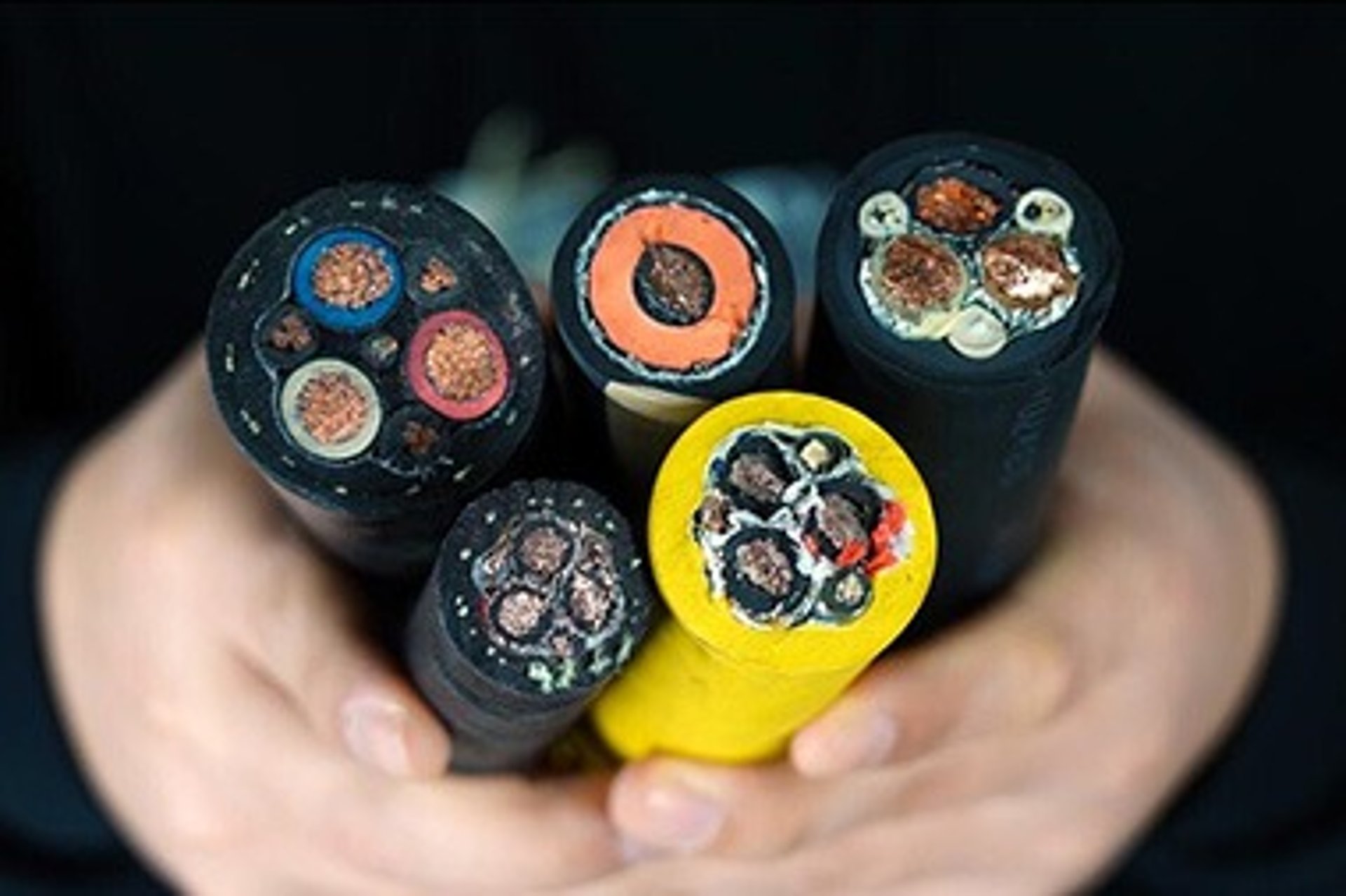
The cable utilizes a multi-core design tailored for reeling and trailing applications. Unlike standard fixed-installation cables, these products must withstand millions of bending cycles without fatigue.
The conductors are manufactured from high-purity copper, stranded in a specific configuration to maximize flexibility. The stranding process ensures that stress is distributed evenly across all wires, preventing individual strands from breaking prematurely. The insulation material is typically a high-grade Cross-Linked Polyethylene (XLPE) or similar compound, chosen for its excellent dielectric strength, thermal resistance, and mechanical toughness. This insulation must withstand the voltage stresses of operation while remaining flexible enough to move with the machinery.
Electrical Performance Parameters
The electrical design is rated for typical port applications, usually at 0.6/1kV levels, ensuring compatibility with standard crane motor systems. The current carrying capacity is calculated to handle the high in-rush currents associated with starting large hoist and trolley motors without excessive voltage drop.
Electrical continuity and resistance stability under dynamic movement are critical design considerations. When a crane moves, the cable flexes, which can cause changes in resistance if the construction is poor. BUFLEX® SEM is engineered to maintain stable electrical properties throughout its flex life, ensuring consistent power delivery to sensitive variable frequency drives (VFDs) and control systems.
The overall construction includes inner sheaths, armour layers (often aramid yarn or steel wires for tensile strength), and outer jackets resistant to oil, chemicals, and UV radiation. This layered approach ensures that the electrical heart of the cable is protected from the external environment.
Optical Integration: BUFLEX® SEM OFE Technology
The addition of optical fibres transforms the cable from a simple power carrier into a multifunctional data highway. The BUFLEX® SEM OFE variant integrates optical units seamlessly into the cable core.
Fibre Embedding Technology
Integrating fibre optics into a dynamic power cable requires special engineering. Glass fibres are inherently brittle and can break if subjected to tight bending or high compression. Therefore, the optical elements are housed within loose tubes or specially designed buffer zones within the cable structure. This allows the fibre to move slightly relative to the rest of the cable during bending, ensuring that the strain on the glass itself remains within safe limits.
The positioning of the fibres is also calculated to place them near the neutral axis of the cable, where mechanical bending stress is lowest. This ensures that the life expectancy of the optical component matches that of the electrical component.
Single Mode vs. Multi Mode Selection
Engineers selecting the cable have the option of Single Mode (SM) or Multi Mode (MM) fibre, depending on the application requirements.
Single Mode Fibre features a very small core diameter, allowing light to travel in a single path. This type offers very low signal attenuation and is immune to dispersion over long distances. It is the preferred choice for large port layouts where data needs to travel hundreds of meters or even kilometres, and where future-proofing for very high bandwidth is required.
Multi Mode Fibre has a larger core, allowing multiple light rays to propagate simultaneously. It is generally less expensive and easier to terminate than Single Mode. It is ideal for shorter distances, such as within a single crane or between adjacent units, where high bandwidth at lower cost is desired.
The choice between the two depends on the network topology, distance, and budget, but the BUFLEX® SEM OFE platform supports both technologies effectively.
Key Optical Performance Indicators
The performance of the optical link is measured against several critical parameters.
Attenuation refers to the loss of signal strength as light travels through the fibre. Low attenuation values ensure that signals remain strong enough to be read clearly at the receiving end, reducing the need for repeaters.
Dispersion is the spreading of light pulses as they travel. In high-speed communication, pulses can overlap if dispersion is not controlled, leading to data errors. The specific glass composition and design minimize this effect.
Bending Loss occurs when the cable is bent sharply. Advanced fibre designs and cable structures minimize this loss, allowing the cable to navigate around pulleys and corners without signal degradation.
Thermal Stability ensures that the optical properties remain consistent whether the cable is operating in the cool of a Cape Town winter or the heat of a KwaZulu-Natal summer.
Real-Time Data Acquisition and SHM Systems
The physical cable is only part of the solution; the system it enables is what delivers value. Structural Health Monitoring (SHM) relies on a robust data acquisition backbone.
Sensor Network Architecture
The system architecture is distributed, meaning sensors are placed at all critical points across the crane structure and the cable itself. These sensors act as the eyes and ears of the maintenance team. The BUFLEX® SEM OFE cable provides the necessary power to run these sensors and the communication channel to bring their data back.
This distributed approach ensures that no critical area is left unmonitored. Whether it is the stress on the main beam, the temperature of the hoist gearbox, or the tension on the trailing cable, data is collected continuously.
Signal Conditioning and Transmission
Raw sensor data is often not directly usable. It requires amplification, filtering, and conversion from analogue to digital format. The integrated design ensures that this signal processing happens close to the source, minimizing noise pickup. The data is then packetized and sent over the fibre link.
Because fibre optics use light instead of electricity, the transmission is completely immune to the electromagnetic interference (EMI) generated by the crane’s powerful motors and VFDs. This guarantees data integrity, which is essential when making safety-critical decisions based on that information.
Applications in Structural Health Monitoring
Strain Measurement allows the system to calculate exactly how much load the structure is carrying. By comparing real-time data against design limits, operators can ensure that safety factors are maintained and detect any unexpected deformation.
Temperature Profiling can be done at multiple points. Hot spots in electrical cabinets or mechanical bearings are flagged immediately. In the cable itself, temperature monitoring ensures that it is not being overloaded beyond its current capacity.
Fatigue Detection works by correlating load cycles with material properties. Over time, the system builds a picture of how many times the equipment has performed certain movements and how much wear this has induced, allowing for accurate calculation of remaining service life.
From Raw Data to Actionable Intelligence
Collecting data is relatively easy; turning it into actionable maintenance decisions is where the real engineering challenge lies.
Data Processing Pipeline
The flow of information moves from the physical sensors through the BUFLEX® SEM OFE cable to a processing unit. Here, the raw signals are cleaned and normalized. Features are extracted from the data stream—for example, calculating the Root Mean Square (RMS) value of a vibration signal or the rate of change in temperature.
This processing reduces large volumes of raw data into manageable metrics that represent the actual health of the asset.
Predictive Algorithms and AI Models
Advanced algorithms analyse these metrics. Simple threshold-based systems trigger alarms when values go too high or too low. More sophisticated systems use trend analysis to see how values are changing over time.
Machine learning models can be trained to recognize patterns that precede failure. By comparing current data against historical failure patterns, the system can predict with high accuracy when a component is likely to fail. This moves the operation from "find and fix" to "predict and prevent."
Decision Support Systems
The end result is a user interface that presents clear information to maintenance managers. Instead of overwhelming them with numbers, the system presents health scores or traffic-light style indicators. Green means normal operation, amber means attention is required, and red means immediate action is needed.
Work orders can be generated automatically based on these alerts, ensuring that parts are ordered and manpower scheduled before the failure occurs. This integration with enterprise management systems closes the loop, making the technology practical for daily use.
Industrial 4.0 and IoT Integration
The concept of the smart port relies on connectivity, and BUFLEX® SEM OFE provides the physical layer for this connectivity.
Edge Computing
To ensure responsiveness, much of the data processing happens at the "edge"—close to the equipment. Edge computing devices analyse data locally to trigger safety interlocks or immediate alarms without waiting for instructions from a central server. This reduces latency and ensures safety functions operate instantaneously.
Cloud Connectivity
While local processing handles immediate needs, long-term data is sent to cloud-based platforms. This allows for big data analytics across an entire fleet of cranes. Engineers can compare performance between different machines or different sites, identifying best practices and spotting systemic issues.
Remote diagnostics become possible, allowing experts off-site to analyse problems without needing to physically climb the crane. This is particularly valuable in large or remote locations.
Cybersecurity Considerations
With connectivity comes the responsibility of security. The system is designed with security protocols to ensure that control signals and data cannot be tampered with. Encryption and authentication mechanisms protect the integrity of the communication flowing through the fibre optic network.
Safety and Control Architecture
Safety is non-negotiable in port operations. The cable system plays a vital role in the overall safety architecture.
Distributed Control Systems
The infrastructure supports a Distributed Control System (DCS) topology. This means control functions are spread throughout the system rather than relying on one central processor. If one part of the system has an issue, others continue to operate, and the system can be brought to a safe stop.
Safety Interlocks
The physical wiring and communication protocols support safety interlock chains. These are hard-wired and software-monitored circuits that ensure dangerous movements are only possible when all safety conditions are met. The reliability guaranteed by the BUFLEX® SEM OFE transmission ensures that stop commands and safety signals are delivered instantly and without corruption.
Remote Control and Diagnostics
The high bandwidth available allows for remote operation capabilities. In certain configurations, cranes can be controlled from a centralised control room, improving ergonomics for operators and allowing them to be located away from hazardous areas. Diagnostics can also be performed remotely, reducing the need for technicians to work at height or in dangerous zones.
Comprehensive Technical Comparison
To fully appreciate the innovation of the BUFLEX® SEM OFE, one must compare it directly against the traditional method of installing separate power cables and separate fibre optic data links.
BUFLEX® SEM OFE vs. Separate Systems
When separate systems are used, the installation requires two distinct cables to be run along the same path. This doubles the effort required for installation, as trays must be larger, and pulling operations are more complex. There is also a higher risk of damage during installation, as the sensitive fibre optic cable can easily be stretched or crushed if not handled with extreme care alongside the heavier power cable.
In operation, separate systems require two sets of connectors, two entry points into cabinets, and two sets of documentation. This complexity increases the Mean Time To Repair (MTTR) when faults occur, as technicians must diagnose which system is affected.
In contrast, the BUFLEX® SEM OFE integrates everything into one robust outer jacket. The installation is a single operation. The maintenance is simplified because the system is designed as a cohesive unit. The reliability is improved because the optical elements are mechanically protected by the overall cable structure, sharing the same armour and protection as the power conductors.
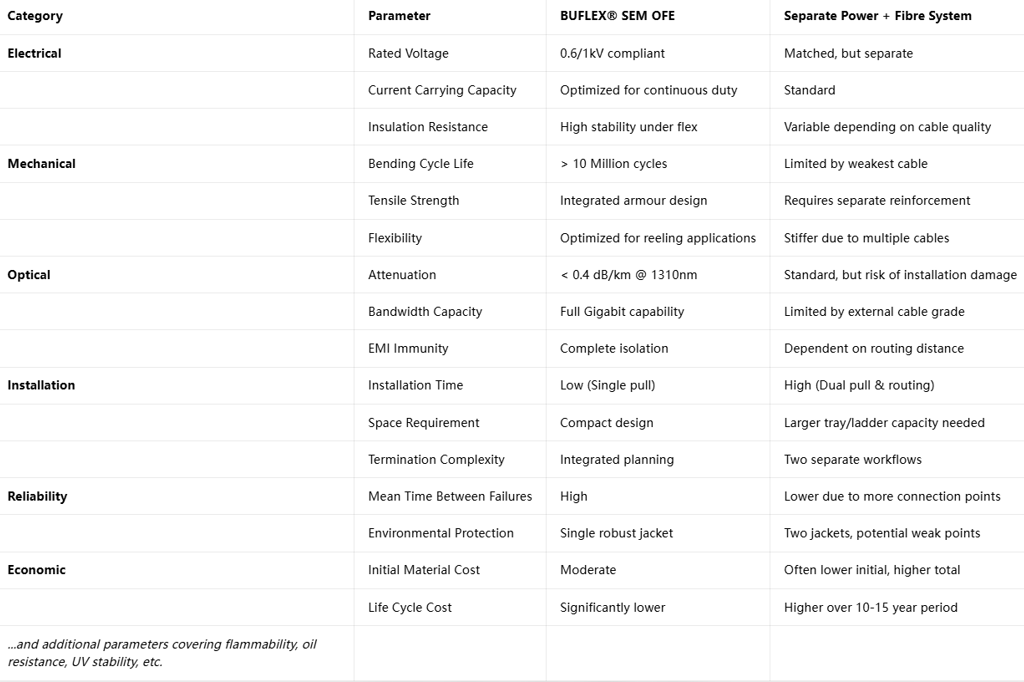
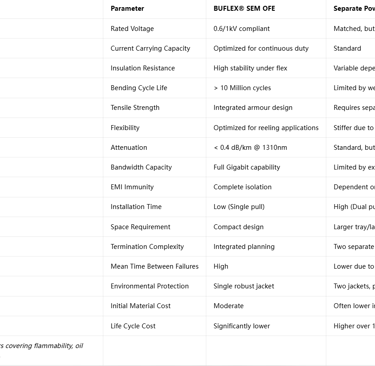
The 26-Parameter Performance Matrix
The engineering validation of BUFLEX® SEM OFE involves testing against a matrix of 26 critical parameters covering electrical, mechanical, optical, and environmental characteristics. This comprehensive testing ensures that the product does not compromise on one aspect to achieve gains in another.
This matrix demonstrates that while separate systems may appear cheaper on a purchase order, the integrated solution offers superior value when considering total cost of ownership and performance.
Optical Performance Characteristics
The performance of the fibre optic element is critical for the data integrity of the entire system. BUFLEX® SEM OFE is engineered to maintain excellent optical properties even under mechanical stress.
Attenuation and Signal Loss
Attenuation refers to the rate at which the light signal decreases in strength over distance. Low attenuation is vital for long cable runs typical in port terminals. The optical fibres used are selected for ultra-low loss properties, ensuring that signals remain clear and strong from one end of the crane to the control room without the need for expensive repeaters.
Dispersion Characteristics
At high data speeds, light pulses can spread out and overlap, causing errors—a phenomenon known as dispersion. The fibre type and core design are chosen to minimize this effect, ensuring that 1Gbps or 10Gbps networks remain stable even over longer distances.
Bending Loss Resistance
One of the biggest enemies of fibre optics in mobile applications is bending loss. When a fibre is bent tightly, light leaks out of the core. BUFLEX® SEM OFE uses specially designed fibres and cable geometry that allow the cable to bend around pulleys and sheaves while maintaining signal integrity. This "bend-insensitive" technology is crucial for reeling applications.
Thermal Stability
The optical properties must remain consistent across a wide temperature range. Whether operating in the cold of a high-altitude site or the heat of Durban summer, the refractive index of the fibre and the dimensions of the core remain stable, guaranteeing year-round performance.
Performance in Extreme Environments
Port equipment operates in some of the harshest conditions imaginable, and cables must survive environments ranging from freezing cold to sweltering heat, often within the same installation or across different projects.
Arctic and Cold Climate Performance
In low-temperature environments, materials tend to stiffen and become brittle. BUFLEX® SEM OFE utilizes special compounding for the insulation and sheath materials. These compounds remain flexible even at temperatures well below zero. The optical fibres are protected in gel-filled loose tubes that prevent water ingress and freezing, which would otherwise cause signal loss or fibre fracture. This ensures that cranes can move smoothly without the cable becoming stiff or prone to cracking.
Tropical and Coastal Performance
In contrast, tropical environments present challenges of high heat, high humidity, and intense UV radiation. The outer sheath of BUFLEX® SEM OFE is formulated to resist UV degradation, preventing the material from cracking or becoming soft after years of exposure to the sun. It is also highly resistant to hydrolysis, meaning it will not degrade in the presence of constant moisture.
For coastal locations like Cape Town or Richards Bay, salt spray resistance is vital. The materials used are non-corrosive and resistant to chemical attack from salt air, preventing the ingress of moisture that could damage the electrical conductors or optical surfaces.
Deployment Framework and Best Practices
Successfully implementing this technology requires attention to detail during installation and operation.
Installation Guidelines
Although the cable is robust, correct handling ensures maximum lifespan. The minimum bending radius must be respected during installation to avoid stressing the internal components. When pulling the cable, tension limits must be observed to prevent stretching the conductors or the optical fibres. The cable is designed to be pulled using appropriate grip points that distribute force evenly, protecting the sensitive core.
Testing and Commissioning
After installation, the system undergoes comprehensive testing. Electrical tests verify insulation resistance and continuity. Optical tests using an Optical Time Domain Reflectometer (OTDR) verify that the fibres have not been damaged during installation and that loss levels are within specification. This commissioning phase creates a baseline "fingerprint" of the installation against which future measurements can be compared.
Maintenance Routine
The beauty of the integrated system is that maintenance is greatly simplified. Instead of inspecting and cleaning two separate systems, technicians maintain one cable pathway. The predictive algorithms running on the system reduce the need for manual inspection rounds, allowing maintenance teams to focus their efforts where the data indicates there is actual risk.
Frequently Asked Questions
Q: Can BUFLEX® SEM OFE be retrofitted into existing cranes?
A: Yes, the design is dimensionally compatible with standard cable reels, making it an excellent upgrade option for older equipment looking to add monitoring capabilities.
Q: How long can the cable be expected to last?
A: With correct sizing and operation, service life of 10 to 15 years or more is typical, depending on the intensity of use. The integrated monitoring actually helps extend life by preventing abuse.
Q: Is the initial cost higher than standard cable?
A: The upfront investment is higher than a basic power cable, but significantly lower than buying a power cable plus a separate fibre system plus all the installation hardware. When lifecycle costs are considered, it is almost always the more economical choice.
Q: What standards does the product comply with?
A: The cables are designed and tested to meet international standards including IEC, VDE, and other relevant specifications required for port and heavy industrial applications.
Conclusion
The demands placed on South Africa’s ports are evolving rapidly. The days of simple power distribution and manual maintenance schedules are giving way to complex, data-driven operations. The BUFLEX® SEM and BUFLEX® SEM OFE cable platforms represent more than just a product; they represent a new philosophy in infrastructure design.
By combining high-performance power transmission with high-speed optical communication and the ability to support sensor networks, these cables become the central nervous system of the smart port. They enable the shift from reactive to predictive maintenance, reduce operational costs, improve safety, and provide the reliability necessary to handle the massive throughput of modern container terminals.
For engineers, project managers, and procurement professionals, choosing BUFLEX® SEM OFE is a decision to future-proof the investment. It ensures that the cable infrastructure does not just meet today's needs, but is ready for the Industrial 4.0 challenges of tomorrow.
Contact Us
If you are looking to upgrade your port, terminal, or heavy industrial cable infrastructure and want to benefit from integrated optical fibre power cable technology, our engineering team is ready to assist you. We can provide detailed technical specifications, custom design solutions, and support for your specific project requirements.
Email: Li.wang@feichuncables.com
Let us help you build a more reliable, efficient, and connected operation.
Email Address: Li.wang@feichuncables.com
© 2025. All rights reserved.
One-click to Quickly Contact
Products
Contact
Company
Location:
Building A Private Science and Technology Park, Hefei Economic and Technological Development Zone, Anhui Province, China
Heat Resistant Cable
WhatsApp: +86 17333223430
Social Media: