Anhui Feichun Special Cable Co.,Ltd Email: Li.wang@feichuncables.com

Coaxial Cable Unplugged: The Shielded Workhorse Still Powering South Africa’s Homes in 2025
Dive deep into coaxial cable – the rugged, interference-proof RF backbone behind DStv, cable internet, and CCTV in South Africa. Discover construction layers, RG-6 vs RG-11 specs, real-world attenuation figures, and honest FAQ answers for installers and homeowners.
Li.wang
11/13/20257 min read
What Exactly Is Coaxial Cable and Why Should You Care?
Picture this: you’re settled in for the Springboks match on DStv, the picture is pin-sharp, and the rain outside isn’t causing a single glitch. Somewhere between the communal satellite dish on the complex roof and your decoder, a humble coaxial cable is quietly doing the heavy lifting. That, in a nutshell, is coaxial cable – a shielded, copper-centred transmission line engineered to shuttle radio-frequency (RF) signals with almost zero interference from the electrical chaos of South African suburbia.
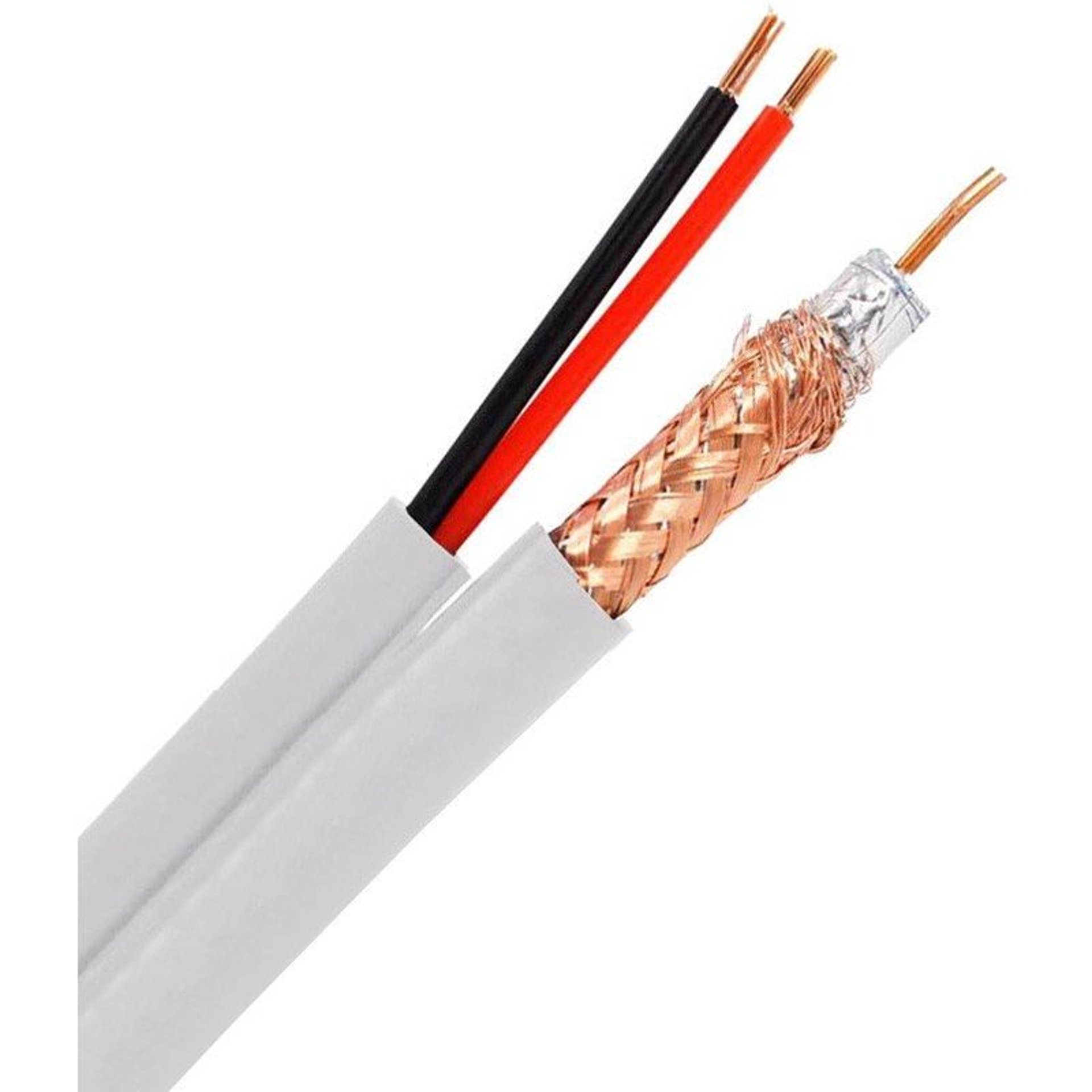
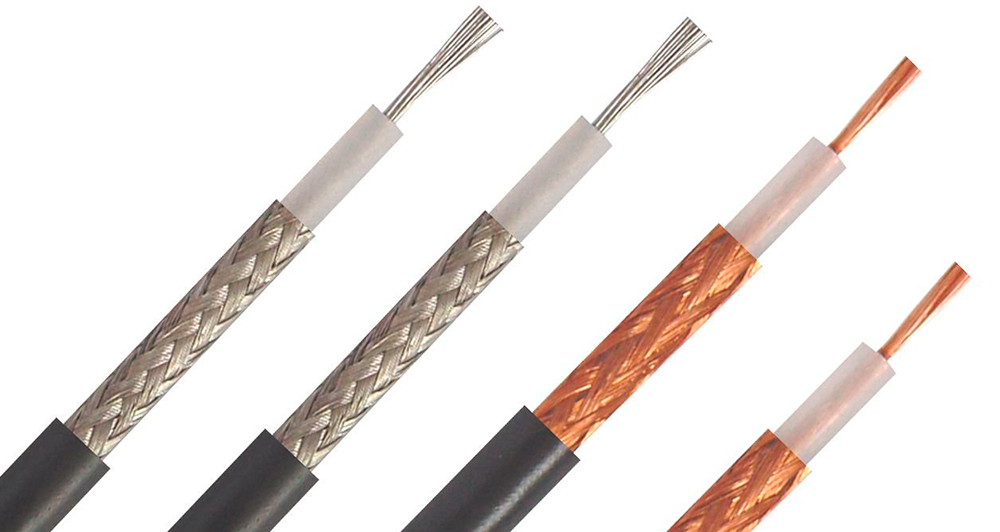
Formally, coaxial cable (universally shortened to “coax”) consists of a central conductor surrounded by a tubular insulating dielectric, a tubular conducting shield, and an outer protective jacket – all sharing the same geometric axis, hence “co-axial”. The shield is the magic: it confines the electromagnetic field between the centre conductor and itself, preventing both signal escape (egress) and external noise entry (ingress).
Invented in 1880 by British polymath Oliver Heaviside and first deployed across continents by AT&T in 1940, coax is older than television itself. Yet in 2025, while fibre-to-the-home (FTTH) grabs headlines, coax remains the unsung hero of last-mile connectivity across Mzansi. From fibre-to-the-curb backup lines to estate-wide MATV systems, DStv Unicable II switch installations, and even DOCSIS 3.1 gigabit cable broadband, coaxial cable refuses to retire. Why? Because it’s affordable, field-terminable with basic tools, and tough enough to survive loadshedding surges, veld fires, and the occasional baboon tug-of-war on aerial drops.
Construction – The Layers That Make Coax Brilliant
Strip back a length of modern RG-6/U quad-shield and you’ll count at least six functional layers, each with a specific electromagnetic or mechanical job.
Centre Conductor Typically 1.02 mm (18 AWG) copper-clad steel (CCS). The steel core gives mechanical stiffness for long aerial spans; the thin copper skin carries high-frequency current via the skin effect. Solid copper is rare in broadband coax because it’s floppy and pricey.
Clean-Stripping Polymer Bond A microscopically thin adhesive layer between conductor and dielectric. It blocks moisture wicking along the steel-copper interface – crucial in humid coastal towns like Durban.
Dielectric Closed-cell foamed polyethylene (PE) with 80–82 % velocity of propagation (VP). Air bubbles lower the effective dielectric constant (ε_r ≈ 1.3), reducing capacitance per metre and pushing signal speed to roughly 0.82c. Solid PE (VP ≈ 66 %) is legacy only.
First Outer Conductor (Bonded Tape) An aluminium-polymer-aluminium (APA) trilayer tape, heat-bonded to the dielectric. The bond prevents “breathing” during temperature swings, maintaining shield integrity and stopping water migration.
Second Outer Conductor (Braid) 34 or 36 AWG aluminium wires woven at 40–70 % optical coverage. Higher percentage equals better low-frequency magnetic shielding; quad-shield RG-6 typically hits 60 % + 40 % on two braid layers.
Third & Fourth Outer Conductors (Tri/Quad-Shield) A second APA tape plus another braid in quad-shield variants. Tri-shield adds one extra tape; quad adds tape + braid. These extra layers boost high-frequency isolation before and after cable flexure – vital for 2.1 GHz satellite IF bands.
Jacket Indoor: flame-retardant PVC, often white or black. Aerial/Outdoor: UV-stabilised black PE, 2.8 mm thick minimum. Direct Burial: PE plus flooding compound (sticky gel) that flows into nicks and stops longitudinal water travel. Messenger: galvanised steel support wire webbed to the jacket for self-supporting catenary spans up to 90 m.
Every layer matters. A single pinhole in the bonded foil defeats the gas-tight seal, inviting corrosion and RF leakage.
How Coaxial Cable Actually Works
RF energy travels as transverse electromagnetic (TEM) waves confined between the centre conductor and the inside surface of the shield. The shield doubles as both return path and Faraday cage.
Characteristic Impedance (Z₀) is the ratio of voltage to current for a travelling wave: Z0=LC=60ln(Dd)με Z_0 = \sqrt{\frac{L}{C}} = 60 \ln\left(\frac{D}{d}\right) \sqrt{\frac{\mu}{\varepsilon}} Z0=CL=60ln(dD)εμ where D = inner diameter of shield, d = outer diameter of centre conductor. Broadband video coax is standardised at 75 Ω; data/wireless at 50 Ω. Mismatch causes reflections measured as return loss (RL); >20 dB RL is excellent.
Skin Effect: Above 50 MHz, current crowds to the conductor surface. That’s why copper-clad steel works – only the skin carries signal.
Attenuation rises with √f due to conductor loss and f due to dielectric loss. Foamed PE keeps tan δ low. Example RG-6 quad-shield figures at 25 °C:
800 MHz (LTE/GSM): 16.2 dB/100 m
1 GHz (DOCSIS upstream): 18.2 dB/100 m
2.1 GHz (satellite IF): 26.5 dB/100 m
Velocity Factor (VF) = 0.82 means a 100 m reel is electrically 122 m at light speed. Critical for time-domain reflectometry fault location.
Shielding Effectiveness: Quad-shield achieves >120 dB isolation up to 1 GHz, blocking 4G/5G ingress that plagues unshielded satellite installs.
Common Types of Coaxial Cable You’ll Actually Encounter in South Africa
RG-59/U Diameter: 6.15 mm. 23 AWG solid copper centre. Legacy analogue CCTV. Attenuation at 800 MHz ≈ 28 dB/100 m. Not suitable for DStv 4K or DOCSIS.
RG-6/U (Dual, Tri, Quad) Diameter: 6.9 mm. 18 AWG CCS. The universal drop cable. Dual-shield (foil + 60 % braid) is entry level; tri-shield and quad-shield are mandatory for complexes with high RF noise. Attenuation at 2.1 GHz ≈ 26–28 dB/100 m.
RG-11/U Diameter: 10.3 mm. 14 AWG CCS. Backbone grade. Half the attenuation of RG-6 (≈ 13 dB/100 m @ 2.1 GHz). Stiffer, needs larger bend radius (125 mm). Used for estate trunking, farm satellite feeds, or any run exceeding 45 m.
Special Variants
SATCR coax: RG-6 quad-shield with low PIM (passive intermodulation) for Unicable II switches serving 32 tuners on one cable.
Direct-burial RG-11: PE jacket + flooding compound + armour tape for underground reticulation in new estates.
Advantages and Disadvantages – Be Honest, No Sales Rubbish
Advantages
EMI Immunity: Can lie in the same trench as 220 V mains without hum bars.
Durability: 20-year lifespan outdoors if UV-rated.
Field Termination: Compression F-connectors seal in 30 seconds with a R50 tool.
Cost: RG-6 quad-shield reel ≈ R12/m; RG-11 ≈ R22/m – a fraction of fibre.
Contained Field: No crosstalk between adjacent cables in multi-pair bundles.
Disadvantages
Attenuation: Needs line extenders beyond 300 m at satellite frequencies.
Single Point Failure: One crushed cable knocks out the whole segment.
Bulk: RG-11 is 10 mm thick – tricky in roof voids already stuffed with Cat6.
Bandwidth Ceiling: DOCSIS 3.1 maxes at ~1.2 Gbps downstream on pristine plant; fibre laughs at 10 Gbps symmetrical.
Coaxial Cable vs Other Technologies (The Real-World Comparison South Africans Need)
Coax vs Cat6 Twisted-Pair Cat6 offers 10 Gbps over 55 m with zero RF licensing, but struggles beyond 100 m and hates lightning. Coax wins for 400 m shared-bandwidth MATV or DOCSIS where trenching one fat pipe is cheaper than eight Cat6 pulls.
Coax vs Fibre Optic Fibre: 100 km before repeaters, 400 Gbps possible, immune to EMI. Coax: 150 m before noticeable satellite picture tiling, 1 Gbps realistic. But fibre needs fusion splicing (R8 000 machine) and hates dust; coax tolerates a fingerprint on the centre pin. In 2025 FTTH roll-outs, coax is still the “ONT-to-decoder” link inside the house.
When to Choose Coax in 2025
Fibre not in your street yet (rural KZN, Free State dorps).
Complexes with 1990s copper plant – overlay DOCSIS cheaper than re-trenching.
DStv over SATCR – one RG-6 feeds 32 Explora decoders.
HD CCTV retrofits – reuse existing RG-59 with baluns, then upgrade to RG-6 for 4 MP.
Practical Applications in South Africa Right Now
Satellite Television Every DStv installation south of the Limpopo uses RG-6 quad-shield from LNB to Unicable switch to decoder. A 45 m drop with two 90° bends and three wall plates loses <10 dB at 2 GHz – well within the 14 dB link budget of a Smart LNB.
Cable Broadband Vuma Key, Frogfoot Reach, and MetroFibre’s DOCSIS layers still ride RG-11 trunking inside estates. A 120 m RG-11 run at 1 GHz loses 15 dB – compensated by CMTS gain.
CCTV Legacy RG-59 handles 960H analogue; modern 4 MP IP-over-coax uses RG-6 with passive baluns up to 180 m.
Estate Distribution A single RG-11 backbone from the head-end tap-off feeds 64 flats via -7 dB directional couplers. Each flat gets RG-6 drop <20 m.
Amateur Radio 50 Ω RG-213 or LMR-400 for HF dipoles; 75 Ω RG-11 surprisingly good as phased array feed on 2 m band.
Frequently Asked Questions (FAQ)
1. Does length of coax affect signal?
Yes. Every metre adds attenuation. At 2.1 GHz, RG-6 loses 0.265 dB/m; RG-11 loses 0.13 dB/m. Keep drops under 45 m on RG-6; switch to RG-11 beyond that.
2. Can coax go bad?
Absolutely. Water in the braid corrodes aluminium in weeks. UV cracks PVC jackets in two Cape summers. Baboons bite through aerial PE. Check connectors yearly.
3. Is all RG-6 the same?
No. Chinese dual-shield with 40 % braid leaks 800 MHz cell tower noise into your decoder. Look for “quad-shield”, “bonded foil”, “CCS 1.02 mm”, and SABS mark.
4. Can I use RG-59 for DStv in 2025?
Technically yes for SD, but 4K HDR needs 30 dB C/N. RG-59 loses 40 dB/100 m at 2 GHz – you’ll see tiling on rainy days.
5. What’s the maximum practical speed on coax today?
DOCSIS 3.1 on pristine RG-11 plant: 1 Gbps down / 200 Mbps up. DOCSIS 4.0 trials in Sandton already hitting 2.5 Gbps symmetrical on extended-spectrum plant.
6. Outdoor or underground – which jacket?
Outdoor aerial: black PE, UV-stabilised. Direct burial: PE + flooding compound + armour. Never use indoor PVC outside – it cracks in one season.
7. Compression connectors vs crimp vs twist-on?
Compression every time. Crimp can corrode; twist-on leaks RF. A proper compression F-plug is gas-tight and waterproof to IP68.
8. Will fibre completely replace coax?
Not for the last 50 m inside your house. Fibre hates 90° bends in wall boxes; coax laughs at it. Hybrid networks will keep coax for decades.
Conclusion
Coaxial cable is the 4×4 bakkie of signal transport – not the flashiest, not the fastest on tar, but unbeatable on gravel roads and in the bundu. In South Africa’s patchwork connectivity landscape of 2025, where fibre roll-outs stutter in deep rural areas and complexes cling to 1990s infrastructure, coax remains the reliable, cost-effective backbone. Understand its layers, respect its attenuation curves, choose quad-shield RG-6 for drops and RG-11 for trunks, and terminate with compression connectors – and your DStv, CCTV, or gigabit cable modem will run flawlessly for the next decade. The future is fibre, but the present – and a good chunk of tomorrow – still runs on shielded copper.
Email Address: Li.wang@feichuncables.com
© 2025. All rights reserved.


One-click to Quickly Contact
Products
Contact
Company
Location:
Building A Private Science and Technology Park, Hefei Economic and Technological Development Zone, Anhui Province, China
Heat Resistant Cable
WhatsApp: +86 17333223430
Social Media: