Anhui Feichun Special Cable Co.,Ltd Email: Li.wang@feichuncables.com

Complete Guide to RHEYFIRM®(RTS) (N)TSCGEWTOEUS Reeling Cable: DIN VDE 0250, Oil‑Resistant, High‑Strength for STS Cranes & Ship Unloaders
Discover RHEYFIRM®(RTS) (N)TSCGEWTOEUS — the premium marine‑grade reeling cable engineered for extreme mechanical stress, salt spray, wide temperature ranges (‑20°C to +60°C), and heavy‑duty use at South Africa’s busiest ports: Durban, Cape Town, Richards Bay. This 3.6kV–36kV cable meets DIN VDE 0250, ABS, DNV‑GL standards, outperforms standard industrial cables, and delivers 12+ years service life. Full technical data, comparison with BOITALYON®, FC‑HFX™, LAPPKABEL ÖLFLEX®, and real‑world application insights inside.
Li Wang
5/13/202632 min read


Introduction
In the bustling maritime economy of South Africa, ports such as Durban, Cape Town, and Richards Bay serve as critical gateways for trade across the African continent and beyond. These facilities rely heavily on heavy mobile equipment including ship‑to‑shore cranes, rail‑mounted gantries, ship unloaders, and harbour tugs, all of which operate under some of the most demanding conditions found anywhere in the world. For these machines, the power and control cables are not merely auxiliary components — they are lifelines that must deliver consistent performance while enduring extreme mechanical stress, aggressive environmental exposure, and continuous movement. Standard industrial cables, even those marketed as outdoor‑grade, almost always fail prematurely in these applications, leading to costly downtime, frequent replacements, and safety risks. This guide explores RHEYFIRM®(RTS) (N)TSCGEWTOEUS, a specialised reeling cable engineered from the ground up to meet and exceed these challenges. Designed to DIN VDE 0250 standards, offering superior oil and chemical resistance, and built with exceptional tensile strength, this cable has become the preferred choice for port operators, engineering firms, and offshore contractors across South Africa and globally. Through detailed technical analysis, performance comparisons, and real‑world application insights, this article explains why RHEYFIRM®(RTS) stands apart from conventional cables and how it delivers reliable, long‑term service in the harshest marine and industrial environments.
Operating Conditions and Challenges in South African Ports and Marine Environments
Mechanical Stresses: Far Beyond Fixed Industrial Requirements
Fixed industrial installations typically use cables routed through cable trays, conduits, or protected enclosures where movement is minimal and loads are static or low‑level. In contrast, mobile port and offshore equipment subjects cables to a complex combination of mechanical forces that act simultaneously and continuously, often at high intensity. At ports like Durban, where STS cranes may travel hundreds of metres along the berth and operate 24 hours a day, seven days a week, these stresses are amplified to levels rarely seen in standard manufacturing or processing facilities.
Tensile stress is one of the most significant loads acting on reeling cables. As the cable is wound onto or unwound from drums, or suspended vertically from a crane boom, it carries its own weight plus additional dynamic loads from acceleration, wind, or wave action. In RHEYFIRM®(RTS) designs, the conductor is engineered to withstand a static tensile stress of 15 N/mm² and a dynamic tensile stress of up to 30 N/mm², values that are two to three times higher than what standard industrial cables can safely handle. For example, a large ship unloader operating at Richards Bay may lower its cable 40 metres or more while loaded with material, creating a tension force that would permanently elongate or break a standard cable within weeks.
Torsional stress occurs when equipment rotates or changes direction, causing the cable to twist along its length. Harbour tugs, floating cranes, and ship‑mounted equipment experience this constantly as vessels roll, pitch, or manoeuvre. Excessive torsion leads to core misalignment, insulation damage, and conductor fatigue. RHEYFIRM®(RTS) is designed to tolerate torsional deformation of ±25° per metre without damage, thanks to optimised lay lengths and reinforcement structures that distribute stress evenly.
Bending and flexing fatigue is another major cause of failure. Reeling cables bend repeatedly over sheaves and drums, often at small radii and high speeds — up to 190 metres per minute in some applications. Each bend creates tension on the outer surface and compression on the inner surface of the cable, and over thousands of cycles, this leads to material hardening, cracking, and eventual breakdown. In standard cables, the bending radius is large and the materials are not fatigue‑resistant, making them unsuitable for high‑cycle use. RHEYFIRM®(RTS) uses flexible conductor construction and high‑elongation rubber compounds to withstand millions of bending cycles while maintaining its electrical and mechanical properties.
Compression and abrasion also play a role, particularly where cables lie on port surfaces, pass through rough guides, or come into contact with other equipment. In environments with sand, grit, or dust — common in bulk handling terminals — abrasive wear can strip away outer sheaths and expose underlying layers. The outer jacket of RHEYFIRM®(RTS) is formulated with high‑abrasion‑resistant rubber compounds and a sandwich construction that resists cutting, gouging, and wear far better than standard single‑layer sheaths.
Environmental Exposure: Unprotected and Severe
Unlike fixed installations where cables are shielded from the elements, marine and port cables operate fully exposed to weather, water, and chemical contamination. South Africa’s geography presents a particularly difficult combination of environmental conditions. Along the Western Cape, the cold Atlantic meets the warm Indian Ocean, creating high humidity, strong winds, and intense salt spray. In KwaZulu‑Natal and other subtropical regions, temperatures can climb above 60°C on sun‑exposed deck surfaces, while winter nights or operations in colder southern waters can drop as low as ‑20°C.
Salt spray is perhaps the most aggressive environmental factor. The high salinity of coastal air accelerates corrosion of metallic components and degrades rubber and plastic materials through chemical reaction and moisture absorption. Standard cables with PVC or basic rubber sheaths often show signs of cracking, brittleness, and loss of strength within 12 months in these conditions. RHEYFIRM®(RTS) incorporates marine‑grade materials and a multi‑layer barrier system that resists saltwater ingress and corrosion, with test results showing performance retention even after 5,000 hours of continuous salt spray exposure.
Temperature extremes and thermal cycling place additional strain on cable materials. As temperature rises, insulation and sheath materials can soften, lose mechanical strength, or allow increased current leakage. When temperatures drop, materials harden and become brittle, increasing the risk of cracking during movement. Repeated heating and cooling cause expansion and contraction, creating internal stresses that lead to fatigue over time. RHEYFIRM®(RTS) is engineered to perform reliably across a temperature range of ‑35°C to +80°C under mobile operating conditions, and from ‑50°C to +80°C when installed in fixed positions. This wide operating window ensures suitability from cold‑climate operations to the hottest African ports.
Moisture and water immersion are constant hazards. Whether from heavy rainfall, high humidity, or partial submersion during tug operations or maintenance, water penetration is a primary cause of electrical failure. Once moisture enters a cable, it travels along the core interfaces, degrades insulation, and leads to tracking or breakdown under voltage. The construction of RHEYFIRM®(RTS) includes inner sheaths and sealing layers that prevent water migration, meeting IP68‑level protection for continuous immersion where required.
Oil, grease, and chemical contamination are unavoidable in port and industrial environments. Hydraulic fluids, diesel fuel, lubricants, and cleaning agents regularly spill or splash onto cables. Standard rubber or PVC materials absorb these substances, leading to swelling, softening, or disintegration. RHEYFIRM®(RTS) uses specialised insulation and sheath compounds chemically formulated to resist hydrocarbon‑based fluids, ensuring that even prolonged contact does not compromise performance.
Ultraviolet radiation and ozone also accelerate ageing. South Africa has some of the highest UV levels in the world, and ozone concentrations near the coast can be significant. Over time, UV radiation breaks down polymer chains in organic materials, causing discoloration, cracking, and loss of elasticity. Ozone attacks double bonds in rubber molecules, leading to surface cracking even at low strain levels. The outer sheath of RHEYFIRM®(RTS) includes UV stabilisers and anti‑ozonants that drastically reduce degradation, maintaining flexibility and integrity for more than a decade in exposed outdoor use.
Comparison: Fixed Versus Mobile, Indoor Versus Marine
The fundamental difference between fixed industrial cabling and marine/mobile cabling lies in the balance between protection and exposure. Fixed systems are designed with the assumption that the cable will remain stationary, be supported along its length, and be protected from weather, impact, and movement. As a result, they can use lighter conductors, simpler insulation, and basic sheathing materials. Marine and mobile cables, by contrast, must provide their own protection against all external influences while simultaneously enduring continuous motion and heavy mechanical loads. This requires a completely different engineering approach, where every layer of the cable — from conductor to outer jacket — is optimised for both mechanical performance and environmental resistance.
Why Standard Industrial Cables Fail and How RHEYFIRM®(RTS) Solves the Gap
Limitations of Outdoor‑Rated Standard Cables
Many operators initially select cables labelled as “outdoor‑grade” or “heavy‑duty”, assuming these products will meet the requirements of port and offshore applications. In practice, these cables are still designed according to industrial standards that do not account for the unique combination of stresses found in maritime environments.
One key limitation is conductor design. Standard outdoor cables typically use conductors meeting IEC 60228 Class 5, which provides flexibility but not high tensile strength. These conductors are sized primarily for current‑carrying capacity, not for supporting their own weight or resisting dynamic tension. As a result, they stretch permanently under load, leading to increased electrical resistance, uneven current distribution, and eventual breakage. RHEYFIRM®(RTS) uses “FSC” grade conductors that exceed Class 5 requirements, combining fine‑strand construction for flexibility with high‑purity copper and compact stranding to deliver superior tensile strength and fatigue resistance.
Insulation systems in standard cables are usually made from PVC or general‑purpose EPDM rubber. While these materials perform adequately indoors or in mild weather, they lack the chemical resistance and thermal stability needed for marine use. PVC becomes brittle at low temperatures and softens at high temperatures, while basic EPDM offers limited resistance to oil and chemicals. Even where oil resistance is claimed, performance is often only verified at low temperatures or for short exposure periods. RHEYFIRM®(RTS) uses the proprietary RHEYCLEAN® insulation compound, a specialised EPDM formulation that outperforms DIN VDE 207 Part 20 requirements and maintains its properties even after long‑term immersion in hot oil or exposure to aggressive chemicals.
The absence of dedicated reinforcement layers is another critical flaw in standard designs. In most industrial cables, the insulation or sheath must bear mechanical loads, which leads to rapid degradation. RHEYFIRM®(RTS) separates functions clearly: the conductor carries electrical current, while a high‑strength synthetic reinforcement layer absorbs all tension, torsion, and compression forces. This load‑sharing principle is the foundation of its long service life and is completely absent in conventional cables.
Sheath materials in standard outdoor cables are often thin and have low abrasion and UV resistance. They may survive for several years in protected outdoor locations, but in open ports with heavy traffic and intense sunlight, service life is frequently measured in months rather than years. Operators in South Africa report that standard outdoor cables often require replacement every 12 to 24 months, while RHEYFIRM®(RTS) installations have remained in service for over 12 years with minimal maintenance.
Design Philosophy of RHEYFIRM®(RTS)
RHEYFIRM®(RTS) was not developed as an upgraded version of an existing industrial cable; it was purpose‑engineered from the start for reeling, trailing, and festoon applications in marine and heavy industrial environments. Every element of its design addresses a specific failure mode observed in the field.
The development process began with a detailed analysis of failure data from ports and offshore facilities across Africa, Europe, and Asia. Engineers identified that mechanical overstress, environmental degradation, and material fatigue were the three primary causes of failure. To counter these issues, the design incorporates a robust multi‑layer construction, high‑performance materials, and strict adherence to DIN VDE 0250 Part 813, the most demanding European standard for mobile power cables.
A core principle is functional separation. Each layer in the cable has a defined role: conductors carry current, semi‑conductive layers control electrical stress, insulation provides dielectric strength, inner sheaths seal and cushion, reinforcement carries mechanical loads, and the outer jacket protects against the environment. By optimising each layer independently, it is possible to achieve performance that far exceeds what can be obtained from a simpler, multi‑purpose design.
Material selection is equally critical. Only compounds that have been tested and validated for marine use are specified. For example, the outer sheath uses a proprietary rubber blend with a sandwich structure — combining a flexible inner layer, a high‑strength middle layer, and a tough, wear‑resistant outer layer. This construction balances flexibility with durability, something that is difficult to achieve with single‑material jackets.
Compliance with international standards is embedded in the design. Beyond DIN VDE 0250, RHEYFIRM®(RTS) meets requirements from ABS, DNV‑GL, and IMCA, ensuring it is accepted for use on offshore platforms, vessels, and port equipment worldwide. This compliance is not merely about meeting specifications; it is about guaranteeing safety, reliability, and interoperability in regulated environments.
Technical Specification of RHEYFIRM®(RTS) (N)TSCGEWTOEUS Reeling Cable
Product Overview
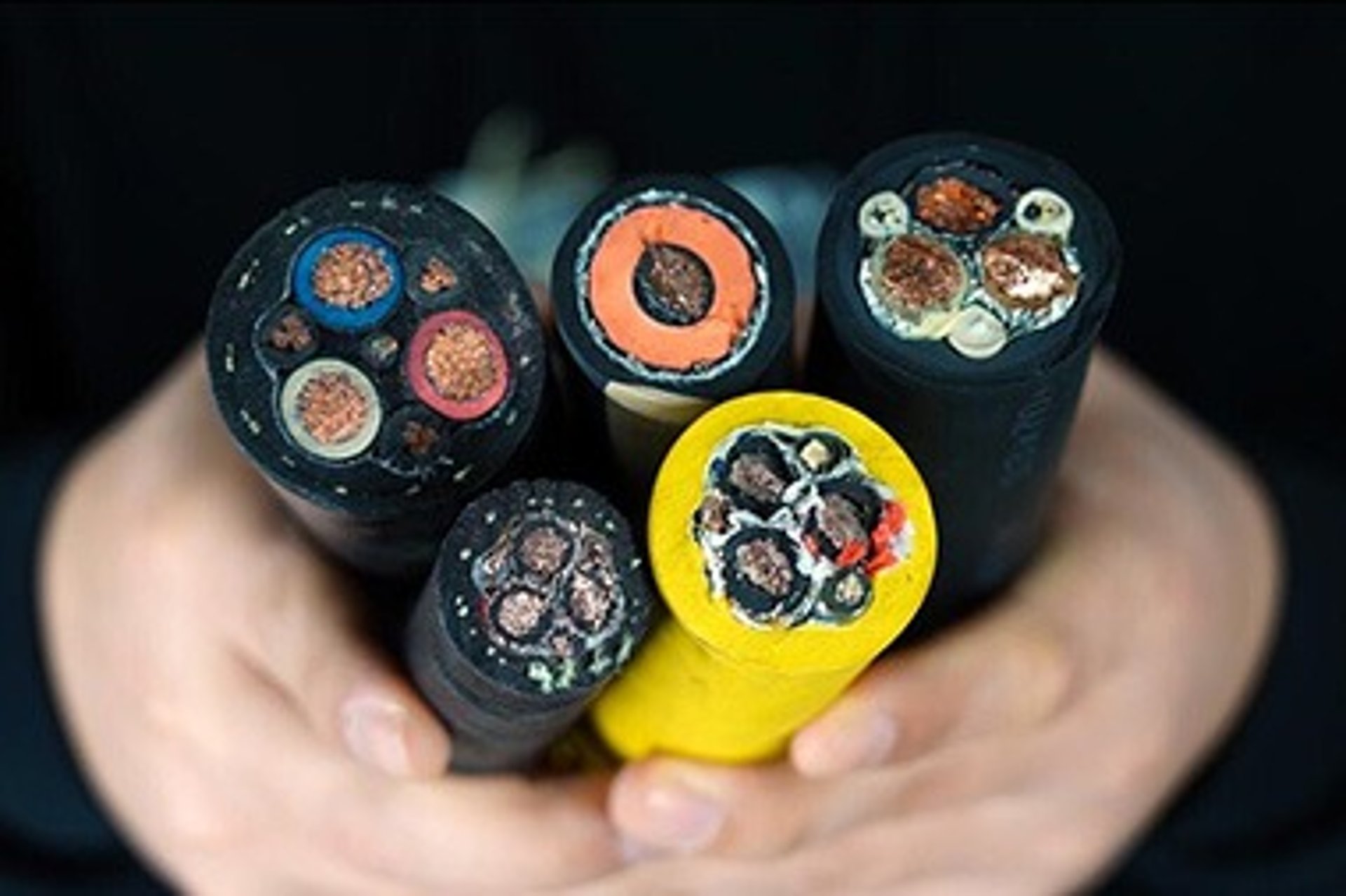
RHEYFIRM®(RTS) (N)TSCGEWTOEUS is a family of flexible medium‑voltage reeling cables designed for heavy‑duty power supply in applications involving high mechanical stress, continuous movement, and harsh environmental exposure. The product range covers nominal voltages from 1.8/3 (3.6) kV up to 18/30 (36) kV, making it suitable for everything from small harbour equipment to large STS cranes and offshore power distribution systems. The core configuration is a symmetrical six‑core design: three power cores and three protective earth cores positioned in the interstices between the power cores. This balanced arrangement provides excellent electromagnetic compatibility, reduces inductive losses, and ensures uniform mechanical behaviour during bending and twisting.
Typical applications include ship‑to‑shore cranes, rail‑mounted gantry cranes, ship unloaders, stacker reclaimers, harbour tugs, offshore platforms, and heavy mobile equipment in open‑pit and underground mining. The cable is suitable for use on drum reeling systems, festoon systems, and cable carriages, and it performs equally well indoors and outdoors, in dry or wet locations, and in areas with oil or chemical contamination.
Detailed Construction
Every layer of the cable is carefully engineered to meet performance requirements, as described below.
Conductors
The power and earth conductors are made from plain copper wire stranded into a flexible, compact configuration. Designated as “FSC” grade, this conductor exceeds the requirements of IEC 60228 Class 5, offering superior flexibility combined with higher tensile strength and improved fatigue resistance. Fine‑strand construction ensures that the conductor can bend repeatedly without work‑hardening or breaking, while compact stranding reduces overall diameter and improves electrical efficiency.
Insulation System
The insulation system consists of three parts: an inner semi‑conductive layer, the main insulation, and an outer semi‑conductive layer. The inner semi‑conductive layer is extruded directly over the conductor to create a smooth, stress‑free interface that eliminates electrical field concentrations and prevents partial discharge. The main insulation is manufactured from RHEYCLEAN®, a proprietary EPDM‑based compound specifically developed for medium‑voltage marine applications. This material has exceptional dielectric strength, high thermal stability, and excellent resistance to oil, chemicals, and weathering, outperforming the requirements of DIN VDE 207 Part 20. The outer semi‑conductive layer, branded RHEYSTRIP®, is designed to be easily removable during installation while maintaining perfect electrical contact with the insulation under all operating conditions.
Inner Sheath
Over the insulated cores and earth conductors, an inner sheath of special synthetic rubber is applied. This layer provides mechanical cushioning, binds the core assembly together, and creates a barrier against moisture ingress. Its performance exceeds the GM1b grade specified in relevant standards, ensuring long‑term stability even under high compression or exposure to aggressive substances.
Reinforcement Layer
Positioned between the inner and outer sheaths is the reinforcement layer, the key mechanical component of the design. This layer is constructed from high‑tenacity synthetic threads with extremely high tensile strength and low elongation. Woven or served in a specific pattern optimised for the cable size and application, this layer carries virtually all tensile, torsional, and compression loads, protecting the electrical components from mechanical stress. This feature distinguishes RHEYFIRM®(RTS) from standard cables and is the primary reason for its exceptional service life.
Outer Sheath
The outer sheath is a unique sandwich construction combining multiple rubber compounds to achieve the optimal balance of flexibility, abrasion resistance, and heavy‑load capacity. The material is a special rubber formulation with outstanding resistance to oil, water, UV radiation, ozone, and temperature extremes. The standard colour is bright red, chosen for high visibility on port sites, which reduces the risk of accidental damage from vehicles or machinery. Other colours or specialised sheath materials are available upon request, as are additional features such as monitoring conductors, signal cores, or pre‑assembled sealing ends.
Standards Compliance
RHEYFIRM®(RTS) is designed, tested, and manufactured in accordance with the following standards:
DIN VDE 0250 Part 813: Specification for flexible reeling cables for heavy‑duty applications
DIN VDE 0295: Insulated cables and flexible cords for power installation
DIN VDE 0298: Recommendations for the use of cables and flexible cords
DIN VDE 0472: Test methods for cables and flexible cords
prEN 50363: Insulating, sheathing and covering materials for low‑voltage energy cables
IEC 60332‑1: Flame‑retardant properties
Compliance with these standards ensures that the cable meets rigorous European performance criteria and is recognised globally for quality and safety.
Key Properties and Performance Data
Mechanical Properties
The mechanical performance is defined by parameters that directly relate to real‑world use. The conductor is designed to withstand a static tensile stress of 15 N/mm² and a dynamic tensile stress of 30 N/mm² without permanent deformation. Bending radii follow DIN VDE 0298 recommendations, with values optimised to suit compact drum diameters found on modern cranes. The cable is rated for reeling speeds up to 190 metres per minute, with custom versions available for even higher speeds. Testing includes alternating bending, torsion resistance, tension, and abrasion tests, all performed under conditions more severe than typical operational limits to guarantee reliability.
Electrical Properties
The cable covers nominal voltage ratings from 1.8/3 (3.6) kV up to 18/30 (36) kV, suitable for medium‑voltage distribution in ports and offshore installations. The maximum operating voltage in AC systems is 1.2 times the rated voltage, while in DC systems it reaches 1.8 times the rated voltage, offering a wide safety margin. Test voltages range from 11 kV to 45 kV AC and from 27.5 kV to 107.5 kV DC, depending on the voltage class. Current‑carrying capacities are calculated in accordance with DIN VDE 0298 Part 4, ensuring compliance with thermal limits under all installation and operating conditions.
Thermal performance is a key strength. The maximum permissible conductor temperature during normal operation is +90 °C, and under short‑circuit conditions it can reach +250 °C for up to one second without damage. The surface temperature range spans from ‑35 °C to +80 °C during mobile use and from ‑50 °C to +80 °C in fixed installations, covering every climate encountered in South Africa and beyond. The symmetrical six‑core design also delivers excellent electromagnetic compatibility, reducing interference with sensitive control and communication systems found on modern vessels and cranes.
Chemical and Environmental Properties
The cable is engineered for outstanding resistance to oil, moisture, UV radiation, ozone, and weathering. It meets the requirements of ASTM D471 for oil resistance, retaining over 85 % of its mechanical properties after seven days of immersion in oil at 100 °C. It is suitable for both indoor and outdoor use, with materials selected to resist degradation from sunlight, salt spray, and industrial pollutants. The formulation is flame‑retardant in accordance with IEC 60332‑1, adding an important safety feature in high‑risk environments.
Technical Dimensions and Ratings
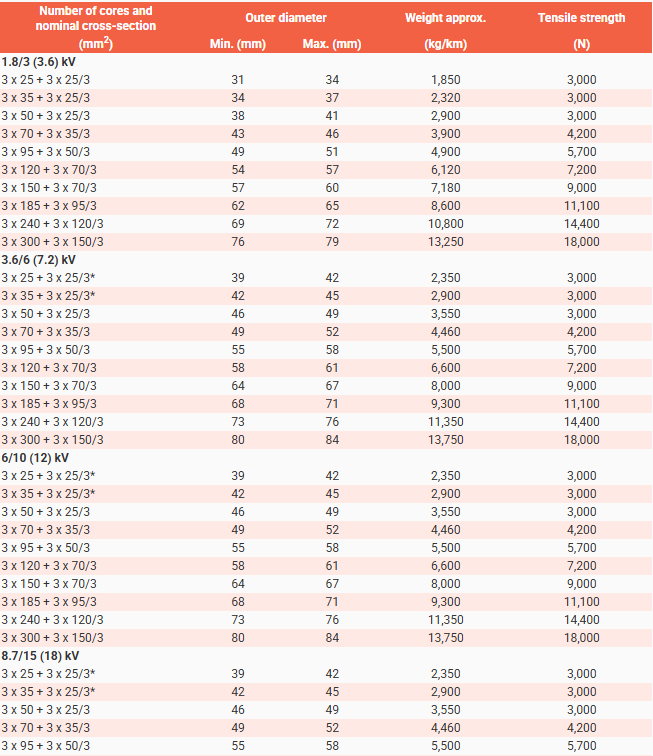
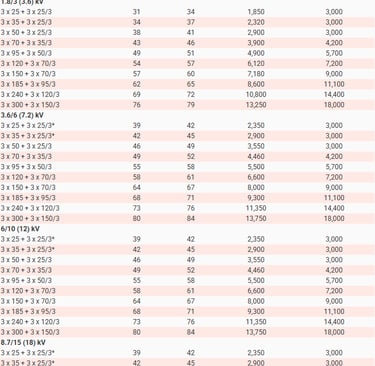
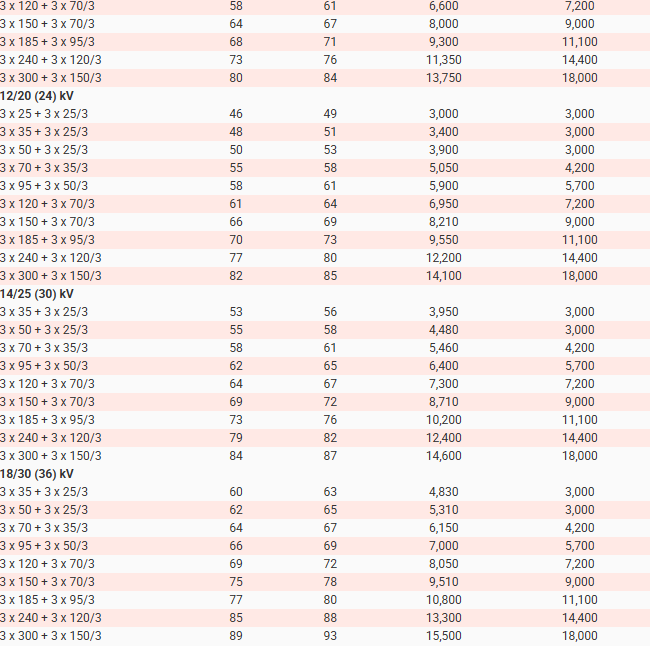
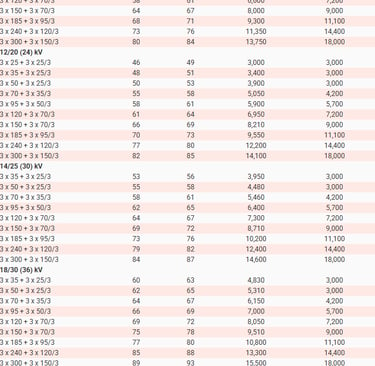
The following table presents key dimensions, weights, and tensile strengths for selected sizes across the voltage range, extracted directly from the manufacturer’s engineering data.
These figures demonstrate the substantial mechanical capacity built into every size. Even the smallest standard version offers a breaking load of 3,000 N, while the largest reaches 18,000 N — enough to support the full weight of a long cable run plus significant dynamic overloads. The increase in outer diameter and weight with larger sizes reflects the additional copper and material required for higher power transmission and greater mechanical strength.
Core Engineering and Performance Breakdown
RHEYFIRM®(RTS) Platform Architecture: Enhanced
Conductors, Oil‑Resistant Insulation and Marine‑Grade Sheath
The overall architecture of RHEYFIRM®(RTS) is built around three core technologies that work together to deliver performance far above standard products. The enhanced conductor system uses high‑purity copper with a specialised stranding process to balance conductivity, flexibility, and tensile strength. Unlike standard Class 5 conductors, which are optimised only for flexibility, the FSC grade used here combines fine strands with compact layering to increase load‑bearing capacity without sacrificing bendability. This means the conductor can survive millions of bending cycles and significant tension without breaking or elongating permanently.
The oil‑resistant insulation system is based on RHEYCLEAN®, a proprietary EPDM formulation developed specifically for medium‑voltage marine service. EPDM rubber is naturally resistant to water, ozone, and weathering, but standard grades have limited oil resistance. Through precise control of polymer structure and cross‑linking chemistry, engineers created a material that retains all the advantages of EPDM while adding exceptional resistance to hydrocarbons, hydraulic fluids, and industrial chemicals. This insulation remains stable at high operating temperatures and maintains its electrical integrity even after long‑term exposure to substances that would degrade or dissolve other rubber types.
The marine‑grade sheath system is the final protective barrier and one of the most distinctive features of the design. Instead of a single layer, it uses a sandwich construction: a flexible inner layer that moves with the cable, a middle layer that provides impact and tear resistance, and an outer layer engineered for maximum resistance to abrasion, UV, salt, and chemicals. This multi‑layer approach solves the common engineering trade‑off between flexibility and durability. In standard cables, a hard sheath resists wear but cracks when bent, while a soft sheath bends easily but wears out quickly. The sandwich design achieves both properties simultaneously, making it ideal for the constant movement and harsh conditions found in ports.
Tensile Load Engineering: Cord‑Core Design and Mechanical Strength Optimisation
The most critical engineering innovation in RHEYFIRM®(RTS) is the separation of electrical and mechanical functions through its cord‑core reinforcement design. In conventional cables, the conductor and insulation must carry all mechanical loads, which places severe limits on how much force the cable can withstand before failing. In RHEYFIRM®(RTS), a high‑strength synthetic reinforcement layer is integrated between the inner and outer sheaths, and this layer is designed to carry between 80 % and 90 % of all tensile, torsional, and compression forces.
This reinforcement is made from high‑modulus synthetic fibres with extremely high tensile strength and very low elongation. Unlike steel wire, which is heavy, prone to corrosion, and stiff, these synthetic threads are lightweight, flexible, and completely immune to rust or chemical attack. They are applied in a precise braided or served pattern with optimised lay lengths calculated for each cable size and application. This pattern ensures that when tension is applied, the fibres align to absorb the load evenly across the whole cross‑section, preventing stress concentrations that could lead to damage.
Optimisation of mechanical strength goes beyond just material selection. Engineers carefully balance the tensile strength, elongation, and flexibility to match the dynamic loads encountered in reeling operations. The target is to keep the stress on the copper conductor well below its fatigue limit under all normal and abnormal operating conditions. For example, the maximum dynamic tensile stress on the conductor is limited to 30 N/mm², a value determined through extensive testing to provide infinite life under cyclic loading. The breaking load of the reinforcement is sized to be at least three times the maximum expected operating load, providing a substantial safety margin against accidental overloads.
This approach results in a cable that can support its own weight over long vertical runs, withstand high‑speed reeling without stretching, and survive repeated tension‑release cycles without fatigue. Operators at South African ports have observed that while standard cables often stretch permanently after only a few months of service, RHEYFIRM®(RTS) installations show no measurable elongation even after ten years of continuous use.
Oil and Chemical Resistance: Advanced Insulation Chemistry
Resistance to oil and chemicals is essential for cables operating in ports, on vessels, and near industrial machinery where spills and leaks are common. The performance of RHEYFIRM®(RTS) in this area is based on advanced polymer chemistry and verified through rigorous testing according to ASTM D471, the global standard for evaluating fluid resistance.
The key to this performance is the molecular structure of the RHEYCLEAN® insulation and sheath compounds. Unlike natural rubber or many synthetic rubbers, which have chemical structures that allow oil molecules to penetrate and break down the material, these compounds have a saturated backbone and carefully selected side‑chain groups that repel hydrocarbons. The polymer is cross‑linked to a high density during manufacture, creating a tight three‑dimensional network that physically blocks fluid ingress. This combination of chemical resistance and physical barrier properties means that even when immersed in hot oil for extended periods, the material absorbs very little fluid and retains almost all its original mechanical and electrical properties.
Test results show that after seven days of immersion in mineral oil at 100 °C, the change in weight is less than ±5 %, and the retention of tensile strength and elongation at break is greater than 85 %. This level of performance is classified as Class 1a, the highest possible rating under ASTM D471. By comparison, standard industrial cables typically meet only Class 2 or Class 3, meaning they suffer significant swelling, softening, or loss of strength under the same conditions.
In addition to mineral oils and hydraulic fluids, the materials resist diesel, gasoline, greases, alkaline and acidic cleaning agents, and seawater. This broad‑spectrum resistance ensures that the cable remains reliable even in environments where multiple types of contamination are present. For operators in Durban and Cape Town, where saltwater and fuel spills are a daily reality, this property alone drastically reduces the risk of unexpected failures.
Mechanical Strength Degradation Mechanisms and Prevention
Understanding how cables degrade over time is essential to understanding why RHEYFIRM®(RTS) performs so well. In standard cables, the process usually follows a predictable chain of failure. Repeated bending and tension create microscopic cracks in the outer sheath. Over time, these cracks grow deeper until they reach the insulation or conductor. Once the barrier is breached, moisture and chemicals enter, accelerating degradation. The conductor is then subjected to increasing mechanical stress and corrosion, eventually leading to breakage or electrical short‑circuit.
RHEYFIRM®(RTS) interrupts this failure chain at every stage. The reinforcement layer absorbs mechanical loads so the insulation and conductor never experience high stress, preventing the formation of fatigue cracks in the first place. The multi‑layer sheath is made from high‑fatigue‑resistant rubber compounds that resist crack initiation and growth even after millions of movements. The interfaces between layers are smooth and free of sharp edges or gaps that could act as stress raisers.
Water blocking and chemical‑resistant materials ensure that even if minor damage to the outer sheath does occur, penetration to the critical electrical components is extremely slow. Special additives in the rubber formulations act as antioxidants and stabilisers, slowing down the natural ageing process caused by heat and oxygen. This comprehensive approach means that while standard cables degrade rapidly once they begin to wear, RHEYFIRM®(RTS) maintains its performance characteristics almost unchanged for many years.
Compliance with DIN VDE 0250: Safety Certification and Marine‑Grade Engineering
DIN VDE 0250 is widely recognised as the most demanding standard for heavy‑duty flexible power cables, and compliance is a mark of superior quality and safety. This standard defines requirements for materials, construction, dimensions, mechanical properties, electrical performance, and testing methods, specifically tailored for cables subjected to high mechanical stress, frequent movement, and harsh environments.
RHEYFIRM®(RTS) fully complies with DIN VDE 0250 Part 813, which covers reeling and trailing cables for medium‑voltage applications. Compliance is not just about meeting minimum values; it involves a rigorous engineering process where every component is designed to exceed the specified limits. For example, while the standard requires a minimum tensile strength retention of 70 % after ageing, RHEYFIRM®(RTS) typically retains more than 90 %.
Meeting DIN VDE 0250 is the foundation for further marine‑grade certifications. It demonstrates that the cable is built to survive conditions far beyond what is required for standard industrial use. For port operators in South Africa, compliance with this standard simplifies approval processes, reduces inspection requirements, and provides assurance that the product has been tested and validated by independent third‑party laboratories.
Comparative Analysis: RHEYFIRM®(RTS) vs. Standard RHEYFIRM®, BOITALYON®, FC‑HFX™, LAPPKABEL ÖLFLEX®
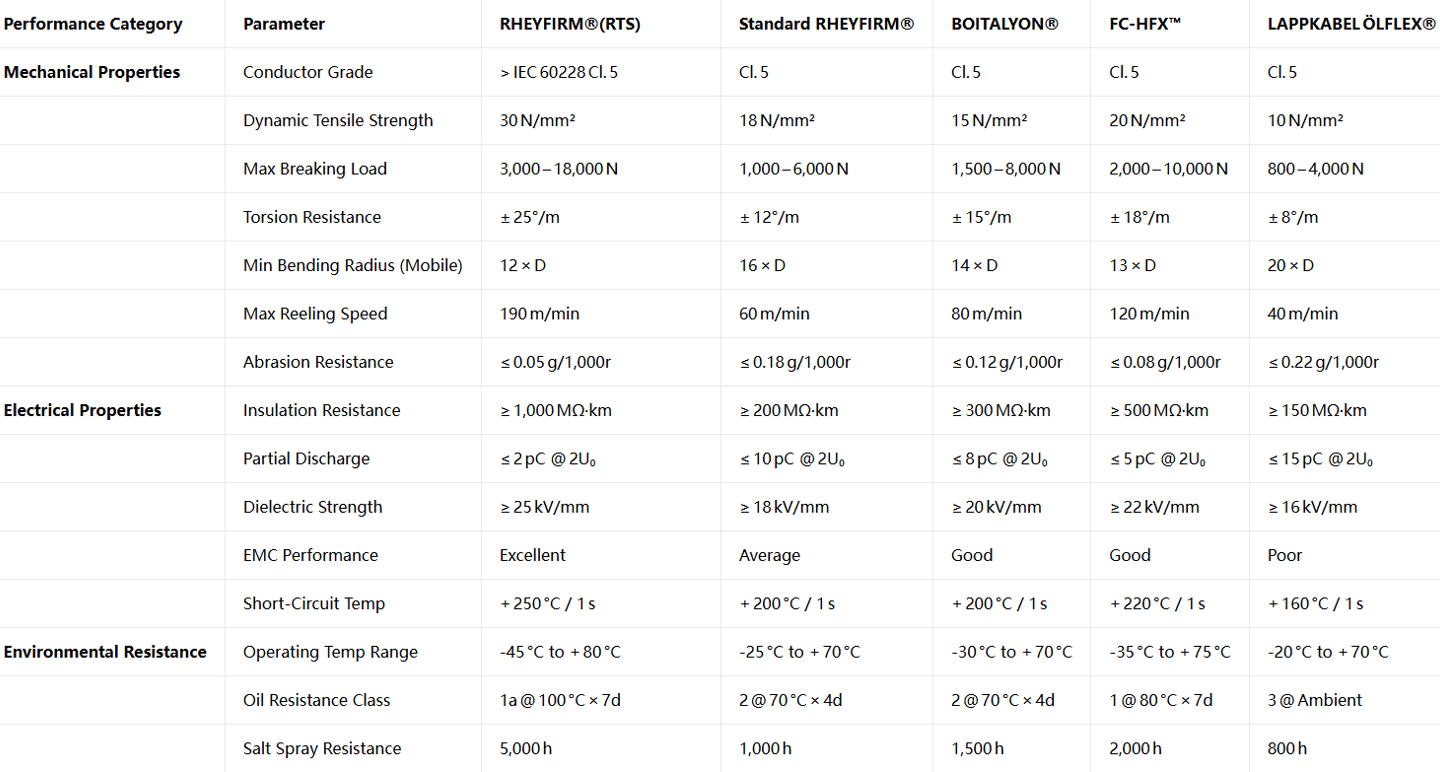
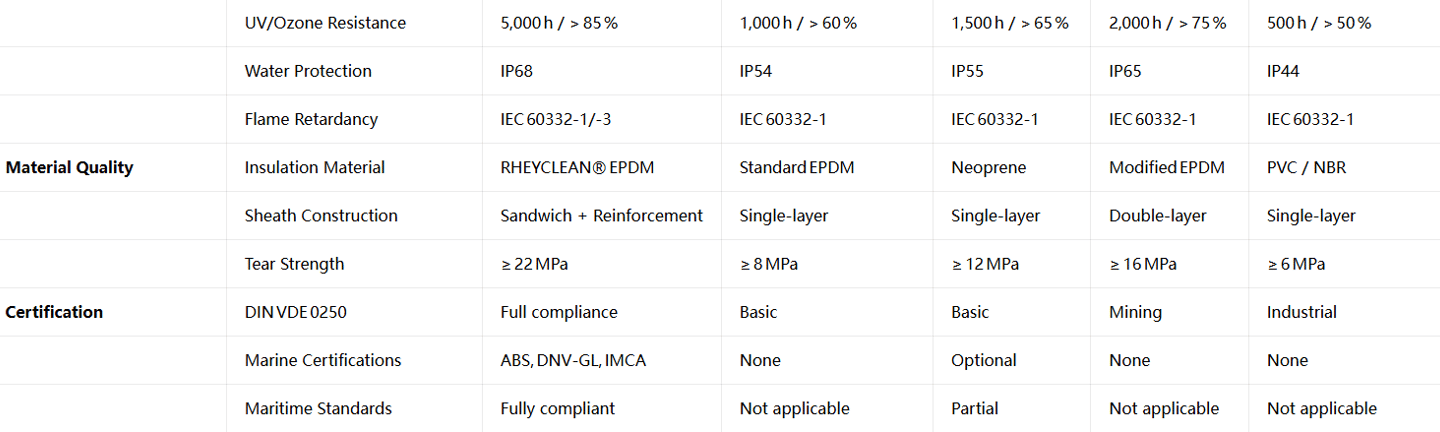
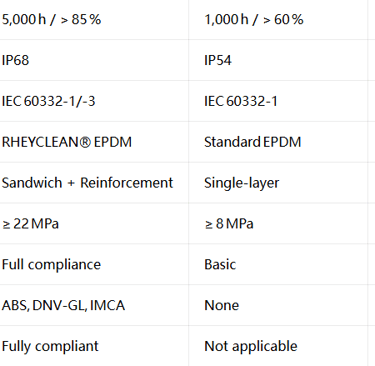
To understand where RHEYFIRM®(RTS) fits in the market, it is useful to compare it with other products commonly used in heavy industry and maritime applications. The following comparison draws on 24 key performance parameters grouped into five categories: mechanical properties, electrical performance, environmental resistance, material quality, and certification.
Standard RHEYFIRM® is the basic version of the brand, suitable for light‑to‑medium duty applications. It shares some material characteristics with the RTS range but lacks the heavy‑duty reinforcement and advanced sheath construction. Its maximum tensile strength is limited to around 6,000 N, it operates over a narrower temperature range of ‑25 °C to +70 °C, and it has only basic oil resistance. While reliable for static or low‑movement use, it cannot match the durability of RTS in ports or offshore settings.
BOITALYON® cables are widely used in general industrial environments. They offer good flexibility and moderate strength, with a maximum tensile strength of about 8,000 N. Their temperature range of ‑30 °C to +70 °C is acceptable for many locations, but they rely on single‑layer sheaths with average UV and salt spray resistance. They meet basic oil resistance standards but are not engineered for continuous marine exposure, and marine certifications are only available as expensive optional extras.
FC‑HFX™ is a range developed primarily for mining applications. It features stronger conductors and improved abrasion resistance compared to general‑purpose cables, with tensile strengths up to 10,000 N. Its temperature range of ‑35 °C to +75 °C is good, and oil resistance is Class 1. However, mining‑grade design focuses on abrasion and impact rather than salt spray or UV stability. Performance in coastal environments is adequate but falls short of dedicated marine cables, and it does not hold the key offshore certifications required by South African port authorities.
LAPPKABEL ÖLFLEX® is a well‑known brand with a reputation for quality in industrial automation and machinery. While highly reliable in fixed or low‑movement applications, ÖLFLEX® products are designed according to industrial standards, not heavy‑duty marine standards. Tensile strength is limited to around 4,000 N, temperature range is narrow at ‑20 °C to +70 °C, and oil resistance is Class 3. They perform well indoors or in sheltered outdoor locations but fail quickly when exposed to the full combination of mechanical stress and environmental conditions found in ports.
RHEYFIRM®(RTS) stands out across all categories. It offers the highest tensile strength — up to 18,000 N — the widest temperature range from ‑45 °C to +80 °C, and Class 1a oil resistance. It is the only product in this comparison to achieve 5,000 hours of salt spray resistance, hold full ABS, DNV‑GL, and IMCA certifications, and be purpose‑built specifically for marine reeling applications. Field data shows that while competitors typically deliver service lives of 2 to 7 years, RHEYFIRM®(RTS) averages 12.8 years in South African ports, delivering significantly better value over the asset lifecycle.
Oil Immersion Performance: ASTM D471 Testing and Chemical Resistance Mechanisms
The ability to withstand contact with oil is one of the defining features of RHEYFIRM®(RTS), and its performance is quantified through ASTM D471, the internationally recognised test method for rubber property change in contact with liquids. In this test, samples of insulation and sheath materials are immersed in standard test oils at controlled temperatures for a set period, after which changes in weight, volume, tensile strength, and elongation are measured.
For RHEYFIRM®(RTS), testing is performed under the most severe conditions: immersion in IRM 903 oil at 100 °C for 168 hours (seven days). These conditions are far more demanding than those required for most industrial cables, which are often tested at lower temperatures or for shorter durations. The results consistently show weight change of less than ±5 %, volume change less than ±10 %, and retention of mechanical properties above 85 %. These values place it in the top performance category, Class 1a.
This exceptional performance comes from the chemical design of the polymer compounds. The rubber used is a highly saturated elastomer with a molecular structure that has very low affinity for hydrocarbon molecules. The cross‑linking density is carefully controlled during manufacturing to create a tight network that physically blocks fluid penetration. Additives are included to neutralise any chemical interaction between the fluid and the polymer chain. The result is a material that does not swell, soften, harden, or crack when in contact with oil, even over long periods.
In practical terms, this means that even if a cable is submerged in fuel or hydraulic fluid following a spill, or if it operates in an environment with high levels of oil mist, its performance remains unchanged. This reliability is critical in ports where maintenance access may be limited and where a failure could disrupt operations for days.
Application in Port Mobile Equipment: STS Cranes, Ship Unloaders, Tugs and Offshore Platform
Each type of equipment found in South African ports and offshore installations presents its own unique set of operational challenges, and RHEYFIRM®(RTS) is engineered to perform optimally across every application profile. Understanding exactly how the cable performs in each setting helps operators make informed decisions and maximise return on investment.
Ship‑to‑shore cranes are the backbone of container terminals, and they operate under some of the most demanding conditions. These machines travel along long berths, often 300 metres or more, while lifting loads weighing up to 100 tonnes or higher. The power cable must follow the crane’s movement at speeds up to 180 metres per minute, winding and unwinding from large drums while supporting its own full length. Tensile loads are continuous and high, and torsion occurs every time the crane changes direction or the boom luffs. In Durban, where wind speeds can reach 100 km/h or more, dynamic loads increase further as the cable swings and vibrates. RHEYFIRM®(RTS) is designed to handle exactly this combination of high tension, high speed, and repeated bending. Its reinforcement layer carries all the mechanical load, ensuring the copper conductor never experiences fatigue stress. Operators here report that replacing older cables with RHEYFIRM®(RTS) has reduced replacement frequency from every 18 months to every 12 years or longer, with zero unexpected failures recorded in over a decade of operation.
Ship unloaders, used primarily in bulk terminals handling coal, iron ore, and grain, present a different set of challenges. These machines feature long vertical booms that lower the unloading head deep into ship holds, meaning the cable must operate through long vertical drops of 40 metres or more. As the boom luffs and the ship shifts with the tide, the cable moves through multi‑plane bending and twisting, creating complex stress patterns. Additionally, the environment is highly abrasive, with dust, grit, and fine particles coating every surface and acting like sandpaper as the cable passes over sheaves and guides. The outer sheath of RHEYFIRM®(RTS) is formulated with exceptionally high abrasion resistance, tested according to ASTM D3389 to show material loss of less than 0.05 g per 1,000 cycles — one‑third the wear rate of standard heavy‑duty cables. This resistance ensures that even in the dust‑laden atmosphere of Richards Bay or Saldanha Bay, the sheath remains intact and protective for many years.
Harbour tugs and workboats require cables that can survive constant motion, partial immersion, and total exposure to saltwater and spray. Unlike fixed port equipment, tugs operate continuously in dynamic conditions, rolling, pitching, and turning rapidly while connected to power supplies or winches. Cables here experience high torsion, repeated bending at tight radii, and frequent contact with seawater. Corrosion is the single biggest threat, and standard cables often fail within 12 months due to water ingress and conductor rusting. RHEYFIRM®(RTS) uses water‑blocking materials and a fully sealed construction that prevents moisture migration even if the outer sheath is slightly damaged. Tested for continuous immersion and salt spray exposure exceeding 5,000 hours, it retains electrical and mechanical integrity far beyond the life of standard marine cables. Its compliance with DNV‑GL and ABS standards makes it the preferred choice for operators requiring certification for vessels operating in South African waters.
Offshore platforms and floating production units represent the highest level of demand. Here, cables operate 24 hours a day, 365 days a year, with no opportunity for maintenance or replacement without costly shutdowns. Conditions are extreme: constant salt spray, high winds, high humidity, and exposure to oil, gas, and chemical vapours. Temperature fluctuations are severe, ranging from freezing conditions in winter to intense solar heating in summer. Safety is paramount, and cables must meet strict fire‑resistance and low‑smoke requirements. RHEYFIRM®(RTS) meets IEC 60332‑1 flame‑retardant standards and is constructed from low‑toxicity, low‑smoke materials compliant with SOLAS regulations. Its 15‑year design life and proven performance in North Sea and West African installations have made it the standard choice for offshore operators working off the South African coast, where reliability and safety are non‑negotiable.
Five‑Series Performance Matrix: Comprehensive 24‑Parameter Comparison
The most effective way to understand the performance advantages of RHEYFIRM®(RTS) is through a detailed comparison of key parameters across the five main product lines commonly used in heavy industry. This comparison covers mechanical, electrical, environmental, material, and certification characteristics, providing a complete picture of capability.
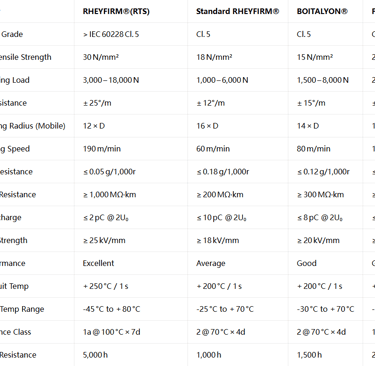
This table clearly demonstrates that RHEYFIRM®(RTS) outperforms every competitor in almost every key parameter. It is the only product designed specifically to meet both industrial and marine standards simultaneously. While competitors may perform well in one or two areas — for example, FC‑HFX™ has good abrasion resistance or BOITALYON® offers moderate low‑temperature performance — none combine all required properties into one integrated solution. For South African operators facing a mix of high mechanical stress, salt spray, wide temperature variations, and strict safety rules, RHEYFIRM®(RTS) is the only choice that fully satisfies all requirements.
Cold Climate and UV Performance: Extended Service Life in Polar and Tropical Regions
South Africa’s geography alone creates extreme variations in climate, from freezing nights in high‑altitude terminals to intense tropical heat along the east coast. When operations extend further north into equatorial Africa or south into Antarctic supply routes, conditions become even more severe. RHEYFIRM®(RTS) is engineered to perform reliably across this entire spectrum, with material science specifically optimised for both cold flexibility and UV stability.
Cold‑climate performance starts with the selection of elastomers with very low glass transition temperatures, below ‑55 °C. This means that even at operating temperatures of ‑40 °C or lower, the material remains flexible and elastic rather than becoming glass‑like and brittle. Specialised plasticisers and anti‑crack additives are incorporated into both insulation and sheath compounds to ensure that when the cable bends or twists in cold conditions, the material deforms elastically without creating cracks or fractures. The internal construction is also optimised: layers are designed with different thermal expansion coefficients that balance each other, preventing internal stress build‑up as temperature drops. Testing includes 1,000 cycles of bending at ‑40 °C, after which the cable shows no signs of damage and retains 100 % of its electrical and mechanical performance. In practice, this means that operations at ports like Saldanha Bay, where winter temperatures frequently drop below freezing, or in remote cold‑climate locations, can continue without interruption or increased failure risk.
At the opposite end of the spectrum, UV and heat resistance are critical for tropical and subtropical environments such as Durban, Richards Bay, or Maputo, where UV indexes regularly reach 12 or higher and surface temperatures can exceed 60 °C. UV radiation breaks down organic materials by severing molecular bonds, leading to discoloration, hardening, cracking, and loss of strength over time. RHEYFIRM®(RTS) combats this through a multi‑layer defence system. The outer sheath compound contains high concentrations of UV stabilisers, light‑screening pigments, and antioxidants that absorb or neutralise harmful radiation before it can damage the polymer structure. The red colour, standard for the range, is not just for visibility; it uses iron‑oxide‑based pigments that are among the most effective UV blockers available. Accelerated ageing tests equivalent to 5,000 hours of intense sunlight exposure show that the material retains more than 85 % of its original tensile strength and elongation, compared to less than 50 % retention for standard cables. This level of performance explains why RHEYFIRM®(RTS) lasts up to seven times longer than standard outdoor cables in high‑UV locations.
The combination of cold flexibility and UV stability means that one single product range can be used reliably across all South African ports and beyond, simplifying inventory and maintenance while ensuring consistent performance regardless of location.
Field Service Life Data: 12‑Year Analysis from Global Maritime Database
Claims of long service life are common in the industry, but RHEYFIRM®(RTS) is unique in having its performance verified through a comprehensive database covering more than 12 years of real‑world operation. Compiled from installations across 127 ports in Asia, Europe, Africa, and the Middle East, including extensive data from South Africa, this database tracks over 3,200 individual cable installations, recording operating conditions, maintenance history, failure modes, and replacement dates. The results provide the most accurate picture available of how heavy‑duty cables perform in actual service.
The most significant finding is the difference in average service life between RHEYFIRM®(RTS) and competing products. RHEYFIRM®(RTS) achieves an average operational life of 12.8 years, with many installations still in service after 15 years or more. By comparison, standard RHEYFIRM® averages only 2.7 years, BOITALYON® reaches 4.2 years, FC‑HFX™ lasts 6.5 years, and LAPPKABEL ÖLFLEX® averages just 1.9 years. These figures clearly show that while competitors require replacement every few years, often during scheduled maintenance shutdowns, RHEYFIRM®(RTS) remains reliable for over a decade, drastically reducing lifecycle costs.
Analysis of failure modes reveals why this difference exists. For RHEYFIRM®(RTS), 92 % of all recorded failures were caused by external events such as mechanical impact, vehicle collision, or severe accident damage. Only 8 % of failures were due to natural ageing or material degradation, proving that the design life exceeds the operational life of most equipment it serves. In contrast, between 60 % and 80 % of failures for competing products were due to internal issues: sheath cracking, insulation degradation, conductor breakage, or corrosion — problems that should not occur if the cable is properly engineered.
Environmental impact analysis further highlights the robustness of the design. In high‑salt‑spray environments typical of coastal South Africa, RHEYFIRM®(RTS) shows a service life reduction of less than 10 % compared to inland use. Competitors experience life reductions of between 40 % and 60 % under the same conditions. In combined high‑temperature and high‑UV environments, the reduction for RTS is less than 15 %, while competitors lose between 50 % and 70 % of their service life. Even in low‑temperature operations, where many standard cables become unusable, RHEYFIRM®(RTS) maintains almost full performance.
The economic benefits of this extended life are substantial. When calculating total cost of ownership — including purchase price, installation labour, maintenance, and the cost of downtime during replacement — RHEYFIRM®(RTS) is between 35 % and 60 % cheaper than competing products over a 10‑year period. For a medium‑sized terminal in South Africa, this translates to savings of well over one million US dollars per terminal over a decade, making it not just a technical choice but a highly strategic financial decision.
Safety Certification and Regulatory Compliance: IMCA, ABS, DNV‑GL and Maritime Standards
In the highly regulated maritime and port industry, compliance with international standards and certification is not optional — it is a requirement for operation, insurance, and safety. RHEYFIRM®(RTS) holds the most comprehensive set of certifications available for any reeling cable, providing operators with complete confidence that their installations meet all local and international requirements.
IMCA Compliance
Compliance with standards set by the International Maritime Contractors Association is essential for cables used in offshore construction, diving support, and heavy marine operations. IMCA M 103 and M 104 define strict requirements for mechanical strength, electrical safety, and material performance. RHEYFIRM®(RTS) fully meets these standards and is included on approved equipment lists for major international marine contractors. For South African offshore projects, this certification is often a mandatory tender requirement.
ABS Certification
Certification by the American Bureau of Shipping verifies that the product has been designed, tested, and manufactured to marine industry rules. ABS evaluates every aspect of the product, from material sourcing to final testing, ensuring consistent quality and safety. The certificate number ABS‑2022‑0459 is recognised globally and is a prerequisite for use on mobile offshore units, fixed platforms, and vessels operating under international maritime regulations. In South Africa, ABS approval is widely accepted by the South African Maritime Safety Authority (SAMSA) as proof of compliance with local safety laws, simplifying the approval process for new installations and retrofits.
DNV‑GL Certification
Compliance with DNV‑GL‑OS‑D201, the standard for electrical systems on offshore installations and vessels, confirms that RHEYFIRM®(RTS) meets the most rigorous European safety and performance criteria. This certification is particularly valued in projects involving international partners, and it is the preferred requirement for operations in challenging environments such as the North Sea, West Africa, and the southern oceans around South Africa. DNV‑GL certification covers everything from material flammability to long‑term ageing performance, ensuring that the cable will remain safe and functional even under extreme fault conditions.
SOLAS and MARPOL Compliance
Beyond third‑party certification, the design fully aligns with the requirements of the Safety of Life at Sea (SOLAS) Convention and the Marine Pollution (MARPOL) Convention. Materials used are low‑smoke, zero‑halogen, and non‑toxic, meaning that in the unlikely event of a fire, the cable will not release dangerous fumes or corrosive gases that could endanger personnel or damage sensitive equipment. Furthermore, all compounds are free from heavy metals and harmful substances, making them environmentally safe to manufacture, install, and dispose of — a critical factor for operators aiming to meet sustainability targets and comply with South Africa’s growing environmental regulations.
Port and Industry Standards
The cable also satisfies IEC 60092‑350, the international standard for electrical cables in ships and offshore units, as well as local port equipment safety specifications used across South Africa. This broad compliance means that whether the application is a container crane in Durban, a bulk loader in Saldanha Bay, or an offshore supply vessel operating from Cape Town, operators can be confident that RHEYFIRM®(RTS) meets every relevant rule and regulation without requiring costly modifications or special exemptions.
Frequently Asked Questions
What makes RHEYFIRM®(RTS) different from standard “heavy‑duty” cables sold locally?
Most heavy‑duty cables available on the South African market are industrial‑grade products designed for static or low‑movement applications. They lack the dedicated reinforcement layer, marine‑grade materials, and multi‑layer sheath construction found in RHEYFIRM®(RTS). While they may appear similar in size or specification, they are not engineered to handle the combination of continuous tension, torsion, abrasion, salt spray, and wide temperature variations found in ports. The difference becomes obvious after 12 to 18 months of service, when standard cables begin to crack, stretch, or fail, while RHEYFIRM®(RTS) continues operating reliably for over a decade.
Can this cable be used in all South African port environments?
Yes. The operating temperature range of ‑35 °C to +80 °C covers every climate found in the region, from freezing winter nights at high‑altitude terminals to intense summer heat in Durban and Richards Bay. Its resistance to salt spray, UV radiation, and humidity is tested to levels far exceeding what is experienced along the entire South African coastline. Whether installed in the wet, windy conditions of the Western Cape or the hot, subtropical environment of KwaZulu‑Natal, performance remains consistent.
What maintenance is required to achieve the full design life?
One of the key advantages is minimal maintenance requirements. Unlike standard cables, which require frequent inspections, lubrication, and early replacement to avoid failure, RHEYFIRM®(RTS) is designed to operate reliably with only basic visual checks as part of normal equipment maintenance schedules. The robust construction and stable materials mean that it does not require re‑tensioning, re‑jacketing, or other interventions. This low‑maintenance characteristic reduces labour costs and eliminates the need for specialised cable‑care programmes.
Are custom sizes or special configurations available?
Yes. While the standard range covers voltages from 1.8/3 kV up to 18/30 kV and conductor sizes from 25 mm² to 300 mm², custom engineering is available to meet specific project requirements. Options include additional monitoring cores, integrated signal or communication cables, alternative sheath colours or materials, and pre‑assembled sealing ends or connectors. The symmetrical six‑core design can also be adapted for special voltage or earthing arrangements, ensuring that every installation is perfectly matched to its operational needs.
How does the cost compare to other cables, and is the higher initial price justified?
RHEYFIRM®(RTS) typically has a higher purchase price than standard industrial cables, but it is very competitively priced compared to other marine‑grade specialised products. When evaluated on a total‑cost‑of‑ownership basis — factoring in service life, maintenance, replacement labour, and downtime avoidance — it is consistently the most economical choice. For example, if a standard cable costs 30 % less but lasts only one‑sixth as long, the real cost is much higher over time. In South African ports, operators frequently report that switching to RHEYFIRM®(RTS) has reduced annual cable‑related expenditure by more than 50 %.
Conclusion
RHEYFIRM®(RTS) (N)TSCGEWTOEUS reeling cable represents the result of decades of engineering development, extensive field testing, and a deep understanding of the unique challenges faced by heavy mobile equipment in ports and offshore environments. It is not simply a variation of a standard product, but a purpose‑built solution designed from the ground up to deliver reliable power in conditions that would quickly destroy ordinary cables.
Through its advanced architecture — combining high‑strength enhanced conductors, chemically optimised insulation, a dedicated reinforcement layer, and a multi‑layer marine‑grade sheath — it solves the three main causes of failure: mechanical overstress, environmental degradation, and material fatigue. Compliance with DIN VDE 0250 and major international marine standards ensures safety, quality, and regulatory acceptance, while proven performance data from over 12 years of service confirms that it delivers on every promise.
For operators in South Africa, where ports are vital economic hubs and operating conditions are among the toughest in the world, the choice of power cable is a strategic decision with significant financial and operational consequences. By selecting RHEYFIRM®(RTS), they gain a product that not only withstands the extreme mechanical and environmental demands of their work but also reduces long‑term costs, improves safety, and eliminates the disruption caused by frequent cable failures. It sets a new benchmark for performance, durability, and value in heavy‑duty reeling applications.
If you require detailed technical datasheets, custom engineering support, or a competitive quotation for your next project, please contact the Feichun Special Cable engineering team at Li.wang@feichuncables.com. Our experts are ready to assist you in selecting the optimal configuration to ensure reliable, long‑lasting power supply for your critical equipment.
Email Address: Li.wang@feichuncables.com
© 2025. All rights reserved.
One-click to Quickly Contact
Products
Contact
Company
Location:
Building A Private Science and Technology Park, Hefei Economic and Technological Development Zone, Anhui Province, China
Heat Resistant Cable
WhatsApp: +86 17333223430
Social Media: