Anhui Feichun Special Cable Co.,Ltd Email: Li.wang@feichuncables.com
Electrifying Reliability: Demystifying BS 7889 Cables for South Africa's Power Needs
Dive into the BS 7889 standard for thermosetting insulated, non-armoured cables rated at 600/1000 V. Discover their construction, applications in fixed installations, differences from IEC 60502, and real-world South African case studies, plus FAQs on flame retardancy, temperature ratings, and compatibility with SANS standards for reliable power in mining, construction, and homes amid load-shedding woes.
Li. Wang
11/25/20258 min read
Introduction
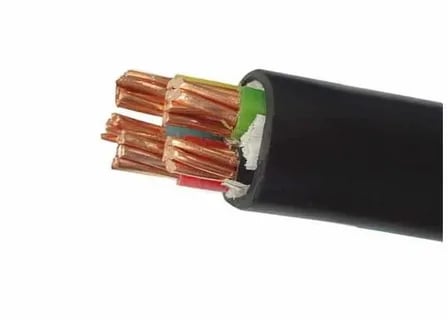
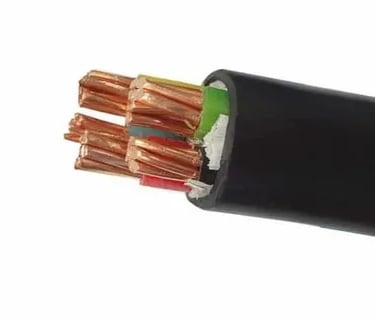
In the heart of modern electrical systems, where reliable power distribution is the lifeline for everything from bustling factories to cosy homes, stands the BS 7889 standard—a cornerstone of British engineering excellence. This British Standard outlines the requirements for thermosetting insulated, non-armoured cables designed for fixed installations at voltages of 600/1000 V. These cables, with their stranded copper conductors, cross-linked polyethylene (XLPE) insulation, and polyvinyl chloride (PVC) sheath, ensure safe and efficient electricity flow without the bulk of armour, making them ideal for environments where mechanical risks are low.
For South Africans, understanding BS 7889 is more than just technical know-how; it's a practical necessity. In a country grappling with frequent load-shedding, where industries like mining and construction demand uninterrupted power, and residential buildings need resilient wiring to handle voltage fluctuations, these cables play a pivotal role. They help mitigate downtime, enhance energy efficiency, and align with local regulations like those from the South African National Standards (SANS). Imagine a Johannesburg warehouse where a sudden power surge could halt operations—BS 7889 cables, with their high thermal tolerance, step in to prevent overheating and failures, keeping the lights on and machinery humming. This real-world resilience is why delving into BS 7889 isn't just for electricians; it's for anyone invested in South Africa's electrified future.
History and Development of BS 7889
The BS 7889 standard traces its roots back to the post-war era of British engineering, when the need for standardised electrical cabling arose to support rapid industrialisation and urban growth. Introduced in the late 20th century, it built upon earlier British Standards like BS 6004 and BS 5467, evolving to focus specifically on thermosetting insulated cables that could withstand higher temperatures and provide better performance in fixed installations. The standard was crafted by the British Standards Institution (BSI), drawing from decades of empirical data on cable failures, fire risks, and electrical efficiency.
Over the years, BS 7889 has seen key updates to incorporate advancements in materials science and safety protocols. For instance, revisions in the 1990s and early 2000s integrated better flame retardancy tests and aligned with European directives on low-voltage equipment. It draws influences from international norms, such as those from the International Electrotechnical Commission (IEC), but tailors them to British—and by extension, Commonwealth—contexts, emphasising durability in temperate to variable climates. In South Africa, where weather swings from the arid Highveld to humid coastal regions, these adaptations prove invaluable, as the standard accounts for thermal expansion and moisture resistance without over-engineering.
South Africa's adoption of BS 7889 reflects a blend of colonial legacies and modern pragmatism. Many cables compliant with this standard are imported from the UK or manufactured locally by companies adhering to SANS equivalents, such as SANS 1507 for insulated cables. This ensures seamless integration with national regulations, including those from the National Regulator for Compulsory Specifications (NRCS). Local manufacturers in Gauteng and KwaZulu-Natal often produce BS 7889-compliant variants, customised for South African voltage standards and environmental stresses, fostering a market where reliability meets affordability amid economic pressures.
Overview of BS 7889 Cables
At its core, BS 7889 defines thermosetting insulated, non-armoured cables for rated voltages of 600/1000 V, intended exclusively for fixed installations in industrial areas, buildings, and similar applications. These cables are not suited for burial in the ground, whether directly or in ducts, due to their lack of armour, which leaves them vulnerable to soil compression and rodent damage. Instead, they excel in controlled environments where protection from mechanical stress is provided by conduits, trays, or embedding in plaster.
The fundamental components include stranded copper conductors conforming to BS 6360 Class 2 or IEC 60228 Class 2, ensuring flexibility and low resistance for efficient current carrying. The insulation is XLPE of GP8 type, a thermosetting material that cross-links during manufacturing to provide superior heat resistance compared to thermoplastic alternatives. An optional inner covering adds structural integrity, while the outer PVC sheath, compliant with Type 9 to BS 7655-4.2, offers abrasion resistance and environmental protection.
Temperature ratings are a standout feature: the cables support a maximum sustained conductor temperature of 90°C, allowing them to handle continuous loads without degradation. In short-circuit scenarios, they endure up to 250°C for a maximum of five seconds, safeguarding against catastrophic failures. However, notes in the standard caution that in areas where cables might be touched or contact other materials, lower temperature limits may apply to prevent burns or material damage. Additionally, when integrated with wiring accessories like junction boxes or consumer units, the overall system's thermal compatibility must be considered to avoid hotspots.
Cable Types and Construction Variations
BS 7889 encompasses a range of cable types, from single-core to multi-core configurations, each tailored for specific wiring needs. Single-core cables, designated as 6181X, feature core identification in brown or blue, making them perfect for individual phase or neutral conductors in larger installations. Their construction includes nominal insulation thicknesses starting at 0.7 mm for smaller cross-sections like 1.5 mm², scaling up to 2.8 mm for massive 1000 mm² sizes.
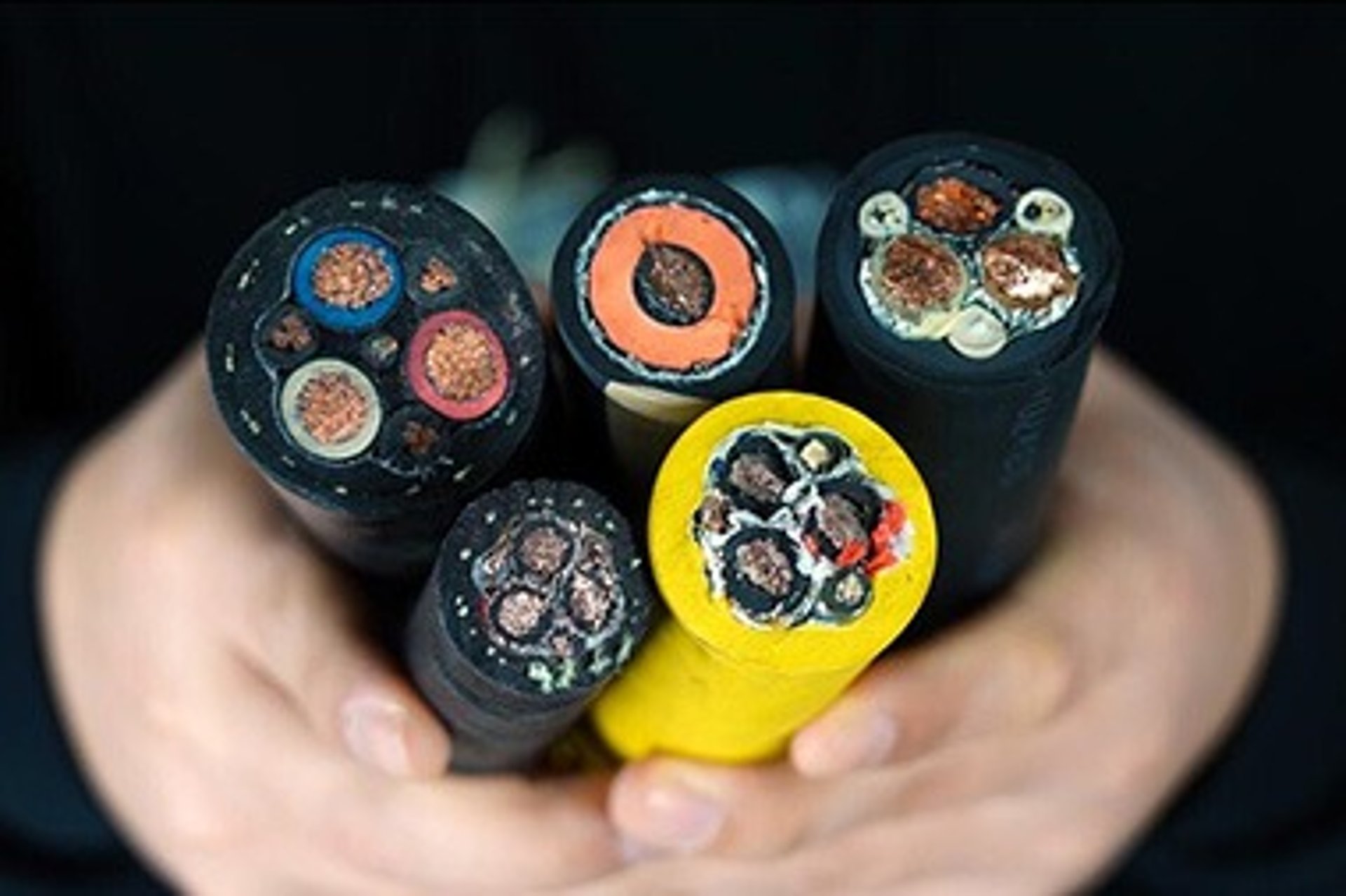
Multi-core variants expand the utility: the 2-core 6182X uses brown and blue cores, ideal for simple power circuits. The 3-core 6183X offers brown, black, and grey, or alternatively green/yellow for earth alongside brown and blue, accommodating three-phase systems. Four-core 6184X includes blue, brown, black, and grey, with an optional green/yellow earth, while the 5-core 6185X incorporates green/yellow, blue, brown, black, and grey for comprehensive control and power applications.
Cross-sectional areas span from 1.5 mm² to 1000 mm² for single-core, with multi-core options up to 120 mm² in shaped stranded conductors for larger sizes to maintain compactness. Insulation thicknesses vary accordingly—0.7 mm for 1.5 to 16 mm², increasing to 1.2 mm for 120 mm²—while inner coverings range from 0.4 mm to 1.6 mm, and sheath thicknesses from 1.4 mm to 2.4 mm, ensuring mechanical robustness without armour.
A key distinction from standards like IEC 60502 lies in construction simplicity. BS 7889 sticks to straightforward 2-, 3-, 4-, and 5-core designs, whereas IEC 60502 includes more complex variants such as 3-core plus one earth, 3-core plus two earths, or 4-core plus one earth. This focus makes BS 7889 more streamlined for standard fixed installations, reducing complexity and cost.
Technical Specifications and Performance
Electrically, BS 7889 cables boast a working voltage of 600/1000 V, suitable for low-voltage distribution networks common in South African grids. Insulation resistance is at least 10 MΩ·km, minimising leakage and enhancing safety. Flame retardancy complies with IEC 60332.1, meaning the cables self-extinguish to limit fire propagation in bundled installations.
Mechanically, the minimum bending radius is four times the overall diameter for cables under 25 mm, six times for larger ones, and six times for shaped conductors, facilitating easier routing in tight spaces. The operating temperature spans -15°C to +90°C, accommodating South Africa's diverse climates from frosty winters in the Drakensberg to sweltering summers in Limpopo.
Performance is validated through rigorous tests in the standard, including dimensional checks, conductor resistance measurements, insulation thickness verification, and high-voltage withstand tests. Thermal cycling and short-circuit simulations ensure long-term durability, making these cables a reliable choice for sustained performance.
Applications and Installation Guidelines
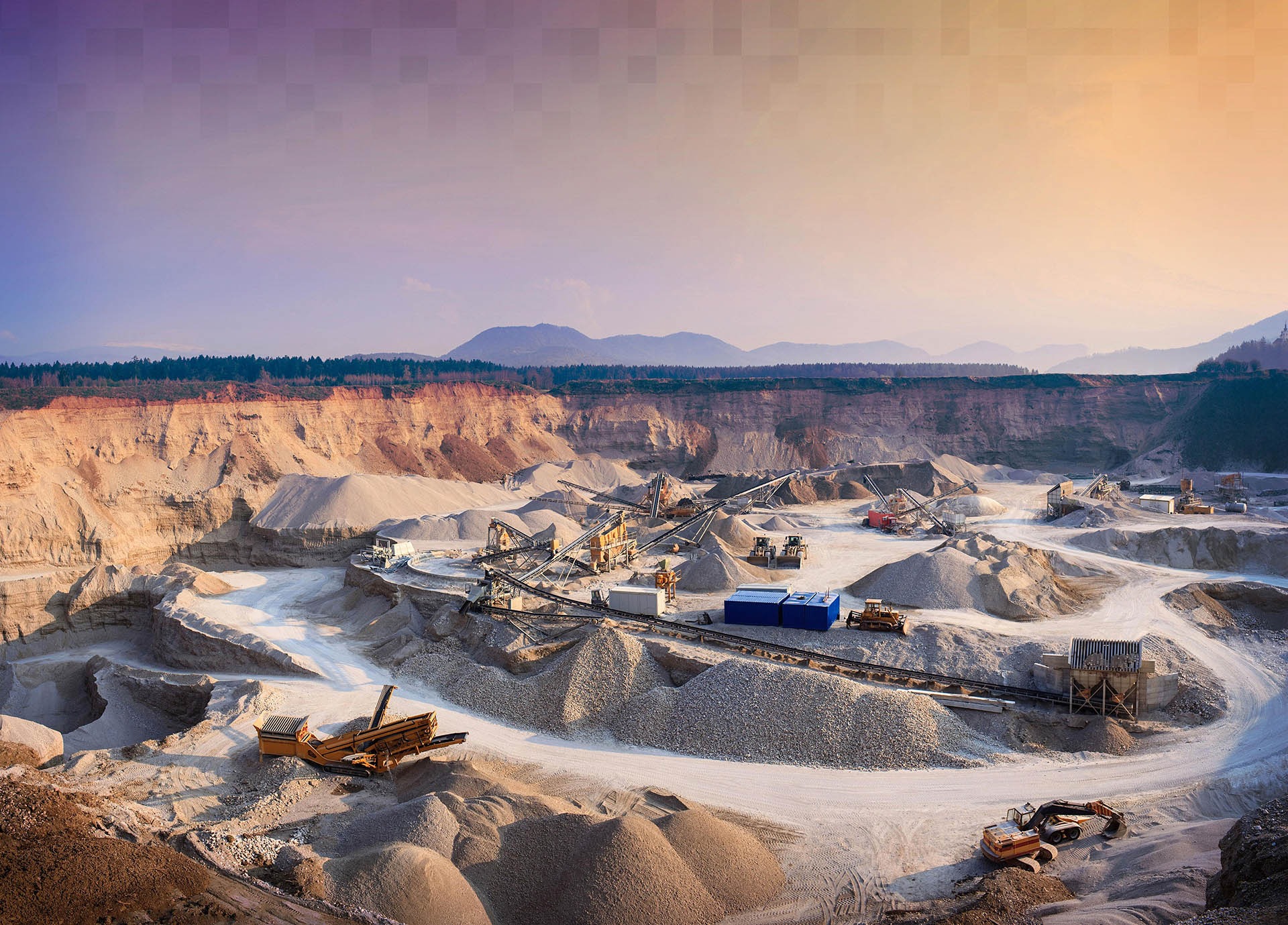
BS 7889 cables shine in power and lighting applications within industrial buildings, general construction, and residential setups. In South Africa, they're commonly surface-mounted, run through conduits or trunking, laid on cable trays, or embedded in plaster—perfect for factories in Durban or homes in Pretoria facing erratic power supply.
However, they're not for direct ground burial or high-risk mechanical zones, where armour is essential. Outdoor use requires protection like conduits to shield from UV rays and weather.
Installation best practices emphasise matching cable ratings with accessories; for instance, consumer units must handle 90°C without derating. South African installers should comply with NRS guidelines, avoiding overloads during load-shedding peaks by incorporating surge protection. Common pitfalls include improper bending, which can crack insulation, or neglecting earth cores in multi-phase setups.
Advantages, Limitations, and Safety Considerations
The advantages of BS 7889 cables include exceptional thermal resistance for high-load scenarios, flexibility in fixed environments, and cost savings over armoured types—up to 20% less weight and material. Their reliability in warm climates like South Africa's reduces maintenance needs.
Limitations stem from the non-armoured design: susceptibility to cuts, impacts, or abrasion in dusty mining sites or humid coastal areas necessitates extra protection. Burial restrictions limit versatility.
Safety-wise, select cables to avoid overheating in accessible spots, integrate with fuses or circuit breakers, and ensure professional installation to prevent shocks or fires.
Comparison with International Standards
Compared to IEC 60502, BS 7889 offers simpler core configurations, focusing on 2-5 cores without dedicated earth variants, which suits straightforward projects but may require supplements for grounded systems. IEC's broader options cater to complex grids, potentially at higher costs.
In South Africa, BS 7889 complements SANS 1507 for PVC-insulated cables, often preferred for XLPE's superior heat handling in imported machinery setups, ensuring compatibility with global equipment while meeting local safety norms.
Case Studies: South African Applications
In a Johannesburg industrial warehouse, BS 7889 multi-core cables like 6183X were deployed for lighting and power distribution in a 2023 retrofit. Facing frequent load-shedding, the project used 4 mm² 3-core variants embedded in conduits, slashing installation costs by 15% versus armoured cables. Outcomes included 20% improved energy efficiency, as the 90°C rating allowed seamless integration with backup generators, minimising downtime during outages.
A Cape Town residential development in 2024 utilised single-core 6181X cables (2.5 mm² brown and blue) embedded in plaster for a 200-unit housing scheme. Challenges from voltage fluctuations were mitigated by pairing with stabilisers, resulting in zero reported failures over the first year and enhanced safety in humid conditions.
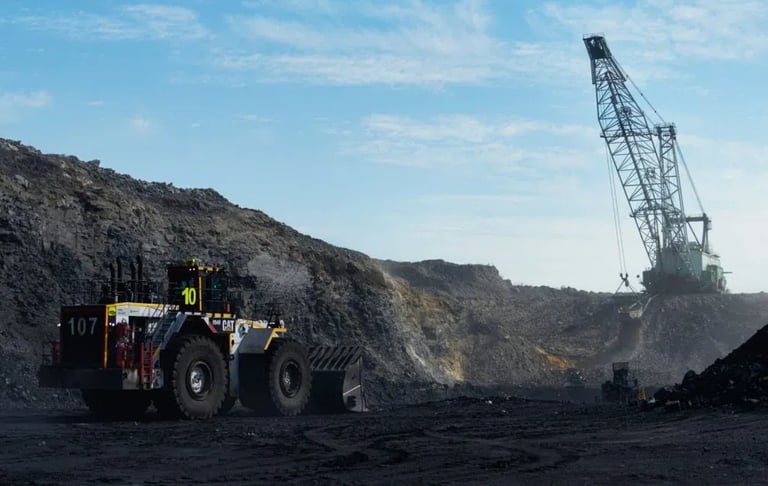
In Mpumalanga's coal mining sector, a 2022 surface wiring upgrade at a mine employed 6184X 4-core cables (10 mm²) for auxiliary power. Despite mechanical stresses from equipment vibrations, the cables performed well with tray protection, teaching lessons on regular inspections to extend lifespan, ultimately reducing unplanned stops by 25%.
Frequently Asked Questions (FAQ)
What is the main difference between BS 7889 and armoured cables?
BS 7889 features a non-armoured design, ideal for low-risk areas, saving on weight and cost but demanding protective measures like conduits, unlike armoured types that withstand direct impacts.
Can BS 7889 cables be used outdoors in South Africa?
They're not for direct burial, but yes, in conduits or trays with UV-resistant coverings to handle our sunny weather.
How do I identify the core count in these cables?
Look at colour coding: 3-core without earth is brown, black, grey; 4-core might add blue or include green/yellow for earth.
Are these cables flame-retardant?
Absolutely, they meet IEC 60332.1, slowing fire spread in bundled setups.
What's the maximum size available?
Single-core reaches 1000 mm²; multi-core up to 120 mm², often with shaped stranded conductors for efficiency.
How does BS 7889 compare to local SANS standards?
It's complementary, with BS 7889's thermosetting insulation excelling in high-heat scenarios where SANS 1507 might suffice for basic PVC needs.
Is XLPE insulation better than PVC?
XLPE provides higher temperature tolerance—up to 90°C sustained—making it superior for heavy loads in our warm climates, though PVC is cheaper for lighter duties.
Conclusion
BS 7889 stands as a robust framework for thermosetting insulated, non-armoured cables, delivering reliability in South Africa's power-challenged landscape. From industrial might to residential comfort, its specifications ensure safe, efficient installations.
South African engineers and electricians, reach out to certified suppliers for compliant products—it's a step towards resilient infrastructure.
Looking ahead, as renewables like solar surge amid Eskom's transitions, BS 7889 may evolve to incorporate eco-friendly materials, bolstering our green energy shift.
Feichun technical engineers have vast experience of designing, manufacturing and testing cables to BS 7889 , and our cables are Quality Assured through testing in our Cable Laboratory to confirm they are capable of meeting the performance demands of installations and applications.
Email Address: Li.wang@feichuncables.com
© 2025. All rights reserved.
One-click to Quickly Contact
Products
Contact
Company
Location:
Building A Private Science and Technology Park, Hefei Economic and Technological Development Zone, Anhui Province, China
Heat Resistant Cable
WhatsApp: +86 17333223430
Social Media: