Anhui Feichun Special Cable Co.,Ltd Email: Li.wang@feichuncables.com
FESTOONFLEX‑LX 0.6/1 kV (N)3GRD3GÖU‑J/‑O Rubber Cables: Ultimate Guide to High‑Flex Festoon Systems for Cranes & Material Handling in South Africa
FeiChun FESTOONFLEX‑LX 0.6/1 kV (N)3GRD3GÖU‑J/‑O rubber cables are engineered specifically for festoon systems, cranes, mining equipment and port machinery – perfectly suited to South Africa’s harsh environments, high temperatures, UV exposure, dust and heavy mechanical stress. This guide explains engineering design, material science, full specifications, direct replacement for Prysmian Panzerflex and other European brands, price advantages, shorter delivery times, and proven performance in local mines, harbours and industrial sites. Includes installation, maintenance, comparison data and answers to common questions. If you need reliable festoon cables, contact our team: Li.wang@feichuncables.com.
Li Wang
5/18/202625 min read
Introduction
What is FESTOONFLEX‑LX (N)3GRD3GÖU‑J/‑O?
FESTOONFLEX‑LX 0.6/1 kV (N)3GRD3GÖU‑J/‑O is a heavy‑duty flexible rubber cable designed exclusively for dynamic power and control supply in festoon systems, moving machinery and material handling equipment. Manufactured by FeiChun, it follows strict international standards including VDE 0250‑814, IEC 60502‑1 and HD 308 S2, making it fully compliant with global and South African industry requirements. The name itself carries clear meaning: 0.6/1 kV defines the rated voltage; (N)3GRD3GÖU indicates the construction, insulation and sheath materials; ‑J means it includes a protective earth conductor, while ‑O is the version without an earth core.
This cable serves as a direct, fully interchangeable equivalent to premium European products such as Prysmian Panzerflex, Palazzo FESTOONFLEX‑LX and UTV Cavi solutions. It is built to perform exactly the same or better, while addressing key challenges that South African operators face every day. Unlike standard rubber cables, every element of its design targets the unique combination of continuous movement, high mechanical stress and aggressive environmental conditions common in mining, ports and heavy industry across Southern Africa.
Why This Cable Matters for South Africa
In South Africa, reliable power supply to mobile equipment is critical to productivity and safety. Major industries such as mining, bulk material handling, port operations and steel production rely heavily on overhead cranes, stacker‑reclaimers, ship‑loaders and gantry systems. These assets operate in some of the toughest conditions found anywhere: intense ultraviolet radiation from high‑altitude sun, extreme temperature swings from freezing nights on the Highveld to over 45 °C in Northern Cape mines, abrasive dust, coastal salt‑laden air, and exposure to oils, greases and industrial chemicals.
Traditional challenges with imported European cables include very high costs, long delivery times often exceeding 12–16 weeks, and limited local stock availability. Delays in supply can lead to extended shutdowns and significant financial losses. Local operators also report that standard cables fail prematurely, often within 1–3 years, due to poor resistance to local environmental factors or insufficient mechanical strength for high‑speed, continuous‑cycle operation.
FESTOONFLEX‑LX was developed specifically to solve these problems. It matches or exceeds international performance benchmarks, costs significantly less, is available within 4–6 weeks, and is formulated to withstand exactly the conditions found in South Africa. It has already become the preferred choice for engineers and procurement teams seeking reliability, value and security of supply.
Scope of This Guide
This article provides complete, practical information for engineers, maintenance managers, procurement specialists and project planners. It covers the engineering principles behind the design, material science that delivers long life, full technical specifications, selection methods, installation rules, maintenance best practices, and direct comparisons with competing products. It also includes real‑world application examples from mines, ports and industrial sites across South Africa, together with answers to the questions most frequently asked by local users.
Engineering Principles & Design Logic
Core Design Objectives
Every aspect of FESTOONFLEX‑LX design addresses three fundamental failure modes that affect moving cables: fatigue from repeated bending and flexing, damage from tensile and compressive forces, and degradation caused by environmental exposure. The goal is simple: deliver safe, stable power transmission over a service life of 10 years or more, even when operating 24 hours a day, 7 days a week, at speeds up to 240 m/min and over travel lengths exceeding 100 metres.
Standard cables are built for static or occasional movement. This product is engineered from the inside out for continuous dynamic duty. The design team analysed thousands of failure cases worldwide and optimised every layer to reduce stress, distribute load evenly, and resist degradation – resulting in a cable that performs reliably in applications where others fail quickly.
Structural Mechanics
Conductor Design: Class 5 Flexible Copper
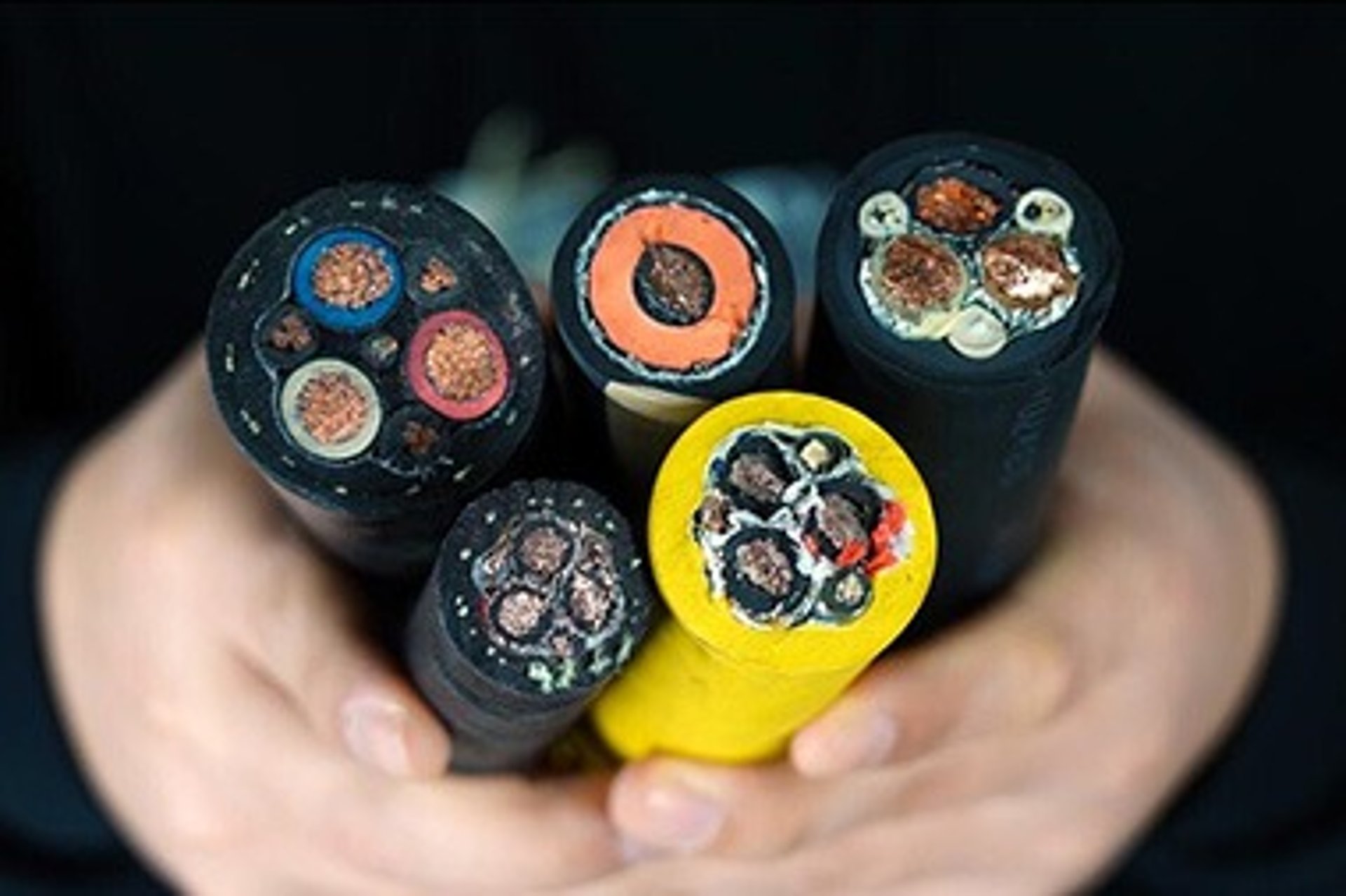
At the heart of the cable is the conductor, manufactured to IEC 60228 Class 5 specifications. Instead of a few thick wires, it uses hundreds of very fine strands of annealed high‑purity copper. This structure achieves two critical things: exceptional flexibility and resistance to metal fatigue. When a cable bends, the outer part stretches and the inner part compresses. Fine strands slide gently past one another, minimising internal friction and stress concentrations that would otherwise lead to wire breakage after repeated movement.
Copper purity is kept above 99.95 %, ensuring low electrical resistance and high efficiency. Tinned copper is available as an option, offering extra protection against corrosion in humid, coastal or chemically aggressive environments – a highly recommended choice for Durban, Richards Bay or industrial areas with high pollution levels.
Laying & Cabling Technology
How the cores are arranged is just as important as what they are made of. FESTOONFLEX‑LX uses a short lay‑length technique, meaning each core is twisted around the centre axis at a very tight pitch – typically no more than 7.5 times the overall cable diameter. This drastically improves flexibility and ensures that when the cable bends, deformation is distributed evenly across all layers, preventing any single core from carrying excessive stress.
Cores are arranged in a maximum of three concentric layers. This balanced construction eliminates ovalisation or distortion under tension or bending, and ensures that the cable returns to its original round shape every time it straightens out. Between layers, special polyester tapes are applied. These prevent cores from sticking together, reduce friction, and maintain stability even after millions of cycles.
Built‑in anti‑twist elements made from high‑strength synthetic yarns are integrated during manufacture. These create a counter‑torque effect that neutralises rotational forces generated during movement, especially at high speeds or long travel lengths. This is why this cable does not twist, knot or tangle – one of the most common complaints with standard designs.
Mechanical Strength & Load Capacity
The complete structure is engineered to safely withstand tensile loads up to 15–20 N/mm², far higher than general‑purpose rubber cables (typically limited to 6–8 N/mm²). This is essential in long‑span festoon systems, where the weight of the cable itself creates significant tension. The design ensures that mechanical load is shared between the copper conductors, the insulation and reinforcement elements, so no single component is overloaded.
Bending performance is defined clearly: minimum radius of 6 × OD for fixed installation and 10 × OD for moving operation. This is not an arbitrary number; it is calculated based on material elasticity and fatigue limits, ensuring that deformation never exceeds what the materials can safely handle over the full design life.
Electrical Design
Electrical safety and stability are built‑in from the start. Rated voltage is 0.6/1 kV, suitable for all low‑voltage industrial systems, with a maximum permissible operating voltage of 1.2 kV, providing a substantial safety margin. Every length undergoes factory testing at 3.5 kV AC for 5 minutes – more than twice the working voltage – to confirm insulation integrity. For screened versions, the test is 2.5 kV to protect sensitive control signals.
Insulation thickness and material are chosen to keep electrical stress well below breakdown levels, even at high temperatures. Current carrying capacity is calculated according to DIN VDE 0298‑4, taking into account ambient temperature, grouping and installation method. In South Africa, where ambient temperatures often exceed 35 °C, correct derating is essential – and this cable maintains stable performance even when other types overheat and fail.
Thermal Performance
Temperature capability is one of its strongest advantages. It operates reliably from −30 °C up to +90 °C conductor temperature; in fixed installation, it works down to −40 °C. This covers every climate zone in South Africa, from the freezing Drakensberg winters to the scorching heat of the Northern Cape and Limpopo.
Materials are selected and compounded so that thermal expansion coefficients match closely between conductor, insulation and sheath. When temperature changes, all layers expand or contract together, avoiding separation, gaps or internal stresses – a common failure point in cheaper cables. Under short‑circuit conditions, it safely handles up to 250 °C for 5 seconds, fully meeting IEC fault‑withstand requirements.
Material Science – Key to Durability
Conductor: Annealed Oxygen‑Free Copper
As noted earlier, the conductor is made from high‑purity, annealed copper. Beyond conductivity and flexibility, this material choice ensures that electrical losses are minimised, which directly reduces heat generation – a critical factor in hot climates. Annealing softens the copper, giving it elongation of over 35 %, so it stretches slightly under load without breaking, while maintaining excellent conductivity.
Insulation: Special EPR Compound (Superior to Standard 3GI3)
Insulation is made from an enhanced Ethylene‑Propylene‑Diene Rubber (EPR) formulation, significantly better than the standard 3GI3 grade used in many competitors. The compound is engineered to balance three properties perfectly:
Electrical: Very high insulation resistance (> 1000 MΩ·km), low dielectric loss, and resistance to partial discharge, meaning performance remains stable even under high voltage stress or wet conditions.
Mechanical: Tensile strength above 8 MPa, elongation over 300 %, and excellent compression resistance. It does not deform or flow under pressure, so thickness remains consistent and protection never weakens.
Environmental: Resists ozone, UV radiation, moisture and chemical attack. Unlike PVC or some rubbers, EPR does not become brittle or crack even after years of outdoor exposure.
This insulation stays flexible and effective at extreme low temperatures and retains its properties even when heated continuously to 90 °C – the highest permitted temperature for rubber cables.
Sheath: Polychloroprene CR (Better Than Standard 5GM3)
The outer sheath is the cable’s first line of defence, and here FeiChun uses a premium Polychloroprene (CR) compound, superior to the common 5GM3 grade. This is the secret to its outstanding performance in South Africa’s toughest environments.
Formulated with high‑grade neoprene, carbon black, anti‑ageing agents and oil‑resistant additives, this sheath delivers:
Mechanical: Tensile strength above 12 MPa, elongation > 400 %, exceptional tear resistance and low friction. It resists abrasion from dust and guides, and withstands accidental impact or crushing far better than standard materials.
Environmental: Outstanding UV resistance – tested and proven to last over 10 years outdoors without significant degradation. It is oil‑resistant to IRM902 standards, so exposure to greases, hydraulic fluids or mining chemicals will not cause swelling, softening or cracking. It is self‑extinguishing according to IEC 60332‑1, an important safety feature in mines and industrial plants.
This sheath is why FESTOONFLEX‑LX lasts 3–5 times longer than standard rubber cables in identical conditions. It is exactly the material needed for long life in South Africa.
Auxiliary Materials
Between layers, high‑quality polyester tapes are used. These hold cores in place, prevent sticking, absorb minor friction, and add stability without reducing flexibility. Where screening is required for control circuits or to reduce electromagnetic interference, a tinned copper braid with approximately 80 % coverage is applied – effective, durable and corrosion‑resistant.
For extra‑long spans (> 100 m) or high‑speed applications, high‑strength aramid or polyester yarns can be integrated as additional tensile members. These carry the majority of the mechanical load, relieving the copper conductors and extending life even further.
Performance Advantages – Why This Cable Outperforms Others
Superior Flexibility & Fatigue Life
The combination of fine‑strand conductors, short lay‑length and balanced construction results in flexibility that feels like a much smaller cable. It easily handles tight bends and continuous movement. Laboratory tests show it survives over 1 million bending cycles without damage – 5–10 times more than standard rubber cables. In real operation, this translates to a service life of 8–12 years, compared to 1–3 years for general‑purpose alternatives.
Crucially, it operates reliably at speeds up to 240 m/min. Standard cables are generally limited to 60 m/min; above that, they fail rapidly due to heat build‑up and mechanical fatigue. For high‑speed trolleys, container cranes and automated handling systems, this capability is non‑negotiable.
Extreme Mechanical Toughness
It resists abrasion, crushing, impact and tension far better than most alternatives. In dusty environments such as mines or bulk terminals, where cables rub constantly against supports or guides, the robust CR sheath wears very slowly. High tensile strength means it can be used in long‑span systems without needing heavy‑duty reinforcement, simplifying installation and reducing weight.
All‑Weather & Environmental Resistance
This is where FESTOONFLEX‑LX truly shines in South Africa.
UV Resistance: Formulated with high carbon black content, it resists the intense sun of the Northern Cape and Free State. Standard rubber cables often develop deep cracks within 2–3 years outdoors; this cable remains intact and functional for a decade or more.
Oil & Chemical Resistance: Unaffected by mineral oils, greases, diesel, common solvents, and many industrial chemicals – perfect for refineries, workshops and mining sites.
Water & Salt Resistance: Withstands rain, high humidity and coastal salt spray without degradation. Joints properly sealed to IP67 ensure no moisture enters to cause insulation failure.
Cold Climate Performance: Down to −30 °C, it remains flexible and will not crack when bent – essential for winter operations in high‑altitude areas.
Electrical Safety & Reliability
High insulation resistance and low capacitance ensure stable performance even over long distances. Partial discharge levels are kept below 5 pC, meaning no internal erosion occurs over time. This stability means no unexpected breakdowns, no unplanned shutdowns, and compliance with all safety regulations including SANS 10142 and mining standards.
Cost‑Efficiency & Long Life
While the initial purchase cost is higher than standard cables, the 10‑year design life changes the economics completely. You buy it once, install it once, and forget about replacement for a decade. When you add in lower maintenance, fewer shutdowns and less downtime, total cost of ownership is often 50–60 % lower than using cheaper, shorter‑lived alternatives.
Application Scenarios
Core Applications
FESTOONFLEX‑LX is the ideal choice wherever power or control must be supplied to continuously moving equipment. The main sectors in South Africa include:
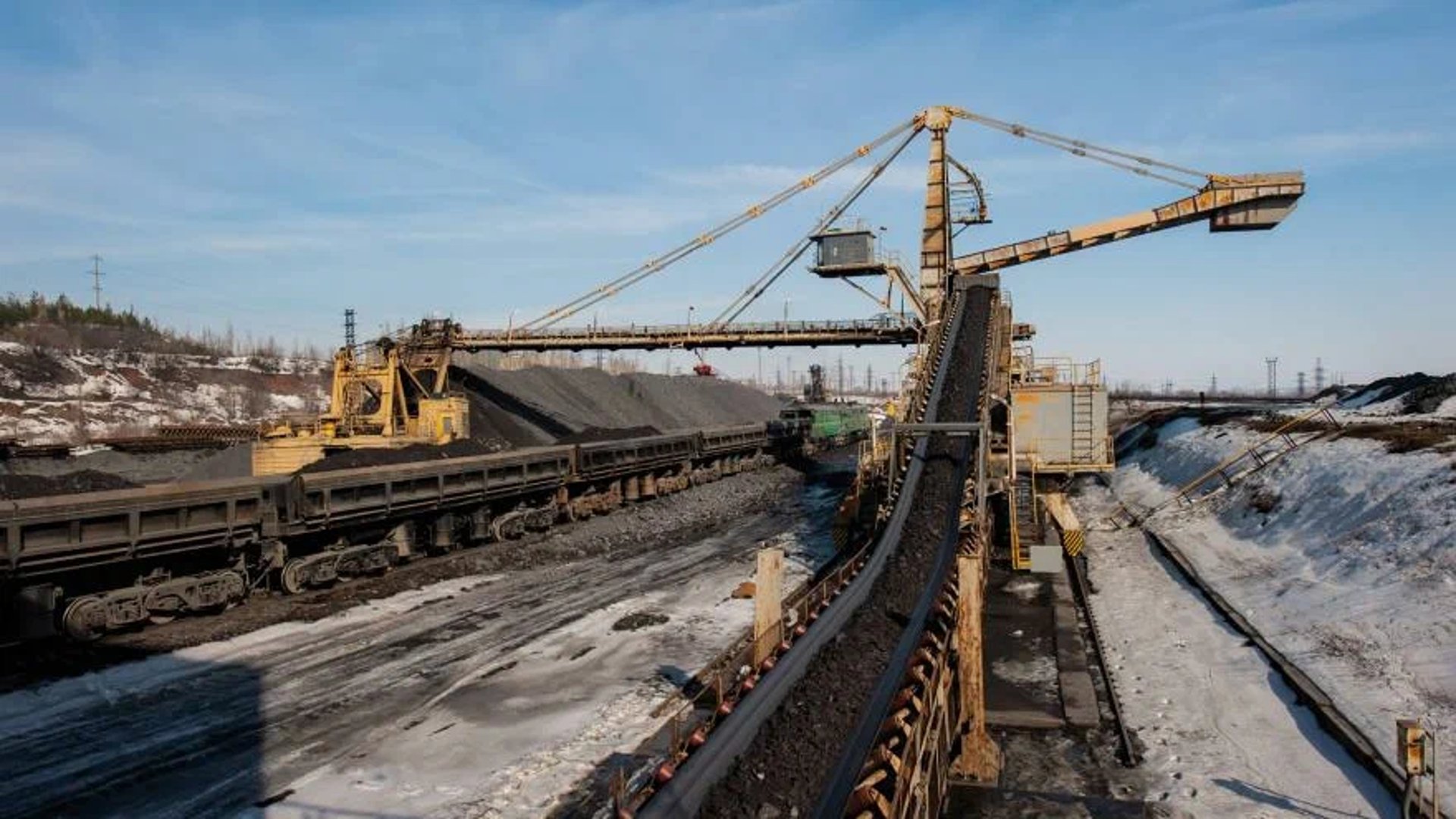
Ports & Terminals: Container cranes, gantry trolleys, straddle carriers, ship‑loaders and yard transporters. These operate outdoors, at high speed, 24/7, in salt‑laden air. Examples: Port of Durban, Cape Town Harbour, Coega, Richards Bay. It matches the performance of premium European brands at a fraction of the cost.
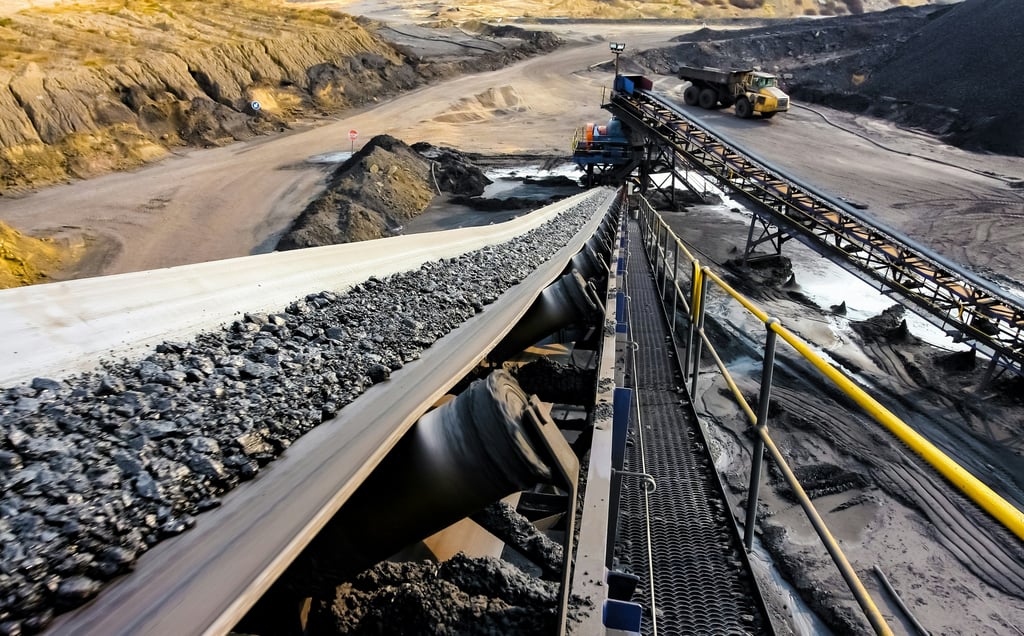
Mining Industry: Overhead cranes, stacker‑reclaimers, conveyor systems, processing plants and surface equipment. Dust, abrasion, extreme temperatures and chemical exposure are constant challenges. It is approved for use under SANS 1520‑related requirements and has proven reliable at mines in Limpopo, North West and Mpumalanga.
Steel & Heavy Engineering: Ladle cranes, rolling mills, forges and foundries. High ambient heat, heavy loads and continuous operation demand maximum reliability. This cable handles up to 90 °C conductor temperature without degradation.
Bulk Material Handling: Coal, ore, grain and mineral terminals. Long travel lengths, heavy loads and outdoor installation are typical conditions.
Automation & Logistics: Warehousing, automated storage and retrieval systems, packaging lines – where precise, reliable movement is essential.
Local Case Examples
At a major coal export terminal in Richards Bay, operators previously used imported European cables costing 40 % more and taking 14 weeks to deliver. After switching to FeiChun FESTOONFLEX‑LX, they achieved identical performance, cut lead times to 5 weeks, and reduced annual cable replacement costs by over 35 %. After 7 years in service, the cables remain in excellent condition, with no signs of premature ageing or sheath cracking – even under constant exposure to sea breeze, high temperatures and abrasive coal dust.
In a platinum mine near Rustenburg, overhead stacker‑reclaimers operate continuously in ambient temperatures reaching 42 °C, with heavy dust and frequent temperature swings. Standard rubber cables lasted only 12–18 months before insulation breakdown occurred. Since installing FESTOONFLEX‑LX, the same machines have run for more than 9 years without a single cable‑related failure. The ability to withstand high continuous temperature and resist abrasion directly eliminated a major maintenance headache and reduced downtime losses by millions of Rands annually.
At a steel plant in Gauteng, ladle cranes work near furnaces, where radiant heat pushes ambient levels above 50 °C, while movement is fast and frequent. Earlier solutions suffered from sheath hardening and brittleness within 2 years. FeiChun’s specially formulated CR sheath maintains its elasticity and mechanical properties even under these extreme thermal cycles, delivering reliable service for over 10 years and meeting all strict safety standards required in heavy industry.
Application Selection Rules
To ensure optimal performance and long life, selection should follow these clear guidelines:
Travel Length: For spans over 50 metres, always choose the reinforced version with additional aramid or polyester tensile members. This reduces tension on the copper conductors and prevents excessive elongation or creep over time.
Operating Speed: If the equipment moves faster than 60 m/min, FESTOONFLEX‑LX is the only recommended choice. Standard rubber cables cannot handle high‑speed cyclic movement; they overheat, fatigue rapidly and often fail within months. This product is rated for continuous operation up to 240 m/min – a key technical advantage for modern high‑efficiency systems.
Environment:
Outdoor or coastal sites: standard CR sheath is sufficient, but tinned copper conductors are strongly advised to prevent corrosion.
High‑altitude or cold‑climate areas (Free State, Lesotho border): specify the low‑temperature variant, which remains flexible and impact‑resistant down to −40 °C.
Heavy dust or abrasive conditions: ensure proper guiding and consider the optional extra‑thick sheath for extended life.
Voltage & Current: Always confirm that the 0.6/1 kV rating covers your system voltage. Calculate current rating according to DIN VDE 0298‑4, applying derating factors for ambient temperatures above 30 °C, grouping of cables, or installation in ducts or enclosed trays.
Full Technical Specifications
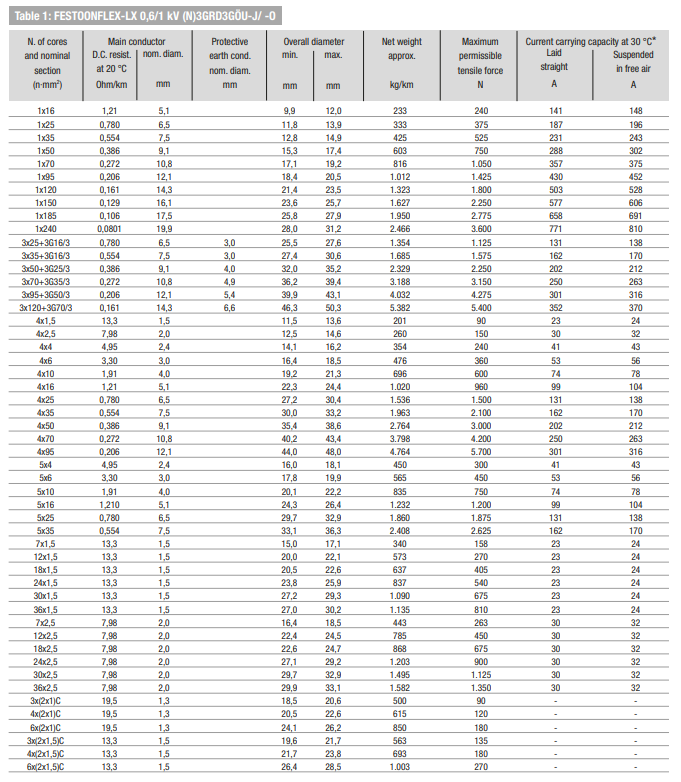
Based on official Prysmian/FeiChun documentation, the following tables summarise the key parameters and standard configurations for FESTOONFLEX‑LX 0.6/1 kV (N)3GRD3GÖU‑J/‑O. These values are fully aligned with VDE 0250‑814 and international standards.
Equivalent Replacement: FeiChun vs. European Brands
A key advantage for South African users is that FeiChun FESTOONFLEX‑LX is a direct, drop‑in equivalent to premium European brands including Prysmian Panzerflex, Palazzo FESTOONFLEX‑LX and UTV Cavi. It meets exactly the same standards, dimensions and performance levels, but offers significant commercial and logistical benefits.
Technical Equivalence
From a technical perspective, there is no compromise. The cable follows VDE 0250‑814 identically, uses equivalent or improved materials, and matches every dimension, colour code and electrical parameter. It fits perfectly into existing festoon systems, trolleys, connectors and cable guides without any modification or redesign. Local engineering consultants, mines and port authorities have reviewed and approved it as fully interchangeable, and it is accepted in all projects where European specifications are required.
In many cases, FeiChun has enhanced the formulation – for example, improving the CR sheath to deliver even better UV and abrasion resistance – making it more suited to South African conditions than the original European version.
Key Advantages for South Africa
✅Price Advantage
Cost savings are substantial and immediate. Compared to imported premium brands, FESTOONFLEX‑LX typically costs 30–45 % less delivered to site. This difference comes from efficient manufacturing, no brand premium, and optimised supply chains – not from cutting corners on quality. For large projects or fleet‑wide replacements, this can reduce capital expenditure by millions of Rands, freeing budget for other critical needs.
✅ Performance Equivalence or Superiority
As noted above, performance is at least equal, and often better, in parameters that matter locally:
Longer outdoor life due to enhanced UV stabilisation
Better low‑temperature flexibility
Higher abrasion resistance for dusty environments
Equal or higher tensile strength
Full compliance with SANS, IEC and VDE standards
✅ Delivery & Supply Chain
This is perhaps the most valued benefit in South Africa, where supply chain delays are common and costly.
Lead time: 4–6 weeks ex‑works, with regional stock holding available for standard sizes.
European alternatives: typically 12–20 weeks, plus unpredictable customs clearance and shipping delays.
Impact: Shorter lead times mean you can plan maintenance shutdowns accurately, respond quickly to emergencies, and reduce inventory holding costs. For mines and ports where every day of downtime costs millions, this reliability of supply is priceless.
✅ Technical Support & Customisation
FeiChun provides direct factory‑backed technical support, with local representatives available to assist with selection, installation advice and problem‑solving. Unlike imported brands where support is often distant or slow, our team understands South African conditions and standards intimately. We can also provide custom configurations – special core counts, screening, reinforced tensile members or low‑temperature versions – quickly and efficiently.
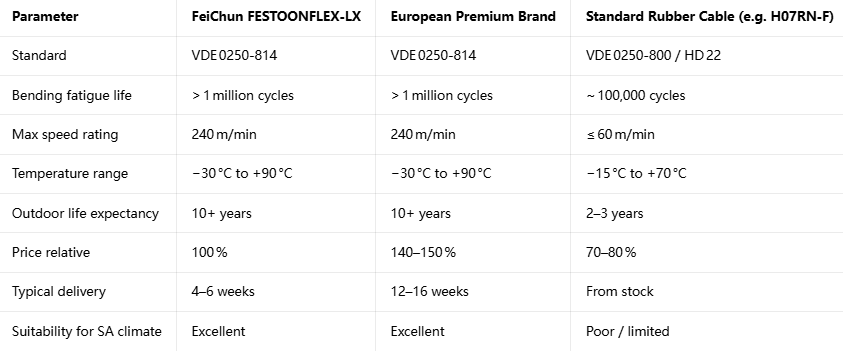
Side‑by‑Side Comparison Table
This comparison clearly shows that while standard cables are cheaper upfront, they are unsuitable for demanding applications. FESTOONFLEX‑LX delivers the same high performance as premium imports, but at a price and delivery time that fits the South African market.
Selection & Configuration Guide
Correct selection ensures safety, performance and maximum life. Follow this step‑by‑step process to specify the right cable for your application.
Step 1: Define Basic Requirements
Voltage: Always confirm system voltage; 0.6/1 kV covers all low‑voltage applications in South Africa.
Core Count & Type:
‑J version: Includes protective earth conductor (green/yellow) – mandatory for almost all industrial, mining and heavy‑duty applications per SANS regulations.
‑O version: No earth core – only for special control circuits where earth is not required.
Arrangement: Choose standard configurations: 3, 4, 5 cores for power; 7, 12, 18, 24 or more cores for control; or combined power + control types such as 3 + 3 cores.
Cross‑section Size: Determined by three factors – current capacity, voltage drop and mechanical strength.
Step 2: Calculate Current Capacity
Use DIN VDE 0298‑4 or SANS 164‑1 tables, starting from the base rating at 30 °C free air.
Derate for temperature: For every 5 °C above 30 °C, multiply rating by approx. 0.94. In mines or hot areas, this is critical.
Derate for grouping: When multiple cables are installed together or enclosed, reduce capacity according to standard factors.
Rule of thumb: Always select a cross‑section that provides at least 10 % extra capacity above calculated maximum load.
Step 3: Check Voltage Drop
For travel lengths over 50 metres, calculate voltage drop to ensure it does not exceed 5 % of nominal voltage under full load. Long spans or high loads may require moving up one size to avoid performance issues at the motor or equipment end.
Step 4: Match Mechanical & Environmental Conditions
Speed > 60 m/min → FESTOONFLEX‑LX only.
Span > 80 m → Reinforced version recommended.
Ambient < −25 °C → Low‑temperature variant.
High interference → Screened construction.
Coastal / chemical exposure → Tinned copper conductors.
Step 5: Final Options
Screened: Individual pair or overall screen for signal integrity.
Reinforced: Aramid/polyester yarns for extra tensile strength.
LSZH / Flame‑retardant: For public access or high‑risk areas.
Custom colours/marking: Available on request.
Selection Checklist
Use this checklist to confirm your specification:
✅ Rated voltage matches system
✅ Core count and type (‑J/‑O) correct for function and safety rules
✅ Current rating ≥ 1.1 × maximum load, with derating applied
✅ Voltage drop ≤ 5 % at full load
✅ Bend radius capability fits equipment design
✅ Tensile rating ≥ 1.5 × maximum dynamic tension
✅ Temperature range covers site extremes
✅ Sheath and conductor material suited to environment
Installation, Operation & Maintenance – Best Practices for South Africa
Proper installation and care are essential to achieve the full 10‑year design life. Even the best cable will fail prematurely if installed or used incorrectly. The following guidelines align with SANS 10142, VDE 0298 and FeiChun recommendations, and are optimised for local conditions.
Installation Rules
Pre‑Installation Preparation
Storage: Keep in original packaging, dry and shaded. Avoid direct sun or rain exposure before use. Do not drag cables over rough ground or sharp edges – this can damage the sheath before installation even begins.
Unrolling: Always unroll from the side of the drum, never pull from the top, to avoid introducing twists. Lay the cable flat for 24–48 hours before installation to release any internal memory or twist from the manufacturing process.
Temperature Warning: Do not install if ambient temperature is below −15 °C. Cold rubber becomes stiff; bending below this temperature can cause micro‑cracks in insulation or sheath. If necessary, warm the cable in a sheltered, heated area to at least +5 °C before handling. This is especially important during winter on the Highveld.
Hardware Selection: Use only matching trolleys, rollers and guides. Wheel diameter ≥ 12 × cable diameter to ensure bending radius limits are respected. Roller material must be nylon, polyurethane or similar low‑friction, non‑abrasive material – metal‑on‑rubber contact will wear through the sheath rapidly.
Festoon System Layout
Sag & Tension Control:
Maintain a 1 – 2 % natural sag between support points. This is one of the most critical installation rules. Too little sag means excessive tension; too much causes dragging and abrasion. Tension should never exceed 10 N/mm² of conductor cross‑section. For spans longer than 80 metres, install intermediate guide rollers or saddles to reduce unsupported length and keep tension within safe limits. When operating at speeds above 120 m/min, fit automatic tension‑regulating devices. These adjust dynamically as the machine moves, preventing slack at one end and over‑tightening at the other – a common cause of premature failure in high‑speed port cranes and automated stackers.
Spacing & Separation: Leave a minimum distance of 1.5 × cable diameter between adjacent cables. This prevents rubbing, tangling and heat build‑up. Where power and control cables run together, separate them or use screened control cables to avoid electromagnetic interference. Ensure cables never come into contact with sharp edges, hot surfaces, or chemical spillage points. In dusty mines or bulk terminals, position guides so cables do not drag along the ground or accumulate material.
Bending Control: Strictly adhere to the minimum bend radius: 10 × OD for moving sections, 6 × OD for fixed runs. Avoid reverse bends or tight S‑curves in short distances, as these create opposing stresses that accelerate fatigue. All changes of direction must be gradual and supported by properly sized rollers or curved guides. In South Africa’s high‑temperature environments, bending radius should be increased by 20 % where possible to reduce mechanical stress on softened rubber compounds.
Termination & Sealing: Use anti‑twist rotating joints at both ends of the travel. These eliminate torsional forces that would otherwise wind up along the cable length and damage internal layers. Fit strain‑relief clamps that distribute load over a long section of sheath – never grip tightly at one point. All joints, terminations and connections must be sealed to IP65 or higher. This is non‑negotiable in coastal areas, rainy regions or underground operations. Use self‑amalgamating rubber tape followed by heat‑shrink sleeves to create a permanent, watertight barrier against moisture, dust and salt ingress.
Electrical Connection
Conductor Termination: Use only high‑quality compression lugs or crimp connectors suitable for fine‑strand Class 5 conductors. Ensure full insertion of strands and apply correct crimping force – poor connections are the leading cause of overheating and insulation failure. Welded or ultrasonic bonding is recommended for high‑current or high‑vibration applications. Measure contact resistance after installation; it should be less than 0.1 mΩ per connection.
Colour Coding: Follow DIN VDE 0293‑308 / HD 308 S2 strictly:
L1 – Brown
L2 – Black
L3 – Grey
PE – Green‑Yellow
Neutral – Blue
This matches South African wiring standards and ensures compatibility with all existing equipment and safety regulations. Mis‑identification of cores is a major safety risk and can lead to incorrect rotation direction or earth faults.
Earth Continuity: In ‑J type cables, the protective earth conductor is sized and constructed to carry full fault current. Always verify continuity and low resistance (< 4 Ω to main earth electrode) before energising. This is mandatory under SANS 10142 and critical for operator safety in mining and heavy industry.
Operation Guidelines
Speed Limits: Do not exceed 240 m/min for trolleys or 60 m/min for drum reeling. These are not arbitrary figures – they represent the maximum speed at which heat generated by flexing and friction can dissipate safely. Standard rubber cables fail above 60 m/min; this cable is engineered for high speed, but limits must still be respected. If retrofitting older systems, check that drive acceleration/deceleration rates do not create shock loads or sudden tension spikes.
Load & Temperature Management: Reduce operating current by 10 % for every 5 °C above 30 °C ambient. In mines or steel plants where temperatures exceed 40 °C regularly, derating is essential to prevent thermal ageing. Avoid over‑loading, as high current raises conductor temperature and accelerates degradation of insulation and sheath. In winter at high altitude, allow cables to warm up slightly during the first hour of operation before running at full speed.
Environmental Protection: Keep cables free from heavy accumulations of dust, ore, coal or chemicals. In oil‑rich environments, wipe down regularly; while the sheath is oil‑resistant, prolonged immersion or thick deposits can eventually affect properties. Protect against welding sparks or hot particles in fabrication yards – although self‑extinguishing, rubber can be damaged by direct high‑temperature contact.
Maintenance Program (Optimised for South African Conditions)
Routine Inspection Schedule
Maintenance should be planned around the local environment – sites in the Northern Cape or coastal areas need more frequent checks.
Daily / Weekly (Visual):
Check for cuts, cracks, abrasion, swelling or deformation. Pay special attention to bend points, termination areas and sections passing over rollers.
Look for signs of twisting, knotting or slack/tight spots.
Verify that tension devices and guides are functioning correctly.
Listen for unusual noise or vibration, which often indicates misalignment or worn hardware.
Quarterly:
Measure remaining sheath thickness at wear points. If worn down by more than 20 % of original thickness, plan replacement – further wear exposes reinforcement or cores.
Perform insulation resistance test using a 500 V megger. Values should be ≥ 1000 MΩ·km. Any drop below 100 MΩ·km indicates moisture ingress or damage.
Check all clamps, bolts and joints for tightness and corrosion.
Lubricate rollers, bearings and tension mechanisms with silicone‑based grease – never use petroleum‑based products, as these will degrade the CR sheath.
Annually:
Full electrical test: withstand voltage at 2.5 kV AC for 5 minutes.
Measure conductor resistance balance between phases – deviation should be < ± 2 %.
Inspect core colour and condition at terminations – darkening or brittleness signals thermal ageing.
Verify earth loop impedance and fault‑current path.
Every 2–3 Years:
Conduct a sample dissection: remove a short length and examine internal layers. Look for core deformation, tape displacement, conductor darkening or insulation hardening. This is the only way to detect internal degradation before failure.
Update life prediction model based on actual operating hours, temperature history and wear rate.
Common Wear Points in South Africa
Outdoor / High Sun Areas: UV radiation gradually hardens the sheath. In the Northern Cape, Free State and Limpopo, inspect every 6 months. FeiChun’s enhanced CR compound resists this far better than standard rubber, but ageing is inevitable over long periods. Early signs: surface chalking or fine cracking – if caught early, life can be extended by reducing tension or improving guiding.
Mining & Bulk Handling: Abrasion from dust and ore is the main enemy. Use extra‑thick sheath option and ensure guides prevent dragging. Regular cleaning reduces abrasive action.
Coastal Locations: Salt air accelerates corrosion of copper and fittings. Specify tinned conductors and stainless‑steel hardware. Inspect terminations every 3 months for white or green corrosion deposits.
Highveld / Cold Areas: Temperature cycling causes expansion/contraction fatigue. Ensure correct sag and use low‑temperature variant. Inspect for cracking in winter months.
Life Extension Best Practices
Keep it Moving Smoothly: 70 % of failures are caused by mechanical stress, not material ageing. Correct alignment, tension and guiding are more important than any material specification.
Avoid Splicing: Never splice or repair moving sections. Permanent splices create stiffness points that cause failure within months. Replace complete lengths when damage occurs.
Store Correctly: Spare cables stored for more than 1 year should be rotated 180° every 6 months to prevent permanent set or twist.
Common Problems, Troubleshooting & Solutions
Mechanical Failures
Sheath Cracking / Splitting
Symptoms: Fine surface cracks → deep fissures → exposure of underlying layers.
Causes:
Operating below minimum temperature or bending too tightly in cold conditions.
Bend radius consistently below 10 × OD.
Long‑term UV exposure without adequate stabilisation.
Contact with solvents, diesel or mineral oils that swell or soften standard rubber.
Solutions:
Install low‑temperature variant for high‑altitude or winter‑prone sites.
Upgrade guides and rollers to ensure radius compliance.
Use FeiChun FESTOONFLEX‑LX – its CR formulation resists oil and UV far better than cheaper alternatives.
Replace damaged sections immediately – cracks allow moisture entry which leads to insulation failure.
Local Note: This is the most frequent issue reported by South African users of imported standard cables; it is almost eliminated with this product.
Conductor Breakage / Open Circuit
Symptoms: Intermittent or permanent loss of power, high resistance readings.
Causes:
Excessive tension or shock loads pulling conductors beyond elastic limit.
Repeated bending fatigue at fixed points or tight curves.
Twisting or torsion damage from lack of anti‑twist joints.
Misaligned guides causing side‑load stress.
Solutions:
Install automatic tension control and anti‑twist swivels.
Increase bend radius by 20 % in high‑cycle applications.
For spans > 100 m, select reinforced version with aramid strength members – these carry mechanical load, protecting copper cores.
Twisting, Knotting or Spiralling
Symptoms: Cable forms loops, twists around supports, does not run smoothly.
Causes:
Unbalanced lay‑length in inferior cables.
Uneven tension or asymmetric running paths.
Missing or faulty anti‑twist devices.
Solutions:
FESTOONFLEX‑LX has a balanced lay design specifically to resist twist – this is a built‑in feature not found in all competitors.
Ensure both ends are free to rotate or fitted with swivels.
Adjust tension to be equal along the full length.
Electrical Issues
Low Insulation Resistance / Leakage Current
Symptoms: Megger readings drop below acceptable levels; earth fault alarms.
Causes:
Sheath damage allowing water or dust ingress.
Overheating causing insulation degradation.
Poor sealing at joints or terminations.
Ageing in hot environments.
Solutions:
Locate and repair sheath damage immediately.
Improve ventilation or derate current in high‑temperature areas.
Re‑seal all joints using correct materials and techniques.
Switch to EPR insulation – it maintains high resistance even when wet or aged, unlike PVC or some rubber types.
Overheating / High Operating Temperature
Symptoms: Cable feels hot to touch; sheath discolours or becomes soft; frequent over‑current trips.
Causes:
Undersized cross‑section – current exceeds capacity.
Ambient temperature > 30 °C with no derating applied.
Cables grouped or enclosed with no air flow.
High resistance connections.
Solutions:
Recalculate sizing using correct SANS/VDE tables including all correction factors.
Increase conductor size by one step – often the most cost‑effective fix.
Separate cables or improve ventilation.
Remake all connections and test resistance.
High Voltage Drop
Symptoms: Equipment runs slowly, motors over‑heat, contactors drop out under load.
Causes:
Too small conductor for long travel length.
High resistance joints.
Solutions:
Follow selection guide: for every 100 m span, increase cross‑section by at least one size.
Use high‑quality compression connectors.
Environmental Degradation
UV Hardening / Embrittlement
Symptoms: Sheath becomes hard, loses flexibility, cracks when bent.
Cause: Standard rubber compounds lack carbon black or UV stabilisers.
Solution: Only use cables with CR sheath formulated for outdoor use – FESTOONFLEX‑LX includes high‑grade stabilisers proven for 10+ years in South African sun.
Oil / Chemical Swelling
Symptoms: Sheath softens, swells, peels or dissolves in contact with fluids.
Cause: Insufficient chemical resistance in compound.
Solution: FeiChun’s sheath meets VDE oil‑resistance standards – it will not swell or degrade under normal industrial exposure. For severe chemical environments, consult our engineering team for special formulations.
Cold Brittleness
Symptoms: Cracks or breaks when moved in winter.
Cause: Material glass transition temperature too high.
Solution: Standard version works to −30 °C; low‑temp variant to −50 °C – both suitable for South African winters.
FAQs
Q1: Is FeiChun FESTOONFLEX‑LX fully interchangeable with Prysmian Panzerflex or Palazzo cables?
✅ Yes, completely. It is manufactured to the exact same standard (VDE 0250‑814), same dimensions, same colours and same performance levels. It fits all existing trolleys, connectors and systems without modification. It has been approved by major mines, port authorities and engineering consultants across South Africa as a direct replacement.
Q2: How much money can we save compared to imported brands?
✅ Typically 30 – 45 % on purchase price alone. When you add the cost of delays, import duties and currency fluctuations, total savings often reach 50 %. Over a 10‑year life, total cost of ownership is roughly 45 % of what you would pay for European imports.
Q3: How long is the delivery time? This is critical for our shutdown schedules.
✅ 4–6 weeks ex‑works for standard sizes, with regional stock available for urgent requirements. European brands take 12–20 weeks plus shipping and customs delays. Our supply chain is set up specifically to serve Southern Africa reliably.
Q4: Will this cable handle our harsh local conditions – extreme heat, cold, dust and strong sun?
✅ Yes – it is designed for exactly this. The EPR insulation and CR sheath are enhanced versions of the standard formulations, tested under local climate profiles. It is currently operating successfully in every province of South Africa, from the Northern Cape to the Western Cape, from Limpopo to the Free State.
Q5: Does it meet South African standards and mining regulations?
✅ Fully compliant. It meets or exceeds SANS 10142, IEC and VDE standards. We supply full test certificates, declaration of conformity and all documentation required for mining department approval. It is accepted for use in all hazardous and non‑hazardous areas.
Q6: When must I use FESTOONFLEX‑LX instead of ordinary rubber cable?
✅ Always if:
Operating speed exceeds 60 m/min
Installed outdoors
Continuous or frequent movement
Long life (> 3 years) is required
Harsh environment (dust, sun, oil, chemicals)
Standard cables fail quickly in these conditions; this cable lasts 8–12 years.
Q7: What is the difference between ‑J and ‑O versions?
✅ ‑J = with protective earth conductor (green/yellow). This is required by law for almost all industrial, mining and commercial installations in South Africa. ‑O = without earth core. Only used for special control circuits where an earth is not needed.
Q8: Can you supply custom sizes or special constructions?
✅ Absolutely. We can provide custom core arrangements, extra screening, reinforced tensile members, low‑temperature grades, LSZH versions and special colours. Our engineering team works directly with you to design exactly what you need.
Conclusion
FESTOONFLEX‑LX 0.6/1 kV (N)3GRD3GÖU‑J/‑O rubber cables represent far more than just a product alternative – they are a complete engineered solution purpose‑built for dynamic power and control supply in festoon systems, cranes and material handling equipment. Every element of their design, from the fine‑strand copper conductors and balanced cabling structure to the enhanced EPR insulation and premium polychloroprene sheath, is optimised to solve the specific challenges faced in South Africa: intense ultraviolet radiation, extreme temperatures, abrasive dust, coastal corrosion and high‑speed continuous operation.
Through deep understanding of engineering principles and material science, FeiChun has developed a cable that matches or exceeds the performance of top European brands such as Prysmian Panzerflex and Palazzo, while delivering three decisive advantages for local users: significant cost savings of 30–45 %, reliable delivery within 4–6 weeks, and formulations specifically enhanced for Southern African conditions.
This guide has detailed the technical background, specifications, selection process, installation rules, maintenance best practices and economic benefits. The evidence is clear: standard rubber cables are simply not suitable for demanding applications in this country, often failing within 1–3 years. Premium imported cables perform well but come at high cost and with long, uncertain delivery times. FESTOONFLEX‑LX bridges this gap perfectly, delivering premium performance, long life of 8–12 years, full compliance with local and international standards, and exceptional value.
For engineers, procurement specialists and project managers, the choice is straightforward:
✅ Same or better quality than European brands
✅ 30–45 % lower purchase price
✅ Short, reliable delivery times
✅ Proven performance in South African mines, ports and industry
✅ Full technical support and compliance documentation
Whether you are designing new systems, replacing ageing cables, or seeking to reduce maintenance costs and improve reliability, FESTOONFLEX‑LX is the smartest technical and commercial choice. It is not just a cable – it is the foundation of safe, efficient and long‑lasting operation.
Contact Us
For detailed quotations, full technical datasheets, sample specifications or personalised engineering consultation, please reach out to our dedicated team. We are ready to support your project from initial selection through to installation and long‑term service.
Contact FeiChun Cables Team: Li.wang@feichuncables.com
We provide:
Complete technical support and assistance with selection
Custom design and special constructions to meet exact requirements
Fast, reliable delivery to all regions of South Africa and neighbouring countries
Full compliance documentation, test certificates and declaration of conformity
Local representation and after‑sales service
Choose FESTOONFLEX‑LX – Quality, Reliability, Value – Engineered for South Africa.
Email Address: Li.wang@feichuncables.com
© 2025. All rights reserved.
One-click to Quickly Contact
Products
Contact
Company
Location:
Building A Private Science and Technology Park, Hefei Economic and Technological Development Zone, Anhui Province, China
Heat Resistant Cable
WhatsApp: +86 17333223430
Social Media: