Anhui Feichun Special Cable Co.,Ltd Email: Li.wang@feichuncables.com
Fire, Salt, Steel and Survival: Why BS 7917 Cables Are the Lifeline of Offshore Installations
Discover how BS 7917 fire-resistant offshore cables — including TCu/MGT/EPR/CS/ZH/GSWB/ZH BS7917 150/250V, TCu/MGT/EPR/IS/ZH/GSWB/ZH BS7917 150/250V, and TCu/MGT/EPR/ZH/GSWB/ZH BS7917 0.6/1kV SW4 cables — protect lives and critical systems in South African offshore, marine, and high-risk industrial environments.
Li Wang
12/15/20256 min read
Why BS 7917 Matters in High-Risk Environments
Fire is not a theoretical risk offshore — it is one of the most credible and catastrophic hazards faced by marine and offshore installations. In environments such as offshore oil and gas platforms, FPSOs (Floating Production Storage and Offloading units), drilling rigs, and coastal energy facilities, a fire can escalate rapidly due to hydrocarbons, confined spaces, high ambient temperatures, and limited evacuation options.
In these conditions, cable performance during fire becomes a matter of life safety, asset protection, and operational continuity. When conventional cables fail, essential services — emergency lighting, alarms, communication, control systems, and fire pumps — are lost precisely when they are needed most.
This is where British Standard BS 7917 plays a critical role.
Across Southern Africa, and particularly along the South African coastline where offshore energy activity is growing, BS 7917 fire-resistant cables are increasingly specified alongside IEC standards. Engineers and specifiers recognise that BS 7917 does not merely require cables to be flame retardant — it requires them to survive fire for hours while maintaining limited circuit integrity.
This article provides a deep, practical, and experience-driven overview of BS 7917 and its key cable constructions, including:
TCu/MGT/EPR/CS/ZH/GSWB/ZH BS 7917 150/250V Cable
TCu/MGT/EPR/IS/ZH/GSWB/ZH BS 7917 150/250V Cable
TCu/MGT/EPR/ZH/GSWB/ZH BS 7917 0.6/1kV SW4 Cable
We will explore how these cables are designed, tested, installed, and applied — with specific reference to South African offshore conditions and real project experience.
Understanding the BS 7917 Standard
What Is BS 7917?
BS 7917 is a British Standard that specifies elastomer-insulated, fire-resistant cables with limited circuit integrity for fixed wiring in mobile and fixed offshore units.
Unlike general offshore cable standards, BS 7917 focuses explicitly on fire survival under severe and prolonged fire exposure. It defines:
Constructional requirements
Material selection
Additional fire resistance testing
Performance criteria under real fire conditions
The standard is intended for applications where continued operation of electrical circuits during fire is essential, even if full electrical performance cannot be guaranteed indefinitely.
A key concept in BS 7917 is the distinction between:
Fire resistance: The ability of a cable to withstand fire without catastrophic failure
Circuit integrity: The ability to continue carrying current during fire exposure
BS 7917 cables offer limited circuit integrity, meaning they are designed to keep circuits operational long enough to support emergency response, safe shutdown, and evacuation.
BS 7917 vs BS 6883 and BS 7919
To understand BS 7917 properly, it must be viewed alongside BS 6883.
BS 6883 defines construction requirements for offshore cables used in lighting, power, control, instrumentation, and propulsion circuits up to 3.3 kV — without fire-resistant circuit integrity.
BS 7917 builds on BS 6883 construction but adds mandatory fire-resistant features and testing.
BS 7919 similarly addresses fire-resistant cables but is often used in conjunction with BS 6883 rather than replacing it.
In practice:
BS 6883 → Standard offshore cables
BS 7917 → Offshore cables where fire survival is critical
Typical voltage ranges covered by BS 7917 include:
150/250V for control, instrumentation, and signalling
0.6/1kV for auxiliary and essential power distribution
Fire Performance Classifications in BS 7917
BS 7917 defines two fire resistance levels:
F0: Fire resistance for 3 hours at 750°C
F1: Fire resistance for 3 hours at 950°C
These tests simulate fully developed offshore fire scenarios, not laboratory-scale flame exposure. The cables are tested according to IEC/EN 60331-21, often with mechanical shock and water spray.
The key technology enabling this performance is the mica glass tape fire barrier, applied either over the conductor or over the insulation.
BS 7917 Cable Design Philosophy
The philosophy behind BS 7917 cables is clear and uncompromising:
Survive fire
Protect personnel
Maintain essential operations
This leads to several fundamental design priorities:
Halogen-free materials to minimise toxic and corrosive gases
Low smoke emission for visibility and evacuation
Mechanical robustness to withstand vibration and movement
Oil resistance for marine and hydrocarbon environments
Wide temperature tolerance from –40°C to +90°C
In offshore environments, cables are not passive components — they are part of the safety system.
Common Construction Elements in BS 7917 Cables
Conductors
BS 7917 cables typically use:
Class 5 flexible tinned copper conductors for smaller cross-sections
Class 2 stranded tinned copper conductors for larger sizes
Tinned copper provides excellent resistance to corrosion in salt-laden marine atmospheres, significantly extending service life.
Fire Barrier System
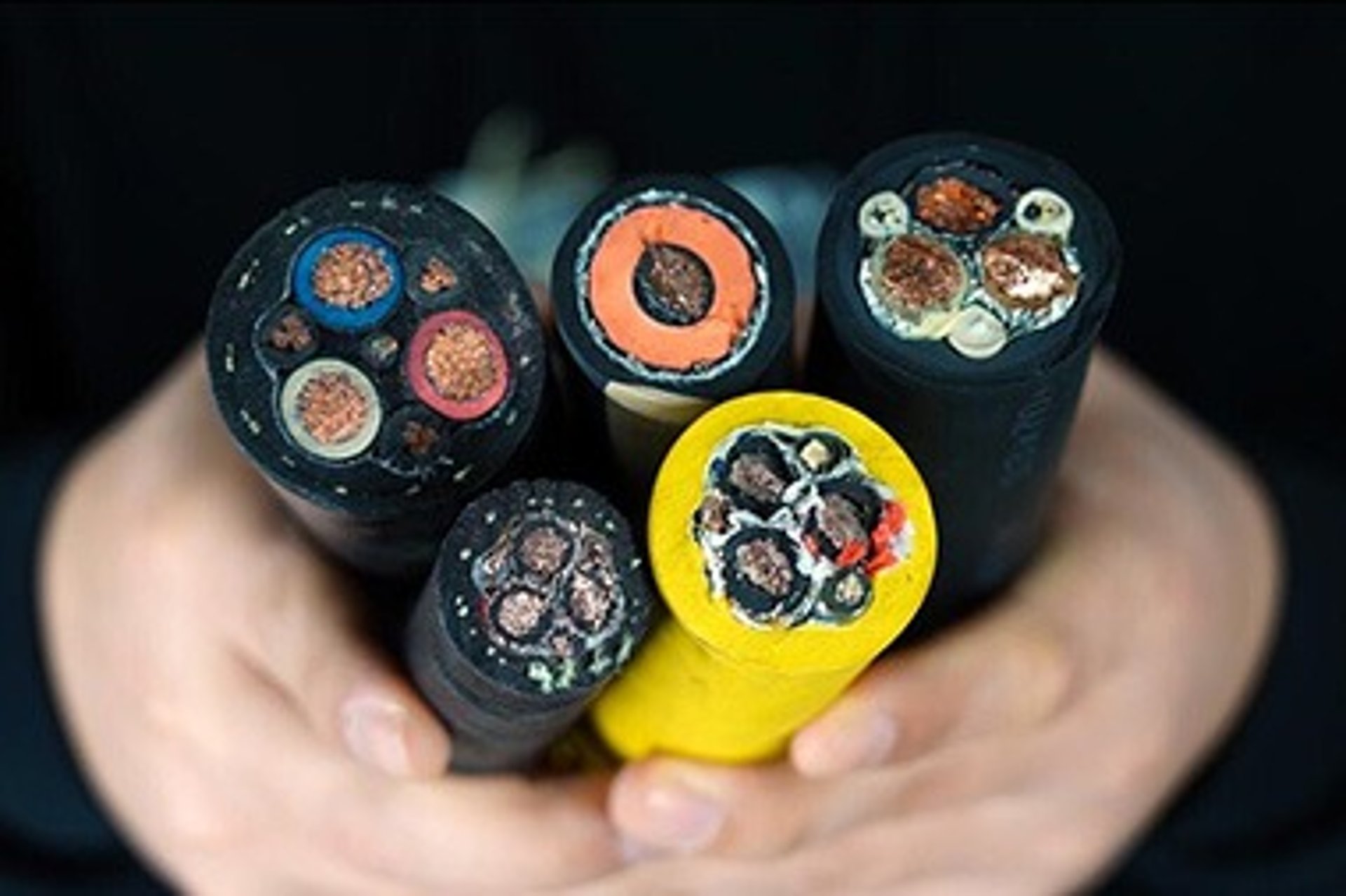
The mica glass tape separator is the heart of the fire-resistant design.
During fire exposure:
Organic insulation materials degrade
The mica tape remains intact
A temporary electrical path is maintained
This is what enables limited circuit integrity, allowing systems to operate during emergency conditions.
Insulation and Bedding Materials
BS 7917 cables use halogen-free EPR (Ethylene Propylene Rubber) insulation and elastomeric bedding.
Key properties include:
Excellent thermal stability
Resistance to ozone and moisture
Flexibility under low temperatures
Compatibility with fire barrier systems
Armour and Mechanical Protection
GSWB (Galvanised Steel Wire Braid) provides:
Mechanical impact resistance
Abrasion protection
Enhanced tensile strength
Flexibility compared to wire armour
This is particularly important on offshore trays and moving structures.
Outer Sheath (ZH / SW4 Types)
Outer sheaths are:
Halogen-free
Oil-resistant
Flame retardant
Low smoke and low toxicity
For higher voltage cables, SW4 sheaths offer enhanced oil resistance and durability.
Detailed Overview of BS 7917 Cable Types
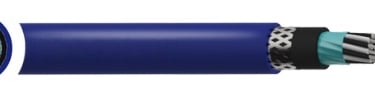
TCu/MGT/EPR/CS/ZH/GSWB/ZH BS 7917 150/250V Cable
This cable is widely used for control, instrumentation, and signalling.
Key features:
Collective aluminium polyester screen (CS)
Class 5 flexible tinned copper conductors
Halogen-free EPR insulation
GSWB armour
ZH outer sheath
Applications:
Process control circuits
Alarm and detection systems
Offshore instrumentation
The collective screen provides effective EMC protection where signals are not individually sensitive.
TCu/MGT/EPR/IS/ZH/GSWB/ZH BS 7917 150/250V Cable
This design introduces individual screening (IS) for each pair or core.
Advantages:
Superior EMC performance
Reduced signal interference
Improved reliability in dense control rooms
Typical use cases:
Safety-critical monitoring
Automation systems
Emergency shutdown circuits
Due to additional layers, a larger minimum bending radius is required during installation.
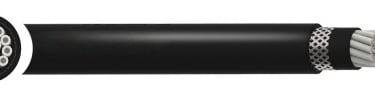
TCu/MGT/EPR/ZH/GSWB/ZH BS 7917 0.6/1kV SW4 Cable
This cable supports higher voltage power distribution.
Characteristics:
Voltage rating: 0.6/1kV
SW4 oil-resistant outer sheath
Class 5 or Class 2 conductors depending on size
Applications:
Auxiliary power systems
Essential services
Offshore power feeders
Electrical and Technical Performance Explained
BS 7917 cables are designed not only for survival but also for predictable electrical behaviour.
Key parameters include:
Voltage test levels appropriate to rating
High insulation resistance for safety
Controlled capacitance and inductance for signal integrity
Temperature rating up to +90°C for current-carrying capacity
Installation Considerations for BS 7917 Cables
Correct installation is critical to maintaining performance.
Best practices include:
Observing minimum bending radius
Proper gland selection for fire-resistant systems
Correct earthing of screens and armour
Segregation from non-fire-resistant circuits
In South Africa, installations must align with offshore safety regulations, marine classification rules, and project-specific specifications.
Typical Applications in Southern Africa
BS 7917 cables are commonly used in:
Offshore oil and gas platforms off the South African coast
FPSOs and support vessels
Coastal power generation facilities
LNG terminals and marine energy infrastructure
Compliance, Testing, and Certification
BS 7917 cables undergo rigorous testing, including:
IEC/EN 60331-21 fire resistance
IEC/EN 60332 flame retardancy
IEC/EN 60754 halogen-free verification
Third-party testing is essential for offshore projects.
BS 7917 vs Alternative Offshore Cable Standards
While IEC offshore designs are widely used, BS 7917 remains preferred where:
Fire duration is expected to be prolonged
Circuit survival is critical
Project specifications demand proven fire resistance
In Southern Africa, BS 7917 is increasingly specified for high-risk installations.
Frequently Asked Questions (FAQ)
What does limited circuit integrity mean?
The cable can continue operating during fire for a defined period, supporting emergency functions.
Can BS 7917 replace BS 6883 cables?
Only where fire resistance is required — otherwise BS 6883 may be sufficient.
Are BS 7917 cables suitable onshore?
Yes, particularly in hazardous or high-risk industrial areas.
How long can they operate during fire?
Up to 3 hours, depending on F0 or F1 classification.
What is the difference between SW2, SW3, and SW4?
They define duty level, oil resistance, and fire behaviour of the outer sheath.
Conclusion
BS 7917 cables represent engineering foresight under extreme conditions.
By combining robust construction, proven fire resistance, and real-world offshore experience, cable types such as:
TCu/MGT/EPR/CS/ZH/GSWB/ZH BS 7917 150/250V
TCu/MGT/EPR/IS/ZH/GSWB/ZH BS 7917 150/250V
TCu/MGT/EPR/ZH/GSWB/ZH BS 7917 0.6/1kV SW4
provide engineers and project owners with confidence, compliance, and continuity.
In offshore environments, the right cable selection is not just good engineering — it is a critical safety decision.


Contact Anhui Feichun Special Cable Co., Ltd.
For comprehensive technical specifications and quotations, please contact our specialized mining cable engineering team:
Technical Engineering Support:
Sales Engineering Department:
WhatsApp Contact:
Manufacturer: Anhui Feichun Special Cable Co., Ltd. (安徽飞纯特种电缆有限公司)
Manufacturing Headquarters: Building A, Private Science and Technology Park, Hefei Economic and Technological Development Zone, Anhui Province, People’s Republic of China
+86 17333223430
Email Address: Li.wang@feichuncables.com
© 2025. All rights reserved.

One-click to Quickly Contact
Products
Contact
Company
Location:
Building A Private Science and Technology Park, Hefei Economic and Technological Development Zone, Anhui Province, China
Heat Resistant Cable
WhatsApp: +86 17333223430
Social Media: