Anhui Feichun Special Cable Co.,Ltd Email: Li.wang@feichuncables.com
H07VVH6-F PVC Flat Cable Explained: Flexible Festoon Cable Solutions for Overhead Cranes and Industrial Handling Systems
Explore the engineering principles, material science, performance benefits, and real-world applications of H07VVH6-F PVC Flat Cable. Designed for festoon systems, overhead cranes, and material handling equipment widely used across South Africa’s ports, mines, and manufacturing plants, this guide offers technical specifications, selection advice, procurement strategies, and shows how Feichun brand delivers an equivalent, cost-effective alternative to premium European brands.
Li Wang
5/19/202614 min read
Introduction
In heavy industry, the reliability of power and control connections directly impacts operational uptime, safety, and productivity. For moving equipment such as overhead cranes, gantries, conveyors, and automated handling systems, standard round cables often fail to deliver the required flexibility, stability, and service life. This is where the H07VVH6-F PVC Flat Cable becomes the preferred solution. Engineered specifically for dynamic applications, this flat flexible cable has become an industry standard in South Africa and across the globe, valued for its ability to perform consistently in both indoor workshops and harsh outdoor environments.
This article takes a deep dive into every aspect of the H07VVH6-F cable. It explains the engineering logic behind its flat construction, the material choices that give it superior performance, and how it is applied in key sectors such as port logistics, mining, and manufacturing. It also provides clear guidance on how to select the right configuration, how to source it effectively, and why the Feichun brand serves as a technically equivalent, more affordable, and readily available alternative to well-known European manufacturers. Whether you are an electrical engineer designing a new system, a procurement specialist sourcing replacement parts, or a maintenance manager looking to improve reliability, this guide will give you the detailed, practical information you need.
Decoding the Cable Name and Compliance Standards
To understand what this cable offers, it helps first to break down its designation H07VVH6-F. Each letter and number corresponds to a defined characteristic under European harmonised standards, which are widely adopted and recognised in South Africa as benchmarks for quality and safety.
H: Indicates the cable meets a harmonised European standard, meaning its design and testing specifications are consistent across all member countries and accepted internationally.
07: Refers to the voltage rating, in this case 450/750 V, which is suitable for low-voltage power and control circuits common in industrial machinery.
VV: Denotes the insulation and sheath material. The first V stands for PVC insulation, and the second V stands for PVC outer sheath.
H6: Specifies the structural design — a flat profile with cores laid parallel side-by-side, optimised for repeated bending and movement in one plane.
F: Means the conductor is made of fine strands, classified as flexible according to IEC 60228 Class 5.
The cable is manufactured and tested to strict technical standards, ensuring uniform quality regardless of the producer. The key standards applicable here include:
HD 359 S2: Covers the general construction and performance requirements for flat flexible cables.
IEC 60227 Part 6: Specifies the requirements for control and power cables with a rated voltage up to 450/750 V, specifically flat types.
HD 308 S2: Defines the colour and number coding for core identification, ensuring safe and error-free installation.
IEC 60332‑1: Outlines the flame retardancy test, confirming the cable is self-extinguishing and does not spread fire.
In South Africa, these standards align well with local industrial safety regulations and specifications required by state-owned entities such as Transnet, mining houses, and large manufacturing groups. Choosing a cable that complies with these standards guarantees compatibility with existing systems and adherence to tender and project requirements.
Engineering Principles: Why the Flat Design Works
The most distinctive feature of the H07VVH6-F cable is its flat shape. While round cables are suitable for fixed installations or multi-directional movement, the flat design is the result of careful engineering aimed at solving specific problems found in festoon systems and moving machinery.
Mechanical Engineering and Movement Logic
When a cable moves back and forth along a track, as seen on overhead cranes in Durban’s container terminals or conveyors in Gauteng’s industrial zones, a round cable tends to twist, bunch up, or rub unevenly against supports. Over time, this causes fatigue, abrasion, and eventual failure. The flat design eliminates these issues by arranging all cores in a single plane. This means every part of the cable bends along the same radius, distributing mechanical stress evenly across the entire cross-section.
Engineers have calculated the mechanical limits precisely to ensure durability:
Static tensile stress rating: 15 N/mm² — the maximum load the cable can support when stationary or suspended.
Dynamic tensile stress rating: 30 N/mm² — the safe load limit while moving, accounting for acceleration and tension changes.
Maximum travel speed: Up to 120 m/min, making it suitable for high-speed automated systems.
Recommended bending radius: At least 4 times the cable thickness for fixed installation and 10 times the thickness for moving applications.
By following these parameters, operators can expect service life exceeding millions of bending cycles, significantly reducing replacement costs and maintenance downtime. In South African ports, where equipment operates continuously around the clock, this reliability translates directly into operational efficiency.
Electrical Engineering and Safety
Beyond mechanics, the electrical design ensures safe and stable performance under all conditions. The insulation system is engineered to withstand the operating voltage of 450/750 V with a significant safety margin. Every cable undergoes a routine voltage test at 2.5 kV AC for 5 minutes before leaving the factory. This test verifies that there are no defects in the insulation that could lead to short circuits or electrical breakdown.
Thermal design is equally important, especially in regions like Limpopo or the Northern Cape where ambient temperatures can reach extreme highs. The conductor is rated for a maximum continuous operating temperature of +70 °C. Under short-circuit conditions, it can safely handle temperatures up to +150 °C for short durations, protecting both the cable and the connected equipment. Surface temperature limits are defined as ‑35 °C to +60 °C for fixed installation and ‑25 °C to +60 °C for mobile operation, covering the full range of climatic conditions found across Southern Africa.
Structural Design Details
Inside the cable, additional engineering details enhance usability and performance. Between groups of cores, special tear cords are embedded in the sheath. These strong threads allow installers to strip back the outer layer quickly and cleanly without damaging the insulation underneath. This feature is highly valued by electrical contractors working on tight schedules, as it speeds up termination and reduces the risk of installation errors.
The cores themselves are laid parallel without twisting, maintaining a uniform electrical capacitance and resistance along the entire length. This consistency ensures that both power transmission and control signals remain stable, which is critical for automated machinery where precise timing and feedback are required.
Material Science: Composition and Performance Impact
The performance of the H07VVH6-F cable is not just a result of its shape, but also the careful selection and formulation of materials used in every layer. Material science plays a central role in determining flexibility, durability, and resistance to the environment.
Conductor: Flexible Plain Copper — Class 5
At the heart of the cable is the conductor, made from high-purity plain copper conforming to IEC 60228 Class 5. Unlike solid or rigid conductors, Class 5 consists of many fine strands of copper wire twisted together. This structure offers two key benefits. First, fine strands allow the cable to bend easily without breaking or suffering permanent deformation. Second, copper provides excellent electrical conductivity, ensuring low power loss and efficient energy transfer — an important factor as South African industries focus on energy efficiency.
The choice of copper also contributes to thermal stability. It can carry high current loads without overheating, provided the cross-section size is correctly selected. For outdoor installations, plain copper offers sufficient corrosion resistance, though the insulation and sheath provide the primary protection against environmental factors.
Insulation: Special Formulation PVC
The insulation layer is made from a specially formulated PVC compound, designated as type TI2 according to standards. PVC, or polyvinyl chloride, is chosen for its balanced combination of electrical, mechanical, and chemical properties. However, not all PVC is the same. For this application, the compound is modified with additives:
Plasticisers: Improve flexibility so the insulation does not crack even at low temperatures or after repeated bending.
Stabilisers: Protect the material from breaking down due to heat or oxidation.
Flame retardants: Ensure the material resists combustion and does not propagate fire, meeting the IEC 60332‑1 requirement.
UV absorbers: Critical for South African outdoor use, these additives prevent degradation from strong sunlight, which would otherwise make the material brittle and lead to failure.
This formulation results in insulation that is tough yet flexible, with high dielectric strength (>20 kV/mm) and excellent resistance to moisture and ozone.
Outer Sheath: Black PVC Compound
The outer sheath is the cable’s first line of defence against the outside world. It is produced from a robust PVC compound, type TM2, coloured black using high-grade carbon black. The carbon black serves a dual purpose: it gives the cable its distinct colour and acts as a powerful UV stabiliser, making it highly resistant to weathering.
In industrial environments such as mines, steel mills, or port areas, cables are exposed to dust, moisture, oil, grease, and occasional contact with mild chemicals. The sheath material is engineered to resist all these influences. It does not degrade when exposed to oils, acids, or alkalis, and remains waterproof even in high humidity or coastal conditions. Mechanically, it is tough and abrasion-resistant, protecting the inner cores from damage caused by friction or minor impacts.
The material also maintains its properties across a wide temperature range, ensuring reliable performance whether installed in freezing high-altitude locations or hot, humid coastal zones.
Performance Advantages: Why This Cable Is Industry Standard
The combination of engineering design and advanced materials gives the H07VVH6-F PVC Flat Cable a set of performance advantages that make it the standard choice for moving power and control applications. These benefits translate directly into lower operational costs, improved safety, and longer service life.
Mechanical Performance Benefits
The flat construction delivers significant mechanical advantages over round alternatives. Because the cable lies flat and moves in only one plane, it stays neatly aligned within festoon trolleys or guide channels. This reduces the risk of snagging, tangling, or derailing — common causes of downtime in crane operations. The low profile also saves space, allowing for more compact installation designs.
High flexibility means the cable can follow tight movement cycles without fatigue. Tests have shown that properly installed H07VVH6-F cables can operate reliably for years even in high-duty cycles, outlasting many other cable types. The high tensile strength ensures that even long suspended lengths remain stable and do not stretch excessively under their own weight or during movement.
Environmental and Chemical Resistance
One of the strongest selling points is its versatility across environments. In South Africa, where a single company may operate facilities in coastal, inland, and highveld regions, having a cable that works everywhere is a major advantage.
Indoor and Outdoor Use: The UV and ozone resistance allows it to be installed outdoors without additional protection, while its clean, non-hygroscopic properties suit indoor workshops perfectly.
Moisture Resistance: It does not absorb water or suffer from moisture ingress, preventing electrical faults even in wet or humid conditions.
Chemical Resistance: It resists damage from oils, greases, and mild acids or alkalis commonly found in engineering workshops, mines, and processing plants.
Flame Retardancy: In the event of a fire, the cable will not contribute to the spread of flames, helping to contain incidents and improve site safety.
Electrical and Thermal Performance
Electrically, the cable provides consistent, reliable performance. The high insulation resistance ensures low leakage currents, meeting safety standards and reducing energy waste. The stable electrical properties mean that control signals remain clear and accurate, preventing errors in automated systems.
Thermally, the wide operating range allows use in almost any South African climate. The ability to handle short-circuit temperatures up to 150 °C adds an extra layer of safety, protecting equipment during fault conditions.
Practical Advantages for Users
Beyond technical specifications, the cable offers practical benefits that engineers and installers appreciate. The tear cords make preparation fast and easy, reducing labour time during installation or maintenance. The colour and number coding system defined in HD 308 S2 ensures that cores are easily identifiable, minimising the risk of incorrect connections — a critical safety factor.
The robust black sheath is also easy to clean and inspect. Dirt and wear are clearly visible, allowing maintenance teams to spot potential issues before they lead to failure.
Typical Applications and Use Cases in South Africa
The design and performance characteristics of the H07VVH6-F cable make it ideal for specific types of equipment. It is found in almost every industry where materials are moved or handled, with particularly strong presence in South Africa’s key economic sectors.
Primary Application Areas
Overhead Cranes and Hoists
This is the most common application. Overhead cranes used in steel mills, warehouses, and container terminals require a cable that can travel the full length of the bay while carrying both power for the hoist and control signals for operation. In ports such as Durban and Cape Town, hundreds of these cables operate continuously, handling thousands of containers daily. The flat design ensures stable movement even at high speeds.
Festoon Systems
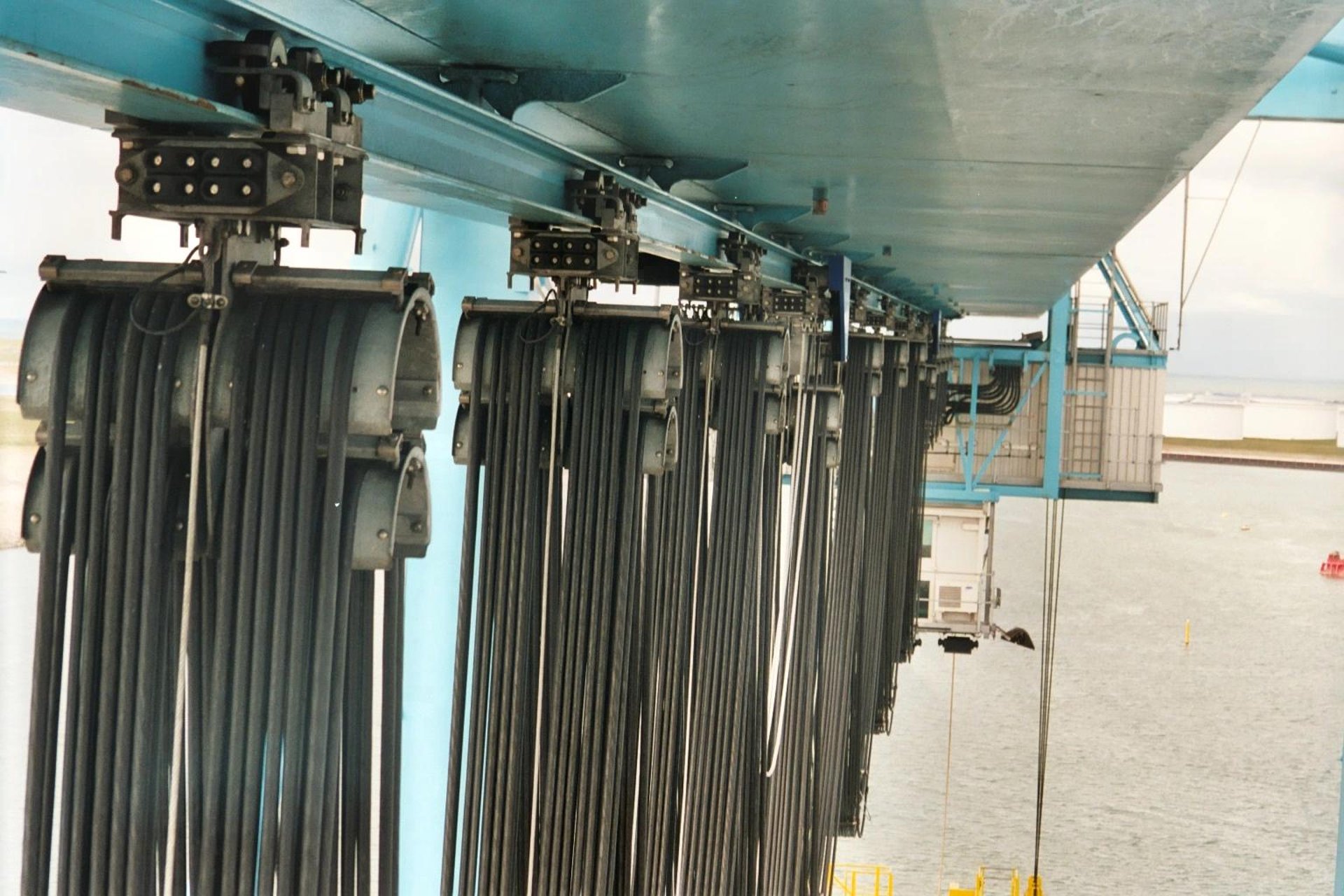
Festoon systems consist of trolleys running along a track, supporting the cable as it moves with the equipment. This arrangement is used on gantry cranes, ship-to-shore cranes, and large conveyors. The H07VVH6-F is the standard cable type specified for these systems because its flat shape runs smoothly in the trolleys and resists the wear caused by repeated movement.
Material Handling and Conveyors
In mining and bulk handling, conveyors transport coal, ore, and minerals over long distances. The motors, sensors, and control units along these conveyors often require moving power connections. The flat cable’s resistance to dust, weather, and mechanical stress makes it suitable for these harsh environments found in mines in Mpumalanga or the North West province.
Automated Storage and Warehousing
Modern logistics centres use automated stacker cranes and retrieval systems. These machines move rapidly along aisles, requiring reliable power and data connections. The H07VVH6-F meets the need for high speed and precise movement, supporting the efficient operation of distribution centres across Gauteng.
Application Guidelines and Limitations
While versatile, this cable is designed for movement in one plane only. It performs best when bending occurs along its flat axis. It is not recommended for applications involving twisting, rotational movement, or multi-directional bending, as this could cause internal stress and damage over time. It should also not be buried directly underground or exposed to highly aggressive chemicals outside the range of standard PVC resistance.
Understanding these application limits ensures users select the right cable for the job and achieve the expected service life.
Complete Technical Specifications
To select and use the cable effectively, it is essential to understand its full range of specifications, dimensions, and configurations. The following details are derived directly from the technical standards and manufacturer data.
Electrical and Thermal Properties
Nominal voltage (U₀/U) 450/750 V
Maximum system voltage (Uₘ) 750 V AC
Test voltage 2.5 kV – 50 Hz AC
Max continuous conductor temperature +70 °C
Max short‑circuit conductor temperature +150 °C
Surface temperature — fixed installation ‑35 °C to +60 °C
Surface temperature — mobile operation ‑25 °C to +60 °C
Core Identification System
Correct identification of cores is vital for safe connection. The colour and number coding follows HD 308 S2:
4 cores: Black – Grey – Green/Yellow – Brown
5 cores: Black – Grey – Green/Yellow – Brown – Blue
More than 5 cores: Black cores with white printed sequential numbers + Green/Yellow earth conductor
Versions without the earth core are available on request, identified by the letter X instead of G in the type designation.
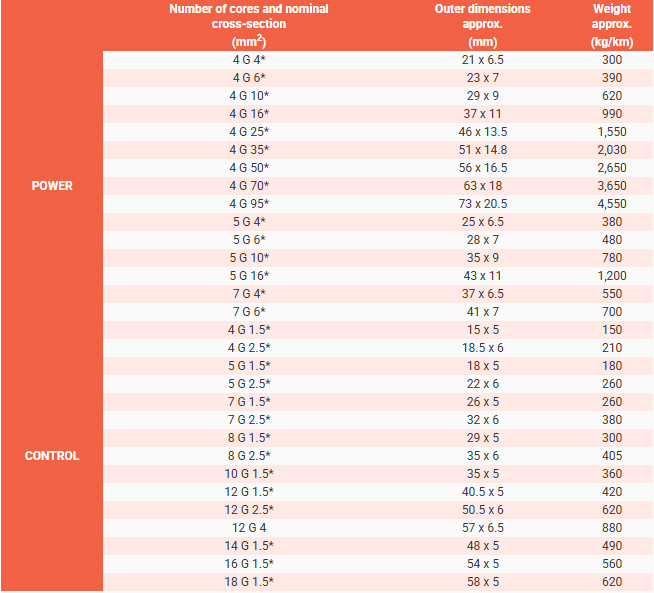
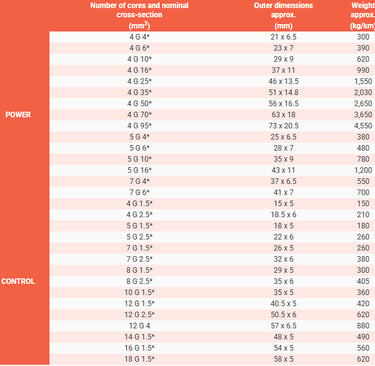
Dimensions, Cross‑Sections, and Weights
The cable is available in a wide range of sizes, divided into Power and Control types based on conductor cross-section. The following tables list the standard dimensions and approximate weight per kilometre.
Configuration Selection Guide: How to Choose the Right Cable
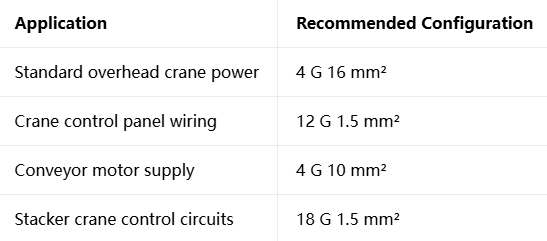
Selecting the correct configuration is essential to ensure safety, performance, and cost efficiency. Engineers and procurement teams should follow a logical process based on the application requirements.
Define Function — Power or Control
Power cables are used to supply main electrical power to motors and drives. They generally have conductor cross-sections of 4 mm² and larger. Selection is based on the load current, voltage drop over the length of travel, and ambient temperature. In South Africa, local wiring codes and SANS standards should be referenced alongside IEC calculations.
Control cables carry signals, commands, or auxiliary power to switches, sensors, and interlocks. These typically use smaller cross-sections of 1.5 mm² or 2.5 mm². The choice here depends on the number of control circuits and the distance involved.
Determine Number of Cores
Count the number of circuits required. Always include the protective earth conductor unless specifically designed out.
4 cores: Common for 3-phase power + earth.
5 cores: Used where neutral is also required.
7 to 18 cores: Typical for multi-function control systems.
Remember that versions without an earth core are available on request, marked with X instead of G.
Select Cross‑Section Size
For power circuits, calculate the required current rating and check voltage drop. In longer installations, using a slightly larger cross-section reduces energy loss and improves efficiency — a consideration increasingly important with rising electricity costs in South Africa.
For control circuits, 1.5 mm² is standard for most applications, while 2.5 mm² is recommended for long runs or where higher current is needed for solenoids or contactors.
Verify Environmental and Mechanical Conditions
Confirm that the operating temperature range, speed of movement, and exposure to UV or chemicals fall within the cable’s capabilities. For extreme outdoor exposure or high duty cycles, consult technical data sheets to confirm suitability.
Example Selection Table
Procurement Strategy and Sourcing Best Practices
Effective procurement goes beyond simply ordering a cable. It involves ensuring quality, compliance, delivery reliability, and value for money. In the South African market, supply chain efficiency is particularly important given the distance from European manufacturing hubs.
Key Specifications to Include When Ordering
To avoid errors, purchase orders should clearly state:
Full designation: H07VVH6-F
Core configuration: e.g. 12 G 1.5 mm²
Compliance standards: HD 359 S2, IEC 60227‑6
Sheath colour: Black
Required certifications: Test reports, declaration of conformity
Length and packaging requirements
Quality Verification Checklist
Upon delivery, check the following to ensure you have received the correct product:
Marking: The cable surface should be printed with the full type designation, manufacturer name, and year‑week production code.
Core colours/numbers: Verify alignment with HD 308 S2.
Dimensions: Measure thickness and width against the published specifications.
Documentation: Ensure valid test certificates are supplied.
Market Pricing and Value
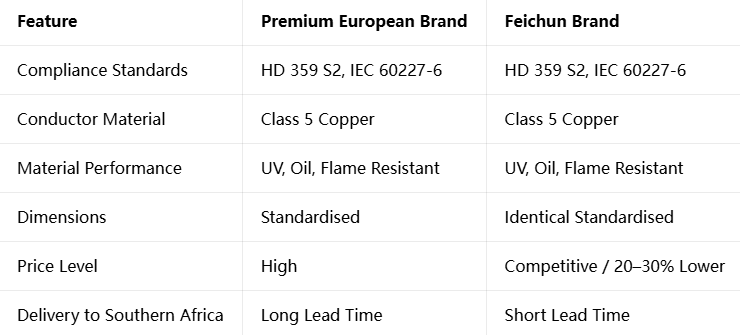
Prices vary based on copper content, cross-section size, and order volume. In recent years, the market has shifted toward balancing premium brand quality with competitive pricing. European brands are well-known but often carry long lead times and higher costs due to transport and import duties. This creates an opportunity for equivalent alternatives that meet the same standards but offer better value.
Feichun Brand: Fully Equivalent Alternative to Premium Brands
Feichun has emerged as a leading manufacturer of H07VVH6-F PVC Flat Cables, widely accepted in Southern Africa as a technically equivalent alternative to established European brands. For engineers and procurement managers, understanding why Feichun cables are considered equivalent helps in making informed sourcing decisions.
Standard and Performance Consistency
Feichun manufactures its H07VVH6-F range strictly according to international standards HD 359 S2, IEC 60227‑6, and HD 308 S2. Every stage of production follows the same design rules and material specifications used by premium manufacturers:
Conductors: Class 5 flexible plain copper, meeting the same conductivity and stranding requirements.
Insulation and Sheath: Formulated PVC compounds with identical electrical, mechanical, and environmental properties, including UV stability and flame retardancy.
Testing: Every batch undergoes the same routine tests — voltage, bending, tensile strength, and ageing — ensuring performance matches the standard.
In independent laboratory comparisons, Feichun cables meet or exceed all performance criteria set by harmonised standards. They are fully interchangeable in terms of dimensions, electrical characteristics, and mechanical behaviour. This means they can be installed in existing systems as direct replacements without any changes to design or setup.
Key Advantages Over Competitors
Same Quality, Lower Cost
Because Feichun optimises manufacturing efficiency and operates with lower overhead structures compared to European brands, it can offer the same technical quality at a significantly lower price. Savings typically range between 20% and 30%, which makes a substantial difference to project budgets and operational expenditure. For large-scale projects in South Africa, this cost reduction can free up capital for other improvements.
Short Lead Times
One of the biggest challenges in sourcing industrial cables is delivery time. European manufacturers often have long production lead times plus extended shipping periods to Southern Africa. Feichun maintains regional stock holding and efficient logistics networks, enabling much shorter delivery times. This is a critical benefit for maintenance teams needing quick replacements or projects with tight construction schedules.
Customisation and Flexibility
Feichun offers flexible production capabilities, including custom lengths, special markings, and variations such as cables without earth cores. This responsiveness supports the specific requirements of South African industries.
Full Technical Support
Feichun employs a team of qualified engineers familiar with international standards and local application needs. They provide technical assistance in selection, installation guidance, and compliance verification — a service level comparable to premium brands.
Side‑by‑Side Comparison Summary
Frequently Asked Questions
What is the maximum distance this cable can be suspended?
When properly supported by festoon trolleys, lengths up to 35 metres are possible, depending on cross-section and load. For longer spans, additional support or larger cross-sections may be required.
Can this cable be used in direct sunlight?
Yes. The black PVC sheath contains carbon black UV stabilisers, making it suitable for continuous outdoor exposure under South African sunlight without degradation.
Is the Feichun brand cable certified?
Feichun cables are manufactured to international standards and supplied with test certificates and declarations of conformity, meeting the requirements of most industrial specifications and tenders.
Can I use this cable for multi‑axis robots or rotational movements?
This cable is designed specifically for movement in one plane only. For twisting or rotational motion, special torsional cables should be selected instead.
How do I identify cores if there are more than five?
Per HD 308 S2, all cores beyond five are black with sequentially printed white numbers, plus the green/yellow earth conductor.
If you want to purchase this cable or require assistance with technical selection, quotations, or delivery arrangements for your project, please contact the Feichun team directly at:
The Feichun team provides expert support and reliable supply to customers across South Africa and neighbouring countries, ensuring you get the right cable at the right price and delivered on time.
Email Address: Li.wang@feichuncables.com
© 2025. All rights reserved.
One-click to Quickly Contact
Products
Contact
Company
Location:
Building A Private Science and Technology Park, Hefei Economic and Technological Development Zone, Anhui Province, China
Heat Resistant Cable
WhatsApp: +86 17333223430
Social Media: