Anhui Feichun Special Cable Co.,Ltd Email: Li.wang@feichuncables.com
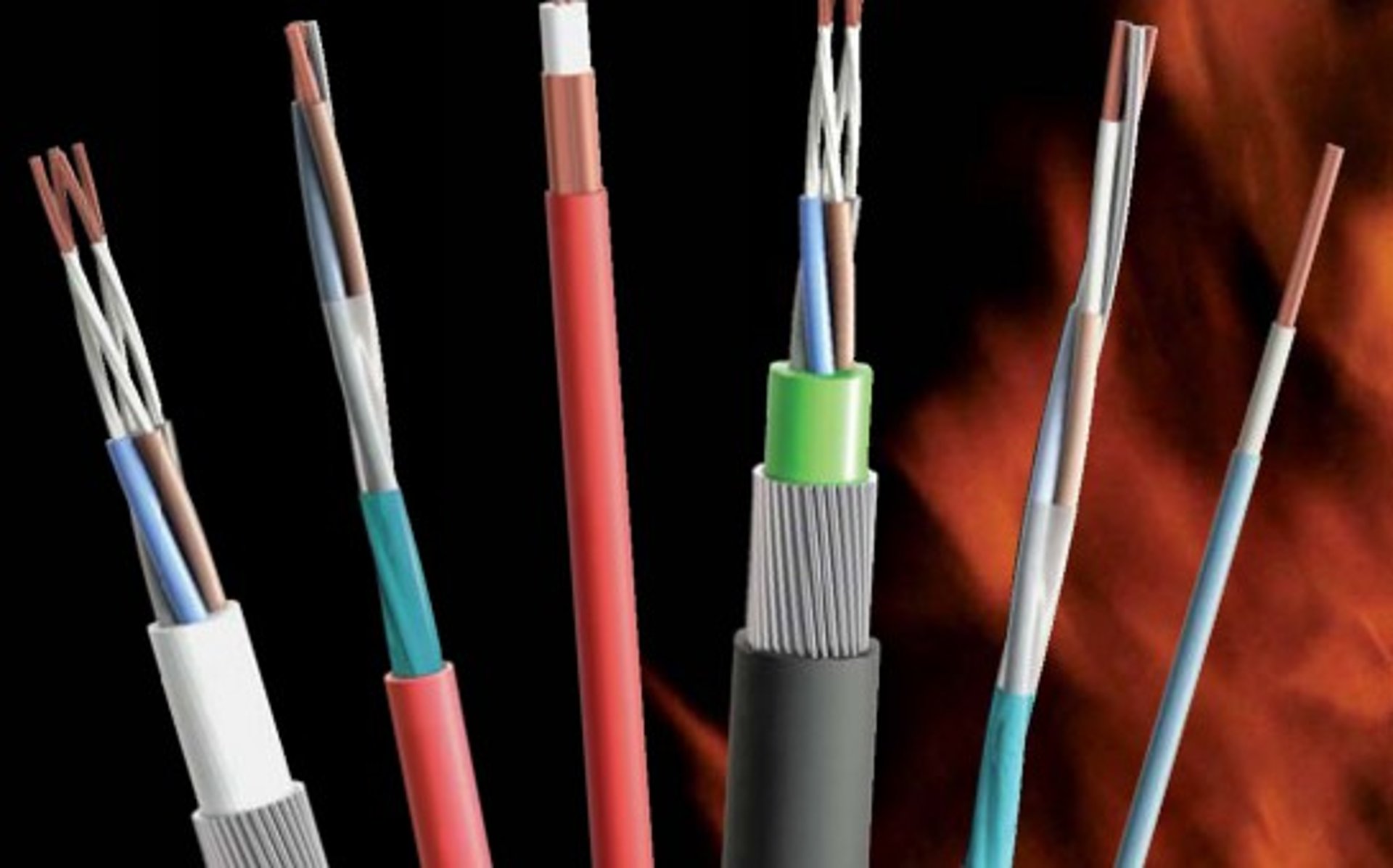
High Temperature Cables: Conquering the Heat in South Africa’s Toughest Industrial Landscapes
Discover high temperature cables rated for 150 °C and above, essential for South Africa’s furnaces, mines, and petrochemical plants. Explore conductor materials, insulation systems, SANS-compliant types, local case studies from Sasol and Kumba, plus a detailed FAQ on selection, installation, and maintenance of high temperature cables.
Li.wang
11/13/20256 min read
Introduction to High Temperature Cables
In South Africa’s industrial heartland, where summer ambient temperatures in the Free State regularly push past 40 °C and process furnaces roar at 500 °C or higher, ordinary cables simply melt away—literally. High temperature cables, commonly abbreviated as hi-temp cables, are engineered conductor and insulation systems formally rated for continuous operation at 150 °C or higher. This threshold distinguishes them from everyday workhorses such as THHN, XHHW-2, or NM-B Romex, which top out at 90 °C–105 °C under dry conditions and are the bread-and-butter of domestic and light-commercial installations countrywide.
The operating temperature denotes the level at which the cable can function reliably for its designated service life—typically 20–40 years—without excessive degradation of insulation resistance, tensile strength, or dielectric properties. Manufacturers sometimes quote a short-term maximum temperature, often 20 %–50 % higher, which the cable can survive for minutes or hours during fault conditions. Confusing the two leads to catastrophic failures, as witnessed in a 2022 incident at Sasol’s Secunda coal-to-liquids (CTL) plant, where mis-specified 90 °C cable in a 210 °C furnace zone caused a R18 million outage.
South Africa’s extreme environments demand hi-temp solutions. At Kumba Iron Ore’s Kolomela mine near Postmasburg, blast-furnace tap-hole thermocouples routinely see 1 200 °C spikes, while the ambient temperature inside dragline motor compartments at Sishen hovers at 150 °C. High temperature cables are therefore not a luxury but a non-negotiable safety and productivity imperative.
Heat-Resistant vs. High-Temperature Cables
All high temperature cables are inherently heat-resistant, but the converse does not hold. Heat-resistant cables merely withstand elevated temperatures without immediate catastrophic failure; high temperature cables are purpose-built to maintain full electrical and mechanical performance at 150 °C and above. The distinction matters for specifiers complying with SANS/IEC 60216, which governs thermal endurance through accelerated ageing tests and Arrhenius extrapolation plots.
Insulation degradation follows an exponential curve: every 10 °C rise roughly halves the useful life. A 90 °C PVC cable in a 120 °C panel lasts mere months, whereas a 180 °C silicone cable retains >70 % elongation after 30 000 hours at 200 °C. Local engineers must plot these curves against site-specific thermal profiles—something routinely done at ArcelorMittal Vanderbijlpark when upgrading electric arc furnace (EAF) power leads.
Conductor Materials for Hi-Temp Applications
The conductor is the current-carrying backbone, and material choice dictates both thermal ceiling and cost.
Tinned copper – electrolytic tough-pitch copper coated with a 3–7 μm tin layer – resists oxidation up to 180 °C. It is the budget-friendly default for Eskom 11 kV substation motor leads feeding induced-draught fans that operate at 160 °C continuous.
Nickel-plated copper (27 %–40 % nickel by weight) pushes the ceiling to 450 °C. At ArcelorMittal Vanderbijlpark, 35 mm² nickel-plated flexible leads feed 120 kA EAF electrodes, surviving molten splash and thermal cycling without blackening or embrittlement.
Pure nickel (99.6 % Ni) is reserved for >450 °C niches, primarily thermocouple extension legs at Anglo American Platinum’s Waterval smelter in Rustenburg, where process gas ducts hit 800 °C.
Aluminium conductors are conspicuously absent from true hi-temp service. Aluminium creep accelerates above 100 °C, and oxide wedging fractures strands—unacceptable in vibrating draglines or furnace stingers.
Insulation and Jacketing Systems
The insulation system is the thermal shield. South African specifiers choose from four dominant families:
Silicone rubber (SR, often EPDM or SRK subtypes) spans –50 °C to +180 °C and remains rubbery, ideal for robotic MIG welders at BMW’s Rosslyn Plant 36, where cables snake through tight articulated joints.
Fluoropolymers—PTFE, FEP, or TFE—deliver 260 °C continuous with near-zero chemical attack. Sasol’s Synfuels polymer extrusion lines in Secunda use PTFE-shielded RTD cables inside 240 °C dies, shrugging off polypropylene vapours.
Mica-glass tape wrapped with fibreglass braid achieves 550 °C and is the backbone of fire-survival circuits at Medupi power station’s boiler penthouse, maintaining circuit integrity for 90 minutes under SANS 10139 flame conditions.
Ceramic braid over mica pushes the envelope to 1 000 °C, protecting kiln instrumentation at PPC’s Dwaalboom cement plant, where rotary kiln shell scanners operate in 850 °C radiant heat.
Common Cable Types and SANS/IEC Ratings
South African hi-temp cables fall into four broad construction families, each mapped to local standards:
Silicone multicore control cables (SANS 1574 Type SiF/GL) – flexible, colour-coded cores for oven control panels.
Fibreglass single-core power cables (SANS 1507 Type FGF) – 600/1 000 V, tinned copper, glass braid, used in furnace stinger drops.
PTFE shielded twisted pairs (SANS 97 Type TP) – low-capacitance instrumentation circuits for Sasol’s Fischer-Tropsch reactors.
Mica fire-proof cables (SANS 10139 PH30/PH90) – mandatory for emergency shutdown wiring in Medupi and Kusile turbine halls.
All carry SANS mark certification and CoC (Certificate of Conformity) traceable to NRCS registration.
Applications in South African Industry
Hi-temp cables power the nation’s economic engines:
Metallurgy: ArcelorMittal Vanderbijlpark runs 240 mm² nickel-plated EAF power leads; Highveld Steel in eMalahleni uses 500 °C mica-glass for induction furnace coil tails.
Petrochemical: Sasol Secunda deploys PTFE-jacketed heater tracing inside 220 °C steam reformers and 180 °C silicone RTD tails on gasifier thermocouples.
Mining: Kumba Sishen’s P&H 4100 shovels rely on 180 °C silicone motor leads; Exxaro Grootegeluk coal mine uses fibreglass dragline pendant cables in 155 °C ambient.
Power generation: Kusile’s turbine-generator exciter rings use 400 °C nickel-plated brushgear pigtails; Medupi’s boiler circulation pumps run on 200 °C PTFE motor cables.
Commercial: Defy Appliances in Durban fits 180 °C oven cords into every electric stove rolling off the Jacobs assembly line.
Selection Criteria
Choosing the correct high temperature cable demands a matrix approach:
Thermal matrix: Continuous duty (e.g., 180 °C), peak process (220 °C for 1 hour), emergency overload (260 °C for 10 minutes).
Electrical derating: Per SANS 10142-1 Table 6.3, a 180 °C silicone cable in 60 °C Polokwane ambient retains 100 % ampacity, whereas 90 °C THHN derates to 58 %.
Environmental stressors: UV-stabilised jackets for Eskom 132 kV overhead lines; oil-resistant CSP for Sasol pump motors.
Mechanical: Minimum bend radius = 8 × OD for silicone flex; abrasion-resistant glass braid for draglines.
Gland interface: Hawke 501/453 brass glands rated 200 °C with silicone gaskets.
Installation and Maintenance Best Practice
Installation pitfalls void warranties faster than heat ages PVC.
Support spacing: In hot substations, reduce SANS 10142-1 ladder spacing by 25 % to counter thermal expansion—critical inside Medupi’s 55 °C GIS hall.
Terminations: Use high-temperature ring lugs (200 °C nickel-plated) and torque to manufacturer specs; apply Dow Corning 744 silicone sealant at gland entries.
Inspection cadence: SANS 10108 mandates 6-monthly visual and IR thermography in Group I (coal) and Group II (petchem) hazardous areas. Look for glazing, tracking, or braid discoloration.
High Temperature Cables FAQ
Q: What is the difference between 180 °C silicone and 250 °C PTFE cable?
A: Silicone offers superior flexibility (bend radius 6 × OD) and low-temperature performance down to –50 °C, perfect for robotic arms. PTFE provides higher continuous rating (260 °C), zero moisture absorption, and total chemical inertness—mandatory inside Sasol’s acid plants.
Q: Can hi-temp cables be used in underground coal mines (Group I)?
A: Yes, provided they carry SANS 1574 Type SiF/GL-P or equivalent with anti-static outer sheath and NRCS IA certification. Exxaro’s Belfast coal mine uses 180 °C silicone trailing cables on shuttle cars.
Q: How do I derate THHN in a 60 °C ambient panel in Polokwane?
A: THHN is rated 90 °C conductor temperature. At 60 °C ambient, derating factor per SANS 10142-1 Table 6.2 is 0.58—your 20 A breaker protects only 11.6 A continuous. Upgrade to 180 °C silicone to restore full rating.
Q: Are there SANS-approved hi-temp cables manufactured locally?
A: Yes. Aberdare Cables in Pietermaritzburg produces SANS 1574 silicone and fibreglass lines; CBI-electric in Lesotho rolls PTFE instrumentation pairs under NRCS oversight.
Q: What is the maximum temperature for thermocouple extension cable at Mogalakwena platinum mine?
A: Type KX extension (nickel-plated) is rated 220 °C continuous inside converter aisles; compensating cable in matte-granulation areas uses 400 °C mica-glass to the marshalling cabinet.
Q: How do I test insulation integrity after a furnace flash incident?
A: Perform 1 kV megger test (SANS 10142-1 Annexure D) at 180 °C oven temperature to simulate operating stress. Acceptance ≥100 MΩ. Follow with TDR for localised charring.
Q: Can I retrofit PTFE cable into an existing XHHW-2 tray at Sasol?
A: Physically yes—same OD—but verify tray fill (SANS 10142-1 Clause 6.4.3) and upgrade glands to 260 °C rated. Obtain EC (Engineering Council) sign-off for hazardous-area modification per SANS 10108.
Q: What documentation must accompany hi-temp cable for NRS 049 compliance?
A: Material test certificate (EN 10204 Type 3.1), SANS CoC, thermal endurance report per IEC 60216, and LoA (Letter of Authority) from NRCS. Eskom additionally demands Form C schedule for 132 kV projects.
Email Address: Li.wang@feichuncables.com
© 2025. All rights reserved.

One-click to Quickly Contact
Products
Contact
Company
Location:
Building A Private Science and Technology Park, Hefei Economic and Technological Development Zone, Anhui Province, China
Heat Resistant Cable
WhatsApp: +86 17333223430
Social Media: