Anhui Feichun Special Cable Co.,Ltd Email: Li.wang@feichuncables.com
How BS 6708 Type 331 Cables Tame South Africa's Wildest Mines and Quarries
Dive into the world of BS 6708 Type 331 cables, the rugged trailing cables revolutionising power supply in South African mining and quarrying. Explore their construction, electrical prowess, and real-world triumphs over abrasive environments, mechanical abuse, and medium-voltage demands in Africa's toughest operations.
Li Wang
12/17/20257 min read
Why BS 6708 Type 331 Matters in Harsh African Conditions
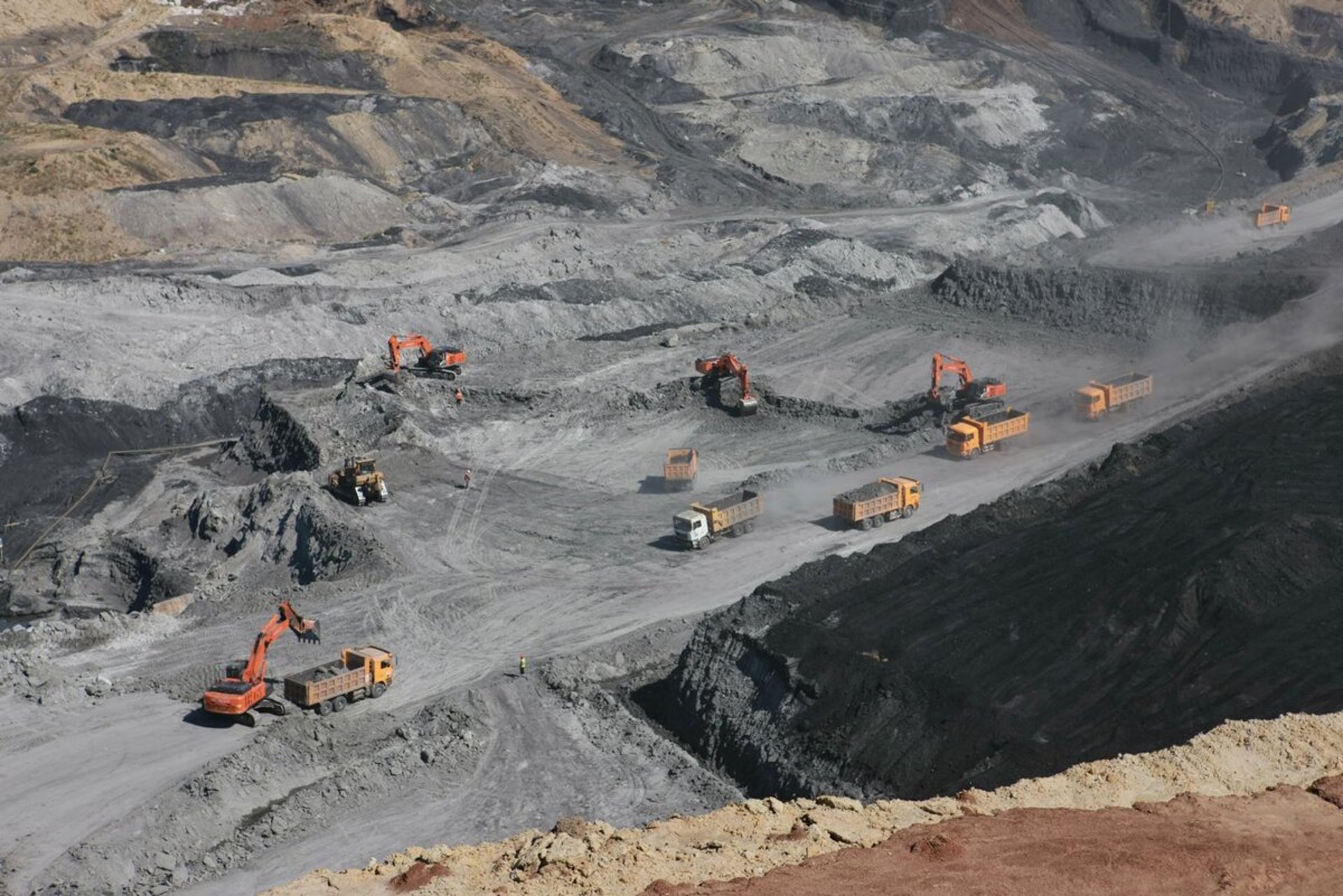
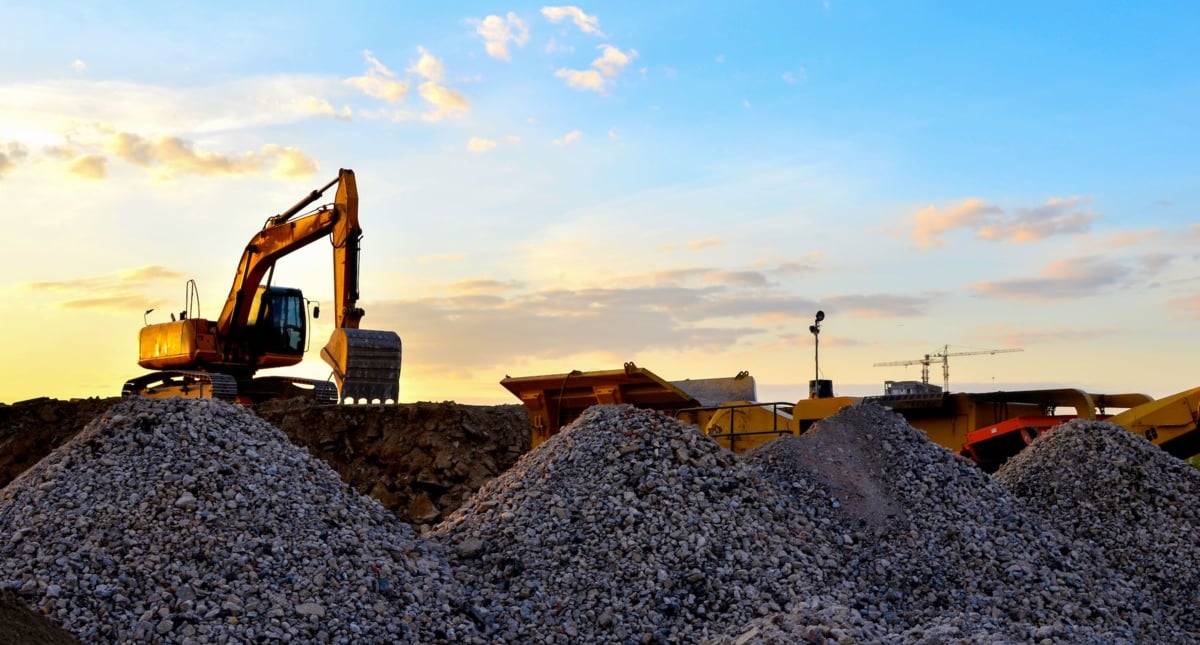
Picture this: deep beneath the sun-baked earth of South Africa's Witwatersrand Basin or amid the dusty chaos of a Limpopo quarry, massive excavators grind through rock, crushers pulverise ore, and lights pierce the gloom of underground roadways. In these unforgiving arenas, where equipment failure isn't just costly—it's downright dangerous—reliable power supply is the unsung hero. Enter the BS 6708 Type 331 cable, a medium-voltage trailing cable designed to withstand the brutal realities of mining and quarrying in Southern Africa.
South African mining faces unique challenges: abrasive dust from gold and platinum reefs, corrosive moisture in coal seams, and relentless mechanical stress from dragging cables across jagged terrain. Quarries add exposure to UV rays, heavy machinery vibrations, and chemical spills. Without mechanically protected cables like the BS 6708 Type 331, operations grind to a halt, risking safety and productivity. This cable, rated at 1900/3300 V, bridges the gap between flexibility and fortitude, ensuring uninterrupted power for excavating machines, crushing plants, and coal face lighting systems.
In the context of medium-voltage mining solutions, the BS 6708 Type 331 stands out for its pliable galvanised steel wire armouring, making it ideal for trailing applications in quarries and mine extensions. It's not just a wire—it's a lifeline, compliant with British Standard BS 6708, which aligns seamlessly with South African mine safety regulations under the Mine Health and Safety Act. As we'll explore, this cable's relevance in our local ops stems from decades of proven performance, reducing downtime and enhancing safety in environments where every spark counts.
What Is BS 6708 Type 331 Cable?
At its core, the BS 6708 Type 331 is a flexible, armoured trailing cable classified under the British Standard BS 6708, which governs cables for mining and quarrying. This standard ensures cables can handle the dynamic stresses of mobile equipment while providing robust electrical integrity. Type 331 specifically targets medium-voltage applications at 1900/3300 V, distinguishing it from lower-voltage types like 62 or 63, which are suited for auxiliary circuits.
Its design intent? To offer a perfect blend of flexibility for repeated bending and dragging, coupled with mechanical protection against impacts, crushing, and abrasion—hallmarks of trailing cables in harsh settings. Compared to other BS 6708 variants, Type 331 excels in higher voltage scenarios, such as powering large excavators or roadway extensions, where Types 20 or 21 might suffice for lighter duties. It's engineered for longevity, with features like screened phase cores to minimise electromagnetic interference, ensuring reliable signal transmission in noisy mine environments.
In South African parlance, it's the "braaied-and-tested" option—tough enough for our veld-like quarries yet pliable for underground twists and turns. This cable's classification underscores its role in preventing electrical faults that could lead to fires or explosions, a critical consideration in methane-rich coal mines.
Typical Applications in Mining and Quarrying
Underground and Surface Mining Equipment
In underground ops, like those in the Bushveld Complex's platinum mines, BS 6708 Type 331 cables power excavating machines that bore through hard rock. Their trailing nature allows them to follow mobile loaders without snapping under tension. For crushing and screening plants—think massive jaw crushers handling tonnes of ore—the cable's armour protects against flying debris and vibrations that could shear insulation.
Surface mining, such as in Mpumalanga's coal fields, sees these cables supplying semi-mobile machinery, where they're dragged across uneven ground. The 1900/3300 V rating ensures efficient power delivery over longer distances, reducing voltage drop and maintaining equipment performance.
Quarry Operations
Quarries in the Western Cape or Gauteng demand trailing cables that endure constant movement. Type 331 serves as mechanically protected power supply lines for drills and loaders in abrasive granite or limestone pits. Its galvanised steel armour resists cuts from sharp aggregates, while the chloroprene sheath wards off chemical erosion from quarry dust and oils.
Mine Roadways and Coal Face Lighting
For mine roadway extensions, these cables provide flexible connections in confined spaces, powering ventilation fans or pumps. In coal face lighting—essential for visibility in low-light seams—the unscreened ground core simplifies installation, while phase screens ensure stable power without interference. Pliable armour allows easy manoeuvring around bends, crucial in twisting tunnels where rigid cables would fail.
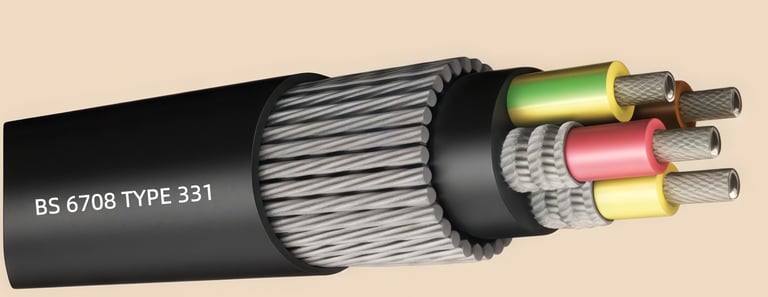
Cable Construction Overview (Structure Breakdown)
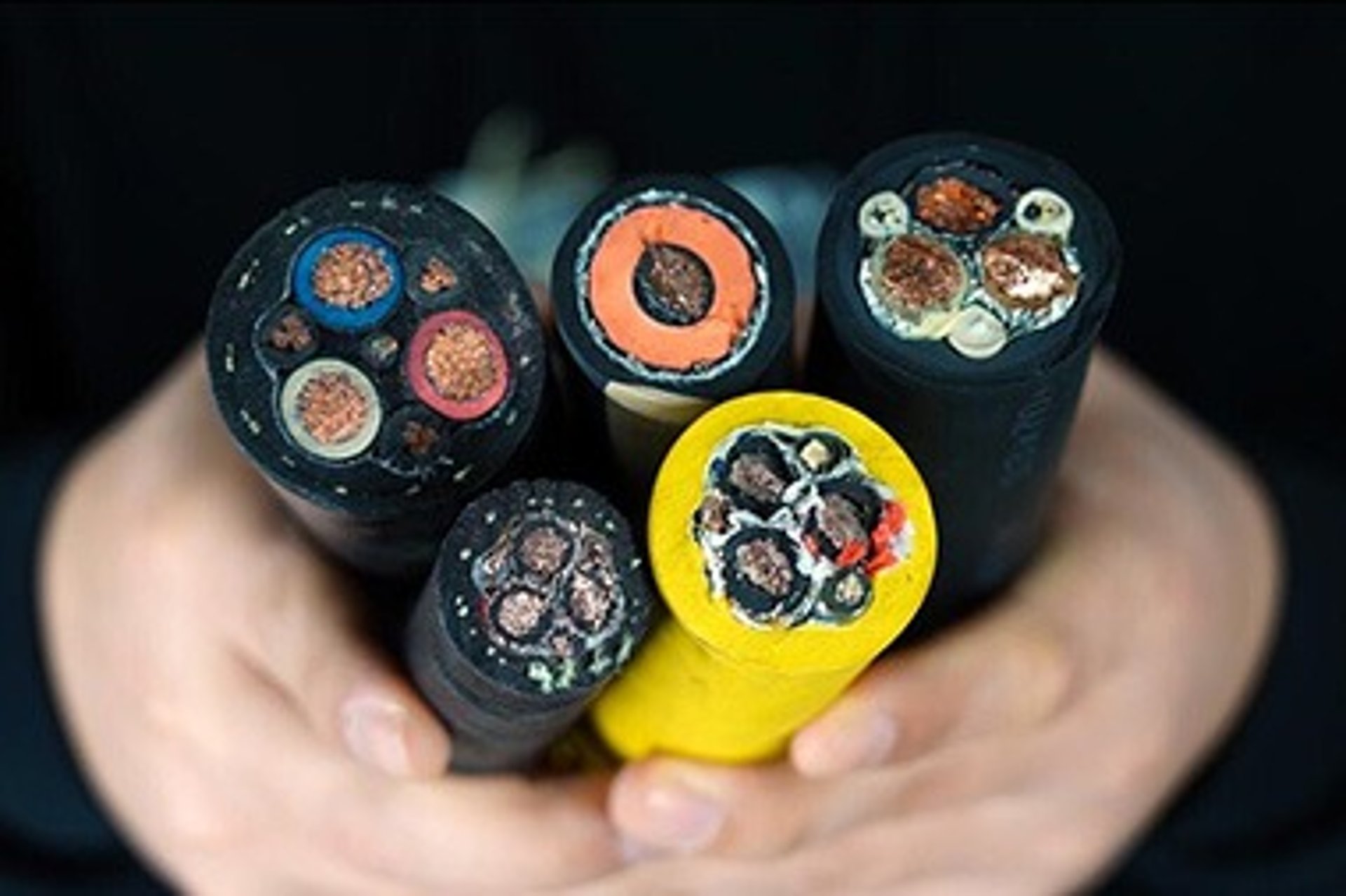
Drawing from industry expertise, let's dissect the BS 6708 Type 331's build, layer by layer—much like peeling back the strata in a South African mine.
Conductor
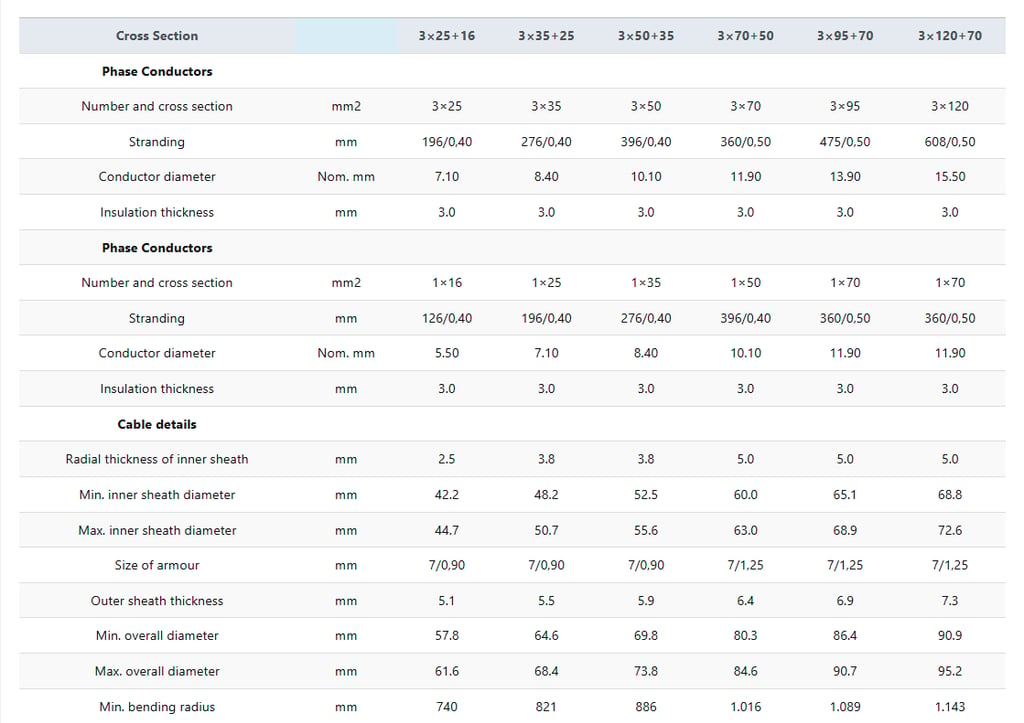
The heart is electrolytic, stranded, tinned copper wire per IEC 60228 Class 5. Fine stranding (e.g., 196/0.40 mm for 25 mm² phases) enhances flexibility, resisting fatigue from constant flexing. Tinning prevents oxidation, vital in humid underground conditions, ensuring low-resistance paths for current flow.
Insulation System
EPR (Ethylene Propylene Rubber) insulation, at 3.0 mm thick, offers superior dielectric strength and thermal stability up to 90°C. Unlike PVC, EPR resists water absorption and ozone, performing reliably in moist, high-temp mines. This insulation maintains integrity under 7.5 kV test voltage, safeguarding against breakdowns.
Screening Design
Tinned copper/nylon braided screens encase phase cores, providing electromagnetic shielding and fault current paths. The ground core remains unscreened for simplicity, but in parallel with armour, it bolsters earthing. This design minimises induced voltages, critical for safe operation near high-power equipment.
Core Lay-Up
Cores are laid up in contact, promoting balanced geometry that reduces stress concentrations. This configuration enhances mechanical stability during trailing, preventing core migration under torsion.
Bedding
A rubber-based compound cushions the cores, absorbing impacts and supporting the armour. It acts as a shock absorber, much like suspension in a bakkie on rough quarry roads.
Armour
Galvanised steel pliable wire armour (e.g., 7/0.90 mm strands) delivers crush resistance up to thousands of Newtons. Unlike rigid conduits, its pliability allows bending radii as low as 740 mm for smaller sizes, ideal for dynamic applications.
Outer Sheath
Heavy-duty chloroprene (CR) sheath, 5.1–7.3 mm thick, resists oils, acids, and UV—perfect for South Africa's harsh climates. It maintains flexibility in cold winters and doesn't crack under summer heat, extending service life.
Key Technical Specifications Explained
Available Conductor Sizes
Phase conductors range from 25 mm² to 120 mm², with earth cores scaled accordingly (e.g., 3×25+16 to 3×120+70). Larger sizes handle higher currents, suiting big excavators.
Dimensional Characteristics
Overall diameters span 57.8–95.2 mm max, with inner sheath 2.5–5.0 mm thick for protection. Armour sizing (7/0.90–7/1.25 mm) balances strength and weight.
Mechanical Properties
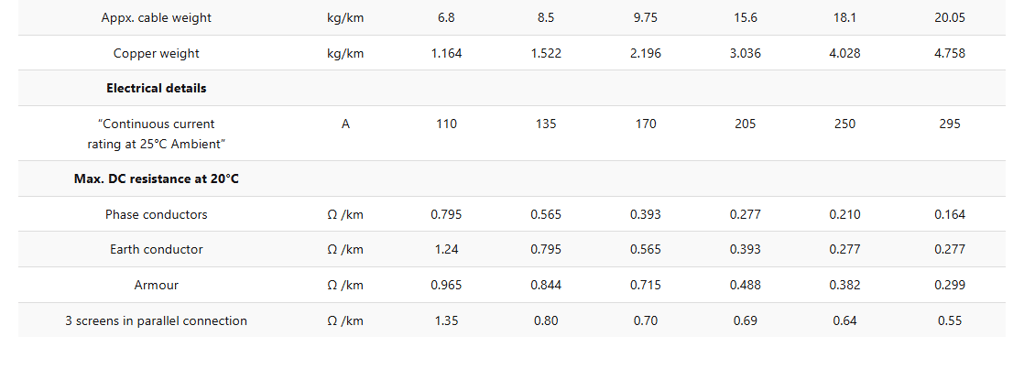
Bending radii (740–1,143 mm) prevent kinking during install. Weights (6.8–20.05 kg/km) influence reel handling; lighter designs ease transport in remote mines.
Electrical Performance and Parameters
Rated and Test Voltage
At 1900/3300 V rated, it's primed for medium-voltage distribution; 7.5 kV testing verifies insulation robustness.
Current Carrying Capacity
Ampacity at 25°C ambient: 110 A for 3×25+16, up to 295 A for 3×120+70. Derating applies in hotter shafts, but EPR aids heat dissipation.
DC Resistance Values
Phase: 0.795–0.164 Ω/km at 20°C; earth: 1.24–0.277 Ω/km; armour: 0.965–0.299 Ω/km. Screens in parallel: 1.35–0.55 Ω/km, ensuring low-impedance fault paths.
Earthing and Fault Protection Considerations
Earth conductor and armour form redundant paths, complying with South African earthing standards to contain faults, preventing arcs in gassy environments.
Compliance with Standards and Industry Expectations
BS 6708 compliance ensures fire-retardant properties and mechanical endurance.
In South Africa, it's accepted under SANS equivalents, aligning with MHSA for hazardous areas. Engineers specify it for its track record in reducing incidents.
Installation and Operational Considerations
Handling and Installation
Adhere to min bending radii; use rollers for dragging to avoid sheath tears.
Performance in Service
Excels under flexing; armour deflects impacts, sheath repels contaminants.
Maintenance and Inspection
Check for armour breaks or insulation swelling; replace if resistance spikes.
South African Application Insight
In Rustenburg's platinum mines, a major operation faced recurring trailing cable failures on continuous miners—abrasion from rock faces and fatigue from bending led to downtime costing thousands per hour. Switching to BS 6708 Type 331 cables, with their EPR insulation and pliable armour, extended lifespan by 50%, reducing faults by 40%. Regular insulation testing integrated with mine protocols ensured safety, showcasing the cable's edge in abrasive, high-mobility settings.
Another Gauteng gold mine case: Type 331 powered underground crushers, minimising degradation over 18 months, with zero unplanned stops—proving its mettle in dusty confines.
Common FAQs About BS 6708 Type 331 Cable
Q1: Is BS 6708 Type 331 suitable for continuous trailing applications?
Yes, its Class 5 stranding and armour make it ideal for dragging.
Q2: Why is galvanised steel wire armour preferred in this cable type?
It offers pliability and corrosion resistance, outlasting alternatives in wet mines.
Q3: Can this cable be used in both underground and surface operations?
Absolutely, from deep shafts to open quarries.
Q4: How does EPR insulation perform compared to PVC in mining environments?
EPR beats PVC in heat, moisture, and ozone resistance.
Q5: What factors determine the correct conductor size selection?
Load current, distance, ambient temp, and derating.
Q6: Is BS 6708 Type 331 accepted in South African mining projects?
Yes, it meets local regs and is widely specified.
Conclusion
The BS 6708 Type 331 cable embodies structural toughness and electrical finesse, making it indispensable in South Africa's demanding mines. From EPR's resilience to armour's guardianship, it's a trusted ally. In our ops, choosing it means safer, smoother runs—proving why it's the beast-tamer of African mining.
Contact Anhui Feichun Special Cable Co., Ltd.
For comprehensive technical specifications and quotations, please contact our specialized mining cable engineering team:
Technical Engineering Support:
Sales Engineering Department:
WhatsApp Contact:
Manufacturer: Anhui Feichun Special Cable Co., Ltd. (安徽飞纯特种电缆有限公司)
Manufacturing Headquarters: Building A, Private Science and Technology Park, Hefei Economic and Technological Development Zone, Anhui Province, People’s Republic of China
+86 17333223430
Email Address: Li.wang@feichuncables.com
© 2025. All rights reserved.

One-click to Quickly Contact
Products
Contact
Company
Location:
Building A Private Science and Technology Park, Hefei Economic and Technological Development Zone, Anhui Province, China
Heat Resistant Cable
WhatsApp: +86 17333223430
Social Media: