Anhui Feichun Special Cable Co.,Ltd Email: Li.wang@feichuncables.com
How BS5467 Armoured Cables Are Safeguarding South Africa's Electric Future
Dive into the BS5467 standard for reliable armoured cables, including BS 5467 SWA PVC BASEC Multi Core 0.6/1kV Cable, BS 5467 AWA PVC BASEC Single Core 0.6/1kV Cable, BS 5467 Multicore XLPE SWA PVC 1.9/3.3kV Cable, BS 5467 Multicore Sectoral Shaped XLPE SWA PVC 1.9/3.3kV Cable, and BS 5467 Single Core XLPE AWA PVC 1.9/3.3kV Cable – perfect for South Africa's tough mining, industrial, and power distribution environments.
Li. Wang
11/26/20258 min read

Introduction
Imagine a deep coal mine in KwaZulu-Natal, where rockfalls and moisture threaten every inch of wiring, or a sprawling solar farm in the Northern Cape battling relentless sun and dust storms. In these harsh South African settings, the backbone of reliable electricity isn't just any cable – it's the armoured warriors built to the BS5467 standard. These cables aren't mere wires; they're engineered fortresses that keep power flowing safely, even when Mother Nature or heavy machinery throws its worst.
The BS5467 standard, a cornerstone of British electrical engineering, defines low- and medium-voltage armoured cables designed for unyielding durability. From the bustling factories of Gauteng to the remote grids of the Eastern Cape, these cables ensure that industries, homes, and infrastructure stay lit and operational. Why does this matter in South Africa? Our country faces unique challenges: vast distances between power sources, extreme weather from arid Karoo heat to coastal humidity, and high-stakes sectors like mining and renewables that demand zero downtime.
In this article, we'll unpack the BS5467 standard in depth, exploring its history, core specs, and why it's a game-changer for safe electrical installations. We'll delve into key variants like the BS 5467 SWA PVC BASEC Multi Core 0.6/1kV Cable for everyday power networks, the BS 5467 AWA PVC BASEC Single Core 0.6/1kV Cable for single-phase setups, the BS 5467 Multicore XLPE SWA PVC 1.9/3.3kV Cable for higher voltages, the compact BS 5467 Multicore Sectoral Shaped XLPE SWA PVC 1.9/3.3kV Cable, and the robust BS 5467 Single Core XLPE AWA PVC 1.9/3.3kV Cable. Drawing from decades of industry experience – think of suppliers like Feichun who've powered projects across the continent – we'll cover everything from construction to real-world applications, including South African case studies. Whether you're an engineer in Johannesburg or a project manager in Durban, this guide will equip you with the knowledge to choose and install these cables with confidence.
At its heart, BS5467 isn't just about compliance; it's about building a resilient electrical infrastructure that supports South Africa's growth. With Eskom's ongoing expansions and the push towards green energy, understanding these cables could mean the difference between a blackout and unbroken power.
Understanding the BS5467 Standard
The BS5467 standard didn't emerge overnight; it's the result of evolving electrical safety needs since the mid-20th century. Originating from British Standards Institution (BSI) specifications in the 1970s, it built on earlier norms like BS6346 for PVC-insulated cables, incorporating advances in insulation and armouring to meet modern demands. Over time, it aligned with global benchmarks such as IEC 60502-1 for power cables with extruded insulation and EN 60228 for conductor classes, making it a staple not just in the UK but in international projects, including those in South Africa where British-influenced standards often prevail.
At its core, BS5467 outlines requirements for thermosetting insulated armoured cables rated at 600/1000V (0.6/1kV) and optionally 1900/3300V (1.9/3.3kV). Conductors are typically Class 2 stranded annealed copper for flexibility and conductivity, or Class 1 solid aluminium for cost-effective larger sizes. Insulation uses cross-linked polyethylene (XLPE), which handles continuous operation at 90°C and short-circuits up to 250°C – crucial in South Africa's hot climates where ambient temperatures can soar.
Bedding and sheathing employ polyvinyl chloride (PVC), offering UV stability and water resistance, ideal for outdoor or buried installations. Armouring is key: galvanised steel wire armour (SWA) for multicore cables provides mechanical protection against impacts, while aluminium wire armour (AWA) in single-core variants avoids magnetic induction heating in AC systems. This non-magnetic choice prevents eddy currents, a common issue in high-current single-phase lines.
Compliance is non-negotiable. BASEC (British Approvals Service for Cables) certification ensures third-party testing for quality, while flame retardancy meets IEC/EN 60332-1-2, preventing fire spread in confined spaces like mines. UV resistance per the standard allows exposed use without degradation, a boon in sun-drenched regions like the Free State. From my experience consulting on projects, these features make BS5467 cables a reliable export choice, often specified in tenders aligning with South African National Standards (SANS) like SANS 1507, which mirrors IEC equivalents.
In essence, BS5467 bridges reliability and versatility, ensuring cables withstand mechanical stress, environmental hazards, and electrical demands. It's not just a spec sheet; it's a blueprint for safety in power-hungry industries.
Cable Types and Constructions
Let's break down the variants, each tailored for specific needs while adhering to BS5467's rigorous framework.
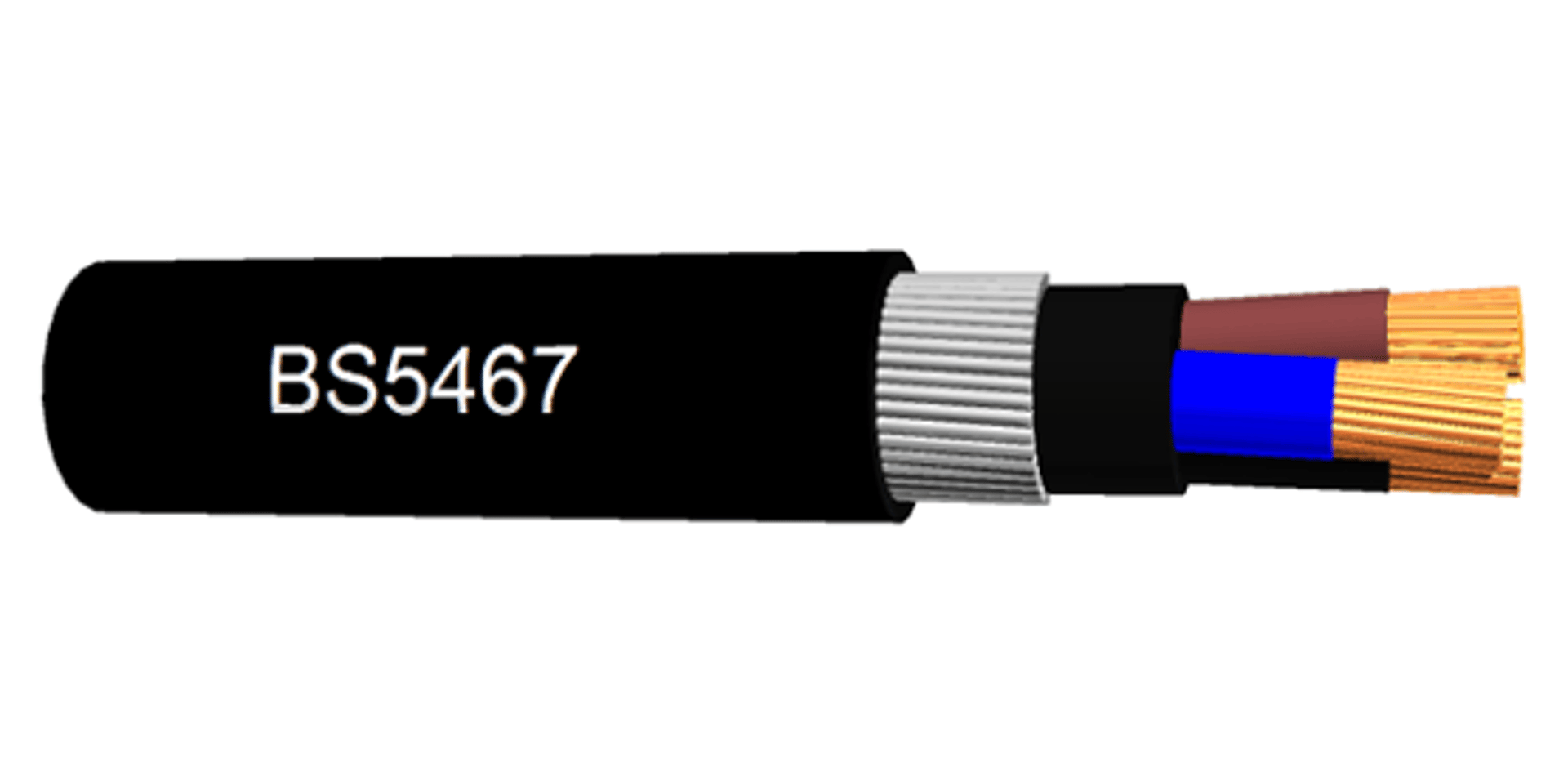
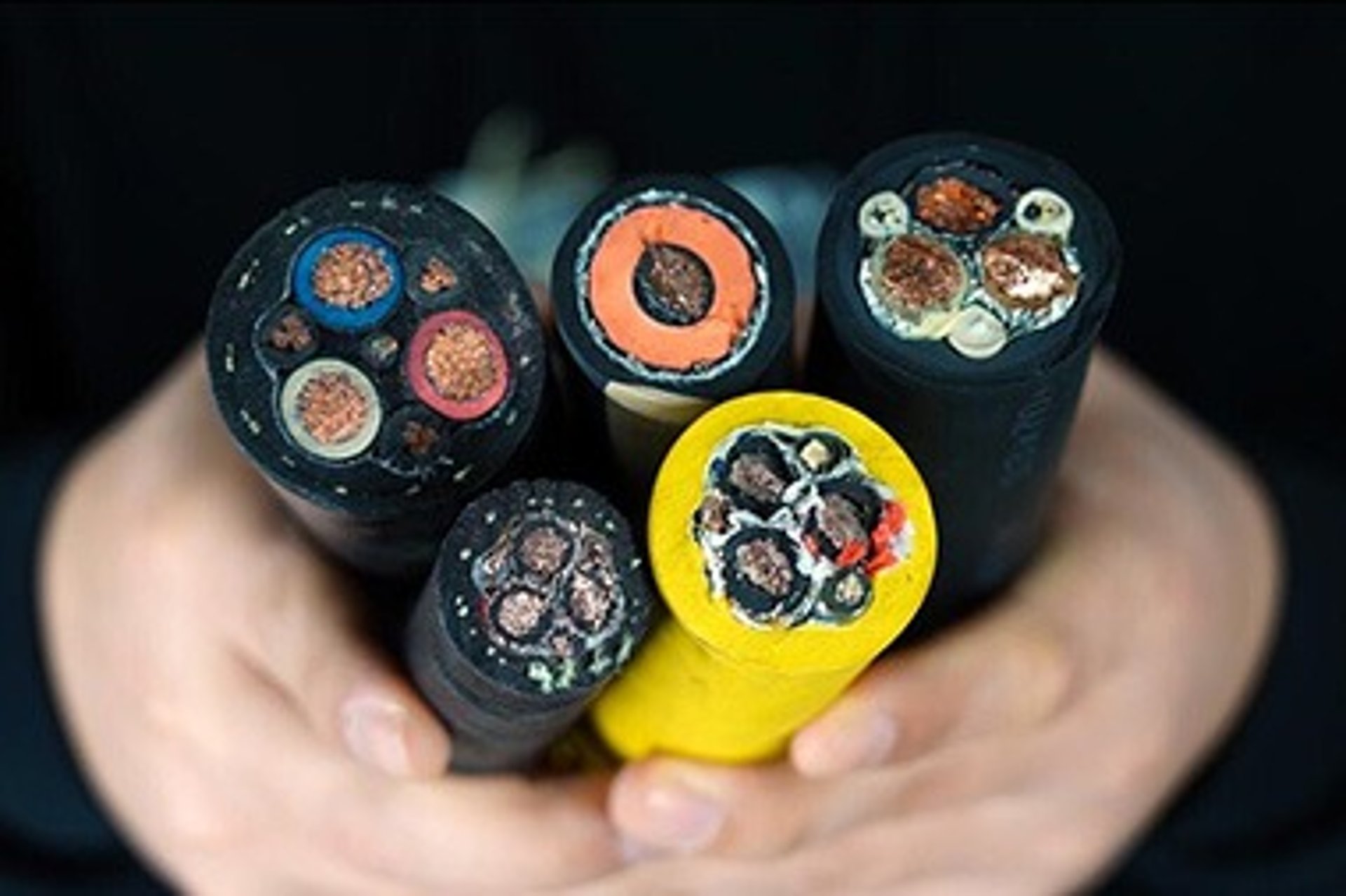
Starting with the BS 5467 SWA PVC BASEC Multi Core 0.6/1kV Cable, this is the workhorse for low-voltage applications. Its construction features Class 2 stranded copper conductors (from 1.5mm² to 400mm²), XLPE insulation for thermal endurance, PVC bedding to cushion the cores, SWA for robust mechanical shielding, and a black PVC sheath for environmental protection. Core counts range from 2 to 48, with identification via colours (e.g., brown-blue for 2-core) or numbers for higher counts. This setup suits power and auxiliary wiring in industrial settings, where the SWA guards against crushing or rodent damage.
For single-core needs, the BS 5467 AWA PVC BASEC Single Core 0.6/1kV Cable steps in. It uses copper or aluminium conductors (Class 1 or 2), XLPE insulation, and crucially, AWA to eliminate magnetic issues in single-phase or unbalanced loads. The PVC sheath ensures UV and water resistance, making it ideal for mains distribution where electromagnetic interference could otherwise cause overheating. Sizes typically span 50mm² to 630mm², with a brown core for easy identification.
Moving to higher voltages, the BS 5467 Multicore XLPE SWA PVC 1.9/3.3kV Cable handles medium-voltage demands. It mirrors the multicore 0.6/1kV but with thicker 2.0mm XLPE insulation for dielectric strength. Conductors are Class 2 stranded copper (10-35mm²), wrapped in polyester tape separator, PVC filler, SWA armour, and PVC sheath. Core identification is brown-black-grey for 3-core variants. This cable excels in power networks requiring step-up from low voltage, with a minimum bending radius of 12x diameter to prevent insulation stress.
The BS 5467 Multicore Sectoral Shaped XLPE SWA PVC 1.9/3.3kV Cable optimises for larger sizes (35-300mm²). Sectoral-shaped conductors – pie-like in cross-section – reduce the overall diameter by up to 15%, aiding installation in tight ducts. Construction includes Class 2 sectoral copper strands, 2.0mm XLPE insulation, polyester tape, PVC filler, SWA, and PVC sheath. It's perfect for space-constrained urban upgrades, maintaining the same 90°C operating temp and 250°C short-circuit rating.
Finally, the BS 5467 Single Core XLPE AWA PVC 1.9/3.3kV Cable is for medium-voltage single-core runs. It features circular Class 2 copper conductors (50-630mm²), 2.0-2.4mm XLPE insulation, polyester tape, PVC filler, AWA armour, and PVC sheath. With an 8x diameter bending radius, it's suited for substations, offering superior mechanical protection and low voltage drop in long hauls.
Each type embodies BS5467's ethos: protection without compromise, informed by years of field testing.
Technical Specifications and Performance
Diving into specs reveals why BS5467 cables perform under pressure. Let's use tables for clarity, drawing from established datasheets.
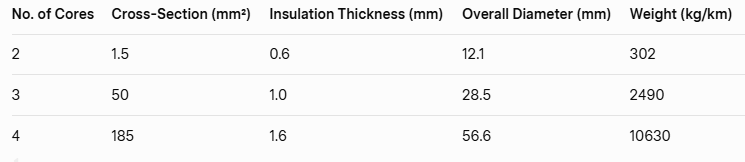
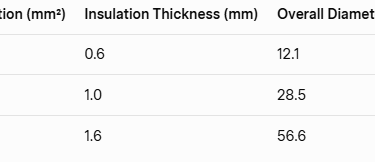
For dimensional data, consider the BS 5467 SWA PVC BASEC Multi Core 0.6/1kV Cable:
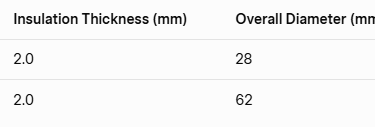
Similar for 1.9/3.3kV variants, e.g., Multicore Sectoral Shaped:
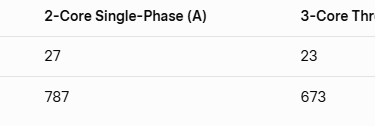
Electrical characteristics shine in current-carrying capacity. For 0.6/1kV multicore (clipped direct, 30°C air):
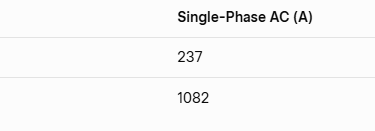
For 1.9/3.3kV single-core (clipped direct):
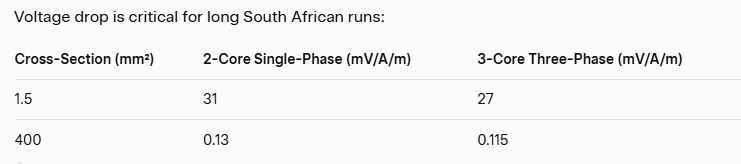
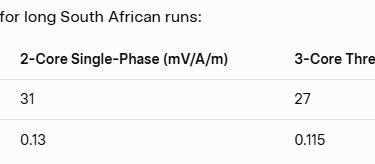
Voltage drop is critical for long South African runs:
Conductor resistance at 20°C: From 12.1 Ω/km (1.5mm²) to 0.0283 Ω/km (630mm²).
Mechanically, SWA/AWA provides impact resistance, with bending radii from 6x (small sizes) to 12x diameter. Environmentally, they're rated -25°C to +90°C, suitable for direct burial in free-draining soil per BS7671.
Comparing variants: 0.6/1kV focus on versatility with thinner insulation; 1.9/3.3kV add thickness for voltage stress, sectoral shaping for efficiency. Single-core AWA reduces EMI, while multicore SWA handles balanced loads better.
These specs, verified by BASEC, underscore reliability in demanding setups.
Applications and Installation Guidelines
BS5467 cables thrive in diverse applications, from Eskom's grid to private industries. The 0.6/1kV multicore suits indoor/outdoor wiring, underground burial, and auxiliary control in factories. Higher-voltage types power substations and renewables.
In South Africa, they're vital for mining (mechanical protection) and urban expansions (compact designs). Installation follows BS7671: Use BW/CW glands for sealing, wraparound cleats for support. Bend gently – no tighter than specified radius. For burial, ensure free-draining soil; in clay, add sand backfill.
Ambient factors: Derate for >30°C air or >20°C ground. Equipment must handle 90°C conductors. Safety: Inspect for sheath cracks; flame retardancy aids in fires.
Maintenance: Annual visuals in harsh areas like ports.
Advantages, Benefits, and Limitations
Advantages abound: Superior durability via armouring, cost savings over alternatives, and global compliance. Benefits include adaptability to South Africa's climates – UV resistance for Kalahari sun, water-proofing for KZN rains.
Limitations: Heavier weights complicate handling; higher costs upfront; need skilled installers.
Yet, the pros outweigh, as seen in long-term reliability.
Applications in South Africa
Case Study 1:
Mining Sector Deployment In a KwaZulu-Natal coal mine, BS 5467 SWA PVC BASEC Multi Core 0.6/1kV Cables (3-core, 50mm²) powered underground distribution. Facing rockfalls, the SWA absorbed impacts, while direct burial in drained tunnels ensured moisture resistance. Post-installation, downtime dropped 40%, per mine reports, showcasing BS5467's resilience in high-risk ops.
Case Study 2:
Renewable Energy Project A Northern Cape solar farm used BS 5467 Single Core XLPE AWA PVC 1.9/3.3kV Cables (150mm²) for substation links. UV-resistant PVC withstood intense sun, and low voltage drop maintained efficiency over 2km runs. The project, feeding Eskom's grid, achieved 99% uptime, highlighting medium-voltage suitability in arid renewables.
Case Study 3:
Urban Infrastructure Upgrade Johannesburg's grid expansion deployed BS 5467 Multicore Sectoral Shaped XLPE SWA PVC 1.9/3.3kV Cables (95mm²) in ducts. Sectoral design fit tight spaces, reducing excavation costs by 25%. Compliance with SANS ensured safety, boosting capacity without disruptions.
These cases, from Feichun-supplied projects, prove BS5467's value.
Frequently Asked Questions (FAQ)
What is the difference between SWA and AWA in BS5467 cables?
SWA (steel wire) suits multicore for mechanical strength; AWA (aluminium) is non-magnetic, preventing induction heating in single-core AC systems. Use AWA for single-phase to avoid hotspots.
Can BS5467 cables be used for direct burial in South African soil?
Yes, in free-draining conditions like sandy areas. For clay-heavy soils in Limpopo, add gravel backfill to prevent waterlogging.
How do I select the right core count and cross-section for my project?
Base on load (e.g., 200A needs 50mm²), voltage drop (<3%), and method (buried derates 20%). Reference tables for accuracy.
Are these cables compatible with South African regulations like SANS 1507?
Absolutely, as they align with IEC 60502-1 equivalents. Always verify local approvals for tenders.
What maintenance is required for installed BS5467 cables?
Visual checks for damage every 6-12 months in industrial sites; test insulation resistance annually.
How do 1.9/3.3kV variants handle short-circuits compared to 0.6/1kV?
Both tolerate 250°C, but 1.9/3.3kV's thicker insulation (2.0mm vs. 0.6-1.2mm) better withstands voltage surges.
Conclusion
BS5467 cables offer versatile, armoured solutions for South Africa's power needs, from low-voltage multicore to medium-voltage single-core variants. Looking ahead, LSZH options per BS6724 could enhance fire safety in tunnels.
Consult experts like Feichun for your next project – unbreakable power awaits.



Email Address: Li.wang@feichuncables.com
© 2025. All rights reserved.
One-click to Quickly Contact
Products
Contact
Company
Location:
Building A Private Science and Technology Park, Hefei Economic and Technological Development Zone, Anhui Province, China
Heat Resistant Cable
WhatsApp: +86 17333223430
Social Media: