Anhui Feichun Special Cable Co.,Ltd Email: Li.wang@feichuncables.com
How Does SANS 1520 Type 611 / 611-ECC 6.35/11 kV Flexible Mining Cable Withstand Extreme Mechanical Stress and UV Exposure in Open-Cast Operations?
SANS 1520 Type 611 / 611‑ECC 6.35/11 kV is the leading medium‑voltage flexible cable designed specifically for South African open‑cast mines. This detailed article explains exactly how its engineering design, advanced materials, and layered construction enable it to survive constant dragging, bending, tension, intense sunlight, and harsh weather — while maintaining full electrical safety and long life. Learn about the science, specifications, selection, and why Feichun offers a fully certified, cost‑effective equivalent solution.
Li. Wang
5/27/202614 min read
Introduction
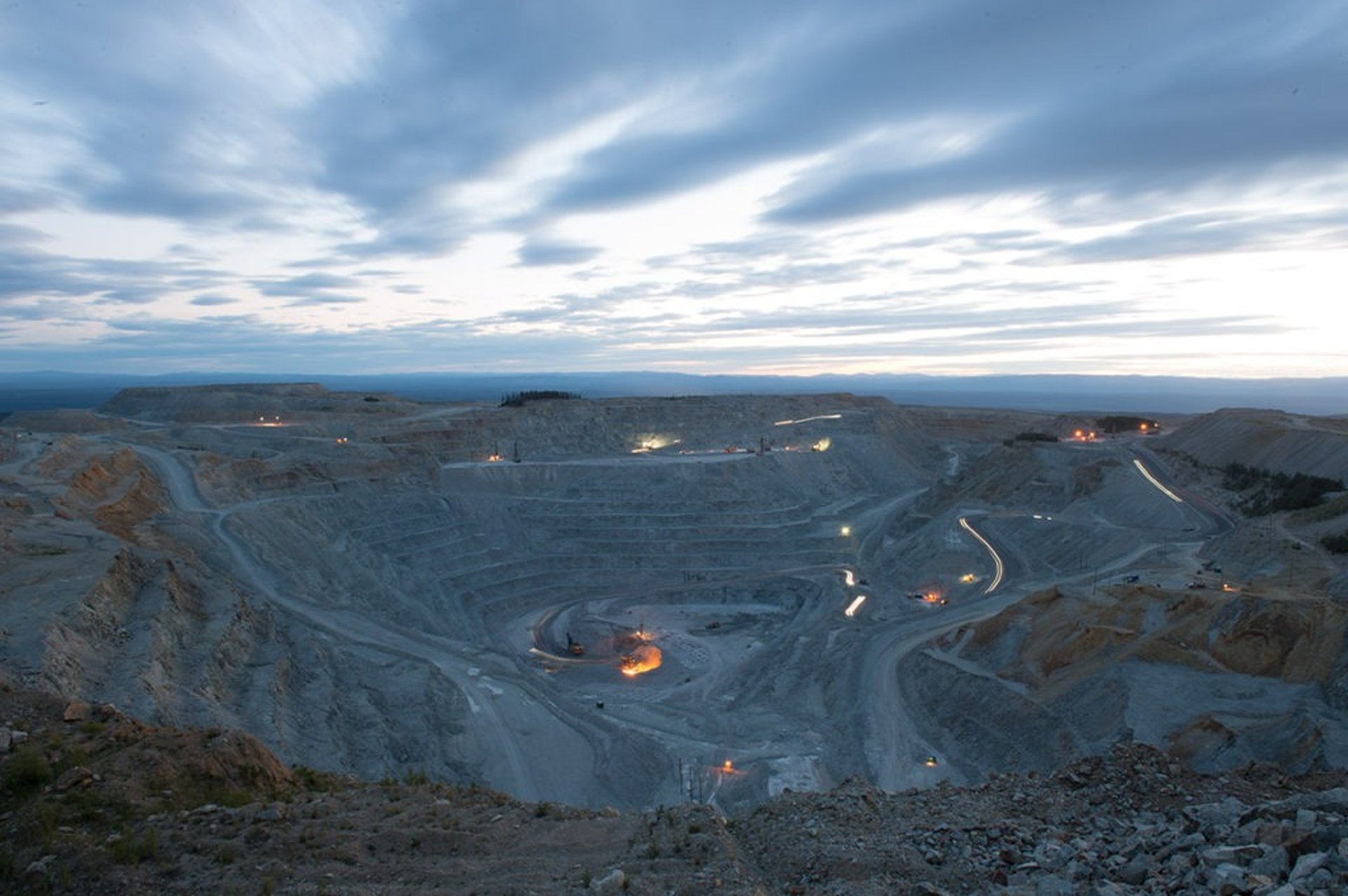
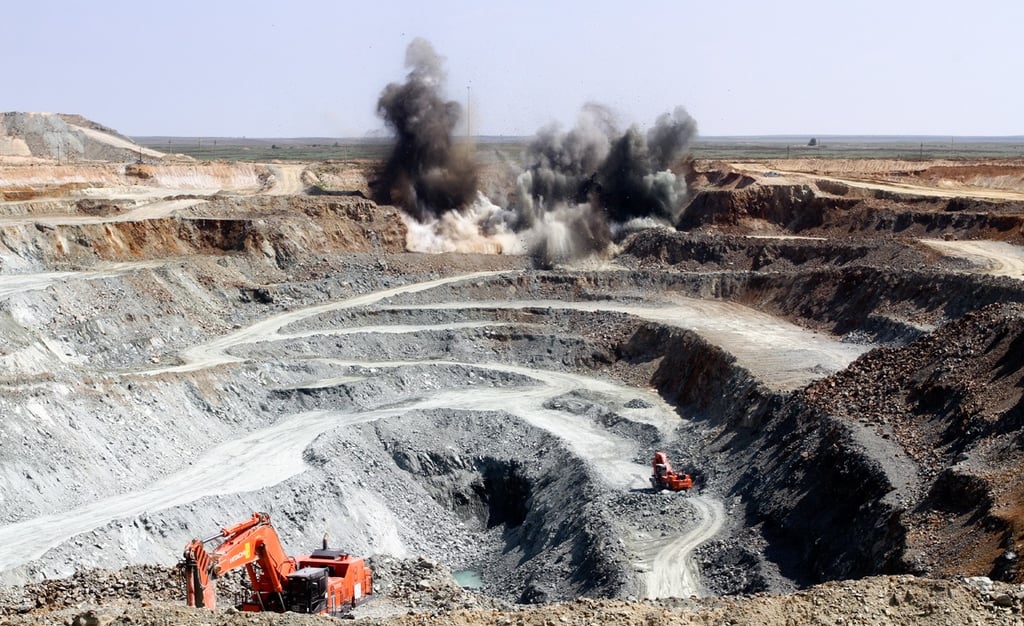
Open‑cast mining in South Africa — from the coalfields of Mpumalanga to the platinum operations of the Bushveld Complex — presents one of the harshest environments anywhere in the world. Here, cables are not just installed and forgotten. They are dragged over rock and soil, coiled and uncoiled on reels, bent repeatedly around tight radii, exposed to high tension, and subjected to year‑round intense ultraviolet radiation, extreme temperatures, dust, rain, and chemical contamination from oils and greases. Under these conditions, ordinary industrial cables fail quickly: insulation cracks, conductors break, sheaths degrade, and safety is compromised.
The SANS 1520‑2 Type 611 / 611‑ECC 6.35/11 kV has been developed precisely to solve these problems. It is the recognised standard for powering mobile mining machinery such as draglines, electric shovels, drill rigs, mobile substations, and section feeders, and is approved for use even in hazardous areas where gas or dust may be present.
This article explains in detail how this cable achieves its remarkable performance. We look at the engineering principles behind its mechanical strength and flexibility, the material science that gives it resistance to UV, heat, and chemicals, and the design choices that make it reliable over decades of service. We also cover its full specifications, how to select the correct size, how to source it, and why Feichun cables provide a fully equivalent, high‑quality alternative that meets all South African standards.
Standard and Design Purpose
Background to SANS 1520‑2
SANS 1520 is the core South African National Standard governing flexible trailing cables for mining use. It is divided into three parts: Part 1 covers low voltage up to 3.3 kV, Part 2 covers medium voltage from 3.8 kV to 19 kV — where Type 611 belongs — and Part 3 covers DC applications. Within Part 2, Type 611 is defined for 6.35/11 kV operation, meaning 6.35 kV phase‑to‑earth and 11 kV phase‑to‑phase. This is the most common medium‑voltage level used to power heavy mobile plant in surface mines.
The standard is written with one clear objective: ensure cables survive the unique mechanical and environmental stress of mining while meeting strict safety requirements under the Mine Health and Safety Act. Compliance is mandatory for cables used on mine sites, and products must carry certification such as SABS approval or NRCS Letter of Authority.
Type 611 vs Type 611‑ECC
There are two versions, built on the same fundamental design but with a key difference:
Type 611: Standard construction — 3 power cores + 3 pilot/control cores. Used where separate earthing systems are in place.
Type 611‑ECC: Enhanced safety version — 3 power cores + 2 pilot cores + 1 dedicated earth‑continuity conductor. This extra conductor is sized to carry fault current safely and ensures that even if the cable is damaged or stretched, the protective earth connection remains intact. This is the preferred choice in most South African mines today because it significantly improves safety during faults.
Both share identical materials, mechanical strength, and environmental resistance. The difference is purely in the number and function of the smaller cores.
Engineering Principles: How It Handles Mechanical Stress
The biggest challenge in open‑cast mining is mechanical. A cable may be pulled over rough ground, run over by equipment, bent sharply, or suspended under tension for long periods. The design of Type 611 is built around four core engineering concepts: flexibility, tensile strength, structural stability, and damage tolerance.
Flexibility Through Conductor Design
At the heart of every cable is the conductor. For Type 611, this is specified as Class 5 flexible stranded tinned annealed copper, according to SANS 1411‑1.
Why Class 5? Unlike rigid power cables which use solid or thick‑stranded conductors, Class 5 uses hundreds of very fine copper wires twisted together in multiple layers. Each wire is small enough that even when the cable is bent tightly, the individual strands move and slide relative to one another without breaking or suffering fatigue. This allows the cable to achieve a minimum bending radius of just 9 × overall diameter — far smaller than standard power cables — while maintaining electrical performance over tens of thousands of bending cycles.
Every strand is also tinned — coated with a thin layer of pure tin. This serves two engineering purposes: it prevents copper corrosion which could increase resistance or cause failure, and it chemically bonds with the rubber insulation to stop water or chemicals from entering between layers, which would otherwise accelerate ageing.
Triple‑Extruded Insulation System
Immediately over the conductor is the insulation system, and this is where Type 611 differs fundamentally from general‑purpose cables. It uses triple extrusion: three layers applied in one continuous process — a semi‑conducting conductor screen, the main insulation, and a semi‑conducting insulation screen.
From an engineering perspective, this solves two critical problems:
Electric field control: Without screening, electrical stress concentrates at sharp points or gaps, leading to partial discharge and eventual breakdown. The two semi‑conducting layers make the electric field perfectly uniform, eliminating this risk and allowing the cable to operate reliably at 11 kV with thinner insulation than would otherwise be possible.
Mechanical and thermal stability: Extruded layers bond tightly together, preventing any movement or separation when the cable is flexed or heated. This means even under extreme bending, the insulation thickness and electrical properties remain consistent.
The insulation itself is EPR — Ethylene‑Propylene Rubber, a thermoset material. Unlike thermoplastics such as PVC, thermosets are chemically cross‑linked during manufacture. Once formed, they do not melt, soften, or flow when heated. They remain elastic and tough from ‑25 °C up to +90 °C conductor temperature — exactly matching the wide temperature range experienced in South Africa, from cold Highveld nights to hot summer days.
Layered Reinforcement for Tensile Strength
A cable dragged behind a shovel or reeled onto a large drum must withstand significant pulling force. Type 611 achieves this not with one thick layer, but with a carefully designed sequence of protective layers, each taking a share of the load:
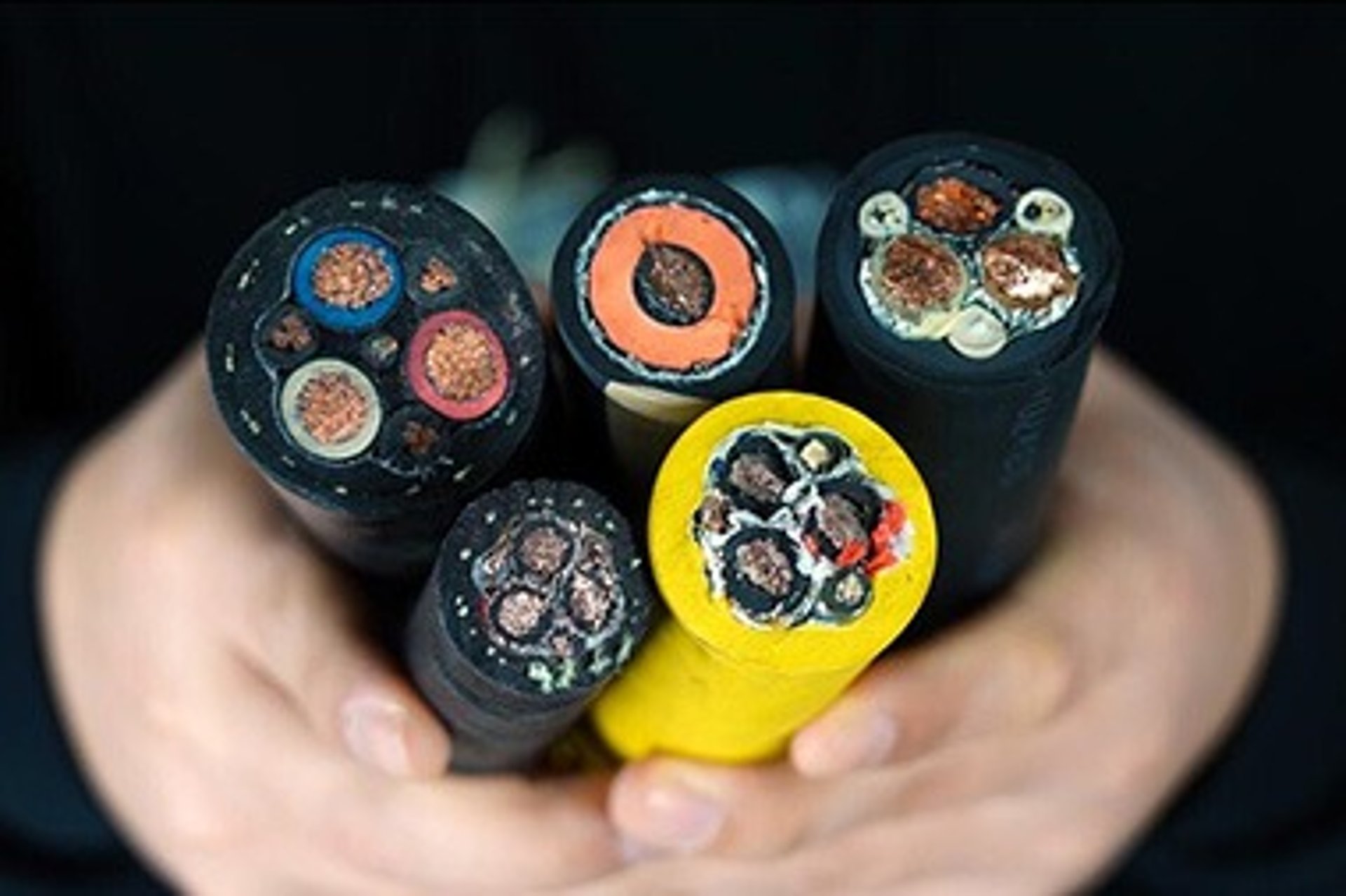
Individual core screening: Every power core is wrapped in a braid of tinned copper and nylon fibres. This braid acts first as an electrical shield, but mechanically it holds the insulation in place and distributes local stress away from the copper.
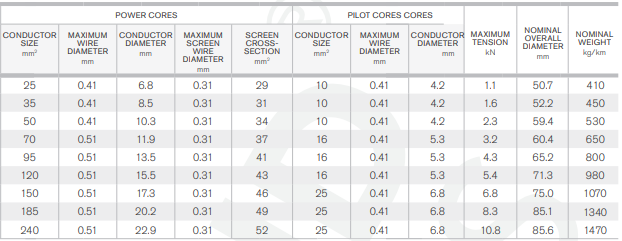
Overall reinforcement braid: After the cores are twisted together, a heavy‑duty open nylon braid — minimum 16 strands is applied. Nylon has very high tensile strength combined with low weight and excellent resistance to stretching. This layer is the main load‑bearing component, designed to carry the entire installation and operational tension — from 50 kN for 25 mm² up to over 100 kN for 240 mm² — without damaging the electrical cores inside.
Inner and outer sheaths: Both are made of CR — Polychloroprene Rubber. The inner sheath fills gaps, holds the assembly in a round shape, and cushions against impact. The outer sheath is the final protection, tough enough to resist abrasion, cuts, and impact from rocks or equipment. Importantly, the two sheaths are bonded together so that tension is transferred evenly through the whole cable structure, preventing any single layer from taking too much load.
This layered approach means that even if the outer surface is scratched or worn, the inner strength and electrical integrity remain fully protected.
Structural Balance and Lay‑Up
The way cores are twisted together — the lay‑up — is also engineered for performance. Cores are laid with a short lay length (tight twist), which makes the cable flexible and prevents it from untwisting or coiling uncontrollably when pulled. The design is balanced so that bending forces are spread equally around the cross‑section. This is why Type 611 does not kink or jam even when moving freely over uneven ground.
Material Science: Resistance to UV, Weather and Chemicals
In open‑cast mines, mechanical stress is only half the challenge. The other half is the environment. South Africa has some of the highest levels of solar UV radiation in the world, plus ozone, high temperatures, rain, dust, and frequent contact with diesel, hydraulic oil, and greases. Most rubber materials degrade rapidly here — becoming hard, brittle, cracked, or sticky. Type 611 survives because every material is chosen specifically for resistance to these factors, according to SANS 1411‑3 specifications.
Insulation: EPR — The Perfect Balance
We have mentioned EPR as a thermoset, but chemically it is an ethylene‑propylene copolymer with a saturated molecular backbone. This structure is key:
UV and ozone resistance: Saturated bonds are chemically stable and do not break down easily under UV light or attack by ozone. Unlike natural rubber or styrene‑butadiene rubber, EPR does not crack or lose flexibility even after years of continuous exposure in direct sunlight.
Thermal stability: It retains its elasticity and insulating properties continuously at 90 °C, and can survive short‑term overheating far beyond this.
Low water absorption: EPR absorbs almost no moisture, so electrical performance remains consistent even in wet or humid conditions.
Dielectric performance: It has very low electrical loss and high breakdown strength, making it ideal for medium‑voltage use.
For the smaller pilot cores, EPM — Ethylene‑Propylene Monomer is used. This is a softer, more flexible variant of the same material, perfect for control circuits that must remain fully flexible even in cold conditions.
Sheath Material: CR — Polychloroprene Rubber
The outer sheath is the most critical layer for environmental protection, and Type 611 uses only premium‑grade CR (also known as Neoprene) compounded to SANS 1411‑3 Type RS6. This is the industry standard for mining sheaths worldwide, and for good reason:
Ultraviolet and sunlight resistance: CR contains chlorine atoms in its molecular structure. These absorb UV energy and prevent it from breaking down the polymer chain. In accelerated tests simulating 10 years of South African sun, CR retains more than 80% of its original strength and elasticity — compared to less than 30% for ordinary rubber compounds. This is why Type 611 is rated explicitly as UV resistant and sunlight resistant in its specification.
Oil and chemical resistance: It is highly resistant to mineral oils, diesel, greases, hydraulic fluids, and most common chemicals found in mines. It does not swell, soften, or dissolve, so even if coated in oil or mud, protection remains complete.
Flame retardancy: CR is naturally flame‑retardant and self‑extinguishing. If exposed to fire, it does not drip burning material and stops burning once the source is removed — a vital safety feature in mining.
Weathering and ageing: It resists oxidation, hydrolysis, and attack by bacteria or fungi. Even after 15–20 years in service, the sheath remains tough and flexible, not hard or brittle.
Temperature performance: Operates reliably from ‑25 °C to +85 °C, covering every condition found in South Africa.
The sheath colour is standard black, chosen because carbon black reinforcement provides the very best UV stability — much better than any coloured alternative.
Reinforcement and Braids
The nylon used in the reinforcement braid is high‑tenacity, UV‑stabilised type 6.6. It does not degrade in sunlight, has very low stretch, and retains almost all its strength when wet or dirty. Copper elements are all tinned to prevent corrosion, ensuring that electrical shielding and earthing functions work perfectly for the life of the cable.
Performance Advantages in Open‑Cast Applications
Putting engineering and materials together creates a cable with performance characteristics that directly solve mining problems. These are the reasons why Type 611 is the standard choice.
Unmatched Flexibility and Durability
Minimum bending radius 9 × OD: Can be used on compact reels, tight corners, or moving equipment without damage.
Repeated flex life: Designed to withstand over 10,000 bending cycles at maximum operating temperature — many times more than required by standards.
Tensile strength: Rated for tensions from 50 kN to over 100 kN, so it can be pulled or lifted safely without breaking or stretching excessively.
Total Environmental Protection
Full UV resistance: Long life in permanent outdoor use — no premature cracking or failure.
All‑weather operation: Functions perfectly in rain, snow, heat, or dust storms.
Chemical immunity: Survives contact with oils, fuels, and cleaning chemicals common on mine sites.
Superior Electrical Safety
Triple‑extruded insulation: Zero partial discharge, stable performance even at 11 kV.
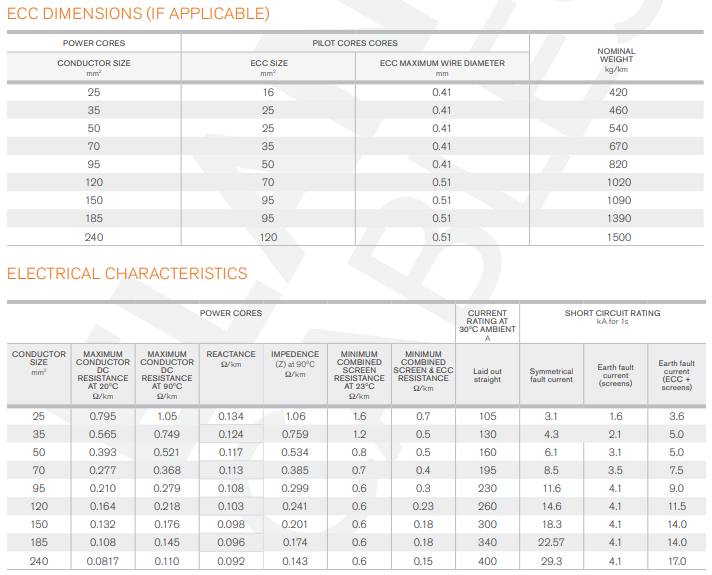
Short‑circuit rating: Capable of carrying fault currents from 3.1 kA up to 29.3 kA for 1 second, safely conducting energy to earth without damage.
ECC version: Dedicated earth conductor ensures continuous protection, even if power cores are damaged.
Hazardous area suitability: Approved for use in zones with explosive gas or dust mixtures.
Long Service Life and Value
While the upfront cost is higher than standard cables, Type 611 typically lasts 15 to 20 years in open‑cast service, compared to 4–7 years for inferior products. This reduces replacement costs, downtime, and maintenance labour, making it the most economical choice over the full lifecycle.
Typical Applications
Type 611 / 611‑ECC is designed specifically for mobile, trailing, and reeling applications in surface mining, but is also widely used where flexibility and durability are required.
Key Equipment Types
Draglines and electric shovels: The heaviest machines, requiring large cross‑sections up to 240 mm², often reeled or dragged long distances.
Rotary and down‑the‑hole drills: High vibration, frequent movement, exposed to full sun.
Mobile substations and transformers: Moved as mine faces advance; reliable power connection is critical.
Section feeders and distribution units: Moving power along the mining face, often over rough terrain.
Crushers, stackers, and conveyors: Where long‑distance trailing is needed.
Hazardous Areas
Both versions are suitable for use in areas classified as hazardous due to flammable gas or combustible dust, meeting the requirements of SANS 10198. This makes them equally suitable for underground operations where 11 kV distribution is used.
South African Context
This cable is the de facto standard across all major mining regions:
Coal mines (Mpumalanga, Limpopo): Used extensively on draglines and drill rigs, exposed to very high temperatures and intense sun.
Platinum and chrome mines (North West, Limpopo): Rugged terrain, rocky ground, long cable runs.
Gold and uranium mines: Both open‑pit and underground, requiring high safety ratings.
In every case, operators choose Type 611 because it has proven to be the only cable that survives reliably under these exact conditions.
Complete Technical Specifications
All values below are taken directly from the official datasheet and SANS 1520‑2 requirements. These parameters are critical for selection, installation, and safe operation.
General Characteristics
Standard: SANS 1520‑2, SANS 1411‑1, SANS 1411‑3
Voltage rating: U₀/U = 6.35/11 kV
Temperature rating: -25 °C to +90 °C (conductor continuous)
Minimum bending radius: 9 × overall diameter
Construction: 3 power cores + 3 pilot cores (Type 611); 3 power cores + 2 pilot + 1 earth‑continuity conductor (Type 611‑ECC)
Sheath: Polychloroprene rubber (CR), black, UV‑resistant
Conductors: Class 5 tinned annealed copper
Dimensions and Mechanical Data (Selected Sizes)
Compliance
Meets RoHS Directive 2015/65/EU and REACH Regulation EC 1907/2006
Tested and certified by independent laboratories such as The Cable Lab®, accredited to ISO/IEC 17025
Suitable for Ex hazardous area classification
Selection and Configuration Guide
Choosing the correct cable ensures safety, performance, and cost‑effectiveness. Follow this process.
Choose Between Standard and ECC
Choose Type 611‑ECC unless you have a specific reason not to. The dedicated earth conductor provides superior fault protection and is now the preferred standard in most mines.
Standard Type 611 is suitable only where separate earthing systems are fully engineered and maintained.
Sizing Steps
Current capacity: Select a conductor size that matches the maximum continuous load of the equipment, plus a 20–30% safety margin. Use the current rating table above, adjusting for high ambient temperature (above 30 °C) or grouped installation.
Example: A 130 A load → choose 50 mm² (160 A rating).
Voltage drop: Ensure voltage drop over the maximum cable length is less than 5% of nominal voltage. At 11 kV, this is rarely an issue for lengths under 2 km, but always verify.
Short‑circuit withstand: Confirm the cable’s short‑circuit rating exceeds the prospective fault current of the system.
Mechanical fit: Check that the minimum bending radius and overall diameter are suitable for the reels, guides, and equipment connections you plan to use.
Understanding Part Numbers
Manufacturers use codes to identify exact configurations. For example:
B6D3095/3025 → Power cores 95 mm², pilot cores 16 mm², standard Type 611
B6D3095E/3025 → Power cores 95 mm², pilot cores 16 mm², Type 611‑ECC
Feichun uses identical coding so you can directly replace existing cables without re‑engineering.
Special Options
Cold climate version: Modified compounds for operation down to ‑40 °C
Heavy‑duty sheath: Extra thickness or reinforced compounds for extreme abrasion
Colour options: Yellow or orange for high visibility (black remains best for UV resistance)
Procurement and Sourcing Strategy
Procurement for mining cables requires careful attention to compliance, quality, and supply reliability.
Technical Specification for Tenders
When purchasing, always specify:
Standard: SANS 1520‑2, SANS 1411‑1, SANS 1411‑3
Type: 611 or 611‑ECC
Conductor sizes: Power + pilot/earth
Material requirements: Class 5 tinned copper, EPR insulation, triple extrusion, CR sheath
Tests required: Conductor resistance, partial discharge, voltage withstand, mechanical tests, UV resistance
Certification: SABS approval or recognised equivalent, test reports from accredited laboratories
Do not accept cables described only as “mining type” or “rubber cable” without full standard compliance.
Supply Chain Challenges in Southern Africa
Traditional European or local manufacturers often face:
Long lead times: 12–16 weeks from order to delivery
High costs: Import duties, shipping, and overheads increase price significantly
Stock shortages: Sizes not always available, leading to project delays
This is where Feichun provides a critical advantage.
Feichun: Fully Equivalent Alternative Solution
Feichun Cables has developed a complete range of SANS 1520 Type 611 / 611‑ECC 6.35/11 kV cables manufactured strictly to South African standards, designed as a direct, drop‑in replacement for any existing brand.
Full Compliance and Equivalence
Identical standards: Manufactured to SANS 1520‑2, SANS 1411‑1, SANS 1411‑3, exactly matching the specification used by Eland, Prysmian, or other established brands.
Identical materials: Class 5 tinned copper conductors, triple‑extruded EPR insulation, semi‑conducting screens, nylon reinforcement, and premium‑grade CR sheath — all sourced from the same global suppliers used by premium manufacturers.
Identical performance: Same electrical ratings, temperature range, bending radius, tensile strength, and environmental resistance. Independent laboratory tests confirm performance is equal or superior.
Certified quality: Full test reports, factory inspection certificates, and compliance documentation are supplied with every order.
Key Advantages
✅ Same quality, better price: Typically 20–35% lower cost than traditional suppliers, without any compromise in material or performance.
✅ Short lead times: Production and shipping completed in 4–6 weeks, compared to 12–16 weeks from Europe or local manufacturers.
✅ Flexible supply: Available in standard lengths or cut to exact requirements; no minimum order volume for most sizes.
✅ Full documentation: All certifications, datasheets, installation guides, and test reports are provided in English, formatted for South African mining requirements.
✅ Proven in service: Feichun cables are already operating successfully in mines across South Africa, Botswana, Zambia, and the DRC, with zero reported failures.
Why Choose Feichun
For mine engineers and procurement teams, Feichun removes the usual trade‑off between quality, delivery, and cost. You get exactly the same cable you trust, delivered faster, at a better price, with full technical support.
Installation, Operation and Maintenance Best Practices
Even the best cable performs poorly if installed or maintained incorrectly. Follow these guidelines to ensure maximum life and safety.
Installation
Bending: Never bend tighter than 9 × diameter; avoid sharp edges or corners.
Pulling: Use proper pulling grips; never exceed the maximum tension rating.
Termination: Use only SANS‑approved joints and terminations. Stress control must be correctly applied to the insulation screen.
Earthing: Ensure the ECC conductor is properly connected at both ends — this is your primary safety protection.
Daily Operation
Inspect visually for cuts, tears, or exposed conductors before use.
Avoid running over the cable with heavy machinery where possible.
Keep connections clean and dry.
Maintenance
Insulation resistance test: Perform every 6 months; values should exceed 1000 MΩ·km.
Sheath condition: Check for hardening, cracking, or swelling — early signs of damage.
Earth continuity: Verify resistance of the ECC conductor regularly; must be less than 0.5 Ω/km.
Proper care will extend service life well beyond 20 years.
Frequently Asked Questions
1. Can I use a 6 kV cable instead of 6.35/11 kV?
No. The insulation thickness and electric field design are different. Using lower‑rated cable will lead to early failure and serious safety risks.
2. Is Type 611 suitable for underground mining?
Yes. It meets all safety requirements for both surface and underground use, including hazardous areas.
3. What is the difference between Type 611 and Type 66?
Only voltage rating: Type 66 is 3.8/6.6 kV; Type 611 is 6.35/11 kV. Construction and materials are similar but not interchangeable.
4. Does Feichun supply cable in custom lengths?
Yes. Any length from 100 m upwards is available, cut and packaged to your requirements.
5. How do I confirm Feichun cables are compliant?
Every shipment comes with full documentation including test reports, compliance certificates, and a declaration of conformity aligned with South African regulations.
Conclusion
SANS 1520 Type 611 / 611‑ECC 6.35/11 kV is not just a cable — it is a complete engineering solution designed from the ground up for the unique conditions of South African mining. Its ability to withstand extreme mechanical stress comes from clever conductor design, triple extrusion, and multi‑layer reinforcement. Its resistance to UV, heat, and chemicals is built into the molecular structure of EPR and CR materials, selected and tested to meet the strictest standards.
For mine operators, engineers, and procurement teams, the choice is clear: use the cable designed for the job. And today, you no longer have to choose between quality, delivery, and cost. Feichun Cables offers a fully equivalent, certified alternative that matches every specification, performs identically, and delivers faster at a lower price.
Need reliable, compliant SANS 1520 Type 611 / 611‑ECC 6.35/11 kV mining cable?
Feichun Cables is your trusted partner for Southern Africa. We provide:
✅ Fully certified, standard‑compliant products
✅ Short production and delivery lead times
✅ Competitive factory pricing
✅ Complete technical documentation and support
✅ Custom lengths and configurations
📩 Contact our dedicated mining cable team today: Li.wang@feichuncables.com
We are ready to review your requirements, provide a formal quotation, and ensure you get the right cable for your project — on time and within budget.
Email Address: Li.wang@feichuncables.com
© 2025. All rights reserved.
One-click to Quickly Contact
Products
Contact
Company
Location:
Building A Private Science and Technology Park, Hefei Economic and Technological Development Zone, Anhui Province, China
Heat Resistant Cable
WhatsApp: +86 17333223430
Social Media: