Anhui Feichun Special Cable Co.,Ltd Email: Li.wang@feichuncables.com
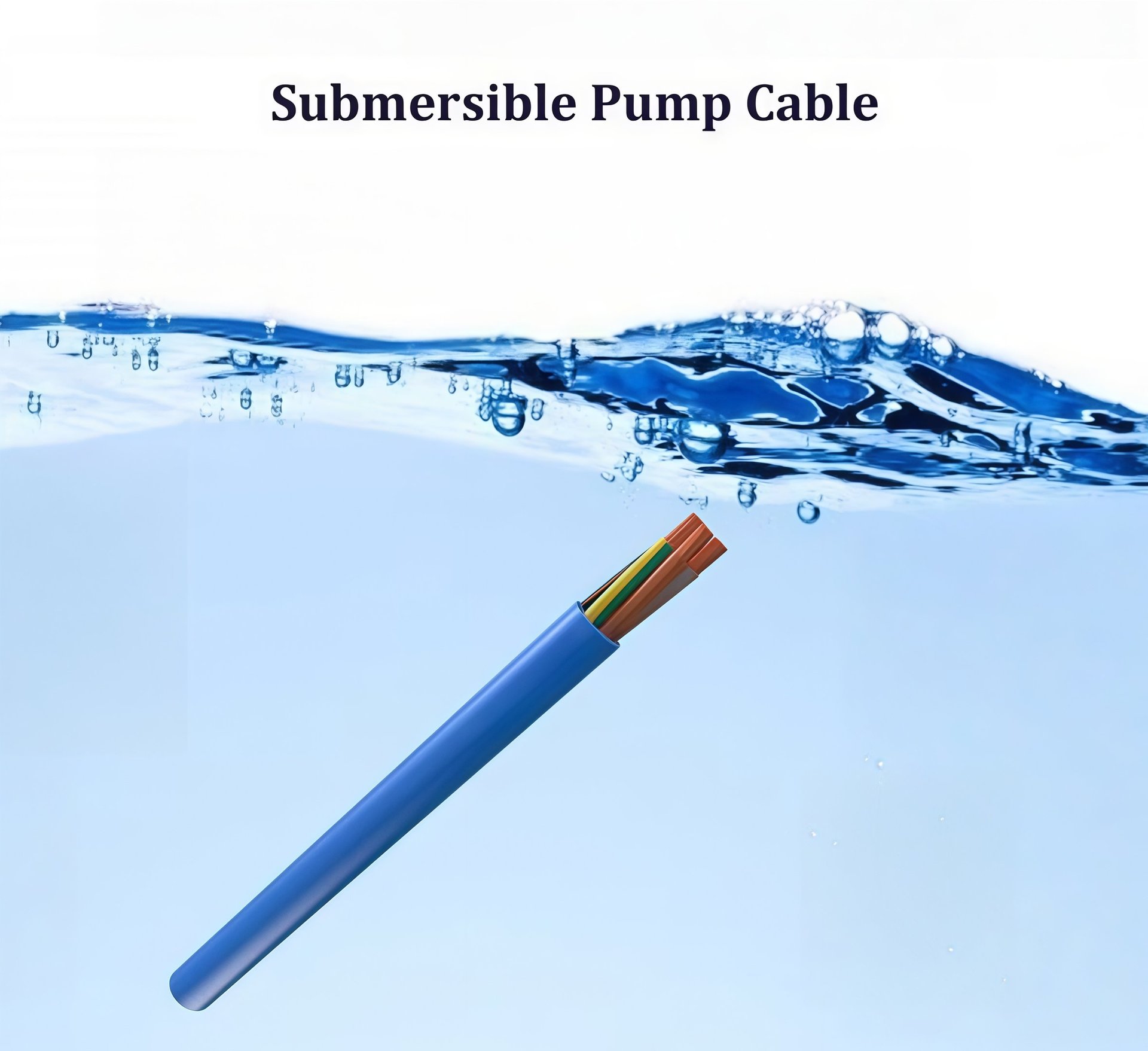
How NSSHOEU / NTSWOEU Submersible Cables up to 6 kV Keep South Africa’s Pumps Running Where It Matters Most
NSSHOEU / NTSWOEU submersible cables up to 6 kV are engineered for long-term underwater power transmission in South Africa’s mining, water, and industrial sectors. This in-depth guide explains construction, standards, voltage classes, applications, and real mining case studies.
Li Wang
12/24/20255 min read
Why Submersible Cables Matter in High-Demand Environments
Delivering electrical power underwater is one of the most demanding tasks in cable engineering. Unlike surface installations, submersible power cables must operate continuously under hydrostatic pressure, moisture ingress, chemical contamination, and mechanical stress, often for years without interruption.
In South Africa, these challenges are magnified. From deep-level gold and platinum mines to municipal water infrastructure and wastewater treatment plants, submerged electrical equipment plays a critical role in keeping operations safe, compliant, and productive.
At the heart of these systems are submersible cables, purpose-designed to power pumps and motors that cannot afford failure. Among the most trusted solutions globally are NSSHOEU and NTSWOEU submersible cable families, engineered for voltages up to 6 kV and designed specifically for long-term underwater operation.
This article takes a deep, practical look at NSSHOEU / NTSWOEU submersible cables, explaining:
Where and why they are used
How they are constructed
Which standards they comply with
How to select the correct voltage and configuration
Why they outperform conventional power cables in submerged conditions
—all with real South African context and experience.
Typical Applications of NSSHOEU / NTSWOEU Submersible Cables
Industrial and Municipal Water Applications
South Africa’s water sector relies heavily on submersible pumping systems, particularly in regions where groundwater abstraction and long-distance pumping are essential.
Typical applications include:
Municipal water treatment plants
Borehole and deep-well pumping systems
Raw water transfer stations
Wastewater and sewage pumping installations
In these environments, cables must withstand:
Permanent immersion
Variable water chemistry
Continuous electrical loading
Limited maintenance access
NSSHOEU (0.6/1 kV) cables are commonly used for low-voltage industrial pumping, while NTSWOEU (up to 6 kV) cables are selected for deep wells and high-power motors, where voltage drop and current limitations make medium voltage essential.
Mining and Resource Industries in South Africa
Mining is where submersible cables are truly tested.
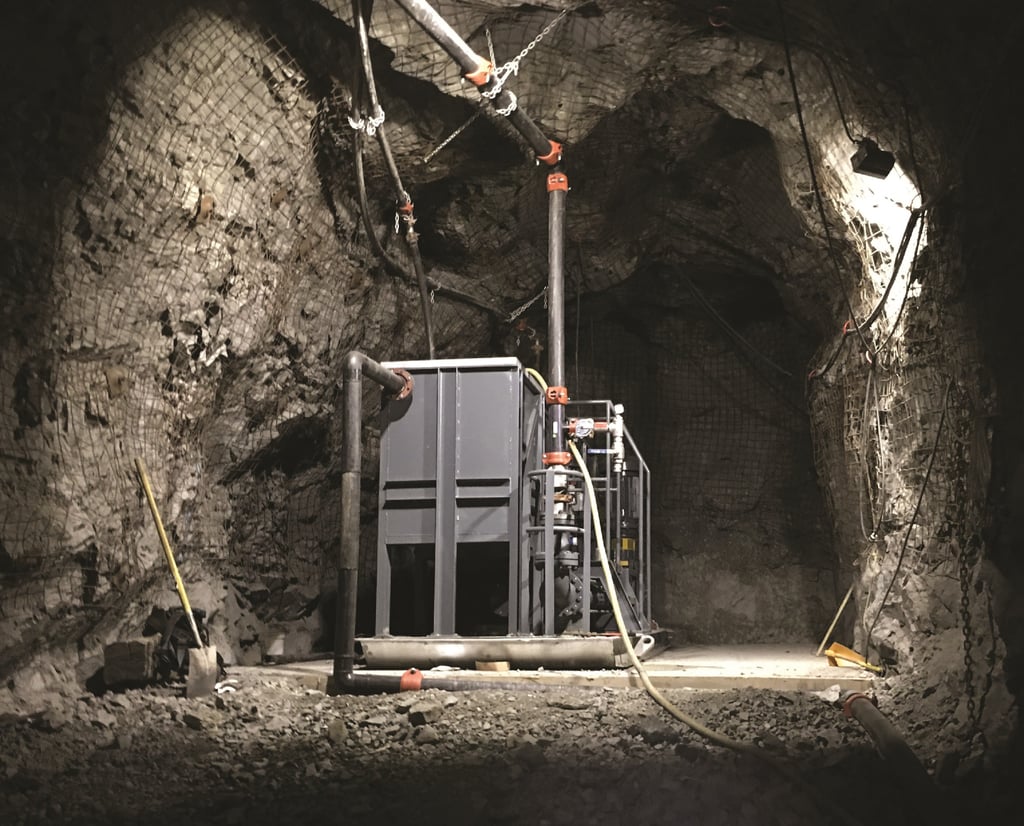
South Africa’s gold, platinum, and coal mines generate vast quantities of underground water that must be removed continuously to maintain safe working conditions. This process, known as mine dewatering, depends on large submersible pumps operating at significant depths.
Key mining applications include:
Shaft sump pumping
Underground dewatering stations
Open-pit mine water management
Process water circulation systems
These environments expose cables to:
Oil and hydrocarbon contamination
Abrasive slurries
Mechanical handling damage
Elevated ambient temperatures
Continuous duty cycles
NTSWOEU 3.6/6 kV submersible cables are widely used in South African mines because they combine medium-voltage performance with robust rubber construction, offering reliability where failure is not an option.
Special Installation Scenarios
A unique feature of NSSHOEU / NTSWOEU systems is their suitability for vertical pump installations, particularly in boreholes and shafts.
In many installations:
The ascending (rising) pipe acts as the earth conductor
3-core cables without a dedicated earth core are used
Space constraints demand compact yet mechanically strong designs
These cables are specifically engineered for:
Long vertical suspension
Constant tensile loading
Safe electrical earthing through metallic pipework
Applicable Standards and Compliance
International Standards
NSSHOEU and NTSWOEU cables are manufactured in accordance with established German and European standards:
VDE 0250 Part 812 – Submersible motor cables
VDE 0250 Part 813 – Medium voltage rubber-insulated cables
These standards define:
Electrical performance requirements
Insulation systems
Mechanical robustness
Test voltages and quality criteria
Relevance to the South African Market
While South Africa uses its own national standards (such as SANS), VDE compliance is widely accepted across:
Mining engineering specifications
Municipal water authority tenders
EPC project documentation
For South African operators, compliance with recognised international standards:
Simplifies safety audits
Reduces project approval risks
Enhances long-term reliability and insurability
Cable Construction Overview
The performance of NSSHOEU / NTSWOEU cables is rooted in purpose-driven construction, optimised for underwater operation.
Conductor Design
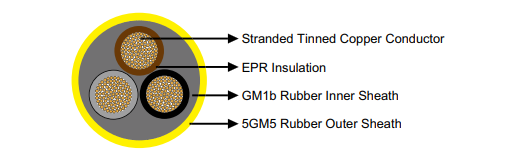
Flexible stranded tinned copper conductors
Class 5 flexibility according to DIN VDE 0295
Why this matters:
Tinning improves corrosion resistance in moist environments
Fine stranding enhances flexibility during installation
Stable current-carrying capacity over long service life
Insulation System
Heat-resistant EPR (Ethylene Propylene Rubber)
EPR insulation is preferred because it offers:
Excellent dielectric stability under water
Resistance to thermal ageing
Superior performance under medium-voltage stress
Long-term reliability compared to PVC or standard rubber
Inner Sheath
Rubber compound GM1b
Functions include:
Mechanical bedding
Moisture barrier
Additional protection during handling and lowering
Outer Sheath
The outer sheath is critical for survival in harsh environments:
Chlorinated rubber compounds
5GM5 for 0.6/1 kV (NSSHOEU)
5GM3 for 1.8/3 kV and 3.6/6 kV (NTSWOEU)
Key properties:
Oil resistance
Abrasion and tear resistance
Flame retardancy
Long service life in submerged and contaminated conditions
Voltage Ratings and Cable Types Explained
NSSHOEU 0.6/1 kV
Best suited for:
Low-voltage industrial pumps
Municipal water systems
Short to medium cable runs
Advantages:
Cost-effective
High flexibility
Proven reliability in submerged LV applications
NTSWOEU 1.8/3 kV
Designed for:
Deeper wells
Higher motor outputs
Reduced current and voltage drop
Provides:
Improved insulation thickness
Enhanced electrical performance
Better efficiency for medium-depth installations
NTSWOEU 3.6/6 kV
The premium solution for:
Large submersible pumps
Deep mining shafts
Long-distance underwater power transmission
Key benefits:
Lower operating current
Reduced conductor size for equivalent power
Superior long-term reliability in demanding mining environments
Electrical and Mechanical Performance Parameters
Key performance characteristics include:
Rated voltage and test voltage compliance
Optimised current-carrying capacity under water
Continuous operating temperatures suitable for EPR insulation
Resistance to tensile and bending stresses during installation and retrieval
Dimensions, Weight, and Installation Considerations
Diameter and Weight Impact
Cable diameter and weight influence:
Borehole sizing
Suspension loads
Installation equipment selection
For example:
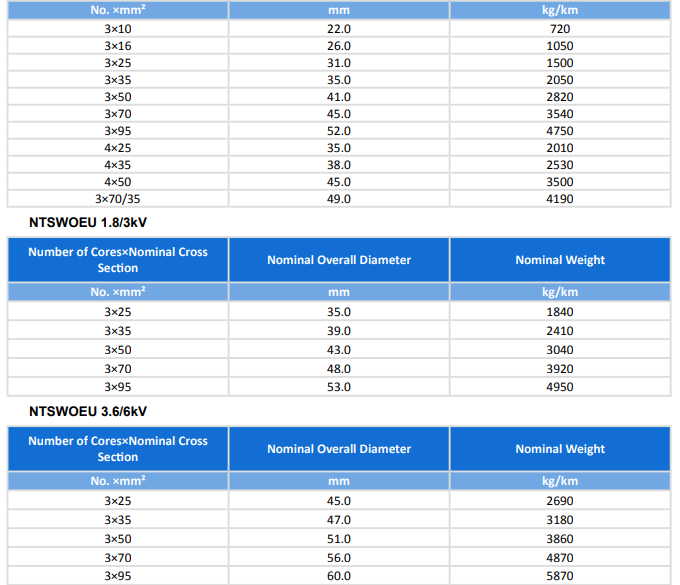
NTSWOEU 3×95 mm² 6 kV cable weighs approximately 5,870 kg/km, requiring careful load calculations.
Core Configurations
Common configurations include:
3-core designs
4-core designs where required
Special sizes such as 3×70/35 mm²
Practical Installation Tips
Avoid sharp edges during lowering
Use proper strain relief systems
Ensure compatibility with pump motors and rising mains
Prevent torsional stress during installation
South African Case Study: Mining Dewatering in the North West Province
Project Background:
A platinum mine in South Africa’s North West Province required a reliable dewatering system for a deep underground section with continuous water ingress.
Challenges:
Permanent submersion
Oil-contaminated water
High mechanical stress
24/7 operation
Solution:
Installation of NTSWOEU 3.6/6 kV submersible cables powering high-capacity pumps.
Results:
Significant reduction in unplanned downtime
Improved electrical stability
Service life exceeding previous standard cable installations
Lower total life-cycle cost
Comparison with Conventional Power Cables
Standard PVC or non-submersible rubber cables typically fail due to:
Water ingress
Insulation degradation
Mechanical damage
NSSHOEU / NTSWOEU cables offer:
Purpose-built underwater performance
Superior durability
Lower maintenance and replacement costs
Common Questions About NSSHOEU / NTSWOEU Submersible Cables (FAQ)
Q1: Can these cables operate continuously under water?
Yes, they are designed for permanent immersion.
Q2: Are they suitable for mining applications?
Absolutely, especially mine dewatering systems.
Q3: Why EPR insulation?
Because of its electrical stability, heat resistance, and longevity.
Q4: Can the rising pipe act as earth?
Yes, in approved installations.
Q5: Expected service life?
Typically many years under correct installation and loading.
Q6: How do I choose voltage rating?
Match motor rating, depth, and cable length.
Key Selection Guidelines for Engineers and Project Managers
Match cable voltage to motor voltage
Consider depth, temperature, and chemical exposure
Ensure compliance with standards and project specs
Factor in installation and life-cycle costs
Conclusion
In South Africa’s water and mining sectors, submersible cables are not consumables—they are critical infrastructure.
NSSHOEU and NTSWOEU submersible cables up to 6 kV offer:
Proven electrical reliability
Robust mechanical design
Long service life in harsh submerged conditions
Choosing the right cable ensures:
Safer operations
Reduced downtime
Lower long-term costs
Confidence below the surface, where failure is not an option

Contact Anhui Feichun Special Cable Co., Ltd.
For comprehensive technical specifications and quotations, please contact our specialized mining cable engineering team:
Technical Engineering Support:
Sales Engineering Department:
WhatsApp Contact:
Manufacturer: Anhui Feichun Special Cable Co., Ltd. (安徽飞纯特种电缆有限公司)
Manufacturing Headquarters: Building A, Private Science and Technology Park, Hefei Economic and Technological Development Zone, Anhui Province, People’s Republic of China
+86 17333223430
Email Address: Li.wang@feichuncables.com
© 2025. All rights reserved.
One-click to Quickly Contact
Products
Contact
Company
Location:
Building A Private Science and Technology Park, Hefei Economic and Technological Development Zone, Anhui Province, China
Heat Resistant Cable
WhatsApp: +86 17333223430
Social Media: