Anhui Feichun Special Cable Co.,Ltd Email: Li.wang@feichuncables.com
How Screened Cables Become South Africa’s Ultimate Defence Against Electromagnetic Interference
Dive into the world of screened cables – essential shielded wiring that combats EMI and RFI. Learn about screened cable types, applications in South Africa's mining and telecom sectors, importance for signal integrity, and key differences from unscreened cables in this comprehensive guide.
Li. Wang
11/28/20257 min read
Introduction
In today's hyper-connected world, where everything from your morning coffee machine to massive mining rigs relies on flawless electrical signals, screened cables stand as unsung heroes. These aren't just wires; they're fortified guardians of data and power, shielding our systems from the invisible storms of electromagnetic interference (EMI). Imagine a bustling Johannesburg factory floor or a stormy Cape Town telecom tower – without screened cables, signals could scramble, leading to costly downtimes or even safety hazards.
In South Africa, with our booming industrial growth, expansive mining operations in Gauteng and Mpumalanga, and rapidly expanding telecom networks driven by initiatives like the National Broadband Plan, the relevance of screened cables couldn't be more pronounced. Our unique environment – think high-voltage mining equipment, frequent thunderstorms, and densely packed urban electrical grids – amplifies exposure to EMI, making reliable cabling not just a luxury, but a necessity.
This article delves deep into the fundamentals of screened cables, exploring their definition, critical importance, diverse types, real-world applications, and how they stack up against unscreened alternatives. Drawing on industry expertise and South African-specific insights, we'll equip you with the knowledge to make informed decisions for your next cabling project. Whether you're an engineer in Durban's ports or a tech enthusiast in Pretoria, understanding screened cables can save you time, money, and headaches.
What is a Screened Cable?
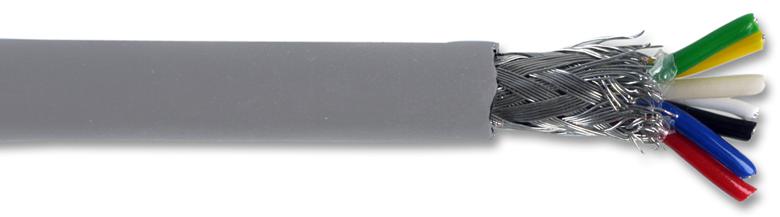
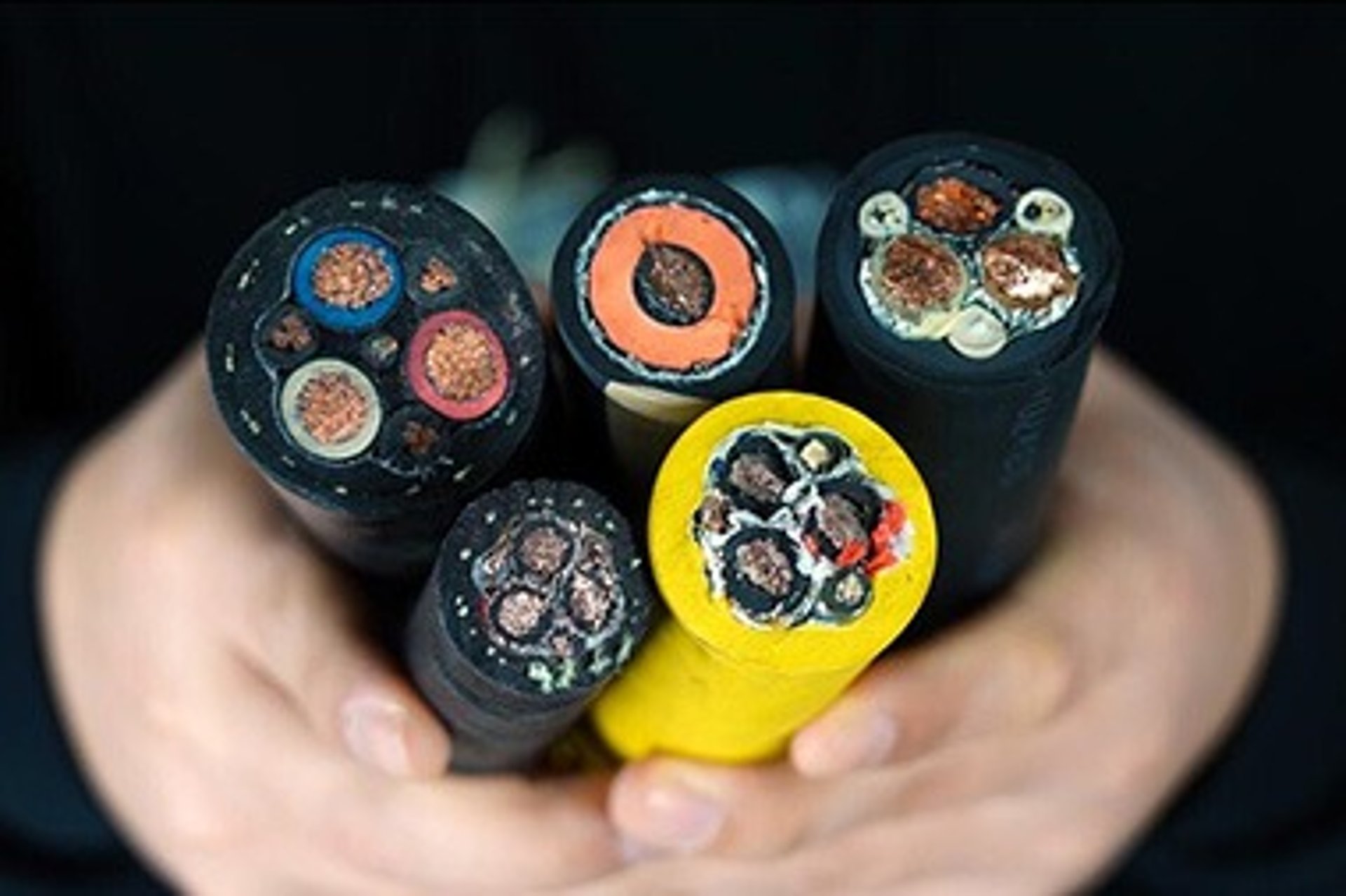
At its core, a screened cable – often interchangeably called a shielded cable – is an electrical cable engineered with a protective conductive layer to safeguard internal signals from external disruptions. This layer, typically crafted from braided copper strands, aluminium foil, or a hybrid of both, envelops the insulated conductors, acting as a barrier against electromagnetic interference (EMI) and radio frequency interference (RFI).
But how does it actually work? Picture this: external electromagnetic fields, whether from a nearby generator or a lightning strike, induce unwanted currents in unshielded wires, corrupting the intended signal. In a screened cable, the shielding layer captures these interferences and channels them harmlessly to earth via grounding. This process, known as Faraday shielding, ensures the integrity of the transmitted data or power, preventing errors, noise, or outright failures.
Key components of a screened cable include:
Central Conductors: Usually copper or aluminium wires that carry the primary signal or power.
Insulation: A dielectric material, such as cross-linked polyethylene (XLPE) or polyvinyl chloride (PVC), surrounding each conductor to prevent short circuits.
Screening Layer: The heart of the protection – this could be a foil wrap for lightweight shielding, a braided mesh for flexibility and durability, or a combination for enhanced performance.
Outer Jacket: A robust sheath, often made from PVC or low-smoke zero-halogen (LSZH) compounds, providing mechanical protection and environmental resistance.
From my years consulting on cabling installations across South Africa's industrial heartlands, I've seen how overlooking this simple yet sophisticated design can lead to cascading failures. Screened cables aren't overkill; they're precision engineering tailored for reliability in demanding environments.
Importance of Screened Cables
The importance of screened cables extends far beyond basic wiring – they're pivotal in maintaining the backbone of modern infrastructure. Let's break it down.
First and foremost, screened cables provide unparalleled protection from EMI and RFI. EMI arises from both man-made sources, like vehicle ignition systems in busy Johannesburg traffic or cell phones in urban offices, and natural phenomena, such as the intense thunderstorms that sweep across the Highveld. These disturbances can degrade signals, increasing error rates in data transmission or causing complete outages. In RFI-prone areas, screened cables absorb and divert these interferences, ensuring signals remain crisp and reliable.
Enhancing signal quality is another cornerstone. By minimising crosstalk – the unwanted signal bleed between adjacent conductors – and reducing attenuation (signal loss over distance), screened cables support high-fidelity transmission. This is crucial in high-frequency applications, where signals can migrate as electromagnetic fields, potentially escaping the cable and causing alien crosstalk with nearby lines.
Safety is non-negotiable, and here screened cables shine through grounding. The screen connects to earth, safely discharging electrical surges or faults, preventing electric shocks and protecting equipment from damage. In South Africa's variable climate, where lightning strikes are among the highest globally, this feature is a lifesaver – literally.
Economically, the benefits are tangible. Downtime in critical sectors like mining or manufacturing can cost thousands of rands per hour. Screened cables reduce malfunctions, extending system lifespan and cutting maintenance costs. For instance, in our mining industry, where operations in deep shafts expose cables to intense EMI from high-current machinery, screened variants prevent costly halts.
In high-frequency environments, like emerging 10GBASE-T networks rolling out in South African data centres, screening is indispensable. As frequencies climb, unscreened cables risk becoming unintentional antennas, broadcasting interference. Screened cables contain these signals, boosting Shannon capacity – a measure of data throughput – by nearly double, as per industry studies. With South Africa's push towards digital transformation, investing in screened cables isn't just smart; it's strategic.
Types of Screened Cables
Screened cables come in various configurations, each optimised for specific needs. Understanding these types empowers professionals to select the right one, drawing on standards like those from the South African Bureau of Standards (SABS).
Coaxial Cable: This features a central conductor, surrounded by an insulating dielectric, a braided metallic mesh screen, and an outer jacket. Its concentric design excels in shielding high-frequency signals, making it ideal for cable television, broadband internet, and RF transmissions. In South Africa, coaxial screened cables are staples in DStv installations and rural broadband extensions, where EMI from power lines is common.
Twisted Pair Cable: Comprising pairs of insulated conductors twisted together to inherently reduce EMI, these gain extra protection from screening. Variants include:
F/UTP (Foiled Unshielded Twisted Pair): Overall foil screen around all pairs.
S/FTP (Screened Foiled Twisted Pair): Braided overall screen plus individual foil on pairs.
U/FTP (Unshielded Foiled Twisted Pair): Foil on individual pairs without overall screening.
These are ubiquitous in telecommunications and Ethernet networks. In office LANs across Cape Town, S/FTP cables ensure gigabit speeds without interference from fluorescent lights or elevators.
Multi-Conductor Cable: These house multiple insulated conductors, each with individual screening (foil or braid) and an overall shield. Built for robustness, they're suited to complex setups like industrial control panels. In South African factories, they connect PLCs in automation lines, shielding against EMI from motors and welders.
Instrumentation Cable: Tailored for low-level signals, these have per-conductor braided or foil screens to combat EMI in noisy environments. Applications include process control in refineries or data acquisition in labs. Their precision is vital in Sasol's petrochemical plants, where accurate measurements prevent operational errors.
Other variants include Armoured Screened Cables, adding a steel wire armour for mechanical protection in harsh outdoor or underground settings, common in mining tunnels. Double-Shielded Cables layer foil and braid for ultra-high interference zones, like radar installations.
From experience, matching cable type to environment – per SANS 1507 standards – avoids over-specification while ensuring performance.
Applications of Screened Cables
Screened cables underpin countless industries, their versatility shining in EMI-heavy scenarios.
In the broadcast and audio industries, they connect microphones, mixers, and amplifiers, delivering noise-free sound. South African studios, like those in Johannesburg's media hubs, rely on them for crystal-clear recordings amid urban electrical buzz.
The medical field demands precision; screened cables ensure accurate signals in MRI machines, ultrasounds, and patient monitors. In hospitals like Groote Schuur, they prevent EMI from nearby equipment, safeguarding diagnostics.
Military and aerospace applications use them for secure communications and avionics. In South Africa's Denel Aerospace systems, screened cables maintain reliability in radar and navigation amid electromagnetic clutter.
Industrial machinery benefits immensely, preventing EMI-induced failures in factories. Automation in automotive plants like BMW's Rosslyn facility uses them for sensor connections.
Telecommunications leverages screened cables to curb crosstalk in high-frequency networks, including fibre optic backhauls. With MTN and Vodacom's 5G rollouts, they're essential for seamless data flow.
Automotive sectors employ them in vehicle ECUs and sensors, ensuring signal integrity amid engine noise.
A compelling South African case study comes from OR Tambo International Airport in Johannesburg. In 2018, Airports Company South Africa (ACSA) upgraded runway lighting circuits with screened cables to counter EMI from high-voltage transformers, radar systems, and frequent thunderstorms. A post-implementation study by ACSA revealed a 30% reduction in signal degradation, enhancing visibility during adverse weather and boosting operational efficiency by minimising delays. This upgrade, compliant with ICAO standards, underscores how screened cables elevate safety in our aviation infrastructure.
Screened vs. Unscreened Cables
Choosing between screened and unscreened cables hinges on environment, performance needs, and budget – a decision I've guided many South African clients through.
Construction Differences: Unscreened cables (e.g., U/UTP) feature twisted pairs under a simple jacket, relying on twisting for basic EMI cancellation. Screened cables add a semi-conductive layer over insulation, topped by metallic shields (foil for cost-effective coverage, braid for flexibility) and an outer jacket, providing robust EMI blocking.
Performance Differences: Screened cables thrive in noisy settings, like industrial floors with high-voltage equipment, offering superior noise immunity and reduced crosstalk. Unscreened ones perform adequately in low-EMI areas but falter under interference, risking signal loss. For high frequencies, screened variants prevent alien crosstalk, doubling data capacity.
Application Differences: Unscreened suit residential wiring or basic office LANs, as in suburban Pretoria homes. Screened are for EMI-prone zones, like secure military comms or factories.
Pros and Cons: Screened are thicker, costlier (due to materials), and require careful installation for earthing. Yet, they deliver unmatched reliability. Unscreened are lightweight, flexible, inexpensive, and easier to install but vulnerable in harsh conditions.
In the South African context, mining operations in Gauteng's gold mines favour screened cables per SANS guidelines, given proximity to high-current drills and conveyors. Unscreened might suffice for a simple home setup, but in Mpumalanga's coal fields, screened prevent failures from EMI spikes.
Frequently Asked Questions (FAQ)
What is the main difference between screened and unscreened cables?
Screened cables incorporate a conductive shielding layer (foil or braid) to protect against EMI/RFI, while unscreened rely solely on twisted pairs for interference cancellation, making them less effective in noisy environments.
When should I use screened cables in South Africa?
Opt for them in high-EMI settings, such as industrial sites, airports, or near power lines – prevalent in regions like Mpumalanga's coal fields or KwaZulu-Natal's ports, where machinery and weather amplify risks.
Are screened cables more expensive?
Yes, owing to additional shielding materials and manufacturing, but they yield long-term savings by minimising system failures and downtime, especially in our resource-intensive industries.
How do I install screened cables properly?
Ensure proper earthing and bonding of the screen to earth for optimal performance, adhering to SANS 10142-1 wiring standards. Consult certified installers to avoid common pitfalls like improper termination.
Can screened cables prevent all interference?
They significantly mitigate EMI/RFI but are most effective when combined with techniques like cable balancing and grounding. No solution is 100% foolproof, but screened cables come close in practice.
What types of screening are available?
Options include foil for individual pairs (reducing NEXT), braid for overall protection (against external EMI), or hybrids like S/FTP for comprehensive shielding in high-performance networks.
Conclusion
In summary, screened cables offer reliable signal transmission, robust EMI protection, and adaptability across industries – from audio studios to mining shafts. Their role in preserving data integrity, enhancing safety, and driving efficiency cannot be overstated.
As South Africa advances technologically, assess your needs through site surveys and consult local experts for SANS-compliant installations. Whether upgrading a telecom network or fortifying industrial controls, screened cables are your shield against electromagnetic chaos.
Remember, in our electrified nation, choosing the right cable isn't just technical – it's about building resilient futures. Share this guide and let's spark informed conversations!
Email Address: Li.wang@feichuncables.com
© 2025. All rights reserved.
One-click to Quickly Contact
Products
Contact
Company
Location:
Building A Private Science and Technology Park, Hefei Economic and Technological Development Zone, Anhui Province, China
Heat Resistant Cable
WhatsApp: +86 17333223430
Social Media: