Anhui Feichun Special Cable Co.,Ltd Email: Li.wang@feichuncables.com
How to Select XTREM® H07RN-F Flexible Rubber Cable for Harsh Industrial Environments, Mobile Equipment and Deep-Well Pumps
Discover how XTREM® H07RN-F flexible rubber cable delivers reliable power in South African mining, construction, industrial and submersible pump applications. Learn about EI7 rubber insulation, EM2 sheath technology, IEC standards, current ratings, cable selection, engineering principles and why Feichun offers a cost-effective equivalent alternative with shorter lead times.
Li. Wang
5/28/202632 min read
Introduction
In South Africa, industries such as mining, construction, agriculture, and water infrastructure form the backbone of the economy. From deep-level mines in Gauteng and Mpumalanga to irrigation systems in the Northern Cape and Limpopo, and from port operations in Durban and Cape Town to heavy manufacturing hubs in Gauteng, reliable electrical power distribution is critical. Yet these are among the most demanding operating environments in the world. High temperatures, intense ultraviolet radiation, dust, moisture, chemicals, oil, and continuous mechanical movement combine to create conditions that quickly degrade standard electrical cables.
Many project engineers and procurement managers initially select flexible PVC cables, believing them to be a cost-effective solution. However, experience across South African industries has shown that PVC insulated and sheathed cables have significant limitations. PVC becomes brittle in cold weather, softens excessively in heat, cracks under repeated bending, offers poor resistance to oils and chemicals, and degrades rapidly under strong sunlight. In dynamic applications where cables are moved, dragged, or flexed thousands of times, PVC cables often fail within months, leading to costly downtime, equipment damage, and safety hazards.
This is where heavy-duty flexible rubber cables like XTREM® H07RN-F become essential. Designed specifically to meet the requirements of harsh industrial environments, mobile machinery, and submerged pump systems, these cables have become the standard choice for engineers who prioritise long-term reliability and safety. This article explains in detail what makes XTREM® H07RN-F different, the engineering and material science behind its performance, how to select the correct configuration for specific applications, and why Feichun offers an equivalent alternative that meets all international standards while providing better value and faster delivery.
Throughout this guide, we will reference real-world applications and conditions found in South Africa, where the combination of extreme climate, rugged terrain, and heavy industry places unique demands on electrical infrastructure. By understanding the principles explained here, technical professionals can make informed decisions that improve operational efficiency, reduce maintenance costs, and enhance safety.
What Is XTREM® H07RN-F Flexible Rubber Cable?
Understanding the H07RN-F Designation
The code H07RN-F is not simply a product name; it is a European harmonised designation that precisely defines the characteristics of the cable according to international standards. Each letter and number has a specific meaning that tells engineers exactly what they are using.
The letter H indicates that the cable complies with harmonised European specifications, meaning it is manufactured to consistent standards recognised across all European countries and widely accepted internationally, including in South Africa where many engineering specifications align with European and IEC norms.
The numbers 07 refer to the voltage rating. This cable is designed for a nominal voltage of 450/750 V, which is suitable for all standard low-voltage industrial applications. Additionally, when installed in fixed and fully protected conditions, it can safely operate up to 1000 V, providing additional flexibility in system design.
The letter R stands for rubber insulation. Unlike thermoplastic materials such as PVC, rubber is an elastomer that retains its flexibility and mechanical properties across a wide temperature range and under mechanical stress.
The letter N indicates that the outer sheath is made from a chloroprene-based compound or equivalent synthetic rubber. This material is often referred to by the trade name Neoprene, though modern formulations are more advanced. It provides excellent resistance to oils, chemicals, weathering, and mechanical abuse.
Finally, the letter F denotes a flexible conductor construction. This means the copper inside is made of many fine strands rather than a single solid wire or thick strands, allowing the cable to bend and flex without breaking or suffering fatigue damage.
When we compare H07RN-F to other flexible cables, the differences become clear. For example, H05VV-F is a common PVC flexible cable rated at 300/500 V with much lower temperature resistance and mechanical durability. H07RN-F is classified as a heavy-duty cable, designed for industrial use where performance and reliability are non-negotiable.
What Makes XTREM® Different?
XTREM® is the premium range of H07RN-F cables manufactured by Top Cable, engineered to exceed the minimum requirements of the standards. While all H07RN-F cables must meet basic specifications, XTREM® is built with enhanced materials, tighter manufacturing tolerances, and additional quality controls to deliver superior performance.
One of the most notable improvements is flexibility. XTREM® cables use an optimised stranding design and specially formulated rubber compounds that allow for a smaller minimum bending radius. This is particularly valuable in applications such as robotic systems, crane controls, and mobile equipment where space is limited and movement is complex.
The oil and chemical resistance of XTREM® is significantly better than standard grades. The sheath compound is engineered to resist not just mineral oils, but also greases, hydraulic fluids, and many common industrial chemicals found in mining and manufacturing environments. In facilities where equipment is regularly lubricated or where accidental spills are common, this resistance prevents the sheath from swelling, softening, or deteriorating.
Outdoor performance is another area where XTREM® excels. South African conditions, particularly in regions such as the Northern Cape and Limpopo, include some of the highest levels of ultraviolet radiation in the world. Standard rubber compounds can degrade rapidly, becoming hard and cracked within a few years. XTREM® incorporates advanced UV stabilisers and high-quality carbon black in the sheath formulation, ensuring it retains its properties for over a decade of continuous outdoor exposure.
Mechanical durability is also enhanced. The cable is designed to withstand dragging over rough ground, being stepped on by personnel or machinery, and exposure to flying debris. This makes it ideal for construction sites and mining operations where cables are often subjected to rough handling.
Typical Industries Using XTREM® H07RN-F
Because of its balanced combination of properties, XTREM® H07RN-F has become the preferred choice across a wide range of industries in South Africa and globally.
In the mining sector, it is used for powering drilling rigs, load-haul-dump machines, ventilation fans, dewatering pumps, and portable lighting. Whether underground or in open-pit operations, the ability to withstand dust, water, and mechanical damage makes it indispensable.
Construction sites rely on it for temporary power distribution, tower cranes, concrete mixers, welding sets, and mobile tools. The cable can be moved daily, dragged across rubble, and left exposed to the elements without failure.
Port and terminal operations involve heavy machinery such as container handlers, reach stackers, and mobile cranes. Here, the cable must handle continuous movement, salt-laden air, and exposure to fuels and lubricants.
Agriculture uses XTREM® extensively in irrigation systems, including centre pivots and moving sprinkler systems, as well as for powering feed mills, dairy equipment, and farm machinery. The combination of outdoor use, water exposure, and mechanical movement is perfectly matched to this cable.
Water infrastructure projects, including municipal water treatment works and wastewater facilities, use XTREM® for submersible pumps, mixers, and aerators. Its AD8 water resistance classification means it can operate continuously submerged in fresh water, and it is approved for use with potable water according to standards such as AS/NZS 4020.
Manufacturing and industrial plants use the cable for welding machines, compressors, conveyors, and automated production lines. In these settings, reliability reduces unplanned downtime which can be extremely costly.
Shipyards and offshore applications benefit from the cable’s resistance to salt water, oil, and weathering, as well as compliance with marine standards such as IEC 60092-353.
Engineering Principles Behind Flexible Rubber Cables
Why Flexibility Matters in Industrial Power Transmission
To understand why XTREM® H07RN-F performs so well, we must first understand the engineering challenges of transmitting electrical power in dynamic environments. In fixed installations, cables are routed along trays, conduits, or ducts and remain in one position for their entire service life. Here, flexibility is not a requirement. However, in mobile applications, the cable is part of a moving system.
When a cable is bent, twisted, or flexed, different parts of its structure experience different mechanical forces. The outer surface of the bend is stretched under tension, while the inner surface is compressed. In the centre of the cable lies the neutral axis where there is no strain. If the material is not flexible enough or if the conductor is not designed correctly, these forces create stresses that lead to fatigue. Over time, this fatigue causes cracks to form, eventually leading to electrical failure or even short circuits.
In South African industries, the cost of failure is high. A broken cable on a deep-level mine dewatering pump can lead to flooding and production losses running into millions of Rands. A failed cable on an irrigation system can destroy a season’s crop. For this reason, engineers design cables to survive millions of bending cycles without degradation.
The Science of Flexible Conductors
The heart of any power cable is its conductor, and in flexible cables, the design of this component is critical. XTREM® H07RN-F uses Class 5 flexible copper conductors manufactured according to IEC 60228 and EN 60228 standards.
Instead of using a single solid copper wire or a small number of thick strands, Class 5 conductors are made of hundreds of very fine copper wires, typically between 0.15 mm and 0.30 mm in diameter, twisted together in layers. This design is based on a fundamental principle of materials science: thinner wires are more resistant to bending fatigue than thicker ones.
When a solid wire is bent, the stress is distributed across its entire cross-section, creating high internal forces that quickly lead to work hardening and breakage. In a stranded conductor, each individual strand bends independently. The small diameter means the strain on each strand is very low, and the overall movement is accommodated by the strands sliding past one another. This sliding action reduces stress concentrations and allows the conductor to bend repeatedly without damage.
The copper used is electrolytically refined to a purity of 99.95% and then annealed. Annealing is a heat treatment process that alters the crystal structure of the copper, making it soft and ductile while maintaining excellent electrical conductivity. The result is a conductor that offers low electrical resistance for efficient power transmission and exceptional mechanical flexibility.
The relationship between strand count and fatigue resistance is direct: the more strands used to achieve a given cross-sectional area, the more flexible and durable the conductor. XTREM® uses an optimised stranding pattern with a balanced lay length – the distance required for one complete twist of the strands – to ensure uniform flexibility and prevent the cable from twisting back on itself during installation.
Stress Distribution During Cable Movement
Beyond the conductor design, the overall structure of the cable is engineered to manage mechanical stress effectively. When a cable bends, the materials surrounding the conductor must be able to deform without cracking or separating.
Rubber materials used in XTREM® have a much lower modulus of elasticity than thermoplastics like PVC. Modulus of elasticity is a measure of how much a material deforms under a given load. A low modulus means the material stretches and compresses easily with very little force. This property allows the insulation and sheath to conform to the movement of the conductor, absorbing the mechanical energy rather than resisting it.
Engineers also design the cable with a circular cross-section and balanced construction. This ensures that regardless of the direction of bending or twisting, the forces are distributed evenly around the neutral axis. In multi-core cables, the inner voids between conductors are filled with flexible rubber or textile fillers to maintain the circular shape and prevent internal abrasion between cores. This attention to structural detail prevents stress concentrations that would otherwise lead to premature failure.
Why Rubber Performs Better Than PVC in Dynamic Applications
The choice between rubber and PVC is one of the most fundamental decisions in cable selection, and the differences in performance are driven by their underlying material science.
PVC is a thermoplastic. At higher temperatures, it becomes soft and flexible, but as it cools, it hardens and becomes rigid. In South Africa, this creates a problem: in summer heat, PVC cables can soften so much that they deform or creep under their own weight, while in winter or at high altitudes, they become brittle and crack when moved. Rubber is an elastomer, meaning it retains its elasticity and flexibility across a much broader temperature range, typically from -40°C up to 90°C.
In terms of flexibility, rubber remains supple throughout its life, whereas PVC tends to become stiffer as it ages due to the migration of plasticisers.
Cold resistance is a major advantage. PVC cables generally become unusable below -5°C to -15°C. XTREM® rubber cables can operate at -40°C in fixed installations and -25°C in mobile service, making them suitable for the cold winters experienced in the Free State, the Drakensberg, and high-altitude mining areas.
Oil resistance is another key difference. PVC is chemically attacked by many oils and greases, which cause it to swell, soften, or dissolve. The rubber compounds used in XTREM® are specifically formulated to resist mineral oils, vegetable oils, and greases, making them safe for use in workshops, engine bays, and industrial facilities.
In dynamic life, rubber cables can withstand millions of flex cycles. In comparison, tests show that PVC cables often fail after only a few thousand bending cycles when subjected to similar movement.
Outdoor performance favours rubber significantly. PVC degrades rapidly under UV light, becoming discoloured, brittle, and cracked within a few years. High-grade rubber compounds with carbon black and stabilisers can last for decades in outdoor applications.
Abrasion resistance is also superior in rubber, allowing the cable to be dragged across rough surfaces without wearing through the sheath.
Material Science Deep Dive
The performance of XTREM® H07RN-F is not just the result of clever design; it is built on advanced material science. Every component, from the copper conductor to the outer sheath, is formulated and manufactured to precise standards.
EI7 Thermosetting Rubber Insulation
What Is EI7?
The insulation material used in XTREM® is classified as type EI7 according to the European standard EN 50363‑1. This is a thermosetting elastomer based on Ethylene‑Propylene Rubber (EPR). EPR is a synthetic rubber made by polymerising ethylene and propylene monomers.
Unlike thermoplastics which melt when heated, thermosetting materials undergo a chemical change during manufacturing known as cross‑linking or vulcanisation. Once formed, their structure is permanent. They will not melt, flow, or soften excessively even at high temperatures. This property is crucial for electrical safety, as it prevents insulation failure under fault or overload conditions.
Molecular Engineering of Thermosetting Rubber
The key to the performance of EI7 insulation lies in its molecular structure. In its raw state, the polymer consists of long, separate molecular chains. During the manufacturing process, these chains are chemically linked together by sulphur or peroxide agents to form a three‑dimensional network. This structure is what gives the material its unique combination of properties.
The cross‑linked network is flexible because the chains can still move and vibrate within the structure, but it is strong and stable because the chains cannot separate or flow past each other. This explains why the material remains solid and stable even when heated to temperatures well above the melting point of thermoplastics.
The chemical composition of EPR is also highly advantageous. The polymer backbone is fully saturated, meaning there are no double bonds between carbon atoms. This saturated structure is chemically inert and highly resistant to oxidation, ozone attack, and weathering – the primary causes of ageing in rubber materials.
Advantages of EI7 Insulation
The benefits of EI7 insulation translate directly into real‑world performance.
First is excellent flexibility. The low modulus of elasticity ensures the cable is easy to install and can bend tightly without damage.
Thermal endurance is exceptional. It can operate continuously at a conductor temperature of 90°C, significantly higher than the 70°C limit of PVC. This higher temperature rating allows the cable to carry more current for the same cross‑sectional area, potentially reducing the required cable size and cost.
Dielectric stability is a critical electrical property. EI7 has a high dielectric strength, meaning it can withstand high electrical fields without breaking down. It also has very low dielectric loss, which means it does not generate excessive heat when conducting electricity, and its insulation resistance remains high even when wet. This is essential for applications such as submersible pumps where water is in constant contact with the cable.
Because of its stable chemical structure, EI7 insulation resists cracking and ageing far better than other materials. Even after years of service in hot, humid, or chemically aggressive environments, it retains its insulating properties.
EM2 Flexible Rubber Outer Sheath
What Is EM2?
The outer protective sheath is made from type EM2 compound, defined in EN 50363‑2‑1. This is a heavy‑duty synthetic rubber blend based primarily on Chloroprene Rubber (CR), often modified with CPE or EPDM polymers to enhance specific properties. The formulation is a closely guarded technical secret, but the result is a material designed to survive the harshest industrial environments.
Why EM2 Is Important in Harsh Environments
The sheath acts as the first line of defence against the outside world. It must resist oil, grease, chemicals, sunlight, water, and physical damage, all while remaining flexible enough to move with the cable.
Oil resistance comes from the polarity of the chloroprene molecule. The chemical structure repels non‑polar substances such as mineral oils and greases, preventing them from penetrating the material and causing swelling or degradation. This is a vital characteristic for mining and industrial applications.
Abrasion resistance is achieved through a combination of high tensile strength and high tear strength. The material is reinforced with fine particle fillers that increase hardness and durability without sacrificing flexibility. It resists cutting and tearing when dragged over rocks, concrete, or metal edges.
UV and ozone resistance is built into the polymer structure and enhanced by additives. Chloroprene rubber is naturally resistant to ozone, which is a major cause of cracking in natural rubber. Combined with a high loading of high‑quality carbon black, the sheath absorbs harmful UV radiation before it can damage the polymer chains. This is why the cable is always black – the carbon black is not just a colourant, it is a critical functional ingredient.
Moisture protection is ensured by the material’s low water absorption rate. EM2 rubber absorbs less than 0.5% water by weight, ensuring that even after years of submersion or exposure to high humidity, water does not penetrate to the conductor or insulation.
Carbon Black and Outdoor Durability
Carbon black is one of the most important ingredients in the sheath compound. It works by absorbing ultraviolet light and converting it into small amounts of heat, which dissipates harmlessly. Without carbon black, UV light breaks the chemical bonds in the polymer, causing the material to become brittle and cracked. The specific grade and particle size of carbon black used in XTREM® are selected to provide maximum protection, making it ideal for the intense sunlight found across Southern Africa.
Mechanical Performance and Durability Analysis
Bending Radius Engineering
One of the most frequently referenced specifications for flexible cables is the minimum bending radius. This is the smallest radius around which the cable can be bent without suffering permanent damage or reduction in service life.
The engineering principle here is simple physics: the tighter the bend, the higher the mechanical strain on the outer layers of the cable. XTREM® H07RN‑F is designed with two standard limits: for cables with an overall diameter less than 12 mm, the minimum bending radius is three times the cable diameter. For larger cables (12 mm and above), it is four times the diameter.
These values are significantly better than many competing products. This advantage comes from the optimised balance between conductor stranding, insulation thickness, and material flexibility. In practical terms, this means XTREM® can be installed in tighter spaces and navigate more complex cable management systems, which is particularly valuable in control panels, on machinery, and in borehole installations where space is limited.
Abrasion Resistance in Industrial Environments
In mining, construction, and port operations, cables are rarely treated gently. They are dragged across rock, concrete, and steel, and they are often exposed to dust and grit that act like sandpaper during movement.
Abrasion resistance is measured by standard tests such as DIN 53516, which determines the volume of material lost under controlled rubbing. XTREM® cables show excellent results in these tests, thanks to the high‑quality EM2 sheath compound.
The importance of this property cannot be overstated. In South African mines, a common cause of cable failure is wear‑through of the outer sheath, which exposes the insulation and eventually leads to electrical faults. By using a cable with superior abrasion resistance, operators can extend service life by years and significantly reduce replacement costs.
Impact Resistance and Industrial Reliability
Cables are often exposed to sudden mechanical shocks – falling debris, moving machinery parts, or accidental impact by vehicles or tools. XTREM® is classified as AG2 impact severity according to relevant standards, meaning it is designed to withstand medium‑severity impacts without damage.
The rubber materials act as a shock absorber, dissipating the energy of an impact rather than cracking or breaking like a rigid material would. This is a key safety feature. A damaged cable can expose live conductors, creating a serious electrocution hazard. By resisting damage, XTREM® improves overall site safety.
Low‑Temperature Flexibility
As mentioned earlier, South Africa experiences a wide range of temperatures. In high‑altitude locations such as mines in Mpumalanga or farming areas in the Free State, winter temperatures regularly drop below freezing.
At these temperatures, PVC cables become rigid and glass‑like. Attempting to move or install them results in immediate cracking. XTREM® retains its flexibility down to -40°C for fixed installations and -25°C for mobile use. This capability is engineered into the polymer formulation by carefully selecting plasticisers and polymer types that remain elastic at low temperatures. The molecular chains are designed to keep moving even when cold, ensuring the cable remains functional and safe in all seasons.
Dynamic Service Life
The ultimate measure of a flexible cable is how long it lasts when moving continuously. XTREM® is engineered for continuous dynamic service. This means it is designed to be moved, flexed, and twisted thousands or even millions of times over its operational life.
This durability is the result of the combination of fine‑stranded conductors, low‑modulus insulation, and tough yet flexible sheaths. In comparative tests, XTREM® cables have demonstrated a service life 30–50% longer than standard H07RN‑F cables and many times longer than PVC alternatives. For industries where downtime costs are measured in millions of Rands per day, this reliability is invaluable.
Electrical Performance and Thermal Engineering
While mechanical durability is what makes these cables survive the environment, their primary function is to conduct electricity safely and efficiently. XTREM® H07RN‑F is engineered with precise electrical and thermal characteristics to meet the demands of industrial power distribution.
Voltage Rating Explained
The designation 450/750 V describes the cable’s voltage capability. The lower figure (450 V) is the voltage between a conductor and earth or the metallic sheath, while the higher figure (750 V) is the voltage between two live conductors. This rating covers all standard low‑voltage systems used in South Africa, including the common 380/400 V three‑phase and 220/230 V single‑phase supplies.
Because of the high‑quality insulation system, the standard allows for use up to 1000 V in fixed and protected installations. This provides engineers with system design flexibility, particularly in larger industrial plants or mining operations where higher distribution voltages may be used.
Current Carrying Capacity
Current carrying capacity, or ampacity, is the amount of electrical current a cable can safely carry without overheating and damaging its insulation. This is governed by the balance between heat generation from electrical resistance and heat dissipation into the surrounding environment.
XTREM® has well‑defined ampacity ratings provided in technical data sheets. These values are calculated based on standards such as IEC 60364‑5‑52 and EN 50565. Two sets of values are provided: one for fixed installations and one for mobile service.
In fixed installations, the cable is assumed to be well‑supported and spaced to allow heat to escape, so higher currents are permitted. In mobile service, the cable is often coiled, bundled, or resting on surfaces that trap heat, so ratings are reduced to prevent overheating.
The high thermal rating of the EI7 insulation (90°C) is a major benefit here. Compared to 70°C PVC cables, XTREM® can carry approximately 15–20% more current for the same size, or alternatively, the same current can be carried in a smaller, lighter, and more cost‑effective cable.
Voltage Drop Engineering
Voltage drop is a critical factor often overlooked in cable selection, especially in South Africa where distances between power sources and loads can be significant – such as pumping water from deep boreholes or powering machinery in remote mining sections.
As current flows through a cable, the electrical resistance of the copper causes a reduction in voltage along the length of the cable. If this drop is too high, equipment may not operate correctly, motors may overheat or fail to start, and efficiency is reduced.
XTREM® data sheets provide precise voltage drop values expressed in V/A·km (Volts per Ampere per kilometre). These values are calculated at the operating temperature of the conductor (60°C) for a power factor of unity. Engineers use these figures to calculate the correct cable size to ensure the drop remains within acceptable limits, typically below 3% for motors and 5% for lighting circuits.
Because XTREM® uses high‑purity copper with low resistance, its voltage drop characteristics are excellent. This allows for longer cable runs or the use of smaller conductors compared to lower‑quality cables that may contain less copper or lower‑grade material.
Short‑Circuit Performance
In the event of a fault or short circuit, very high currents flow through the cable for a short period. This generates intense heat in the conductor. The insulation must be able to withstand this thermal shock without melting or catching fire.
XTREM® is designed to handle a short‑circuit temperature of 250°C for a maximum duration of 5 seconds. This is a stringent requirement that tests the thermal stability of the cross‑linked rubber insulation. Unlike thermoplastics which would melt and flow at these temperatures, EI7 insulation retains its integrity, containing the fault and preventing further damage or fire spread.
Technical data also includes short‑circuit current capacity tables, allowing protection engineers to coordinate circuit breakers and fuses correctly to ensure the cable is protected while still allowing sufficient current to operate protective devices.
Heat Resistance and Aging
Thermal ageing is the slow degradation of materials over time due to heat. All organic materials age, but the rate depends heavily on temperature. The Arrhenius equation describes this relationship: for every 10°C increase in operating temperature, the life of an organic material is roughly halved.
By allowing continuous operation at 90°C, XTREM® not only offers higher current capacity but also ensures that even when operating at high ambient temperatures common in South Africa, the material remains well below its absolute limit, ensuring a long service life.
The cross‑linked structure of the rubber prevents the material from undergoing structural changes at high temperatures. It does not soften, flow, or lose mechanical strength, ensuring performance remains consistent for decades.
Water Resistance and Submersible Pump Applications
One of the standout features of XTREM® H07RN‑F is its suitability for use in and under water, making it the premier choice for South Africa’s water infrastructure.
Understanding AD8 Water Resistance
XTREM® is classified as AD8 according to relevant standards. This is the highest level of water resistance classification, indicating that the cable is suitable for continuous submersion in water. Unlike many cables that are only rated for occasional wetting or damp environments, AD8 rated cables are designed to operate fully immersed for their entire service life.
Why Water Destroys Standard Cables
Water is one of the most destructive forces for electrical cables. When water penetrates a cable, several damaging processes begin.
Water treeing is an electrochemical phenomenon that occurs in insulation materials under the combined influence of water and electrical stress. It creates microscopic tree‑like structures that eventually grow through the insulation, leading to breakdown and failure. This is a common failure mode in PVC and lower‑grade rubber cables used in pumping applications.
Moisture ingress also leads to a rapid drop in insulation resistance, which can cause earth leakage protection devices to trip unnecessarily or create safety hazards.
Copper corrosion occurs when water reaches the conductor, leading to increased resistance and eventually open circuits.
Why XTREM® H07RN‑F Performs Well Underwater
The design of XTREM® prevents these failure modes. The rubber materials used have very low water absorption rates, meaning water does not soak into the material like it would into a sponge. The interface between the insulation and sheath is bonded tightly during manufacturing, creating a continuous seal that prevents water from wicking along the length of the cable.
Furthermore, the chemical structure of EI7 insulation is highly resistant to water treeing. It is chemically inert and does not react with water or dissolved minerals found in ground water.
The cable has also been tested and approved for use with potable water according to standards such as AS/NZS 4020. This means it does not leach harmful substances into the water, making it safe for use in drinking water supplies – a crucial requirement for municipal water systems across South Africa.
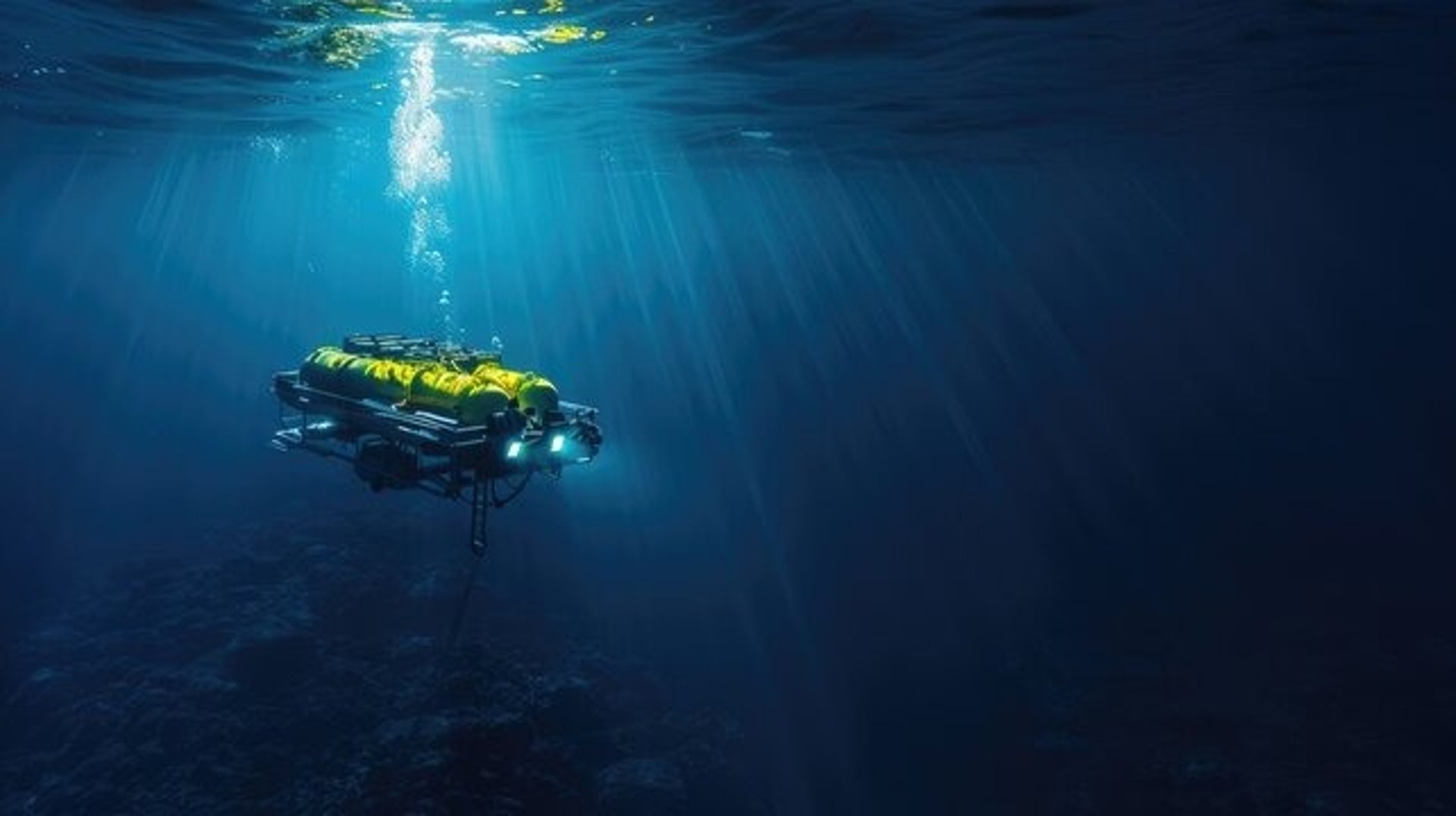
Deep‑Well and Pump Installations
The ability to operate reliably underwater has made XTREM® the standard choice for submersible pump installations, which are widespread across South Africa.
Typical Applications
Borehole pumps are used extensively in rural and farming areas where surface water is scarce. These pumps are lowered deep into the ground, often hundreds of metres, and run continuously. Replacing a failed cable in these installations is extremely expensive and difficult. XTREM® provides the reliability needed here.
Agricultural irrigation systems rely heavily on boreholes and dams. From the Western Cape to Limpopo, farmers depend on these cables to power the pumps that keep crops watered.
Municipal water systems and wastewater treatment works use submersible pumps, mixers, and aerators, all of which require cables that can handle permanent immersion.
Mine dewatering is critical to keep operations dry. Pumps operate continuously in water that is often acidic or laden with solids, conditions where standard cables fail rapidly.
South African Application Example
A typical application can be found in the Limpopo and Northern Cape provinces, where deep boreholes supply water to remote communities and large agricultural estates. In these installations, cables must be lowered hundreds of metres down narrow casings, requiring excellent flexibility and mechanical strength. They operate in hot water at depth, exposed to minerals and dissolved gases.
Experience has shown that XTREM® cables installed in these conditions have an operational life exceeding 15 years, compared to just 2–3 years for standard PVC or lower‑grade rubber cables. The return on investment is clear: fewer replacements, less maintenance labour, and consistent water supply.
International Standards and Compliance
Engineering standards are the language of the industry. They ensure that products are safe, reliable, and interchangeable. XTREM® H07RN‑F is manufactured to a comprehensive set of international standards that are widely recognised and required in South African specifications.
Main Standards Explained
EN 50525‑2‑21 is the primary European standard covering construction and performance requirements for flexible rubber cables rated 450/750 V. It defines everything from conductor stranding to insulation thickness, sheath materials, and test methods. Compliance with this standard ensures the cable meets a minimum level of quality, but XTREM® often exceeds these baseline requirements.
IEC 60245‑4 is the international standard equivalent, widely referenced in South African technical specifications and mining standards. It covers rubber insulated cables and provides detailed requirements for materials and testing.
IEC 60092‑353 is the standard for electrical cables used in ships and offshore units. Compliance here makes XTREM® suitable for marine applications, a growing market in South Africa’s ports and coastal industries.
EN 60228 defines the classes of conductor flexibility. Class 5, used in this cable, is the standard for flexible applications.
EN 60332‑1 specifies the test for flame propagation. XTREM® passes this test, meaning it will not spread fire if ignited, a critical safety feature required by the SANS 10142 wiring code and mining safety regulations.
EN 50575 covers the Construction Products Regulation (CPR). XTREM® is classified as E₍ca₎, the standard reaction to fire classification for power cables, indicating it meets essential safety requirements for construction projects.
Why Standards Matter for Procurement
For procurement professionals, standards are the primary tool to ensure value and quality. Buying a cable that claims to be H07RN‑F but does not actually meet these standards is a false economy. Such products often use inferior rubber compounds, less copper, or thinner insulation and sheaths, leading to early failure and safety risks.
Compliance with recognised standards is also a requirement for insurance purposes, project approvals, and regulatory compliance in South Africa, particularly in the mining and construction sectors where safety is heavily regulated.
South African Market Relevance
South Africa has a unique position where it draws standards from both Europe and the rest of the world. While local standards (SANS) exist, European and IEC standards are widely accepted and specified. XTREM®’s compliance with these international standards ensures it is accepted by consulting engineers, mining houses, and government departments across the country. It fits seamlessly into project specifications that require SANS, IEC, or EN compliance.
Industrial Applications and Real‑World Use Cases
To fully appreciate the versatility of XTREM® H07RN‑F, we can look at how it is applied across key sectors of the South African economy.
Mining Industry Applications
Mining remains the cornerstone of the South African economy, and it is arguably the toughest environment for electrical infrastructure.
Underground mining presents challenges including high humidity, water ingress, high ambient temperatures, and exposure to dust and chemicals. XTREM® is used for powering drilling rigs, load‑haul‑dump vehicles, and ventilation fans. Its flexibility allows it to follow machinery as it moves along tunnels, and its rugged construction resists damage from rock falls and handling.
Open‑pit mining involves exposure to intense sunlight, wind, and abrasive dust. Mobile equipment such as shovels, draglines, and stacker‑reclaimers rely on long lengths of flexible power cable. These cables are subjected to constant movement and dragging. The UV stability and abrasion resistance of XTREM® significantly extend service life compared to alternatives.
Dewatering systems are essential in almost every mine. Whether pumping water from deep underground or managing surface water, submersible pumps are used extensively. The AD8 water resistance and robust construction make XTREM® the default choice for these critical systems.
Construction Industry Applications
Construction sites are temporary but highly demanding environments. Cables are often moved daily, dragged over rough ground, and left exposed to the elements.
XTREM® is used to power site generators, mobile lighting towers, concrete mixers, and welding sets. It is the standard cable used on tower cranes, where it must flex hundreds of times per day as the crane slews and luffs. The ability to handle cold winter mornings and hot summer afternoons without losing flexibility is a major operational benefit.
Port and Marine Applications
South Africa’s ports are vital hubs for import and export. Equipment such as container handlers, reach stackers, and ship‑to‑shore cranes require power cables that can handle continuous movement and exposure to salt‑laden air.
XTREM®’s resistance to weathering and chemicals, combined with compliance with marine standards, makes it ideal. It is also used for shore power connections and mobile equipment in shipyards, where oil and grease contamination is common.
Agricultural and Water Infrastructure
In agriculture, reliability directly translates to profitability. Irrigation systems, particularly centre pivots, require long lengths of flexible cable that move in a circle across the field. These cables must withstand being run over by tyres, exposure to fertilisers and chemicals, and constant wetting and drying.
XTREM® is also widely used in water treatment works, powering pumps, mixers, and filters. Its approval for potable water contact ensures compliance with health regulations.
Industrial Manufacturing
Factories and processing plants use XTREM® wherever equipment is mobile or subject to vibration. Welding machines, compressors, robotic systems, and assembly lines all benefit from a cable that does not fail due to fatigue or contamination. In facilities where machinery is washed down with high‑pressure water or chemicals, the cable’s resistance to ingress is essential.
Technical Specifications and Configuration Selection
Selecting the correct configuration of XTREM® H07RN‑F is a process that balances electrical requirements, mechanical needs, and environmental conditions. The range is extensive, covering cross‑sections from 1.5 mm² up to 630 mm² and configurations from 1 core to 37 cores.
Core Configurations
Cables are available in several standard configurations:
Single‑core: Used for high‑power applications or where cables are run in parallel.
Multi‑core (2 to 5 cores): The most common range, used for single‑phase and three‑phase power.
With or without earth conductor: Designated by the letter G in the code. For example, 3G4 indicates three power cores plus an earth conductor. This is the standard configuration for safety in industrial systems.
Control cables: Configurations with 7 or more cores, often numbered, used for signal and control circuits on machinery.
Colour coding follows the international HD 308 standard, ensuring compatibility with installation practices across South Africa and the world.
Selecting the Correct Cable Size
Choosing the right size involves a step‑by‑step engineering process:
Determine the load current: Calculate the full‑load current of the equipment, including starting currents where relevant.
Check ampacity: Refer to the technical data sheet for the current rating for both fixed and mobile use. Apply correction factors for ambient temperature. In South Africa, where ambient temperatures often exceed 30°C, derating is essential. For example, at 40°C, the capacity drops to 0.91 of the base value for fixed installations and 0.82 for mobile use.
Calculate voltage drop: Measure the total length of the cable run. Using the V/A·km values, calculate the total drop. Ensure it is within acceptable limits (typically ≤ 3% for motors). This is particularly important for long borehole installations.
Consider mechanical strength: Ensure the conductor size is large enough to withstand the tension of installation and use. For mobile applications, a minimum of 1.5 mm² is recommended regardless of current.
Review environmental factors: If the cable will be exposed to extreme heat, cold, or heavy mechanical stress, consider upgrading to a larger size or ensuring the installation method supports the cable correctly.
How to Select Cable for Mobile Equipment
For mobile machinery, flexibility and durability are prioritised. Always select the mobile service ampacity rating rather than the fixed rating. Consider the path of movement – does the cable bend in one plane or twist? XTREM®’s balanced construction handles both well, but avoiding tight loops is always best practice.
Selecting Cable for Submersible Pumps
Submersible applications require special attention. The cable must be AD8 rated. Calculate the length carefully, as the weight of the cable itself adds to the load on the pump and installation rope. Voltage drop is critical here; if the voltage is too low at the pump motor, it may fail to start or overheat. The table below shows typical selections:
Small borehole pumps (< 2.2 kW): 3G 1.5 mm² or 3G 2.5 mm²
Medium pumps (3 kW – 11 kW): 3G 4 mm² to 3G 10 mm²
Large pumps (> 15 kW): 3G 16 mm² and above
Recommended Cable Selection Examples
For clarity, here are common examples applicable to South African industries:
Portable tools and lighting: 2‑core or 3G 1.5 mm² or 2.5 mm²
Small pumps and compressors: 3G 4 mm²
Medium‑sized industrial motors: 4G 16 mm²
Heavy‑duty cranes and mining equipment: 5G 35 mm² or larger
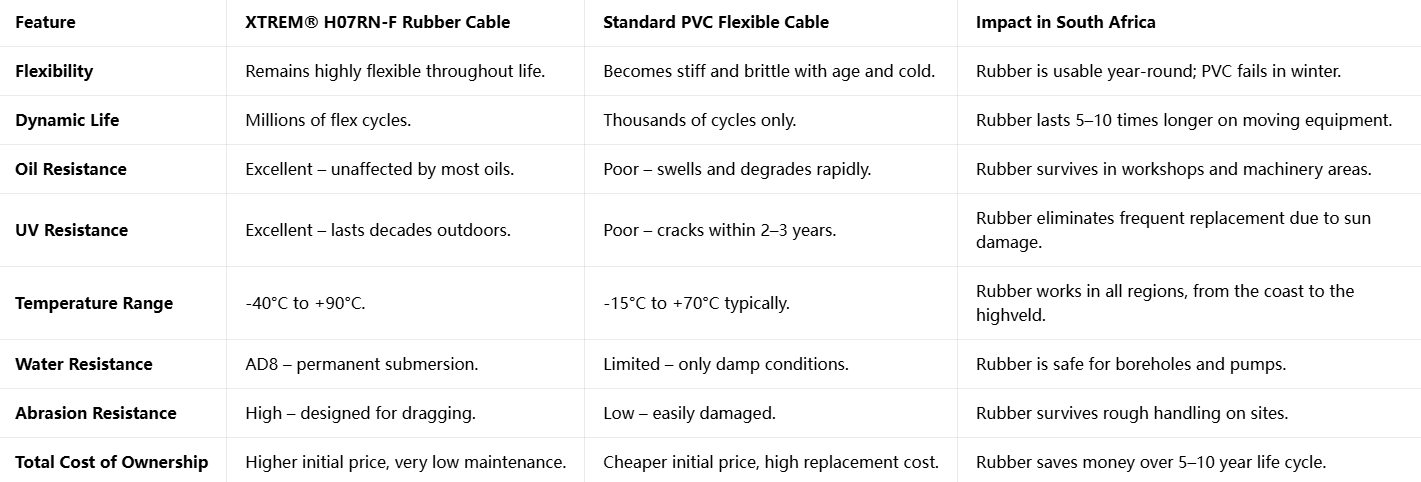
XTREM® H07RN‑F vs PVC Cable Comparison
The decision between rubber and PVC is one of the most impactful choices in cable selection. The following comparison summarises why rubber is the superior choice for industrial environments.
While PVC cables may appear cheaper on a price‑per‑metre basis, the frequency of replacement, downtime costs, and labour expenses make them significantly more expensive in the long run. In mining operations, the cost of downtime alone often exceeds the entire value of the cable installation.
Why Feichun H07RN‑F Cable Is an Equivalent Alternative
As global supply chains evolve, procurement professionals are increasingly looking for reliable alternatives to traditional European brands. Feichun Cables has emerged as a leading manufacturer of industrial rubber cables, offering a product that is fully equivalent to XTREM® H07RN‑F in every technical aspect.
Standard Compliance Equivalence
Feichun H07RN‑F is manufactured to exactly the same international standards: EN 50525‑2‑21, IEC 60245‑4, and IEC 60092‑353.
The construction is identical:
Conductor: Class 5 fine‑stranded electrolytic copper according to EN 60228.
Insulation: EI7 thermosetting rubber compound, same material classification and performance specifications.
Sheath: EM2 heavy‑duty synthetic rubber sheath, matching the chemical and mechanical properties required by the standard.
Dimensions: Diameters, wall thicknesses, and colour coding adhere strictly to harmonised standards, ensuring mechanical interchangeability.
Every Feichun cable is tested according to the same rigorous protocols as the leading brands, including high‑voltage tests, insulation resistance checks, mechanical strength tests, and ageing tests. The result is a product that meets all the same specifications and is accepted by engineers, consultants, and regulatory bodies in South Africa as a direct replacement.
Comparable Performance Characteristics
Because the materials and standards are identical, the performance characteristics match exactly:
Electrical: 450/750 V rating, 90°C continuous operation, 250°C short‑circuit capability.
Mechanical: Same bending radii, tensile strength, and flexibility.
Environmental: AD8 water resistance, UV resistance, excellent oil and chemical resistance.
Safety: Flame‑retardant to EN 60332‑1, CPR classification E₍ca₎.
Feichun cables perform identically in South African mining, construction, and water applications. They have been used successfully in projects across the region, proving their reliability in the same harsh conditions.
Advantages of Feichun Cable
While the technical performance is the same, Feichun offers significant commercial and logistical advantages that are highly valued by procurement teams.
Faster Lead Times
One of the biggest challenges in sourcing European‑manufactured cables is delivery time. Due to production backlogs, shipping times, and supply chain complexities, lead times for XTREM® and similar brands can range from 12 to 20 weeks. In fast‑moving industries like mining and construction, waiting this long is often impossible and causes project delays.
Feichun operates modern manufacturing facilities with efficient production planning and established global shipping networks. Typical lead times are 4 to 8 weeks, often even shorter for standard sizes. This speed allows projects to stay on schedule and reduces the need for expensive stock holding.
More Competitive Pricing
Feichun’s manufacturing base and operational structure allow it to offer pricing that is typically 15% to 25% lower than premium European brands, without any compromise on quality. This difference directly improves project margins and allows for more competitive tendering.
This price advantage does not come from using cheaper materials or reducing specifications. It is the result of efficient manufacturing, economies of scale, and lower overhead structures. The copper content, rubber quality, and testing standards remain identical.
Customisation Capabilities
Unlike mass‑produced standard cables, Feichun offers a high degree of flexibility in production. They can provide custom lengths, special markings, and modified configurations to meet specific project requirements. This is particularly useful for large infrastructure projects in South Africa where unique specifications may apply.
Stable Export Supply
With years of experience in international trade, Feichun understands the documentation, certification, and logistics requirements of exporting to South Africa. They provide all necessary documentation including test reports, certificates of compliance, and commercial documentation required for import clearance and engineering approvals.
Why More Global Buyers Are Considering Equivalent Alternatives
Global industries are moving away from the idea that "European made" is the only guarantee of quality. Modern manufacturing in Asia has reached world‑class levels, with companies like Feichun leading the way.
Buyers are realising that by switching to certified equivalents, they can:
Reduce capital expenditure significantly.
Speed up project delivery.
Maintain the same high level of reliability and safety.
Diversify their supply chain and reduce dependency on single sources.
For South African companies, this shift offers a way to manage costs while still using the high‑quality infrastructure materials required for local conditions.
Procurement and Purchasing Guide
Buying the correct cable is about more than just selecting a part number. It requires understanding specifications, verifying quality, and avoiding common pitfalls.
Common Procurement Mistakes
Buying Only on Price
The most common mistake is purchasing the cheapest product labelled as H07RN‑F. In the cable industry, price is directly linked to material cost, and copper and high‑grade rubber are expensive.
Low‑cost alternatives often cut corners:
Reduced copper cross‑section (higher resistance, overheating).
Lower‑grade copper alloy or recycled material.
Thinner insulation or sheath walls (risk of breakdown or damage).
Use of thermoplastic rubber instead of true thermosetting rubber (melts at high temperatures, ages quickly).
Poor‑quality compounds that crack within months.
These "bargains" end up costing far more in replacements and downtime.
Ignoring Voltage Drop
Specifying a cable based only on current rating is insufficient, especially for long runs or deep boreholes. Undersized cables cause motors to burn out or pumps to fail to start, leading to expensive repairs and production stops.
Using PVC Cable in Dynamic Applications
Specifying PVC cables for moving equipment is a false economy. They simply do not have the life expectancy required, and the cost of labour to replace them repeatedly dwarfs the initial savings.
What Buyers Should Verify Before Purchase
When procuring H07RN‑F cables, use this checklist to ensure quality:
Standard Markings: The cable sheath must be clearly marked H07RN‑F, the voltage 450/750 V, the standard EN 50525‑2‑21, and the manufacturer’s name, metre by metre.
Material Specification: Confirm the insulation is EI7 and the sheath is EM2 grade rubber.
Conductor Class: Verify it is Class 5 flexible copper.
Certifications: Request copies of test reports, ISO 9001 quality certificates, and compliance declarations.
Technical Data: Check that the supplier provides full technical tables including dimensions, weights, ampacity, and voltage drop values matching the standard.
Questions Industrial Buyers Should Ask Suppliers
To clarify suitability, ask:
Is this cable suitable for continuous daily movement and flexing?
What is the exact rubber compound used for insulation and sheath?
Is the cable suitable for permanent submersion in water or borehole use?
What is the guaranteed minimum bending radius?
What are the current lead times and delivery terms to South Africa?
By asking these questions, buyers ensure they are comparing products on quality and performance, not just price.
Frequently Asked Questions (FAQ)
Is H07RN‑F suitable for outdoor use?
Yes, it is specifically designed for outdoor use. The EM2 sheath provides excellent UV and ozone resistance, and it is formulated to withstand the intense sunlight and weather conditions found in South Africa. It will not degrade or crack like PVC or lower‑grade rubber cables.
Can H07RN‑F be submerged in water?
Yes, XTREM® and Feichun H07RN‑F are classified AD8, meaning they are suitable for continuous submersion. They are approved for use in potable water and are the standard choice for borehole and submersible pump applications.
What is the difference between rubber and PVC flexible cable?
Rubber cables like H07RN‑F remain flexible in cold weather, resist oil and chemicals, do not crack under UV exposure, and can withstand millions of bending cycles. PVC cables become brittle in cold, soften in heat, degrade in sunlight, and have a much shorter life when moved. Rubber cables are a heavy‑duty industrial solution, while PVC is a light‑duty domestic or commercial product.
Is H07RN‑F suitable for mining applications?
Absolutely. It is widely specified by mining houses across Southern Africa because it resists dust, water, abrasion, and mechanical damage. It meets the safety and performance requirements of mining regulations.
Can H07RN‑F be used for submersible pumps?
Yes, this is one of its primary applications. It is designed to withstand the pressure, temperature, and chemical conditions found in deep wells. It does not suffer from water treeing or insulation breakdown when wet.
What conductor class is used?
Class 5 flexible copper conductor according to IEC 60228. This is the finest standard stranding available, providing maximum flexibility and resistance to fatigue breakage.
What temperature range can the cable handle?
It operates safely from ‑40°C to +90°C. For mobile applications, the minimum recommended temperature is ‑25°C to prevent over‑stressing the rubber during movement. This covers every climate region in South Africa.
How long does H07RN‑F cable typically last?
In fixed outdoor applications, a life of 15–20 years is common. In continuous dynamic or submerged service, 10–15 years is typical, provided it is installed and sized correctly. This is 3 to 5 times longer than standard PVC alternatives.
How do I select the correct cable size?
Selection requires calculating the load current, applying temperature correction factors, calculating voltage drop for the length of the run, and ensuring sufficient mechanical strength. Always refer to the manufacturer’s technical tables and consult with a qualified electrical engineer.
Is Feichun H07RN‑F cable equivalent to European brands?
Yes. Feichun manufactures to exactly the same international standards, uses the same materials (EI7 insulation, EM2 sheath, Class 5 copper), and passes the same tests. It offers identical performance and safety, with the added benefits of faster delivery and better pricing.
Conclusion
XTREM® H07RN‑F flexible rubber cable represents the result of decades of engineering development and material science innovation. It is not simply a wire covered in rubber; it is a complex engineered system designed to solve the specific challenges of power distribution in harsh environments.
For South African industries – from mining and agriculture to water infrastructure and manufacturing – the value proposition is clear. By understanding the principles of flexibility, thermal stability, and environmental resistance, engineers can see why this cable is the trusted standard. It bridges the gap between performance and safety, offering a level of reliability that standard cables simply cannot match.
The decision to specify H07RN‑F is an investment in operational continuity. In a country where environmental conditions are extreme and downtime is costly, the slightly higher initial cost is returned many times over through extended service life, reduced maintenance, and trouble‑free operation.
Furthermore, the availability of fully equivalent alternatives such as Feichun H07RN‑F means that procurement teams no longer have to choose between quality, delivery speed, and price. Feichun delivers exactly the same engineering performance and compliance with international standards, but with lead times and pricing structures that align better with modern project realities. This equivalent solution has been proven in hundreds of installations across Southern Africa, confirming that reliability and value can go hand in hand.
Ultimately, selecting the right flexible rubber cable is about understanding the balance between electrical needs, mechanical demands, and environmental conditions. Whether you choose the XTREM® range or the Feichun equivalent, following the principles outlined in this guide — verifying standards, calculating ampacity and voltage drop correctly, and prioritising material quality — will ensure you make a choice that delivers safety, efficiency, and long service life.
In industries where failure is not an option, H07RN‑F remains the gold standard. It is a product designed by engineers, for engineers, built to withstand the toughest conditions South Africa and the world can offer.
Looking for a reliable and cost‑effective H07RN‑F flexible rubber cable for mining, industrial, construction or submersible pump applications?
Feichun Cables can provide equivalent‑performance flexible rubber cables with:
International standard compliance — manufactured to EN 50525‑2‑21, IEC 60245‑4 and related norms
Shorter delivery times — typically 4–8 weeks compared to 12–20 weeks for European brands
Competitive pricing — 15 – 25 % lower cost without compromising quality
OEM customisation support — bespoke lengths, markings and configurations available
Export experience — full documentation and certification for projects across Southern Africa
Contact the Feichun team today to discuss your requirements, request technical data sheets or get a formal quotation:
Our engineering and sales team understands the unique demands of South African industries and is ready to help you select the right cable for your application.
Email Address: Li.wang@feichuncables.com
© 2025. All rights reserved.
One-click to Quickly Contact
Products
Contact
Company
Location:
Building A Private Science and Technology Park, Hefei Economic and Technological Development Zone, Anhui Province, China
Heat Resistant Cable
WhatsApp: +86 17333223430
Social Media: