Anhui Feichun Special Cable Co.,Ltd Email: Li.wang@feichuncables.com
Inside the Nerve System of Modern Mines: A Deep Dive into BS 6708 Type 506, 512, 518 & 524 Control Cables
A comprehensive guide to BS 6708 Type 506, 512, 518 and 524 control cables used in mining. Learn about construction, electrical performance, applications, and why these BS 6708 control cables are trusted in South African mining operations.
Li Wang
12/17/20255 min read
Introduction
Modern mining is no longer driven solely by brute mechanical force. Behind every continuous miner, longwall shearer, crusher, or conveyor system lies a dense network of control and interconnection cables that transmit signals, commands, and feedback between machine sections and auxiliary systems. These cables do not carry megawatts of power—but without them, even the most powerful machine becomes unusable.
In deep-level and mechanised mining environments such as those found across South Africa, control cables must operate flawlessly under constant vibration, mechanical stress, moisture, dust, oil contamination, and electromagnetic interference. Any signal instability can result in equipment malfunction, unplanned downtime, or serious safety incidents.
This is where BS 6708 control cables have built a strong reputation. Within this standard, Type 506, 512, 518 and 524 are widely specified for use in large mining machines and heavy industrial systems requiring reliable control, signalling, and interconnection.
This article provides an in-depth technical and practical overview of BS 6708 Type 506–524 control cables, explaining how they are constructed, how they perform electrically and mechanically, and why they remain a trusted solution for South African mining conditions.
Understanding the BS 6708 Standard
BS 6708 is a British Standard developed for heavy-duty control and instrumentation cables, particularly where enhanced mechanical protection, screening, and durability are required. While originally developed in the UK, BS 6708 has gained international acceptance in industries such as mining, minerals processing, ports, and heavy manufacturing.
The design philosophy behind BS 6708 is clear:
High mechanical robustness
Stable electrical performance
Effective electromagnetic screening
Long service life in harsh industrial environments
In South Africa, BS 6708 cables are commonly accepted in mining and industrial projects because their construction aligns closely with local operational realities. Many mining OEMs and EPC contractors specify BS 6708 control cables for imported machinery, especially where British or European engineering heritage is involved.
Although BS 6708 is not a South African national standard, it is widely used alongside SANS practices, provided the cable design meets mine safety, reliability, and operational requirements.
Typical Applications in Mining and Heavy Industry
Control and Signalling in Large Mining Machines
BS 6708 Type 506, 512, 518 and 524 cables are primarily used as control and interconnection cables in large mining machines. Their role is to transmit low-voltage control signals between:
Machine sections
Control panels
Sensors and actuators
Auxiliary equipment
Typical mining equipment includes:
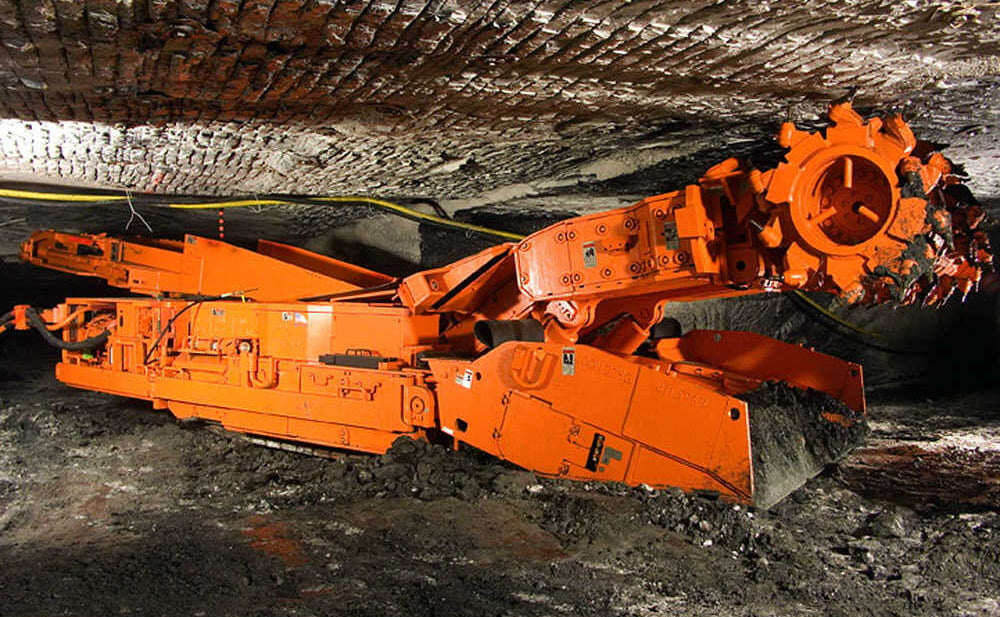
Continuous miners
Longwall shearers
Crushers and feeder breakers
Conveyor systems
Mobile and fixed auxiliary systems
Remote Control and Automation
As South African mines continue to adopt mechanised and semi-automated systems, the importance of reliable control cabling has increased. These cables support:
Remote start/stop circuits
Interlocks and safety loops
Sensor feedback (temperature, pressure, position)
PLC and control system interconnections
Why Screened and Armoured Control Cables Are Preferred
Underground mining environments are saturated with high-power equipment, creating strong electromagnetic fields. Screened control cables reduce EMI and ensure signal integrity, while armour provides protection against crushing, abrasion, and accidental impact.
Cable Construction Overview
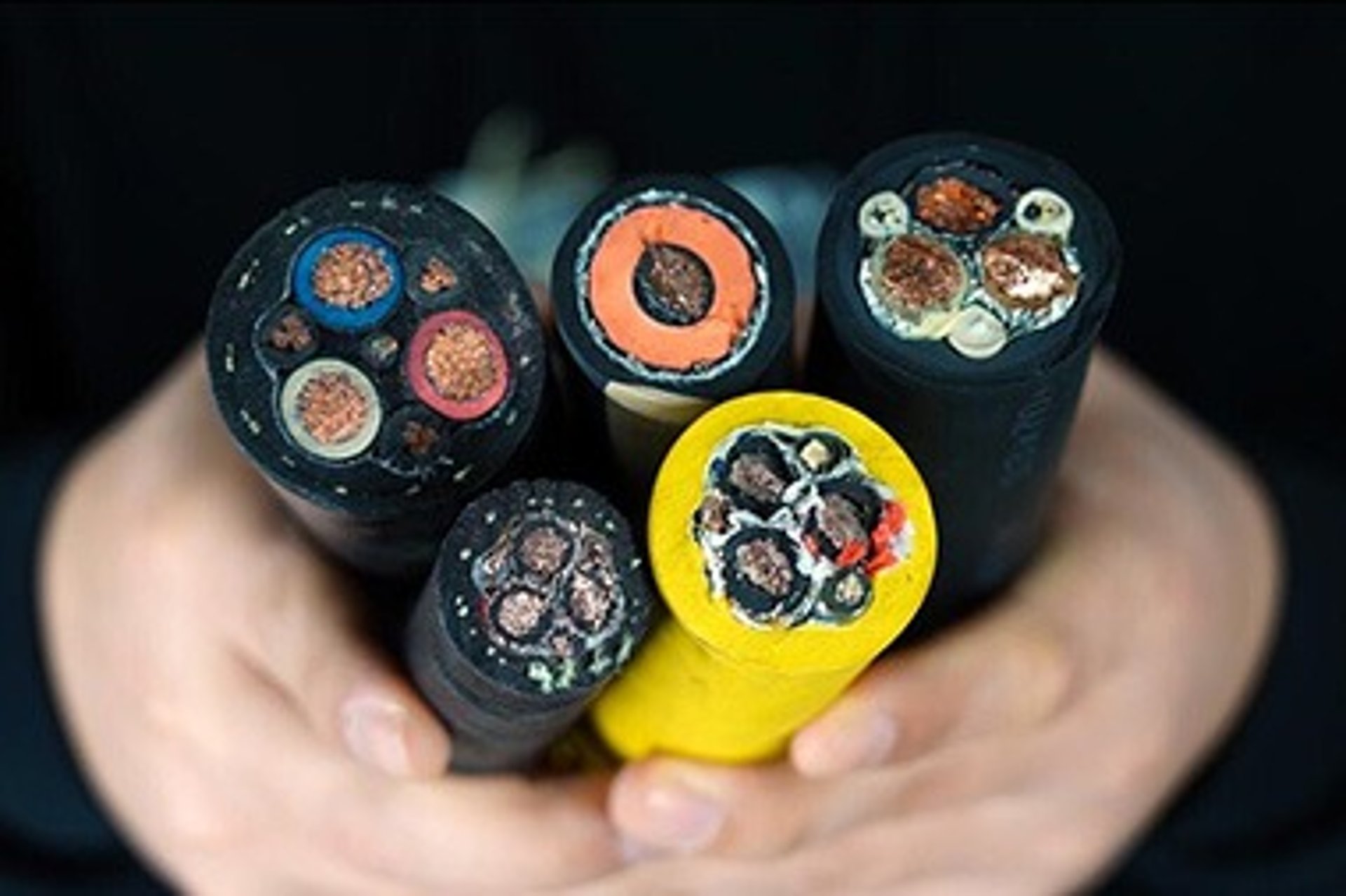
BS 6708 Types 506 / 512 / 518 / 524 share a common construction philosophy focused on mechanical protection and electrical stability.
Each layer of the cable is engineered to perform a specific function, working together to ensure reliable operation in demanding conditions.
The typical construction includes:
Fine-stranded tinned copper conductors
EPR or TPE insulation
Multi-core lay-up in contact
Tinned copper / nylon braided screen
Rubber-based bedding
Galvanised steel pliable armour
Heavy-duty chloroprene outer sheath
Conductor Design
Electrolytic, Stranded, Tinned Copper
The conductors are manufactured from electrolytic copper, ensuring high electrical conductivity. Stranding complies with IEC 60228 Class 5, making the conductors flexible enough for installation in moving or vibrating machinery.
Benefits of Fine Stranding
Fine stranding reduces internal stress during bending and vibration—critical in mining machines where cables are rarely static.
Advantages of Tinned Copper
Tin coating provides enhanced resistance to corrosion, especially in:
Humid underground environments
Areas exposed to water ingress
Mines with chemically aggressive atmospheres
Insulation System
EPR vs TPE Insulation
BS 6708 control cables typically use EPR (Ethylene Propylene Rubber) or TPE (Thermoplastic Elastomer) insulation.
Both materials offer:
Excellent dielectric strength
Thermal stability
Resistance to oil and grease
Long-term ageing performance
Importance for Control Circuits
Stable insulation is critical for low-voltage control circuits, where even minor leakage or insulation degradation can cause false signals or system faults.
Core Identification and Lay-Up
Multi-Core Configurations
The cables are available in:
6 cores
12 cores
18 cores
24 cores
This allows engineers to select the appropriate configuration based on control complexity.
Laid Up in Contact
All cores are laid up in contact, resulting in:
Compact overall diameter
Improved flexibility
Easier termination in control panels
Screening System
Tinned Copper / Nylon Braided Screen
A braided screen is applied over the laid-up cores, serving several critical functions:
Reduces electromagnetic interference (EMI)
Protects sensitive control signals
Improves system reliability
Importance in Mining Equipment
High-power motors, variable speed drives, and switching equipment generate noise that can disrupt control circuits. Screening ensures clean and stable signal transmission.
Bedding Layer
A rubber-based bedding compound is applied over the screened cores. This layer:
Cushions the cores
Absorbs vibration
Protects against mechanical stress
It also improves the flexibility of the cable while preparing a smooth surface for the armour.
Armour Design
Galvanised Steel Pliable Armour
The armour provides robust mechanical protection against:
Crushing
Impact
Abrasion
Armour as Earth Continuity
In addition to mechanical protection, the armour acts as a reliable earth continuity path, enhancing safety in mining installations.
Outer Sheath Characteristics
Heavy-Duty Chloroprene (CR)
The outer sheath is manufactured from chloroprene rubber, chosen for its resistance to:
Oils and greases
Moisture and chemicals
Mechanical damage and abrasion
Performance in South African Conditions
CR sheaths perform reliably across South Africa’s diverse mining climates—from humid underground gold mines to dusty open-cast operations.
Voltage Ratings and Electrical Performance
Rated voltage: 320/550 V
Test voltage: 1.5 kV
These ratings provide sufficient safety margins for low-voltage control and signalling applications in mining environments.
Technical Specifications Overview
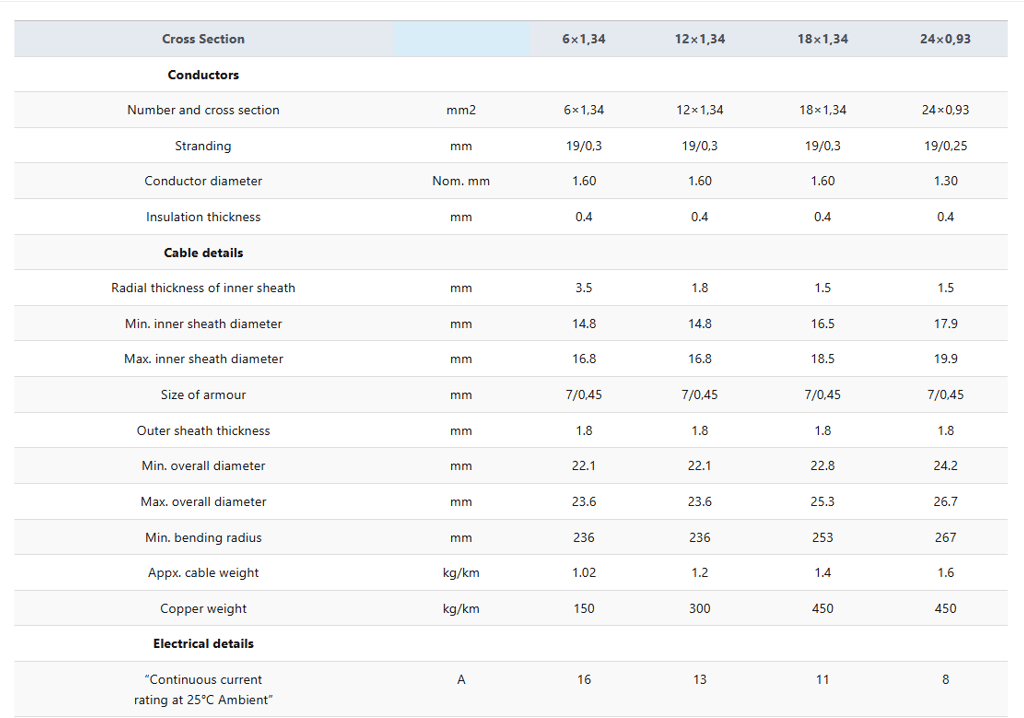
Available configurations include:
6 × 1.34 mm²
12 × 1.34 mm²
18 × 1.34 mm²
24 × 0.93 mm²
Key construction details:
Class 5 stranded conductors
Consistent insulation thickness (0.4 mm)
Robust inner and outer sheath dimensions
Mechanical Characteristics
Minimum bending radius: 236–267 mm
Approximate cable weight: 1.02–1.6 t/km
Optimised balance between durability and handling
The combination of armour and CR sheath ensures long service life, even under harsh handling conditions.
Electrical Parameters in Detail
Continuous Current Ratings (25°C Ambient)
6 × 1.34 mm²: 16 A
12 × 1.34 mm²: 13 A
18 × 1.34 mm²: 11 A
24 × 0.93 mm²: 8 A
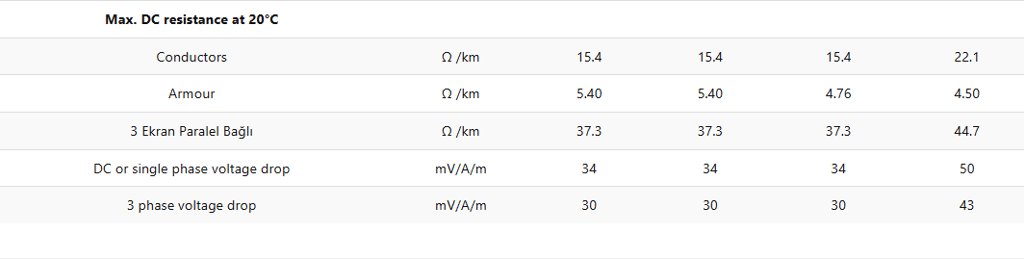
Voltage Drop and Resistance
Low DC resistance and controlled voltage drop make these cables suitable for long control runs without signal degradation.
Installation Considerations in Mining Operations
Best practices include:
Maintaining minimum bending radius
Proper clamping and routing
Correct termination of screens and armour
Ensuring effective earthing
Poor installation remains one of the leading causes of premature cable failure.
Performance in South African Mining Conditions
BS 6708 Type 506–524 cables have proven compatibility with:
Continuous-duty mining operations
High-vibration equipment
Mechanised and automated systems
Their robust construction aligns well with South Africa’s demanding mining environment.
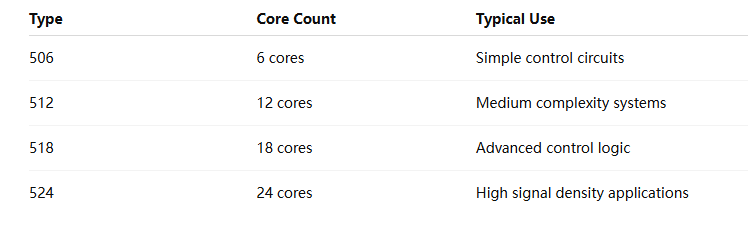
Comparison Between Types 506, 512, 518 and 524
Common Questions and Answers (FAQ)
Are BS 6708 control cables power cables?
No. They are designed for control and signalling, not power transmission.
Can they be used underground?
Yes, they are well suited for underground coal and hard rock mines.
Why is screening necessary?
To protect control signals from electromagnetic interference.
Are they suitable for moving equipment?
Yes, their flexible conductors and robust construction support dynamic applications.
Conclusion
BS 6708 Type 506, 512, 518 and 524 control cables represent a proven solution for control and interconnection in demanding mining environments. Their combination of mechanical strength, electrical stability, effective screening, and durable materials makes them a trusted choice for South African mining operations.
Selecting the correct configuration is not just a technical decision—it is a long-term investment in operational reliability, safety, and productivity.


Contact Anhui Feichun Special Cable Co., Ltd.
For comprehensive technical specifications and quotations, please contact our specialized mining cable engineering team:
Technical Engineering Support:
Sales Engineering Department:
WhatsApp Contact:
Manufacturer: Anhui Feichun Special Cable Co., Ltd. (安徽飞纯特种电缆有限公司)
Manufacturing Headquarters: Building A, Private Science and Technology Park, Hefei Economic and Technological Development Zone, Anhui Province, People’s Republic of China
+86 17333223430
Email Address: Li.wang@feichuncables.com
© 2025. All rights reserved.
One-click to Quickly Contact
Products
Contact
Company
Location:
Building A Private Science and Technology Park, Hefei Economic and Technological Development Zone, Anhui Province, China
Heat Resistant Cable
WhatsApp: +86 17333223430
Social Media: