Anhui Feichun Special Cable Co.,Ltd Email: Li.wang@feichuncables.com
Medium Voltage Trailing Cable Mastery: PROTOLON(SB) NTSCGEWOEU 6–20 kV Flexible Trailing Cables for South Africa Open‑Cast Mines
PROTOLON(SB) NTSCGEWOEU is not just a reinforced cable—it is a complete engineering system built for South Africa’s toughest open‑cast mines. This article explains its electrical principles, composite mechanics, elastomer chemistry, field performance, and how it cuts downtime and total ownership cost.
Li Wang
6/23/20268 min read
Introduction
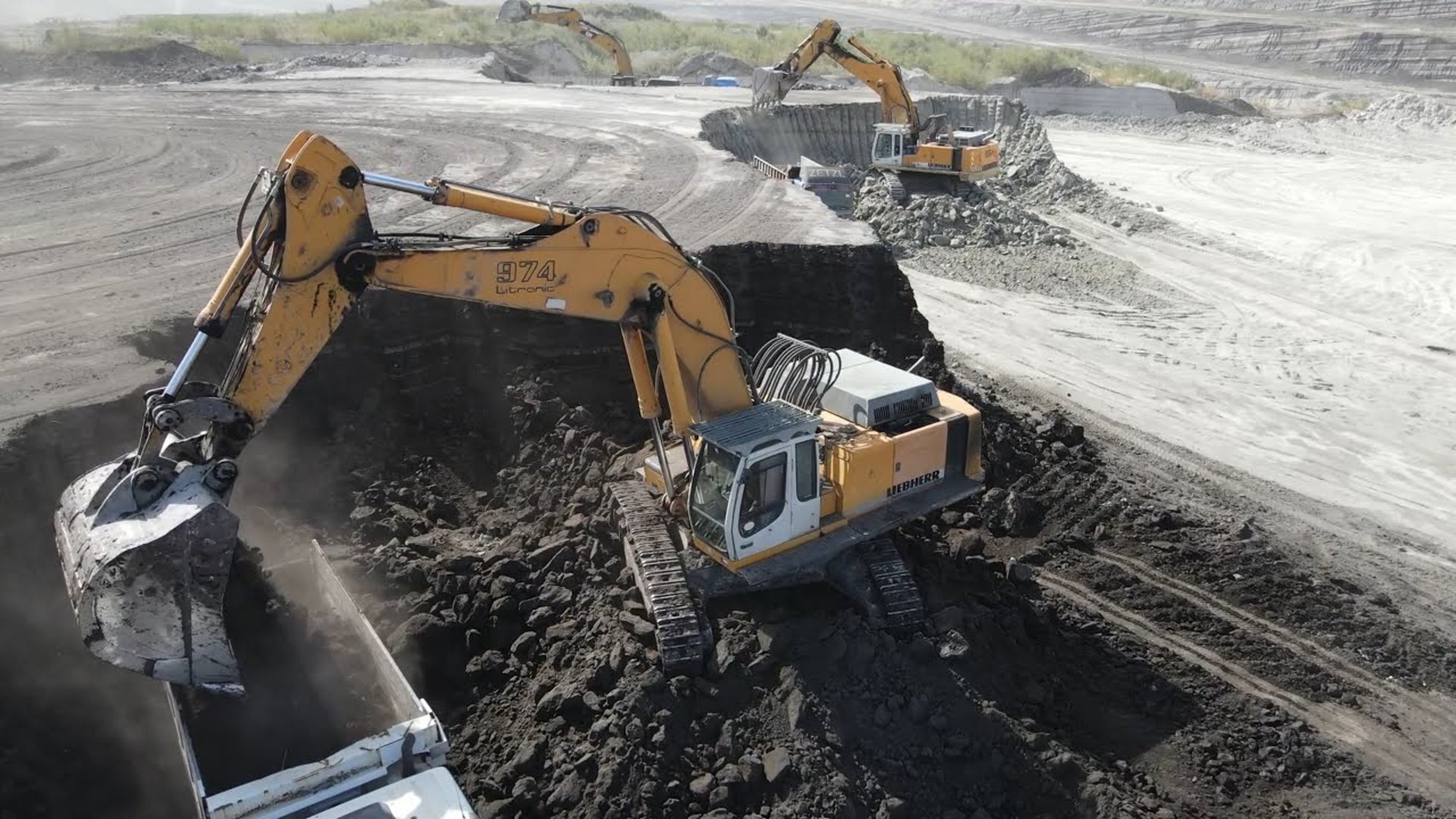
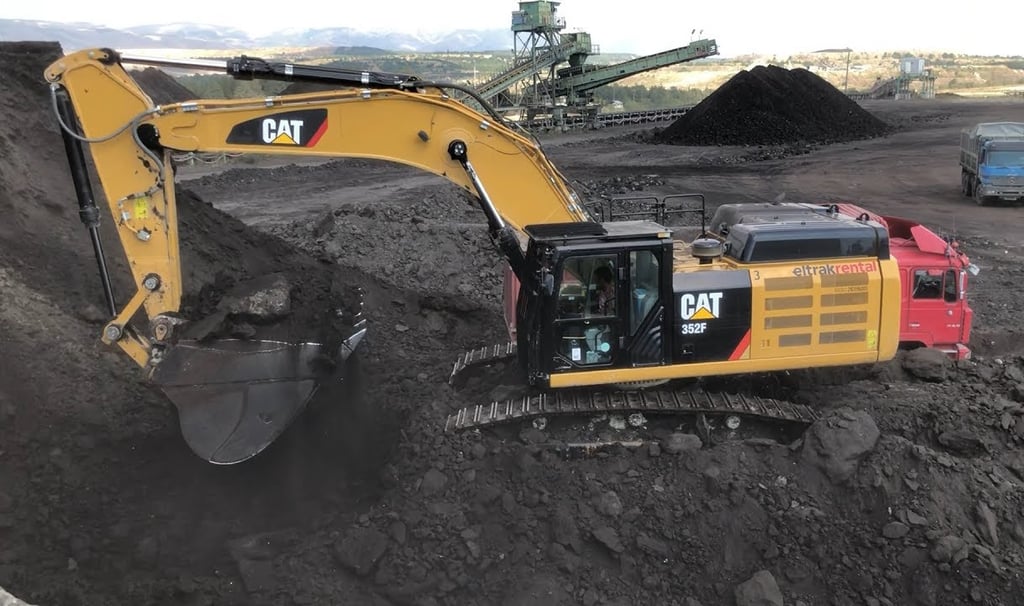
Open‑cast mining in South Africa stands as one of the most demanding industrial environments in the world. Across the coalfields of Mpumalanga, the platinum and chrome operations of the North West, and the iron ore mines of Limpopo and the Northern Cape, massive machines operate 24 hours a day, 365 days a year. Electric shovels, bucket‑wheel excavators, draglines, stacker‑reclaimers, and mobile crushers require continuous, reliable power to move millions of tonnes of material each month. The link between the fixed substation and these moving machines is the medium‑voltage trailing cable, and its reliability directly determines mine productivity and profitability.
Standard power cables, designed primarily for static installation, quickly fail under these conditions. They are subjected to repeated pulling, twisting, bending, abrasion against rock and soil, crushing by equipment tracks, wide temperature swings, intense ultraviolet radiation, ozone, rain, mud, and exposure to hydraulic and lubricating oils. Insulation cracks, conductors fatigue, sheaths split, and core migration occurs, leading to unplanned outages that can cost mines tens of thousands of Rands per hour in lost production, repairs, and safety inspections.
This is where PROTOLON(SB) NTSCGEWOEU 6–20 kV changes the equation. It is not merely a “heavy‑duty” or “reinforced” cable; it is a system solution engineered from the conductor outward to manage stress, stabilize electrical fields, and resist environmental attack. By combining advanced materials science with layered mechanical design, it transforms the cable from a static electrical component into a dynamic, durable power delivery system. This article examines its construction, engineering principles, performance data, and proven value in South African mining operations.
Basic Profile, Standards and Technical Specifications
Product Identification
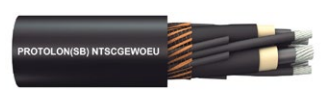
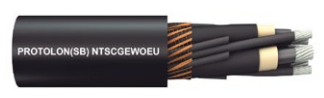
Full Designation: PROTOLON(SB) NTSCGEWOEU Medium Voltage Flexible Trailing Cable
Voltage Range: 3.6/6 kV, 6/10 kV, 8.7/15 kV, 12/20 kV
Core Configuration: 3‑phase conductors + split earth conductors arranged in the interstices (e.g., 3×25 + 3×25/3 up to 3×185 + 3×95/3)
Primary Application: Power supply and connection for large material handling machines in open‑cast mines, where continuous dragging, torsion, and high mechanical stress are unavoidable.
Compliance and Certifications
The cable is built strictly to DIN VDE 0250‑813, the leading European standard for flexible trailing and reeling cables, which defines requirements for electrical performance, mechanical endurance, and environmental resistance. It also conforms to:
MSHA P‑189‑4: Approved for use in mines in the United States and widely accepted in Southern Africa
GOST‑R/K/B: Russian Federation certification for industrial and mining applications
IEC 60332‑1‑2: Flame‑retardant performance
IEC 60811‑2‑1: Resistance to mineral and hydraulic oils
EN 50525‑2‑21: Water and weather resistance
SANS Alignment: Complies with South African Mine Health and Safety Act requirements and SANS 1339 and SANS 10198 standards for surface mining equipment.
Electrical Ratings
3.6/6 kV rated voltage
Maximum permissible AC operating voltage: 4.2/7.2 kV
Maximum permissible DC operating voltage: 5.4/10.8 kV
AC test voltage (applied for 5 minutes): 11 kV
6/10 kV rated voltage
Maximum permissible AC operating voltage: 6.9/12 kV
Maximum permissible DC operating voltage: 9/18 kV
AC test voltage (applied for 5 minutes): 17 kV
8.7/15 kV rated voltage
Maximum permissible AC operating voltage: 10.4/18 kV
Maximum permissible DC operating voltage: 13.5/27 kV
AC test voltage (applied for 5 minutes): 24 kV
12/20 kV rated voltage
Maximum permissible AC operating voltage: 13.9/24 kV
Maximum permissible DC operating voltage: 18/36 kV
AC test voltage (applied for 5 minutes): 29 kV
Thermal Limits:
Continuous conductor temperature: 90 °C
Short‑circuit temperature: 250 °C (maximum 5 seconds)
Ambient temperature: ‑40 °C to +80 °C fixed installation; ‑20 °C to +60 °C in full dynamic operation (‑45 °C cold‑climate version available)
Mechanical Ratings
Maximum tensile load: 15 N/mm² continuous; 25 N/mm² during acceleration
Torsion capability: ±100°/m — far exceeding standard cables
Minimum bending radius: 10× outer diameter for normal movement; 20× outer diameter for S‑curves and direction changes
Construction, Materials and Engineering Principles
PROTOLON(SB) NTSCGEWOEU is designed according to a clear philosophy: layered stress cancellation. Every component serves a specific purpose, and the interaction between materials and geometry creates a system stronger than the sum of its parts.
Layer‑by‑Layer Structure
Conductor
Material: Electrolytic copper, tinned, finely stranded to Class 5 or FS ultra‑fine construction
Why this design: Fine stranding increases flexibility and reduces fatigue from repeated bending and torsion. Tinning protects against oxidation, sulphur compounds, and chemical corrosion common in mine environments. The cross‑sectional geometry distributes electrical current evenly, reducing resistance heating and ensuring compliance with IEC 60287 ampacity rules.
Insulation System
Material: Ethylene‑Propylene Rubber (EPR) compound 3GI3
Field Control: Inner and outer layers of semiconductive rubber compound
Electrical Principle: In medium‑voltage cables, uneven electric fields create stress points that can lead to partial discharge and eventual breakdown. The Maxwell field theory shows that smooth, uniform surfaces reduce electric field concentration. The dual semiconductive layers ensure the electrical field is evenly distributed across the insulation, eliminating peaks. EPR 3GI3 provides excellent dielectric strength, low water absorption, resistance to corona, and stable performance at 90 °C.
Core Arrangement and Split Earth
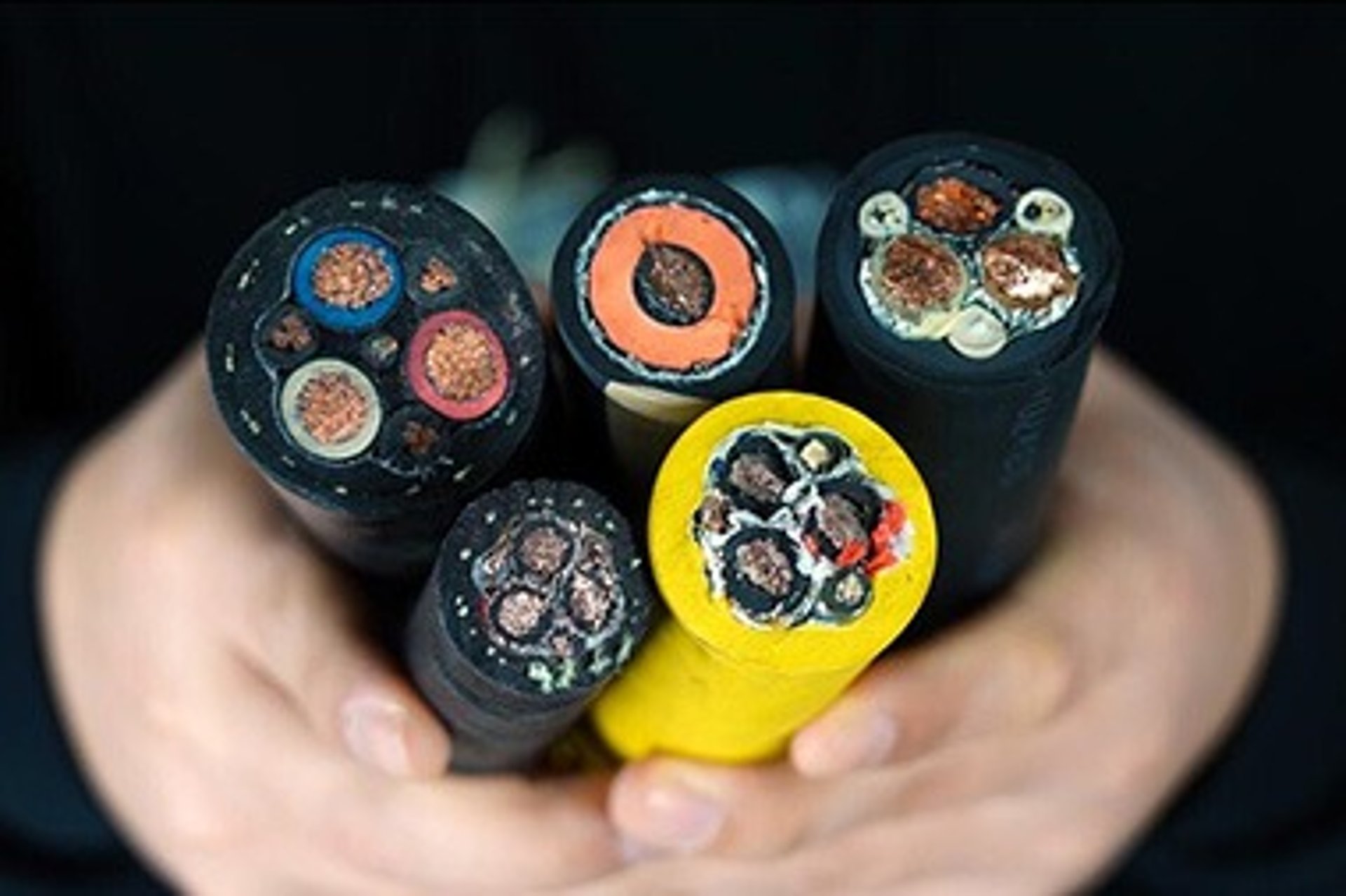
Configuration: Three main power cores, with three split earth conductors placed in the gaps between them
Mechanical & Electrical Advantage: Unlike a single central earth conductor, this design maintains symmetry, improves flexibility, allows better heat dissipation, and ensures reliable grounding even when the cable is bent or twisted. The earth path remains continuous and low‑resistance under dynamic conditions.
Anti‑Torsion Reinforcement
Material: Extremely tear‑resistant synthetic tape applied over the core assembly
Mechanics: When a cable twists, shear forces build up between layers. This high‑modulus tape acts as a composite skeleton, distributing torsion evenly over the cross‑section, preventing core migration, and stopping the outer sheath from sliding relative to the inner layers. This follows principles of composite mechanics where load sharing prevents localized failure.
Inner and Outer Sheath System
Inner Sheath: Chloroprene rubber (CR) compound 5GM5, natural colour
Outer Sheath: Same 5GM5 CR, black, vulcanised‑bonded directly to the inner sheath
Material Science: Chloroprene rubber offers a unique balance of elasticity, toughness, and chemical resistance. The 5GM5 formulation is specifically compounded for mining: it resists ozone and UV degradation, repels oil and hydrocarbons, maintains flexibility at low temperatures, and has high abrasion resistance. The dual‑bonded construction eliminates delamination, ensuring that wear is gradual and predictable rather than sudden.
The Triple Balance
This design achieves what standard cables cannot:
Electrical Stability: 3GI3 EPR + semiconductive control = long insulation life
Mechanical Durability: Flexible conductors + anti‑twist tape + symmetric core = resistance to fatigue
Environmental Tolerance: 5GM5 CR = defence against weather, oil, and physical wear
Performance Advantages Over Standard Cables
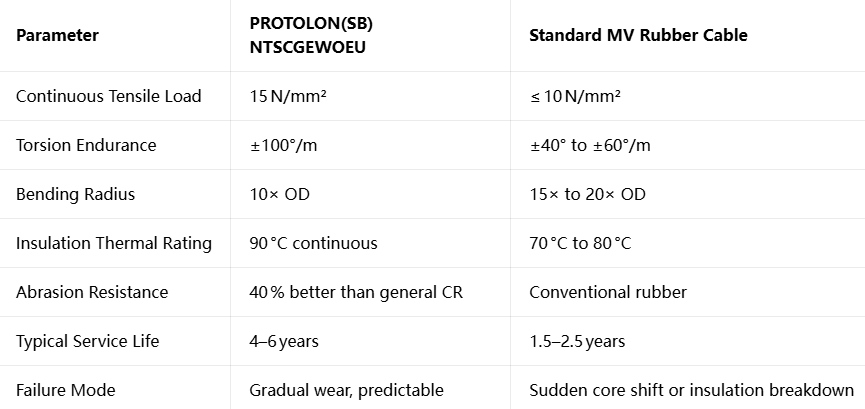
To understand why PROTOLON(SB) is preferred in South Africa, we must compare its behaviour in real mining conditions.
Why the difference matters:
In South African open‑cast mines, a trailing cable may undergo thousands of bending and twisting cycles per week. Standard cables experience fatigue at the conductor‑insulation interface, while the split‑earth, reinforced design of PROTOLON(SB) absorbs these stresses and spreads them evenly. The result is fewer unplanned stops, less maintenance labour, and lower replacement frequency.
South African Open‑Cast Mining Application
Local Operating Conditions
South Africa’s mining belts present a unique set of challenges:
Temperature: Summer highs above 40 °C, winter lows below 0 °C at high altitudes
UV and Ozone: Strong sunlight and high atmospheric ozone accelerate polymer degradation
Mechanical Stress: Cables dragged over rock, gravel, and mud; often run over by heavy equipment
Chemical Exposure: Hydraulic oils, diesel, and acidic mine water
Typical Equipment and Installation
A common application is the 6/10 kV, 3×95 + 3×50/3 configuration feeding a 5 MW electric shovel operating in Mpumalanga coalfields. The cable runs between a mobile substation and the shovel, covering 250–400 m and moving 8–12 times per hour as the machine advances.
Field Data:
Standard cable: 12–18 months service; 3–4 replacements per year
PROTOLON(SB): 42–58 months average life; 65 % fewer failures
Total cost reduction: Approximately 40 % over 5 years when including downtime, labour, and materials
Mines in the North West Province have also reported that the cable’s compliance with SANS and MSHA standards simplifies safety audits and reduces regulatory risk.
Full Technical Data Overview
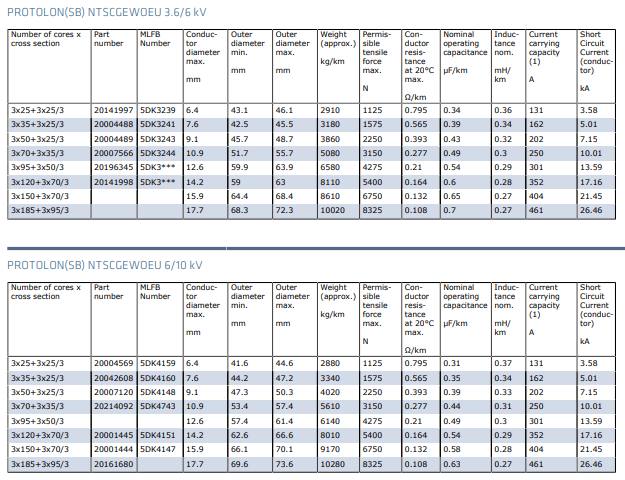
The following tables summarise key specifications for quick reference.
Similar data exists for 8.7/15 kV and 12/20 kV versions, with larger insulation thicknesses to accommodate higher system voltages.
Equivalent Alternative: FeiChun NTSCGEWOEU
While the original PROTOLON(SB) is well‑proven, many mines in Southern Africa seek reliable alternatives that meet the same engineering standards but offer better availability and pricing. FeiChun Cable offers a direct equivalent, manufactured to the exact same specifications.
Why It Is a True Equivalent
Same Standard: Built to DIN VDE 0250‑813, identical construction, 3GI3‑grade EPR insulation, 5GM5‑grade chloroprene sheath, split earth design, and anti‑torsion reinforcement
Identical Performance: Electrical ratings, temperature limits, tensile strength, and torsion capability match exactly
Compliance: Available with test reports, factory acceptance tests, and documentation suitable for South African mine approvals
Key Advantages
Shorter Lead Times: Stocked and distributed regionally, reducing delivery time from months to weeks
Cost‑Effective: Typically 15–25 % lower in price without sacrificing technical performance
Customisation: Available with metallic screen (type NTSCGECEWOEU), extra control cores, cold‑climate formulation, and various sheath colours
Frequently Asked Questions
Q: What does NTSCGEWOEU stand for?
A: The designation follows German standard conventions: N = standard construction, T = trailing, S = rubber insulated, C = chloroprene sheath, G = ground/earth, E = EPR insulation, W = reinforced, O = oil resistant, E = ozone resistant, U = outdoor use.
Q: Can it be used underground?
A: While designed primarily for open‑cast mines, it can be used underground if additional local certification is obtained.
Q: What is the difference between SB and M versions?
A: SB offers higher tensile strength (15 N/mm² continuous), while M is for lighter‑duty applications (10 N/mm²).
Q: How do I select the correct voltage class?
A: Use the system voltage as the base: 6 kV systems → 6/10 kV cable; 10 kV systems → 12/20 kV cable, allowing a safety margin for transient overvoltages.
Q: Can the cable be repaired?
A: Minor sheath damage can be repaired using approved vulcanising or heat‑shrink sleeves, but conductor damage requires proper splicing kits and should be inspected by qualified personnel.
Conclusion
PROTOLON(SB) NTSCGEWOEU represents a major evolution in mining cable technology. It moves away from the traditional approach of “adding more layers” to a design philosophy based on materials‑structure‑performance synergy.
Structure: Flexible Class 5 conductors + controlled electric field + symmetric split earth + anti‑twist tape + dual vulcanised sheath — each layer counteracts specific forces
Materials: 3GI3 EPR ensures electrical integrity; 5GM5 CR delivers unmatched environmental protection
Value: In South Africa’s high‑cost mining environment, this means fewer failures, longer service life, and a measurable reduction in total cost of ownership
It is not simply a reinforced cable; it is a system solution designed to survive and perform in conditions that defeat ordinary cables. For mine engineers and procurement managers, the choice is clear: invest in reliability, and the savings follow.
If you are specifying or replacing medium‑voltage trailing cables for open‑cast mines in South Africa and across the SADC region, contact the FeiChun team to receive full technical data sheets, test reports, and competitive pricing.
Our engineering team can assist with cable sizing, installation guidance, and compliance documentation to ensure your next cable selection delivers the performance and durability your operation demands.
Email Address: Li.wang@feichuncables.com
© 2025. All rights reserved.
One-click to Quickly Contact
Products
Contact
Company
Location:
Building A Private Science and Technology Park, Hefei Economic and Technological Development Zone, Anhui Province, China
Heat Resistant Cable
WhatsApp: +86 17333223430
Social Media: