Anhui Feichun Special Cable Co.,Ltd Email: Li.wang@feichuncables.com
Mining in Extreme Heat: Why Northern Cape Kalahari (Hotazel–Sishen–Kuruman) Iron and Manganese Mines Demand High-Performance POLYFLEX MINE Cables
The Kalahari mining region of South Africa’s Northern Cape, including Hotazel, Sishen, and Kuruman, experiences extreme temperatures exceeding 45°C, abrasive dust, and heavy mechanical stress from large-scale open-pit mining. This article analyses the environmental challenges affecting mining cables and explains why Feichun POLYFLEX MINE cable, with its EPR insulation, polyurethane sheath, and FC-ASB™ material system, is engineered for reliable performance in the world’s harshest mining conditions.
Li Wang
4/13/202610 min read
Introduction: The Harsh Reality of Kalahari Mining Environment
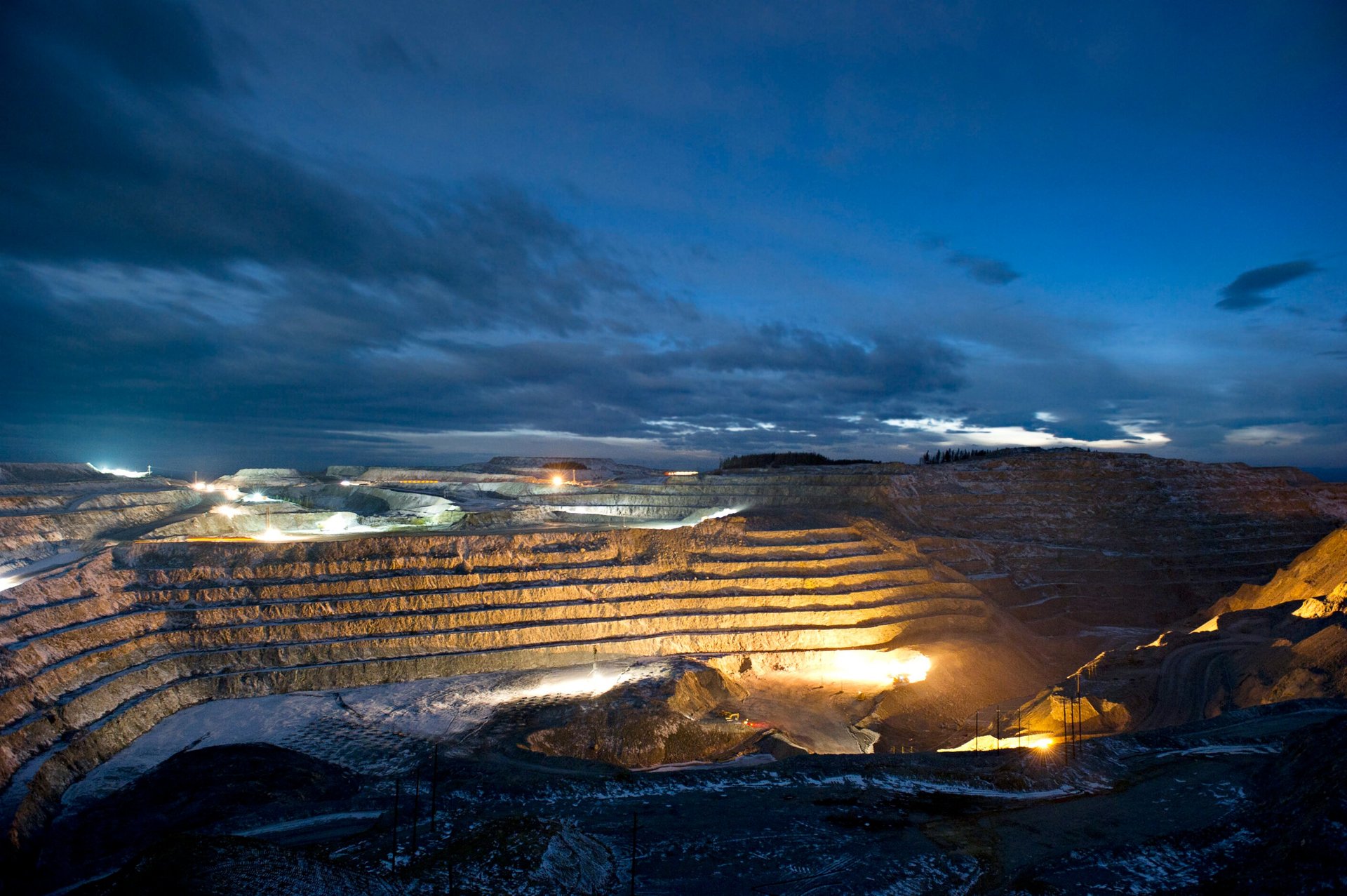
South Africa’s Northern Cape Province is home to one of the most productive yet unforgiving mining belts on the planet. The Hotazel–Sishen–Kuruman corridor forms the heart of the Kalahari Manganese Field and the massive Sishen iron-ore operations. This region produces a significant share of the world’s high-grade manganese and iron ore, feeding global steelmaking and increasingly the battery and renewable-energy supply chains. Mines such as Hotazel (manganese), Sishen (iron ore, one of the largest open-pit operations globally), and the surrounding Kuruman corridor operate around the clock, moving millions of tonnes of ore annually through vast open-cast pits.
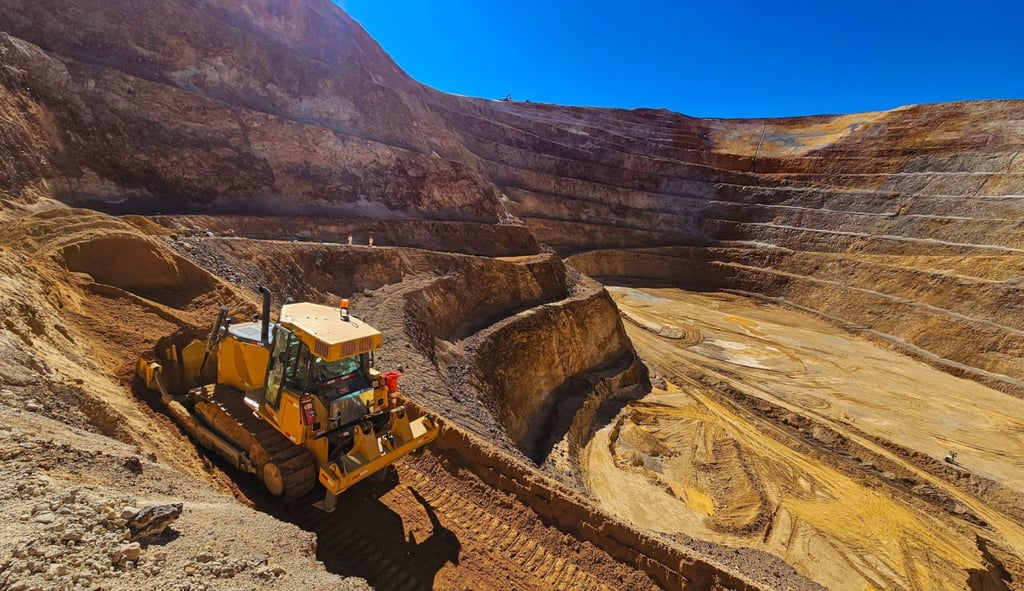
Yet these operations face a unique challenge: they are not simply working in “hot weather”. They operate inside a continuous high-thermal and abrasive mechanical system. Summer daytime ambient temperatures routinely climb to 37–45 °C and beyond, with ground-surface temperatures on exposed ore benches and haul roads frequently exceeding 60–70 °C under direct solar radiation. Steel equipment surfaces reflect and amplify this heat, while long-duration exposure—day after day, shift after shift—places relentless stress on every component, especially the flexible trailing cables that power the heavy mobile fleet.
These cables are the lifelines of modern mechanised mining. Without reliable power delivery to electric rope shovels, hydraulic excavators, draglines, bucket-wheel excavators, mobile crushers, stacker-reclaimers and 200–400-tonne ultra-class haul trucks, production stops instantly. In the Kalahari, conventional cables fail prematurely, leading to unplanned downtime that can cost mines hundreds of thousands of rand per hour. The engineering solution must therefore address not one or two stresses, but the full spectrum of Kalahari conditions: extreme heat cycling, intense UV radiation, quartz-rich abrasive dust, chemical contamination from iron and manganese oxides, and repeated mechanical abuse from rock fragments and truck overruns. This is precisely why Feichun POLYFLEX MINE cables have become the cable of choice for operations seeking European-grade performance without the European price tag or lead times.
Environmental Conditions in Hotazel–Sishen–Kuruman Mining Belt
Extreme Temperature Conditions
The Kalahari Desert transition zone in the Northern Cape is classified as semi-arid to arid. Summer (November to February) brings prolonged heatwaves. Official records and on-site monitoring show daytime highs of 37–45 °C+ in Hotazel and Sishen, with peaks above 48 °C during heatwave events. Ground-surface temperatures on dark ore benches and haul roads can reach 60–70 °C and higher because of solar absorption and low albedo of crushed manganese and iron ore. Equipment metal surfaces reflect additional radiant heat, pushing local micro-environments around cable reels and drag paths well beyond ambient figures. Heat is not a short peak; it persists for weeks, with minimal night-time relief in the dry desert air. This continuous thermal load accelerates polymer ageing and reduces current-carrying capacity if cables are not rated for true 90 °C continuous operation.
UV Radiation Exposure
At these latitudes and altitudes, the UV index is among the highest globally. Clear skies and low humidity allow intense solar radiation to bombard exposed cables for 10–12 hours daily. Standard PVC or neoprene jackets suffer rapid photo-oxidation, leading to surface chalking, embrittlement and cracking within months. Cables lying on the pit floor or dragged across benches receive cumulative UV doses that conventional mining cables were never designed to withstand over extended service lives.
Dust & Abrasive Particle Load
The Kalahari Manganese Field and Sishen ore bodies produce fine, quartz-rich dust mixed with hard manganese and iron oxides. These particles have high Mohs hardness and act like industrial sandpaper. Continuous wind and truck traffic keep dust clouds in suspension, settling on and grinding against cable jackets during every reel-in/reel-out cycle. Abrasive erosion is constant, not occasional.
Heavy Mechanical Mining Environment
Operations rely on:
Electric rope shovels (P&H 4100-class) and hydraulic excavators for loading.
Ultra-heavy haul trucks (Komatsu 860E/960E, Caterpillar 795F-class) carrying 250–320 tonnes per pass.
Draglines and bucket-wheel excavators in selected benches.
Mobile crushers, conveyors and stacker-reclaimers.
Cables are dragged, reeled, bent, twisted and run over by 400-tonne trucks on uneven, rocky surfaces. The mechanical environment is dynamic, high-impact and unforgiving.
Cable Failure Mechanisms in Kalahari Mining Operations
Traditional trailing cables fail through a combination of synergistic stresses that compound over time.
Thermal Degradation
At sustained conductor temperatures approaching or exceeding the insulation rating, ethylene-propylene rubber (EPR) or cross-linked polyethylene (XLPE) begins to soften. Molecular chains lose elasticity, micro-cracks form under thermal cycling, and dielectric strength drops. In Kalahari heat, cables without a true 90 °C continuous rating must be derated, reducing available power and forcing operators to run equipment below design capacity.
UV-Induced Polymer Breakdown
UV photons break carbon-hydrogen bonds in the sheath polymer, causing chain scission, surface chalking and loss of tensile strength. Cracks propagate under flexing, allowing moisture and dust ingress that accelerate insulation failure.
Abrasion & Rock Cutting
Sharp manganese-ore fragments and quartz sand slice into jackets during dragging. Conventional rubber or PUR compounds wear through in weeks, exposing conductors to short-circuit risk.
Compression Failure
A single overrun by a 300-tonne haul truck can flatten cable geometry, crush internal fillers and create permanent indentations that concentrate mechanical stress in subsequent cycles.
Dynamic Fatigue Failure
Repeated reeling/unreeling on large cable reels introduces torsional shear and bending fatigue. Asymmetrical conductor lay-outs cause uneven stress distribution, leading to premature strand breakage.
Chemical & Mineral Contamination
Iron and manganese oxides, combined with occasional dew or process water, create acidic or oxidising micro-environments that corrode copper and degrade polymer chains. Dust cakes inside cracks, turning minor abrasion into major electrical faults.
These mechanisms explain why many European-sourced cables, while excellent in temperate climates, require frequent replacement in the Northern Cape—often every 6–12 months—driving up total cost of ownership (TCO) dramatically.
Engineering Requirements for Mining Cables in This Region
A cable suitable for the Hotazel–Sishen–Kuruman belt must deliver:
Continuous thermal endurance of at least 90 °C with no derating.
Full UV and ozone resistance for permanent outdoor exposure.
Extreme abrasion and cut-through resistance.
High flexibility across a wide temperature window, including cold winter nights.
Mechanical crush and impact resistance to survive truck overruns.
Structural symmetry to eliminate torsional fatigue.
Chemical resistance to iron/manganese dust and moisture.
Long service life under continuous dynamic motion while complying with South African standards such as SANS 1520 for flexible mining cables.
Only a purpose-engineered design can meet all these demands simultaneously.
Feichun POLYFLEX MINE – Technical Deep Engineering Analysis
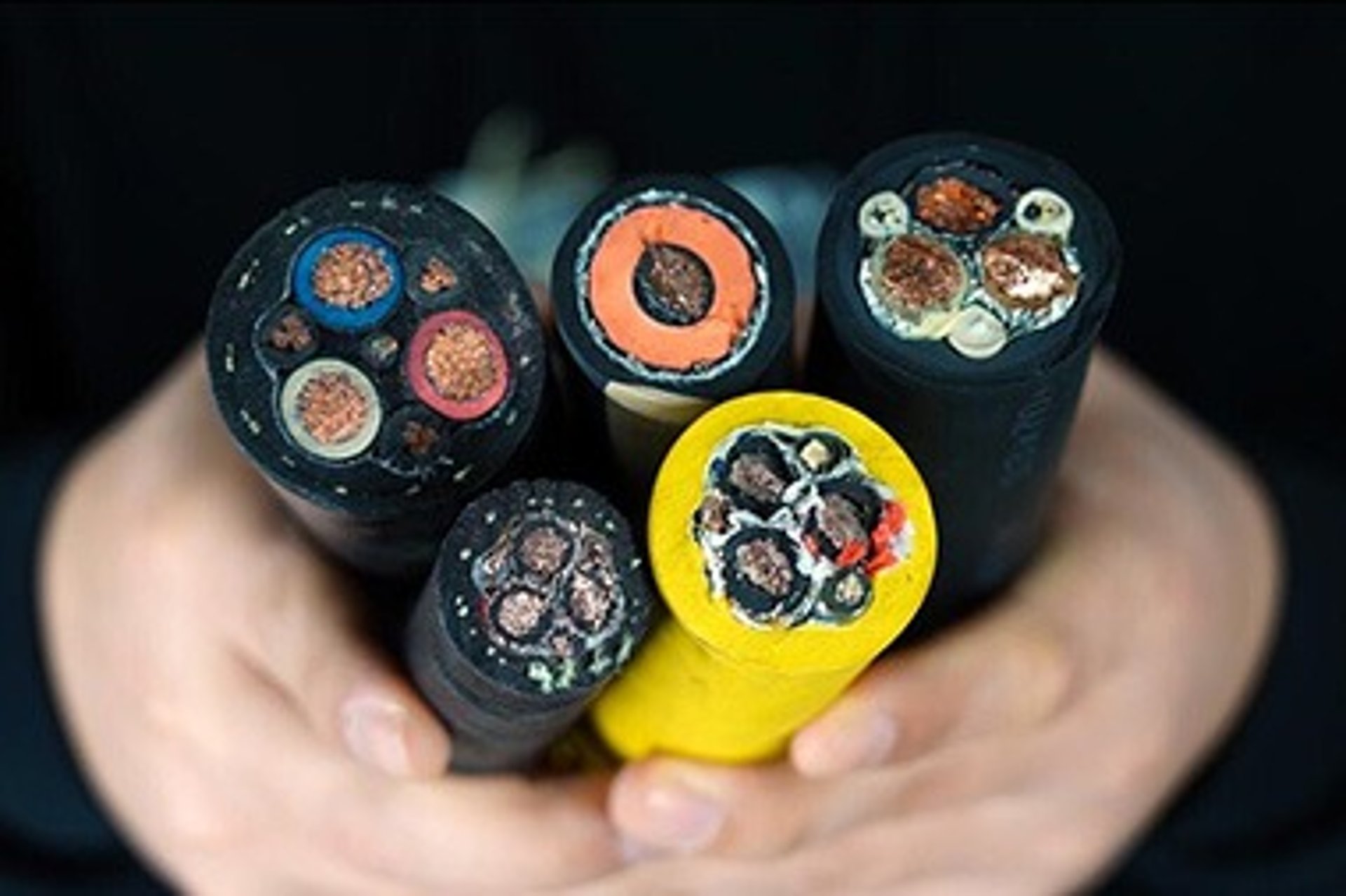
POLYFLEX MINE is a 0.6/1 kV heavy-duty polyurethane mining trailing cable from Anhui Feichun Special Cable Co., Ltd. It is explicitly engineered for open-cast excavators, quarry crushers, underground mining vehicles, draglines, bucket-wheel excavators, stacker-reclaimers and every heavy mobile machine operating from polar midnight to equatorial noon.
Core Design Philosophy
“Simplified structure + extreme material performance.” POLYFLEX MINE avoids complex multi-layer armouring or fragile self-supporting elements. It relies on massive flexible copper conductors, robust insulation, perfect radial symmetry and an ultra-tough outer jacket. Fewer layers mean fewer interfaces that can delaminate under heat and flexing—resulting in higher long-term reliability.
Electrical Insulation System: EPR (Ethylene Propylene Rubber)
The insulation is high-performance EPR rated for 90 °C continuous conductor temperature and 250 °C short-circuit withstand. EPR offers superior flexibility at both temperature extremes, excellent dielectric stability and outstanding moisture resistance—critical in the Kalahari where dew or process water can penetrate damaged jackets. Because the cable carries full current at 90 °C without derating, operators gain higher ampacity from the same cross-section compared with 80 °C-rated alternatives. In Kalahari heat this prevents thermal runaway and extends insulation life by reducing oxidative ageing.
Outer Sheath System: High-Performance Polyurethane (PUR)
The sheath is a specially compounded, aramid-reinforced polyurethane (PUR) under the proprietary FC-ASB™ system. It is halogen-free, UV-stabilised, oil-resistant and flame-retardant to IEC 60332-1-2. Abrasion resistance is exceptional (≤18 mm³ per DIN 53516). The compound maintains elasticity from –60 °C (fixed) to +90 °C (moving), resisting the glass-transition brittleness that destroys standard PUR or neoprene below –30 °C. In the field, FC-ASB™ PUR withstands rock cutting in iron-ore zones, survives haul-truck overrun pressure and shrugs off sand-blast abrasion that would destroy conventional jackets.
Concentric Symmetry Design with Split Ground Conductor
The protective earth conductors are split and placed in the outer interstices between the three phase cores. This maintains perfect radial symmetry under load, bending and temperature cycling. The result is uniform mechanical stress distribution, elimination of hot spots, reduced torsional fatigue and balanced earth-return paths—critical when cables are dragged or reeled thousands of times per shift.
Heavy-Duty Simplified Architecture
By minimising internal layers, POLYFLEX MINE reduces internal friction, delamination risk and failure points. The design is deliberately “heavy-duty simple”: massive Class 5 Tongling electrolytic copper (99.97 %+ purity, ≥100.5 % IACS conductivity), EPR insulation, symmetric split-earth geometry and FC-ASB™ PUR sheath. This architecture delivers higher mechanical integrity and easier on-site repair—important in remote Northern Cape operations where specialist technicians may be hours away.
FC-ASB™ Material Technology (Feichun Proprietary System)
FC-ASB™ is an aramid-fibre-reinforced barrier structure within the PUR matrix. It dramatically improves anti-crack propagation, elastic recovery after compression and thermal-cycling stability. Where ordinary PUR might tear after repeated rock impacts, FC-ASB™ arrests crack growth and returns to shape, preserving the underlying insulation.
High-Conductivity Copper (Copper Alloy Optimisation)
Tongling electrolytic copper (Cu-CATH-1 grade) provides lower resistivity than standard conductors. Reduced I²R heating lowers internal thermal stress, especially valuable on long cable runs (500–2000 m) typical of Kalahari pits. The flexible Class 5 stranding also enhances fatigue resistance under vibration and repeated bending.
Why POLYFLEX MINE is Ideal for Kalahari Mining Conditions
The cable matches every major Kalahari stress factor directly:
In the demanding conditions of the Northern Cape Kalahari mining belt, every environmental stress factor has a direct and carefully engineered counterpart in the design of Feichun POLYFLEX MINE cable. This precise matching ensures the cable does not merely survive but consistently delivers reliable performance where conventional mining cables typically fail within months.
Extreme heat (45 °C+ ambient and ground temperatures exceeding 60–70 °C) is countered by the cable’s high-performance EPR (Ethylene Propylene Rubber) insulation system, which is rated for continuous operation at 90 °C conductor temperature with a short-circuit withstand capability of 250 °C. This allows the cable to carry its full rated current without any derating, even during prolonged summer heatwaves typical of Hotazel, Sishen, and Kuruman. The EPR compound maintains excellent dielectric stability and flexibility under sustained thermal stress, preventing insulation softening, micro-cracking, and accelerated ageing that commonly plague lower-rated cables in the Kalahari’s long-duration heat cycles.
Intense UV radiation, characteristic of the high-altitude desert environment with clear skies and extended daily solar exposure, is effectively managed by the UV-stabilised high-performance polyurethane (PUR) outer sheath. The specially formulated PUR compound resists photo-oxidation, surface chalking, and embrittlement, maintaining its mechanical integrity and flexibility even after months of continuous outdoor exposure on open-pit benches and haul roads.
Severe rock abrasion caused by sharp manganese ore fragments, quartz-rich sand, and constant abrasive dust is addressed through the proprietary FC-ASB™ aramid-fibre-reinforced barrier structure integrated into the PUR jacket. This reinforcement dramatically improves cut-through resistance, anti-crack propagation, and abrasion resistance (measured at ≤18 mm³ according to DIN 53516). As a result, the cable withstands continuous scraping and grinding against hard ore particles far better than standard rubber or PUR sheaths, significantly extending service life in the highly abrasive Hotazel manganese field and Sishen iron-ore zones.
Heavy truck crushing and compression loads from ultra-class haul trucks weighing 200–400 tonnes are mitigated by the cable’s heavy-duty structural core combined with the high elastic recovery properties of the FC-ASB™ enhanced PUR sheath. Even after repeated overruns on uneven, rocky surfaces, the sheath returns to its original shape with minimal permanent deformation, protecting the internal conductors and maintaining the cable’s geometric integrity.
Dynamic dragging and reeling stresses, generated by frequent movement of electric rope shovels, draglines, bucket-wheel excavators, and mobile crushers, are controlled through the cable’s symmetrical conductor design featuring split ground conductors positioned in the interstices between the three phase cores. This concentric symmetry ensures uniform stress distribution during bending, twisting, and torsional loading, effectively eliminating hotspots, reducing fatigue accumulation, and preventing the uneven wear and conductor breakage commonly seen in asymmetrical cable constructions under continuous dynamic operation.
By systematically pairing each major Kalahari environmental challenge with a targeted engineering solution, POLYFLEX MINE achieves a level of reliability and longevity that directly translates into reduced downtime, lower replacement frequency, improved operational safety, and higher overall machine utilisation rates across the Hotazel–Sishen–Kuruman mining corridor.
Lifecycle Advantage in Mining Operations
Mines report significantly reduced downtime, lower replacement frequency, improved safety (fewer electrical incidents) and higher machine utilisation. In an industry where a single cable failure can halt a R10-million-per-hour pit, extending cable life by 2–3× delivers immediate bottom-line impact.
South African Mining Case Applications
Sishen Iron Ore Mine (Northern Cape)
Ultra-heavy haulage systems and long-distance surface cable routing cross high-mechanical-wear zones. POLYFLEX MINE powers electric rope shovels and mobile crushers where truck traffic is constant.
Hotazel Manganese Field
Extremely abrasive manganese-oxide dust and high UV exposure on open-pit benches challenge reeling machinery daily. The cable’s chemical resistance and abrasion performance excel here.
Kuruman Mining Corridor
Mixed iron–manganese geology, complex terrain and frequent haul-road crossings create high cable-impact risk. The symmetric design and crush resistance minimise failures at road crossings.
Why South Africa Needs POLYFLEX MINE Cable
South African mining is becoming ever more mechanised and electrified. Climate extremes are intensifying operational stress, while the cost of unplanned downtime now far exceeds the cost of premium cable. South Africa has traditionally depended on expensive European imports with long lead times (often 12–24 weeks). POLYFLEX MINE offers European-grade performance at optimised lifecycle cost, with shorter delivery and full compatibility with SANS 1520-type requirements for flexible trailing cables.
Why It Is a Cost-Effective Alternative to European Mining Cables
Traditional European Cable Limitations
High procurement cost, over-engineered complexity (multiple layers that can delaminate in heat), long lead times and higher maintenance dependency.
POLYFLEX MINE Advantage
Simplified architecture, comparable or superior durability in extreme heat (true 90 °C rating), optimised EPR + PUR + FC-ASB™ material system, and significantly lower total cost of ownership. Mines in similar arid regions report 40–60 % savings versus European equivalents while achieving faster commissioning and simpler inventory management.
Summary
The Kalahari mining belt is not a normal industrial environment—it is a multi-stress geological and thermal system. POLYFLEX MINE succeeds because it addresses thermal stability (EPR), mechanical destruction (PUR + FC-ASB™), structural fatigue (symmetry design) and lifecycle reliability (simplified heavy-duty architecture) in one globally proven package.
FAQ Section
Q1: What is the main challenge of mining cables in Kalahari?
Extreme heat (up to 45 °C+), UV exposure, and severe mechanical abrasion from quartz-rich dust and heavy truck traffic.
Q2: Why is EPR insulation used in POLYFLEX MINE?
It provides 90 °C continuous thermal stability and high flexibility under stress, preventing softening and micro-cracking in prolonged Kalahari heat.
Q3: How does PUR sheath improve mining cable durability?
The FC-ASB™ aramid-reinforced polyurethane resists abrasion, UV degradation, chemical attack and mechanical crushing far better than standard rubber or PVC.
Q4: Where can POLYFLEX MINE cables be used in South Africa?
Hotazel manganese mines, Sishen iron-ore operations, Kuruman mining zones and any Northern Cape open-cast site using draglines, bucket-wheel excavators, electric rope shovels or ultra-class haul trucks.
Q5: Why is it better than traditional European mining cables?
It offers similar or higher performance in extreme heat with a simplified structure, lower lifecycle cost, shorter lead times and single-specification coverage from –60 °C to +90 °C.
Conclusion
The Hotazel–Sishen–Kuruman mining corridor represents one of the harshest industrial environments on Earth. Conventional cables fail due to thermal, mechanical and environmental stress accumulation. Feichun POLYFLEX MINE cable is engineered specifically for these conditions by combining high-temperature EPR insulation, ultra-durable PUR sheath, structural symmetry design and FC-ASB™ material enhancement system. It is not just a cable—it is a system-level engineering solution for extreme mining environments. For Northern Cape operations seeking maximum uptime, safety and cost efficiency, POLYFLEX MINE delivers the performance South African miners demand—without compromise.
If your project requires POLYFLEX MINE cables, please contact the Feichun team promptly to obtain the complete technical specifications. Li.wang@feichuncables.com
Email Address: Li.wang@feichuncables.com
© 2025. All rights reserved.
One-click to Quickly Contact
Products
Contact
Company
Location:
Building A Private Science and Technology Park, Hefei Economic and Technological Development Zone, Anhui Province, China
Heat Resistant Cable
WhatsApp: +86 17333223430
Social Media: