Anhui Feichun Special Cable Co.,Ltd Email: Li.wang@feichuncables.com
Navigating the Depths: The Vital World of Shipboard Cables in South Africa’s Blue Economy
Discover everything about shipboard cable – from power and control types to LSZH materials, IEC 60092 standards, and South African SAMSA compliance. Expert guide with FAQs on selection, installation, and maintenance for vessels off Cape Agulhas and beyond.
Li. Wang
11/4/20256 min read
Core Classification and Functional Roles of Shipboard Cables
Shipboard cables are not one-size-fits-all; they are meticulously categorised by function to meet the diverse electrical needs of marine settings. Let’s break them down with professional precision.
Power cables: These are high-current-rated, multi-conductor assemblies designed for propulsion systems, lighting circuits, and auxiliary machinery. They come in voltage classes such as low-voltage (below 1 kV) for general onboard use and medium-voltage (1–35 kV) for heavy-duty applications like main engine starters. In South Africa, low-voltage power cables are staples in port operations at Saldanha Bay, where iron ore loaders demand robust 690 V feeds without voltage sag.
Control cables: Featuring multi-core, screened configurations, these handle relay logic, PLC interfacing, and automated system actuation. Typically with 7–37 cores, they ensure precise commands reach valves or winches. On naval vessels patrolling the Wild Coast, control cables maintain seamless integration between bridge controls and engine room responses.
Instrumentation cables: Employing twisted-pair or triaxial designs with individual and overall shielding, these preserve millivolt-level sensor signals from pressure gauges or temperature probes. Their low-capacitance construction minimises noise, critical for monitoring fuel levels on bulk carriers transiting from Richards Bay.
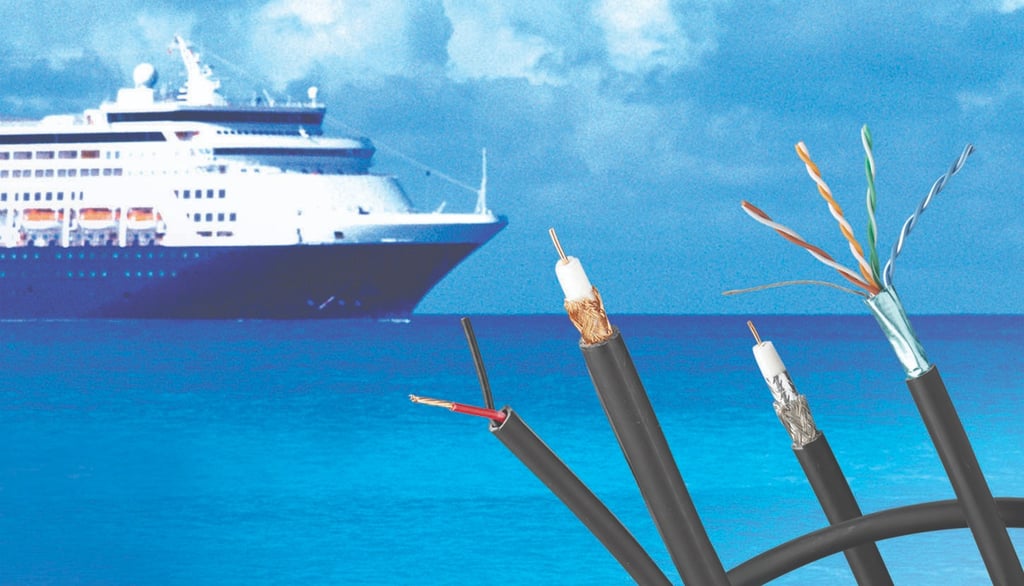
Communication cables: Variants include coaxial for RF signals, twisted-pair (Cat 6/7) for Ethernet, or fibre-optic for high-bandwidth needs. They support voice, data, and video with latency under 1 ms and bandwidth up to 10 Gbps. Fibre-optic communication cables are increasingly vital for VSAT links on vessels supplying offshore rigs in the Agulhas Basin.
Beyond these staples, specialised subtypes address niche demands. Harmonic-filter cables mitigate electromagnetic interference in variable-frequency drives, essential for modern hybrid propulsion on eco-friendly ferries. Submersible pump cables, with IP68-rated seals, power bilge systems on fishing boats off the West Coast. High-voltage inter-array cables connect wind turbines in South Africa’s emerging offshore renewables sector, part of the blue economy push under Operation Phakisa.
In real-world South African applications, power cables dominate in Transnet’s port cranes at Durban, while instrumentation cables ensure accurate cargo weighing. Control cables shine in automated mooring systems at Cape Town’s V&A Waterfront, and communication cables enable real-time telemetry for seismic survey vessels exploring the Orange Basin. This functional diversity optimises operational efficiency, reducing downtime in our wave-battered waters.
Materials Science and Construction Technologies
The resilience of shipboard cable stems from advanced materials and layered construction, engineered to defy marine hostility.
Conductors form the core: tinned stranded copper (Class 2 for fixed installations or Class 5 for flexible ones, per SANS 1574) offers superior ampacity and oxidation resistance compared to bare copper. Tinning prevents corrosion in humid holds, while aluminium alternatives lighten weight on large vessels but sacrifice conductivity – a trade-off weighed in fuel-efficient designs for Cape-to-Cairo routes.
Insulation systems are the next barrier. Cross-linked polyethylene (XLPE) boasts high dielectric strength (up to 30 kV/mm) and resists thermal ageing to 90°C continuous. Ethylene propylene rubber (EPR) excels in flexibility and partial-discharge resistance, ideal for vibrating engine rooms. Thermoplastic elastomers (TPE) provide oil resistance for galley wiring. These materials outperform PVC in marine settings, preventing water-treeing that plagues older insulations.
Sheathing and jacketing seal the deal with low-smoke zero-halogen (LSZH) polyolefin compounds, which emit minimal toxic fumes in fires – a lifesaver in confined crew quarters. Halogen-free flame-retardant (HFFR) variants add UV stabilisation for deck exposures. Oil-resistant outer sheaths withstand diesel spills on fishing trawlers.
Armouring ramps up protection: galvanised steel wire armour (GSWA) endures over 2,000 N crush tests, perfect for rodent-prone holds in Table Bay. Aluminium wire armour (AWA) reduces weight for aloft installations, while served copper braid enhances EMI shielding.
Shielding topologies combat interference: aluminium foil screens attenuate high-frequency noise, braids handle low-frequency, and combinations achieve 60–80 dB attenuation from 50 Hz to 1 GHz. This is crucial near radar masts on SAN vessels.
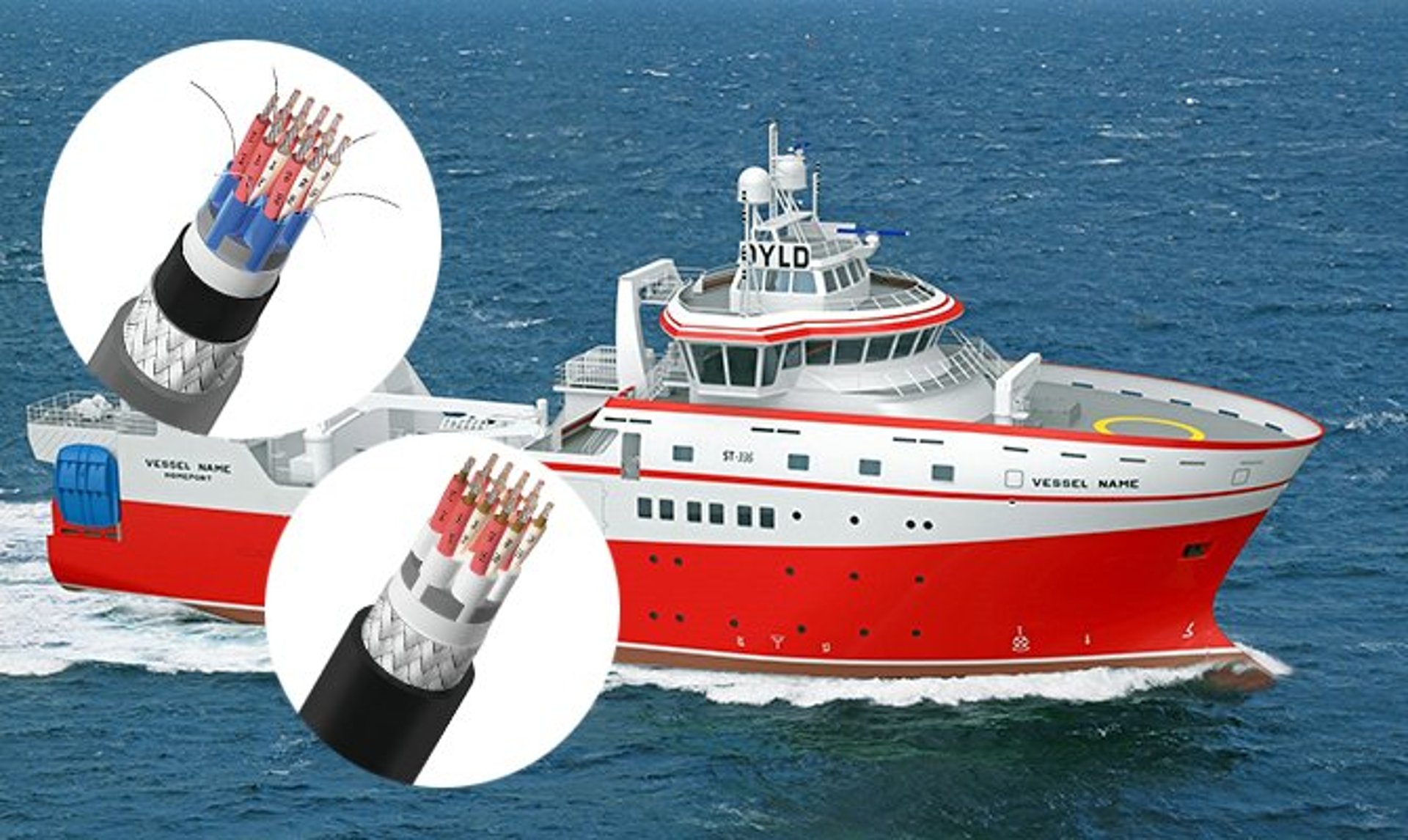
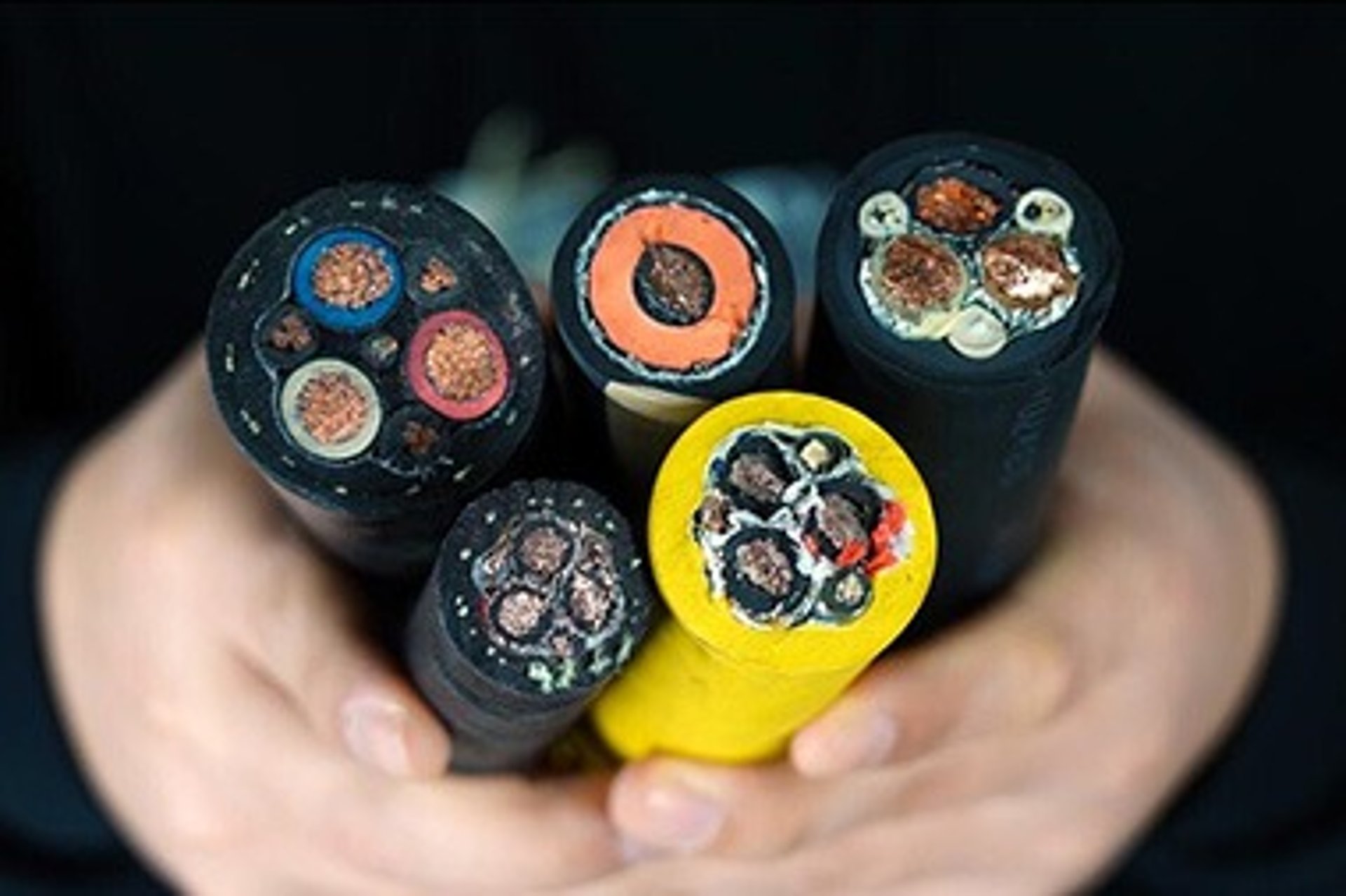
Visualise a cross-sectional diagram: at the centre, tinned copper strands; surrounded by colour-coded XLPE insulation per core; bundled with fillers; wrapped in overall foil and braid shields; armoured with GSWA helices; and finally jacketed in black LSZH sheath with printed markings like “IEC 60092-350 LSZH 0.6/1 kV”. This multi-layer fortress ensures shipboard cable thrives where standard wires fail.
Performance Standards, Certifications, and South African Regulatory Landscape
Compliance is non-negotiable for shipboard cable, blending global benchmarks with local mandates.
Internationally, the IEC 60092 series governs electrical installations in ships, covering conductor sizing and fire tests. IEEE 45 recommends practices for U.S.-flagged equivalents, while UL 1309 certifies marine shipboard cable for oil resistance. IMO SOLAS Chapter II-1 mandates circuit integrity during fires.
Military specs like MIL-DTL-24643 demand shock resistance and EMC for naval use, harmonised with SANS/IEC in South Africa. Classification societies – ABS, DNV, Lloyd’s Register – issue type approvals, essential for vessel registry.
Locally, SANS 1574 details low-voltage cables, enforced by NRCS compulsory specs. SAMSA’s Port State Control inspections under Marine Notices ensure SOLAS adherence. For offshore, PetroSA tenders require DNV-GL certification.
Fire-performance ratings distinguish: IEC 60332-1 tests single-cable flame propagation; IEC 60332-3 bundled; IEC 60331 ensures 90-minute circuit integrity at 750°C; EN 50200 adds impact. Flame-retardant cables self-extinguish; fire-resistant maintain function.
Environmental ratings include IP68 for submersibles, -40°C to +90°C operation, and 1,000-hour salt-spray per ISO 9227.
For South African tendering, a compliance checklist: verify NRCS LoA; confirm IEC 60092-350 construction; attach ABS type approval; prove LSZH per IEC 60754-1 (zero halogens); and document IP67 glanding. This safeguards vessels from Richards Bay to international waters.
Environmental and Operational Stressors – A South African Perspective
South Africa’s coasts amplify cable stressors, demanding tailored engineering.
The Agulhas Current’s high salinity accelerates galvanic corrosion on untinned conductors. Durban’s summer highs (35°C) contrast Port Elizabeth winters (-5°C), causing thermal cycling that cracks sheaths. Wild Coast heavy seas induce vibrations up to 10g, fatiguing flexible sections.
Failure modes: water-treeing in XLPE from moisture ingress; fatigue cracking in risers; EMI from lightning off Mozambique Channel.
Mitigations: cathodic protection anodes on hulls; double-extruded sheaths; strain-relief glands with 6× diameter loops.
A 2023 case: a Cape Town–Walvis Bay supply vessel suffered power cable failure mid-voyage due to unarmoured XLPE chafing against bulkheads in rough Benguela swells. Post-incident analysis revealed inadequate bend radius; retrofit with GSWA and annual TDR checks prevented recurrence, highlighting SAMSA-mandated inspections.
Procurement, Selection, and Lifecycle Management
Smart procurement starts with a technical matrix. Calculate voltage drop: Vd=2×I×L×ρAV_d = \frac{2 \times I \times L \times \rho}{A}Vd=A2×I×L×ρ (ρ = 0.017 Ω·mm²/m for copper), limiting to 3% per SANS 10142-1. Derate current 20% for bundling; enforce 8× diameter bend radius for armoured shipboard cable.
Evaluate suppliers: ISO 9001 quality; SABS certification; track record with Transnet or PetroSA. Seek warranties covering 25 years.
Installation: zone trays per IEC 60092-352 (power separate from comms); torque glands to 20 Nm; test continuity below 0.1 Ω.
Maintenance: annual 1 kV DC megger (>1 GΩ); thermographic scans for hotspots; TDR for sheath faults.
End-of-life: recycle via e-Waste firms under NEM:WA; recover 95% copper and reprocess LSZH.
Frequently Asked Questions (FAQ)
Q1: What distinguishes shipboard cable from standard industrial cable?
A: Shipboard cables mandate LSZH insulation for low toxicity, tinned conductors against corrosion, and type-approved fire performance per IEC 60331; industrial cables typically use PVC and lack marine-specific ratings, risking failure in salty, vibrating environments.
Q2: Are halogen-free shipboard cables compulsory under South African law?
A: Yes, for passenger vessels and new offshore installations under SAMSA Marine Notice compliance with SOLAS and SANS 10142-1. LSZH is required to minimise fumes in confined spaces, with NRCS enforcing via LoA.
Q3: Can I retrofit XLPE-insulated cable on a 1980s fishing trawler registered in Port Nolloth?
A: Only with a marine surveyor’s dispensation from SAMSA, full insulation resistance test (>100 MΩ at 500 V DC), and proof of compatibility with existing glands. Ensure LSZH sheathing for fire safety.
Q4: What is the typical service life of armoured LSZH shipboard cable in Table Bay conditions?
A: 25–30 years with annual maintenance; GSWA protects against corrosion, but unarmoured sections fail sooner due to salt spray – accelerate checks in foggy winters.
Q5: Where can I source SABS-certified shipboard cable in South Africa?
A: Reputable distributors in Durban (e.g., Aberdare Cables), Cape Town (Voltex Marine), and Port Elizabeth; always verify NRCS Letter of Authority and SABS mark for genuine compliance.
Q6: Do communication cables require EMI shielding in naval auxiliary vessels?
A: Mandatory per MIL-DTL-24643 to prevent interference with radar, sonar, and secure comms – braid/foil combos achieve >70 dB attenuation, vital for SAN operations off Simon’s Town.
Q7: How do I dispose of decommissioned shipboard cable responsibly?
A: Register with e-Waste recyclers approved under NEM:WA (e.g., Desco); copper is 100% recoverable, LSZH reprocessed – avoids fines and supports circular economy.
Conclusion
From the treacherous currents off Cape Agulhas to the bustling ports of Durban, shipboard cables are the backbone of South Africa’s maritime prowess. By mastering their classification, materials, standards, and management, operators ensure safety, efficiency, and sustainability. As electrification waves crest under Operation Phakisa, investing in premium shipboard cable today secures smoother sails tomorrow. Consult SAMSA guidelines, partner with certified suppliers, and keep these lifelines inspected – your vessel depends on it.


Email Address: Li.wang@feichuncables.com
© 2025. All rights reserved.
One-click to Quickly Contact
Products
Contact
Company
Location:
Building A Private Science and Technology Park, Hefei Economic and Technological Development Zone, Anhui Province, China
Heat Resistant Cable
WhatsApp: +86 17333223430
Social Media: