Anhui Feichun Special Cable Co.,Ltd Email: Li.wang@feichuncables.com
Offshore & Marine Cables: A Comprehensive Guide
Discover the critical role of offshore cables and marine cables in South Africa’s maritime and energy sectors. This in-depth guide explores shipboard and subsea applications, NEK 606 and IEEE 1580 standards, LSZH fire safety, mud-resistant VFD systems, and real-world South African marine cable deployments like PetroSA’s Mossel Bay FPSO revamp.
Li. Wang
10/28/20256 min read
Introduction
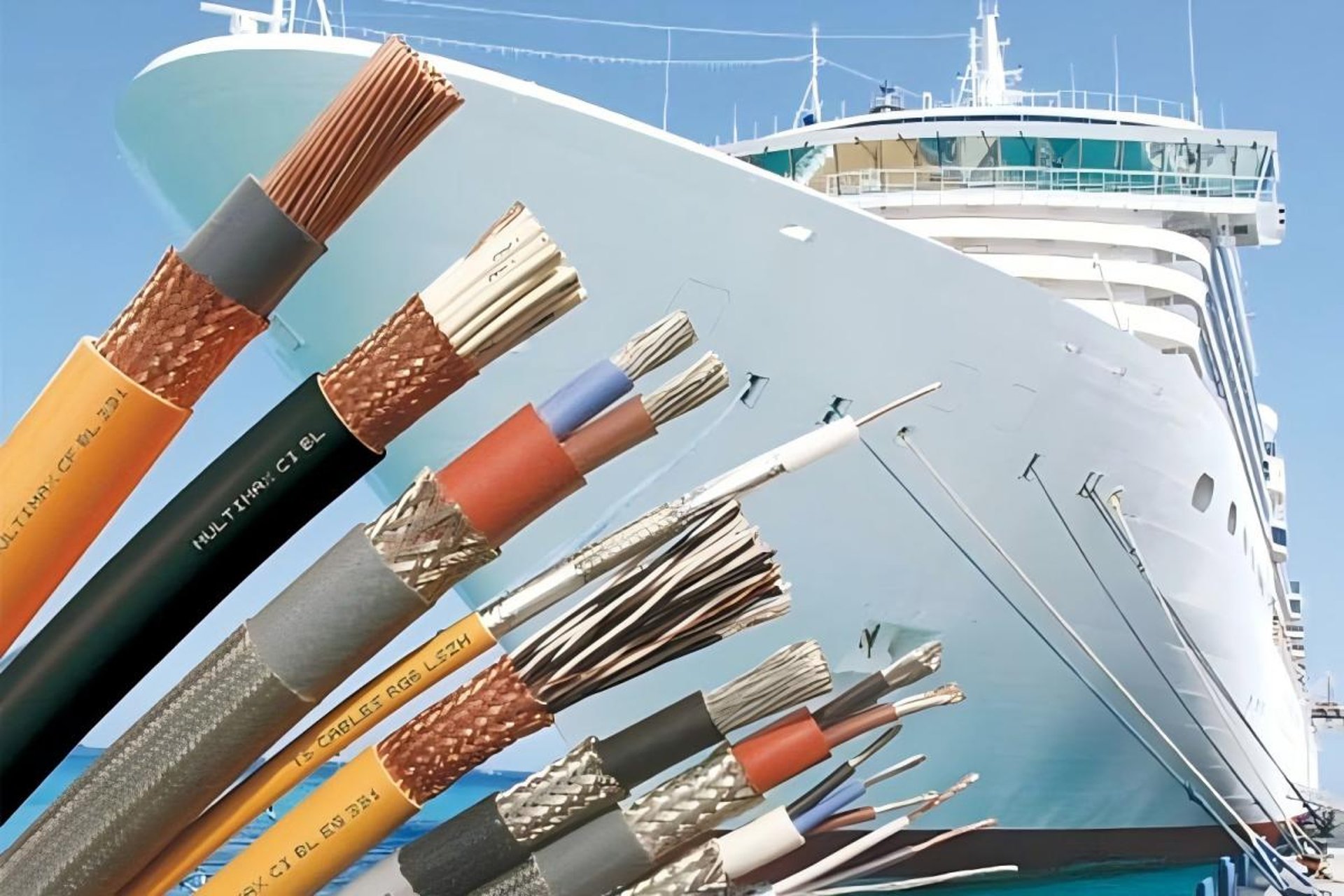
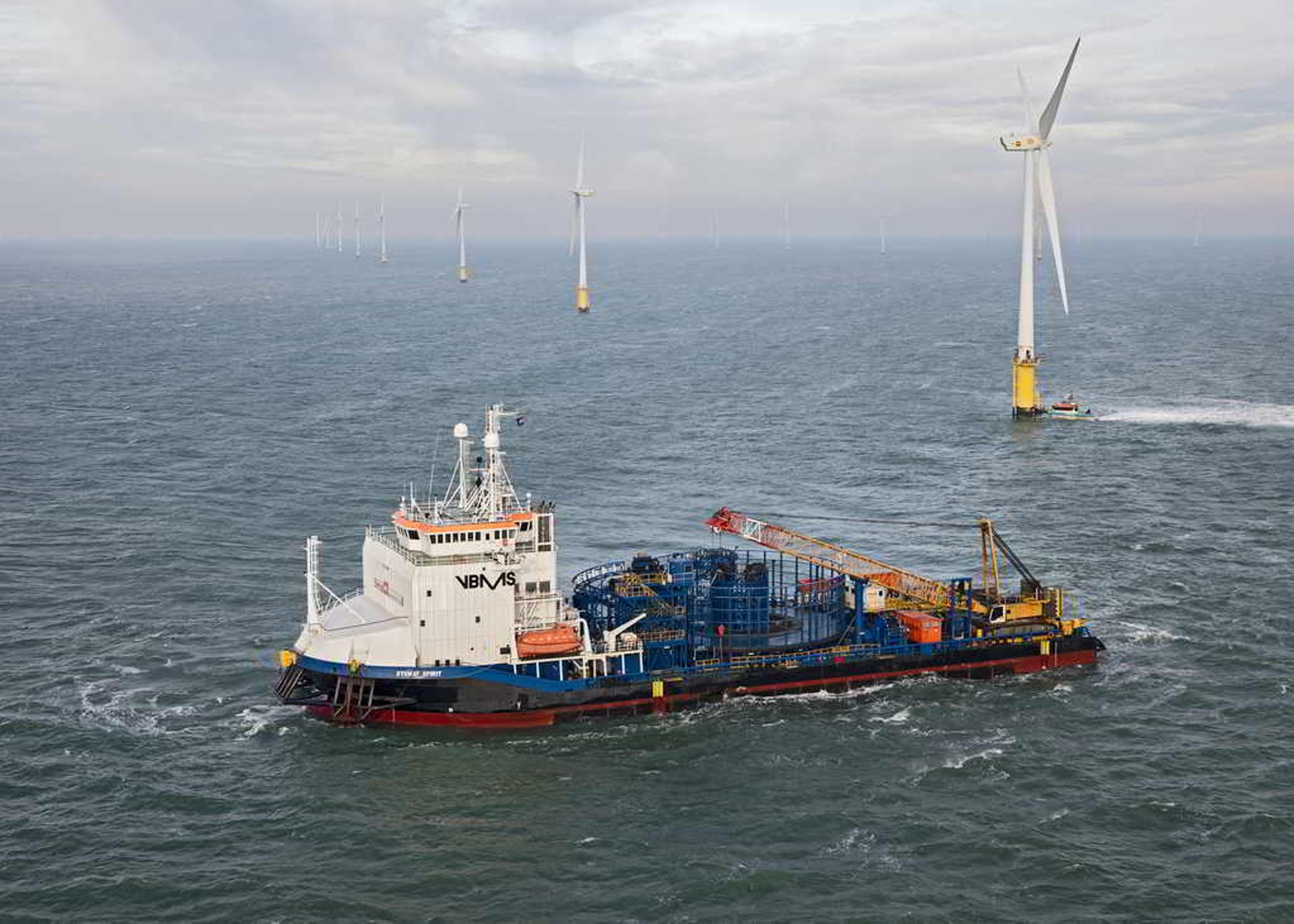
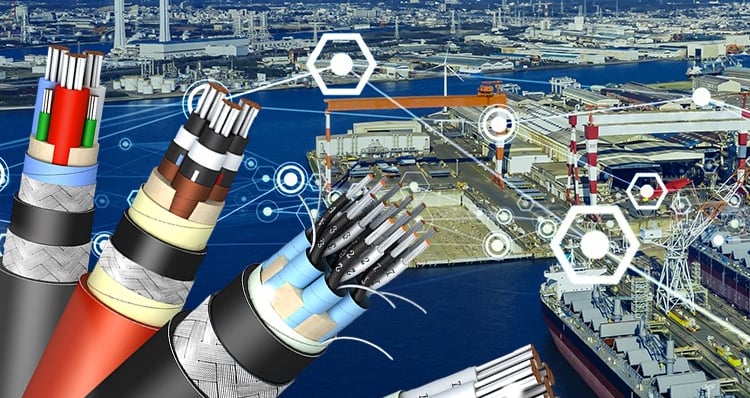
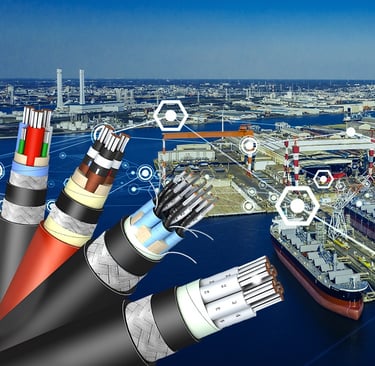
Marine cables and offshore cables are the unsung heroes of modern maritime and energy infrastructure. While the term marine cables typically refers to shipboard or on-vessel wiring (powering everything from a cruise liner’s Wi-Fi to a fishing trawler’s navigation lights), offshore cables encompass the heavy-duty subsea, inter-array, and umbilical systems that link oil rigs, wind farms, and floating production units to shore.
The distinction matters. A Cape Town-registered bulk carrier sailing to Durban needs flexible, LSZH-sheathed shipboard cables compliant with IEC 60092-350. But the same vessel, if repurposed for offshore support near Mossel Bay, will rely on NEK 606 mud-resistant RFOU cables to survive the Agulhas Current’s dynamic loading.
Historically, marine wiring began with gutta-percha insulated telegraph cables in the 1850s. By the 1970s, lead-sheathed power cables dominated. Today, in 2025, the global offshore and marine cable market sits at approximately USD 12 billion, propelled by offshore wind (South Africa’s own 3.9 GW pipeline), LNG FPSO growth in Mozambique Channel projects, and cruise fleet renewal post-COVID.
This guide dives deep: from propulsion power distribution on Table Mountain-berthed vessels to 132 kV dynamic export cables off Jeffreys Bay. We’ll cover applications, taxonomy, critical attributes, installation, maintenance, and a detailed South African marine cable case study at PetroSA’s Mossel Bay FPSO.
Thesis: Only by understanding the full lifecycle — from tinned copper conductor to end-of-life copper recovery — can South African operators ensure safety, uptime, and ESG compliance in one of the world’s most challenging marine environments.
Applications of Offshore & Marine Cables
Shipboard (Vessel-Centric)
South African waters host everything from Transnet’s Durban Container Terminal tugs to Icon-class cruise ships docking in Cape Town. Marine cables here serve four core functions:
Power Distribution: LV/MV cables (0.6/1 kV RFOU) feed bow thrusters, hotel loads (air-conditioning in 40 °C Table Bay summers), and main propulsion via VFD-driven azimuth pods. A typical 8 000 TEU container ship draws 4–6 MW at sea.
Communication & Automation: GMDSS radios, ECDIS screens, and Integrated Bridge Systems (IBS) rely on Cat 6 marine data cables and fibre-optic backbones. On a Safmarine vessel, a single FO drop failure can blind AIS tracking.
Safety Systems: IEC 60331 fire-rated cables ensure public address/general alarm (PA/GA), emergency shutdown (ESD), and fire dampers operate during a galley blaze.
Entertainment & Passenger Experience: Cruise lines like MSC (regularly docking in Durban) use IPTV-over-fibre and Wi-Fi 6 mesh networks — all cabled with LSZH SHF1 to prevent toxic smoke in confined corridors.
Offshore Platforms
South Africa’s offshore oil and gas sector — centred on Mossel Bay, Saldanha, and emerging Virginia gas fields — demands offshore cables that survive 20-year design lives.
Topsides Power: 12/20 kV NEK 606 RFOU(i) cables distribute MV power from turbine generators to compressors.
Subsea Umbilicals: Electro-hydraulic umbilicals (API 17E) combine power conductors, fibre-optic signal lines, and chemical injection tubes in a single armoured assembly.
Drilling & Production: ESP cables (QYEQEY flat submersible pump cables) power downhole pumps in 2 000 m water depths, while mud-resistant BFOU-VFD cables drive top-drive motors.
Renewable Energy
South Africa’s Just Energy Transition includes offshore wind (Risk-based CFP Round 1 awarded 3.9 GW in 2024).
Inter-array Cables: 66 kV XLPE dynamic cables link turbines in 30 m waves off Agulhas Bank.
Export Cables: 132 kV HVAC or emerging 525 kV HVDC cables run 80 km to Koeberg-area substations.
Pilot Links: Floating solar arrays in Durban Harbour and wave energy converters off Port Elizabeth use lightweight FO hybrid cables.
Classification & Technical Taxonomy
By Function
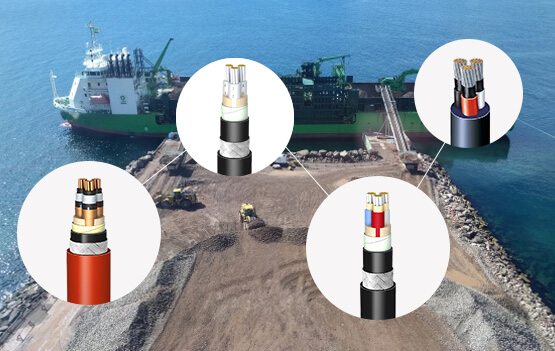
TypeExamplesKey FeaturesPowerRFOU, BFOU, TFOU0.6/1 kV to 132 kV, tinned Cu, SHF2ControlMulti-core screened300/500 V, foil + braidInstrumentationRE-2X(St)HSWAH, NEK 606Twisted pairs, 150/250 VCommunicationCat 6/7, FO, RF coaxLSZH, UV-stabilisedVFD/EMCRFOU-VFD, symmetricalTriple shield, low capacitanceEarth/UXP15 UX0.6/1 kV, green/yellow SHF2
By Environment
Shipboard: IEC 60092-350/353/376, DNVGL-CP-0401 Type Approval.
Offshore: IEEE 1580 Type P (USA), NEK 606 (Norway — widely adopted in SA), API 17E (umbilicals).
Subsea: Dynamic (lazy-wave, catenary) vs static (trench & bury); armour — SWA, DSTA, or bronze for corrosion hotspots.
By Material Innovation
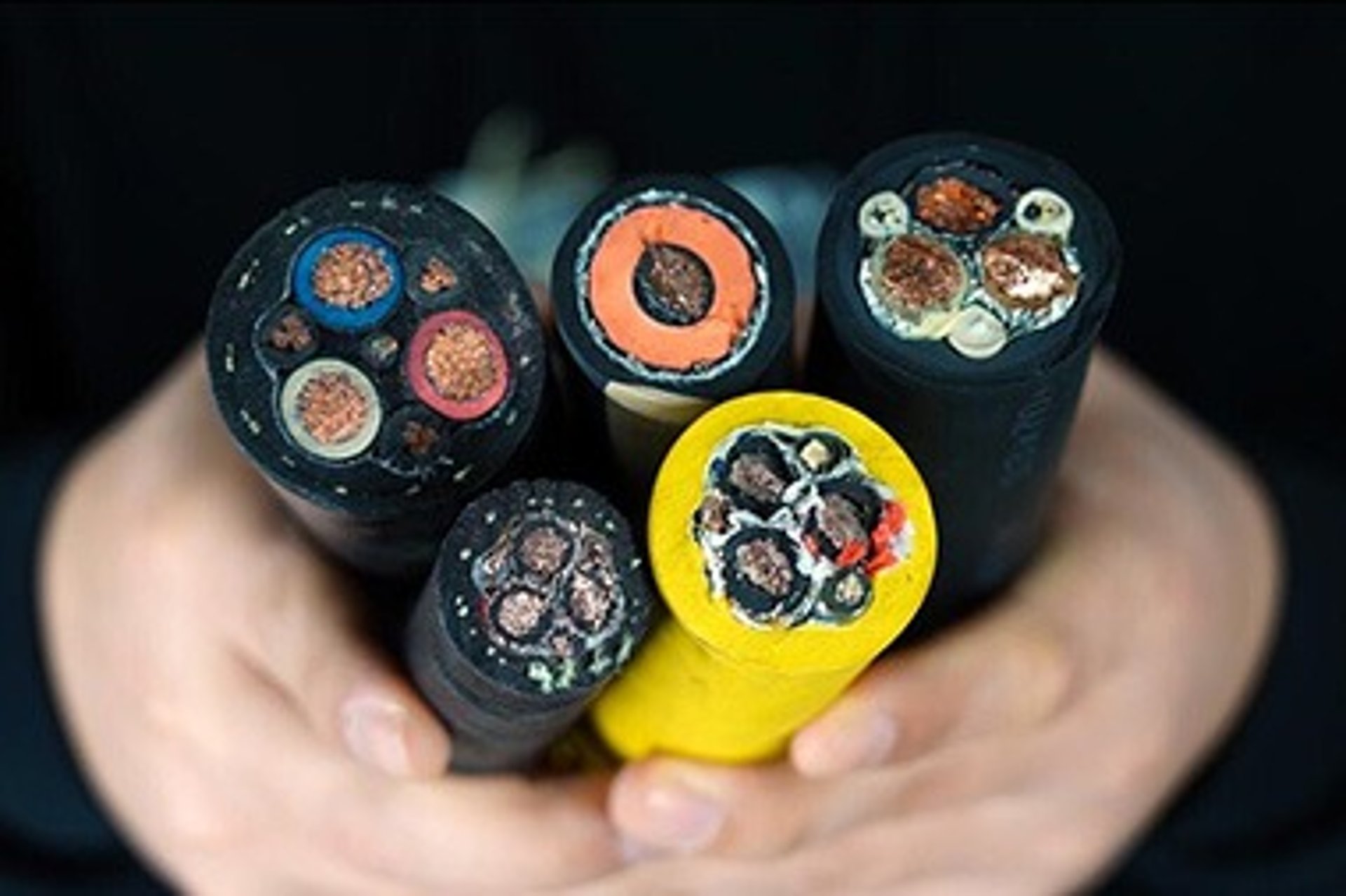
Conductor: Class 5 tinned copper (99.99 % purity) — prevents “red plague” oxidation.
Insulation: EPR (flexible), XLPE (high voltage), SHF2 (NEK 606 mud-resistant).
Sheath: LSZH thermoset — zero halogen, low smoke (IEC 61034).
Armour: Galvanised steel wire (GSW), bronze (saltwater), or aluminium (weight-critical).
Why Marine/Offshore Cables Matter?
Corrosion Resistance
South Africa’s coastal waters average 35 ppt salinity and 8.5 pH — ideal for copper pitting. Tinned copper + SHF2 sheath outperforms bare copper:
ASTM B117 salt-spray: >2 000 hours without red plague (vs 200 h for bare).
Field data (Aberdare Cables, Port Elizabeth): 18-year-old RFOU cables retrieved from Saldanha FPSO showed <0.1 mm pitting.
Fire Safety
A fire on a cruise ship in Cape Town Harbour can evacuate 5 000 passengers in 20 minutes. LSZH cables ensure:
IEC 60331: Circuit integrity at 750 °C for 3 hours.
IEC 60332-3 Cat A: Flame propagation <1.5 m in bundled tests.
Hydrocarbon fire (HCF) rating: BFOU cables survive 1 100 °C for 120 min.
Mechanical Resilience
Dynamic cables off Jeffreys Bay endure:
Tensile strength: >30 kN (66 kV inter-array).
Minimum bend radius: 8×OD static, 12×OD dynamic.
Torsion: ±120°/m without conductor fatigue.
EMC & Signal Integrity
VFD thrusters on AHTS vessels in Durban generate >100 V bearing currents. Symmetrical VFD cables reduce this to <5 V:
Triple shielding (foil + braid + foil): Crosstalk < –90 dB @ 10 MHz.
Continuous shield bonding via EMC glands.
Temperature & Fluid Compatibility
Operating range: –40 °C (Southern Ocean winter) to +110 °C (engine room).
NEK 606 mud resistance: SHF2 survives IRM-5 + NBR-based drilling fluids for 6 months at 70 °C.
Installation Best Practices
Pre-Installation
Pull Tension: Capstan equation: Tout=Tin⋅eμθ T_{out} = T_{in} \cdot e^{\mu \theta} Tout=Tin⋅eμθ. Limit to <40 % of cable breaking load.
Reel Strength: Flange rating > reel + cable weight (e.g., 25 t reel needs 50 mm steel flanges).
Routing & Support
Tray fill ratio: ≤40 % (IEC 60287) to allow heat dissipation.
Separation: Power vs signal ≥300 mm; use aluminium dividers.
Pulling & Termination
Pulling Eyes: Factory-fitted, tested to 1.5× pull load.
Lubricant: Water-based, coefficient μ ≤0.15.
Glanding: IP68 EMC glands (Roxtec or CMP) for Zone 1 areas.
Dynamic Sections
Bend Stiffeners: Polyurethane, 1.5 m long at J-tube exits.
Buoyancy Modules: Distributed along lazy-wave catenary to achieve S-shape.
Maintenance, Testing & Lifecycle Management
Inspection Schedule
FrequencyMethodQuarterlyVisual + IR thermography (hotspots >80 °C)AnnuallyTan δ + partial discharge (MV export)5-yearlyMegger insulation resistance (subsea via ROV)
Diagnostic Tools
TDR (Time Domain Reflectometry): Locates faults to ±1 m.
OTDR: Fibre break location in umbilicals.
VLF Hipot: 0.1 Hz testing at 3 U₀ for XLPE cables.
Repair vs Replace
Splice Kits: Cold-shrink or resin for LV; heat-shrink banned in SA due to VOCs.
Cost Model: Repair <10 % of reel cost; replace if >3 splices per 100 m.
End-of-Life Recycling
Copper Recovery: >95 % via smelters in Springs, Gauteng.
LSZH Granulation: Reused in non-marine cable sheaths.
FAQ – Common Technical Queries
1. Can shipboard LSZH cables be used subsea?
No. Subsea requires mud-resistant SHF2 + double steel tape armour (DSTA). LSZH alone fails in drilling mud within 72 hours.
2. RFOU vs BFOU?
RFOU: Braided armour, standard fire rating.
BFOU: Tape + braid, IEC 60331-31 fire resistance, preferred for FPSOs.
3. How to size VFD cable for a 1 MW thruster?
Current: ~1 200 A at 690 V.
Select 3×240 mm² + 3×120/3 symmetrical conductors.
Apply NEC 310.16 + 1.25 derating for 40 °C ambient + EMC shield continuity.
4. Are fibre-optic cables immune to lightning?
Yes for data, but hybrid FO-power cables need MOV surge arrestors on copper pairs.
Case Study: South Africa Marine Cable Deployment
Project: PetroSA Mossel Bay FPSO Revamp (2023–2025)
Scope:
42 km NEK 606 RFOU(i) 12/20 kV power cables (topsides to turret).
18 km fibre-optic umbilical with integrated temperature sensing (DTS).
Challenges:
Agulhas Current: 2.5 m/s velocity → >25 kN dynamic load.
H₂S Sour Service: NORSOK M-001 compliance for elastomer swelling.
Local Content: 60 % per dti codes — manufacturing in South Africa mandatory.
Solutions:
Local Manufacturing: Aberdare Cables (Pietermaritzburg) extruded tinned Cu + SHF2 under ISO 9001.
Lazy-Wave Catenary: 120 distributed buoyancy modules (50 kg net buoyancy each).
Real-Time Monitoring: DTS fibre detected a +8 °C hotspot in riser base within 4 hours of first oil.
Outcome:
Zero Lost Time Incidents (LTI) over 1.2 million man-hours.
First oil 6 weeks ahead of schedule.
Partial discharge <2 pC at 1.7 U₀ after 18 months — best-in-class.
Future Trends
66 kV Wet-Design Wind Export Cables
Eliminate lead sheath; use water-blocking tapes.
First deployment: Coega Wind Farm (2027).
HVDC Subsea Links
Germany–South Africa Green Hydrogen Corridor: ±525 kV MI-PPL cables, 3 000 km.
Digital Twin + AI Predictive Maintenance
Transnet Port Terminals pilots fibre Bragg grating sensors in Durban quay cranes.
Conclusion
Reliable marine cables and offshore cables are the difference between a safe voyage and catastrophe, between profit and downtime, between carbon-intensive delays and South Africa’s Just Energy Transition. From the tinned copper strands in a Saldanha fishing trawler to the 132 kV export cable landing at Jeffreys Bay, every metre must meet IEC, NEK, and IEEE standards — and be locally supported.
Call to Action: Engage DNV- or ABS-certified engineers and South African manufacturers (Aberdare, CBI Electric) for project-specific selection. Your next cable pull could power a greener, safer maritime future.
Email Address: Li.wang@feichuncables.com
© 2025. All rights reserved.
One-click to Quickly Contact
Products
Contact
Company
Location:
Building A Private Science and Technology Park, Hefei Economic and Technological Development Zone, Anhui Province, China
Heat Resistant Cable
WhatsApp: +86 17333223430
Social Media: