Anhui Feichun Special Cable Co.,Ltd Email: Li.wang@feichuncables.com

PROTOLON(FL)-LWL (N)TSFLCGEWOEU: Medium Voltage Flat Reeling Cable with Fiber Optics – The Ultimate Solution for South African Single-Plane Automation Equipment
Explore PROTOLON(FL)-LWL (N)TSFLCGEWOEU, the medium voltage flat reeling cable with integrated fiber optics, engineered for South African single-plane automation equipment like ship loaders and stacker-reclaimers. Learn about its specifications, technical advantages, and how it ensures reliable power supply and noise-free data transmission in harsh industrial environments.
Li Wang
5/7/202629 min read
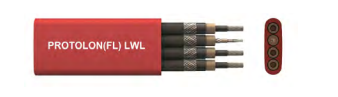
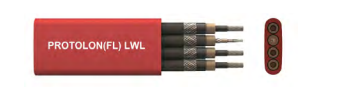
In the port and bulk material handling industries across South Africa, single-plane automation equipment serves as the backbone of efficient logistics operations. From ship loaders moving massive volumes of coal and ore to stacker-reclaimers managing stockpiles and flat-drum ship-to-shore transfer equipment facilitating rapid cargo movement, these machines operate in some of the most demanding environments imaginable. However, their reliable performance relies heavily on one critical component: the cable system that delivers power and transmits vital operational data. Traditional cable designs often struggle to meet the dual demands of high-power transmission and real-time communication while withstanding the mechanical stresses of continuous single-plane motion. PROTOLON(FL)-LWL (N)TSFLCGEWOEU medium voltage flat reeling cable with fiber optics represents a breakthrough solution, engineered specifically to address these challenges. By combining optimized flat geometry with integrated optical fiber technology, this cable delivers stable medium-voltage power supply, high-speed noise-free data transmission, and exceptional mechanical durability. It has rapidly become an emerging industry standard for new automation projects and modernization initiatives across the region, particularly where condition-based maintenance strategies are being implemented. This article explores the operational requirements that drive cable selection, the innovative design principles behind PROTOLON(FL)-LWL, its comprehensive technical specifications, and the engineering advantages that make it the preferred choice for South African applications.
Application Requirements & Challenges of Single-Plane Automation Equipment in South Africa
Operational Context and Equipment Types
South Africa’s economy is deeply reliant on the efficient movement of bulk commodities, with ports such as Richards Bay, Saldanha Bay, and Durban serving as critical gateways for global trade. Within these facilities, and in mining operations across the country, single-plane automation equipment plays an indispensable role. These machines include ship loaders, which transfer bulk materials from storage facilities directly into vessel holds; stacker-reclaimers, which build and retrieve material stockpiles in yards; and flat-drum ship-to-shore transfer equipment, which moves cargo between vessels and shore-based infrastructure.
What unites all this equipment is their mode of operation: continuous reciprocating motion restricted to a single plane. Unlike machinery that moves in multiple axes or rotates through 360 degrees, these systems travel back and forth along fixed linear or curved paths, with their movement constrained by rails, booms, or guide systems. This specific operational characteristic creates unique requirements for the cables that supply them with power and communication. At the same time, these machines operate in environments characterized by high temperatures, intense ultraviolet radiation, high humidity, and in coastal areas, significant salt spray exposure. They also operate 24 hours a day, 7 days a week, with minimal downtime scheduled only for essential maintenance.
Power Supply Requirements
The scale and power demands of this equipment are substantial. A medium-sized ship loader, for example, requires continuous electrical current ranging from 600 to 900 Amperes, delivered at medium voltage levels typically between 3.6kV and 27kV. This high power requirement stems from the heavy-duty motors that drive movement systems, conveyor belts, hydraulic pumps, and other essential components.
What makes power delivery particularly challenging is the dynamic nature of the equipment’s operation. As machines move back and forth, cables are continuously reeled and unreeled, subjected to varying levels of tension, bending, and mechanical stress. Traditional round cables often experience uneven tension distribution during this process, leading to internal structural fatigue, conductor damage, and eventually, power interruptions. In South Africa’s high-temperature environments, these issues are compounded, as heat accelerates the degradation of insulation materials and reduces current-carrying capacity.
Reliability is non-negotiable in these applications. A power failure lasting just a few minutes can disrupt entire supply chains, resulting in significant financial losses and missed shipping schedules. Therefore, any cable solution must not only deliver the required power levels but maintain stable performance throughout years of continuous dynamic operation under harsh environmental conditions.
Real-Time Digital Monitoring Needs
Modern automation equipment relies on sophisticated control systems that require constant, high-quality data exchange between the machine and central control rooms. The parameters that need to be monitored and transmitted in real-time include boom position, load weight, conveyor speed, motor temperature, hydraulic pressure, equipment health status, and operator control commands.
Each type of data has specific transmission requirements. Position and speed data, for instance, require low latency and high precision to ensure safe and accurate machine operation. Equipment health monitoring data, on the other hand, requires high bandwidth to accommodate multiple sensor readings transmitted simultaneously. All data must be transmitted reliably, with minimal risk of corruption or loss, as incorrect or delayed information can lead to operational inefficiencies, equipment damage, or safety incidents.
In industrial environments, electromagnetic interference (EMI) represents one of the biggest threats to reliable data transmission. High-power motors, variable frequency drives, and high-voltage power lines all generate strong electromagnetic fields that can disrupt signals transmitted through traditional copper communication cables. Shielding solutions are often complex, expensive, and add significantly to cable size and weight, while still providing imperfect protection in high-interference environments.
Special Requirements for Cable Geometry
Perhaps the most distinct challenge in these applications arises from the single-plane motion characteristic. When traditional round cables are wound onto flat drums or guided through roller systems during back-and-forth movement, they inevitably experience torsion – twisting along their longitudinal axis. Over time, this torsion causes cumulative stress throughout the cable structure, damaging conductors, insulation, and internal components. Torsion also leads to uneven winding on drums, causing cables to overlap, bunch together, or slip out of alignment, which further increases mechanical stress and accelerates wear.
To overcome these problems, the cable cross-section must be specifically engineered to operate effectively in single-plane motion. The ideal geometry should lay flat and remain stable during winding and unwinding, maintain consistent contact with guide rollers, and distribute mechanical forces evenly throughout its structure. It should also resist torsion naturally, eliminating the damaging stresses that shorten the service life of conventional cables.
PROTOLON(FL)-LWL: Innovative Solution Integrating Flat Geometry and Fiber Optics
Product Overview and Industry Position
PROTOLON(FL)-LWL (N)TSFLCGEWOEU represents the culmination of decades of research and development in industrial cable technology. Designed and manufactured in accordance with the rigorous DIN VDE 0250-813 standard, this medium voltage flat reeling cable with integrated fiber optics has been specifically engineered to address all the challenges outlined above. It combines advanced materials science, innovative structural design, and optical fiber technology to create a solution that delivers exceptional performance in single-plane automation applications.
Across South Africa and other regions with similar operating environments, PROTOLON(FL)-LWL has quickly established itself as the preferred choice for new equipment installations and modernization projects. Industry experts increasingly recognize it as an emerging specification for ship loader automation and stacker-reclaimer upgrade programs, particularly those implementing condition-based maintenance strategies. Its ability to deliver both power and high-quality data transmission through a single integrated system simplifies engineering design, reduces installation complexity, and provides a future-proof foundation for smart industrial operations.
Core Design Philosophy
The design of PROTOLON(FL)-LWL is built around two fundamental principles: optimized flat geometry and independent optical fiber integration. These principles work together to create a cable that not only meets current operational requirements but also addresses the underlying causes of performance degradation in traditional solutions.
The rectangular cross-section is the defining feature of this cable. Unlike round cables that naturally twist and bunch when moved in a single plane, the flat profile maintains its orientation and lays uniformly on flat drums and guide rollers. This geometry ensures that forces are distributed evenly across the cable structure, minimizing stress concentrations and significantly reducing mechanical fatigue. The flat shape also improves thermal performance, allowing heat generated during power transmission to dissipate more efficiently, which is particularly valuable in South Africa’s warm climate.
Within this flat structure, the cable incorporates six dedicated optical fiber tubes, with each tube containing between one and three optical fibers. These fiber units are completely separated from the power transmission components, creating an independent communication channel that operates without interference or risk of signal degradation. This separation eliminates the need for complex electromagnetic shielding while ensuring that high-power electrical operation does not compromise data quality.
Key Technical Advantages
The benefits of this integrated design are numerous and far-reaching. First and foremost, it solves the torsion problem that plagues traditional cables. By eliminating twisting forces, PROTOLON(FL)-LWL can operate reliably for significantly longer periods, reducing maintenance requirements and replacement costs. The flat profile also improves the efficiency of drum winding and roller guidance systems, reducing wear on both the cable and associated mechanical components.
From a communication perspective, the use of optical fiber technology provides inherent immunity to electromagnetic interference. Unlike copper-based systems, optical signals are transmitted as light pulses through glass fibers, making them completely unaffected by the strong electromagnetic fields present in industrial environments. This results in reliable, high-quality data transmission with virtually zero signal loss or corruption. The high bandwidth capacity of optical fibers also means the system can accommodate growing data requirements as equipment becomes more advanced and monitoring systems more sophisticated.
The integration of power and communication functions into a single cable offers significant practical advantages. It simplifies installation and routing, reduces the physical space required for cable management, and lowers overall system costs. It also improves reliability by reducing the number of connection points and potential failure locations. For operators implementing condition-based maintenance strategies, the reliable data transmission capability provides the essential infrastructure needed to monitor equipment health, predict failures, and optimize maintenance schedules.
Complete Technical Specifications of PROTOLON(FL)-LWL (N)TSFLCGEWOEU Cable
Application Scope
PROTOLON(FL)-LWL is classified as a flexible medium voltage reeling cable designed specifically for applications subject to high mechanical stress. It performs exceptionally well in environments characterized by dynamic tensile loads, repeated changes of direction within a single plane, and continuous operation over roller systems. The cable is ideal for use with mobile equipment such as high-speed container cranes, heavy-duty port cranes, large-scale mining machinery, excavators, and the single-plane automation equipment common in South African ports and industrial facilities.
Its robust construction allows it to operate reliably both indoors and outdoors, making it versatile enough to serve across a wide range of facility types and operational environments. Whether installed in the humid, salt-laden atmosphere of coastal ports or the dusty, high-temperature conditions of inland mining operations, PROTOLON(FL)-LWL maintains consistent performance throughout its service life.
Installation Guidelines
While PROTOLON(FL)-LWL is designed for durability and reliability, proper installation is essential to ensure optimal performance and longevity. The optical fiber components within the cable require specialized handling during termination and connection. These processes demand specific technical skills and precision tools to avoid damage to the fibers and ensure signal quality.
For this reason, it is strongly recommended that fiber optic termination and installation work be performed by qualified technical personnel or entrusted directly to the manufacturer’s customer service team, who offer factory assembly services. When planning installation projects, users should provide detailed connection dimensions and technical specifications to ensure that the cable is supplied and terminated correctly for the specific application requirements. Following these guidelines helps to maximize performance, reliability, and service life.
Detailed Design Features
Conductor System
The electrical conductors form the heart of the power transmission system. PROTOLON(FL)-LWL uses electrolytic copper conductors that have been tinned and finely stranded. This construction follows Class F specifications as defined in the DIN VDE 0295 standard, ensuring exceptional flexibility while maintaining high electrical conductivity. Tinning the copper strands provides excellent corrosion resistance, which is particularly valuable in the humid and salt-laden environments common in many South African port facilities. The fine stranding ensures that the conductors can withstand millions of bending cycles without fatigue or failure, even under conditions of continuous dynamic operation.
Insulation System
Insulation is critical for both electrical safety and long-term reliability. The cable uses PROTOLON insulation material, a specialized compound based on high-quality Ethylene Propylene Rubber (EPR) rated at grade 3GI3 or higher. This material has been engineered to offer exceptional electrical insulation properties combined with excellent mechanical strength and thermal stability. It maintains its insulating characteristics across a wide temperature range and provides resistance to ozone, UV radiation, and chemical exposure. The insulation system is designed to withstand the electrical stresses associated with medium-voltage operation while remaining flexible enough to endure continuous bending and movement.
Electrical Field Control
To ensure reliable electrical performance and long service life, PROTOLON(FL)-LWL incorporates a sophisticated electrical field control system consisting of two semiconductive layers. The inner layer is made from standard EPR material and is applied directly over the conductor to ensure uniform electric field distribution. The outer semiconductive layer uses a modified EPR compound with the special property of being removable under heating conditions. This design feature greatly simplifies on-site termination work while maintaining excellent electrical performance and preventing the formation of partial discharges that can degrade insulation over time.
Core Identification
To facilitate accurate installation and maintenance, the power cores use a natural color insulation system combined with a black semiconductive layer. This provides clear visual differentiation between individual cores, making identification straightforward even in low-light conditions. This simple but effective feature reduces the risk of connection errors during installation or maintenance work, contributing to overall system safety and reliability.
Optical Fiber Unit
The optical fiber system is engineered to deliver reliable high-speed data transmission while withstanding the mechanical stresses of dynamic operation. The system offers three different fiber types to suit varying application requirements:
G50/125μm graded-index fiber features a core diameter of 50μm and cladding diameter of 125μm, offering attenuation of less than 2.8 dB/km at 850nm and less than 0.8 dB/km at 1310nm. It provides bandwidth greater than 400 MHz at 850nm and greater than 1200 MHz at 1300nm, with a numerical aperture of 0.2 ± 0.02. This fiber type is ideal for medium-distance, high-bandwidth applications common in port automation systems.
G62.5/125μm graded-index fiber has a core diameter of 62.5μm and cladding diameter of 125μm, offering attenuation of less than 3.3 dB/km at 850nm and less than 0.9 dB/km at 1310nm. It provides bandwidth greater than 400 MHz at 850nm and greater than 600 MHz at 1300nm, with a numerical aperture of 0.275 ± 0.02. This represents a cost-effective solution for many standard monitoring and control applications.
E9/125μm single-mode fiber features a core diameter of 9μm and cladding diameter of 125μm, offering exceptional performance with attenuation of less than 0.4 dB/km at 1310nm and less than 0.3 dB/km at 1550nm. It features chromatic dispersion of less than 3.5 ps/nm·km at both 1300nm and 1550nm, with a numerical aperture of 0.14 ± 0.02. This fiber is ideal for long-distance transmission and high-precision monitoring applications where signal integrity is critical.
All fibers are identified using a specially developed color coding system that allows individual fibers to be easily distinguished during installation and maintenance. For mechanical protection, each fiber is housed within a hollow tube filled with a specialized compound. The tube material is Ethylene Tetrafluoroethylene (ETFE), chosen for its excellent chemical resistance, low friction characteristics, and ability to maintain its properties across a wide temperature range. The filling compound, designated as 7YI 1, provides cushioning and prevents movement of the fiber within the tube, protecting it from mechanical stress.
Within the overall cable structure, the optical elements are arranged as six separate tubes positioned around a central support element. Each tube contains between one and three optical fibers, allowing for configurations of 6, 12, 18, or 24 total fibers depending on specific application requirements. This strategic placement ensures that the optical fibers are located in areas of minimal mechanical stress, significantly enhancing their long-term reliability.
Core Arrangement
The internal layout of PROTOLON(FL)-LWL follows a parallel core arrangement that maximizes the benefits of the flat geometry. Power cores are positioned side-by-side rather than being twisted or layered, maintaining the overall flat profile of the cable. The earth conductors are specially designed and positioned – split into multiple segments and distributed concentrically around each power core. This arrangement improves electrical safety and performance while contributing to the balanced mechanical structure of the cable.
Sheath System
The outer sheath provides the first line of defense against environmental and mechanical damage. PROTOLON(FL)-LWL uses PROTOFIRM, a specialized compound based on Chloroprene Rubber (CR) rated at grade 5GM5 or higher. This material offers exceptional resistance to abrasion, tearing, oil, ozone, UV radiation, and moisture – exactly the combination of properties needed for South African operating environments. The sheath is colored red, providing high visibility and making cable identification easier in complex installation environments.
Product Marking
To ensure traceability and correct application, the cable features clear, permanent marking along its length. The marking includes the product designation PROTOLON (FL) LWL (N)TSFLCGEWOEU, followed by details of the core configuration, rated voltage, year of manufacture, and unique serial number. This comprehensive marking system helps ensure that the right cable is used for the right application and simplifies maintenance and replacement processes throughout the product lifecycle.
Electrical Parameters
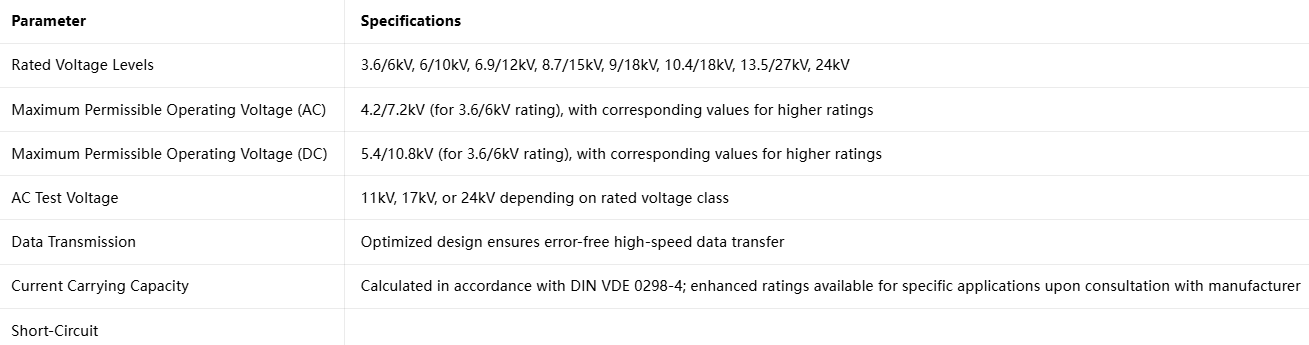
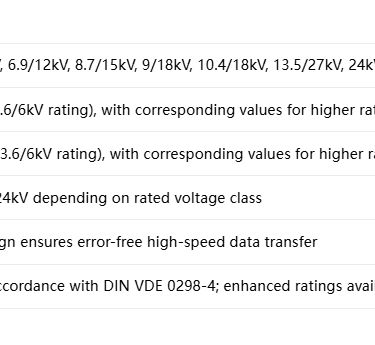
The electrical performance characteristics of PROTOLON(FL)-LWL have been engineered to meet the demanding power requirements of heavy-duty industrial equipment. The range of available voltage levels ensures that there is a suitable configuration for almost any installation, from smaller auxiliary systems to large-scale main power supplies. The current carrying capacity is calculated following the DIN VDE 0298-4 standard, which takes into account factors such as operating temperature, installation method, and grouping of cables. In certain operating conditions, it is possible to achieve higher current ratings than the standard values, although this should always be verified in consultation with the manufacturer to ensure safety and long-term reliability.
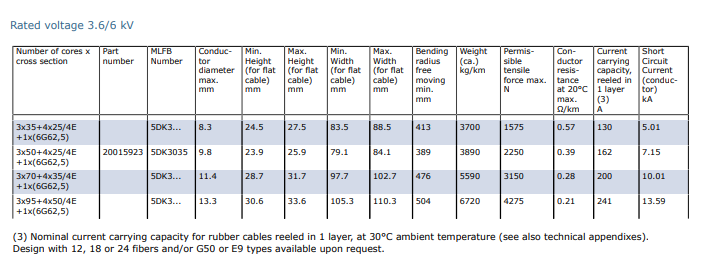
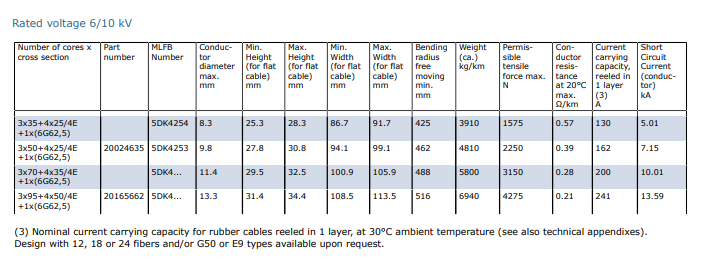
The short-circuit withstand capacity is a particularly important parameter in medium-voltage systems, as it determines how well the cable can survive extreme electrical events without damage. With values ranging from 5.01kA to 13.59kA depending on the specific conductor cross-section chosen, PROTOLON(FL)-LWL provides substantial protection against these potentially damaging occurrences. This capability not only protects the cable itself but also contributes to the overall safety and stability of the entire electrical system.
Chemical Parameters
In the challenging operating environments found across South Africa, chemical resistance is just as important as electrical or mechanical performance. PROTOLON(FL)-LWL has been formulated and tested to deliver exceptional resistance to a wide range of chemical agents and environmental factors. The cable meets the requirements of DIN EN 60811-404 and DIN VDE 0473-811-404 standards for oil resistance, meaning it can withstand prolonged exposure to mineral oils, lubricating oils, hydraulic fluids, and other petroleum-based products commonly found in industrial facilities.
The weather resistance characteristics are equally impressive, allowing the cable to be used reliably both indoors and outdoors without degradation over time. The materials used in its construction provide excellent resistance to ozone, which can cause cracking and brittleness in inferior products, as well as strong resistance to ultraviolet radiation. This is particularly important in South Africa, where high levels of sunlight exposure can accelerate the ageing process of many materials. The cable also meets the requirements of the HD 22.16 standard for water resistance, making it suitable for use in humid environments or applications where occasional water exposure is possible.
Thermal Parameters
Temperature has a profound effect on both the performance and service life of electrical cables, and PROTOLON(FL)-LWL has been designed to operate effectively across a wide range of thermal conditions. The maximum permissible operating temperature for the conductor is 90°C, which allows the cable to deliver high power levels without overheating or suffering insulation damage. In the event of a short-circuit, the cable can withstand temperatures up to 250°C for short durations (maximum 5 seconds), providing an additional safety margin during electrical faults.
The cable remains flexible and functional even in extreme environmental temperatures. For fixed installations, it can operate reliably in ambient temperatures ranging from -50°C to +80°C, making it suitable for use in almost any location in South Africa and beyond. For dynamic applications where the cable is continuously moving or flexing, the recommended operating range is slightly narrower at -35°C to +80°C. This distinction is important because materials become stiffer at lower temperatures, and flexibility is more critical during movement than in static installations. These thermal characteristics ensure that PROTOLON(FL)-LWL maintains its performance whether installed in the hot, humid conditions of coastal ports or the cooler temperatures found at higher altitudes or during winter months.
Mechanical Parameters
The mechanical performance specifications of PROTOLON(FL)-LWL have been carefully calibrated to meet the exacting demands of single-plane automation equipment. The cable can withstand a maximum tensile load of 15N per square millimetre of conductor cross-sectional area, which is sufficient to handle the forces encountered during normal operation, even in long-distance installations. One of the most significant mechanical characteristics is that the cable is specifically designed to operate without torsional stress. Torsion – the twisting force that is so damaging to conventional cables – is not permitted in the design parameters, reflecting the fundamental principle that this cable should never experience the type of stress that leads to premature failure.
Bending performance is another critical factor in reeling applications. The minimum bending radius for installation and operation follows DIN VDE 0298-3 standards, but a practical recommendation is to maintain a radius of at least 1.5 times the height of the flat cable. This ensures that bending forces remain within safe limits and that the internal structure is not compromised during movement. Where the cable changes direction in an S-shaped path, the minimum distance between the points of curvature should be at least 20 times the cable’s overall width to prevent excessive stress concentrations.
For high-speed applications, such as those found on modern container cranes and ship loaders, the cable has been tested and approved for operating speeds up to 120 metres per minute. This makes it suitable for the most efficient and productive equipment currently available. To verify these mechanical characteristics, every cable design undergoes rigorous testing, including repeated reverse bending tests and continuous reeling tests that simulate years of operation in just a few weeks. Only products that pass these demanding evaluations are released for commercial use.
Detailed Specification Tables
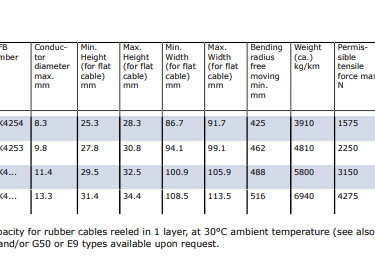
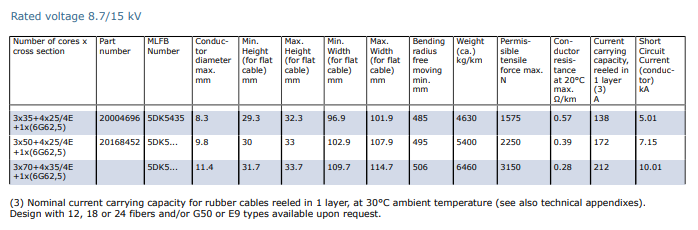
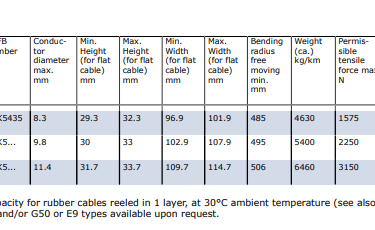
It is important to note that all standard specifications can be adapted to meet specific project requirements. Custom configurations with 12, 18, or 24 optical fibres are available, as are alternative fibre types to suit particular communication needs. Engineers and project managers are encouraged to discuss their exact requirements with the manufacturer to ensure the perfect solution for their application.
In-Depth Analysis of Core Technologies
Flat Profile and Fibre Optic Integration Architecture
The most distinctive feature of PROTOLON(FL)-LWL is the way it combines flat geometry with integrated optical fibres, creating a system where power transmission and data communication operate side-by-side without interference or compromise. This architectural approach is based on a clear understanding of the mechanical and electrical principles governing single-plane motion systems.
The rectangular cross-section is not merely a geometric choice but a fundamental solution to the mechanical challenges of single-plane operation. When a flat cable moves back and forth along a defined path or winds onto a flat drum, it naturally maintains its orientation because of its wider profile. Unlike round cables, which can rotate freely and therefore tend to twist under tension, the flat profile resists rotation. This means that the forces applied during operation are always distributed across the same plane of the cable structure, eliminating the rotational stress that causes damage in conventional designs. The result is significantly lower mechanical fatigue, reduced internal stress, and a much longer service life.
Within this flat structure, the power and communication components are arranged in parallel, with clear physical separation between them. The electrical cores are positioned in the lower section of the cable, while the optical fibre units are located in the upper section, closest to the neutral axis of the cable’s bending motion. This positioning is intentional, as the neutral axis experiences the least amount of stress during bending. By placing the delicate optical components in this low-stress zone, the design ensures that they are protected from the forces that could otherwise damage them over time.
This separation also has significant electrical benefits. The physical distance between the high-voltage power conductors and the optical fibres ensures that the electromagnetic fields generated during power transmission have minimal impact on the light signals travelling through the fibres. Unlike copper communication cables, which are susceptible to electromagnetic interference and require heavy and expensive shielding, the optical fibres in PROTOLON(FL)-LWL are naturally immune to these effects. This creates a communication channel that is both highly reliable and significantly lighter and more compact than equivalent shielded copper systems.
From an installation perspective, this integrated architecture offers considerable advantages. Rather than installing separate cables for power and communication, which requires twice the space and twice the installation time, PROTOLON(FL)-LWL combines both functions into a single unit. This simplifies cable routing, reduces the space required in cable trays and ducts, and lowers the overall cost of installation. It also improves reliability by reducing the number of connection points and potential failure locations in the system.
Fibre Optic Tube Integration: Mechanical Protection Within Flat Geometry
One of the most critical aspects of the PROTOLON(FL)-LWL design is the way the optical fibres are housed and protected within the cable structure. Optical fibres are incredibly efficient at transmitting data but are also relatively delicate, with glass fibres measuring just a few microns in diameter. To survive the harsh conditions of industrial operation, they require sophisticated protection systems that allow them to bend and flex without damage.
The design uses six separate fibre optic tubes, each containing between one and three fibres, arranged around a central support element. This arrangement serves multiple protective functions. First, the tubes themselves act as the first line of defence, physically separating the fibres from the surrounding materials and preventing direct contact that could cause abrasion or stress. The tubes are made from ETFE, a high-performance fluoropolymer chosen specifically for its excellent mechanical properties, chemical resistance, and ability to remain flexible across a wide temperature range. ETFE has very low friction characteristics, which means that as the cable bends and flexes, the fibres can move slightly within the tube to relieve stress, rather than being held rigidly in place.
Inside each tube, a specialised filling compound provides additional protection. This compound, designated as 7YI 1, is designed to cushion the fibres, absorb shock and vibration, and maintain a consistent environment around the glass elements. It prevents the fibres from rubbing against the inside of the tube or against each other, even during rapid movement or vibration. The compound also helps to distribute stress evenly along the length of the fibre, preventing the formation of stress concentrations that could lead to breakage or signal loss.
The positioning of these fibre units within the overall cable structure is equally important. By locating them around the central support element, the design places them at the geometric centre of the cable’s cross-section. This is precisely the point that experiences the least amount of mechanical stress when the cable is bent or stretched. In engineering terms, this is known as the neutral axis – the line along which material neither stretches nor compresses during bending. Placing the optical fibres in this zone ensures that they experience minimal mechanical load, even when the cable is subjected to significant movement or tension.
This comprehensive approach to fibre protection means that the optical communication system can be expected to last as long as the cable itself, eliminating the need for separate maintenance or replacement of communication components. It also ensures consistent signal quality throughout the cable’s service life, regardless of operating conditions.
Fibre Type Selection: Matching Performance to Application Requirements
Choosing the right type of optical fibre is essential to ensuring optimal performance and cost-effectiveness in any given application. PROTOLON(FL)-LWL offers three distinct fibre types, each with characteristics that make it suitable for specific operational requirements. Understanding the differences between these fibre types helps engineers make informed decisions that balance performance needs with budget considerations.
G50/125μm graded-index fibre represents a versatile high-performance option that is particularly well-suited to the automation systems found in South African port and mining operations. With a core diameter of 50μm and cladding diameter of 125μm, this fibre offers excellent transmission characteristics across commonly used wavelengths. It provides attenuation of less than 2.8 dB/km at 850nm and less than 0.8 dB/km at 1310nm, making it highly efficient for medium-distance transmission up to several kilometres. The bandwidth performance is particularly impressive, offering more than 400 MHz at 850nm and over 1200 MHz at 1300nm. This high bandwidth capacity allows it to handle large volumes of data simultaneously, making it ideal for applications where multiple sensor readings, video streams, and control signals need to be transmitted at once. The numerical aperture of 0.2 ± 0.02 strikes a good balance between light gathering capability and modal dispersion, ensuring reliable signal transmission even in less than ideal conditions. This fibre type is widely recommended for modern automation systems that require high data throughput and future-proofing against increasing data demands.
G62.5/125μm graded-index fibre offers a cost-effective alternative that still delivers excellent performance for many standard applications. With a larger core diameter of 62.5μm and the same 125μm cladding diameter, this fibre has slightly higher attenuation levels – less than 3.3 dB/km at 850nm and less than 0.9 dB/km at 1310nm – but these remain well within acceptable ranges for most industrial applications. It provides bandwidth of over 400 MHz at 850nm and more than 600 MHz at 1300nm, which is sufficient for standard monitoring and control systems. The higher numerical aperture of 0.275 ± 0.02 makes this fibre somewhat more forgiving during installation and termination, as it is easier to couple light into and less sensitive to minor misalignments. This characteristic can be particularly valuable in industrial environments where installation conditions may be less than ideal. For many South African applications where requirements are more traditional or where cost considerations are important, G62.5/125μm fibre represents an excellent balance of performance and value.
E9/125μm single-mode fibre represents the highest performance option available and is specifically designed for long-distance transmission and high-precision applications. With a much smaller core diameter of just 9μm, this fibre allows only a single mode of light to travel through it, which eliminates modal dispersion almost entirely. This results in exceptional performance characteristics, with attenuation levels of less than 0.4 dB/km at 1310nm and less than 0.3 dB/km at 1550nm – figures that are significantly better than those of multi-mode fibres. The chromatic dispersion is also extremely low, measuring less than 3.5 ps/nm·km at both 1300nm and 1550nm, which means that signals remain clear and distinct even over very long distances. The numerical aperture of 0.14 ± 0.02 is lower than that of multi-mode fibres, which contributes to the superior transmission characteristics but requires more precision during installation and termination. This fibre type is the preferred choice for applications such as remote monitoring systems, long-distance control links, and high-precision measurement applications where signal integrity is absolutely critical.
When selecting between these fibre types, engineers should consider several factors including the total transmission distance, the volume and type of data being transmitted, the required precision and reliability, and the available budget. In many cases, a hybrid approach can be adopted where different fibre types are used within the same cable system to optimise performance and cost for different communication channels.
Real-Time Monitoring Pathways: Condition Data Transmission and Predictive Maintenance
One of the most important applications of the integrated communication system in PROTOLON(FL)-LWL is supporting modern condition-based maintenance strategies. In South Africa’s industrial operations, where equipment downtime can have significant financial consequences, the ability to monitor equipment health in real-time and predict potential failures before they occur has become increasingly valuable. The optical fibre communication system provides the ideal infrastructure to support these advanced maintenance approaches.
The high bandwidth capacity of the optical fibres allows for the transmission of data from numerous sensors distributed throughout the equipment. These sensors can monitor parameters such as vibration levels, temperature, pressure, fluid flow rates, electrical characteristics, and positional accuracy. Each sensor generates data at different rates and with different precision requirements, and the communication system must be able to handle this diverse mix of information efficiently. Optical fibres excel in this environment, as they can simultaneously support multiple communication protocols and data streams without interference or performance degradation.
The low latency characteristics of fibre optic transmission are equally important. For certain types of monitoring data, particularly those related to safety-critical systems or high-speed control applications, data must be transmitted and received almost instantaneously. The speed of light transmission through glass fibres is essentially instantaneous for practical purposes, making this technology ideal for applications where timing is critical. This ensures that operators and control systems receive accurate, up-to-the-second information about equipment performance.
Perhaps most importantly, the reliability of fibre optic communication ensures that maintenance decisions are based on accurate and complete information. In traditional systems using copper cables, signal corruption or intermittent faults can lead to false readings or missing data, which can result in incorrect maintenance decisions – either performing unnecessary maintenance or missing genuine problems. With PROTOLON(FL)-LWL, the communication channel remains consistently reliable throughout the life of the installation, ensuring that maintenance teams have access to the high-quality data they need to make informed decisions.
This capability supports the transition from traditional preventive maintenance schedules, which are based on time or usage regardless of actual equipment condition, to predictive maintenance approaches that are based on real operating data. By identifying subtle changes in equipment performance that indicate developing problems, maintenance can be scheduled exactly when needed, reducing costs while improving reliability and safety. For South African operations looking to optimise their maintenance strategies, this represents a significant opportunity to improve operational efficiency and reduce costs.
Electromagnetic Compatibility and Noise-Free Communication: The Benefits of Optical Immunity
In industrial environments, electromagnetic compatibility represents one of the biggest challenges to reliable communication. High-power electrical equipment, variable speed drives, large motors, and high-voltage power lines all generate strong electromagnetic fields that can interfere with signals transmitted through copper-based communication systems. In South African port and mining operations, where power levels are high and equipment is densely packed, these interference effects can be particularly severe. PROTOLON(FL)-LWL solves this problem fundamentally through its use of optical fibre technology.
The principle behind this advantage is straightforward but highly effective. In copper communication systems, information is transmitted as electrical currents travelling through metal conductors. These electrical currents naturally generate magnetic fields and are themselves influenced by external magnetic fields. When a copper communication cable runs alongside power cables or near electrical equipment, the electromagnetic fields generated by these sources induce unwanted electrical currents in the communication conductors. This results in signal noise, corruption, or complete loss of communication in severe cases. To combat this, copper cables require complex shielding systems involving layers of metal foil or braid, which add significantly to the cost, size, and weight of the cable while still providing imperfect protection.
In contrast, optical fibre communication systems transmit information as pulses of light travelling through glass fibres. Light is electromagnetic radiation, but it operates at frequencies far too high to be affected by the relatively low-frequency electromagnetic fields generated by industrial electrical equipment. This means that optical signals remain completely unaffected by even the strongest electromagnetic interference found in industrial environments. No matter how close the communication fibres run to power cables or electrical equipment, the signal quality remains consistently high and free from interference.
This fundamental advantage has several practical implications for system design and operation. First, it simplifies cable installation significantly, as communication cables can be run alongside power cables without maintaining minimum separation distances or using expensive shielding. This reduces installation costs and makes more efficient use of available space in cable trays and conduits. Second, it improves system reliability by eliminating a common source of intermittent faults and communication errors. In many industrial systems, communication problems caused by electromagnetic interference are intermittent and difficult to diagnose, leading to prolonged periods of reduced performance or unexpected downtime. With PROTOLON(FL)-LWL, these issues are eliminated entirely.
Perhaps most importantly, this immunity to interference means that communication performance remains consistent throughout the entire operating life of the system. As equipment ages and electrical systems potentially become noisier, the communication quality is not affected. This long-term reliability is particularly valuable in South African operations where equipment lifecycles are often extended and replacement schedules carefully managed.
Flat Geometry Constraints: Torsion-Free Engineering and Roller System Integration
The mechanical design of PROTOLON(FL)-LWL represents a sophisticated engineering solution specifically tailored to the constraints and requirements of single-plane motion systems. The flat geometry is not simply a physical form but a carefully engineered system that addresses the fundamental mechanical challenges of these applications.
Torsion – the twisting force that occurs when cables move through guides or wind onto drums – is the primary enemy of conventional cables in these applications. When a round cable moves back and forth or winds onto a flat drum, it naturally tends to rotate around its longitudinal axis. This rotation creates torsional stress throughout the cable structure, causing internal components to twist and flex in ways they were not designed to handle. Over time, this repeated twisting causes cumulative fatigue damage, leading to conductor breakage, insulation cracking, and eventual failure. In many South African operations, this has traditionally meant that cables require frequent replacement, with significant associated costs and downtime.
PROTOLON(FL)-LWL eliminates this problem through its fundamental geometry. The flat cross-section is inherently resistant to rotation because its wide profile creates stability. When the cable moves through guides or winds onto drums, it naturally maintains its correct orientation, because any rotation would require lifting one edge against gravity or against the pressure of adjacent cable turns. This geometric stability means that the cable moves exactly as intended, with bending occurring only in the designated plane and without any twisting forces being applied to the internal structure.
This geometric advantage extends to the interaction between the cable and the roller systems that guide it during operation. Flat cables maintain consistent contact with guide rollers across their entire width, rather than the line contact typical with round cables. This distributed contact reduces pressure on both the cable surface and the roller surfaces, reducing wear on both components. It also means that the cable is guided more precisely, reducing lateral movement and the associated stresses.
The flat profile also improves thermal performance, which is particularly valuable in South Africa’s warm climate. Heat generated during power transmission dissipates more easily from a flat surface than from a round one, allowing the cable to operate at higher current levels without overheating. This improved thermal performance can contribute to increased efficiency and potentially reduced energy costs.
For system designers and equipment manufacturers, the predictable mechanical behaviour of PROTOLON(FL)-LWL simplifies engineering calculations and system design. Because the cable moves exactly as intended without unpredictable rotation or twisting, engineers can design systems with confidence, knowing exactly how the cable will behave under all operating conditions. This predictability contributes to more reliable system performance and potentially reduces engineering time and costs.
Field Performance and Automation Equipment Deployment Strategies
While laboratory testing and theoretical analysis provide important information about cable performance, the real measure of any industrial product is how it performs in actual operating conditions. Across South Africa, PROTOLON(FL)-LWL has been deployed in numerous applications ranging from small port operations to some of the largest bulk handling facilities in the world. The experience gained from these installations provides valuable insights into how best to utilise this technology and what benefits it delivers in practice.
One of the most consistent findings from field experience is the significant extension of service life compared to traditional cable solutions. In applications where round cables previously required replacement every two to three years, PROTOLON(FL)-LWL typically remains in service for five years or more. This extended life results directly from the elimination of torsion-related damage and the more even distribution of mechanical stress throughout the cable structure. For South African operations, where replacement costs and downtime are significant considerations, this represents a substantial financial benefit.
Field experience has also demonstrated the value of the integrated communication system. In many older installations, separate cables were used for power and communication, which meant that communication cables often failed before the power cables. This created situations where equipment could still operate but monitoring and control systems were unavailable, reducing operational efficiency and safety. With PROTOLON(FL)-LWL, both systems are designed and constructed to the same high standards, ensuring that communication reliability matches power reliability throughout the service life of the installation.
When deploying PROTOLON(FL)-LWL, there are several best practices that have emerged from successful installations across the region. First, careful attention should be paid to the design of drum and guide systems. While the cable is designed to perform well in almost any properly designed system, performance is optimised when drums and guides are sized according to the manufacturer’s recommendations. In particular, maintaining the correct drum diameter and ensuring smooth transitions between straight and curved sections of the cable path helps to minimise stress and maximise service life.
Another important consideration is the orientation of the cable during installation. While the flat design is very robust, it is designed to bend primarily in one plane. Installing the cable with the correct orientation ensures that bending occurs exactly as intended and that the benefits of the design are fully realised. This is particularly important in systems with complex routing or multiple direction changes.
Regular inspection and maintenance remain important, although the requirements are significantly reduced compared to traditional cable systems. Visual inspections can be performed quickly and easily, as the flat profile makes it simple to check for any signs of wear or damage. The integrated communication system also allows for remote monitoring of cable performance, providing an additional layer of protection and early warning capability.
For operations planning new installations or upgrading existing systems, PROTOLON(FL)-LWL offers a future-proof solution that can be configured to meet current requirements while accommodating future expansion. The ability to choose different fibre types and configurations means that the same basic cable design can be used for everything from basic control systems to advanced automation networks. This standardisation simplifies inventory management and reduces the need for multiple spare parts.
Frequently Asked Questions
What makes PROTOLON(FL)-LWL suitable specifically for South African operating conditions?
PROTOLON(FL)-LWL has been engineered to perform exceptionally well in the specific environmental conditions found across South Africa. The materials used in its construction provide excellent resistance to the high levels of ultraviolet radiation found throughout the country, preventing the degradation that affects many inferior products. The robust outer sheath offers superior protection against the abrasive dust found in mining operations and the corrosive salt spray common in coastal ports. The wide operating temperature range ensures reliable performance whether installed in the hot, humid conditions of KwaZulu-Natal or the drier, cooler environments of the Highveld. Furthermore, the cable’s ability to operate reliably in high electromagnetic interference environments makes it particularly suitable for the high-power systems typical of South African industry.
Can the cable be customised for specific project requirements?
Yes, one of the key advantages of PROTOLON(FL)-LWL is its flexibility and adaptability to specific project needs. While standard configurations are available and widely used, the design can be modified to meet almost any requirement. This includes different voltage ratings, conductor sizes, and combinations of power and communication cores. The optical fibre system is particularly flexible, with options for 6, 12, 18, or 24 fibres, and the choice of any combination of fibre types within the same cable. Engineers work closely with clients to understand their exact requirements and develop custom solutions that deliver optimal performance and value.
What level of technical support is available during installation and commissioning?
Comprehensive technical support is available throughout the entire project lifecycle, from initial design and specification through to installation, commissioning, and ongoing operation. This includes detailed documentation, installation guides, and training materials. For more complex projects, technical specialists can be deployed to site to provide hands-on assistance and guidance. The manufacturer’s customer service team also offers factory termination services, ensuring that fibre connections are made to the highest standards and eliminating the need for specialised on-site skills. This comprehensive support helps to ensure that installations are completed correctly and that systems perform as expected from day one.
How does the total cost of ownership compare with traditional cable solutions?
While the initial purchase price of PROTOLON(FL)-LWL may be higher than that of some conventional cables, the total cost of ownership is typically significantly lower. The extended service life means that replacement costs are reduced or eliminated for many years. Installation costs are also lower, as only one cable needs to be installed rather than separate power and communication cables. Maintenance requirements are minimal, and the reliability of the system means that the indirect costs associated with downtime and lost production are substantially reduced. When all these factors are considered, PROTOLON(FL)-LWL consistently demonstrates excellent value for money over the full lifecycle of the installation.
What testing and quality assurance procedures are applied during manufacturing?
Every PROTOLON(FL)-LWL cable is manufactured to the highest quality standards and undergoes rigorous testing before leaving the factory. This includes electrical testing to verify insulation integrity, conductor resistance, and voltage withstand capability. The optical fibre system is tested for attenuation, bandwidth, and signal quality. Mechanical testing verifies tensile strength, flexibility, and resistance to environmental factors. All testing is performed in accordance with international standards and documented for traceability. This commitment to quality ensures that every cable delivered meets the exact specifications required for reliable performance in industrial applications.
Conclusion
PROTOLON(FL)-LWL (N)TSFLCGEWOEU represents a significant advancement in industrial cable technology, specifically engineered to meet the demanding requirements of single-plane automation equipment across South Africa. By combining innovative flat geometry with integrated optical fibre technology, it solves many of the problems that have traditionally affected cable performance in these applications. The elimination of torsion-related damage, the inherent immunity to electromagnetic interference, and the ability to deliver both power and high-quality data through a single cable system combine to create a solution that is technically superior and economically attractive.
For engineers and project managers planning new installations or upgrading existing systems, PROTOLON(FL)-LWL offers a reliable, future-proof solution that delivers exceptional performance in all operating conditions. The comprehensive range of available configurations, combined with the ability to customise designs to meet specific requirements, ensures that there is a solution for every application. With its proven track record of performance across numerous South African installations, it has rightly earned its reputation as an emerging industry standard for modern industrial automation.
For further information or to discuss your specific requirements, please contact the technical and sales team at Feichun Cables:
📧 Email: Li.wang@feichuncables.com
Our experienced engineers and technical specialists are ready to assist you in selecting the optimal solution for your application and ensuring the successful implementation of your project.
Email Address: Li.wang@feichuncables.com
© 2025. All rights reserved.
One-click to Quickly Contact
Products
Contact
Company
Location:
Building A Private Science and Technology Park, Hefei Economic and Technological Development Zone, Anhui Province, China
Heat Resistant Cable
WhatsApp: +86 17333223430
Social Media: