Anhui Feichun Special Cable Co.,Ltd Email: Li.wang@feichuncables.com
PROTOMONT(V) NSSHKCGEOEU 1kV Coal Cutter Cables: How Advanced EPR Insulation, Steel-Copper Reinforcement and Chain Design Solve Drag Chain Failures in Mining?
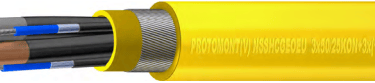
PROTOMONT(V) NSSHKCGEOEU 1kV Coal Cutter Cables represent a specialized engineering solution designed exclusively for underground mining chain-operation systems. Manufactured to DIN VDE 0250-812 and aligned with South African SANS 1520 standards, these cables utilize advanced EPR insulation, PROTOFIRM elastomer sheathing, and vulcanized steel-copper reinforcement to separate mechanical load from electrical function. This article explores how the principle of stress separation, combined with rigorous material science, solves the common failures seen in standard trailing cables in harsh South African collieries — including conductor breakage, insulation wear, and environmental degradation. Detailed specifications, performance comparisons, equivalent options from Feichun Cables, and application guidelines are provided for mining engineers, procurement specialists, and maintenance managers seeking to improve reliability and reduce operational costs.
Li.Wang
6/4/202617 min read
Introduction
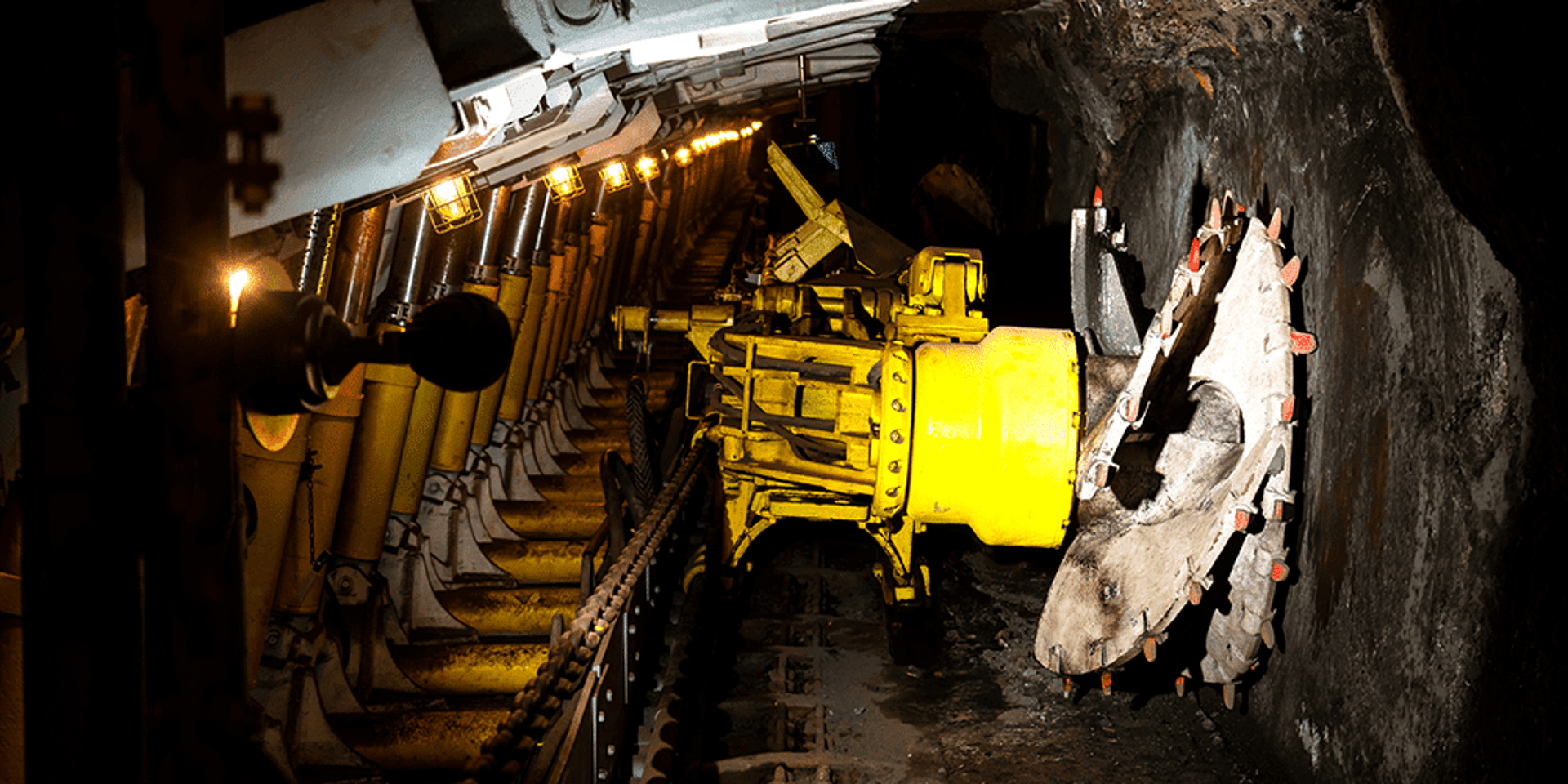
In the deep-level coal mines of South Africa, particularly in major producing regions such as Mpumalanga, Limpopo, and the Free State, mobile machinery such as shearers, ploughs, and continuous miners operate in one of the most demanding environments on Earth. These machines rely on flexible power and control cables that move continuously within cable protection chains or handlers, following the equipment back and forth along the longwall face. For decades, mining operations faced a persistent and costly problem: standard flexible trailing cables would fail within a few months due to mechanical fatigue, abrasion, tension, and exposure to dust, moisture, oil, and extreme temperatures. The result was frequent downtime, high replacement costs, and significant safety risks.
PROTOMONT(V) NSSHKCGEOEU 1kV is a cable engineered specifically to change this reality. It is not simply an upgraded version of a standard cable, but a completely re-designed system built around four core principles: stress separation, material upgrade, structural innovation, and safety integration. By fundamentally changing how the cable carries mechanical loads and how it resists environmental damage, this product transforms what was traditionally considered a consumable or wear part into a long-life, reliable engineering component. Every aspect of its construction follows established principles of mechanics, material science, and electrical engineering, and every performance characteristic is backed by international standards and rigorous testing. In South Africa’s competitive mining industry, where operational efficiency directly determines profitability, understanding how this cable works and why it outperforms all alternatives is essential for any technical decision-maker.
Understanding the Product: Design Concept and Core Philosophy
At its heart, the PROTOMONT(V) NSSHKCGEOEU 1kV is defined by one central idea that differentiates it from every standard cable on the market: load separation. In conventional flexible cables, the copper conductors carry two types of load simultaneously — the electrical current required to power the machine, and all the mechanical tension, bending, and torsion generated as the cable moves inside the chain. This combination is the root cause of almost all failures. When copper is subjected to repeated mechanical stress while conducting electricity, it suffers from metal fatigue, leading to broken strands, increased resistance, overheating, and eventual open circuits. The insulation is also stretched and flexed, becoming thinner and weaker until electrical breakdown occurs.
PROTOMONT(V) changes this relationship completely. In its design, conductors conduct only electricity; mechanical forces are absorbed entirely by a dedicated reinforcement system. This is the essence of stress separation. By splitting these functions, the cable designer can optimize each component for its specific role without compromise. The reinforcement is made from high-strength steel and copper, engineered to handle tensile forces up to 15 N/mm², while the copper conductors are made from ultra-fine stranded tinned copper (Class FS) optimized purely for flexibility and conductivity. This concept is supported by structural innovation: all layers — inner sheath, reinforcement, and outer sheath — are bonded together through a vulcanisation process to form a single, solid monolithic structure. This prevents relative movement between layers, eliminating internal abrasion and stopping water or dust ingress.
Safety integration is woven into the design as well. By incorporating double concentric control and protective earth conductors in the outer interstices of the cable structure, the design ensures that safety monitoring and earthing functions remain reliable even when the cable is under stress. Combined with advanced materials like EPR insulation and PROTOFIRM synthetic elastomer sheathing, the result is a system that operates reliably from -40°C to +80°C, resists oil and flame, and withstands millions of cycles of movement without degradation. This philosophy turns a vulnerable component into a robust system capable of surviving the harsh realities of South African underground mining.
Detailed Technical Specifications and Standards Compliance
To understand the capability of this cable, it is necessary to examine the exact specifications as defined in the technical documentation, which are fully aligned with international and regional mining standards.
Electrical Parameters
The cable is rated for 0.6/1 kV (600/1000 V), which is the standard low-voltage class for mining machinery in South Africa under SANS 1520 and globally under IEC 60502. Its maximum permissible operating voltage is 0.7/1.2 kV AC or 0.9/1.8 kV DC, ensuring stability during voltage fluctuations common in mine power networks. Quality is verified through factory testing at 3 kV AC for power cores and 2 kV AC for control cores, confirming the integrity of insulation systems.
Electrical performance remains consistent across all sizes, from 3×25 mm² up to 3×240 mm². Conductor resistance at 20°C ranges from 0.795 Ω/km for the smallest section down to 0.0817 Ω/km for the largest, ensuring efficient power transmission with minimal losses. Nominal operating capacitance is between 0.36 µF/km and 0.67 µF/km, and inductance remains stable at 0.25 to 0.33 mH/km, critical for predictable performance in long cable runs. Current carrying capacity varies proportionally with size, from 131 A at 3×25 mm² to 544 A at 3×240 mm², while short-circuit current ratings are exceptionally high — from 3.58 kA to 34.32 kA — providing safety during fault conditions.
Thermal and Environmental Ratings
Temperature performance is a major strength. For fixed installation, the cable operates reliably from -40°C to +80°C, suitable for cold highveld winters and hot underground workings. For fully flexible operation — the key application — the range is -20°C to +60°C, ensuring materials remain elastic and do not become brittle or soften excessively when moving continuously.
Chemical and environmental resistance is defined by rigorous standards. It meets EN 60332-1-2 / IEC 60332-1-2 for flame retardancy, meaning it self-extinguishes and does not propagate fire — a vital safety requirement in coal mines. Oil resistance is tested to EN 60811-404, proving it is unaffected by hydraulic fluids and greases common around mining equipment. Weather resistance is described as unrestricted for indoor and outdoor use, with high resistance to ozone and moisture, protecting against degradation from air quality and water ingress found in tunnels.
Mechanical Specifications
Mechanical specifications are where this cable differs most significantly from standard designs. The maximum permissible tensile load on the conductor is 15 N/mm², nearly double the 5–8 N/mm² typical of standard cables. This is possible precisely because the conductor is not the primary load-bearing element.
Flexibility is engineered for drag chains. The minimum bending radius is only 2.3 × cable diameter (D) under a maximum tensile load of 5 N/mm², compared to 6–10 × D for conventional cables, allowing operation in very tight spaces. Even for S-shaped directional changes, the minimum distance is only 20 × D, enabling installation in compact handler systems. All mechanical design follows DIN VDE 0298 Part 3, the leading standard for flexible power cables.
Standards and Certifications
The primary design standard is DIN VDE 0250-812, the German specification specifically for coal cutter cables in chain operation, which is widely recognized as the most rigorous global benchmark. Beyond this, the product holds international approvals including MSHA (USA), MA (China), GOST (Russia), and BAS (Bosnia-Herzegovina), confirming compliance with safety regulations in major mining nations. In South Africa, the construction and performance align fully with SANS 1520-1:2014, making it fully acceptable for local mining specifications and safety audits.
Available Configurations
The standard construction is a three-core power design combined with three control/monitoring cores plus protective earth elements. The full range includes:
3×25 + 3×(1.5STKON + 16/3KON)
3×35 + 3×(1.5STKON + 16/3KON)
3×50 + 3×(1.5STKON + 25/3KON)
3×70 + 3×(1.5STKON + 35/3KON)
3×95 + 3×(1.5STKON + 50/3KON)
3×120 + 3×(1.5STKO + 70/3KON)
3×150 + 3×(1.5STKO + 70/3KON)
3×185 + 3×(1.5STKO + 95/3KON)
3×240 + 3×(1.5STKO + 120/3KON)
Each configuration lists exact outer diameter, weight, and permissible pulling force — ranging from 1125 N to 10800 N — allowing engineers to select the exact right cable for the power requirement and mechanical load of the specific shearer or miner.
Layer-by-Layer Structure and Material Science
To appreciate the engineering achievement, it is necessary to examine the construction from the inside out, explaining the material choices and the scientific principles behind each layer. Every material and dimension is chosen to solve a specific problem found in mining environments.
Conductor: Class FS Tinned Copper
The innermost layer is the electrical conductor, made from finely stranded tinned copper (Class FS). Class FS is the highest flexibility class defined in IEC 60228, consisting of extremely thin strands twisted together in multiple layers. From a mechanical perspective, fine stranding reduces the bending stress on each individual wire. When a cable bends, the outer surface stretches and the inner compresses; by making each strand very small, the amount of stretch per wire stays well within the elastic limit of copper, preventing fatigue failure even after millions of cycles.
Tinning is a critical material choice. Underground mine air is often humid, acidic, or sulphurous. Bare copper would oxidise or corrode over time, increasing resistance and causing overheating. A layer of tin, applied through hot-dipping or electroplating, acts as a barrier that is chemically stable and prevents degradation. Electrically, tin also improves connection reliability at terminals, reducing contact resistance and the risk of hot spots. The science here combines materials chemistry (corrosion resistance) with mechanical engineering (fatigue reduction).
Insulation: PROTOLON 3G13 EPR
Insulation is made from PROTOLON 3G13, a compound based on Ethylene Propylene Rubber (EPR). This is arguably the single most important material difference compared to standard cables, which often use PVC or natural rubber. EPR is chosen for its unique combination of electrical, thermal, and mechanical properties.
Electrically, EPR has a high dielectric strength (~22 kV/mm) and a low dielectric constant (~2.5). This means it insulates very effectively while keeping electric field stress low and uniform, reducing the risk of partial discharge and breakdown. Unlike thermoplastics, EPR is a thermoset elastomer. It does not melt or flow when heated, and it remains flexible even at extremely low temperatures. From a thermal standpoint, it operates continuously at high temperatures and stays elastic down to -50°C, solving the common problem of standard cables becoming stiff and cracking in cold conditions or softening and flowing in heat.
Chemically, EPR is non-polar and highly resistant to ozone, oxygen, acids, alkalis, and water. Ozone is a powerful oxidising agent found in mine ventilation air that attacks unsaturated bonds in rubber molecules, causing cracking. EPR has no such bonds, making it immune. Mechanically, its high elasticity means that when the cable bends or stretches, the insulation deforms elastically rather than cracking or thinning, maintaining consistent thickness and electrical integrity.
Electrical Field Control: Semiconductive Layer
Directly over the insulation lies a cold-strippable semiconductive rubber layer. In electrical engineering, when insulation is surrounded by air or copper, electric field lines concentrate at sharp points or irregularities, creating high-stress zones that can lead to breakdown. A semiconductive material has conductivity between an insulator and a conductor, and its purpose is to grade and evenly distribute the electric field. By ensuring the electric field is uniform along the entire surface of the conductor, this layer eliminates local stress points and significantly increases the long-term reliability of the insulation system. It is also designed to be easily stripped back during installation, maintaining usability.
Core Arrangement and Control Elements
The three main power cores are laid up with a length of lay of approximately 6 × outer diameter. The length of lay is the distance required for one complete twist of the cores. This value is a careful calculation: a smaller length makes the cable more flexible but less stable, while a larger length makes it stiffer and prone to bird-caging or loosening. Six times the diameter is the engineering sweet spot for balancing flexibility and structural stability in dynamic applications.
In the outer interstices — the gaps between the main cores — are placed double concentric control and protective earth conductors, coloured blue for easy identification. Placing these elements in the outer gaps is a deliberate design choice. This position means they experience less mechanical stress and bending strain than if they were at the centre, reducing the chance of breaking. Furthermore, because they are concentric and continuous, they form a low-impedance path for fault currents and provide continuous monitoring capability, allowing operators to detect insulation damage or earth faults before a catastrophic failure occurs.
Reinforcement System: Steel-Copper Spinning (The Key Innovation)
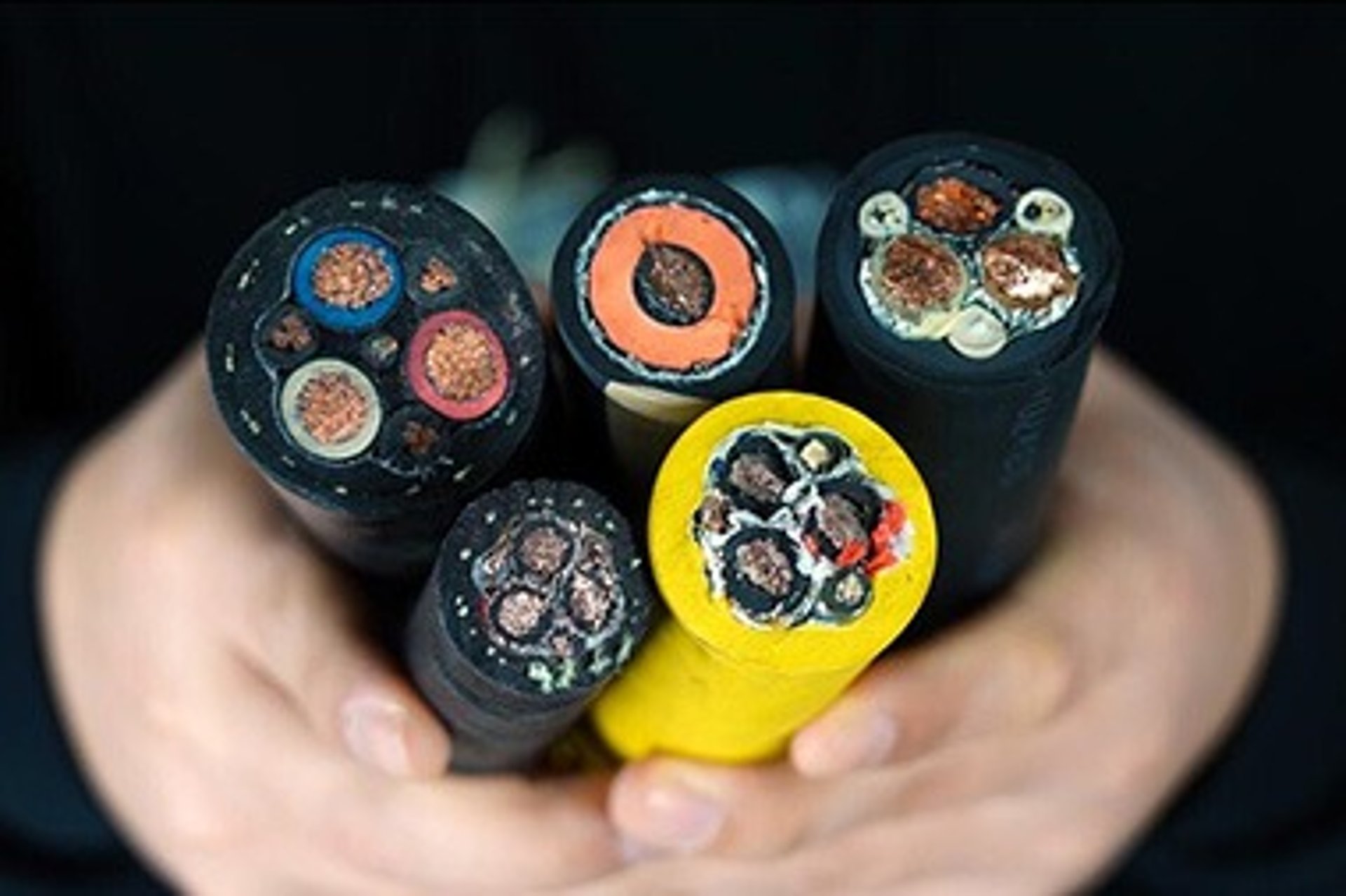
The most critical structural component is the reinforcement layer: closed-lay spinning of steel and copper wires, bonded in vulcanisation between inner and outer sheaths. This is the element that implements the principle of stress separation.
Mechanically, high-tensile steel wires (tensile strength > 1500 MPa) provide the load-bearing capacity. They are wound in two layers with opposite lay directions — one clockwise, one counter-clockwise. This double-layer reverse winding cancels out torsional forces that would otherwise twist the cable as it bends or is pulled, keeping it stable and preventing it from coiling or tangling in the chain. The copper wires integrated within this layer serve a dual purpose: they enhance electrical continuity for earthing and improve flexibility compared to pure steel.
Crucially, this reinforcement is not just wrapped around the cable; it is vulcanised or chemically bonded to both the inner sheath beneath it and the outer sheath above it. This creates a solid composite structure. When tension is applied, the force is distributed evenly across the entire cross-section of the reinforcement and transferred axially, rather than concentrating on individual components. The science here is composite material mechanics — creating a structure stronger than the sum of its parts, and tribology — eliminating friction and wear between layers by making them move as one unit.
Inner Sheath: GM1B Vulcanised EPR
Beneath the reinforcement is the GM1B inner sheath, made from vulcanised EPR rubber. Its primary role is to provide a smooth bedding for the reinforcement and a barrier between the electrical cores and the mechanical load-bearing elements. Material compatibility is key here: because it is based on the same polymer family as the insulation and outer sheath, it bonds perfectly during the manufacturing process. It acts as a seal, preventing moisture or dust from reaching the conductors, and provides mechanical cushioning to absorb compressive forces. It also ensures that the electrical system remains isolated and protected even if the outer layers are damaged.
Outer Sheath: PROTOFIRM 5GM5 Synthetic Elastomer
The outermost layer is the PROTOFIRM 5GM5 sheath, a proprietary synthetic elastomer compound (CM-type), coloured bright yellow for high visibility in low-light underground conditions. This layer faces the harshest environment, rubbing against the inside of the drag chain, being stepped on, exposed to chemicals, and weathered by temperature changes.
Material science principles are fully applied here. The compound is engineered for ultra-high abrasion resistance — typically 3 to 5 times better than standard rubber compounds. It resists cutting and tearing, essential where rock fall or heavy equipment impact is possible. It is formulated to be oil and chemical resistant per EN 60811-404, meaning hydrocarbon fluids cause no swelling, softening, or degradation. It is ozone and UV resistant, with a chemical structure that does not degrade under oxidation. And it is flame retardant according to EN 60332-1-2, contributing to mine safety.
Unlike thermoplastics, this elastomer retains its elasticity over the entire temperature range. It stretches under tension and rebounds perfectly, absorbing mechanical energy without permanent deformation. This prevents the sheath from cracking, peeling, or hardening — the most common failure modes of standard cables.
Root Causes of Failure in Standard Cables vs. PROTOMONT(V) Solutions
To fully understand the value of this product, it is necessary to analyse exactly why standard cables fail in mining chains, and the specific engineering solutions PROTOMONT(V) employs to overcome these limitations. This comparison is particularly relevant to mines in South Africa where maintenance budgets and downtime costs are under intense pressure.
1: Conductor Breakage
Why standard cables fail:
In conventional designs, the copper conductors are the strongest component and naturally bear all the tension. Copper is an excellent conductor but a poor structural material. Under repeated pulling and bending, it undergoes work hardening and fatigue. Micro-cracks form in the strands, grow with each movement, and eventually break. Once a few strands break, the remaining ones carry higher current and load, overheat, and fail rapidly. In South African mines with longwall faces exceeding 200 metres, tension forces can be high, accelerating this process to failure in as little as 3 months.
PROTOMONT(V) Solution:
Through stress separation, the steel-copper reinforcement carries 100% of the tensile load. The copper conductors remain essentially stress-free. High-strength steel has a fatigue life thousands of times greater than copper under tension. By removing the mechanical burden from the conductive elements, the design extends the electrical life of the cable from months to years.
2: Insulation Degradation and Electrical Breakdown
Why standard cables fail:
Insulation in standard cables is subjected to both mechanical and electrical stress simultaneously. When the cable is pulled, the insulation stretches and becomes thinner. Thinner insulation has lower dielectric strength and higher electric field stress, leading to partial discharge and eventual puncture. Bending creates tensile stress on the outer radius and compressive stress on the inner, creating micro-cracks that propagate over time. Moisture and dust enter these cracks, causing tracking and short circuits.
PROTOMONT(V) Solution:
Using EPR 3G13 insulation changes the material response. Unlike PVC or natural rubber, EPR is highly elastic and mechanically robust. It does not thin significantly under tension and recovers its shape instantly. Combined with the semiconductive field control layer, electrical stress is kept uniform and low. Furthermore, because the entire cable is a bonded monolithic structure, there are no gaps or pathways for contaminants to enter. The insulation remains protected, stable, and thick for the entire service life.
3: Sheath Wear, Tearing and Environmental Attack
Why standard cables fail:
Standard sheaths are often made of PVC or general-purpose rubber. PVC hardens and cracks in cold weather or under ozone exposure; it softens and melts in heat or oil contact.. General rubber wears quickly when sliding inside a metal drag chain. Once the sheath is breached, water and dust enter, destroying the cable from the inside out. Layers in standard cables are loose, allowing water to travel along the length of the cable once inside.
PROTOMONT(V) Solution:
The PROTOFIRM 5GM5 outer sheath is engineered specifically for this tribological environment. Its high coefficient of friction resistance means it slides rather than wears away. It is chemically inert to oil, water, and ozone. The vulcanised bonding of all layers means that even if surface damage occurs, it cannot propagate inward or allow longitudinal water migration. The cable remains sealed and protected, maintaining its integrity even after years of continuous use.
4: Structural Instability and Twisting
Why standard cables fail:
Improper lay lengths and unbalanced construction cause cables to twist when pulled. In drag chains, twisting leads to jamming, crushing, and accelerated wear. Standard cables often suffer from "bird-caging" — where layers separate and bulge out — weakening the structure further.
PROTOMONT(V) Solution:
The 6 × D lay length and double reverse-wound reinforcement create a perfectly balanced structure. Torsional forces are internally cancelled. The bonded layers prevent separation or bulging. The cable maintains its round shape and structural integrity regardless of how many times it is bent or pulled, ensuring it runs smoothly and safely inside the chain handler.
Feichun Cables: Equivalent Alternative with Superior Value
While the Prysmian Group original is widely recognised, mining operators are increasingly looking for reliable alternatives that offer the same performance at a lower cost and with faster delivery. Feichun Cables offers a direct equivalent version of PROTOMONT(V) NSSHKCGEOEU 1kV, manufactured to exactly the same engineering specifications and standards, making it a drop-in replacement for South African mines.
Why Feichun is a True Equivalent
The Feichun version is designed and tested to meet DIN VDE 0250-812, the core standard for this type of cable. Every dimension, material specification, and performance parameter matches the original data sheets provided.
Material Matching: Feichun uses Class FS tinned copper conductors, EPR insulation equivalent to PROTOLON 3G13, and synthetic elastomer sheathing equivalent to PROTOFIRM 5GM5. The chemical formulation and mechanical properties are identical, ensuring the same resistance to heat, oil, ozone, and abrasion.
Structure Matching: The double concentric reinforcement, lay length of 6 × D, vulcanised bonding, and core arrangement are replicated exactly. The same 15 N/mm² tensile rating and 2.3 × D bending radius are achieved through identical manufacturing processes.
Standard Compliance: All tests are performed according to EN, IEC, and VDE standards. The Feichun product carries the necessary certification documentation to satisfy SANS 1520 compliance requirements in South Africa.
Key Advantages of Choosing Feichun
Cost Efficiency: Feichun typically offers pricing 20% to 35% lower than the premium European brand equivalent. In a large mining operation with hundreds of metres of cable installed, this represents a substantial capital saving without any compromise on safety or operational life.
Shortened Lead Times: Sourcing from overseas manufacturers often involves long shipping and production delays of 12–16 weeks. Feichun maintains stock of standard sizes and has streamlined logistics for export to Southern Africa, delivering orders within 2–4 weeks, significantly reducing waiting time for maintenance or new projects.
Customisation Support: Feichun can accommodate custom lengths, special markings, or specific packaging requirements, adapting the product to the exact needs of South African collieries.
Proven Track Record: Feichun cables are currently deployed in mines across Africa, Asia, and Europe, with field data confirming service life and reliability identical to the original specification.
For technical procurement teams, the Feichun version offers a risk-free optimisation: same technical specifications, same reliability, better price, faster delivery.
Application Guide, Selection and Installation Best Practices
To get the maximum benefit from PROTOMONT(V) NSSHKCGEOEU 1kV cables, correct selection and installation are vital. Based on engineering principles and South African mining practice, the following guidelines ensure optimal performance.
Selection Criteria
Determine Load Requirements: Calculate the full load current of the shearer or machine. Select the cable size where the current carrying capacity (from 131 A to 544 A) exceeds the maximum load with an appropriate safety margin.
Calculate Mechanical Load: Determine the maximum pulling force the cable will experience based on chain length and friction. Ensure the selected cable’s permissible tensile force rating (1125 N to 10800 N) is not exceeded.
Environmental Conditions: If the mine is located in a region with extreme winter temperatures or high oil exposure, confirm the operating range (-40°C to +80°C) and chemical resistance meet the specific site profile.
Safety Needs: Always choose the version with integrated monitoring cores to align with South African safety regulations regarding trailing cables.
Installation Rules
Bending: Never bend the cable tighter than 2.3 × outer diameter. In drag chains, ensure the minimum radius is maintained at all points of travel. Avoid sharp edges or corners that can create stress concentrations.
Pulling: Always pull the cable using appropriate grips that distribute force across the outer surface or the reinforcement — never pull by the conductors or control cores. The cable is designed to be pulled safely, but improper pulling points can damage terminations.
Temperature Limits: Do not install or flex the cable when ambient temperature is below -20°C. Although it is rated for -40°C static, flexing very cold elastomers can cause temporary stiffening.
Routing: Ensure S-bends follow the 20 × D minimum distance rule to prevent binding. Keep the cable clear of hot surfaces or sharp debris.
Termination: Use cold-stripping tools to remove insulation and semicon layers without damaging the core. Use cable glands designed for the exact outer diameter to maintain the IP rating and seal.
Maintenance Tips
Visual Inspection: The bright yellow sheath makes damage easy to spot during routine checks. Look for cuts, deep abrasion, or signs of twisting.
Electrical Monitoring: Utilise the integrated control cores to continuously monitor insulation resistance and earth continuity. A gradual drop in resistance is an early warning sign, allowing maintenance planning before failure.
Cleanliness: Keep drag chains free from accumulated coal dust, rock, or debris, which increases friction and accelerates wear.
Following these practices ensures the cable operates as designed, delivering its full service life of 4–8 years — a massive improvement over the 6–12 months typical of standard cables.
Frequently Asked Questions
Q: Is this cable suitable for use in South African coal mines?
A: Yes. It is designed to DIN VDE 0250-812, which is the gold standard for this application, and its construction, materials, and safety features align perfectly with the requirements of SANS 1520 and local mining safety codes. It is widely used in major coalfields across Mpumalanga and Limpopo.
Q: How much longer does it last compared to normal cables?
A: In field conditions, standard trailing cables typically require replacement every 6 to 12 months. PROTOMONT(V) cables commonly remain in service for 4 to 8 years. This is an increase in service life of 5 to 8 times, drastically reducing maintenance labour and replacement costs.
Q: Can I use this cable for other applications besides drag chains?
A: While optimised for chain handlers, its robust construction makes it excellent for any trailing, reeling, or highly flexible application where high mechanical stress is present. However, its specific reinforcement design is most beneficial where tension absorption is required.
Q: Does the Feichun version meet the same safety standards?
A: Absolutely. Feichun manufactures strictly to the same international standards and provides full documentation, test certificates, and compliance declarations required for mining safety inspections. There is no difference in safety rating.
Q: What happens if the outer sheath gets damaged?
A: Unlike standard cables where damage leads to rapid water ingress and failure, the vulcanised bonded structure prevents longitudinal water migration. Even with minor outer sheath damage, the inner sheath remains intact, keeping the electrical system protected. The yellow colour ensures damage is highly visible for repair.
Conclusion
The PROTOMONT(V) NSSHKCGEOEU 1kV Coal Cutter Cable represents a paradigm shift in mining power distribution. By applying fundamental principles of mechanical and electrical engineering — specifically stress separation, advanced material science, and structural integration — it solves the age-old problem of cable failure in drag chains. It is not simply a better cable, but a completely reimagined system where every layer has a defined engineering purpose, and every material is chosen to resist the specific forces and chemicals found underground.
In South Africa, where mining is a cornerstone of the economy and operational efficiency is critical to global competitiveness, this technology offers tangible benefits. It reduces downtime, lowers maintenance expenditure, improves safety through better monitoring and fire resistance, and delivers predictable performance in extreme environments. The detailed specifications confirm that it is built to the highest international standards, while the layer-by-layer analysis explains why it works where others fail.
Furthermore, the availability of an equivalent solution from Feichun Cables means that these benefits are accessible to all operations, offering identical performance with better pricing and faster delivery. For any engineer or procurement manager evaluating cable solutions for longwall or continuous mining applications, the choice is clear: move away from consumable cables that fail every few months, and adopt an engineered solution designed to last.
If you wish to purchase this cable or require detailed technical data sheets, quotations, or samples, please contact the Feichun team:
Feichun provides global shipping, full certification packages, and dedicated engineering support for mining projects across Southern Africa.

Email Address: Li.wang@feichuncables.com
© 2025. All rights reserved.
One-click to Quickly Contact
Products
Contact
Company
Location:
Building A Private Science and Technology Park, Hefei Economic and Technological Development Zone, Anhui Province, China
Heat Resistant Cable
WhatsApp: +86 17333223430
Social Media: