Anhui Feichun Special Cable Co.,Ltd Email: Li.wang@feichuncables.com
RHEYFESTOON® (N)3GRD5G Festoon Cables Explained: Why Unshielded Design Is the Smart Choice for Heavy-Duty Power Systems
Discover the engineering science behind RHEYFESTOON® (N)3GRD5G Flexible Round Festoon Cables. This comprehensive guide explores why the unshielded design is optimized for pure power transmission, covering HEPR material chemistry, electromagnetic performance, mechanical dynamics, and technical specifications. Ideal for engineers and procurement specialists in South Africa’s mining and heavy industries.
Li. Wang
5/11/202611 min read
Introduction
In the demanding world of heavy industry, mining operations, and port logistics, the reliability of electrical infrastructure is non-negotiable. Whether powering massive overhead cranes in Johannesburg or feeding energy to continuous mining machinery in the rich mineral belts of South Africa, the cable is not just a connection; it is the lifeline of operations. Among the various solutions available, RHEYFESTOON® (N)3GRD5G stands out as a premier choice for flexible round festoon cables.
This article explores the engineering philosophy, material science, and electromagnetic principles that define this product. We will look closely at why the specific design choice to exclude a concentric shielding layer represents a sophisticated engineering optimization rather than a cost-cutting measure. For project managers, procurement specialists, and electrical engineers working in challenging environments, understanding these details is essential for making informed decisions that balance performance, safety, and economic efficiency.
Decoding the Design – Why Unshielded is Superior for Pure Power
Understanding the Nomenclature
To fully appreciate the value of this cable, one must first understand its name. The designation RHEYFESTOON® (N)3GRD5G follows the strict guidelines of DIN VDE 0250 part 812. Many industry professionals look for the letter "(C)" within these designations, which typically indicates the presence of a concentric copper screen or shield. The absence of this letter in (N)3GRD5G is intentional.
There is a common misconception that the removal of a shield implies a lower quality standard or a reduction in specifications to save money. In reality, the design team deliberately omitted this layer to achieve a higher level of performance for specific applications. The decision was based on rigorous analysis of how the cable behaves under load, movement, and varying environmental conditions.
The Engineering Case for Removing the Shield
When evaluating the inclusion of a metallic shield, engineers must weigh the benefits against the penalties. In the context of pure power transmission at standard grid frequencies, the balance tips heavily in favour of the unshielded design.
From a financial perspective, the addition of a shield increases material costs significantly. Industry data suggests that incorporating a concentric copper layer adds between $0.80 and $1.50 per meter to the production cost. When multiplied over the kilometres of cable often required in mining and industrial projects, this represents a substantial capital expenditure.
Beyond cost, there is the physical penalty. A metallic shield adds mass. Typically, a shielded version of the same cable will weigh between 20% and 35% more than its unshielded counterpart. In festoon and reeling applications where the cable must be lifted, dragged, or rolled repeatedly, this extra weight increases the load on traction systems, accelerates mechanical wear on sheaves and rollers, and requires stronger support structures.
Furthermore, flexibility is compromised. A metallic layer, even if made of fine wires, acts as a rigidifying element. It restricts the cable's ability to bend tightly and twist naturally. For systems requiring high flexibility and small bending radii, this restriction can lead to premature mechanical failure or installation difficulties.
Electrical Performance at 50/60Hz
The most critical argument for the unshielded design lies in electrical physics. Shielding is primarily designed to mitigate electromagnetic interference (EMI) and radio frequency interference (RFI), protecting sensitive electronic signals from noise. However, in power systems operating at 50 or 60 Hertz, the dynamics are entirely different.
In high-power circuits, the performance is governed by two main factors: the ability to carry load current, which typically ranges from 100A to 600A in these applications, and the management of voltage drop, which should ideally remain below 5% of the nominal value. In this context, the noise generated by external electromagnetic fields is negligible. Measurements indicate that interference levels usually remain below 0.1 Volts. Compared to the operating voltage of 1,000 Volts, this noise is electrically insignificant and has no measurable impact on the delivery of power.
By removing the shield, the design also reduces thermal resistance. Heat is the enemy of electrical insulation. Without an extra layer trapping heat against the core, the cable dissipates heat more effectively, allowing it to run cooler under sustained load or contributing to a longer insulation life. Therefore, the unshielded architecture is not a compromise; it is a targeted optimization that removes unnecessary complexity to enhance efficiency, weight, and cost.
Complete Technical Specification & Data Sheet
General Overview
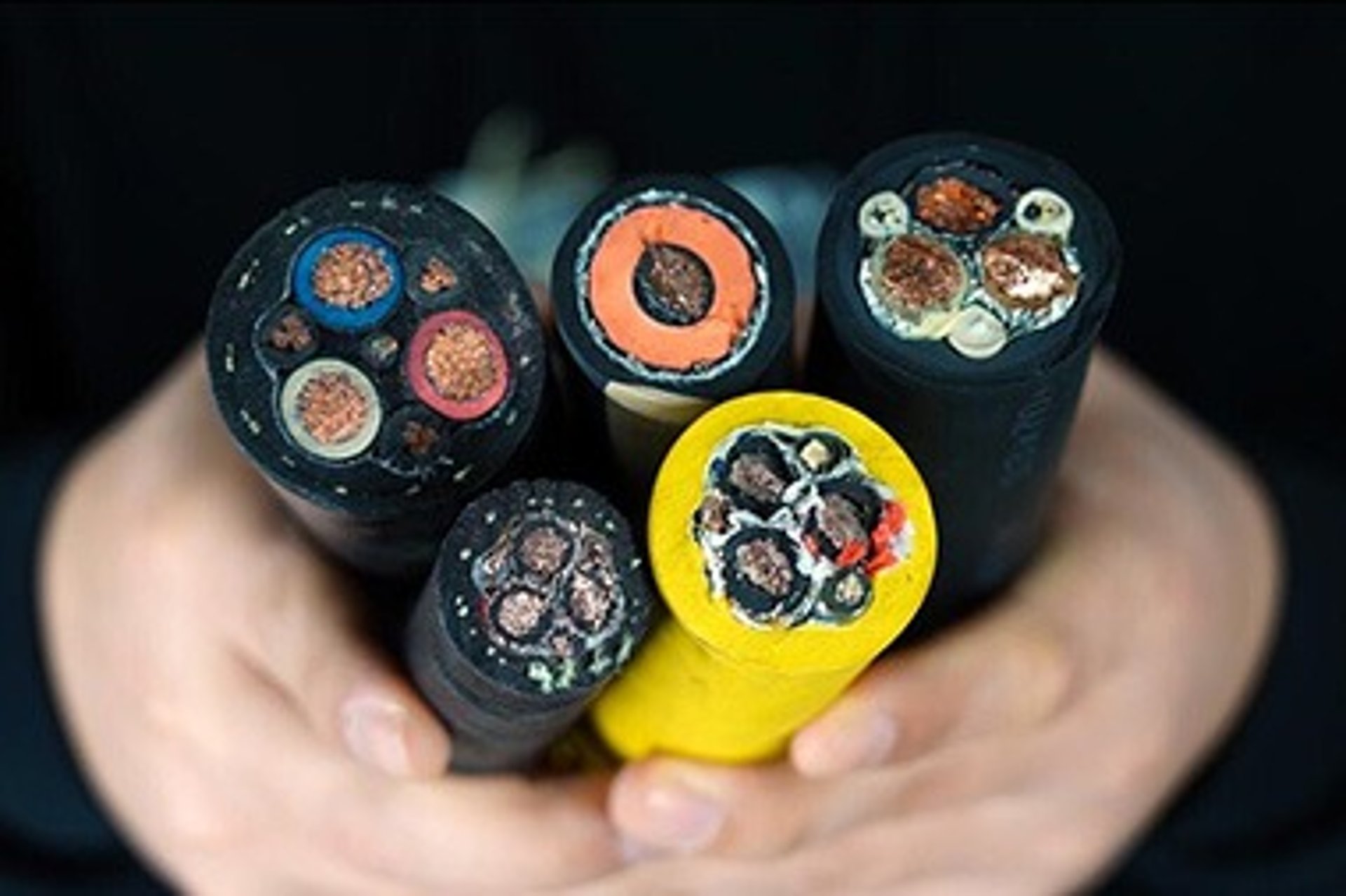
The RHEYFESTOON® (N)3GRD5G is classified as a flexible round festoon cable designed for heavy-duty service. It is engineered to handle both mechanical tensile stress and dynamic stress associated with continuous movement, making it ideal for crane systems, conveyor belts, and mobile equipment.
Type: Flexible Round Festoon Cable
Nominal Voltage: Uo/U = 0.6/1 kV
Maximum Operating Voltage (AC): Um = 1.2 kV
Maximum Operating Voltage (DC): Vm = 1.8 kV
Test Voltage (Power): 3.0 kV AC
Test Voltage (Control): 2.0 kV AC
Standards: DIN VDE 0250 Part 812
VDE Registration No.: 7891
Flame Retardancy: IEC 60332 Part 1
Construction Breakdown
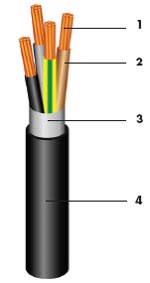
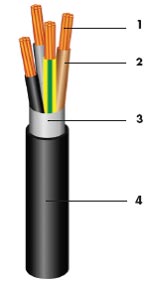
The cable consists of four main structural elements, each selected for specific performance characteristics.
Conductor
The current path is formed by flexible, plain copper strands manufactured to the "FSC" standard. This construction exceeds the requirements of IEC 60228 Class 5, ensuring a high number of fine wires. This fine stranding is what gives the cable its exceptional flexibility and ability to withstand repeated bending without fatigue.
Insulation
The core insulation is made of RHEYCLEAN-HEPR, a High Modulus Ethylene Propylene Rubber compound. This material offers superior dielectric properties and mechanical toughness compared to standard rubbers, meeting and exceeding the requirements set out in IEC 60502-1.
Inner Sheath
Beneath the final outer layer lies an inner sheath composed of a special synthetic rubber compound. This layer is formulated to perform better than the EM6 quality defined in prEN 50363. It provides bedding for the cores, mechanical protection, and contributes to the overall roundness and stability of the cable.
Outer Sheath
The final protective layer is an EM7 grade rubber compound, supplied in standard black colour. This sheath is designed to resist abrasion, weathering, and chemical attack, ensuring the cable remains protected even in the harshest industrial environments.
Core Identification
The cable follows the colour coding standards of DIN VDE 0293 part 308 and HD 308 S2. Four-core cables use green/yellow, brown, black, and grey. Five-core cables add blue. For configurations with more than five cores, the insulation is black with white printed numbers, with the protective earth core always located in the outer layer. A special 6-core design places three green/yellow cores in the interstices between the main phase conductors.
Performance Characteristics
Mechanical Properties
The conductor is designed to withstand significant stress. The permissible tensile stress is rated at 15 N/mm² under static conditions and 30 N/mm² under dynamic loads. The cable has been successfully tested for alternating bending, roller bending, and torsional resistance. It is capable of handling festoon speeds up to 240 meters per minute, with options for even higher speeds available upon specific request.
Environmental and Thermal Properties
The material composition ensures resistance to oil, moisture, UV radiation, and ozone. This makes the cable suitable for both indoor installations and outdoor exposure, a feature particularly valuable in the variable climates experienced across South Africa. The maximum conductor temperature is 90°C during normal operation and can withstand peaks of 250°C during short circuit events. The sheath can operate reliably in temperatures ranging from -35°C to +80°C when moving, and down to -50°C when fixed.
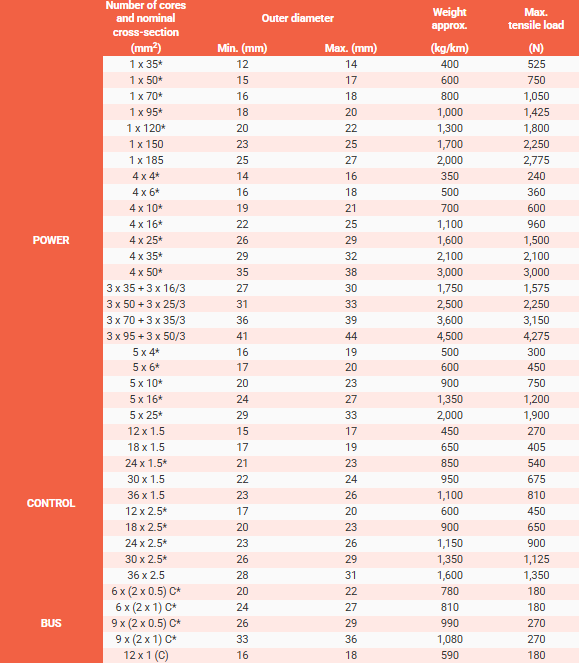
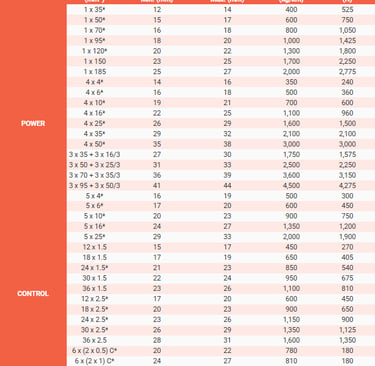
Comprehensive Specification Table
The following table details the available sizes, dimensions, weights, and mechanical load capacities.
Material Science – The Chemistry of Durability
HEPR Insulation Explained
The insulation material is one of the most critical components, and the choice of HEPR (High Modulus Ethylene Propylene Rubber) is central to the cable's success. Unlike standard elastomers, HEPR is a copolymer where the molecular structure is precisely engineered. The ratio of ethylene to propylene monomers is controlled to create a balance between crystallinity and amorphous regions.
This molecular design gives the material its "high modulus" characteristic, meaning it possesses high mechanical stiffness and tensile strength while retaining the elastic memory required to flex millions of times without permanent deformation. The chemical structure provides excellent dielectric strength, ensuring that even at thicknesses designed for flexibility, the insulation can safely withstand the electrical stresses imposed upon it.
The Vulcanization Process
The transformation of the raw rubber compound into a durable insulation layer occurs through vulcanization, specifically using a peroxide curing system. This process creates strong Carbon-Carbon (C-C) bonds between the polymer chains, as opposed to the weaker sulphur links found in older technologies.
The result is a material with exceptional thermal stability. The cross-linked network does not melt or flow when heated, allowing the cable to operate continuously at 90°C and survive sudden temperature spikes during fault conditions without degradation. This chemical robustness directly translates into a longer service life and higher safety margins, especially important in applications where maintenance access is difficult or costly.
The 5G Sheath System
The outer sheath, often referred to as the 5G compound, is a masterpiece of chemical formulation designed for survival in harsh environments. It is based on a synthetic rubber matrix infused with a sophisticated system of stabilizers.
Antioxidants are included to prevent the material from becoming brittle over time, while UV absorbers protect the polymer chains from the intense solar radiation common in many parts of Southern Africa. Ozone resistance agents prevent cracking caused by electrical discharges or atmospheric pollution. Together, these additives ensure that the sheath remains flexible and intact, resisting oils, chemicals, and mechanical abrasion year after year.
Electromagnetic Theory & Performance
Field Distribution and Crosstalk
To understand why shielding is unnecessary here, one must visualize how electricity behaves. In an unshielded power cable, the electromagnetic fields radiate naturally around the conductors. The fields interact with each other, creating mutual inductance and capacitance.
In power transmission, crosstalk—the phenomenon where energy from one line couples to another—is not an issue. The high voltage and current levels in power cables are completely unaffected by the low levels of induced energy. In fact, the natural distribution of fields in an unshielded design can be more electrically efficient, as there is no conductive layer to reflect energy or create eddy current losses within the cable structure itself.
Grounding and Safety
Safety is paramount, and the absence of a dedicated metallic shield does not compromise protection. The design incorporates a full-sized protective earth conductor (green/yellow) which provides the primary path for fault currents.
When analysing earth loop impedance, the unshielded design offers clarity. There is only one path for fault current to follow, simplifying the calculation of protection relay settings. In systems where cables are wound onto drums or reels, a shielded cable with both ends grounded can act like a transformer short-circuit, inducing circulating currents that generate heat and waste energy. The unshielded topology eliminates this phenomenon entirely, ensuring that the cable remains cool and efficient even when coiled tightly on a reel.
Leakage Inductance Characteristics
Leakage inductance is an electrical property that describes how much magnetic flux escapes from the main circuit. Shielded cables generally exhibit lower leakage inductance because the metal screen contains the magnetic field. However, in power systems, slightly higher leakage inductance, as found in the (N)3GRD5G, is actually beneficial.
It acts as a natural buffer, helping to limit the rate of rise of current during switching operations or faults. This inherent damping effect reduces stress on connected equipment such as variable speed drives and contactors. Therefore, the electrical topology of the unshielded cable offers practical advantages that go beyond simple noise reduction.
Mechanical Engineering & Dynamics
High-Speed Rheology
The ability to move at speed is a defining characteristic of festoon cables. The RHEYFESTOON® (N)3GRD5G is rated for operation at velocities up to 240 meters per minute. At these speeds, the cable is subjected to intense physical forces. The term "rheology" refers to how materials flow and deform under stress, and here the engineering is focused on managing that deformation.
When a cable accelerates or decelerates, different layers experience different forces. The outer surface travels a longer path than the inner curve during bending, creating shear stress between the insulation and sheath. The combination of HEPR insulation and the specific synthetic rubber compounds used ensures that these stresses are absorbed elastically rather than causing permanent damage. The material returns to its original shape after every movement, preventing the accumulation of mechanical fatigue.
Torsional Dynamics
Movement in cranes and trailing systems is rarely just linear; twisting and spiralling often occur as the cable sways or is guided through rollers. The construction of the (N)3GRD5G accounts for this torsional stress. The stranding direction and lay length of the conductors are carefully calculated to provide rotational stability.
The exclusion of a rigid metallic layer actually aids in this aspect. Without a shield trying to maintain a perfect cylindrical shape, the cable can flex and twist more naturally, distributing torsional loads evenly across all components. This flexibility reduces the risk of individual wires snapping or insulation rubbing through, which are common failure modes in stiffer, shielded designs.
Fatigue Life Prediction
One of the most complex aspects of cable design is predicting how long the product will last under continuous bending. Fatigue failure typically starts with the initiation of micro-cracks on a molecular level, which then propagate under repeated stress until they become visible defects.
The high-performance nature of the HEPR polymer network acts to resist this process. The cross-linked chemical structure provides resilience, ensuring that when the material is bent, the molecular chains stretch and recoil without breaking bonds. Extensive testing, including roller bending tests and reverse bending protocols, demonstrates that this cable design achieves a very high number of operating cycles before any degradation begins to occur. For the end user, this translates directly into fewer shutdowns, lower maintenance budgets, and higher operational safety.
Decision Making – Selection Framework
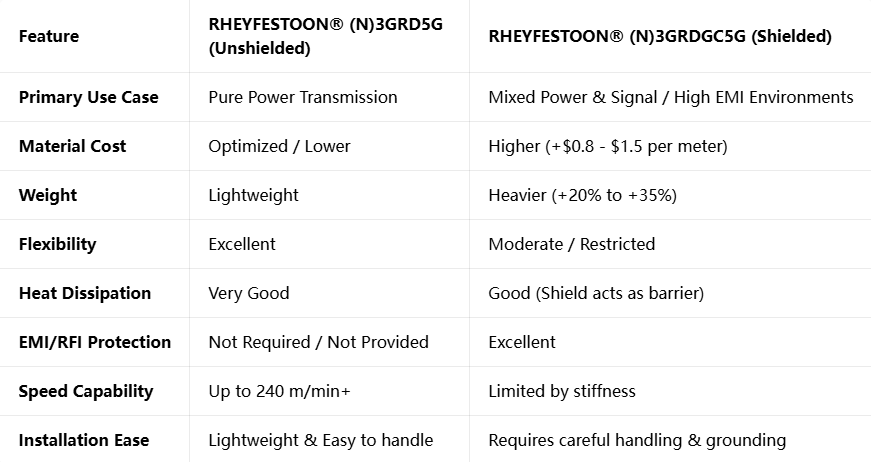
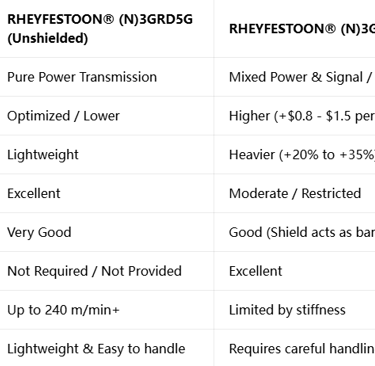
Value Proposition Matrix
Choosing between the unshielded (N)3GRD5G and the shielded variant (N)3GRDGC5G should not be based on a vague preference for "better quality," but on a clear analysis of application requirements. The following comparison highlights where each design excels.
Application Guide: When to use which?
The decision matrix is straightforward once the environment and function are defined.
Select (N)3GRD5G when:
The application is dedicated to power distribution where large motors, heaters, or heavy machinery are being energized. In these circuits, the signal-to-noise ratio is so high that interference is irrelevant. This design is also the clear winner in systems requiring high speeds, frequent movement, or where weight is a critical factor for the mechanics of the crane or reeling system. It is the standard choice for most mining operations, port cranes, and general industrial festoon systems across South Africa and similar markets.
Consider Shielded versions when:
The cable must carry both power and sensitive control signals or data communication lines within the same sheath. If the installation is located immediately adjacent to high-frequency switching equipment, arc furnaces, or in environments with extreme radio frequency interference, then the shielding becomes necessary to protect the low-level signals. In these specific cases, the penalties of higher weight and cost are justified by the need for signal integrity.
Frequently Asked Questions
Is the unshielded design safe for use in mining applications?
Safety is determined by insulation integrity, earthing provisions, and mechanical strength, not by the presence of a screen. The RHEYFESTOON® (N)3GRD5G is built to stringent VDE standards. It includes a dedicated protective earth conductor and robust insulation capable of withstanding 3kV test voltages. It is fully compliant with safety requirements and widely used in underground and opencast mining operations where reliability is critical.
How does the cable perform in extreme temperatures found in parts of SA?
South Africa experiences a wide range of climates, from the heat of Limpopo to cold fronts in the Western Cape. The cable material is rated for operation between -35°C and +80°C when moving, and can tolerate even lower temperatures when fixed. The HEPR insulation and EM7 sheath remain flexible and do not become brittle in cold conditions, nor do they soften or melt under high ambient temperatures.
Can this cable be used for direct burial or in cable troughing?
While the primary design is for festoon and reeling systems where the cable is visible and supported, the outer sheath offers excellent resistance to water, oil, and UV. It is robust enough for many fixed installation applications, including installation in troughs or ducts. However, it is always recommended to consult the installation guidelines regarding burial depth and protection if used underground.
What is the minimum bending radius allowed?
The bending radius is defined in accordance with DIN VDE 298 standards and varies slightly depending on the overall diameter of the specific cable size. Generally, for dynamic applications, the radius is kept relatively tight to suit modern compact crane systems, but adherence to the specified values is important to ensure the long service life of the conductor strands.
Conclusion
The engineering behind RHEYFESTOON® (N)3GRD5G demonstrates that sometimes, removing a component is the most advanced step one can take. The decision to manufacture this cable without a concentric shield is rooted in deep understanding of electrical physics, material chemistry, and mechanical dynamics. It is a design optimized for the job it is intended to do: deliver high power reliably, flexibly, and efficiently in the toughest conditions.
By focusing on what matters—current carrying capacity, mechanical endurance, thermal management, and total cost of ownership—this cable offers a superior solution for the vast majority of heavy industry applications. It proves that technical excellence is not about adding features unnecessarily, but about perfecting the essentials.
Ready to Specify or Order?
For technical support, quotations, or further information regarding RHEYFESTOON® (N)3GRD5G cables, please contact our specialist team. We are ready to assist with your project requirements and provide expert advice on cable selection and application.
📧 Email: Li.wang@feichuncables.com
We look forward to supporting your project with world-class cable solutions.
Email Address: Li.wang@feichuncables.com
© 2025. All rights reserved.
One-click to Quickly Contact
Products
Contact
Company
Location:
Building A Private Science and Technology Park, Hefei Economic and Technological Development Zone, Anhui Province, China
Heat Resistant Cable
WhatsApp: +86 17333223430
Social Media: