Anhui Feichun Special Cable Co.,Ltd Email: Li.wang@feichuncables.com
RHEYFIRM® (RTS) (N)TSCGEWTOEUS OFE Cable Explained: Advanced Reeling Fiber Optic Cable for South African Ports and Mining Automation
Discover the engineering excellence of RHEYFIRM® (RTS) (N)TSCGEWTOEUS OFE composite reeling cables. Designed for port automation, cranes and mining applications, compliant with DIN VDE 0250-813 standards.
Li Wang
4/28/202611 min read
Introduction
The industrial landscape in South Africa is defined by scale, harsh environmental conditions, and the constant demand for efficiency. From the bustling container terminals of Durban to the vast open-pit mines of the Northern Cape, heavy machinery operates around the clock. At the heart of this massive infrastructure lies a critical component that often goes unnoticed yet determines the entire system's reliability: the cable.
As industries move towards higher levels of automation and integration, the requirement for cables has evolved. It is no longer sufficient to simply transmit power. Modern systems demand simultaneous high-speed data communication, robust mechanical strength, and the ability to withstand millions of bending cycles. This is where specialized reeling and trailing cables come into play.
This article explores the RHEYFIRM® (RTS) (N)TSCGEWTOEUS OFE cable series, a product designed specifically to meet these extreme challenges. We will examine how it functions within the complex mechanics of port cranes and mining equipment, delve into the engineering principles behind its construction, and demonstrate why it stands as a superior alternative to traditional European suppliers.
The Operational Environment – Ports and Mines
To understand why a cable is designed the way it is, one must first understand the environment it operates in. South Africa’s economy relies heavily on two major sectors: logistics through its ports and the extraction of natural resources through mining.
Port Automation and Container Handling
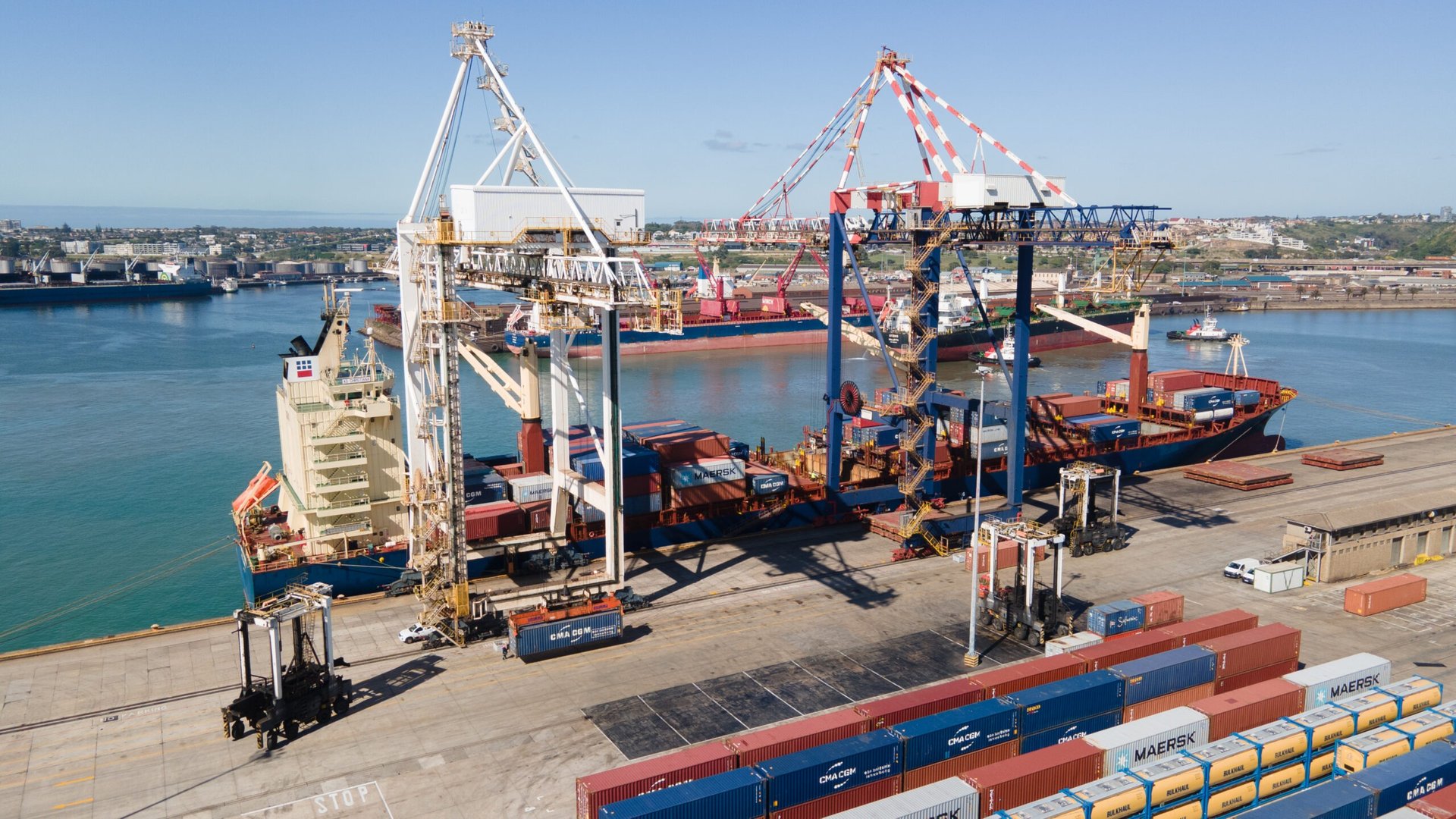
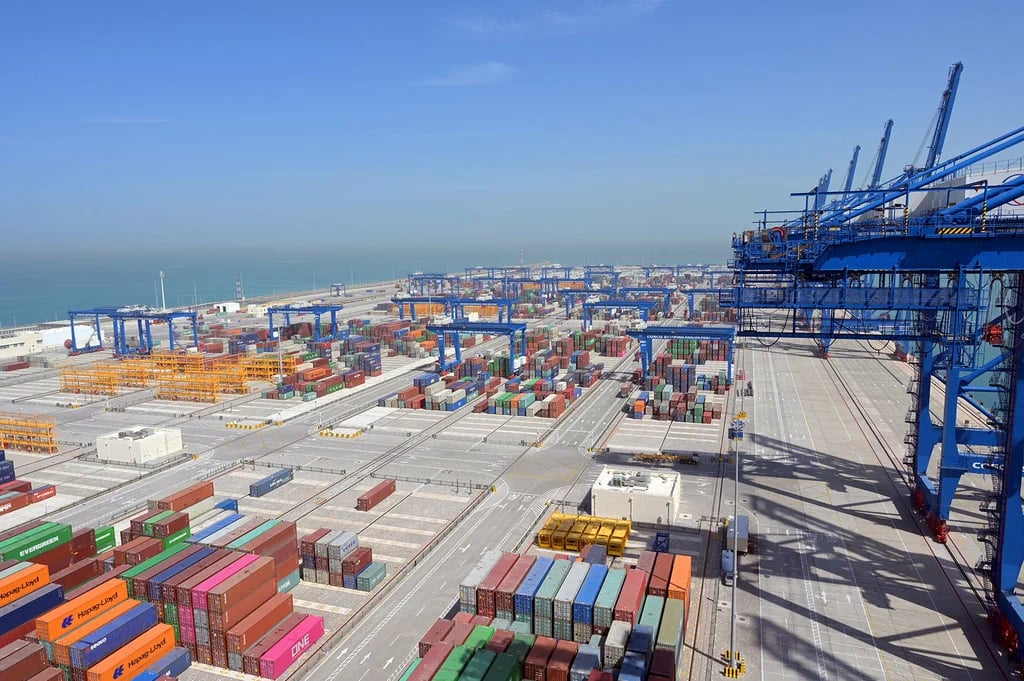
South African ports serve as the gateway to Africa, handling millions of tons of cargo annually. The efficiency of these ports depends entirely on the performance of material handling equipment.
Ship-to-Shore Cranes (STS)
These are the giant structures visible along the quayside. Their primary function is to load and unload containers from massive cargo vessels. The operation involves the crane gantry moving along the quay, while the trolley travels horizontally along the boom. The hoist mechanism lowers the spreader to lock onto a container, lift it high enough to clear obstacles, and traverse it to the waiting truck or yard stack.
The mechanical stress placed on the cables here is immense. The cable must follow the rapid vertical and horizontal movements. It experiences high tensile loads, constant torsion twisting as the crane slews, and frequent bending around cable drums or festoon systems. Furthermore, the cable is exposed to salt spray, intense UV radiation, and wide temperature fluctuations.
Rubber Tyred Gantry Cranes (RTGs) & Rail Mounted Gantry Cranes (RMGs)
Within the stacking yards, these machines organize containers efficiently, often stacking them five or six units high. The cables here must handle continuous travel over long distances, often dragging or reeling, requiring extreme flexibility and abrasion resistance.
Mining and Bulk Material Handling
In the mining sector, particularly in operations handling coal, iron ore, or manganese, the equipment is even larger and operates in rougher terrain.
Bucket Wheel Excavators (BWE)
These are among the largest mobile machines in the world. The bucket wheel at the end of a long boom rotates, cutting into the earth or overburden. The material is scooped up by the buckets, discharged onto a conveyor belt integrated into the machine, and transported away. This process is continuous, meaning the cable is constantly trailing behind the machine as it crawls forward. The cable must resist rocks, sharp edges, dust, and moisture.
Stacker-Reclaimers
These machines perform two functions. In stacking mode, they receive material from a conveyor and deposit it in large stockpiles in an organized pattern. In reclaiming mode, a bucket wheel or scraper chain digs the material back out and loads it onto another conveyor for transport to the port or processing plant. The movement involves the boom rising, falling, and sweeping through an arc, placing significant torsional and bending stress on the power and control cables.
The South African Context
South Africa presents specific challenges. The climate ranges from subtropical humidity to dry, high-altitude conditions. The distance between sites means logistics and maintenance support must be reliable. Equipment downtime is extremely costly, so components must have long service lives and require minimal intervention. The cables used here must be more than just conductive wires; they must be engineered survival systems.
RHEYFIRM® (RTS) – A Breakthrough in Cable Technology
The RHEYFIRM® (RTS) (N)TSCGEWTOEUS OFE represents a significant advancement in cable technology, specifically classified as a composite reeling cable. But what makes it "breakthrough"?
Traditionally, heavy machinery required separate cables for power, separate cables for control signals, and often additional copper or fiber optic cables for communication networks. This meant multiple cables running parallel, increasing installation complexity, taking up more space on cable drums, and subjecting each individual cable to the same harsh forces.
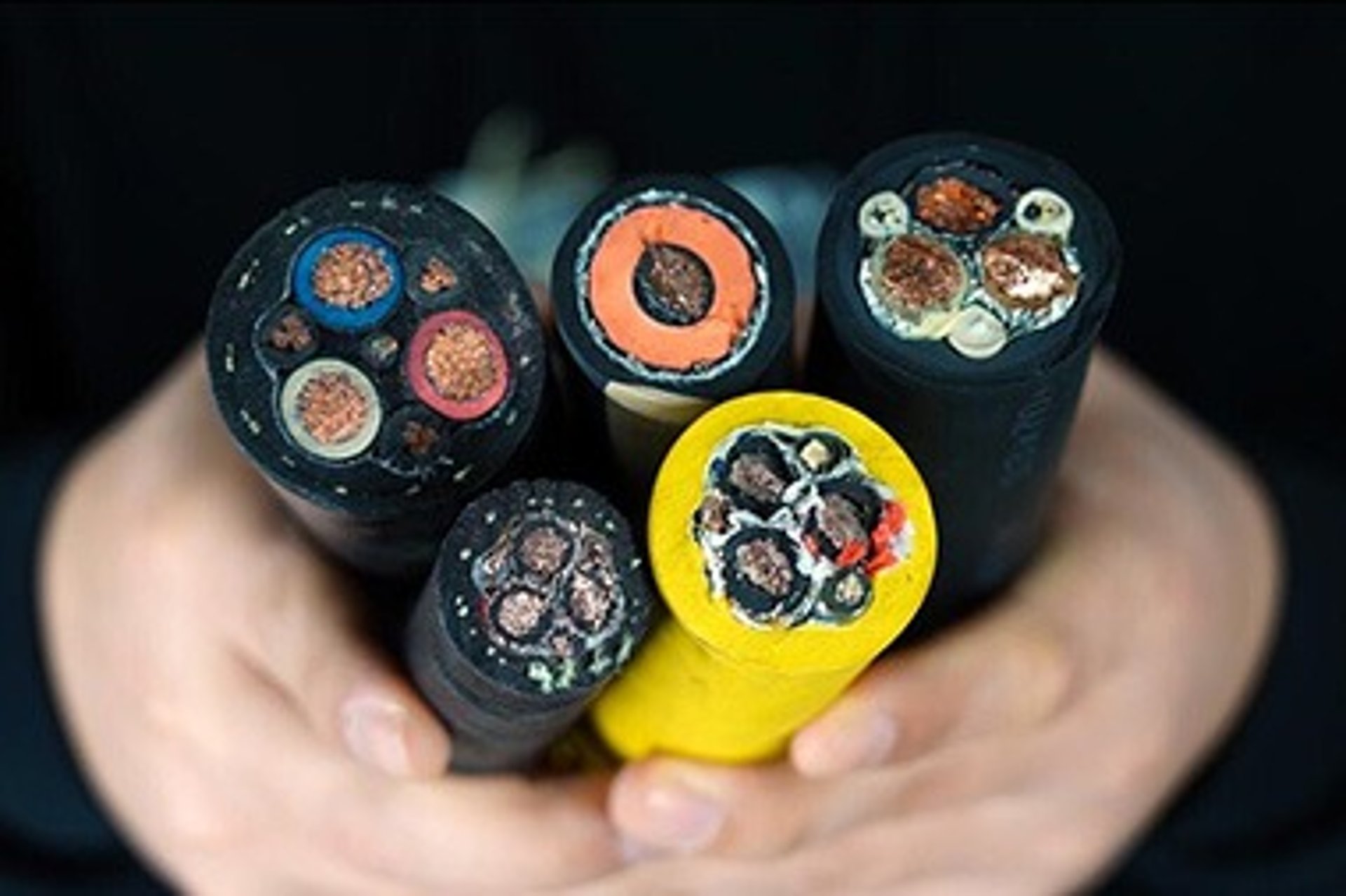
The innovation behind RHEYFIRM® is the integration of all these functions into a single, robust cable core. It combines power conductors, control cores, and fiber optic elements within one unified structure.
This integration solves several engineering problems simultaneously. By combining everything into one cable, the mechanical loads are distributed more evenly. The design ensures that when the cable bends or twists, the optical fibers and electrical cores move together harmoniously, preventing relative movement that could cause wear or damage.
The term "Reeling and Trailing" defines its purpose. Reeling cables are designed for applications where the cable is wound onto a drum, such as on crane hoists or winches. Trailing cables are designed to be dragged or follow behind moving machines like excavators. RHEYFIRM® is engineered to excel in both scenarios. It possesses a unique combination of extreme flexibility, allowing for tight bending radii, and incredible mechanical strength, allowing it to withstand high tensile forces and crushing loads.
This "All-in-One" concept reduces the total number of cables needed on a project, simplifies logistics, lowers installation costs, and most importantly, increases the overall system reliability. It is not just an evolution in cable manufacturing; it is a rethinking of how energy and data should be delivered in heavy industry.
Technical Structure and DIN VDE 0250-813 Compliance
The performance of any cable is determined by its construction materials and geometry. RHEYFIRM® is built layer by layer to maximize performance.
Detailed Construction
Conductor
The current-carrying core is made of high-purity copper. However, unlike standard fixed wiring cables that use thick solid wires, this uses fine copper wires stranded together. This construction follows Class 5 or Class 6 flexibility standards. By using many thin strands instead of one thick wire, the cable remains flexible even when carrying high amperage, and it resists fatigue failure when bent thousands of times.
Insulation System
Surrounding the conductor is an insulation layer made of special Ethylene Propylene Rubber (EPR) compounds. This material provides excellent dielectric strength, meaning it can hold back high voltages efficiently without being excessively thick. Crucially, the insulation is designed to be easily strippable, which makes termination and installation work much faster and safer for technicians on site.
Screening and Shielding
For medium voltage applications, the insulation is sandwiched between semi-conductive layers. These layers control the electrical field distribution, preventing partial discharges and ensuring the cable can handle voltage fluctuations safely. This is vital for stable operation in mining and power distribution applications.
Fiber Optic Integration
Embedded within the cable structure are optical fiber units. These are protected in loose tubes filled with special gel or water-blocking powders. This design isolates the glass fibers from the mechanical stresses affecting the rest of the cable, ensuring that data transmission remains perfect even if the cable is bent or stretched within operational limits.
Armoring and Sheathing
A layer of textile or aramid yarns provides tensile strength, absorbing the "pulling" forces so the conductors and fibers are not strained. Over this, an inner sheath and often an armoring layer provide crush resistance. The final outer sheath is made of robust elastomers like Chloroprene or special Polyurethane blends. These materials are resistant to oil, chemicals, UV light, ozone, and fire, ensuring longevity in the harshest climates.
Compliance with DIN VDE 0250-813
Standards exist to ensure safety and performance. The RHEYFIRM® series is designed and tested according to DIN VDE 0250 Part 813. This specific German standard outlines the requirements for cables used in rolling and trailing applications.
Meeting this standard means the cable has been tested for:
Mechanical stability under dynamic stress.
Bending cycle endurance.
Torsion resistance.
Electrical safety properties.
By adhering to this recognized standard, users can be confident that the RHEYFIRM® cable meets or exceeds the technical expectations set by European engineering norms. It is not merely a "copy" of a standard product; it is a product built to satisfy rigorous quality benchmarks.
Engineering Strategy – Fiber Optic Protection in High Voltage Environments
One of the most critical engineering challenges in modern cables is protecting optical fibers, especially when they run alongside high voltage conductors or are used in power plants.
The Challenge
Glass fibers are incredibly efficient at transmitting data, but they are also delicate. They can be damaged by excessive bending (macro-bending), micro-bending (pressure points), or tensile stretching. Furthermore, in high voltage environments or near large motors, there is intense electromagnetic interference. Copper cables can suffer from signal noise, but fibers are immune to this. However, they must be physically protected.
Protection Strategy in RHEYFIRM®
The design strategy for fiber protection in RHEYFIRM® involves multiple layers.
First, the fibers are placed inside a loose buffer tube. There is intentional space between the fiber and the inner wall of the tube. This allows the fiber to move slightly and remain straight even when the overall cable bends. The tube is filled with water-blocking compounds that not only prevent moisture ingress but also provide cushioning.
Second, the positioning within the cable core is calculated. The fiber unit is placed in a position that experiences the least amount of mechanical strain during bending and twisting operations. It is surrounded by the power cores and filling elements that act as structural buffers against impact and crushing.
Application in Power Plants
In High Voltage (HV) power generation and distribution stations, control and communication cables run close to busbars and transformers. Using fiber optics eliminates the risk of induced voltages and ensures clear communication. The RHEYFIRM® design ensures that even if the cable is installed in trays carrying high voltage lines, or subjected to the vibration and temperature changes of a power plant environment, the optical signal remains clean and uninterrupted. The physical protection ensures that rodents, accidental impacts, or installation stresses do not compromise the data link which is often vital for safety systems and SCADA monitoring.
Manufacturing Excellence – Triple Extrusion CCV and Gap Armoring
A design is only as good as the manufacturing process that brings it to life. Feichun Cable utilizes state-of-the-art technology to produce RHEYFIRM®, ensuring perfection at every stage.
Triple Extrusion and CCV Technology
The insulation and shielding process is the heart of cable quality. RHEYFIRM® utilizes a Continuous Curing Vulcanization (CCV) line with a triple extrusion head.
This means that the inner semi-conductive screen, the insulation layer, and the outer semi-conductive screen are all extruded at the exact same time, in one single pass. This technology ensures perfect bonding between the layers. There are no air pockets, no uneven gaps, and perfect concentricity.
In older or simpler processes, layers might be applied sequentially, which can lead to imperfections or contamination at the interfaces. Triple extrusion creates a seamless insulation system that is electrically uniform. This directly translates to higher reliability, longer service life, and the ability to handle higher electrical stresses without breakdown.
Gap Armoring Technology
For applications requiring extra mechanical protection, the gap armoring technique is employed. This involves wrapping metal tapes or wires around the cable core in a specific spiral pattern with a calculated overlap or "gap".
The purpose of this design is to create a shield that is incredibly resistant to crushing and impact, yet does not make the cable stiff or rigid. The gap allows the armor layers to slide over each other slightly when the cable bends. This maintains flexibility while providing a "tank-like" protection against external forces. It prevents sharp rocks in mining operations or heavy objects in port yards from damaging the internal cores.
This level of manufacturing precision ensures that every meter of cable leaving the factory performs exactly as the engineering team intended.
Applications and Case Studies
The true test of any technology is how it performs in the field. RHEYFIRM® cables are already proving their worth in key projects across South Africa.
Port Automation Projects
Durban Harbour
As the largest and busiest port in Africa, Durban requires maximum uptime. RHEYFIRM® cables are deployed on Ship-to-Shore cranes and Yard Cranes handling container traffic. The ability to combine power and fiber optics into one cable simplified the retrofitting of automation systems. The cables handle the rapid acceleration and deceleration of trolley systems, and their resistance to the salty, humid air ensures they do not degrade prematurely like standard cables might.
Richards Bay Port
Specializing in bulk commodities like coal and minerals, the environment here is dusty and abrasive. The cables are used on ship loaders and stacker-reclaimers. These machines move massive volumes of material daily. The RHEYFIRM® cable’s resistance to abrasion and its ability to handle long travel lengths make it ideal. The integrated fiber optics allow for precise control of conveyor speeds and bucket wheel positions, ensuring efficient loading operations.
Mining Operations
In the coal fields of Mpumalanga and the manganese mines of the Northern Cape, conditions are severe. Temperatures can be extreme, and the ground is often uneven. RHEYFIRM® trailing cables follow the massive excavators and spreaders as they move across the pit.
The cable’s construction prevents water and dust ingress. The armoring protects against rock fall and being run over by auxiliary vehicles. The ability to transmit both power and data means that the machine operators have real-time feedback on system temperatures, pressures, and performance metrics, allowing for predictive maintenance and safer operation.
These applications demonstrate that the cable is not just designed on a drawing board, but is battle-proven in some of the toughest industrial environments on the continent.
A Superior Alternative to Nexans, Prysmian and European Suppliers
When selecting critical components, project managers and engineers often look at established European brands like Nexans and Prysmian. While these are reputable companies, Feichun offers a compelling alternative that challenges the status quo.
Technical Parity
Feichun RHEYFIRM® (N)TSCGEWTOEUS OFE cable is designed to meet the same international standards, such as DIN VDE and IEC, that European manufacturers adhere to. The electrical performance, mechanical properties, and material quality match or exceed the specifications found in major brand catalogues. The use of CCV lines and advanced extrusion technology ensures that the product quality is on par with the best in the world.
Cost Efficiency
One of the most significant advantages is the total cost of ownership. Without the overheads associated with European manufacturing and logistics, Feichun offers a highly competitive price point. This does not mean a compromise on quality; rather, it represents efficient manufacturing and direct supply chain management. For large projects involving many kilometers of cable, the savings can be substantial without sacrificing safety or reliability.
Flexibility and Service
European manufacturers often have rigid product lines and long lead times. Feichun Cable, as a specialized manufacturer, offers greater flexibility. Custom lengths, specific voltage requirements, or particular mechanical adaptations can be handled more readily. The engineering support team is focused on solving the client's specific problems, offering direct communication and faster response times for technical queries or after-sales support.
The Value Proposition
Choosing Feichun means getting the same, or better, technical specification as the premium European brands, but with better commercial terms and a partnership approach. It is a strategic choice for companies looking to optimize their budgets while maintaining the highest standards of equipment specification.
FAQ and Installation Guidance
Even with the best product, installation and operation can present challenges. Here we address common technical questions and solutions for complex installation scenarios.
What is the minimum bending radius allowed?
The minimum bending radius is typically specified as a multiple of the cable outer diameter. For RHEYFIRM®, it is designed for high flexibility, usually allowing bending radii between 10x to 15x the cable diameter depending on the specific size and whether it is under tension or not. Always ensure that cable drums and pulley systems are sized correctly to avoid sharp bends which can damage the structure over time.
How does the cable handle torsion?
Torsion is common on crane jibs. The cable construction includes specific stranding directions and reinforcing layers designed to absorb twist. During installation, it is important to ensure the cable is not "set" with a twist before use. The design allows for defined degrees of rotation per meter length without affecting performance.
Can the cable be used in areas prone to fire?
Yes. The sheath compounds used are typically flame retardant, meeting IEC 60332-1 standards. This means the cable will not propagate fire and will self-extinguish if a source is removed.
How to handle installation in very cold weather?
While the cable remains flexible at low temperatures, extreme cold can make the sheath harder. It is recommended to store the cable in warmer conditions before installation, or allow it to acclimatize. Installation forces should be monitored closely in cold weather to avoid over-stressing the outer jacket.
Maintenance and Inspection
Regular visual inspection is the key to long life. Look for signs of abrasion, cuts, or swelling. Check that the cable is running freely in its guides and not rubbing against sharp edges. The composite design means that if the outer sheath is intact, the internal fibers and conductors are likely performing perfectly.
Contact Us
Engineering reliable systems requires reliable partners. If you are looking for high-performance reeling cables that offer the perfect balance of technology, durability, and value, the Feichun series is your solution.
Our team of engineers is ready to assist with technical selection, custom design requirements, and project support. Whether you are upgrading existing port equipment or engineering a new mining fleet, we have the cable technology to keep your operations moving.
For inquiries and orders, please contact:
📧 Email: Li.wang@feichuncables.com
Email Address: Li.wang@feichuncables.com
© 2025. All rights reserved.
One-click to Quickly Contact
Products
Contact
Company
Location:
Building A Private Science and Technology Park, Hefei Economic and Technological Development Zone, Anhui Province, China
Heat Resistant Cable
WhatsApp: +86 17333223430
Social Media: