Anhui Feichun Special Cable Co.,Ltd Email: Li.wang@feichuncables.com
Shining a Light on South African Wiring: Bare Copper Cable vs Tinned Copper Cable – Your Practical Electrical Handbook
Explore the key differences between bare copper cable and tinned copper cable in South Africa’s tough environments. From Eskom grids to marine and mining applications, this guide covers conductivity, corrosion resistance, costs, and SANS-compliant choices for electricians and engineers.
Li. Wang
10/28/20255 min read
Introduction
Copper is the backbone of South Africa’s electrical world. Whether it’s keeping the lights on through Eskom’s vast transmission grids, powering the surge in renewable energy projects like solar farms in the Northern Cape, feeding the deep-level mining operations in Gauteng and Mpumalanga, or wiring vessels along our 2 800 km coastline, copper conductors carry the current that drives the nation. But not all copper cable is created equal. Enter the perennial debate: bare copper cable versus tinned copper cable.
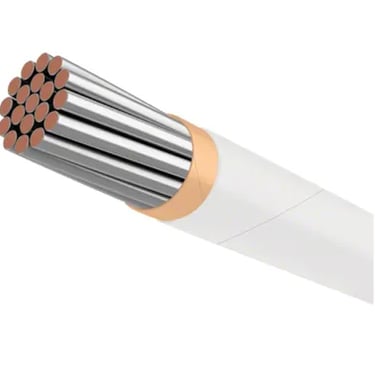
According to SANS 1411 Part 1, bare copper cable is defined as “uncoated electrolytic tough pitch (ETP) copper conductors, solid or stranded, with no metallic or non-metallic covering other than any protective grease or compound applied for preservation”. In plain electrician speak, it’s pure copper, nothing added, nothing taken away.
Tinned copper cable, per SANS 1574, is “copper conductors coated with a continuous layer of tin by electroplating, hot-dipping, or other approved method, with a minimum thickness of 1 µm for general purposes”. That thin silver-grey sheath is the game-changer.
This 2 500-word deep dive is written for the boots-on-the-ground brigade – electricians on construction sites in Joburg’s highveld thunderstorms, engineers specifying kits for offshore rigs in Saldanha, and procurement officers balancing budgets against 20-year lifecycles. We’ll dissect material properties, environmental resilience, installation nuances, cost realities, and deliver a bullet-proof application matrix tailored to Mzansi conditions. By the end, you’ll have a decision checklist sharper than a Klein stripper.
Core Material Properties
Let’s strip it back to brass tacks – or rather, copper fundamentals.
Composition
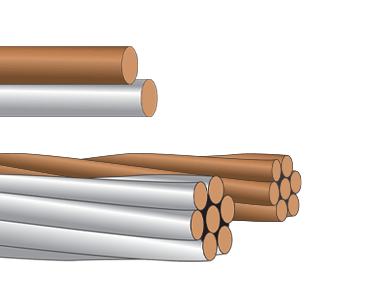
Bare copper cable: 99.99 % ETP copper (SANS 1411). No plating, no additives. Straight from the rod breakdown mill.
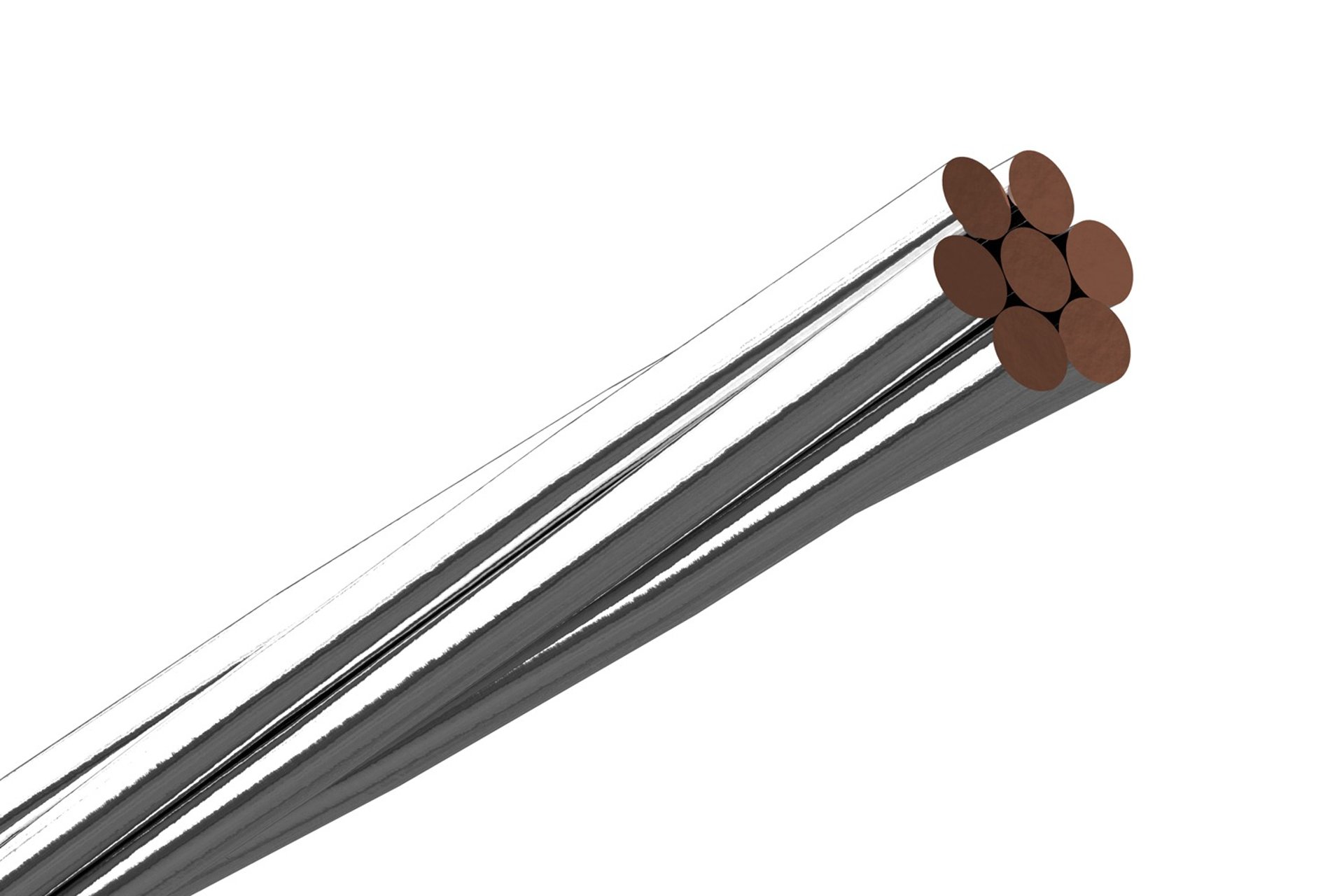
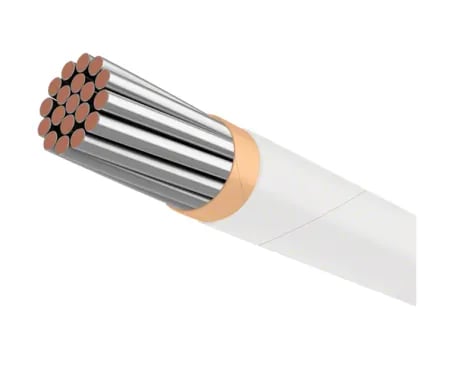
Tinned copper cable: Same ETP core, but electroplated with matte or bright tin to SANS 1574 specs. Minimum 1 µm tin thickness; 3 µm common for harsh service. The tin is 100 % bonded – no peeling, no holidays.
Conductivity (IACS %)
Both hit the sweet spot: 100–101 % IACS at 20 °C. The tin layer adds less than 0.1 % DC resistance penalty – negligible for 50 Hz distribution or DC solar strings. AC skin effect? Still irrelevant below 400 Hz. Bottom line: electrical performance is identical.
Mechanical Temper
Hard-drawn (Class 1), half-hard, or soft-annealed (Class 2/5) options exist for both. Need stiff 185 mm² for overhead line jumpers? Hard-drawn bare works. Need flexible 16 mm² for submersible pump leads? Soft-annealed tinned is your mate.
Surface Finish & Visual ID
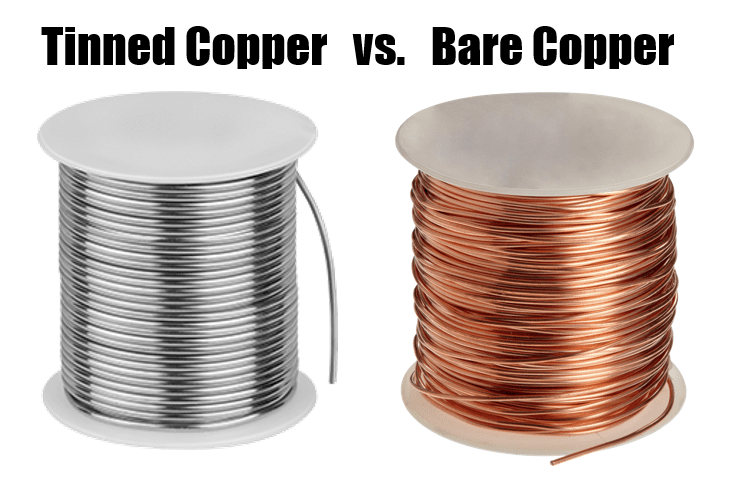
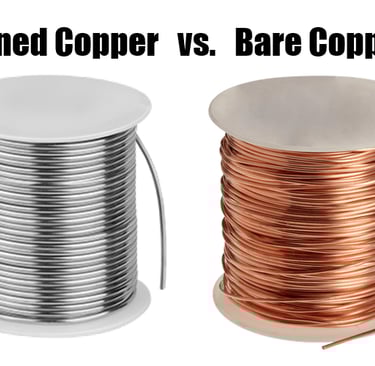
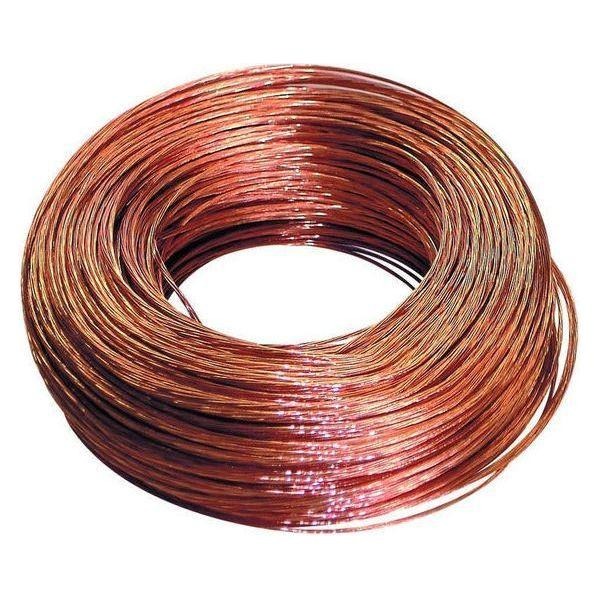
Bare: Classic reddish-orange when fresh. Within weeks in humid air, a brown Cu₂O layer forms, then black CuO. Coastal areas see green verdigris (copper carbonate) in months.
Tinned: Uniform silver-grey. Even after a year in Durban’s 80 % RH, it stays shiny. Scratch it? Copper shows through, but the plating remains intact.
PropertyBare Copper CableTinned Copper CableComposition99.99 % ETP CuETP Cu + ≥1 µm SnIACS %100–101100–101TemperHard / Half / SoftHard / Half / SoftAppearanceRed → Brown → GreenSilver-grey
Environmental Performance & Failure Modes
South Africa throws every curveball at cables: 95 % humidity in KZN summers, SO₂ from Sasolburg stacks, saline mist in Cape Town winters, and pH 3.5 acid mine drainage in the Witwatersrand basin. Here’s how each cable type fares.
Corrosion Resistance
Bare copper cable: Oxidation kicks off above 60 % RH. H₂S from sewerage or industrial plants forms black CuS. Salt spray (ASTM B117) pits bare copper in < 500 hours. In coastal KZN or Western Cape, expect 2–5 year lifespan before resistance spikes.
Tinned copper cable: Tin is sacrificial. It oxidises to SnO₂, protecting the copper underneath. SABS salt-spray tests show 5–10× longevity in wet/dry cycles. Real-world proof: Durban harbour cranes still humming on 15-year-old tinned 35 mm² after constant sea spray.
Temperature Rating
Bare: Copper softens above 100 °C. Inverter compartments on Northern Cape solar farms hit 85 °C ambient; add 30 °C self-heating and you’re in creep territory. Annealed bare loses 50 % tensile strength at 150 °C.
Tinned: Tin melts at 232 °C but stays solid up to 150 °C continuous (SANS 1574-1). Prevents copper grain growth and embrittlement. Ideal for furnace electrode leads or PV array boxes.
Soil Burial
Bare: Galvanic nightmare in acidic soils (pH < 5). Mine tailings around Rustenburg eat bare copper in 3–7 years via differential aeration cells.
Tinned: Specify ≥ 3 µm tin for aggressive geochemistry. Even unknown soils? Default to tinned – the insurance policy is cheaper than a mid-night call-out.
Failure ModeBare CopperTinned CopperCoastal salt spray< 500 h pitting> 2 000 h150 °C continuousCreep failureStablepH 4 soil3–7 yr life15–25 yr life
Electrical & Installation Characteristics
Solderability & Termination
Bare: Oxide layer forms in hours. Without immediate flux, you get cold joints and high-resistance terminations. Crimp-only lugs? Fine, but clean first.
Tinned: Pre-fluxed surface. Tin reflows at 230 °C, wetting the lug perfectly. Crimp-and-solder lugs love it. No cleaning, no drama.
Flexibility & Strand Fatigue
Class 2 bunched or Class 5 rope-lay stranding per SANS 1411 Parts 1 & 2 – identical fatigue life. Vibration in wind-blown overhead lines or pump motors? Same performance.
Current-Carrying Capacity
No derating difference up to 90 °C PVC or XLPE insulation (SANS 10142-1 Table 6.2). A 35 mm² tinned cable carries the same 125 A as bare in conduit. Only when you hit 105 °C EPR or 150 °C silicone does tin’s thermal edge appear.
Cost & Life-Cycle Economics
Upfront Cost
Tinned commands a 15–30 % premium. Example: 16 mm² 600/1 000 V PVC bare = R45/m; tinned = R58/m (2025 Johannesburg wholesaler pricing). Tin plating line + quality control = the difference.
otal Cost of Ownership
Run the numbers:
Marine jetty lighting: Bare replaced every 5 years = 4 × R100 000 = R400 000 over 20 years.
Tinned once-off: R130 000 + zero downtime = R130 000 total.
ROI: Tinned pays back in year 6; saves R270 000 over life.
Procurement Tip
Demand SANS 1574 CoC with measured tin thickness (micrometre cross-section). Reject hot-dip “wiped” cable – uneven thickness causes hot spots. Reputable mills (Aberdare, CBI) laser-print batch codes every metre.
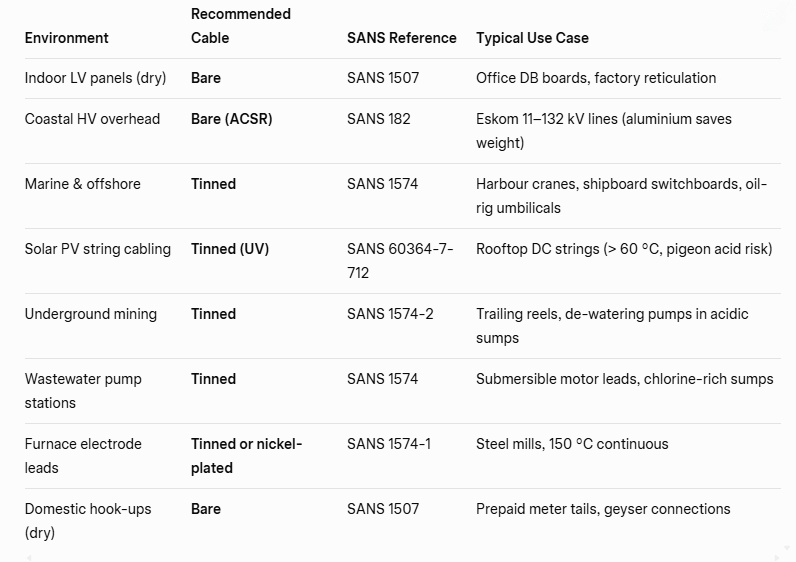
Application Matrix (South African Context)
FAQ Section
“Can I tin bare copper on site with a soldering iron?”
Nee man, that’s just cosmetic. You’ll get 50 µm blobs, not uniform 3 µm electroplate. Factory hot-dip or electrolytic only (SANS 1574).
“Does tinned cable need special lugs?”
Standard copper lugs work, but bi-metallic Cu-Sn lugs stop galvanic action with aluminium busbar. Tin prevents the dreaded green goo.
“Is bare copper allowed for solar DC strings in Joburg?”
Ja, if UV-stabilised PVC/XLPE jacketed. But in coastal inverters (SANS 10142-1 Annex D), tinned is compulsory – salt creep kills bare in 18 months.
“How do I spot fake tinned cable?”
Check SANS mark, mill cert, uniform silver sheen. Scratch with a coin – copper shows instantly if plating < 1 µm. Real tinned resists 24-hour oxidation.
“Can I mix bare and tinned in the same joint?”
Bad idea. Galvanic couple eats the bare side. Use tinned throughout or slap dielectric grease and pray.
Conclusion
South Africa’s electrical landscape demands smart choices.
Dry, indoor, budget-tight? Bare copper cable is your workhorse.
Wet, saline, scorching, or buried in dodgy soil? Tinned copper cable is non-negotiable.
Quick Checklist:
Dry, indoor, cost-driven → Bare copper
Wet, saline, high-temp, long-life → Tinned copper
Request CoC, SANS 1574 tin thickness report, 20-year warranty
Verify UV jacket for solar, flame retardant for mining
Armed with SANS 1411, SANS 1574, SANS 10142-1, and Eskom Distribution Standards, you’ll spec the right cable first time, every time.
Email Address: Li.wang@feichuncables.com
© 2025. All rights reserved.
One-click to Quickly Contact
Products
Contact
Company
Location:
Building A Private Science and Technology Park, Hefei Economic and Technological Development Zone, Anhui Province, China
Heat Resistant Cable
WhatsApp: +86 17333223430
Social Media: