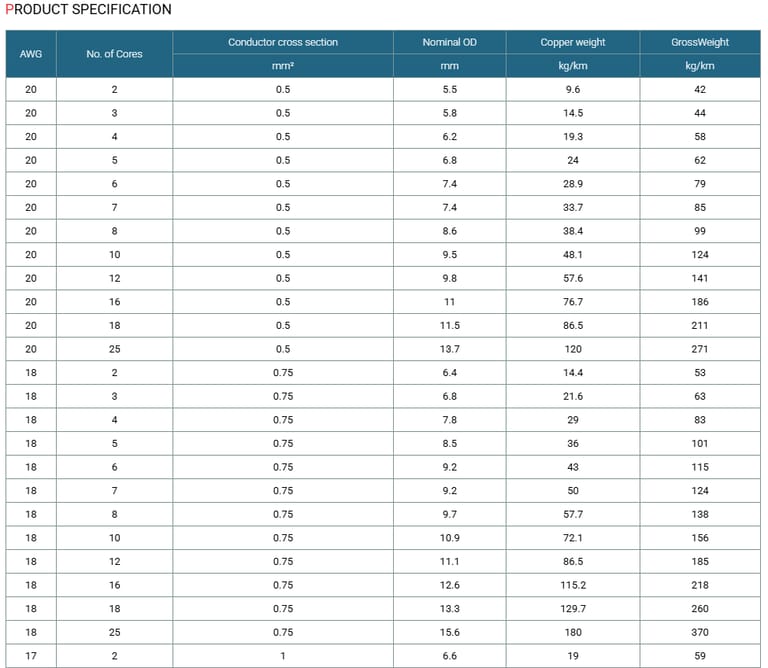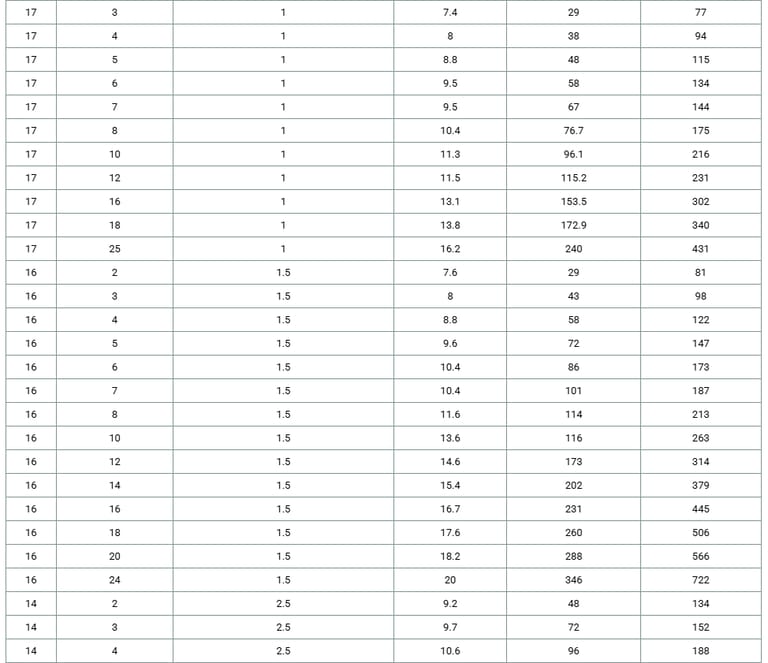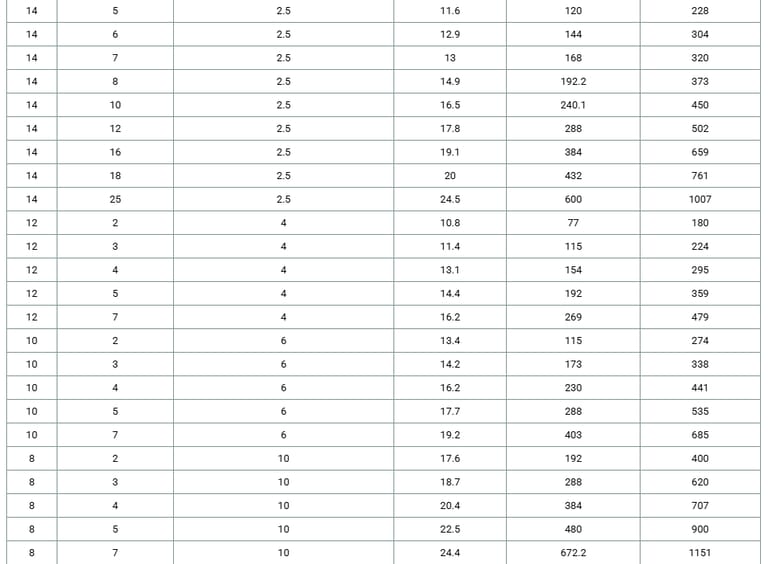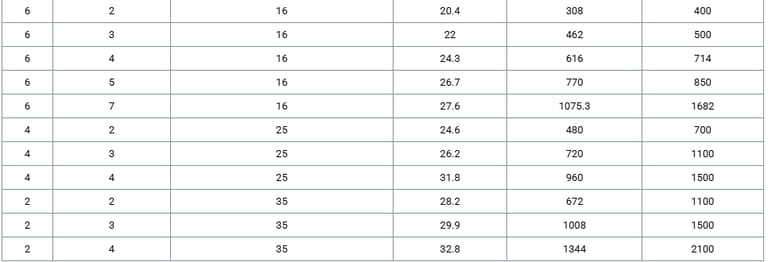
SIHF
Product application
Suitable where PVC insulated cables become brittle due to high temperature variations. Silicone insulated single cores are commonly used in the metallurgical industry, steel works, hot rolling mills, coking plants, foundries etc. The insulation consists of silicone rubber. It is resistant to vegetable and animal fat, many types of oil and diluted acids. No decomposition occurs when exposed to alcohol, alkaline solutions etc. The insulation is resistant to oxygen and ozone. Should the cable burn, a silicone dioxide layer will remain on the conductor to render it short circuit proof.
Product characteristic
Construction
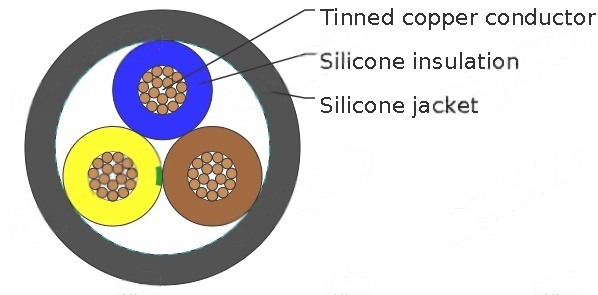
Fine strands of tinned copper wire
Tinned copper conductors to DIN VDE 0295 cl. 5, BS 6360 cl. 5 and IEC 60228 cl. 5
Silicone conductor insulation
Conductor identification to DIN VDE 0293-308 color coded or black conductors with continuous white numbers
For 2-conductors brown, blue
Conductors stranded in layers with optimal lay-length
Green-yellow earth-conductor (3 conductors and above)
Outer jacket of silicone
Technical
Special silicone multi conductor cable with higher heat-resistance range adapted to DIN VDE 0250 part 1 and part 816
Working voltage : 300/500 volts
Test voltage : 2000 volts
Bending Radius : flexing 7.5 x cable O, fixed installation 4 x cable Ø
Temp range : -60°C to +180°C
Short time temp up to +220°C
Flame retardant : IEC 60332.1
Insulation resistance : min. 200 MΩ x km
Radiation resistance : up to 20x106 cJ/kg (up to 20 Mrad)
Properties
Advantages
Hardly changes of dielectric strength and the insulation resistance also at high temperatures, high ignition or flash point, in case of fire, forms an insulating layer of SiO2
Resistant to
High molecular oils, fats from vegetables and animals, alcohols, plasticizers and clophenes, diluted acids, lye and salt dissolution, oxidation substances, tropical influences and weather, lake water, oxygen and UV
Halogen-free
According to DIN VDE 0482 part 267/ EN 50267-2-1/ IEC 60754-1 (equivalent DIN VDE 0472 part 815)
Behavior in fire
No flame propagation
Test according to DIN VDE 0482 part 265-2-1/ EN 50265-2-1/ IEC 60332-1 (equivalent DIN VDE 0472 part 804 test method B)
For laying as a fixed installation only in open or ventilated pipe systems as well as in ducts. Otherwise the mechanical properties of the silicon are reduced by the enclosed air at temperatures exceeding 90°C.