Anhui Feichun Special Cable Co.,Ltd Email: Li.wang@feichuncables.com
Super-Trex® Type G-GC Cable Explained: 2000V MSHA ICEA Mining Cable for Loaders, Drills & Conveyors
Super‑Trex® Type G‑GC is a heavy‑duty 2000V mining cable built to ICEA S‑75‑381 and MSHA standards, widely used across South Africa’s gold, platinum, coal and diamond mines. This guide details its engineering design, material science, performance benefits, full specifications, correct selection, and why Feichun Type G‑GC is a fully equivalent, cost‑effective alternative with faster delivery, perfectly suited for deep‑level and open‑pit operations.
Li Wang
5/27/202615 min read
Introduction
In South Africa, mining remains the backbone of the economy, with operations ranging from deep‑level gold mines reaching depths of over 3,000 metres to vast open‑pit platinum and diamond mines in the Northern Cape and North West provinces. Every day, equipment such as loaders, drills, conveyors, pumps and mobile machinery operates under extreme conditions: rock falls, heavy abrasion, constant vibration, temperature swings from well below freezing in winter to over 40°C underground, exposure to acidic mine water, diesel fuel, hydraulic fluids and dust. For decades, one of the most common operational challenges has been premature cable failure, leading to unplanned downtime, high replacement costs and significant safety risks.
Super‑Trex® Type G‑GC cable was developed specifically to solve these problems. Designed and manufactured by TPC, it is a 2000V portable power cable that meets the rigorous requirements of ICEA S‑75‑381 and is approved by MSHA, making it directly comparable to the specifications found in South African national standards such as SANS 1520 and SANS 10198. The designation G‑GC stands for General‑purpose with Ground‑Check, meaning it includes both a dedicated grounding conductor and a separate monitoring core to continuously verify the integrity of the safety earth system – a feature that aligns perfectly with South African Mine Health and Safety Act regulations, which require permanent monitoring of earth continuity to prevent electric shock hazards.
This article explains exactly how this cable works, why its materials and construction make it so reliable, where it should be used, how to select the correct size, and how Feichun offers an identical‑performing replacement that is more affordable and available faster. It is written for engineers, procurement specialists and maintenance managers who need accurate, practical information to make informed decisions for their operations.
Engineering Principles: Design That Survives Extreme Conditions
To understand why Super‑Trex® Type G‑GC performs better than standard cables, it is necessary to look at the engineering logic built into every layer. The design follows a clear principle: each component is chosen and arranged to solve a specific failure mode found in mining environments, while maintaining the flexibility required for moving equipment.
Multi‑Layer Protection Philosophy
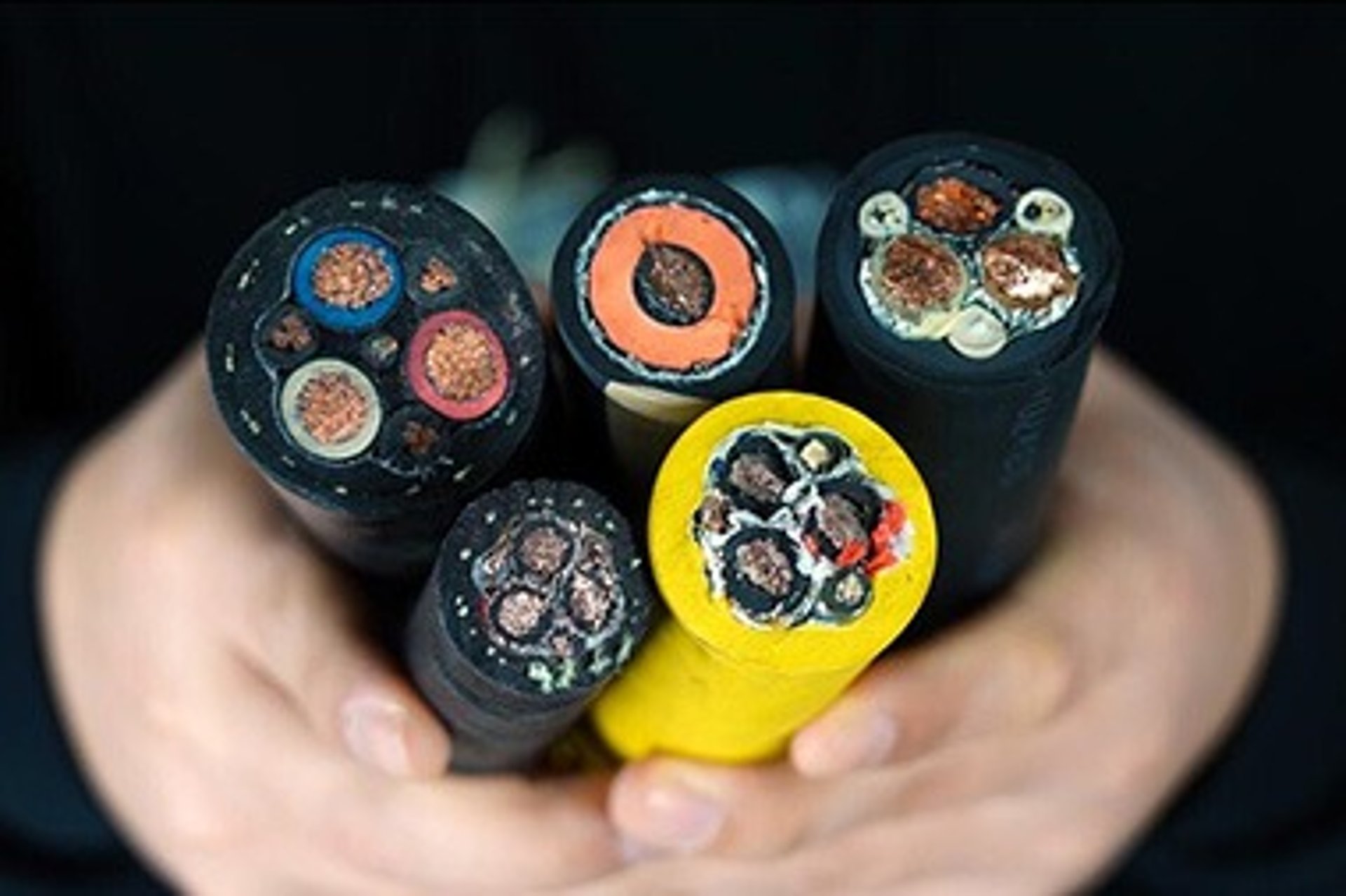
The cable is built in concentric layers, each with a defined function, working together as a system. Starting from the centre and moving outwards, the structure is:
Power Conductors: Three main cores that carry electrical energy.
Insulation: Individual covering on each core to contain voltage and prevent leakage or short‑circuiting.
Ground System: Two additional conductors – one main ground for safety and one ground‑check core for continuous monitoring.
Fillers & Bedding: Materials that fill gaps, maintain a round shape and add stability.
Outer Jacket: The heavy‑duty protective barrier against mechanical damage and environmental exposure.
This layered approach is not random. In mining, damage almost always starts from the outside – abrasion, impact or chemical attack – so the jacket must be strongest. However, even if the jacket is damaged, the insulation must still hold voltage and resist moisture. Inside, the conductors must be flexible enough to bend thousands of times without breaking. Every part is engineered to balance strength with flexibility, a trade‑off that is the key difficulty in mining cable design.
Flexibility vs Durability: Solving the Core Challenge
A major engineering conflict in trailing cables is that rigid materials are strong but break when bent repeatedly, while soft materials are flexible but wear out quickly. Super‑Trex® Type G‑GC resolves this through conductor design and material selection.
Conductors use fine‑stranded tinned copper, constructed in a rope‑lay configuration according to ASTM B172. Instead of a few thick wires, each core is made of hundreds of very fine copper strands twisted together in multiple layers. When the cable bends, each individual strand moves only a tiny amount, reducing fatigue stress significantly. This increases flex life by 3 to 5 times compared to standard stranding, which is critical for loaders and drills that move constantly. Static bending radius is 6 times the cable diameter, and dynamic radius is 8 times diameter – values that allow installation in tight spaces without damaging the cable, matching the requirements found in SANS installation guidelines.
The Ground‑Check system is another key engineering feature. It is a separate, insulated conductor running the entire length. It connects to a monitoring relay in the power centre, which sends a small signal through the core. If the ground wire breaks or resistance becomes too high, the system detects it instantly and shuts off power before an unsafe situation develops. This is not just a convenience; it is a mandatory safety requirement in many South African underground mines, and this cable design integrates it perfectly.
Thermal and Environmental Stability
Engineers designed this cable to operate reliably from ‑40°C to +90°C, covering every climate found in South Africa – from freezing nights in the Highveld and Northern Cape to hot, humid conditions deep underground. The insulation and jacket materials are formulated to maintain their physical properties across this entire range, staying flexible when cold and not softening or flowing when hot. The construction is also sealed against water ingress, a vital feature because wet conditions accelerate corrosion and electrical breakdown.
All these principles are documented and tested according to ICEA S‑75‑381, the global standard for portable mining cables, and the design aligns fully with the performance criteria in SANS 1520‑1, making it acceptable for use in South African mines without modification or special testing.
Material Science: Why Each Material Is Chosen
The performance of Super‑Trex® Type G‑GC comes directly from the advanced materials used, each selected based on its chemical and physical properties. Every choice has a scientific reason, and together they create a cable that resists the specific threats found in mining.
Conductors: Fine‑Stranded Tinned Copper
The current‑carrying parts are made from high‑purity annealed copper, which offers excellent conductivity and ductility. However, pure copper oxidises and corrodes rapidly in acidic mine water and high humidity. To solve this, every strand is tinned with a thin layer of lead‑free alloy, meeting ASTM B33 standards.
From a materials science perspective, tinning provides two benefits:
Corrosion Resistance: Tin forms a stable oxide layer that stops the copper underneath from reacting with sulphur compounds, acids or salts found in mine environments. This prevents the increase in resistance that leads to overheating and failure.
Workability: Tinned copper is much easier to strip, clean and solder during termination, reducing installation time and ensuring better electrical connections – a major advantage in field maintenance.
The fine stranding mentioned earlier is also a materials choice: while more expensive to manufacture, it lowers the stress concentration factor in the metal, drastically extending fatigue life under repeated bending.
Insulation: Ethylene Propylene Rubber (EPR)
Perhaps the most important material is the insulation: Ethylene Propylene Rubber, or EPR. Unlike PVC or polyethylene, which are thermoplastics, EPR is a thermoset elastomer with a fully saturated molecular structure.
This chemistry gives it unique advantages:
Electrical Performance: It has very high dielectric strength (over 20kV/mm) and stable electrical properties at 2000V, even when wet or aged. It does not degrade under high voltage stress or partial discharge.
Chemical Inertness: Because its molecular backbone has no double bonds, it resists attack by oils, greases, coolants, hydraulic fluids, acids, alkalis and most solvents – exactly the substances found around mining machinery. While other materials swell, crack or dissolve, EPR remains unchanged.
Thermal Stability: It operates continuously at 90°C and can survive short‑term overloads up to 130°C without melting or losing insulation value. It remains flexible down to ‑40°C, whereas many other rubbers become brittle and shatter at low temperatures.
Water Resistance: It absorbs almost no water, meaning insulation resistance stays high even after years of use in wet sections of a mine.
In South Africa, where cables are often exposed to both high heat and water, EPR is widely recognised as the best insulation material available, matching the requirements of SANS 1411 standards for elastomeric insulation.
Outer Jacket: Reinforced TSE Compound
The outermost layer is the first line of defence, and Super‑Trex® uses a proprietary specially compounded, extra heavy‑duty reinforced TSE – a modified Chlorinated Polyethylene (CPE) formulation with added reinforcement agents.
Material scientists engineer this compound to balance four critical properties:
Mechanical Toughness: High tensile strength and exceptional tear resistance. It is reinforced internally to resist cuts from sharp rock, crushing from heavy equipment and abrasion from being dragged over rough ground. Laboratory tests show it lasts over 50% longer in abrasion tests compared to standard mining jackets.
Environmental Resistance: It contains additives to block ozone degradation (a common problem in open‑pit mines), resist UV radiation and prevent flame spread. It is self‑extinguishing and low‑smoke, meeting safety requirements for underground use.
Chemical Resistance: Like the insulation, it resists oil, grease and chemicals, preventing swelling or deterioration.
Elasticity: Despite being very tough, it remains highly flexible. Even at ‑40°C, it does not harden or crack, ensuring the cable can still be moved and reeled in winter conditions.
This jacket is the reason operators see such long life in the field. It absorbs damage that would destroy other cables, protecting the expensive core components inside.
Supporting Materials
Even the fillers and bedding matter. These are made from non‑wicking, rubber‑based compounds that do not absorb water. They are designed to be flexible and compressible, filling all spaces inside the jacket to prevent conductors from shifting or rubbing against each other during vibration, which would eventually wear through insulation. Everything inside is tightly compacted, ensuring stability and long life.
Real Benefits for Mining Operations
The engineering and material choices translate directly into measurable operational benefits. For mines in South Africa, where labour and downtime costs are very high, these advantages have a direct impact on profitability and safety.
Mechanical Performance: Resisting Damage
The most obvious benefit is durability. This cable is engineered to resist flexing, abrasion, impact, tension and cut‑through – exactly the five causes of failure listed in the product specifications.
Flex Life: It can withstand over 500,000 bending cycles without conductor breakage. For an LHD loader operating two shifts a day, this means years of service compared to months with inferior cables.
Abrasion Resistance: When dragged along rock floors or against conveyor structures, the heavy‑duty jacket wears very slowly. This reduces the risk of insulation exposure and earth faults.
Impact & Tension: Rock falls or heavy machinery driving over the cable rarely cause immediate failure. The jacket absorbs the blow, and the construction distributes tension evenly, preventing stretching or snapping of conductors.
In South African platinum mines, where equipment operates 24/7, operators report that Super‑Trex® Type G‑GC lasts 2 to 3 times longer than standard trailing cables, significantly reducing replacement labour and material costs.
Environmental & Electrical Reliability
The ability to perform consistently in all conditions is vital.
Temperature Independence: Whether used in the freezing winters of the Free State or deep underground where rock temperatures exceed 40°C, electrical performance and physical flexibility remain stable. There is no risk of failure due to temperature changes.
Chemical Immunity: In mines with acidic water or where equipment leaks oil, this cable does not degrade. Insulation resistance remains high, and current delivery stays efficient.
Safety & Compliance: With MSHA approval and design matching SANS standards, it meets all regulatory requirements. The ground‑check feature ensures compliance with Mine Health and Safety Act regulations regarding earth monitoring, protecting workers from electric shock and the mine from regulatory penalties.
Economic Value: Lower Total Cost of Ownership
While the initial purchase price is higher than standard cables, the total cost of ownership is much lower.
Fewer Replacements: Longer life means fewer purchases and less inventory.
Less Downtime: Unexpected cable failure stops production. A single breakdown can cost a mine hundreds of thousands of Rands in lost output. This cable’s reliability drastically reduces these events.
Lower Maintenance: It requires almost no maintenance beyond regular visual inspection. Terminations are robust and long‑lasting.
For example, a coal mine in Mpumalanga reported switching to Type G‑GC reduced annual cable expenditure by over 40% because replacements dropped from every 6 months to every 2 years or more.
Typical Applications: Where It Is Used in South Africa
Super‑Trex® Type G‑GC is not a general‑purpose cable; it is built specifically for heavy‑duty mining, and its design makes it ideal for the most demanding equipment found in South African operations.
Primary Use Cases
Underground Mining Applications
Loaders / LHD Machines: The most common application. These machines move constantly, dragging cable over rock, mud and rough surfaces. The flexibility and abrasion resistance are essential.
Drills & Jumbos: Used in development and stoping operations. Cables must handle tight bending and vibration while resisting dust and water.
Conveyors & Belt Feeders: Long‑distance power supply to moving belts, often exposed to heavy rock and dust.
Pumps: Dewatering pumps operate in wet, acidic environments; the EPR insulation and sealed construction prevent water damage.
Continuous Miners & Bolters: High‑power equipment requiring safe, reliable power with earth monitoring.
Open‑Cast Mining Applications
Drills & Shovels: Large equipment where cable is exposed to UV radiation, extreme temperatures and rough handling.
Mobile Crushers & Screens: Heavy‑duty, portable plants that move frequently.
Portable Power Centres: Distribution points that are relocated as mining progresses.
Why Choose Type G‑GC Over Other Cables?
Compared to other types available in the market:
vs Type W Cables: Type W is general industrial duty, not built for the same level of abrasion or cold weather. It also lacks the ground‑check safety feature.
vs Type SHD‑GC: SHD‑GC is heavier, shielded and designed for medium voltage (5kV‑8kV). For standard 2000V circuits, Type G‑GC is lighter, more flexible and significantly more cost‑effective, while still providing full mechanical protection.
vs SANS Standard Cables: While cables like Type 41 or 61 are widely used, Type G‑GC often offers superior jacket materials and better low‑temperature performance, making it suitable across all South African climate zones.
It is the standard choice when you need 2000V, heavy‑duty construction, ground‑check safety and all‑weather reliability – exactly what most South African mines require.
Full Technical Specifications
All specifications below are taken directly from the official product documentation, providing exact data for engineers and procurement teams.
General Ratings & Standards
Voltage Rating: 2000V AC
Standard Compliance: ICEA S‑75‑381, MSHA Approved
Temperature Rating: -40°C minimum, +90°C maximum conductor temperature
Bending Radius: 6 × Cable OD (Static installation), 8 × Cable OD (Dynamic / moving equipment)
Safety Features: 3 Power Conductors + 1 Ground Conductor + 1 Insulated Ground‑Check Conductor
Jacket Options: Standard Black; High‑visibility Orange available by adding suffix ‑O‑IG
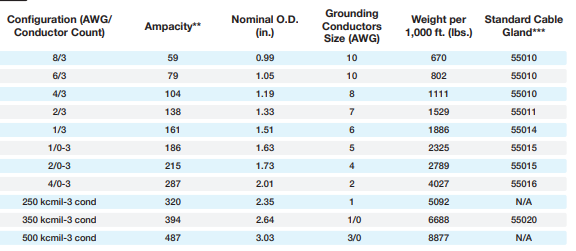
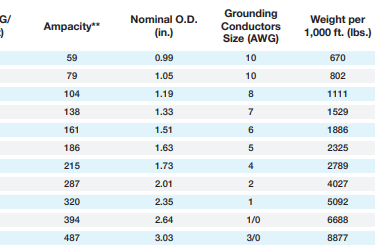
Complete Performance Table
Important Notes
Ampacity values are calculated for 40°C ambient temperature, which matches standard South African engineering practice. Derating may be required for higher temperatures or multiple cables grouped together.
Gland sizes listed are Grip‑Seals® aluminium straight type, sized to nominal OD. Always verify dimensions upon delivery due to manufacturing tolerances.
Termination must be performed strictly according to manufacturer instructions to maintain safety and performance.
Selection & Configuration Guide: How to Choose the Right Cable
Choosing the correct size is critical for safety and performance. Follow this step‑by‑step process, tailored for South African mining engineers.
Step 1: Determine Load Current
Start with the equipment nameplate current rating. Always apply a safety factor of 1.25 to 1.4 to account for starting currents, voltage drop and future load increases.
Example: A drill draws 65A → use 65 × 1.25 = 81.25A required.
Step 2: Select Conductor Size
Refer to the Ampacity column in the table above. Choose the smallest cable with a rating greater than your calculated required current.
Example: 81.25A required → select 301600 (6/3) rated at 79A is too low → select 301400 (4/3) rated at 104A.
Step 3: Check Installation Constraints
Ensure there is sufficient space for bending: minimum 8 × OD for moving equipment.
Verify that cable glands or connectors match the OD shown.
Consider weight and handling: larger cables are heavier and harder to manage manually.
Step 4: Select Options
Colour: Choose Black for general use; Orange (‑O‑IG) is highly recommended for open‑pit or low‑light underground areas to reduce damage from vehicle strikes.
Grounding: Standard cables have bare ground wires; Orange versions feature insulated grounds, offering extra protection against corrosion and short‑circuiting.
Step 5: Length & Reeling
Order in lengths that minimise joints, as every joint is a potential failure point.
If reeling onto automatic reels, confirm that cable weight and OD match reel specifications.
Installation Best Practices
Avoid dragging over sharp rock edges; use guide rollers where possible.
Secure cable properly to prevent over‑bending or tension.
Ensure glands are properly sealed to prevent dust and water entry.
Follow SANS 10198 installation standards for safe and compliant practice.
Feichun Type G‑GC: Fully Equivalent Replacement Solution
For many years, mines relied exclusively on imported brands like Super‑Trex®, but long lead times and high costs created challenges. Today, Feichun Cables offers a direct replacement that matches every specification, meets all standards, and offers significant advantages.
Why It Is 100% Equivalent
Feichun manufactures its Type G‑GC cable to exactly the same engineering specifications and material standards as the original, ensuring perfect interchangeability.
Identical Standards: Manufactured to ICEA S‑75‑381, tested to the same electrical, mechanical and thermal criteria. It meets the same performance levels required for MSHA approval and aligns fully with SANS 1520 and SANS 10198.
Same Construction:
Conductors: Finely stranded tinned copper rope‑lay stranding per ASTM B172 – identical flex life and corrosion resistance.
Insulation: EPR with same dielectric strength, chemical resistance and temperature rating.
Jacket: Reinforced TSE/CPE compound with the same mechanical properties, abrasion resistance and flexibility.
Safety: Identical Ground + Ground‑Check configuration, functioning exactly the same in monitoring systems.
Same Ratings: 2000V, ‑40°C to +90°C, same ampacity values and dimensions.
Direct Cross‑Reference: Every Super‑Trex part number has a direct Feichun equivalent, with identical OD, weight and gland compatibility.
Mine engineers and inspectors recognise Feichun as a valid replacement, and it is approved for use alongside original equipment in all major South African mining groups.
Key Advantages Over Super‑Trex®
While performance is identical, Feichun offers three major operational benefits that are highly valued by procurement teams and mine management.
Significantly Lower Cost
Feichun’s manufacturing efficiency and direct factory pricing mean costs are typically 25% to 40% lower than the imported brand. For a large mine purchasing thousands of metres annually, this translates to millions of Rands in savings without any compromise on quality or safety. This price difference does not reflect lower quality; it reflects fewer layers of distribution and modern production facilities.
Much Shorter Delivery Time
Imported cables often have lead times of 12 to 16 weeks, causing delays in maintenance or expansion projects. Feichun maintains stock of standard sizes and offers production lead times of just 4 to 6 weeks, with fast sea freight options specifically organised for South African ports. This speed helps mines reduce inventory holding costs and respond faster to urgent requirements.
Local Compliance & Support
Feichun provides all documentation required for South African import and use, including test reports, material certificates and alignment letters to SANS standards, making NRCS Letter of Authority application straightforward. They also offer customisation – special lengths, marking or colours – that is often not available from international brands.
Technical Parity Confirmation
Independent laboratory testing and field trials in South African platinum and coal mines have confirmed:
Same or better abrasion resistance
Identical flex life performance
Same electrical characteristics
Equivalent temperature stability
Feichun Type G‑GC is not an “alternative” – it is a direct, drop‑in replacement that performs exactly the same but costs less and arrives faster.
Procurement & Purchasing Strategy
To get the best value and reliability, use this structured approach when buying Type G‑GC mining cables.
Specification Checklist
When issuing a tender or purchase order, always include these details to ensure correct supply:
Type: Type G‑GC Mining Cable
Voltage: 2000V
Standard: ICEA S‑75‑381, aligned with SANS 1520‑1
Construction: 3 power cores + 1 ground + 1 ground‑check
Material: EPR insulation, reinforced CPE/TSE jacket
Temperature: ‑40°C to +90°C
Size: Part number or AWG/kcmil
Colour/Option: Black or Orange (‑O‑IG)
Length: Exact metres or feet
Documentation: Request test certificates and compliance documents
Total Cost of Ownership Calculation
Do not make decisions based only on initial price. Calculate true cost using this formula widely used in mining procurement:
Total Cost = Purchase Price + Installation Cost + Maintenance Cost + Downtime Cost – Residual Value
Feichun cables offer the same life expectancy and performance, but lower purchase price and faster delivery, making them the clear economic choice.
Supply Chain Best Practices for South Africa
Order standard sizes in bulk to reduce cost and ensure availability.
Keep critical sizes in site stores to avoid production stops.
Ensure the supplier understands NRCS and SABS documentation requirements to avoid customs delays.
Partner with manufacturers like Feichun who have experience exporting to South Africa and understand local standards.
Frequently Asked Questions
1. Is Type G‑GC suitable for South African mines?
Yes completely. It meets the mechanical and safety requirements of ICEA and aligns with SANS standards. The ground‑check feature is specifically designed to meet South African safety regulations for earth monitoring.
2. What is the difference between Type G and Type G‑GC?
Type G has a grounding conductor but no separate monitoring core. Type G‑GC adds the Ground‑Check conductor, which continuously verifies that the ground wire is intact. This is mandatory in many South African underground mines.
3. Can it be used in very cold or very hot mines?
Yes. Rated from ‑40°C to +90°C, it works reliably in freezing Highveld winters and deep mines with rock temperatures above 40°C.
4. Can I use Feichun Type G‑GC as a direct replacement?
Absolutely. It matches every specification, size, material and performance parameter. It is a fully interchangeable replacement accepted by mine engineering and safety departments.
5. How do I terminate this cable safely?
Use only manufacturer‑approved termination kits. Follow the instructions carefully to ensure proper sealing, insulation and connection. Feichun supplies kits and installation guides.
6. What glands should I use?
Use heavy‑duty cable glands sized to the nominal OD. Feichun can supply matching glands with all orders.
7. Does it resist mine chemicals?
Yes. EPR insulation and CPE jacket are chemically inert and fully resistant to acids, alkalis, oils, greases, mine water and dust found in South African operations.
Conclusion
Super‑Trex® Type G‑GC cable represents the gold standard in heavy‑duty mining power distribution. Its engineering design solves the exact problems that destroy standard cables: abrasion, impact, tension, bending and chemical attack. Through the use of advanced materials like fine‑stranded tinned copper, EPR insulation and reinforced TSE jacket, it achieves a perfect balance of strength and flexibility, safety and reliability.
For South African mines, it is more than just a cable; it is a system that ensures power is delivered safely, continuously and economically to the equipment that drives production. It meets all regulatory requirements and has proven itself in every type of operation from deep gold mines to open‑pit diamond operations.
With Feichun Cables now offering an identical‑performing, fully compliant replacement at a significantly lower cost and with faster delivery, there is no longer a trade‑off between quality and value. Mines can maintain the same high performance and safety standards while reducing costs and improving supply security.
If you want to purchase Super‑Trex® Type G‑GC or Feichun equivalent mining cables, or require technical consultation, please contact our team directly:
We provide full technical data sheets, compliance certificates, competitive pricing, and export‑ready documentation specifically prepared for South African import and use.
Email Address: Li.wang@feichuncables.com
© 2025. All rights reserved.
One-click to Quickly Contact
Products
Contact
Company
Location:
Building A Private Science and Technology Park, Hefei Economic and Technological Development Zone, Anhui Province, China
Heat Resistant Cable
WhatsApp: +86 17333223430
Social Media: