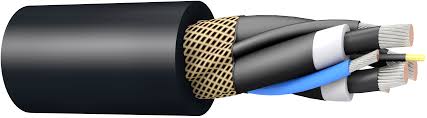
TENAX SAS Power Supply Cable for Trailing Applications Cold Flexible Version Up to -50°C
TENAX SAS Power Supply Cable: Offering Robust Abrasion Resistance, Enhanced Safety, and Reliable Power for Shovels and Draglines in Demanding Environments
TENAX SAS
Power supply cable for trailing applications cold flexible version up to -50°C
Application | Power supply cable for large mobile equipment in mines. Trailing cable for shovels and draglines in trailing and reeling applications. Outer sheath is robust, tough against abrasion and tearing, fully flexible down to -50°C. | |
Global Data | Brand | Feichun TENAX-SAS |
Type Designation | NTSCGEWOEU | |
Standard | DIN VDE 0250-813 | |
Certifications/Approvals | Fire Certificate of Russian Federation, GOST K, GOST B | |
Design Features | Conductor | Tinned copper, finely stranded (class 5), according to DIN VDE 0295 |
PE-Conductor | Tinned copper, finely stranded (class 5) with semi-conductive special rubber compound | |
Insulation | Rubber, Compound type: EPR 3GI3 | |
Electrical Field Control | Inner and outer layer of semiconductive rubber compound, cold strippable outer layer | |
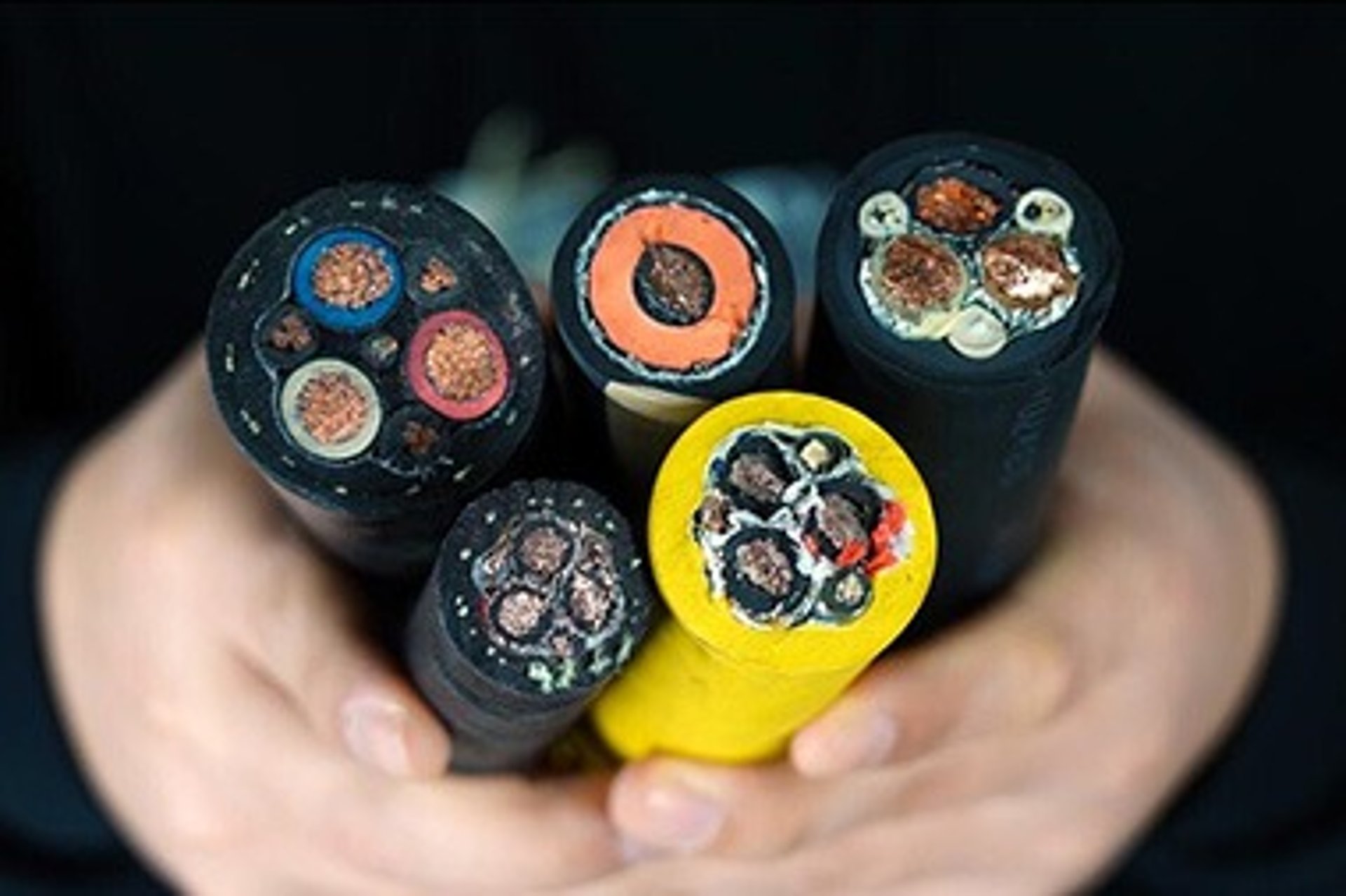
Core Arrangement | Cores laid up around conductive central cradle separator with aramid rope in the center | |
Inner Sheath | Rubber sheath, Special compound: 5GM3 (mechanical properties) | |
Pilot Conductor | Tinned copper, finely stranded (class 5), EPR-Insulation | |
Outer Sheath | Rubber, compound type: better 5GM5, acc. to DIN VDE 0207 part 21; Color: Black | |
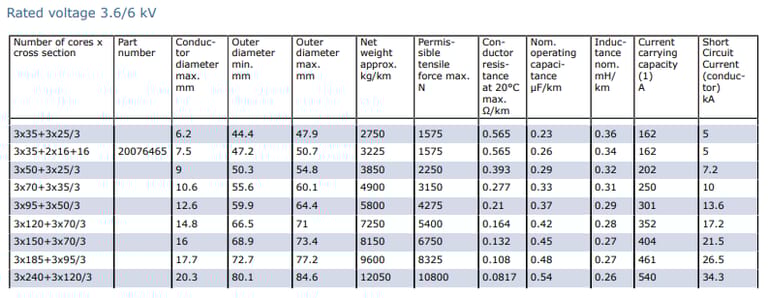
Electrical Parameters | Rated Voltage | 3.6/6 kV |
Max. Permissible Operating Voltage AC | 4.2/7.2 kV | |
Max. Permissible Operating Voltage DC | 5.4/10.8 kV | |
AC Test Voltage | 11 kV | |
Chemical Parameters | Resistance to Fire | EN 60322-1-2, IEC 60322-1-2 |
Resistance to Oil | EN 60811-404, IEC 60811-404 | |
Weather Resistance | Unrestricted use outdoors and indoors, resistant to ozone and moisture | |
Thermal Parameters | Max. Permissible Temperature at Conductor | 90 °C |
Max. Short Circuit Temperature of the Conductor | 250 °C | |
Ambient Temperature for Fixed Installation (Min) | -50 °C | |
Ambient Temperature for Fixed Installation (Max) | 80 °C | |
Ambient Temperature in Fully Flexible Operation (Min) | -50 °C | |
Ambient Temperature in Fully Flexible Operation (Max) | 60 °C | |
Mechanical Parameters | Max. Tensile Load of Cable | 25 N/mm² |
Bending Radii (Min) | According to DIN VDE 0298 part 3 | |
Minimum Distance with S-Type Directional Changes | 20 x D | |
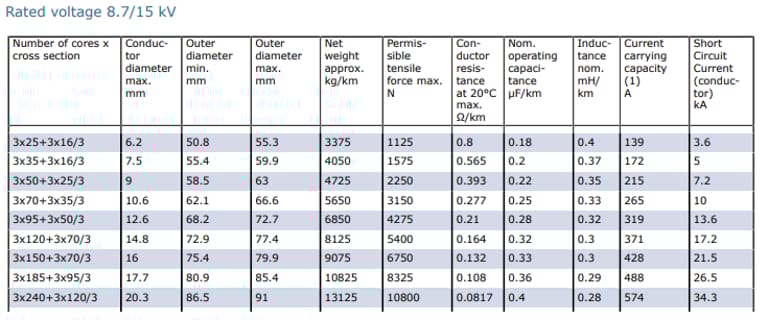
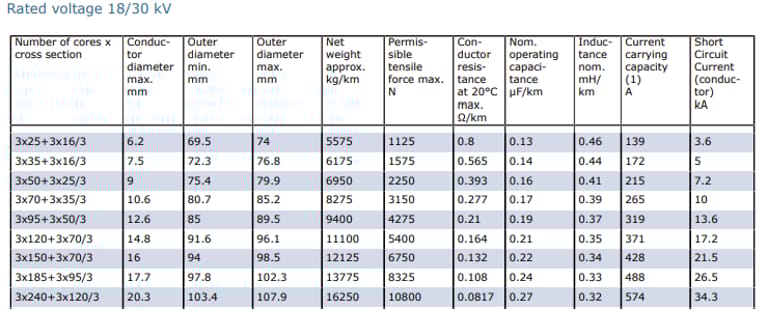
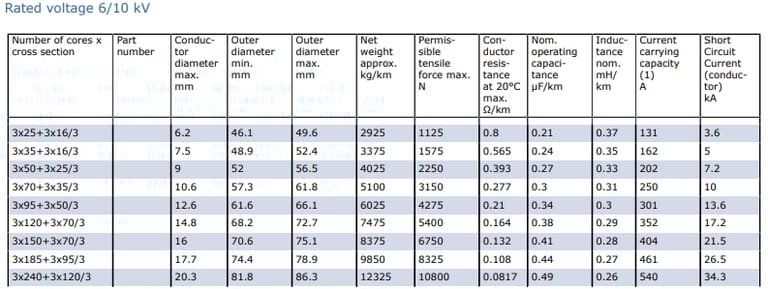
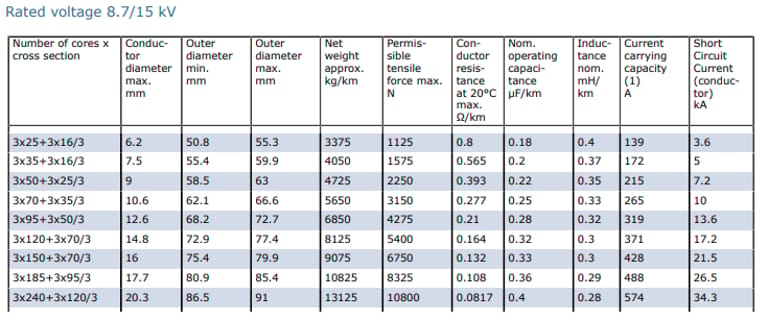
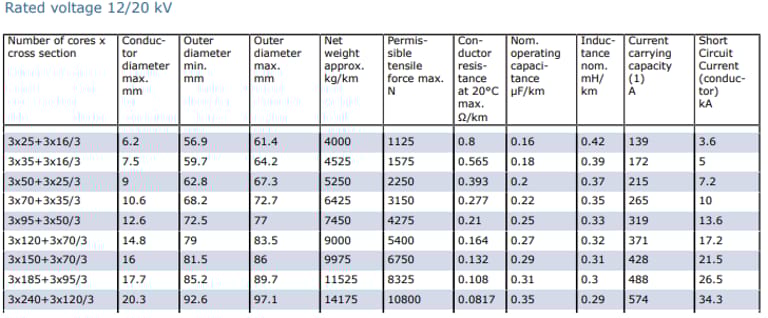
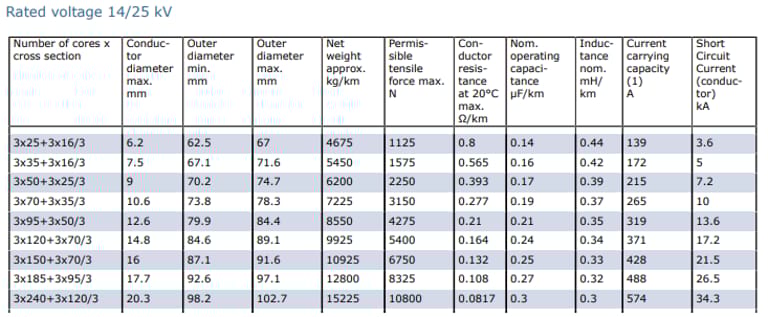
Voltage Ratings (kV) | 6/10, 6.9/12, 9/18, 17; 8.7/15, 10.4/18, 13.5/27, 24; 12/20, 13.9/24, 18/36, 29; 14/25, 17.3/30, 22.5/45, 36; 18/30, 20.8/36, 27/54, 43 |
What is the TENAX SAS Power Supply Cable?
At its core, the TENAX SAS is a medium-voltage power supply cable tailored for trailing applications, meaning it's dragged or reeled behind mobile equipment without compromising performance. Manufactured under the brand TENAX-SAS with the type designation NTSCGEWOEU, it adheres to the stringent DIN VDE 0250-813 standard. This ensures compliance with international quality benchmarks, including certifications like the Fire Certificate of the Russian Federation, GOST K, and GOST B, making it suitable for global deployment.
The cable's design is a marvel of materials science. Conductors are made from tinned copper, finely stranded in class 5 configuration per DIN VDE 0295, providing excellent flexibility and conductivity. The PE-conductor similarly uses tinned copper with a semi-conductive special rubber compound, enhancing electrical stability. Insulation employs Ethylene Propylene Rubber (EPR) type 3GI3, known for its dielectric strength and resistance to environmental stressors.
Electrical field control is achieved through inner and outer layers of semi-conductive rubber, with the outer layer being cold-strippable for easy maintenance. The cores are laid up around a conductive central cradle separator, reinforced with an aramid rope at the center for added tensile strength. An inner sheath of special 5GM3 rubber compound bolsters mechanical properties, while a pilot conductor—also tinned copper with EPR insulation—allows for monitoring and control functions.
The outer sheath, crafted from an enhanced 5GM5 rubber compound per DIN VDE 0207 part 21 in black, is the cable's armor against the elements. This sheath is extremely robust, offering superior resistance to abrasion and tearing, crucial in trailing applications where cables endure constant friction against rocky surfaces.
Electrically, the TENAX SAS supports rated voltages from 3.6/6 kV up to 18/30 kV, with maximum AC operating voltages reaching 20.8/36 kV and DC up to 27/54 kV. It passes an 11 kV AC test voltage, ensuring safety under load. Chemically, it's resistant to fire (per EN 60332-1-2 and IEC 60332-1-2), oil (EN 60811-404 and IEC 60811-404), ozone, and moisture, allowing unrestricted indoor and outdoor use.
Thermally, it operates with a maximum conductor temperature of 90°C and can handle short-circuit spikes up to 250°C. Ambient temperatures for fixed installations range from -50°C to 80°C, and for fully flexible operations from -50°C to 60°C—key for cold flexibility in trailing setups.
Mechanically, it boasts a maximum tensile load of 25 N/mm², minimum bending radii per DIN VDE 0298 part 3, and a 20x diameter minimum distance for S-type directional changes. Available in various voltage ratings like 6/10 kV, 8.7/15 kV, and up to 18/30 kV, it's versatile for different power needs.
This combination of features makes the TENAX SAS a specialized tool for power supply in large mobile mining equipment, particularly in cold, abrasive environments.
Advantages in Extreme Conditions
The TENAX SAS power supply cable's advantages shine in scenarios where standard cables falter. Its cold flexibility down to -50°C is a game-changer; traditional cables become brittle in sub-zero temperatures, leading to cracks and failures. The specialized rubber compounds—EPR for insulation and 5GM5 for the sheath—retain elasticity, allowing seamless reeling and trailing even in Arctic-like conditions. This reduces downtime, a critical factor in mining where every hour lost costs thousands.
Abrasion and tear resistance are paramount. In trailing applications, cables are dragged over rough terrain, exposed to rocks, debris, and mechanical stress. The robust outer sheath withstands this punishment, extending service life and minimizing replacement costs. Compared to conventional PVC or XLPE cables, which degrade faster under abrasion, the TENAX SAS's rubber formulation offers superior toughness.
Safety is enhanced through features like the semi-conductive layers for electrical field control, preventing partial discharges that could lead to failures or hazards. The pilot conductor enables real-time monitoring, alerting operators to issues before they escalate. Fire and oil resistance add layers of protection in volatile mine settings, where flammable materials abound.
Energy efficiency is another boon. With tinned copper conductors minimizing resistance, power loss is reduced, crucial amid global pushes for sustainable mining. In cold environments, where equipment efficiency drops, reliable power delivery optimizes performance of shovels and draglines, boosting productivity.
Versatility extends to various voltage levels, accommodating different equipment scales. Its compliance with standards ensures easy integration into existing systems, and the black sheath provides UV resistance for outdoor longevity.
Overall, the TENAX SAS reduces total ownership costs through durability, reliability, and low maintenance, making it ideal for operators facing harsh conditions.
Usage Scenarios in Mining
Primarily, the TENAX SAS serves as a power supply cable for large mobile equipment in mines, excelling in trailing and reeling applications with shovels and draglines. Shovels, massive excavators scooping ore, require constant power while moving; the cable trails behind, enduring bends and pulls. Draglines, used in strip mining, reel cables over long distances, testing flexibility and strength.
In open-pit mines, especially in cold regions like Canada's tar sands or Russia's Siberian operations, the -50°C flexibility prevents operational halts during winter. For underground mines, its robustness suits tunneling equipment, though it's optimized for surface trailing.
Beyond mining, it could adapt to other trailing needs, like port cranes or heavy construction in cold climates, but its certifications target mining rigor.
In reeling systems, the cable's tensile load capacity handles dynamic stresses, ensuring smooth payout and retrieval. Operators in remote, cold sites benefit from its weather resistance, reducing weather-related failures.
Frequently Asked Questions
What makes the TENAX SAS suitable for cold environments? Its specialized rubber compounds maintain flexibility at -50°C, preventing brittleness unlike standard cables.
How does it handle abrasion in trailing applications? The 5GM5 outer sheath is extremely tough, resisting tears and wear from constant dragging.
What voltages does it support? From 3.6/6 kV to 18/30 kV, with higher options like 20.8/36 kV AC.
Is it fire-resistant? Yes, compliant with EN 60332-1-2, ideal for mine safety.
Can it be used in South African mines? Absolutely, via distributors like Powermite, aiding in energy crisis mitigation.
What's the maximum tensile load? 25 N/mm², ensuring durability in dynamic setups.
How does it compare to other cables? Superior cold flexibility and robustness set it apart for extreme trailing.
Maintenance tips? Regular inspections for wear; the cold-strippable layer eases repairs.
Environmental impact? Oil and ozone resistance promote longevity, reducing waste.
Where to buy? Through certified suppliers adhering to DIN standards.