Anhui Feichun Special Cable Co.,Ltd Email: Li.wang@feichuncables.com
The Importance of SABS and SANS: A Comprehensive Guide for South Africans – With a Deep Focus on Electrical Cables
Discover why SABS (South African Bureau of Standards) and SANS (South African National Standards) matter to every South African, from everyday braai tongs to SANS 1507 PVC-insulated cables. This 2500-word guide unpacks history, roles, cable-specific standards like SANS 10142-1, certification processes, and FAQs in plain South African English.
Li. Wang
10/31/20258 min read
Why SABS and SANS Matter to Every South African
If you’ve ever fired up the braai with a trusty pair of tongs, flicked on a light switch without worrying about sparks, or driven over a bridge that doesn’t wobble, you’ve already benefited from the work of the South African Bureau of Standards – better known as SABS – and the South African National Standards, or SANS. These two entities are the unsung heroes keeping our daily lives safe, reliable, and up to scratch.
Let’s get the basics straight right away, because plenty of folks still mix them up. SABS is the statutory body – the actual organisation headquartered in Groenkloof, Pretoria, that employs the boffins, runs the labs, and stamps the famous SABS Mark on products. SANS are the published standards themselves – the detailed technical documents that spell out exactly how thick a cable’s PVC insulation must be, or how much load a roof truss can carry before it gives way.
This guide is written in plain South African English – no fancy jargon unless we’re talking cables, where terms like dielectric strength or sheath thickness are part of the game. We’ll walk you through the history, the institution, the standards, and then dive deep into the electrical cable sector – because if there’s one place where cutting corners can literally spark disaster, it’s in the wiring that powers our homes, factories, and cities. By the end, you’ll know exactly how to spot a proper SANS-compliant cable, what the SABS Mark really means, and why these two acronyms should matter to every proud South African.
Historical Background: From 1945 to the 2008 Standards Act
The story of SABS begins in 1945, when South Africa was still finding its industrial feet after World War II. The Standards Act, 1945 (Act No. 24 of 1945) established the South African Bureau of Standards as a statutory body tasked with creating uniformity in everything from bricks to butter. Back then, the country needed reliable benchmarks to rebuild and grow its manufacturing base.
Fast-forward to the 1990s. As apartheid ended and South Africa rejoined the global economy, the pressure was on to align local quality with international norms. SABS rose to the challenge, harmonising many SANS documents with ISO and IEC standards. This wasn’t just about exports – it was about ensuring that the geyser in your Rondebosch home wouldn’t explode because some dodgy manufacturer skimped on pressure ratings.
The big shake-up came in 2008. The Standards Act, 2008 (Act No. 8 of 2008) split the regulatory muscle from the standardisation muscle. SABS kept its core jobs: developing SANS, running commercial testing and certification, and promoting quality. But the enforcement of compulsory specifications – those non-negotiable safety rules – moved to a new kid on the block, the National Regulator for Compulsory Specifications (NRCS), which falls under the Department of Trade and Industry.
A proud milestone? South Africa was a founding member of ISO in 1947, and SABS still holds the secretariat for SADCSTAN, the standardisation body for the 14-nation Southern African Development Community. That’s clout on the continental stage.
SABS – The Institution Behind the Standards
Under the Standards Act, 2008, SABS has three clear mandates:
Develop, promote, and maintain South African National Standards (SANS)
Promote quality in commodities, products, and services
Render conformity assessment services – that’s the fancy term for testing, certification, and inspection.
Physical Footprint
The nerve centre sits in Groenkloof, Pretoria, but SABS isn’t a Jo’burg-only show. You’ll find regional offices in Durban, Cape Town, Port Elizabeth, and East London, plus specialised testing facilities in Richards Bay (think coal and heavy industry), Secunda (petrochemicals), Middelburg (steel), and Saldanha (marine). In 2009, SABS even opened a representative office in Shanghai, giving South African exporters a foothold in the world’s biggest manufacturing hub. Today, SABS services reach 46 countries.
Accreditation
SABS labs are accredited by SANAS (South African National Accreditation System) and the Dutch RvA (Raad voor Accreditatie). That double stamp means test results from an SABS lab in Durban are accepted in Amsterdam without question.
Commercial Arm
This is where SABS earns its keep. Besides writing standards, it offers:
Product certification (full SABS Mark scheme)
System certification (ISO 9001, 14001, etc.)
Consignment inspection (batch-by-batch checks for importers)
Laboratory testing – the biggest ISO/IEC 17025-accredited suite in Africa.
SANS – The Standards Themselves
A SANS is a published document containing technical specifications that can be used as rules, guidelines, or definitions. Think of it as the recipe book for industry. SABS maintains a live database of more than 6,500 SANS, and the list is never static – standards are born, revised, or retired as technology and society evolve.
How Standards Are Born
Every SANS starts life in a technical committee packed with stakeholders: manufacturers, regulators, academics, consumer bodies, and even trade unions. These committees ensure the final document reflects real-world needs and national priorities, like boosting local manufacturing or cutting energy waste.
International Harmony
Most SANS are harmonised with ISO, IEC, or other global bodies. For example, SANS 9001 is identical to ISO 9001. This alignment is gold for exporters – a cable made to SANS 1507 in Nigel can plug straight into a European spec without re-testing.
Legal Status
Here’s the crucial bit: SANS are voluntary unless cited in regulation. Build a house? The National Building Regulations and Building Standards Act, 1977 (Act 103 of 1977) makes SANS 10400 compulsory. Sell electrical cables? Certain SANS become mandatory via NRCS compulsory specifications (more on that in the cable section).
SABS and SANS in the Electrical Cable Sector
South Africa’s homes, factories, and mines run on electricity – and electricity runs on cables. One dodgy joint or undersized conductor can start a fire, trip a substation, or worse. That’s why the cable industry is one of the most tightly regulated under SABS and NRCS.
Principal Cable Standards
Here are the heavy hitters every electrician, builder, and procurement officer should know:
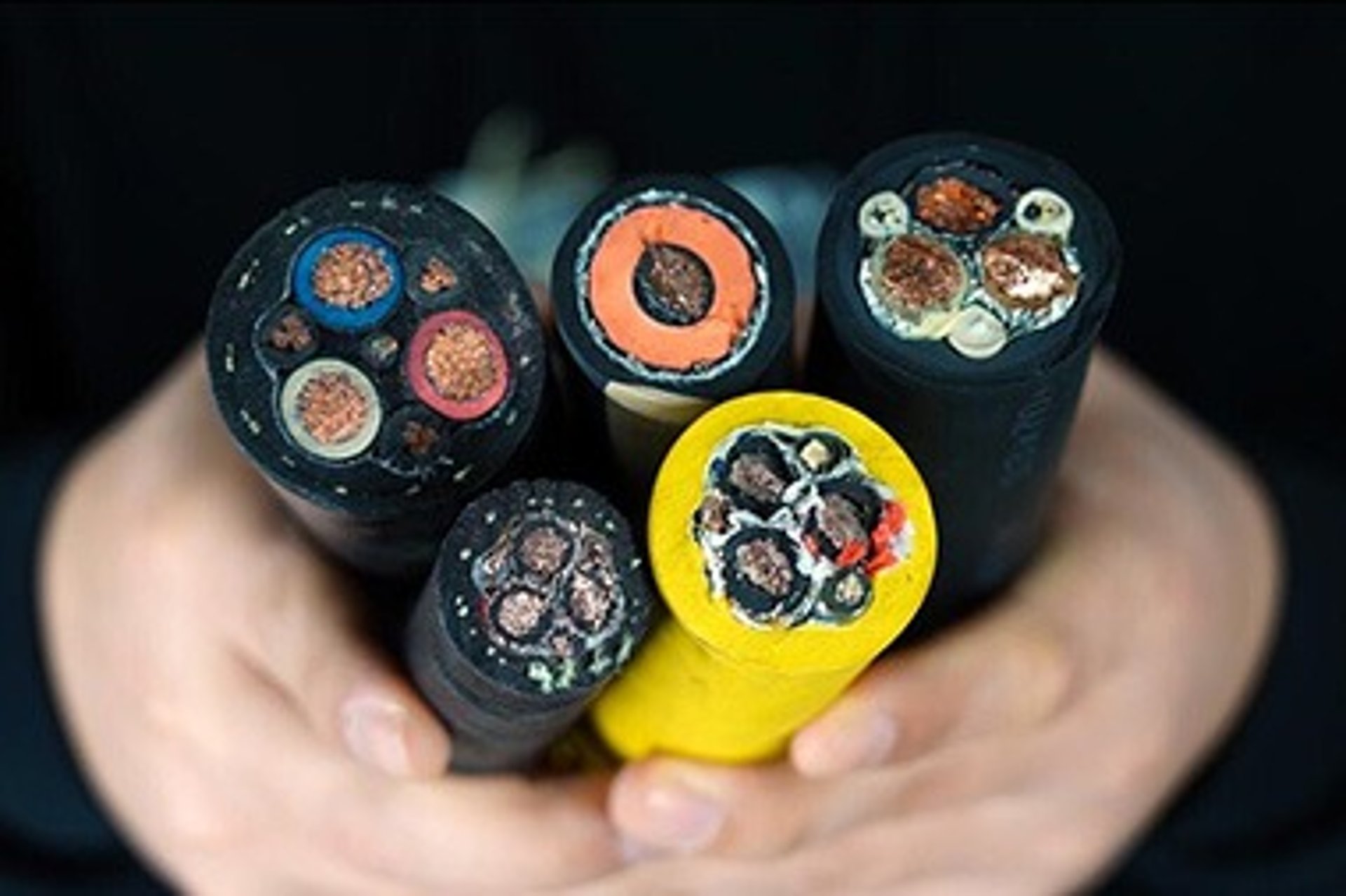
SANS 1507 – PVC-insulated electric cables for fixed installations Covers single-core and multi-core cables up to 600/1000 V. Specifies conductor material (copper or aluminium), insulation thickness, voltage rating, and colour coding (red/black/blue for phases, green-yellow for earth).
SANS 1574 – Flexible cords and flexible cables Think appliance leads and extension cords. Mandates double insulation, tinned conductors for corrosion resistance, and braid armour where needed.
SANS 1339 – Electric cables with extruded solid dielectric insulation for fixed installations (3.3 kV to 33 kV) Medium-voltage armoured cables – the backbone of Eskom distribution networks.
SANS 97 – Electric cables – Impregnated paper-insulated metal-sheathed cables for rated voltages 3.3/3.3 kV to 19/33 kV Legacy standard still referenced for older installations.
SANS 10142-1 – The wiring of premises – Part 1: Low-voltage installations The electrician’s bible. Dictates everything from cable sizing (current-carrying capacity tables) to earthing, bonding, and circuit breaker selection.
NRCS Compulsory Specifications (VC Numbers)
Even if a manufacturer claims “SANS compliant”, certain cables fall under NRCS compulsory specifications. Miss these, and you’re selling illegally:
VC 8008 – PVC-insulated cables for fixed wiring (links to SANS 1507)
VC 8075 – Safety of flexible cords and appliance cables (links to SANS 1574, SANS 1661)
NRCS issues a Letter of Authority (LOA) after SABS or another SANAS-accredited lab verifies compliance. No LOA = no sale.
SABS Certification Process for Cable Manufacturers
Getting the SABS Mark on a cable reel is no rubber stamp. Here’s the journey:
Type Testing A sample reel goes to an ISO/IEC 17025 lab (usually SABS campus in Pretoria). Tests include:
Conductor resistance at 20 °C (to verify cross-section)
Insulation resistance and dielectric strength (high-voltage soak)
Flame propagation (vertical burn test per SANS 60332-1)
Sheath thickness and overall diameter (measured with micrometres)
Marking durability (ink must survive 30 seconds of petrol wipe)
Factory Production Control (FPC) Audit SABS auditors visit the plant. They check:
Raw material certificates (Cu purity ≥ 99.9 %)
Extruder temperature logs (PVC compound must hit 160–180 °C)
In-line spark testers (every metre checked for pinholes)
Batch traceability (from spool number to test cert)
Award Decision Pass everything? You earn the full SABS Mark (permit number printed on the cable). Fail? You get Listed Product status (allowed to sell but no mark) or a rejection.
Local-Content Verification
Government tenders often demand minimum local content. SABS verifies this per SANS 1286 and the Preferential Procurement Policy Framework Act (PPPFA). A cable with 90 % local copper, extrusion, and labour gets a higher B-BBEE score than an imported Chinese reel.
Common Non-Conformances
Wrong colour coding: Using brown instead of red for phase – instant fail. Fix: Train operators on SANS 1507 Table 3.
Sheath too thin: Measured 1.1 mm instead of 1.2 mm minimum. Fix: Calibrate extruder die.
Oversized conductor: Claims 2.5 mm² but measures 2.3 mm². Fix: Buy certified copper rod with mill certificate.
Missing marking: No “SANS 1507” or voltage rating printed. Fix: Upgrade printer and QA checks.
SABS Commercial Services Explained
Product Certification vs Consignment Inspection
Product certification = full SABS Mark after type testing + ongoing audits.
Consignment inspection = one-off batch check for importers who don’t want full certification. Cheaper, but no mark.
Laboratory Capabilities
SABS boasts Africa’s largest ISO/IEC 17025 suite. Cable labs in Pretoria can run 66 kV partial discharge tests, salt-spray corrosion on armoured cables, and even UV ageing for solar farm leads.
Training Academy
Need to upskill? SABS offers:
SANS/ISO 9001 (quality management)
SANS/ISO 45001 (occupational health & safety)
Cable-specific courses on SANS 10142-1 installation rules and SANS 1507 manufacturing.
The SABS Mark
That little blue-and-white logo screams “SABS-approved”. Internationally, it’s recognised in SADC, the EU (via ILAC mutual recognition), and even China. Spot it on a cable drum? You’re buying peace of mind.
International Dimension
SABS is South Africa’s official member body for ISO and IEC. Every year, South African experts sit on technical committees drafting standards that later become SANS. Example: the global shift to low-smoke zero-halogen (LSZH) cables influenced updates to SANS 1507.
For exporters, SANS/ISO alignment is a golden ticket. A Cape Town manufacturer with SANS 1507 certification can ship to Germany without extra tests – saving weeks and thousands of rands.
Frequently Asked Questions (FAQ)
Q: Is it correct to call a product an “SABS standard”?
No. SABS is the organisation; SANS are the standards. Saying “this cable is an SABS standard” is like calling your braai a Weber recipe. Correct: “This cable complies with SANS 1507 and carries the SABS Mark.”
Q: What is the difference between SABS certification and NRCS compulsory specification?
SABS certification is voluntary (but prestigious). NRCS compulsory specifications are mandatory for certain products (e.g., VC 8008 cables). You can have SABS Mark without NRCS LOA (if not compulsory), but never NRCS LOA without passing SABS-type tests.
Q: How do I know if a cable complies with SANS 10142-1 on site?
Check the drum label for:
“SANS 10142-1”
Voltage rating (300/500 V or 600/1000 V)
Conductor size (e.g., 2.5 mm²)
SABS permit number or NRCS LOA number Then measure with a micrometer and multimeter if you’re extra cautious.
Q: Can a small cable manufacturer afford SABS certification?
Yes, but it’s an investment. Initial type testing costs R50,000–R100,000; annual audits R20,000+. Many SMEs start with consignment inspection (R5,000 per batch) and scale up once export orders roll in.
Q: What happens if a product with the SABS Mark fails in service?
SABS investigates. If manufacturing fault, the permit is suspended, product recalled, and manufacturer blacklisted. Consumers can claim via the Consumer Protection Act.
Q: Are older SABS standards (pre-2008) still valid
Only if still listed in the SABS catalogue and not superseded. Example: SANS 1574:2001 was replaced by SANS 1574:2015 – use the latest.
Q: How often are cable standards updated, and who decides?
Every 5–7 years or when technology changes (e.g., solar micro-inverters). Technical committees vote; SABS publishes the new edition.
Q: Where can I download SANS documents?
Buy from the SABS Webstore (store.sabs.co.za). Free viewing at SABS libraries in Pretoria, Durban, and Cape Town. NRCS compulsory specs are on their website.
Conclusion
From the water in your kettle to the armoured cable feeding a Soweto substation, SABS and SANS are the invisible threads holding South African quality together. The Bureau writes the rules, runs the labs, and slaps on the trusted mark; the standards themselves are living documents that evolve with our needs – greener, smarter, safer.
For the cable industry, compliance isn’t just paperwork – it’s the difference between a reliable grid and a midnight blackout. Whether you’re an electrician in Polokwane, a procurement manager in Sandton, or a homeowner in Khayelitsha, knowing your SANS 1507 from your VC 8008 keeps money in your pocket and sparks out of your walls.
So next time you see that little SABS Mark on a reel of house wire, give it a nod. It’s proof that South Africa’s got standards – and they’re world class.
Email Address: Li.wang@feichuncables.com
© 2025. All rights reserved.
One-click to Quickly Contact
Products
Contact
Company
Location:
Building A Private Science and Technology Park, Hefei Economic and Technological Development Zone, Anhui Province, China
Heat Resistant Cable
WhatsApp: +86 17333223430
Social Media: