Anhui Feichun Special Cable Co.,Ltd Email: Li.wang@feichuncables.com
The Ultimate South African Guide to BS6622 Medium-Voltage Armoured Cables
Looking for a complete guide to BS6622 medium-voltage armoured cables? This in-depth South African technical article explains BS6622 standards, MV cable construction, voltage ratings, applications, and real case studies in mining, utilities, and renewable energy. Covers 11kV, 22kV, and 33kV BS6622 cables, XLPE/SWA/PVC, MDPE sheathing, and SANS compliance.
Li Wang
12/8/20255 min read
Why BS6622 Cables Matter in South Africa
If you work in South Africa’s mining, utility, industrial, or renewable energy sectors, you know that medium-voltage (MV) reliability is non-negotiable. Power dips shut down conveyor belts, overheating cables halt mining ventilation systems, and insulation failures trigger costly substation outages. In some mining operations, a single hour of downtime can cost more than R1 million.
That’s exactly why BS6622 medium-voltage armoured cables (3.8/6.6kV to 19/33kV) have become a backbone of South African MV distribution. Designed for durability, thermal stability, and mechanical strength, they operate reliably in environments that include:
Limpopo’s rocky platinum belts
Northern Cape solar fields
KZN’s humid coastal industrial zones
Gauteng municipal substations
Deep shaft mining networks in Rustenburg
South Africa’s harsh conditions—heat, UV, chemical soils, impact forces, rodent activity, and high fault levels—demand more than average cables. BS6622 MV cables deliver that toughness.
These cables dominate 11kV, 22kV, and 33kV distribution networks due to:
Globally trusted British cable engineering
Long-term stability under thermal and electrical stress
Mechanical protection through SWA/AWA armouring
Compatibility with SANS 10198 installation practices
Understanding the BS6622 Standard
Scope of BS6622
BS6622 is the reference standard for armoured medium-voltage power cables used in fixed installations. It covers:
Voltage classes: 3.8/6.6kV → 19/33kV
Cables for substations, industrial plants, mines, and distribution networks
Single-core AWA (Aluminium Wire Armour)
Three-core SWA (Steel Wire Armour)
In other words, these are the “workhorse” cables that feed South Africa’s MV grid.
Types of Cables Covered
BS6622 includes multiple constructions, such as:
XLPE/PVC/SWA/PVC
XLPE/PVC/SWA/MDPE
XLPE/AWA/PVC for single-core feeders
EPR-insulated variants for high-temperature or chemical resistance needs
Single-core cables → typically aluminium armour (AWA)
Three-core cables → galvanised steel wire armour (SWA)
Key Compliance Tests Required by the Standard
Every BS6622 cable must pass strict IEC-aligned testing, including:
Electrical strength / HV withstand tests
Insulation and sheath integrity
Armour fault current capability test
Hot set test (for thermoset insulation)
Fire behaviour tests (including CPR for PVC sheaths)
Water penetration, corrosion & ageing resistance
This makes BS6622 one of the most dependable MV cable standards for long-term installations.
Cable Construction Explained (Layer-by-Layer)
The design of a BS6622 cable is what gives it strength, stability, and reliability.
Conductor
Options include:
Copper Class 2 stranded — preferred in:
Mining
Substations
High mechanical load applications
Aluminium Class 2 stranded / Class 1 solid — preferred in:
Long feeders
Renewable collector systems
South African trend:
CU for critical loads | AL for long-distance cost-efficient feeders
Insulation (XLPE or EPR)
XLPE (GP8) – the most common
90°C operating temperature
Low dielectric loss
Excellent ageing performance
EPR (GP7) – selected for:
Marine/coastal plants
Chemical processing facilities
High thermal overload capability
Insulation Screen
A semi-conductive extruded layer that ensures:
Uniform electric field distribution
Reduced partial discharge (PD)
Improved long-term dielectric stability
Metallic Screen
Made from copper wires or copper tape.
Functions:
Carries earth fault current
Reduces electromagnetic interference (EMI)
Provides a return path for protection devices
Inner Sheath (Bedding)
Usually PVC
Separates the armour from the inner layers
Adds mechanical cushioning
Armour Layer (AWA or SWA)
AWA – Aluminium Wire Armour
Used for single-core cables because:
Reduced eddy current losses
Non-magnetic behaviour
SWA – Steel Wire Armour
Used for three-core cables:
Highest mechanical protection
Excellent crush and impact resistance
Essential in:
Mines
Construction zones
High-vandalism areas
Outer Sheath Options
PVC
Indoor installations
CPR compliant
Good fire characteristics
MDPE (Medium-Density Polyethylene)
Superior abrasion resistance
Chemical and moisture resistant
Best for direct burial, especially in:
Free-draining soil
Rural feeders
Renewable energy plants
Voltage Ratings and System Categories
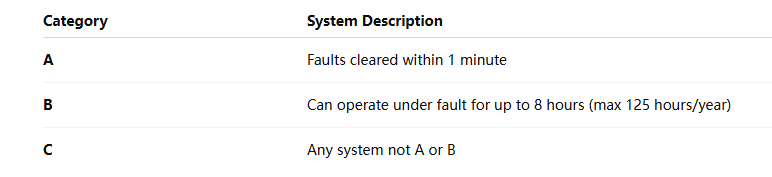
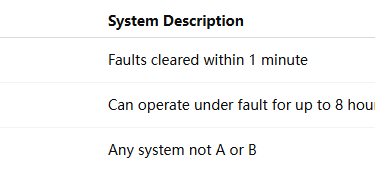
Understanding Categories A, B, and C
BS6622 defines systems based on how faults are managed.
Choosing the Right Voltage Rating
South African examples:
6.35/11kV (12kV) – municipal feeders, substations
12.7/22kV – industrial zones, mines, processing plants
19/33kV – solar/wind collector systems, long-distance distribution
South African Environmental Considerations
High daytime temperatures → XLPE withstands 90°C and overloads
Rocky or compacted soils → SWA armour essential
Chemical soils → MDPE outperforms PVC
UV-intensive environments → MDPE again preferred
Vandal-prone areas → Steel armour adds protection
Typical BS6622 Cable Models and Their Real Applications
BS 6622 CU XLPE AWA/SWA PVC 3.8/6.6kV
Used for:
Light industries
Smaller substations
Local distribution upgrades
BS 6622 XLPE PVC 6.35/11 (12) kV Cable
The most widely used MV cable in South Africa.
Installed by:
City Power Johannesburg
Tshwane Municipality
eThekwini Municipality
Seen in:
MV ring networks
Distribution substations
Underground reticulation in estates
BS 6622 XLPE PVC 12.7/22kV Cable
Used for heavy electrical loads such as:
Mining ventilation fans
Large conveyor systems
Industrial plants
Water pumping stations
BS 6622 XLPE MDPE 19/33kV Cable
Increasingly popular in renewable energy:
Wind farms
Solar farms
Collector lines
Transmission tie-ins
Technical Specifications and Electrical Parameters
A complete BS6622 MV cable specification includes:
Conductor sizes: 35 mm² to 630 mm²
Current-carrying capacity: varies by installation method
Short-circuit ratings: thermal withstand for 1 second
Minimum bending radius:
Typically 12 × diameter for armoured cables
Armour fault-current capability
Dielectric strength test examples:
11kV cable → tested at ~24kV AC
33kV cable → tested at ~70kV AC
Installation Considerations in South Africa
Direct Burial
Challenges:
High soil resistivity
Rocky terrain
Termites & rodents
Moisture variation
MDPE sheaths perform best outdoors.
Installation in Air or Cable Ladder
Important factors:
Ventilation
Support spacing
UV-resistant sheaths
Surge/EMI in industrial zones
Use in Mines
Why SWA/XLPE is preferred:
High mechanical stress
Mobile machinery movement
Elevated temperatures
Copper conductors handle overloads better
Safety and Compliance
Follow:
SANS 10198 (South African installation standard)
Proper earthing and bonding
Fire performance checks in indoor applications
South African Case Study
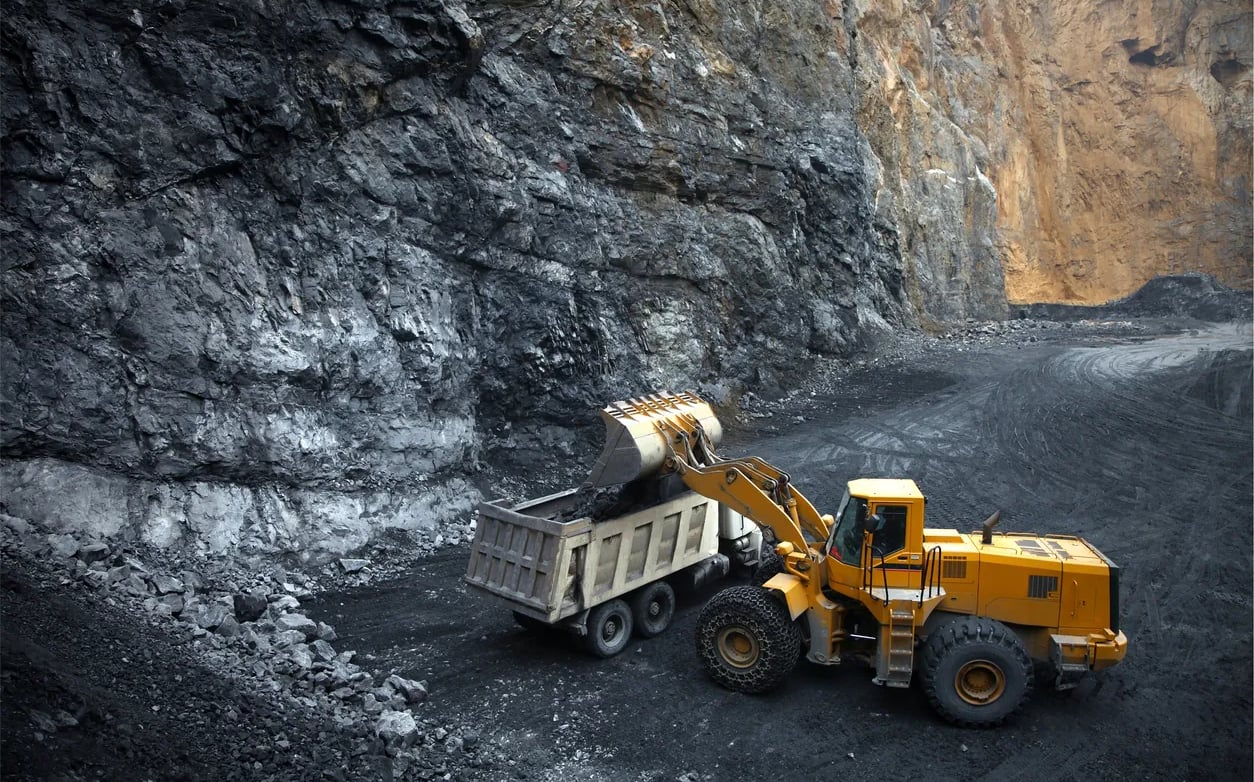
11kV BS6622 Cable Upgrade in a Limpopo Platinum Mine
Problem
A platinum operation in Limpopo suffered:
Frequent voltage drops
Repeated insulation failures
MV tripping during peak loads
Old PVC-insulated feeders were buried in rocky soil and damaged by loaders and haul trucks.
Solution
Upgrade to:
BS6622 CU XLPE/SWA/PVC 6.35/11kV cable
Installed via direct burial with protective bedding.
Results
28% reduction in unplanned downtime
Fault clearance aligned with protection curves
Armour prevented further mechanical failures
Improved power stability for ventilation and dewatering pumps
Lessons
SWA armour is essential in mining
XLPE insulation prevents thermal ageing
Upgrading cables directly boosts productivity
Advantages of BS6622 Cables for South African Users
High mechanical durability
Excellent thermal performance of XLPE
Compatible with 11kV / 22kV / 33kV networks
Wide selection of constructions (PVC / MDPE / SWA / AWA)
Long lifespan even in harsh environments
Recognised globally → simplified procurement and compliance
Lower failure rates → lower OPEX
Limitations and Practical Considerations
Heavier than unarmoured cables
Requires MV-qualified jointers/terminators
Not suitable for mobile equipment in mines (use SANS mining trailing cables)
Requires correct bedding for rocky terrain
FAQ
Q1: What is the difference between AWA and SWA armour?
AWA = aluminium, for single-core
SWA = steel, for three-core
AWA avoids eddy current heating.
Q2: Can BS6622 cables be used in underground mines?
Yes — but only for fixed installations, not mobile machinery.
Q3: Is MDPE better than PVC in South Africa?
Yes, for outdoor burial.
PVC is better for indoor installations.
Q4: What voltage levels does BS6622 cover?
From 3.8/6.6kV to 19/33kV.
Q5: Are BS6622 cables compatible with SANS requirements?
Yes — they integrate fully with SANS 10198 installation practices.
Q6: Are BS6622 cables suitable for renewable energy?
Absolutely — 22kV and 33kV BS6622 cables are widely used in solar and wind plants.
Conclusion
BS6622 remains one of the most trusted MV cable standards in South Africa. Whether you are powering a mine, utility network, or renewable energy project, these cables provide:
Mechanical durability
Thermal and electrical stability
Long service life
Wide adaptability
Installations proven across South Africa
Selecting the right construction—PVC or MDPE, AWA or SWA, copper or aluminium—ensures safe, reliable, low-maintenance MV performance for decades.

Contact Anhui Feichun Special Cable Co., Ltd.
For comprehensive technical specifications and quotations, please contact our specialized mining cable engineering team:
Technical Engineering Support:
Sales Engineering Department:
WhatsApp Contact:
Manufacturer: Anhui Feichun Special Cable Co., Ltd. (安徽飞纯特种电缆有限公司)
Manufacturing Headquarters: Building A, Private Science and Technology Park, Hefei Economic and Technological Development Zone, Anhui Province, People’s Republic of China
+86 17333223430
Email Address: Li.wang@feichuncables.com
© 2025. All rights reserved.
One-click to Quickly Contact
Products
Contact
Company
Location:
Building A Private Science and Technology Park, Hefei Economic and Technological Development Zone, Anhui Province, China
Heat Resistant Cable
WhatsApp: +86 17333223430
Social Media: