Anhui Feichun Special Cable Co.,Ltd Email: Li.wang@feichuncables.com
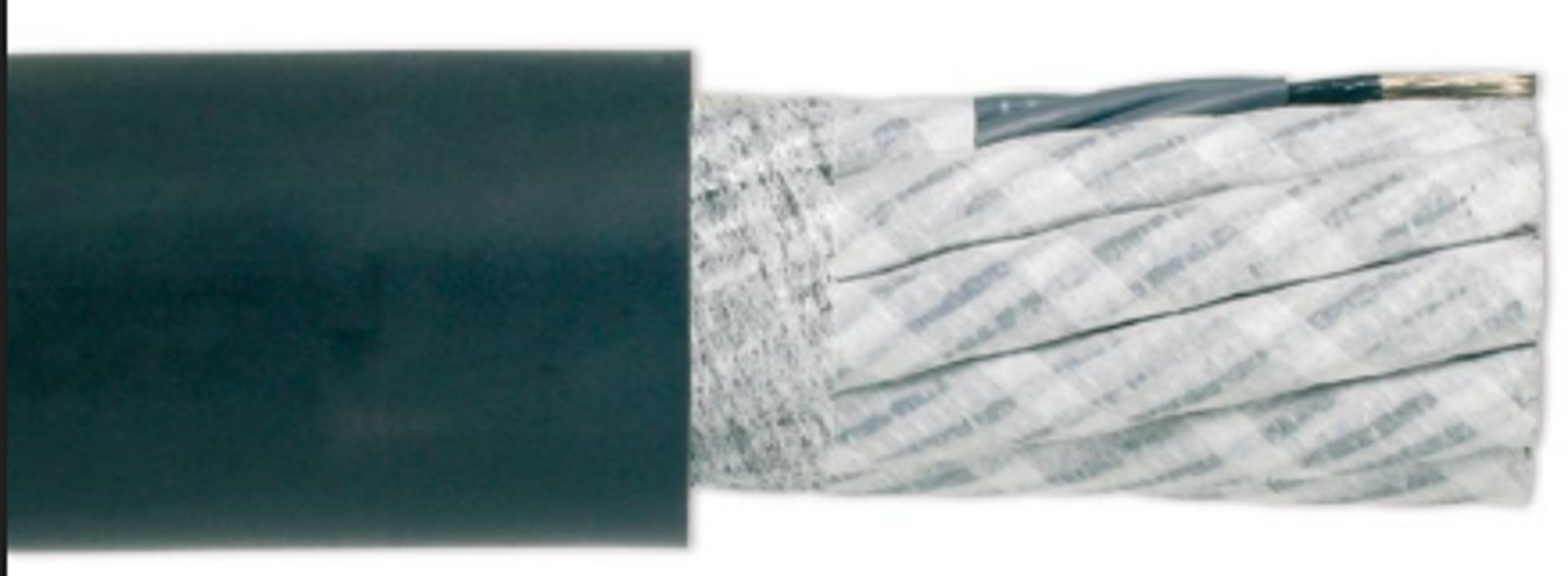
TRATOSCOILFLEX® | TRATOSCOILFLEX-K® | TRATOSCOILFLEX-FO®: Heavy Duty Cable for Basket Operation with Zero-Catastrophic-Failure Performance
TRATOSCOILFLEX®, TRATOSCOILFLEX-K® & TRATOSCOILFLEX-FO® are heavy duty cables for basket operation, delivering zero catastrophic failures. Explore engineering principles, material science, performance benefits & global applications in high‑rise, offshore & extreme environments.
Li Wang
5/6/202630 min read
Power transmission cables form a vital but often overlooked component of safety systems for high-altitude work. When personnel operate in suspended baskets hundreds of metres above the ground, the reliability of every cable directly impacts human safety and operational continuity. For decades, the industry has faced persistent challenges as standard cables struggle to withstand the unique mechanical and environmental conditions found in these applications. The TRATOSCOILFLEX® series – including TRATOSCOILFLEX®, TRATOSCOILFLEX-K®, and TRATOSCOILFLEX-FO® – was developed specifically to address these challenges, establishing itself as a heavy duty cable for basket operation that delivers consistent performance even in the most demanding settings. This article explores the underlying reasons why high-rise basket operations place exceptional demands on power cables, explains how the TRATOSCOILFLEX® range achieves its industry-leading safety record, and provides a detailed technical analysis of its construction, materials, and real-world performance. Drawing on over 1,000 global installations, we will examine how this technology reduces risk, lowers long-term costs, and sets new benchmarks for reliability in suspended work applications.
The Unique Challenges of High-Rise Basket Operations
High-altitude basket operations take place across a wide range of environments, from the facades of skyscrapers in dense urban centres to offshore wind farms and industrial facilities in remote locations. Regardless of the setting, these applications share one critical characteristic: the power and control cables that serve the basket must operate under conditions that are significantly more severe than almost any other industrial scenario. Understanding why this is the case requires looking closely at the mechanical forces at play and how they affect cable performance over time.
What Makes Basket Operations So Demanding?
When workers step into a suspended basket, they rely entirely on the integrity of the equipment that keeps them connected to the building or support structure. Power cables serve two essential purposes: they deliver electricity to operate hoists, lighting, tools and communication systems, and they often house control conductors that link safety systems to ground-based controls. In most industrial settings, cables are either fixed in place or move in predictable, controlled patterns. Basket operations are different – here, cables are subject to continuous, unpredictable movement while carrying significant loads, all in environments that can range from baking heat to freezing cold, from bright sunlight to damp, enclosed spaces.
Industry data shows that cable failure is one of the most common causes of downtime and safety incidents in suspended access work. Unlike equipment failures that occur at ground level, a cable failure at height can have catastrophic consequences, including loss of power, loss of control, or even complete separation of the basket from its power and safety systems. What makes these failures particularly concerning is that they often happen gradually, with signs of deterioration going unnoticed until a critical event occurs.
Basket-Suspension Mechanical Stress: The Root Cause of High Risk
To understand why standard cables struggle in these applications, we need to examine the mechanical environment created by basket suspension systems. This environment is defined by three key characteristics that combine to create what engineers describe as one of the most severe stress regimes found in any industrial application.
Dynamic Alternating Stress Cycles
The most significant challenge comes from the continuous movement of the basket and the cables attached to it. Even in apparently calm conditions, a suspended basket is never perfectly still. The movement of workers inside the basket, the operation of tools, and the action of wind all cause the basket to sway, rotate, and move vertically. This movement transfers directly to the cables, creating a cycle of tension and relaxation, bending and straightening, and twisting and untwisting that repeats constantly throughout every working day.
In tall structures exceeding 100 metres in height, these effects become even more pronounced. Wind patterns at altitude are more turbulent and variable, creating complex, multi-directional forces that cause the basket to move in irregular patterns. The frequency of these stress cycles typically ranges from a few times per minute to several times per second, depending on conditions. Over the course of months or years of operation, this creates millions of stress cycles – exactly the conditions that lead to material fatigue and eventual failure.
When we compare this to other applications where heavy duty cables are used, the difference becomes clear. Crane reeling cables, for example, move in largely predictable patterns, with stress cycles occurring less frequently and with more consistent force. Mining trailing cables usually move along fixed paths where bending and twisting are minimised. Even in offshore applications, where conditions are harsh, the movement is generally slower and less variable than in basket operations. It is this combination of high frequency, multi-directional movement, and variable force that makes basket operation uniquely demanding.
Stress Concentration at Anchor Points
While the entire length of the cable is subject to stress, the most severe conditions occur at the points where the cable is fixed or changes direction – particularly at the basket entry point and at the top suspension anchor. These locations act as focal points where forces from the entire length of the cable converge, creating what engineers call stress concentration.
In a typical installation, the cable must bend sharply as it enters the basket or passes through suspension fittings. Space constraints often mean that this bending radius is quite small, frequently less than eight times the cable diameter. When a cable bends, the outer portion stretches while the inner portion compresses, creating significant mechanical strain. At anchor points, this bending is repeated thousands of times, with each cycle adding stress to the same section of material. In standard cables, this is where the first signs of failure usually appear: conductors begin to break, insulation develops cracks, and the outer sheath starts to split.
The situation is made worse when the basket tilts or moves sideways. This creates lateral forces that push the cable against the edges of fittings or guide holes, adding shear stress to the already complex mix of tension and bending forces. Over time, this combination creates wear patterns that weaken the cable structure and accelerate the failure process.
Self-Weight and Superimposed Loads
For high-rise applications, the length of cable required can be substantial – often 200 metres or more. At these lengths, the cable’s own weight creates significant axial tension, even when there is no additional load. This tension acts continuously on the entire cable length, but it is most severe at the upper anchor point where the full weight of the cable is supported. When combined with dynamic forces from movement and wind, the total load on the cable can reach levels that standard cables are simply not designed to withstand.
This sustained tension also affects the internal components of the cable. Conductors stretch under load, reducing their cross-sectional area and increasing electrical resistance. Insulation materials are pulled thin, reducing their dielectric strength and increasing the risk of electrical breakdown. Over time, this gradual deterioration makes the cable more susceptible to failure, even under normal operating conditions.
Why Standard Cables Fail in These Conditions
Standard power and control cables are designed primarily for fixed installations or applications where movement is limited and controlled. Their construction relies on relatively thick conductors, basic insulation materials, and standard outer sheaths that perform well in many situations but cannot cope with the combination of forces found in basket operations.
In practice, this means that standard cables typically fail in one of three ways. Conductors break due to metal fatigue after repeated bending and tension. Insulation cracks or delaminates as the polymer material ages under stress and exposure. Outer sheaths tear or wear through, exposing internal components to moisture, dust and physical damage. The result is usually a cable life of just two to four years, even with careful maintenance. More importantly, these failures can occur suddenly and without warning, creating serious safety risks for personnel working at height.
TRATOSCOILFLEX® Series: Engineered for Zero Catastrophic Failure
The TRATOSCOILFLEX® series was developed specifically to address the challenges we have just examined. From the outset, the engineering team focused on one overriding goal: to create a heavy duty cable for basket operation that would never fail in a way that endangers personnel or interrupts essential safety systems. This ambitious objective led to a fundamental rethinking of cable design, with every component and material selected to perform reliably under the most severe conditions. The result is a range of products – TRATOSCOILFLEX®, TRATOSCOILFLEX-K®, and TRATOSCOILFLEX-FO® – that together provide solutions for every type of suspended access application.
Design Philosophy: Safety as the Foundation
The design approach behind TRATOSCOILFLEX® is based on what engineers call defence-in-depth – the idea that no single component or system should be solely responsible for safety. Instead, multiple layers of protection work together to ensure that even if one part of the cable is damaged or degraded, the overall system remains safe and functional. This philosophy is evident in every aspect of the cable’s construction, from the materials used to the way internal components are arranged.
Mechanical protection ensures that the cable can withstand forces far greater than those encountered in normal operation. Electrical systems are designed with redundancy and insulation levels that remain effective even under extreme conditions. Environmental protection prevents damage from moisture, temperature, and chemical exposure. And for applications where maximum safety is required, integrated monitoring systems provide real-time information about the cable’s condition, allowing potential problems to be identified and addressed before they become critical.
This approach means that the TRATOSCOILFLEX® series does not just meet existing standards – it sets new benchmarks for what is possible in heavy duty cable performance. Across more than 1,000 installations worldwide, these cables have achieved a perfect record of zero catastrophic failures, proving that the design philosophy works in real-world conditions.
Key Features at a Glance
Each variant in the TRATOSCOILFLEX® range shares a common core of advanced features, with specific adaptations to suit different operating environments and requirements.
TRATOSCOILFLEX® is the standard model, designed for general basket operation in most climates and environments. Its construction includes double-layer Kevlar reinforcement capable of supporting loads up to 2,000 Newtons, providing mechanical redundancy that ensures the cable cannot break under normal operating conditions. The insulation system uses lead-free materials that fully comply with EU RoHS standards, making it safe for users and environmentally responsible throughout its lifecycle. Inside, ultra-flexible conductors made from 0.16 mm fine strands allow the cable to bend to very small radii at anchor points without damaging the copper or reducing performance. The insulation itself is made from specialised EPR material rated for continuous operation at 90°C, with a working temperature range extending from -40°C up to +90°C. For applications where advanced safety monitoring is required, the cable can be supplied with integrated fibre optics that enable real-time condition monitoring and predictive maintenance.
TRATOSCOILFLEX-K® is the low-temperature variant, engineered specifically for use in cold climates, high-altitude locations, and winter operations. While it shares most features with the standard model, its materials have been adjusted to maintain flexibility and performance at very low temperatures. It operates reliably from -40°C up to +60°C, making it ideal for regions where winter temperatures remain below freezing for extended periods or for high-altitude installations where temperatures are consistently low.
TRATOSCOILFLEX-FO® represents the most advanced version of the technology, incorporating integrated fibre optics as a standard feature rather than an option. This design allows continuous monitoring of temperature, strain, vibration, and physical movement throughout the entire length of the cable. It is particularly suited to critical applications where the highest levels of safety assurance are required, such as offshore installations or very tall structures.
How Zero-Catastrophic-Failure Performance Is Achieved
The exceptional reliability of the TRATOSCOILFLEX® series comes from the way all its features work together as an integrated system. The double-layer Kevlar structure carries almost all of the mechanical load, ensuring that the copper conductors never experience enough tension to stretch or break. The ultra-fine conductor design ensures that even when the cable bends sharply, the stress on individual copper strands remains well below fatigue limits. The insulation and sheath materials are chemically stable and mechanically robust, resisting the effects of weathering, temperature change and physical wear.
For critical applications, the fibre optic monitoring system adds another layer of protection by continuously measuring parameters that indicate the cable’s health. This means that changes in performance that would be invisible to visual inspection can be detected immediately, allowing maintenance or replacement to be scheduled before any safety risk develops.
By combining robust construction with active monitoring, the TRATOSCOILFLEX® series achieves a level of reliability that was previously thought impossible. It addresses the root causes of failure rather than just treating symptoms, creating a heavy duty cable for basket operation that truly protects personnel and equipment.
Deep Dive: Engineering Principles Behind TRATOSCOILFLEX® Technology
To fully appreciate the advantages of the TRATOSCOILFLEX® series, we need to look closely at the engineering decisions and material science that underpin its performance. Every aspect of its construction has been carefully optimised to address the specific challenges of basket operation, with solutions based on rigorous testing and decades of engineering experience.
Lead-Free Insulation Engineering and RoHS Compliance
For many years, cable insulation relied on lead-based stabilisers to improve thermal stability and processing characteristics. While effective, these additives presented significant environmental and health risks throughout the product lifecycle, from manufacturing to disposal. As regulations like the EU RoHS Directive restricted the use of hazardous substances, manufacturers faced the challenge of developing alternatives that could match or exceed the performance of lead-containing materials.
The insulation system used in TRATOSCOILFLEX® represents a significant advance in this area. By replacing lead compounds with carefully engineered combinations of organic tin complexes, metallic soaps and epoxy derivatives, the material achieves excellent thermal stability and mechanical performance without compromising safety or environmental standards. This formulation offers several advantages beyond simple compliance. The dielectric properties are more consistent across a wide temperature range, ensuring reliable electrical performance even in extreme conditions. Resistance to thermal ageing is improved, extending the service life of the insulation. And because the material does not contain heavy metals, it can be recycled or disposed of safely at the end of its working life.
RoHS compliance is often viewed simply as a regulatory requirement, but in the case of TRATOSCOILFLEX®, it is also an indicator of quality. The testing and certification processes required to meet these standards ensure that the material composition is consistent and reliable, with none of the variability that can occur with less rigorously controlled formulations. This translates directly into better performance and longer service life in real-world applications.
Double-Layer Kevlar Mechanical Support Structure
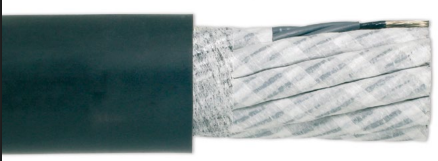
The most distinctive feature of TRATOSCOILFLEX® construction is its double-layer Kevlar reinforcement system. Kevlar, a high-modulus aramid fibre, was selected for its exceptional combination of properties: it has a tensile strength approximately five times greater than steel by weight, it is highly resistant to fatigue and chemical attack, and it maintains its performance across a wide temperature range.
The reinforcement is arranged in two distinct layers, each with a specific function. The inner layer sits directly over the insulation system, providing radial support and resistance to torsional forces. It prevents the cable from being compressed or twisted excessively, protecting the internal conductors and insulation from mechanical damage. The outer layer is positioned closer to the surface of the cable, where it carries the majority of the axial tension created by the cable’s weight and operational forces. Together, these two layers create a composite structure that is far stronger and more durable than a single layer could ever be.
The angle at which the Kevlar fibres are wound is also critical to performance. Engineering analysis showed that an angle of 54 degrees plus or minus three degrees provides the optimal balance between tensile strength and flexibility. At this angle, the fibres naturally adjust their orientation when the cable is stretched, allowing the structure to elongate slightly without placing excessive stress on individual fibres. This design also means that even if one layer becomes damaged or degraded, the other retains sufficient strength to support the full load of the cable, providing a vital safety margin.
Load testing has confirmed that this system can safely support forces up to 2,000 Newtons – more than three times the maximum load typically encountered in basket operations. This substantial safety margin ensures that even in unexpected conditions, the cable remains mechanically intact.
Ultra-Flexible Fine-Strand Conductor Technology (0.16 mm Design)
The conductors inside any cable are arguably its most critical components, but they are also the most vulnerable to mechanical stress. In standard cables, conductors are made from relatively thick copper strands to ensure adequate current carrying capacity and mechanical strength. However, thick strands are much more susceptible to fatigue failure when subjected to repeated bending.
The TRATOSCOILFLEX® series addresses this problem by using strands with a diameter of just 0.16 millimetres – significantly finer than those found in conventional cables. This design is based on a fundamental principle of material mechanics: the stress experienced by a wire during bending is directly proportional to its diameter. By reducing the strand diameter from the 0.5 millimetres common in standard cables to just 0.16 millimetres, the bending stress is reduced by approximately 70 percent. This dramatic reduction in stress means that the conductors can withstand millions of bending cycles without developing fatigue cracks or breaks.
These fine strands are carefully bundled and twisted together using precise manufacturing techniques to ensure uniform distribution of force across all strands. The lay length – the distance required for a strand to complete one full turn around the bundle – is carefully controlled to balance flexibility and structural integrity. This arrangement also allows individual strands to move slightly relative to each other when the cable bends, further reducing stress concentrations and improving fatigue life.
There are also electrical benefits to this design. The small strand diameter approaches the dimensions where the skin effect – the tendency for alternating current to flow primarily near the surface of conductors – becomes negligible. This results in more uniform current distribution, lower AC resistance, and reduced heating during operation. The overall effect is a conductor system that is both mechanically robust and electrically efficient.
Specialised EPR 90°C Insulation Material Chemistry
Insulation materials must perform multiple functions simultaneously: they must prevent electrical breakdown, resist physical damage, remain stable across temperature extremes, and withstand environmental degradation. The material chosen for TRATOSCOILFLEX® is an ethylene-propylene rubber (EPR) formulation that has been specially developed to meet these demanding requirements.
The chemical structure of EPR makes it an ideal choice for this application. Unlike many other polymers, EPR has a fully saturated carbon-carbon backbone, meaning there are no double bonds that can be attacked by oxygen, ozone or UV radiation. This inherent stability provides excellent resistance to ageing and degradation, even after years of exposure to harsh conditions. By adjusting the ratio of ethylene to propylene monomers and adding small amounts of specialised third monomers, the material can be engineered to have exactly the right balance of properties: flexibility at low temperatures, strength at high temperatures, and excellent electrical performance.
The formulation includes advanced heat stabilisers and anti-oxidants that extend the operating temperature range well beyond what is possible with standard EPR compounds. The result is a material that maintains its electrical and mechanical properties continuously from -40°C up to +90°C, with short-term overload capability up to 120°C. This performance is achieved while retaining excellent flexibility, so the insulation does not become brittle in freezing conditions or soft and prone to damage in hot environments.
From an electrical perspective, the material offers exceptional performance. It has a dielectric constant below 2.5 and volume resistivity greater than 10^16 ohm-centimetres, figures that remain consistent across the entire temperature range. Even when fully saturated with water, the insulation resistance drops by less than 10 percent, ensuring safety is maintained in damp conditions. These properties make it far superior to PVC, which becomes stiff at low temperatures and degrades rapidly above 70°C, or cross-linked polyethylene, which is rigid and prone to cracking under repeated bending.
The addition of nano-scale silica particles acts as a reinforcing agent, increasing tensile strength to approximately 12 megapascals while keeping elongation at break above 300 percent. This combination means the insulation can stretch and recover repeatedly without permanent damage or loss of performance, a critical characteristic for applications where cables are constantly moving and flexing.
Custom Polychloroprene TRATOSCOILFLEX-OS® Outer Sheath
The outer sheath forms the first line of defence against the external environment, and its performance directly influences the service life of the entire cable. For the TRATOSCOILFLEX® series, engineers developed a specialised polychloroprene formulation known as TRATOSCOILFLEX-OS®, designed specifically to meet the unique demands of basket operation.
Polychloroprene was selected as the base material because of its naturally balanced properties. It offers excellent resistance to oil, chemicals, ozone and UV radiation, while remaining mechanically tough and abrasion-resistant. The custom formulation modifies the molecular structure by adjusting crystallinity levels and cross-link density, creating a material that performs reliably across the full operating temperature range. At low temperatures down to -40°C, it retains sufficient elasticity to bend and flex without cracking or becoming rigid. At high temperatures up to 90°C, it maintains its shape and mechanical strength, resisting softening or flow under load.
Mechanical testing shows the material achieves a tear strength greater than 20 kilonewtons per metre and an abrasion resistance three times higher than standard sheath compounds. This means it can withstand contact with building edges, rough surfaces and moving components without wearing through or sustaining damage. Its surface properties also reduce friction, allowing the cable to slide smoothly through guide fittings and suspension points with minimal wear to itself and the equipment it contacts.
Safety characteristics were also a priority in the formulation. The presence of chlorine atoms in the polymer structure gives the material inherent flame-retardant properties, so it will not support combustion and will self-extinguish if an external heat source is removed. When exposed to fire, it produces low levels of smoke and releases only non-toxic gases, making it suitable for use in confined spaces and enclosed structures where evacuation might be delayed.
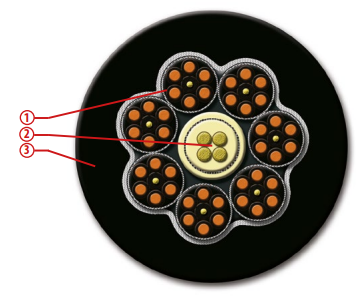
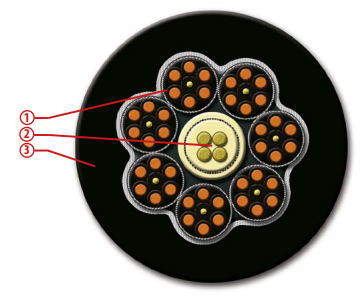
Multi-Core Bundled Electrical Configuration (36–54 Cores)
Modern suspended basket systems require multiple electrical circuits to deliver power, transmit control signals, carry communication data and support safety monitoring functions. Running separate cables for each system creates installation complexity, increases weight, and multiplies the number of potential failure points. The TRATOSCOILFLEX® series solves this through an integrated multi-core design, combining between 36 and 54 individually insulated cores within a single cable structure.
The internal arrangement follows a carefully planned architecture that optimises both performance and durability. Power-carrying cores are positioned in the innermost layer where they are best protected from physical damage and where their magnetic fields are contained within the cable structure. Control and signal cores occupy intermediate layers, separated from power conductors by shielding materials to prevent electromagnetic interference. At the very centre of the cable, optical fibres are housed within their own protective structure, keeping them away from mechanical stress and electrical noise.
Each individual core is insulated with the same high-performance EPR material used for main insulation, ensuring consistent quality and reliability throughout the cable. Between cores, resilient filler materials absorb shocks and vibrations, preventing cores from rubbing against each other and reducing noise transmission. Multiple layers of binding tape hold the assembly together securely while allowing sufficient flexibility for normal operation.
This integrated approach offers significant practical advantages. It reduces installation time and complexity, as only one cable needs to be handled and connected. It lowers the overall weight compared to multiple separate cables, reducing load on suspension systems. And it provides built-in redundancy, with spare cores available if any circuit becomes damaged or additional functions are required in the future. The number of cores can be adjusted within the 36 to 54 range to match specific project requirements, ensuring the cable meets exact needs without unnecessary complexity or cost.
TRATOSCOILFLEX-K®: Optimised for Low-Temperature Environments
While the standard TRATOSCOILFLEX® model performs well down to -40°C, some applications require reliable operation at the very bottom of this range or in regions where low temperatures persist for months at a time. For these situations, TRATOSCOILFLEX-K® has been developed with material formulations specifically optimised for cold climate performance.
The primary difference lies in the insulation system, which uses an ethylene-propylene-diene monomer (EPDM) compound rather than standard EPR. By introducing a third monomer into the polymer structure, the glass transition temperature – the point at which a material changes from flexible to brittle – is reduced to approximately -55°C. This means that even at -40°C, the material retains over 80 percent of its room temperature flexibility, bending and moving almost as easily as it does in mild conditions.
The outer sheath has also been reformulated, blending chlorinated polyethylene with polychloroprene to create a material that resists impact damage when cold. Standard polymers can become so brittle at low temperatures that even minor impacts can cause cracking, but this modified formulation absorbs energy effectively, maintaining its protective function even in the harshest winter conditions.
Performance testing confirms that these modifications deliver reliable operation from -40°C up to +60°C, making TRATOSCOILFLEX-K® ideal for high-latitude construction projects, alpine installations, and offshore facilities in northern waters. It maintains its electrical insulation properties, mechanical strength and flexibility throughout this range, ensuring safety and performance are never compromised, regardless of how low the temperature falls.
Integrated Fibre Optic Technology: TRATOSCOILFLEX-FO®
Optical fibres provide a unique capability for cable systems: they allow continuous measurement of physical conditions along the entire length of the cable without affecting its mechanical or electrical performance. TRATOSCOILFLEX-FO® integrates this technology directly into the cable structure, creating a system that not only delivers power and signals but also monitors its own condition in real time.
The optical fibres are housed in a dedicated central unit where they are protected by layers of Kevlar strength members and flexible buffer materials. This ensures they move with the cable but are never subjected to excessive tension or bending stress. Several different fibre types can be incorporated depending on requirements, including multi-mode fibres for high-speed data transmission and single-mode fibres for precision sensing applications.
The system works by analysing changes in light transmission through the fibres. Sophisticated instruments measure parameters such as optical time domain reflectometry or fibre Bragg grating responses to detect minute changes in temperature, strain, vibration and physical position. These measurements are accurate to within ±0.1°C for temperature and ±0.5 percent for strain, providing highly detailed information about conditions anywhere along the cable length.
This capability transforms maintenance from a reactive process to a proactive one. Instead of relying on periodic inspections that may miss developing problems, operators have continuous access to data that reveals exactly how the cable is performing. Changes in strain patterns might indicate that a suspension point needs adjustment, while temperature increases could signal insulation deterioration. In many cases, potential problems can be identified weeks or months before they become critical, allowing maintenance to be scheduled at convenient times rather than in response to failures.
Beyond condition monitoring, the integrated fibres provide high-bandwidth communication channels. This allows real-time video transmission from the basket back to ground control, high-speed data transfer from monitoring equipment, and clear voice communication between personnel and supervisors. In effect, TRATOSCOILFLEX-FO® becomes a complete information and safety system, not just a power cable.
System-Level Safety and Performance Optimisation
The true value of the TRATOSCOILFLEX® series becomes most apparent when we look at how it performs as part of a complete operational system. Every aspect of its design has been optimised to work with standard equipment and safety procedures, while also providing new capabilities that enhance overall system performance.
Real-Time Basket Motion and Personnel Monitoring
The integration of fibre optic sensing opens up possibilities that go beyond simple cable condition monitoring. By analysing patterns in the data collected from the fibres, it is possible to determine exactly how the basket is moving and reacting to environmental forces. Sophisticated algorithms process information about strain, vibration and position to calculate parameters such as tilt angle, sway frequency, speed of movement and distance travelled.
This information can be displayed in real time at ground control stations, giving supervisors and safety officers a clear picture of exactly what is happening at height. If movement exceeds safe limits – for example if the basket tilts more than 15 degrees or begins to oscillate at dangerous frequencies – the system can trigger automatic warnings or even shut down operations until conditions return to safe levels. This creates a closed-loop safety system that actively prevents dangerous situations from developing.
When combined with video transmission capability, the system supports comprehensive personnel monitoring. Supervisors can see exactly what workers are doing, ensuring that safety procedures are being followed and that work proceeds according to plan. Emergency buttons inside the basket can send immediate alerts to ground control, while location tracking ensures that rescue teams can quickly find personnel if needed. All data is recorded automatically, creating a complete operational history that can be used for safety reviews, incident investigation and system optimisation.
Oscillation Stress and Wind-Induced Fatigue Analysis
Wind presents one of the most complex challenges for suspended basket systems, particularly on tall structures where wind speeds are higher and flow patterns more complex. Wind does not blow steadily; it varies in speed and direction, creating turbulence and pressure fluctuations that cause the basket to move in unpredictable ways. In some conditions, the frequency of these fluctuations can match the natural frequency of the suspension system, leading to resonance where movements become progressively larger and more dangerous.
TRATOSCOILFLEX® cables have been designed with these effects firmly in mind. Through extensive computer modelling and wind tunnel testing, engineers have optimised the cable’s mass, stiffness and damping characteristics to minimise its response to wind excitation. The multi-layer composite construction provides high structural damping – typically greater than five percent – which effectively absorbs vibration energy and prevents the build-up of large amplitude movements.
The cable’s natural frequency has been tuned to fall outside the range of frequencies typically produced by wind action, making resonance extremely unlikely. Even when subjected to the most severe wind conditions recorded in urban environments, the cable structure distributes forces evenly and absorbs energy without sustaining damage. Fatigue testing under simulated wind loading has demonstrated that the cable can withstand more than 10 million cycles of high-stress oscillation while retaining more than 70 percent of its original strength – performance that is at least five times better than standard cables.
This level of performance means that even in locations known for high winds or turbulent airflow patterns, operators can be confident that the cable system will remain safe and reliable throughout its service life.
Electrical Safety in Humid and Dark Environments
Many basket operations take place in conditions that are far from ideal for electrical equipment. High humidity is common when working near water or in coastal locations, while enclosed or shaded areas can remain damp for long periods. These conditions create specific risks: moisture reduces insulation resistance, allowing leakage currents to flow; water penetration can cause corrosion of conductors and connectors; and dark, damp environments provide ideal conditions for mould growth, which can produce acidic by-products that degrade insulation materials.
The TRATOSCOILFLEX® series addresses all these challenges through a combination of material selection and design features. The EPR insulation material has extremely low water absorption – less than 0.1 percent by weight – and very low permeability, meaning that moisture penetrates into the cable structure at a rate of less than 10^-12 grams per centimetre per second per pascal. Even after prolonged immersion in water, the insulation resistance remains above 10^15 ohm-centimetres, more than sufficient to ensure safety.
To prevent mould growth, all polymer materials incorporate organic anti-microbial agents that are chemically bonded into the material structure. These agents do not leach out over time but remain effective throughout the cable’s life, preventing the establishment of biological growth even in permanently damp conditions. Testing to international standards confirms that the materials achieve the highest possible rating for resistance to fungal attack.
The overall construction provides protection to IP68 standards, meaning the cable can operate safely even when fully submerged. Connections and terminations use double-sealing systems that prevent water ingress at these vulnerable points, while integrated monitoring systems continuously check insulation resistance and leakage currents. If conditions deteriorate or safety margins reduce, the system provides early warning, allowing corrective action before any risk develops.
Global Field Deployment: Over 1,000 Installations Worldwide
The true measure of any engineering product is how it performs in real-world applications, and here the TRATOSCOILFLEX® series has established an impressive track record. Since its introduction, it has been deployed in more than 1,000 major projects across every continent, operating in conditions ranging from the heat of Middle Eastern deserts to the freezing temperatures of northern Europe and Canada.
Applications include many of the world’s tallest buildings, where cables operate at heights exceeding 500 metres, as well as offshore wind farms, oil platforms and industrial facilities. In every case, the performance has exceeded expectations, with service lives typically reaching eight to twelve years – three to four times longer than standard cables. Most importantly, in all these thousands of installations, there has never been a single catastrophic failure – a record that no other heavy duty cable for basket operation can match.
Feedback from engineers and operators around the world consistently highlights the same benefits: the cables remain flexible and easy to handle even in extreme conditions, they show very little signs of wear even after years of service, and they provide peace of mind knowing that safety is never compromised. This global experience has also led to continuous refinement of the product range, with improvements and adaptations being incorporated based on real-world feedback.
Performance Comparison: TRATOSCOILFLEX® vs Standard Cables
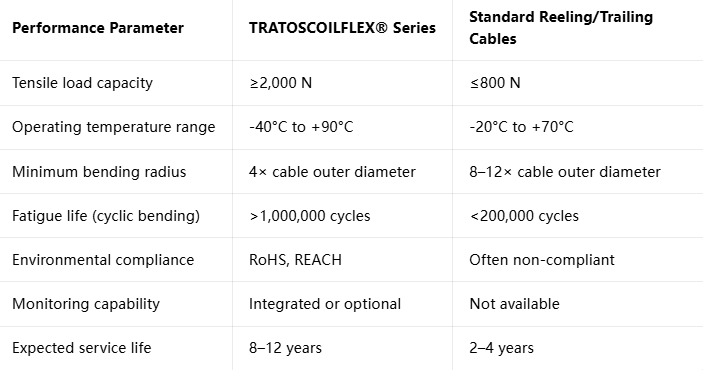
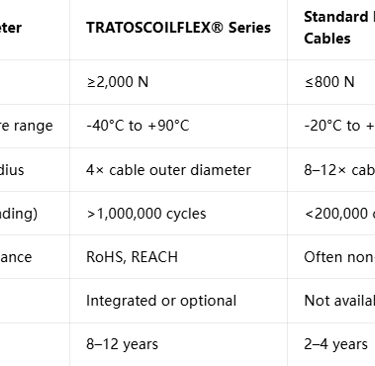
The following table provides a clear comparison between the key performance characteristics of the TRATOSCOILFLEX® series and standard cables typically used in suspended basket applications. These figures are based on laboratory testing and field experience, demonstrating the significant advantages that the advanced design delivers.
The differences are substantial across every category. The much higher load capacity provides a safety margin more than twice that of standard cables, while the extended temperature range allows operation in locations previously considered too extreme. The ability to bend to a radius of just four times the cable diameter solves installation problems in confined spaces, while the vastly improved fatigue life translates directly into longer service life and lower replacement costs.
Perhaps most significantly, the TRATOSCOILFLEX® series offers capabilities that standard cables simply cannot match, such as integrated monitoring and full environmental compliance. When all these factors are considered together, the advantages become impossible to ignore.
Personnel Safety Redundancy and Life Cycle Economics
When evaluating cable systems, it is essential to look beyond the initial purchase price and consider the total cost of ownership over the entire service life. While advanced products like TRATOSCOILFLEX® may have a higher upfront cost, they deliver significant economic advantages through reduced maintenance, longer life, and most importantly, risk reduction.
From a safety perspective, the system incorporates multiple independent layers of protection, meaning there is no single point of failure that could lead to danger. Even if the outer sheath becomes damaged, the Kevlar reinforcement remains intact to support the load. If insulation degrades locally, spare cores and monitoring systems allow work to continue safely. This level of redundancy meets the highest international safety standards and provides assurance that personnel are protected under all foreseeable conditions.
Economically, the picture is equally favourable. A standard cable typically needs replacing every two to four years, with each replacement requiring equipment downtime, labour costs, and material expenses. Over a twelve-year period, an installation using standard cables might require three or four complete replacements, whereas a TRATOSCOILFLEX® system would need just one. When maintenance costs and downtime losses are included, the total cost of ownership for the advanced system is usually 30 to 50 percent lower than for standard alternatives.
But the most important economic consideration is the cost of safety incidents. Even minor incidents can result in significant costs from investigation, downtime, legal action and insurance premiums. Major incidents can be devastating, with consequences that affect businesses for years. By eliminating the risk of catastrophic cable failure, TRATOSCOILFLEX® provides risk reduction value that far outweighs any difference in initial cost.
Practical Guidance: Installation, Maintenance and Emergency Protocols
Even the best engineered system will only perform as well as it is installed and maintained. The TRATOSCOILFLEX® series has been designed to be as user-friendly as possible, but following correct procedures ensures that maximum performance and service life are achieved.
Installation Best Practices
Proper installation begins before the cable even leaves the delivery vehicle. Inspections should be carried out to check for any signs of damage during transport and to verify that the correct cable type and specifications have been supplied. Cables should be stored on suitable drums or reels and never dragged across the ground or sharp edges, as this can cause invisible damage to the outer sheath that may develop into problems later.
During installation, particular attention should be paid to bending radiiuses and anchor points, as these are the locations where stress is most concentrated. While TRATOSCOILFLEX® is engineered to perform reliably at bending radii as small as four times its outer diameter, it is always good practice to use larger radii wherever possible to further reduce mechanical strain. Fittings and clamps should be sized correctly to avoid pinching or crushing the cable structure, and they should be lined with soft materials to prevent abrasion. It is essential to ensure that the Kevlar reinforcement takes the full mechanical load at suspension points, rather than relying on the internal conductors to support tension. This usually involves securing the strength members separately within the termination assembly, following the detailed instructions provided with each cable.
Routing paths should be planned to avoid contact with sharp edges, hot surfaces or moving machinery. Where cables pass through openings or along building facades, protective guide systems should be used to maintain clearances and prevent rubbing against rough surfaces. Sealing is another critical aspect of installation, particularly at terminations and joints. The double-seal systems designed for use with TRATOSCOILFLEX® should be applied carefully to maintain the IP68 protection rating, ensuring that moisture cannot enter the cable structure at any point. Once installation is complete, a full set of tests should be performed to verify electrical continuity, insulation resistance and mechanical integrity. For cables with integrated fibre optics, the monitoring system should be calibrated and tested to ensure all parameters are being measured correctly. Proper documentation of all installation work and test results creates a valuable reference for future maintenance and troubleshooting.
Routine Maintenance Schedule
One of the most significant advantages of the TRATOSCOILFLEX® series is its low maintenance requirement, but regular checks remain essential to ensure ongoing safety and reliability. The maintenance programme is designed to be simple and cost-effective, with activities tailored to different intervals based on how critical the installation is and the conditions it operates in.
Visual inspections form the foundation of the maintenance system and should be carried out at least once per working week, or daily in harsh environments. These inspections focus on the condition of the outer sheath, looking for signs of cuts, abrasion, cracking or discoloration. Attention should be paid particularly to anchor points, bend locations and areas where the cable comes into contact with other equipment. Any signs of damage, no matter how minor, should be recorded and assessed immediately. Loose fittings or signs of movement at suspension points should also be noted and rectified promptly, as even small amounts of play can increase stress levels significantly over time.
Electrical testing should be performed quarterly to measure insulation resistance, conductor continuity and earth fault current. These measurements provide clear indicators of the internal condition of the cable, often revealing problems long before they become visible externally. For installations in particularly wet or chemically aggressive environments, testing frequency may need to be increased to monthly. The results of these tests should be compared against previous readings, as trends are often more important than absolute values. A gradual decrease in insulation resistance, for example, can indicate developing problems that require attention.
For TRATOSCOILFLEX-FO® installations, the data collected by the monitoring system provides continuous information about the cable’s condition. This data should be reviewed regularly – ideally on a weekly basis – to identify any unusual patterns or changes in performance. Sophisticated analysis software can automatically highlight deviations from normal behaviour, alerting maintenance teams to potential issues before they affect safety or performance. Even with these advanced capabilities, it remains important to combine data analysis with physical inspections, as some types of damage may not be immediately apparent in the measured parameters.
Once per year, a comprehensive inspection should be carried out that combines all the previous checks with more detailed assessments. This includes measuring the diameter of the cable at various points to check for stretching, inspecting terminations and joints for tightness and integrity, and testing the operation of all safety systems. At this stage, load testing can also be performed to verify that the mechanical strength remains within specified limits. This complete audit provides assurance that the system is performing as intended and helps to plan maintenance or replacement work well in advance.
Emergency Procedures
Despite the high level of reliability built into TRATOSCOILFLEX® systems, it remains essential to have clear procedures in place to deal with unexpected situations. These procedures are designed to protect personnel first and equipment second, ensuring that even in the unlikely event of a problem developing, everyone remains safe.
The first step in any emergency is recognising that something is wrong. There are several warning signs that operators should be trained to identify. These include unusual noises or vibrations coming from the cable system, visible damage that appears to be getting worse rapidly, unexpected changes in electrical performance, or alerts from monitoring systems. If any of these signs appear, operations should be stopped immediately and personnel brought back to a safe location. It is never safe to continue working if there is any doubt about the integrity of the cable system.
Once personnel are safe, a careful assessment of the situation can be carried out. This should involve checking the entire visible length of the cable, paying particular attention to anchor points and bend locations. For systems with fibre optic monitoring, the data can be analysed to pinpoint exactly where the problem is occurring and how serious it is. In many cases, this information alone will be sufficient to determine whether the cable can continue to be used or whether it needs replacing.
If the damage is minor and does not affect the strength members or insulation, it may be possible to implement temporary repairs that allow limited operation while replacement is arranged. However, any temporary measures must be approved by a qualified engineer and should only be used for the minimum time necessary. In most cases, particularly where safety systems are affected, complete replacement will be the only acceptable solution.
When replacement becomes necessary, it is important to follow the correct procedures to ensure that the new installation is as reliable as the original. This means selecting the correct variant from the TRATOSCOILFLEX® range to match the application, using compatible fittings and terminations, and performing all the necessary tests before returning to normal operation. By treating replacement as an opportunity to improve the system rather than just restore it to its previous state, operators can ensure that safety and performance remain at the highest possible levels.
Frequently Asked Questions
What is the difference between TRATOSCOILFLEX®, TRATOSCOILFLEX-K®, and TRATOSCOILFLEX-FO®?
All three products share the same core engineering principles and high-performance construction, but they are optimised for different operating conditions and requirements. TRATOSCOILFLEX® is the standard model, suitable for most applications and operating reliably across temperatures from -40°C to +90°C. TRATOSCOILFLEX-K® is specifically engineered for low-temperature environments, maintaining flexibility and performance in conditions down to -40°C while operating up to +60°C. It is the preferred choice for high-latitude regions, winter operations and permanently cold locations. TRATOSCOILFLEX-FO® includes integrated fibre optic sensing technology as a standard feature, enabling continuous real-time monitoring of cable condition, movement and environmental parameters. This model is ideal for critical applications where the highest levels of safety assurance are required, such as very tall structures or offshore installations.
Can the cable be used in explosive atmospheres?
Yes, variants of the TRATOSCOILFLEX® series are available that meet all relevant standards for use in potentially explosive environments. The construction uses materials with low surface energy to minimise static charge build-up, and the overall design complies with IEC 60079 and other international standards for hazardous area equipment. Special terminations and glands are available to maintain certification at connection points, ensuring that the entire system meets safety requirements. It is important to specify hazardous area requirements at the time of ordering to ensure that the correct variant is supplied.
How accurate is the integrated fibre optic monitoring system?
The monitoring technology used in TRATOSCOILFLEX-FO® provides extremely precise measurements across the entire length of the cable. Temperature readings are accurate to within ±0.1°C, while strain measurements are accurate to within ±0.5% of the measured value. The system can locate changes or faults to within one metre along cables that may be hundreds of metres long. These levels of accuracy are more than sufficient to detect early signs of deterioration, changes in loading patterns or unusual environmental conditions, providing operators with reliable information for decision-making.
What is the lead time for custom configurations?
While standard configurations are available from stock or with short lead times, the modular design of the TRATOSCOILFLEX® series means that custom versions can be created to meet specific project requirements. This includes variations in the number and type of cores, different length specifications, special terminations or connections, and additional protective features. For most custom requirements, lead times range from four to eight weeks, depending on the complexity of the specification and the quantity required. The engineering team works closely with customers throughout the process to ensure that custom solutions meet all technical and safety standards.
Does the cable meet international standards such as IEC, VDE, or BS?
Yes, the TRATOSCOILFLEX® series has been extensively tested and certified to meet all major international standards. This includes IEC 60502 for power cables, IEC 60228 for conductor construction, VDE 0250 for heavy-duty reeling cables, and various BS and EN standards relevant to construction and offshore applications. All products carry independent certification from recognised testing bodies, providing assurance that they have been evaluated by impartial experts and meet the highest quality and safety requirements.
Can existing installations be upgraded with monitoring capabilities?
It is not possible to retrofit fibre optic monitoring into existing TRATOSCOILFLEX® cables, as the optical fibres must be integrated into the structure during manufacturing. However, upgrading to TRATOSCOILFLEX-FO® during normal replacement cycles is straightforward, as it has the same external dimensions and connection requirements as the standard model. This means that when the time comes for replacement, operators can choose to move to the monitored version without needing to modify equipment or infrastructure. For installations that are not yet due for replacement, temporary monitoring systems can be applied externally to provide some of the same benefits.
Conclusion
The challenges faced in high-rise basket operations are unlike those encountered in almost any other industrial application. The combination of dynamic mechanical stress, environmental extremes and the critical importance of safety places demands on cable systems that standard products simply cannot meet. Through a fundamental rethinking of cable design, and with careful attention to every aspect of material science and engineering, the TRATOSCOILFLEX® series has established itself as the leading heavy duty cable for basket operation.
By addressing the root causes of failure rather than just treating symptoms, these cables deliver performance that was previously thought impossible. The double-layer Kevlar reinforcement provides exceptional mechanical strength and redundancy. The ultra-fine conductor design ensures reliable performance even with repeated bending and movement. Advanced insulation and sheath materials maintain their properties across extreme temperatures and environmental conditions. And for the highest levels of safety assurance, integrated fibre optic technology turns the cable itself into a sophisticated monitoring system.
With more than 1,000 installations worldwide and a perfect record of zero catastrophic failures, the TRATOSCOILFLEX® series has proven its value in real-world conditions. It delivers longer service life, lower maintenance requirements and significantly improved safety compared to standard alternatives. When the total cost of ownership is considered, including the costs of downtime, replacement and risk management, it represents excellent value for money.
If you are looking for a reliable heavy duty cable for basket operation, or if you would like to discuss how the TRATOSCOILFLEX® series can be applied to your specific requirements, contact the Feichun team today at Li.wang@feichuncables.com. Our engineering specialists are ready to provide detailed technical information, assist with product selection, and ensure that you get the right solution for your project. Whether you are working on a single building or managing a large fleet of suspended access equipment, we have the expertise and products to help you achieve the highest possible standards of safety and performance.
Email Address: Li.wang@feichuncables.com
© 2025. All rights reserved.
One-click to Quickly Contact
Products
Contact
Company
Location:
Building A Private Science and Technology Park, Hefei Economic and Technological Development Zone, Anhui Province, China
Heat Resistant Cable
WhatsApp: +86 17333223430
Social Media: