Anhui Feichun Special Cable Co.,Ltd Email: Li.wang@feichuncables.com
TRATOSFESTOON® LOW VOLTAGE POWER AND CONTROL CABLE: Reduced Dimension Design for Festoon Applications – Technology, Performance & Industrial Use
In South Africa’s heavy engineering, mining, and automated material handling sectors, reliable power and signal transmission is critical — yet standard cables often fail quickly under the extreme mechanical stress of continuous movement. This comprehensive guide explores why conventional cables break down in festoon systems, how TRATOSFESTOON® LOW VOLTAGE POWER AND CONTROL CABLE solves these problems through advanced materials and purpose-built design, and delivers a full technical breakdown, performance analysis, and practical application advice for engineers and procurement specialists.
Li Wang
5/15/202630 min read
Introduction
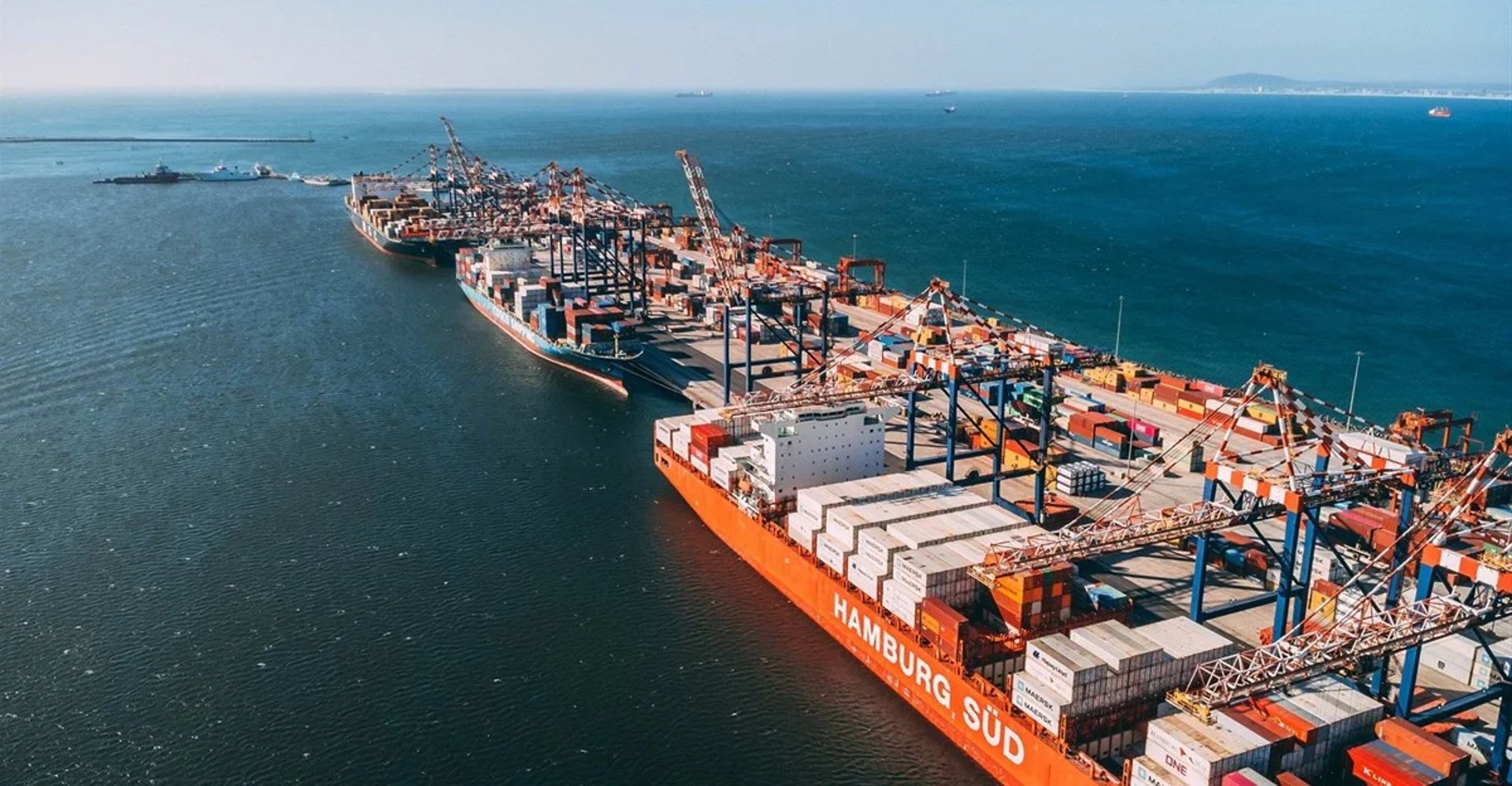
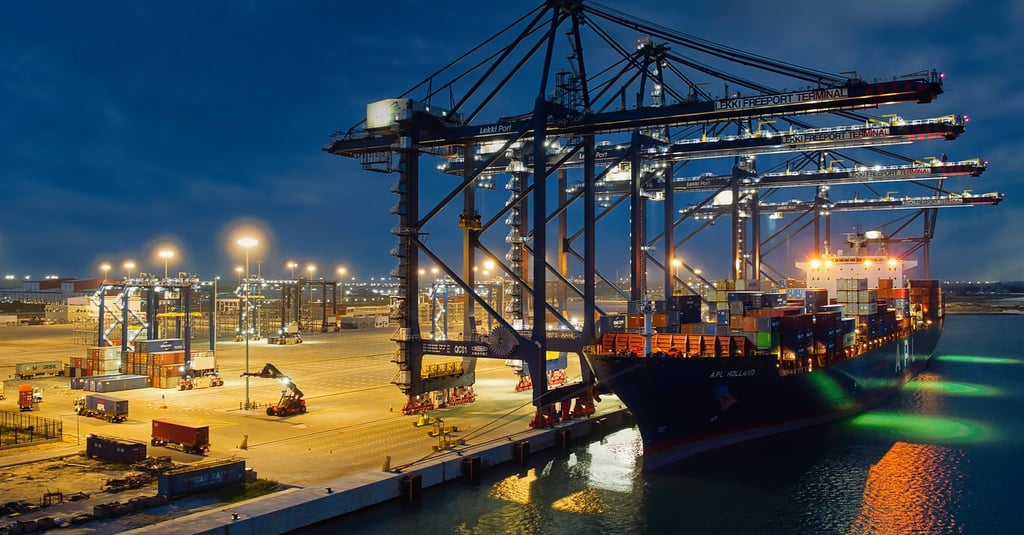
South Africa’s industrial landscape is defined by large-scale manufacturing, busy ports, extensive mining operations, and highly automated material handling systems. From overhead cranes moving heavy loads in factories to stacker cranes in high-bay warehouses and straddle carriers at container terminals, almost every piece of mobile equipment relies on flexible cables to deliver power and carry control signals. These cables are the lifeline of operations, yet they operate in some of the harshest conditions imaginable. While static cabling is well understood and reliable, cables that move continuously as part of festoon, reeling, or trailing systems face a completely different set of challenges. Many operators have experienced unexpected downtime, high replacement costs, and safety incidents caused by premature cable failure. The root cause is almost always the same: standard industrial cables are simply not designed to withstand the combination of bending, tension, abrasion, and temperature variation that comes with dynamic service.
This guide introduces TRATOSFESTOON®, a low voltage power and control cable engineered specifically for festoon applications with a reduced dimension profile. Developed to meet the demands of African industry, it represents a shift from generic cabling to application-specific engineering. We will examine the mechanical loads that destroy ordinary cables, explain how TRATOSFESTOON overcomes fatigue through design and material science, present its complete technical specifications, and analyse its performance in real-world scenarios. Whether you are selecting cable for a new installation, looking to improve reliability in an existing system, or comparing products for procurement, this resource provides the detailed engineering insight you need.
Mechanical Loads in Motion – Why Moving Cables Fail
The Extreme Demands on Cables in South African Industry
Cables installed in festoon systems do not sit still. They follow equipment along linear or curved paths, bending back and forth, winding onto drums, and unwinding again, often at high speeds and under significant tension. In South Africa, these conditions are made even more severe by the environment. Highveld locations see freezing winter nights and hot summer days, while coastal sites bring salt-laden air and high humidity. Mining and industrial areas add dust, abrasive particles, and exposure to oils and chemicals. The combination creates a perfect storm for cable degradation.
The types of mechanical stress acting on these cables fall into several key categories. Repeated bending and flexing occur every time the equipment moves. Even with a generous radius, each bend places the outer layers of the cable in tension and the inner layers in compression. Over thousands or millions of cycles, this creates fatigue in both conductors and insulation. Tensile loads are applied continuously as the cable hangs under its own weight or is pulled along the track. During acceleration, deceleration, or when the cable runs slightly tight, dynamic shock loads can spike to many times the normal operating tension. Compression and radial pressure happen when cables are stacked on a drum or pressed against support rollers, causing deformation and internal damage. Torsion or twisting occurs if the cable is not aligned perfectly or if the moving equipment rotates, leading to shear forces between layers. Finally, abrasion and wear take place as the cable rubs against guide wheels, supports, or adjacent cables, gradually wearing away the outer protection.
Operating speeds in modern facilities are also high. TRATOSFESTOON is rated for use up to 240 metres per minute, a speed that places enormous strain on materials. For standard cables, these conditions are far beyond what they were designed to endure.
Why Standard Industrial Cables Suffer Catastrophic Failure
Standard industrial cables are designed primarily for fixed installation or occasional movement. Their construction follows principles that prioritise low cost and basic electrical performance, not long life under cyclic mechanical stress. The first point of weakness is usually the conductor. Many general-purpose cables use relatively coarse strands or fewer wires to reduce manufacturing complexity. While this works well when the cable is stationary, bending concentrates stress at a small number of points. Over time, individual strands snap one by one, increasing resistance and heating until the conductor fails completely.
Insulation and sheath materials are another major limitation. PVC or basic rubber compounds are common in standard products. These materials have limited elasticity and poor memory. After being bent, they do not return perfectly to their original shape. With repeated movement, the material hardens, becomes brittle, and eventually cracks. Once the sheath cracks, moisture and dust enter, leading to insulation breakdown and short circuits. These materials also perform poorly under temperature extremes, becoming stiff and prone to shattering in cold weather or soft and easily damaged in high heat.
A lack of stress-relieving construction is a further critical issue. Standard cables pack conductors tightly with little or no cushioning between layers. When the cable bends or twists, the different components rub against each other, creating internal friction and wear. There is no mechanism to absorb or distribute mechanical energy, so all stress is transferred directly to the weakest points. The overall diameter of standard cables is also unnecessarily large. A bigger cable is stiffer and requires a larger bend radius. When installed in the compact spaces typical of festoon systems, they are forced into tighter bends than they can handle, accelerating fatigue.
The consequences of failure are severe. In South Africa’s competitive industrial environment, downtime costs money by the minute. Beyond production loss, there is the cost of replacement cable, labour for installation, and the safety risk of working on live equipment or at height. In many cases, standard cables last only a few months before they need replacing, creating a cycle of maintenance that is expensive and disruptive.
TRATOSFESTOON® – The Solution to Mechanical Fatigue
Core Engineering Principles to Eliminate Fatigue
TRATOSFESTOON was developed from the ground up with one clear objective: to survive and perform reliably in continuous motion. Every element of its design addresses a specific failure mode found in standard cables. The engineering approach combines advanced material science, precision construction, and careful analysis of mechanical stress patterns.
At the heart of the solution is a reduced-dimension architecture. By optimising every layer, engineers have created a cable that is significantly smaller in diameter than equivalent standard cables. A smaller size means greater flexibility, lower bending forces, and the ability to operate safely in tighter spaces without exceeding material limits. Despite the smaller profile, electrical safety margins are maintained or improved through the use of higher-performance insulation compounds.
Flexibility is maximised through the use of Class 5 tinned copper conductors. These conductors are made of many extremely fine strands, arranged and stranded in a way that allows them to move relative to one another without stress concentration. This design distributes bending stress across thousands of individual wires rather than a few thick ones, effectively eliminating strand breakage as a failure mode.
The materials selected for insulation and sheathing are specialised elastomers, specifically EPR-based compounds that remain flexible and resilient over the long term. Unlike PVC, these materials have high elongation and excellent elastic memory. They stretch under tension or bending and return exactly to shape, cycle after cycle. They are also chemically engineered to resist aging, ozone, UV radiation, and temperature extremes, ensuring performance does not degrade over years of service.
A multi-layer protective structure separates and cushions components. An inner sheath absorbs internal forces and prevents the insulation from rubbing against the outer layer, while a heavy-duty outer sheath provides high mechanical and environmental protection. This gradient construction allows the cable to deform uniformly under load, spreading stress evenly and avoiding the sharp peaks that cause fatigue cracks.
Extensive testing confirms the effectiveness of these principles. TRATOSFESTOON is proven to withstand more than 100,000 full wind and unwind cycles without measurable loss of performance. It operates reliably from minus 40 degrees Celsius up to plus 80 degrees Celsius, covering every climate found in Southern Africa.
Summary of Key Advantages Over Standard Cables
Compared to general-purpose or traditional festoon cables, TRATOSFESTOON offers a clear performance advantage. Its service life is typically three to five times longer, drastically reducing maintenance requirements. It maintains stable electrical properties even when subjected to millions of movements, ensuring consistent power delivery and signal integrity. The compact dimensions simplify installation and reduce the space required within festoon tracks or on drums. With high tensile strength and excellent abrasion resistance, it handles high operating speeds and heavy loads safely. For operators, the biggest benefit is predictability: TRATOSFESTOON is designed to last the lifetime of the equipment it serves, rather than becoming a consumable item that needs regular replacement.
Complete Technical Specification of TRATOSFESTOON®
Basic Product Definition and Ratings
Product Definition: TRATOSFESTOON® is formally designated as a LOW VOLTAGE POWER AND CONTROL CABLE, featuring a reduced dimension design developed specifically for festoon applications.
Rated Voltage: Classified for operation at 0.6/1 kV, suitable for all standard low voltage industrial power and control circuits.
Maximum Operating Voltage: Permitted up to 0.7/1.2 kV, providing a safe operational margin.
Factory High Voltage Testing:
Control cable variants: tested at 2.5 kV AC
Power cable variants: tested at 3.5 kV AC
Purpose: ensures robust insulation integrity and safety before delivery.
Standards Compliance:
Conductor construction: meets requirements of VDE 0295.
Insulation performance: matches or exceeds the benchmark specification EPR 3GI3 for high-grade elastomeric insulation.
Outer sheath quality: manufactured to minimum 5GM3 grade — the highest standard for heavy-duty rubber sheaths — ensuring excellent resistance to abrasion, oil, and weathering conditions.
Detailed Construction
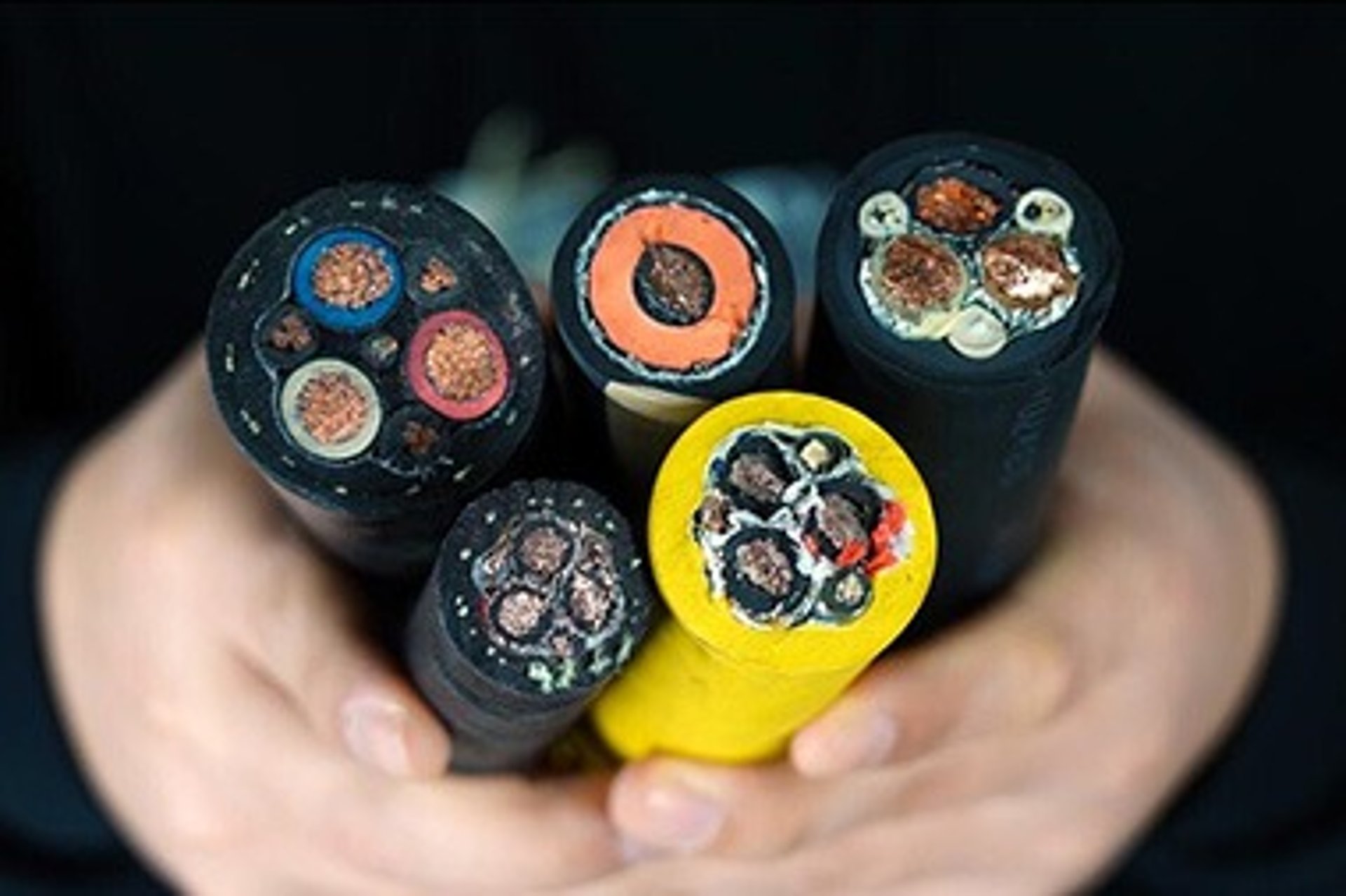
General Construction: The cable features a four‑layer design, with each layer performing a specific role and working together as a complete system.
Conductor (Innermost Layer)
Made of tinned flexible copper, manufactured to Class 5 standard per VDE 0295 — the highest flexibility class, achieved by stranding numerous ultra‑fine copper wires.
Tin coating provides dual functions: protects copper from corrosion in humid or aggressive environments, and lubricates strands to prevent friction wear and strand slippage during bending.
Insulation
Formulated from proprietary compound Tratosfestoon‑I®, based on Ethylene Propylene Rubber (EPR).
Chemically optimised to combine superior electrical performance with excellent mechanical flexibility.
Performance matches or exceeds the established EPR 3GI3 specification.
Key properties: high dielectric strength, low capacitance, and strong resistance to thermal aging.
Inner Sheath
Made from dedicated compound Tratosfestoon‑IS®.
Functions as a cushion and separator; fills gaps between insulated cores and outer jacket to form a round, stable structure.
Soft, elastic material absorbs mechanical stress, dampens vibration, and prevents insulated cores from rubbing against the hard outer sheath — avoiding long‑term abrasion and insulation damage.
Outer Sheath (Outermost Layer)
Constructed from Tratosfestoon‑OS®, a black high‑strength elastomer meeting or exceeding 5GM3 quality grade.
Acts as the primary external defence: offers outstanding resistance to abrasion, cutting, tearing, oils, chemicals, ozone, and UV radiation.
Black pigmentation ensures long‑term stability under direct sunlight, making it ideal for outdoor use.
Temperature and Performance Parameters
Temperature Performance
This is a key distinguishing feature of the cable.
Fixed installation: suitable for ambient temperatures from -40°C up to +80°C.
Standard dynamic operation: rated for -25°C up to +80°C.
Type K variant: extends dynamic operating range down to -40°C, ideal for extremely cold environments or refrigerated facilities.
Electrical Thermal Ratings
Continuous conductor operating temperature: maximum 90°C, enabling high current‑carrying capacity relative to cable size.
Short‑circuit condition: withstands temperatures up to 250°C for up to 5 seconds, complying with safety standards for fault conditions.
Mechanical Performance
Operating speed: approved for use up to 240 metres per minute, suitable for high‑cycle and high‑speed machinery.
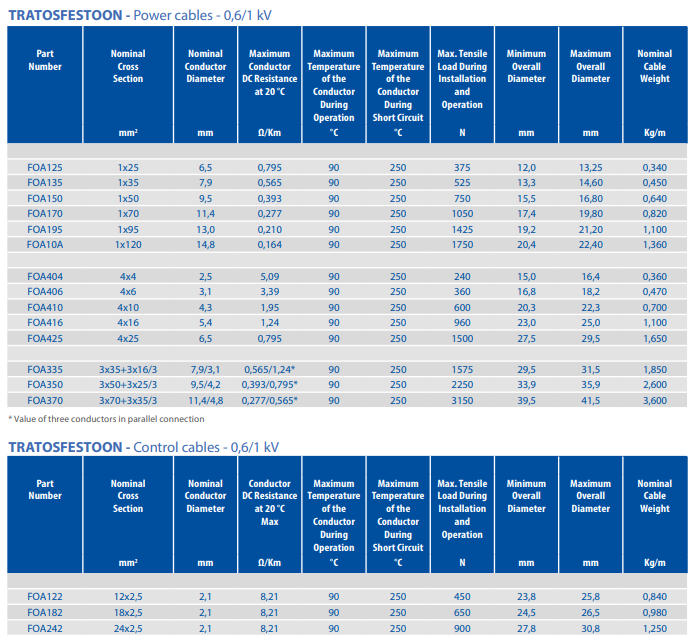
Tensile load capacity: ranges from 240 N (smaller control cables) to 3150 N (largest power cable variants), ensuring reliable support of its own weight and operational tension without damage.
Product Range and Technical Data
The TRATOSFESTOON range covers both power and control applications, with dimensions carefully calculated to balance performance and compactness. The following data presents the key specifications available.
Key Technologies and Engineering Principles
EPR Elastomer Chemistry for Festoon Systems: Balancing Flexibility and Insulation Life
The choice of insulation material is perhaps the most critical engineering decision in a moving cable. TRATOSFESTOON relies on Ethylene Propylene Rubber (EPR) as the base polymer, a material chosen for its unique combination of electrical and mechanical properties. Unlike thermoplastics such as PVC, EPR is an elastomer — it is cross-linked during manufacturing to create a molecular structure that behaves like rubber. This structure allows it to stretch significantly under load and immediately return to its original form without permanent deformation.
The chemical formulation used in Tratosfestoon‑I® is optimised specifically for festoon duty. Engineers control the density of cross-links and add specific reinforcing agents to balance softness with strength. A material that is too soft would deform under pressure, while one that is too hard would resist bending and crack. The optimisation results in a compound with an elongation at break exceeding 400%, meaning it can stretch to four times its length before breaking. It remains flexible even at very low temperatures and does not soften or flow at high temperatures.
From an electrical perspective, EPR offers superior dielectric performance. It has a high dielectric strength, typically above 20 kV per millimetre of thickness, meaning thin walls can safely withstand high voltages. It also has very low dielectric loss, so energy is not wasted as heat within the insulation. Most importantly, these properties do not change when the material is bent, twisted, or compressed. In standard cables, deformation creates micro-cracks or voids that lead to partial discharge and eventual breakdown. In Tratosfestoon‑I®, the material flexes uniformly, remaining free of defects and maintaining its insulating capability for decades.
Tinned Flexible Conductor Technology: VDE 0295 Class 5
The conductor is the heart of the cable, and in moving applications, its design determines how long the cable will conduct electricity before breaking Tinned flexible conductors manufactured to VDE 0295 Class 5 standard represent a fundamental upgrade over the solid or coarse-stranded conductors found in general-purpose cables. Class 5 is the highest flexibility classification defined by the standard, achieved by stranding together a very large number of extremely fine copper wires. For example, a 2.5 mm² conductor may contain over 50 individual strands, each less than 0.2 mm in diameter. This high strand count ensures that when the cable bends, the movement is distributed across thousands of microscopic slip planes rather than forcing a few thick wires to stretch or compress. The stress on any single strand remains well below the fatigue limit of the copper, effectively eliminating the risk of breakage caused by repeated flexing.
Every strand is coated with a uniform layer of tin through a hot-dip or electroplating process. This coating provides two essential functions. First, it creates a barrier that prevents oxidation and corrosion of the copper underneath. In industrial environments, and particularly in coastal or mining regions of South Africa, exposure to moisture, salts, and chemical vapours is common. Without protection, copper corrodes quickly, leading to increased electrical resistance, overheating, and eventual failure. Tin is highly resistant to these environmental factors and preserves the conductivity of the conductor over its entire service life. Second, the tin coating acts as a solid lubricant. As the cable flexes, strands slide against one another. The smooth tin surface reduces friction and prevents the strands from abrading or cutting into each other, a common failure point in uncoated flexible conductors. This combination of fine stranding and tinning creates a conductor that is not only highly conductive but also mechanically durable and chemically stable.
Reduced Dimension Cable Architecture: Compact Design Without Compromise
One of the defining features of TRATOSFESTOON is its reduced dimension profile. This is not simply about making the cable smaller; it is a carefully engineered architecture designed to improve performance while saving space. In festoon systems, cables are often installed in tight tracks, on small-diameter drums, or in bundles where space is limited. A larger cable has a larger minimum bend radius and higher stiffness, both of which increase mechanical stress during movement. By optimising every layer of construction, engineers have reduced the overall diameter by approximately 15% to 20% compared to standard flexible cables of the same current rating.
Achieving this reduction without sacrificing safety or performance required innovation in materials and geometry. The insulation and sheath materials used have much higher mechanical and electrical strength than standard compounds. This means that thinner walls can be used while still providing the same or better protection against voltage breakdown and physical damage. The arrangement of conductors inside the cable is also optimised. Conductors are stranded with precise lay lengths to create a compact, circular form that minimises wasted space. Fillers are eliminated or replaced with integrated cushioning layers that contribute to strength rather than bulk.
The result is a cable that is easier to install, requires less space, and operates with significantly lower mechanical stress. A smaller bend radius means the cable can follow tighter curves without exceeding the elastic limit of the materials. Lower weight also reduces the tension load on the cable itself and on the supporting festoon hardware. Despite the compact size, all TRATOSFESTOON cables fully comply with international voltage standards and safety margins, ensuring that electrical integrity is never traded for size.
Tratosfestoon‑I® Insulation Compound: EPR 3GI3 Equivalent and Improved Dielectric Strength
The insulation material, Tratosfestoon‑I®, is the result of advanced polymer science, formulated to match or exceed the performance of the industry benchmark EPR 3GI3. EPR 3GI3 is a specification widely recognised for excellent electrical properties and heat resistance, but Tratosfestoon‑I® goes further, specifically enhanced for dynamic mechanical use. The compound is based on high-molecular-weight ethylene-propylene rubber with a controlled level of cross-linking. This structure provides a balance of high elasticity and thermal stability that thermoplastic materials simply cannot achieve.
From an electrical standpoint, the compound is engineered for high dielectric strength and low dielectric loss. Dielectric strength measures the ability to withstand voltage without breaking down, and this material exceeds 20 kV per millimetre of thickness. This allows for reliable operation at 0.6/1 kV with relatively thin insulation walls. The material also has very low capacitance and dissipation factors, meaning it does not store electrical energy or convert it into heat, which is crucial for maintaining signal quality in control circuits and efficiency in power circuits.
Mechanically, the formulation is designed to resist the effects of continuous movement. It has high tear strength and cut-through resistance, so it resists damage during installation and operation. Unlike standard EPR compounds, Tratosfestoon‑I® contains anti-aging additives that protect the polymer chains from breaking down under the combined effects of heat, oxygen, and mechanical stress. Over time, standard insulation can become hard or brittle, but this compound remains flexible and resilient. Extensive testing shows that even after thousands of hours of aging at elevated temperatures, it retains over 85% of its original elongation and tensile strength, ensuring long-term reliability.
Multi‑Layer Protection: Tratosfestoon‑IS® Inner Sheath + Tratosfestoon‑OS® Outer Sheath
The dual-sheath construction is one of the most effective design features in TRATOSFESTOON, creating a system of protection that addresses both internal and external threats. Many standard flexible cables use only a single sheath, or simply fill the gaps between cores with cheap material, leading to internal wear and instability. TRATOSFESTOON separates these functions into two distinct layers, each made from a specialised compound: Tratosfestoon‑IS® for the inner sheath and Tratosfestoon‑OS® for the outer sheath.
The Inner Sheath (Tratosfestoon‑IS®) is a soft, flexible elastomer with a lower modulus of elasticity. Its primary role is to act as a buffer. It surrounds the insulated conductors, filling all voids and creating a perfectly round core. This round shape is essential because irregular shapes deform unevenly under bending or pressure, creating stress concentrations. The soft material absorbs mechanical shock and vibration, preventing the hard outer jacket from rubbing directly against the insulation. It also ensures that the conductors remain in their correct position and do not bunch up or twist relative to each other. By decoupling the movement of the inner cores from the outer jacket, it eliminates the friction that is a major cause of premature insulation wear.
The Outer Sheath (Tratosfestoon‑OS®) is engineered as the heavy-duty protective skin. Manufactured to a minimum 5GM3 quality grade — the highest standard for rubber sheaths in industrial applications — this compound is significantly harder, tougher, and more resistant to environmental factors. It provides exceptional resistance to abrasion, tearing, cutting, and impact. It is highly resistant to mineral oils, greases, fuels, and common industrial chemicals found in workshops and mines. It also contains carbon black and UV stabilisers, making it impervious to ozone and ultraviolet radiation, which cause rapid cracking in standard rubber or PVC exposed to outdoor sunlight.
The combination of these two layers creates a modulus gradient. When the cable bends, the stress is absorbed progressively. The outer layer provides strength and protection, while the inner layer provides flexibility and cushioning. This synergy prevents delamination, a common failure mode where layers separate and create voids that lead to water ingress and insulation failure. Together, they form a protective barrier that is far greater than the sum of its parts.
Mechanical Fatigue Engineering: Stress Analysis and Cycle Life Prediction
Every aspect of TRATOSFESTOON is shaped by mechanical fatigue engineering — the science of understanding how materials fail under repeated loading and designing to prevent it. Engineers use advanced finite element analysis (FEA) software to simulate exactly how the cable behaves in operation. Models are built to replicate bending, tension, torsion, and compression, calculating the stress levels at every point within the cable structure. This analysis identifies where stress concentrations occur — typically at sharp corners, material interfaces, or changes in geometry. The design is then modified to smooth these transitions and distribute load evenly.
For example, the rounded profile, the graduated hardness between layers, and the fine-stranded conductors are all direct results of this analysis. By ensuring that no single component carries an excessive share of the load, the design keeps operating stresses well below the fatigue limit of the materials used. The fatigue limit, or endurance limit, is the stress level below which a material can be cycled infinitely without breaking.
Life expectancy is calculated using material S‑N curves, which plot stress against the number of cycles to failure, combined with Miner’s Rule for cumulative damage. These calculations predict performance well beyond normal operating conditions. Physical testing validates these models. Accelerated life tests involve running cables through continuous wind and unwind cycles at maximum speed and tension. Results consistently show that TRATOSFESTOON withstands over 100,000 complete cycles with no measurable degradation in electrical or mechanical properties. In comparison, standard industrial cables typically fail between 10,000 and 20,000 cycles. This engineering approach moves cable selection from a guesswork exercise to a predictable maintenance strategy.
Thermal Cycle Performance: -40°C Cold Soak to +80°C Continuous Operation
In South Africa, equipment operates in environments ranging from freezing highveld winters to scorching summer heat, and often both within a single 24-hour period. Temperature changes affect every property of a cable — materials expand and contract, flexibility changes, and resistance to chemical attack varies. If a cable is not engineered for this range, it will fail when conditions shift. TRATOSFESTOON is designed for thermal stability across an extreme range, rated for dynamic operation from -40°C to +80°C.
This performance is achieved through careful polymer selection and compound formulation. The materials used have very low glass transition temperatures — the point where a material changes from rubbery to glass-like and brittle — typically below -50°C. This means that even after prolonged soaking at -40°C, the cable remains flexible. It can be bent or moved without cracking or shattering, unlike standard PVC cables which become rigid and break easily in cold conditions.
At the other end of the spectrum, the compounds are engineered for thermal endurance. The insulation and sheath materials do not soften, melt, or lose their physical strength at continuous operating temperatures up to +80°C. The conductor itself is rated for 90°C continuous operation, allowing it to handle high loads without the insulation degrading. Heat aging tests involve exposing samples to 90°C for thousands of hours. After testing, the material retains more than 85% of its original tensile strength and elongation. This stability ensures that whether the cable is installed indoors in a heated factory, outdoors in the sun, or inside a refrigerated warehouse, it performs consistently and safely.
Continuous Motion Optimisation: Analysis of Over 100,000 Wind/Unwind Cycles
The ultimate test for a festoon cable is its ability to perform millions of movements without failure. TRATOSFESTOON is optimised specifically for continuous motion, validated through rigorous cycle analysis. Testing protocols replicate the most demanding real-world scenarios: operating speeds up to 240 metres per minute, tension levels of 0.2 to 0.5 Newtons per square millimetre, and bend radii as tight as six times the cable diameter. These conditions represent the upper limit of what modern automated systems demand.
During each cycle, the cable undergoes a complex sequence of deformation: bending around a radius, stretching under tension, relaxing as it moves, and potentially twisting slightly. Engineers analyse how each material behaves during this sequence. The elasticity of the insulation and sheath ensures that deformation is purely elastic — meaning the material springs back to its original shape instantly. There is no permanent set or deformation after movement. The internal structure ensures that the relative movement between components is minimised and lubricated, so friction and wear are negligible.
After completing over 100,000 full wind and unwind cycles in laboratory tests, cables are thoroughly inspected. Conductors show no broken strands and less than 3% change in electrical resistance. Insulation retains its full dielectric strength with no signs of cracking or hardening. The outer sheath shows minimal wear, typically less than 0.1 mm loss in thickness, and remains free from splits or tears. This level of performance ensures that in actual service, the cable life matches or exceeds the mechanical life of the equipment it serves, removing the need for mid-life replacement.
Power Cable Configurations: Single‑Core and Multi‑Core Solutions
TRATOSFESTOON offers a versatile range of power cable configurations to suit every type of industrial load and system design. Understanding the differences between these designs helps engineers select the most efficient solution for their specific application.
Single‑core designs, ranging from 1×25 mm² up to 1×120 mm², are the simplest and most flexible option. Because they contain only one conductor, they are extremely pliable and can navigate very tight bend radii. They are ideal for applications requiring high power transmission over long distances, such as the main power feed to a large overhead crane or a gantry system. Their simplicity means they handle high tensile loads exceptionally well — up to 1750 N in the largest size — making them suitable for long travel lengths where the cable must support its own weight. Single-core cables are also easier to install and replace, and they offer the best possible current-to-size ratio, as there is no need to accommodate multiple cores within one sheath.
Multi‑core designs, available as 4×4 mm² up to 4×25 mm², combine power lines, neutral, and earth or auxiliary circuits within a single compact cable. This configuration reduces the total number of cables running along the festoon track, saving space and simplifying installation. The design is electrically balanced, meaning the magnetic fields generated by the current in each core largely cancel each other out. This reduces inductive reactance and electromagnetic interference, which can be problematic with single-core cables in close proximity. Multi-core cables are the standard choice for most general manufacturing applications, automated warehouses, and conveyor systems where multiple circuits need to move together.
Special combined designs, such as 3×35+3×16/3, 3×50+3×25/3, and 3×70+3×35/3, represent a highly specialised solution common in crane technology. These feature three main power conductors operating in parallel with three smaller auxiliary or control conductors. The auxiliary conductors are often used for earthing, signalling, or powering smaller onboard equipment. By integrating them into one cable, the design ensures perfect length matching — a critical factor in festoon systems where uneven length would cause differential tension. These cables are constructed to maintain high tensile strength, with the largest version rated for 3150 N, making them the heavy-duty choice for ports, ship-to-shore cranes, and heavy industrial lifting equipment.
Control Cable Applications: Signal Integrity, EMI Suppression and Multi‑Core Design
In modern automation, control signals are as important as power. Even if power is delivered reliably, if a signal is lost or corrupted, the machine stops or operates incorrectly. TRATOSFESTOON control cables are engineered specifically to maintain signal integrity and protect against interference in dynamic environments. Available in multi-core configurations of 12×2.5 mm², 18×2.5 mm², and 24×2.5 mm², they pack high circuit density into a reduced-diameter form factor.
Each core is insulated with Tratosfestoon‑I®, which has low electrical capacitance (typically below 150 pF/m). Low capacitance is essential for high-frequency signals or long distances, as it reduces signal attenuation and distortion. The cores are twisted together in layers with precise lay lengths. This balanced twisting structure reduces crosstalk — the transfer of signals between adjacent circuits — ensuring that commands sent to a sensor or drive are received clearly.
Electromagnetic interference (EMI) is a major challenge in industrial environments where variable frequency drives, motors, and high-current power cables generate strong electromagnetic fields. If these fields penetrate control cables, they can induce noise that causes erratic behaviour or data loss. While standard cables offer little defence, TRATOSFESTOON control cables can be specified with optional copper screening. This provides high levels of shielding effectiveness, containing internal signals and blocking external interference.
Mechanically, the control cables share the same robust construction as the power range. They use Class 5 tinned copper conductors and the dual-layer sheath system. This ensures that even with up to 24 cores packed inside, the cable remains flexible and durable. The compact design allows installation in tight cable carriers or festoon tracks, while the high tensile rating — up to 900 N for the 24-core version — ensures it does not stretch or break under its own weight. For automated warehouses, stacker cranes, and complex transfer systems, these cables provide the reliable communication link required for 24/7 operation.
Crane System Integration: Compatibility with Hoists, Gantries and Straddle Carriers
TRATOSFESTOON is recognised globally as a preferred solution for crane systems, and its technical specifications align perfectly with the requirements of hoists, gantries, and straddle carriers found throughout Southern Africa. Cranes represent one of the most demanding applications for moving cables. They involve long travel distances, high speeds, heavy loads, and exposure to the elements.
For hoists and overhead travelling cranes, the ability to handle high tensile loads is paramount. As the crane travels along the bay, the cable hangs in a catenary and must support its own weight. TRATOSFESTOON’s high tensile ratings, ranging from 240 N to over 3000 N, ensure it does not stretch permanently or snap under these loads. The reduced diameter means the cable forms a tighter, neater loop, reducing the space required below the crane girder. The temperature range covers both heated indoor workshops and unprotected outdoor yard cranes, operating reliably in all seasons.
Gantry systems and port straddle carriers operate at even higher speeds and over greater distances. These machines often move at speeds approaching the 240 m/min rating of the cable. At these speeds, aerodynamic forces and dynamic impact loads become significant.. The robust outer sheath (5GM3 grade) resists abrasion from wind-blown sand and dust common in coastal and mining areas. The stability of the cable construction ensures that even with continuous high-speed movement, the electrical characteristics remain stable, preventing signal dropout during critical lifting or positioning operations.
Installation compatibility is another key factor. The cable’s minimum bend radius of just six times the outer diameter allows it to wrap compactly around drums or pass over small-diameter rollers without damage. This matches the design of modern crane festoon systems, which are engineered for compactness. Whether retrofitting an older installation or equipping a new terminal, TRATOSFESTOON integrates seamlessly, offering performance that matches or exceeds the original equipment specification.
Performance in Production Lines, Automated Warehouses and Material Handling
Beyond heavy lifting, TRATOSFESTOON is widely applied across general manufacturing, automated warehousing, and high-volume material handling, where reliability and consistent performance directly influence production output and profitability. These environments are characterised by high-cycle, repetitive motion — conveyors running 24 hours a day, stacker cranes moving thousands of pallets daily, transfer shuttles zipping along guide rails, and automated assembly lines where every station depends on continuous power and data flow. In such operations, even minor interruptions caused by cable failure can lead to costly bottlenecks, missed delivery targets, and wasted labour.
Standard industrial cables are rarely able to cope with this relentless rhythm. Designed for static or occasional use, they tend to degrade rapidly under constant flexing, often requiring replacement every 6 to 12 months. This creates a cycle of maintenance and downtime that eats into operational efficiency. TRATOSFESTOON changes this equation by offering a service life typically five to eight years under full operating conditions — a lifespan three to five times longer than conventional alternatives. This extended life is not just about durability; it is about stability. The materials and construction maintain their mechanical and electrical properties virtually unchanged over years of service, meaning performance on day one is the same as performance on day one thousand.
In automated warehouses, where space is at a premium and equipment is tightly packed, the reduced dimension design is a major advantage. The compact profile allows cables to run in narrower tracks or smaller cable carriers, freeing up valuable space for storage racks or machinery. The high flexibility ensures smooth movement even in complex routing paths with multiple bends or direction changes, reducing mechanical drag and wear on both the cable and the guiding system.
For production lines, signal integrity is just as important as power delivery. Control signals, sensor data, and communication links must remain clear and noise-free to ensure precise timing and coordination between machines. TRATOSFESTOON’s low-capacitance insulation and balanced core design minimise signal distortion and crosstalk, while optional screening protects against interference from drives, motors, and other industrial equipment. This reliability translates directly into fewer errors, less scrap material, and higher throughput.
The ability to operate reliably across a wide temperature range is also a significant benefit in manufacturing environments that include cold storage areas, heat treatment zones, or outdoor transfer bays. The cable performs consistently whether moving between -40°C freezers and ambient areas or operating near furnaces and ovens where temperatures can reach the upper limit of its rating. For facility managers and engineers, the result is a cabling solution that becomes a permanent part of the infrastructure, requiring minimal attention and allowing them to focus resources on core production activities.
TRATOSFESTOON vs. Standard Industrial and Traditional Festoon Cables
To fully appreciate the engineering advantages of TRATOSFESTOON, it is useful to compare it directly against the two most common alternatives found in South African industry: standard flexible industrial cables and traditional festoon cables.
Standard industrial cables represent the baseline. These are typically constructed with solid or coarse-stranded conductors, PVC or basic rubber insulation, and a single-layer sheath. They are inexpensive upfront and widely available, but they are fundamentally unsuited for continuous movement. Their flexibility is low, requiring a bend radius of 10 to 12 times the outer diameter, which is often too large for festoon systems. Their cycle life is short, usually failing between 10,000 and 20,000 operations. Temperature tolerance is limited, generally ranging from -15°C to +70°C, making them unreliable in extreme South African climates. Abrasion resistance is low, and they wear through quickly when in contact with guides or other cables. While the purchase price is low, the total cost of ownership is very high due to frequent replacement and associated downtime.
Traditional festoon cables represent an older generation of application-specific products. These are better than standard cables, with improved flexibility and better materials, but they lack the advanced engineering found in modern designs. They usually feature medium flexibility with a bend radius requirement of around 8 times the diameter. Their cycle life is better, typically reaching 40,000 to 60,000 cycles, but still falls well short of modern requirements. Temperature range is usually from -30°C to +70°C, missing the lower and upper extremes. Their construction is bulkier, with larger overall diameters and heavier weights, increasing tension and space requirements. They often use older rubber compounds that become stiff or degrade over time, and their protection against environmental factors like UV and ozone is only moderate.
TRATOSFESTOON sits clearly above both categories. It offers high flexibility, allowing a bend radius of just 6 times the diameter — a critical advantage for compact installations. Its proven cycle life exceeds 100,000 operations, effectively eliminating fatigue failure as a maintenance issue. Temperature performance covers the widest range, from -40°C to +80°C, suitable for every location in Southern Africa. The reduced dimension design makes it 15% to 20% smaller and lighter than traditional equivalents, reducing mechanical load and installation space. The outer sheath meets the highest 5GM3 quality grade, offering superior resistance to abrasion, oil, chemicals, and weathering.
When evaluating total cost of ownership, the difference is stark. Although TRATOSFESTOON may have a higher initial purchase price than standard cables, its vastly longer life and reduced maintenance mean it costs significantly less per year of service. Compared to traditional festoon cables, the price difference is minimal, but the improvement in reliability, safety, and operational continuity provides an immediate return on investment. For procurement professionals, the choice is between a consumable part that needs constant attention and a high-performance component that delivers value for a decade or more.
Predictive Maintenance and Condition Monitoring
Even the most durable cables benefit from a structured approach to maintenance and monitoring, and TRATOSFESTOON is designed to make this straightforward and effective. The engineering team behind the product has developed guidelines that allow maintenance crews to assess the health of the cable and predict when replacement may be necessary, long before failure occurs. This approach, known as predictive maintenance, is far safer and more efficient than reactive maintenance, where action is only taken after a breakdown stops production.
Electrical monitoring is the primary method for assessing insulation health. The key measurement is insulation resistance, which should remain stable above 1,000 Megaohms per kilometre under normal conditions. As insulation ages or becomes damaged, this value gradually decreases. By taking baseline measurements when the cable is new and then repeating them at regular intervals, usually annually or bi-annually, trends can be established. If readings drop by more than 20% from the baseline, or fall below recommended thresholds, it indicates that the insulation system is beginning to degrade and the cable should be scheduled for replacement. This method detects internal damage that may not be visible externally, such as cuts, water ingress, or material fatigue.
Mechanical monitoring focuses on the physical condition of the cable. Visual inspections should be carried out every three months, looking for signs of excessive wear, cuts, cracks, or swelling in the outer sheath. Particular attention should be paid to areas where the cable bends most sharply or makes contact with guides and rollers. Measuring the outer diameter at different points can reveal if the cable is being over-compressed or crushed. Checking the flexibility by hand or using simple gauges can identify if the material has begun to harden or become stiff, a sign of thermal aging. Tension checks are also important to ensure the cable is not carrying more load than its rating, which would accelerate fatigue.
Combining these two streams of data creates a complete picture of cable health. TRATOSFESTOON’s stable material properties mean that changes happen very slowly, giving maintenance teams plenty of time to plan replacements during scheduled shutdowns rather than in emergency situations. This strategy improves safety by eliminating unplanned work on live equipment and reduces operational risk significantly.
Installation Best Practices for Traditional Festoon Systems & Plug‑and‑Play Use
Correct installation is just as important as correct product selection in determining cable life. Even the best engineered cable will fail prematurely if installed improperly. TRATOSFESTOON is designed to be robust and forgiving, but following established best practices ensures maximum performance and longevity.
The most critical rule concerns the minimum bend radius. During both installation and operation, the cable should never be bent tighter than 6 times its outer diameter. Forcing a tighter bend places excessive stress on the outer layers of the cable, stretching them beyond their elastic limit and causing permanent damage. When designing the festoon system or retrofitting existing tracks, drum diameters and guide roller sizes should be selected to meet or exceed this requirement. Larger radii will further extend life and are recommended where space allows.
Tension setting is another key factor. The cable must be kept taut enough to prevent it from sagging, twisting, or jumping off the guides, but not so tight that it is permanently stretched. The ideal operating tension is between 0.2 and 0.5 Newtons per square millimetre of cross-sectional area. Too much tension increases fatigue and conductor resistance, while too little leads to abrasion from uncontrolled movement. TRATOSFESTOON’s high tensile strength allows it to handle variations in tension, but correct adjustment at commissioning ensures optimal conditions.
Routing and guiding must be smooth and free from sharp edges or rough surfaces that could cut or abrade the sheath. All contact points should have rounded edges or rotating rollers. Twisting the cable during installation should be avoided, as this creates internal shear forces that damage conductors and insulation over time. The cable should be laid naturally, allowing it to find its own relaxed position before being fixed in place.
One of the major benefits of TRATOSFESTOON is its plug‑and‑play capability. Unlike some high-performance cables that require pre-forming, pre-stretching, or complex termination procedures, this cable is delivered ready to install. Lengths are cut to exact requirements, and ends can be stripped and terminated using standard industrial tools and methods. This reduces installation time and complexity, minimising labour costs and the risk of errors during fitting. Whether replacing an old cable or fitting a new system, the process is straightforward and familiar to any qualified electrician or maintenance engineer.
Frequently Asked Questions
What makes TRATOSFESTOON different from standard flexible cables?
Standard flexible cables are designed primarily for fixed installation or occasional movement. They use coarser conductors, basic insulation materials like PVC, and simple construction that lacks fatigue resistance. TRATOSFESTOON is engineered specifically for continuous dynamic service. It features Class 5 tinned copper conductors, advanced EPR elastomer insulation that remains flexible and stable, a dual-layer sheath system, and a reduced dimension profile that lowers mechanical stress. It is built to survive millions of movements, while standard cables typically fail after a few thousand cycles.
Can it be used outdoors and in direct sunlight?
Yes. The outer sheath material, Tratosfestoon‑OS®, is manufactured to 5GM3 grade and contains high levels of carbon black and UV stabilisers. This makes it highly resistant to ultraviolet radiation, ozone, and weathering. It does not crack or degrade even after years of exposure to the harsh African sun, rain, and temperature changes. It is fully suitable for outdoor applications including port cranes, yard conveyors, and mining equipment.
What is the minimum bending radius during installation and operation?
TRATOSFESTOON has a minimum bending radius of 6 times the overall diameter. This is significantly smaller than standard cables, which usually require 10 to 12 times the diameter. This compact bending capability allows the cable to be used in tight spaces, on smaller drums, and in festoon systems with limited track width without compromising safety or life expectancy.
Is it suitable for high‑speed festoon systems up to 240 m/min?
Absolutely. 240 metres per minute is the official maximum operating speed rating for the product. Every aspect of the design — from the fine-stranded conductors to the balanced core arrangement and high-tensile sheath — is optimised to handle the dynamic forces, vibration, and wind resistance encountered at these speeds. It is the preferred choice for high-speed automated warehouses and high-performance crane systems.
What is the expected service life in continuous operation?
Under normal operating conditions within its rated parameters, TRATOSFESTOON is designed to last between 5 and 8 years. In terms of movement, it is proven to withstand over 100,000 full wind and unwind cycles without degradation. This is roughly three to five times the service life of traditional festoon cables and up to ten times that of standard industrial cables. Life can be extended further with proper maintenance and by operating within recommended tension and radius limits.
Does it comply with South African and international standards?
Yes. The cable meets or exceeds relevant international standards including VDE 0295 for conductor construction and insulation performance, and IEC standards for low voltage cables. It is tested to the highest levels for safety and performance. Its specifications align with the requirements of South African industry and it is accepted and used by major engineering and procurement firms across the region.
Can I use it for both power and control circuits in the same system?
Yes. There are dedicated variants for each application. The power cable range covers main supply circuits up to 0.6/1 kV, while the control cable range is designed for signal, data, and auxiliary power circuits. Both ranges share the same robust mechanical construction and environmental resistance, meaning they can be installed alongside each other in the same festoon track or cable carrier, offering uniform performance and appearance.
How do I select the correct size and configuration for my crane or conveyor?
Selection depends on three main factors: electrical load requirements, mechanical parameters such as travel length and tension, and the type of equipment. Single-core designs are best for high power and long travel. Multi-core designs simplify installation where multiple circuits are needed. Combined designs are standard for cranes. It is recommended to work with the technical team to calculate current rating, tensile load, and voltage drop to ensure the perfect fit for your specific system.
What maintenance is required?
TRATOSFESTOON is designed for low maintenance. A simple programme of visual inspection every three months to check for wear or damage, combined with annual electrical testing to measure insulation resistance, is sufficient to ensure reliable service. Unlike older cable types, it does not require periodic re-tensioning, re-forming, or special treatments. Its stable material properties mean it requires very little attention throughout its operational life.
Where can I get technical support or place an order?
Expert technical support and supply are available directly from the manufacturer’s team. Whether you need help with product selection, detailed specification sheets, installation advice, or a formal quotation, the team is ready to assist.
Conclusion
In the demanding industrial environment of Southern Africa, reliability is not just a preference — it is a necessity. The challenges faced by festoon systems are unique: continuous movement, high mechanical stress, extreme temperatures, and exposure to aggressive environments. Standard cables fail quickly under these conditions, leading to high costs and operational risk. TRATOSFESTOON® LOW VOLTAGE POWER AND CONTROL CABLE represents a fundamental shift from generic cabling to purpose-engineered solutions.
By combining advanced materials science, including EPR elastomer chemistry and multi-layer protective sheathing, with precision mechanical design such as Class 5 tinned conductors and reduced dimension architecture, it solves the problem of mechanical fatigue. It delivers stable performance over more than 100,000 cycles, operates safely from -40°C to +80°C, and offers a service life three to five times longer than traditional alternatives.
For engineers, procurement specialists, and facility managers, the benefits are clear: reduced downtime, lower maintenance costs, improved safety, and predictable performance. Whether used in heavy cranes, automated warehouses, mining equipment, or manufacturing lines, TRATOSFESTOON delivers the peace of mind that comes from knowing the critical power and signal link will perform reliably year after year.
If you are looking for a reliable, high-performance cable solution designed specifically for continuous-motion festoon systems — or need technical support, custom sizing, or a formal quotation — the Feichun Special Cable team is ready to assist you.
📧 Contact us directly: Li.wang@feichuncables.com
Our engineering team can help you select the exact TRATOSFESTOON® configuration to match your equipment, operating speed, and environmental conditions — ensuring trouble-free operation and maximum productivity for years to come.
Email Address: Li.wang@feichuncables.com
© 2025. All rights reserved.
One-click to Quickly Contact
Products
Contact
Company
Location:
Building A Private Science and Technology Park, Hefei Economic and Technological Development Zone, Anhui Province, China
Heat Resistant Cable
WhatsApp: +86 17333223430
Social Media: