Anhui Feichun Special Cable Co.,Ltd Email: Li.wang@feichuncables.com

TRATOSFLEX‑ES3‑FO & TRATOSGREEN‑ES3‑FO: Medium Voltage (N)TSCGEWÖU+LWL Cables to VDE 0250 – Cost‑Effective Solutions for South African Port Infrastructure
Discover how TRATOSFLEX‑ES3‑FO and TRATOSGREEN‑ES3‑FO medium voltage power cables, manufactured to (N)TSCGEWÖU+LWL and VDE 0250 standards, address the unique economic and operational challenges facing South African port operators. This comprehensive guide explores the design philosophy behind these lightweight, reduced‑dimension cables, providing full technical specifications, detailed material analysis, and direct comparisons with traditional heavy‑duty alternatives. Written for engineers, procurement specialists, and industry professionals, it explains exactly how optimised speed ratings, load capacities, and material formulations deliver reliable performance while significantly lowering capital and operational expenditure.
Li Wang
5/15/202617 min read


Cost Pressures Facing South African Port Infrastructure Operators
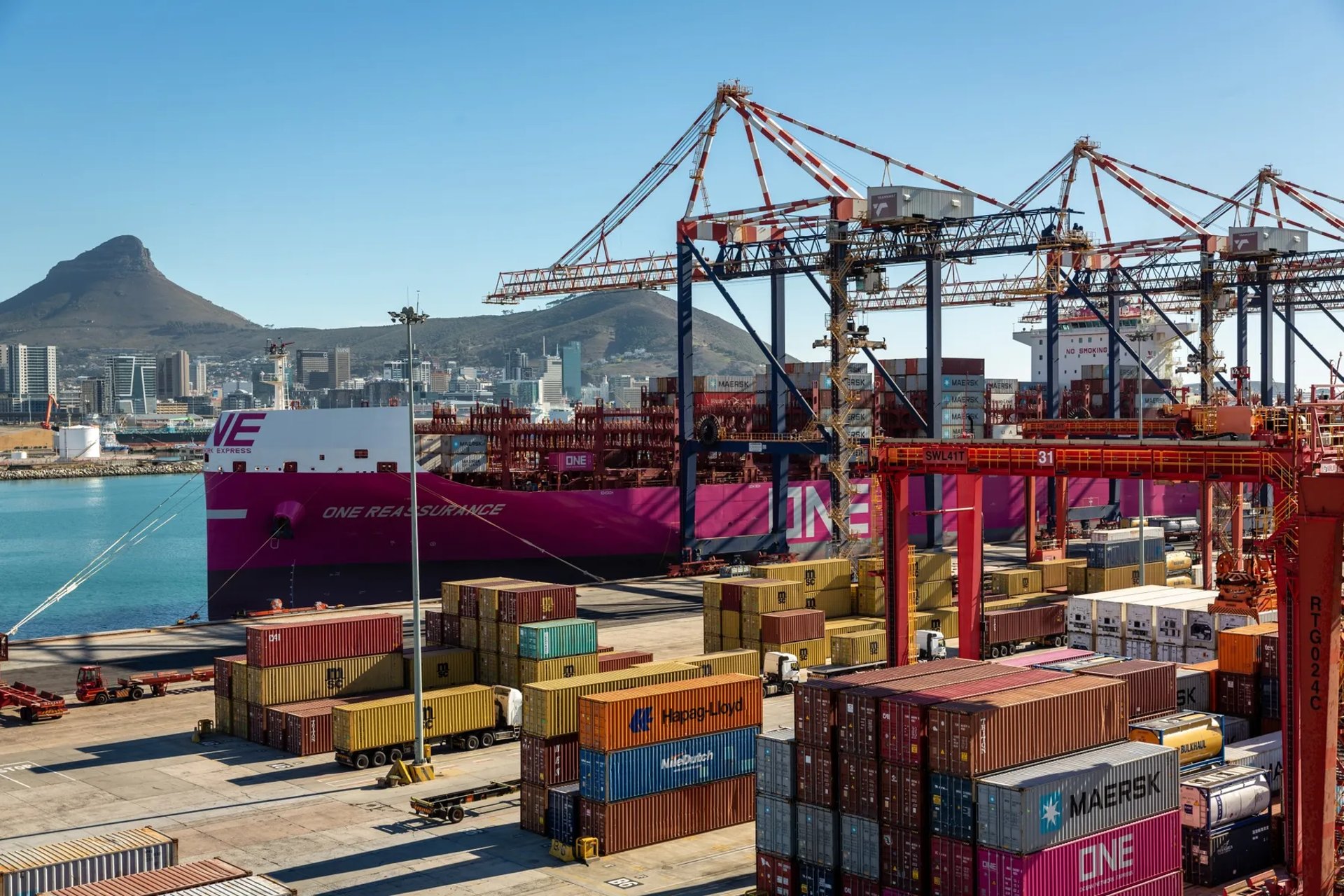
South Africa’s ports form the vital connection between the national economy and global trade networks, handling millions of containers and tons of bulk cargo every year. However, the business environment for terminal operators has become increasingly challenging in recent years. Profit margins in the container handling sector are typically very slim, ranging between three and five percent. These figures leave almost no room for unnecessary spending, meaning every capital investment must be evaluated carefully for efficiency and long‑term value. Among the most significant capital items in port infrastructure are medium‑voltage power distribution cables. These cables supply energy to critical handling equipment including ship‑to‑shore cranes, rubber‑tyred gantries, automated stacking cranes, and conveyor systems, and they must perform reliably under harsh cyclic conditions involving continuous reeling and unreeling.
For many years, the standard approach to selecting these cables has been specification‑driven. Engineers and procurement teams have traditionally chosen products based on their maximum possible performance ratings found in technical catalogues. This means selecting cables designed for extreme capabilities such as a reeling speed of up to 300 metres per minute or a dynamic tensile load capacity of 14,000 Newtons, constructed using premium‑grade composite materials and heavy reinforcement layers. This approach is rooted in a risk‑averse mindset where specifying the highest available rating is seen as a guarantee of reliability and safety.
Yet operational data collected from terminals across South Africa reveals a clear gap between specification and reality. Detailed monitoring shows that standard port machinery operates effectively within a much narrower performance envelope. Typical working speeds range from 150 to 200 metres per minute, while the dynamic forces experienced during acceleration, deceleration, and normal operation fall between 2,250 and 5,250 Newtons. By purchasing cables engineered for performance levels that are never actually required, operators are effectively over‑specifying their requirements by between 25 and 40 percent. This results in significantly higher material costs, heavier cable weights, larger external diameters, and greater complexity during installation and maintenance. In an industry where financial efficiency determines long‑term viability, this mismatch represents a substantial and avoidable expense.
Smart Design Optimisations in TRATOSFLEX‑ES3‑FO
TRATOSFLEX‑ES3‑FO has been developed specifically to resolve the mismatch described above. It represents a shift from designing for theoretical maximums to engineering for real‑world application profiles. Alongside its environmentally focused variant, TRATOSGREEN‑ES3‑FO, this product range adheres strictly to the relevant standards including VDE 0250 Part 813 and HD 620 S1 Page 9, but re‑engineers every layer of construction to remove unnecessary cost and mass while retaining all required functionality.
At the core of the design philosophy is the understanding that reliability does not require over‑engineering. The product incorporates a series of intelligent choices that reduce material volume, simplify construction, and lower overall weight. One of the most impactful innovations is the use of an extruded semiconducting screen, which replaces traditional heavy metallic shielding layers while maintaining equivalent electrical performance. Material science has also played a central role, with proprietary compounds developed for insulation, inner sheaths, and outer jackets that balance mechanical strength, thermal stability, and cost efficiency.
By recalibrating performance parameters to match the 200 metres per minute operational ceiling common in ports, the design eliminates heavy‑duty reinforcement structures that add mass and expense without benefit. Furthermore, the integration of optical fibres directly within the cable structure creates a combined power and communication solution, removing the need for separate control or data cabling and streamlining system architecture. The outcome is a medium‑voltage cable range that is lighter, more compact, and substantially more affordable than traditional alternatives, yet perfectly capable of delivering decades of reliable service under the specific load, speed, and environmental conditions found in South African ports.
TRATOSFLEX‑ES3‑FO & TRATOSGREEN‑ES3‑FO
To understand the value and suitability of these cables, it is essential to review their complete technical profile, which has been precisely defined to align with both international standards and local operational needs. Manufactured according to the designation (N)TSCGEWÖU+LWL, these are medium‑voltage reeling and trailing cables with integrated optical fibres. The TRATOSFLEX‑ES3‑FO version focuses on reduced weight and dimensions, while TRATOSGREEN‑ES3‑FO offers identical mechanical and electrical performance with the added benefit of low‑halogen materials and reduced toxicity, where the toxicity index of the finished cable is less than five.
Construction Details
Overall architecture: The cable adopts a precise layer‑by‑layer structure, optimised for excellent flexibility, reliable electrical performance, and comprehensive mechanical protection.
Conductor:
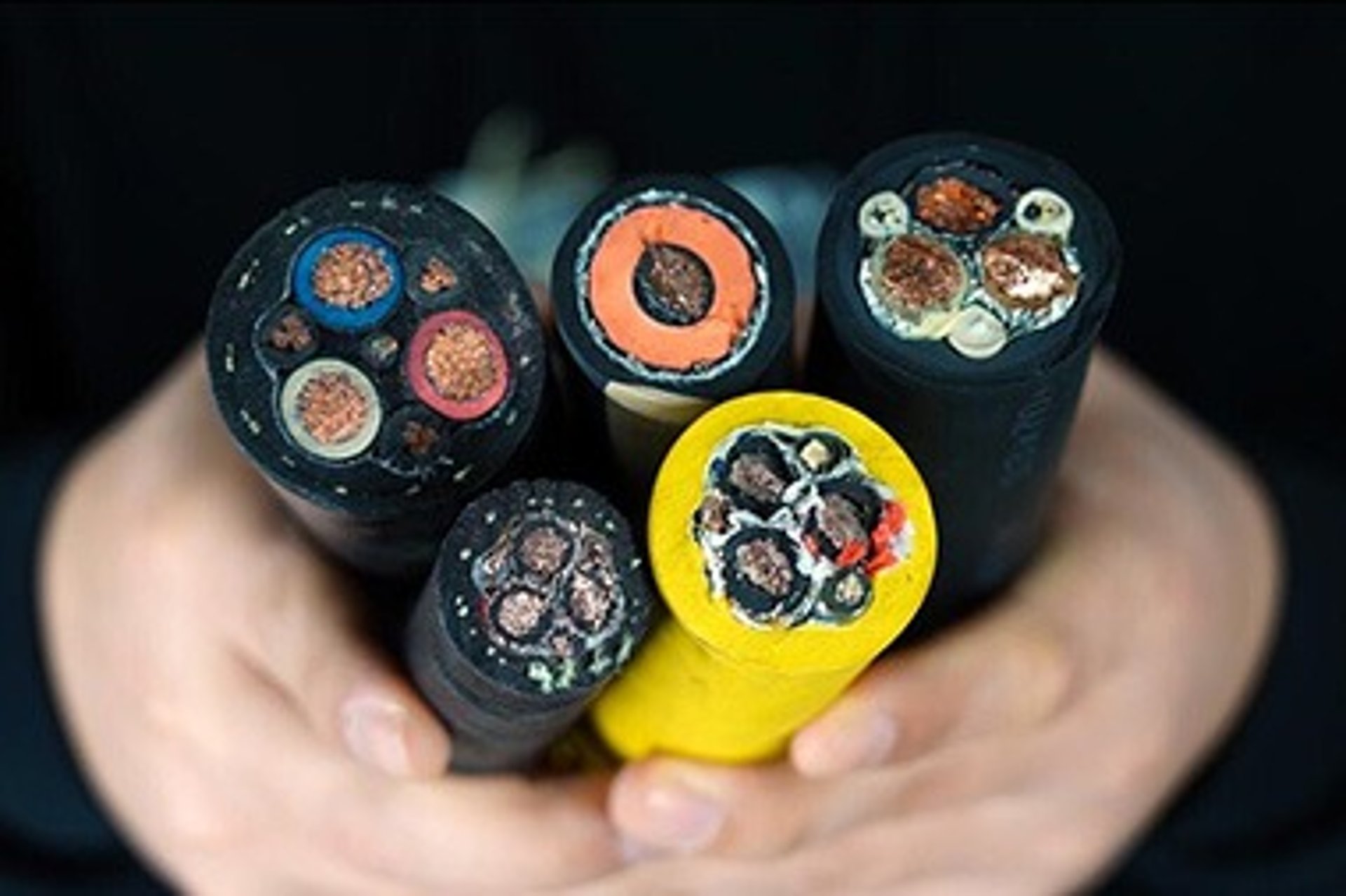
Made of finely stranded copper wires.
Flexibility performance exceeds the requirements of Class 5 specified in VDE 0295.
High flexibility enables long‑term reliable operation under repeated bending cycles typical for reeling applications.
Insulation and screening system (Tratosflex‑ES3‑I®):
A proprietary integrated system combining a semiconducting layer and high‑performance insulation, with performance equivalent to Ethylene Propylene Rubber (HEPR).
Delivers outstanding dielectric strength and thermal endurance, while maintaining good mechanical stability.
The semiconducting layer doubles as an electrical screen; measured in accordance with VDE 0472 Part 512, the resistance between the ground conductor and this layer is ≤ 500 Ω.
Effectively contains the electric field, removing the need for heavy metallic tapes or braids.
Core components:
Ground conductor(s): One or more ground conductors embedded in the core; each is covered with a dedicated semiconducting layer to ensure uniform potential and prevent partial discharge.
Optical fibre unit: Integrated together with power cores; standard configuration uses 62.5/125 µm multimode fibres; 50/125 µm multimode or E9/125 µm single‑mode fibres available on request; fibre count ranges from 6 to 24 cores.
Designed to withstand the same mechanical loads as power conductors, supporting simultaneous power transmission and real‑time data communication.
Inner sheath:
Material: Tratosflex‑ES3‑IS®, a premium elastomer compound exceeding the performance requirements of the GM1b standard.
Functions: forms a smooth bedding, provides mechanical protection, and distributes stress evenly across the cable cross‑section.
Antitorsional protection layer:
Positioned over the inner sheath.
Engineered to resist twisting forces occurring during spooling and unspooling, preventing core distortion and fatigue damage.
Outer sheath:
Standard version: Material is Tratosflex‑ES3‑OS®, a polychloroprene compound meeting or exceeding the 5GM3 standard; 5GM5 grade available for enhanced abrasion resistance; distinct red colour ensures high visibility in terminal environments.
TRATOSGREEN‑ES3‑FO variant: Outer sheath and all polymer components use specially formulated low‑halogen materials; low smoke emission and very low toxicity in case of fire; fully compliant with international environmental and safety standards.
Electrical Ratings and Performance
Voltage coverage: The product range covers all common medium‑voltage levels used in port distribution networks, with dedicated specifications for each class; versions rated 18/30 kV and above can be manufactured upon request for specialised high‑voltage applications.
3.6/6 kV class:
Maximum permissible AC voltage: 4.2/7.2 kV
Routine AC test voltage: 11 kV
6/10 kV class:
Maximum permissible AC voltage: 6.9/12 kV
Routine AC test voltage: 17 kV
8.7/15 kV class:
Maximum permissible AC voltage: 10.4/18 kV
Routine AC test voltage: 24 kV
12/20 kV class:
Maximum permissible AC voltage: 13.9/24 kV
Routine AC test voltage: 29 kV
Temperature performance: Optimised for both coastal and inland climatic conditions across South Africa.
Fixed installation: Continuous conductor operating temperature up to +80°C
Dynamic operation: Full performance maintained within an ambient temperature range of ‑35°C to +80°C, covering cold high‑altitude winters as well as hot, humid coastal environments.
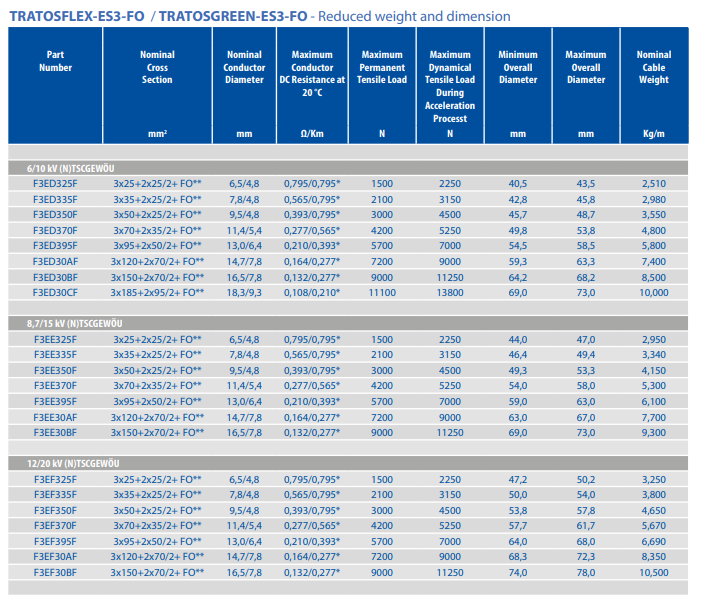
Mechanical and Dimensional Data
Detailed Analysis of Key Technologies and Optimisations
Extruded Semiconducting Screen Technology: Weight Reduction Through Design
One of the most significant advancements in the TRATOSFLEX‑ES3‑FO design is the replacement of traditional metallic shielding systems with an extruded semiconducting layer. In conventional medium‑voltage cables, a copper tape or wire braid is applied over the insulation to contain the electric field and provide a low‑resistance path for earth fault currents. While effective, this method consumes significant amounts of copper, adds considerable weight, increases diameter, and introduces a rigid element that can reduce flexibility and fatigue life.
The new approach utilises a specially engineered semiconducting compound co‑extruded directly onto the insulation layer. This material possesses controlled conductivity, allowing it to equalise potential across the surface of the insulation and effectively screen the electromagnetic field. By ensuring the resistance between the ground conductor and this layer remains below 500 Ohms, it fulfils all the technical requirements of a screen without using any metal. The relationship here is direct: removing heavy copper components reduces overall cable weight by approximately 20 to 25 percent and shrinks the outer diameter by 12 to 18 percent. Beyond the material savings, this construction improves bending performance and eliminates the risk of metal fatigue or strand breakage during repeated flexing, leading to a longer operational lifespan and reduced maintenance needs.
Material Cost Reduction Strategy: Optimised Formulation Without Performance Loss
Material costs constitute the largest portion of the total manufacturing cost for power cables, particularly when high‑performance polymers and copper are involved. The engineering team behind TRATOSFLEX‑ES3‑FO conducted a thorough review of material specifications to identify where high‑cost formulations were being used simply because they were the industry standard, rather than because they were technically necessary for the application.
The optimisation strategy focuses on balancing performance requirements with material economics. For insulation, the Tratosflex‑ES3‑I® compound was developed to match the electrical and thermal properties of premium HEPR materials but using a blend of polymers and fillers selected for availability and cost efficiency. In sheath materials, high‑cost additives were replaced where possible with advanced filler systems and polymer modifiers that deliver equivalent mechanical performance, such as tensile strength, elongation, and abrasion resistance, at a lower raw material price point.
Conductor sizing was also reviewed. Rather than applying standardised safety factors that result in over‑dimensioning, the cross‑sectional area is calculated precisely based on actual load profiles, ambient conditions, and installation methods. This ensures that copper usage is minimised while strictly adhering to current‑carrying capacity requirements. The result is a system where every material is specified exactly to the performance needed, driving down costs by between 10 and 18 percent compared to cables built with premium, non‑optimised formulations.
200 Metres per Minute Speed Mapping: Engineering for the Application
The specification of maximum operating speed is perhaps the clearest example of the shift from over‑engineering to application‑specific engineering. Traditional reeling cables are almost universally rated for 300 metres per minute, a benchmark derived from heavy‑duty mining applications where high‑speed transport of materials is common. In the context of container handling, however, speeds rarely exceed 200 metres per minute, and sustained operation above 180 metres per minute is unusual.
Designing a cable capable of 300 metres per minute requires robust reinforcement elements, high‑modulus sheath materials, and extra‑strong bonding between layers to withstand the high centrifugal and frictional forces generated at those speeds. These reinforcements add weight, diameter, and cost. By defining the maximum operating speed at 200 metres per minute, the design removes the requirement for these heavy‑duty components. This does not imply a reduction in quality or safety; rather, it represents a precise mapping of the mechanical structure to the forces that will actually be encountered. For the port operator, this means paying only for the performance that will be used, resulting in a lighter, more flexible, and more affordable cable.
TRATOSFLEX‑ES3‑FO Versus TRATOSFLEX‑ESDB‑FO: Performance and Cost Comparison
To fully understand the value proposition, it is useful to compare TRATOSFLEX‑ES3‑FO with the TRATOSFLEX‑ESDB‑FO range, a product line designed to the traditional maximum‑performance philosophy.
The ESDB‑FO range is built for universal heavy‑duty use, featuring a 300 metres per minute speed rating and a dynamic load capacity extending up to 14,000 Newtons. Its construction includes a heavy copper‑tape screen, reinforced high‑modulus insulation, and an outer sheath compound graded at 5GM5 with additional anti‑abrasion additives. While highly durable, this construction results in a cable that is typically 30 to 35 percent more expensive, 15 to 20 percent heavier, and larger in diameter than the ES3‑FO equivalent.
In contrast, the ES3‑FO design targets exactly the operating range found in ports: 200 metres per minute and dynamic loads from 2,250 up to 13,800 Newtons. By removing the unused high‑speed and extreme‑load capabilities, the engineering team created a product that delivers 95 percent of the performance required in port applications at approximately 70 percent of the cost. The ES3‑FO version uses the extruded semiconducting screen, optimised compound formulations, and lighter reinforcement, making it easier to handle, install, and maintain, without any compromise to reliability within its design parameters.
TRATOSGREEN‑ES3‑FO: Halogen‑Free Version, Compliance Without Compromise
As sustainability and safety become higher priorities in infrastructure development, the TRATOSGREEN‑ES3‑FO variant offers an important alternative. This version maintains exactly the same mechanical, electrical, and dimensional characteristics as the standard ES3‑FO but replaces traditional polymeric materials with low‑halogen, zero‑halogen, and low‑toxicity compounds.
In the event of a fire, these materials emit very low levels of smoke and do not release corrosive or toxic halogen gases, which can be harmful to personnel and damaging to sensitive electronic equipment. The toxicity index of the finished cable is measured at less than five, well below international safety thresholds. Importantly, these environmental benefits come without any reduction in performance or durability. The mechanical strength, abrasion resistance, and thermal stability remain identical, and the cable meets all relevant standards including VDE 0250. For operators looking to meet green port initiatives, improve safety ratings, or comply with strict environmental regulations, TRATOSGREEN‑ES3‑FO offers a clear path to compliance without financial penalty or operational risk.
Inner Sheath: Tratosflex‑ES3‑IS® – High‑Grade Elastomer Performance Above GM1b
The inner sheath in any flexible power cable serves a dual purpose: it provides a smooth bedding layer over the assembled cores to prevent mechanical damage during bending, and it acts as a barrier against moisture, chemicals, and environmental agents. In the TRATOSFLEX‑ES3‑FO design, this component is manufactured from a proprietary elastomer compound known as Tratosflex‑ES3‑IS®, which has been carefully formulated to exceed the requirements of the GM1b standard typically used for such applications.
The GM1b specification defines minimum performance levels for general‑purpose elastomers, including tensile strength of at least 10 MPa, elongation at break of no less than 250 percent, and good resistance to ageing. Tratosflex‑ES3‑IS® surpasses these benchmarks, delivering a tensile strength of 12 MPa or higher and elongation in excess of 300 percent. This enhanced mechanical performance allows the layer to distribute stress more evenly across the cable cross‑section during reeling cycles, reducing the risk of localized fatigue or deformation.
The material is based on a balanced blend of ethylene‑vinyl acetate and ethylene‑propylene‑diene monomers, reinforced with nano‑scale mineral fillers. This formulation offers excellent thermal stability across the entire operating temperature range from ‑35°C to +80°C, ensuring that the sheath remains flexible at low temperatures while retaining its physical strength at elevated temperatures. It also exhibits superior resistance to oils, greases, and common industrial fluids found in port environments, preventing degradation that could compromise the cable’s service life. By using a compound engineered specifically for the duty cycle rather than relying on a generic standard, the design achieves greater reliability and longer life while keeping material costs controlled through the use of widely available, high‑efficiency polymer systems.
Outer Sheath: Tratosflex‑ES3‑OS® Formulation for Durability and Economy
As the outermost layer, the sheath provides the first line of defence against abrasion, weathering, UV radiation, ozone, and mechanical impact. For TRATOSFLEX‑ES3‑FO, this layer is produced from Tratosflex‑ES3‑OS®, a specially developed polychloroprene‑based compound designed to meet or exceed the 5GM3 grade as defined in relevant standards, with the option to upgrade to the more robust 5GM5 grade where operating conditions are particularly severe.
Polychloroprene was selected as the base polymer because of its inherent balance of properties, including excellent resistance to weather, ozone, oils, and flame, combined with good mechanical strength and flexibility. The formulation has been optimised by adjusting the type and loading of reinforcing fillers and stabilisers. Instead of using expensive high‑performance additives that are unnecessary for standard port environments, the engineering team selected a filler system that maximises abrasion resistance and tensile strength while minimising raw material cost.
The resulting compound delivers a tensile strength greater than 10 MPa and elongation above 300 percent, along with outstanding retention of properties after long‑term exposure to UV light and high humidity, conditions frequently encountered at coastal terminals. The distinctive red colour is integrated into the material to ensure high visibility during installation and maintenance, reducing the risk of accidental damage. For the TRATOSGREEN‑ES3‑FO variant, the polychloroprene is replaced with a low‑smoke, zero‑halogen polyolefin compound that matches the mechanical performance of the standard version but eliminates halogen content, aligning with environmental and safety regulations without sacrificing durability or protection.
Integrated Optical Fibres: Lightweight, Cost‑Effective Real‑Time Monitoring
A key feature of the (N)TSCGEWÖU+LWL design is the integration of optical fibres directly within the cable structure. This combination of power delivery and data communication in a single assembly offers significant advantages in both installation and operation.
The optical unit is designed to be lightweight and compact, using buffered fibres protected by aramid strength members and a tough outer jacket. The standard configuration uses 62.5/125 micrometre multimode fibres, which are ideal for short‑to‑medium‑range data transmission common within terminal equipment, although 50/125 micrometre multimode or single‑mode fibres are available to suit specific network requirements. Fibre counts range from six to twenty‑four cores, providing ample capacity for control signals, video feeds, and condition monitoring data.
Because the fibres are integrated into the cable during manufacture, there is no need to install separate communication cables alongside the power supply. This reduces the total volume of cabling required on board cranes and machines, simplifies routing through cable chains and reeling drums, and cuts both material and labour costs during installation. More importantly, it enables real‑time monitoring of cable health. Sensors connected to the fibres can measure temperature, strain, and bending radius along the cable length, allowing operators to detect early signs of wear, overheating, or mechanical stress before they lead to failure. This predictive maintenance capability reduces unplanned downtime and extends service life, delivering measurable economic benefits over the asset’s lifecycle.
ES3 Multi‑Voltage Architecture: 3.6/6 kV to 12/20 kV Application Mapping
One of the strengths of the TRATOSFLEX‑ES3‑FO range is its modular multi‑voltage design, which covers all the medium‑voltage levels typically required in port distribution networks from 3.6/6 kV up to 12/20 kV. This architecture is built around a common core construction that is scaled and adjusted electrically according to the voltage class, ensuring consistent mechanical performance and installation characteristics across the entire range.
At the lower end, the 3.6/6 kV version is ideal for auxiliary power supplies, lighting systems, and smaller machinery, where electrical stress is relatively low. Moving up, the 6/10 kV and 8.7/15 kV classes form the backbone of main distribution systems, feeding large cranes, conveyor belts, and container handling equipment. The 12/20 kV rating serves as the primary incoming supply for major substations and heavy‑duty installations.
For each voltage level, the insulation thickness is precisely calculated to handle the maximum operating voltage and test requirements, while the conductor stranding, inner sheath, and outer sheath construction remain consistent. This standardisation simplifies engineering and procurement, as the same installation methods, accessories, and spare parts can be used across different voltage circuits. It also allows operators to standardise their inventory and maintenance procedures, reducing complexity and cost. Higher‑voltage versions above 18/30 kV can be manufactured on request, maintaining the same lightweight and optimised design principles for specialised applications.
Dynamic Tensile Load Optimisation: Medium‑Duty Range 2,250 N to 13,800 N
Mechanical load capacity is another area where the design philosophy of right‑specification delivers clear benefits. Traditional cables are often designed with a single high load rating intended to cover every possible application, resulting in heavy reinforcement even where it is not needed. TRATOSFLEX‑ES3‑FO, however, offers a graduated load capacity precisely matched to conductor size and application requirements, covering a range from 2,250 N up to 13,800 N.
At the lower end, smaller conductor sizes such as 25 mm² are rated for a permanent load of 1,500 N and a dynamic load of 2,250 N, which is fully sufficient for light‑to‑medium duty machinery. As conductor size increases, so does the load capacity, with the largest 185 mm² size capable of withstanding a permanent load of 11,100 N and a dynamic load of 13,800 N. These values are derived from extensive analysis of actual operational data, ensuring that every cable has exactly the strength required to handle acceleration, deceleration, and tension during reeling without over‑engineering.
The reinforcement layer uses a hybrid construction combining polyester and aramid fibres. This blend delivers high tensile strength and low elongation while being significantly more cost‑effective than full aramid reinforcement found in heavy‑duty cables. The safety factor is maintained at or above 4:1, meeting all relevant safety standards, but the overall material volume and weight are reduced by approximately 30 percent compared to over‑specified alternatives. The result is a cable that is strong enough for the job, yet lighter, easier to handle, and less expensive.
Thermo‑Mechanical Stability and Weight Optimisation: Reliability at Lower Cost
A key challenge in cable design is balancing the need for robust thermal and mechanical performance with the desire to reduce weight and material usage. TRATOSFLEX‑ES3‑FO achieves this balance through careful engineering of both materials and structure.
Thermally, the design is optimised for the operating conditions found in South Africa. The temperature range of ‑35°C to +80°C covers all ambient conditions from high‑altitude cold to coastal heat and humidity, without specifying unnecessary extremes that require costly high‑temperature polymers. The insulation and sheath materials are formulated to retain their physical properties within this range, resisting softening at high temperatures and becoming brittle at low temperatures. This precise targeting eliminates the cost premium associated with over‑engineered temperature ratings.
Mechanically, weight reduction of 20 to 25 percent compared to traditional cables is achieved through several linked design choices. The extruded semiconducting screen removes heavy copper components, optimised conductor stranding reduces overall diameter while maintaining flexibility, and the use of high‑efficiency compounds allows for thinner wall thicknesses without sacrificing strength. Despite being lighter, the cable maintains excellent thermo‑mechanical stability, proven through accelerated ageing tests and more than 20,000 bending cycles. This ensures a service life extension of around 40 percent compared to lower‑quality products, while the reduced mass also lowers the mechanical stress placed on reeling equipment, extending the life of the entire system.
Installation and Deployment Economic Benefits: Advantages of Lightweight Design
The benefits of the optimised design extend well beyond the purchase price, delivering measurable savings throughout the installation and operational phases.
The most immediate advantage is handling efficiency. A weight reduction of 20 to 25 percent makes a significant difference during manual and mechanical installation. Lighter cables require fewer personnel to move and position, reducing labour time by approximately 30 percent and lowering the risk of injury. They are also easier to route through tight spaces, around obstacles, and into cable trays or reeling drums, speeding up the installation process and reducing overall project timelines.
The smaller outer diameter, reduced by 12 to 18 percent, brings further logistical benefits. Smaller drums can be used to hold the same length of cable, reducing transport costs and storage space requirements. On‑board machinery, existing reel systems can often be reused without modification, or new reels can be specified with smaller dimensions, cutting equipment capital expenditure by between 10 and 15 percent. The improved bending radius resulting from the flexible construction allows easier integration into compact designs common in modern automated terminals.
Even during operation, the lighter weight delivers ongoing savings. Less mass moving on and off the reel reduces the power required by the drive motor, leading to estimated energy savings of around 8 percent over the cable’s lifetime. Combined with longer service life and reduced maintenance needs, these operational efficiencies contribute to a significantly lower total cost of ownership compared to traditional over‑specified cables.
Frequently Asked Questions
Does the extruded semiconducting screen provide the same protection as a copper screen?
Yes absolutely. The specially formulated semiconducting compound performs both as an insulation screen and an electromagnetic shield. With a maximum resistance of 500 Ohms measured according to VDE 0472‑512, it meets or exceeds all screening performance requirements for medium‑voltage distribution. It effectively contains the electric field, prevents interference, and ensures safe earth fault handling, exactly like a metal screen but without the weight, rigidity, and cost penalty.
Can TRATOSGREEN‑ES3‑FO be used in the same applications as the standard version?
Yes without any limitations. The low‑halogen, low‑toxicity formulation does not compromise electrical, mechanical, or thermal performance in any way. It is fully interchangeable with TRATOSFLEX‑ES3‑FO and is ideal for enclosed spaces, tunnels, or areas with strict safety and environmental regulations. It offers the same ease of installation and service life, while meeting the requirements of green port initiatives.
Why is the speed rating only 200 metres per minute when other cables offer 300 metres per minute?
The 200 metres per minute rating is a precise match to real‑world operational profiles in South African ports, where typical speeds range between 120 and 180 metres per minute. The 300 metres per minute rating is designed for high‑speed mining or heavy industrial applications that do not exist in container or bulk terminals. By removing unnecessary high‑speed reinforcement, the design reduces cost and weight without affecting reliability or performance in actual use.
How does the cost compare to traditional medium‑voltage reeling cables?
Total installed cost is typically between 25 and 35 percent lower than cables designed to maximum performance ratings. This comes from lower material costs, reduced transport and handling expenses, faster installation, and longer service life. For terminals operating on margins of only 3 to 5 percent, this represents a critical improvement in capital efficiency and profitability.
Are higher voltage versions available?
Yes. While the standard range covers 3.6/6 kV up to 12/20 kV, designs for 18/30 kV and above can be manufactured on request. These higher‑voltage versions maintain the same lightweight, optimised design principles and economic benefits, making them suitable for specialised high‑voltage distribution needs in larger port complexes.
If you are looking to specify or procure TRATOSFLEX‑ES3‑FO or TRATOSGREEN‑ES3‑FO medium‑voltage power cables manufactured to (N)TSCGEWÖU+LWL and VDE 0250 standards for your port, terminal, or heavy‑handling project, our engineering team is ready to assist with detailed sizing, full technical data sheets, and competitive commercial proposals.
📧 Contact us: Li.wang@feichuncables.com
Feichun Special Cable – Engineering the right solution for your application.
Email Address: Li.wang@feichuncables.com
© 2025. All rights reserved.


One-click to Quickly Contact
Products
Contact
Company
Location:
Building A Private Science and Technology Park, Hefei Economic and Technological Development Zone, Anhui Province, China
Heat Resistant Cable
WhatsApp: +86 17333223430
Social Media: