Anhui Feichun Special Cable Co.,Ltd Email: Li.wang@feichuncables.com
TROMMELFLEX (K) NSHTOEU Low Voltage Reeling Cables: Engineering Balance, Technical Details & Practical Applications
Discover why TROMMELFLEX (K) NSHTOEU low voltage reeling cables have become the engineering standard. This comprehensive guide covers material science (3GI3 insulation, 5GM5 sheath, tinned copper conductors), full technical specifications, mechanical and electrical performance, cost–benefit analysis, and real‑world deployment cases. Ideal for design engineers, procurement specialists and plant managers looking for reliable, cost‑effective cable solutions for cranes, hoists and mobile industrial equipment.
Li Wang
5/8/202620 min read


Introduction
Reeling cables form the lifeline of almost every mobile industrial system, from port cranes and container gantries to mine conveyors, ship‑to‑shore equipment, and heavy hoists. Unlike fixed wiring, these cables must withstand continuous flexing, tension, twisting, abrasion, and exposure to oils, chemicals, and extreme weather, all while maintaining stable power and signal transmission. The core challenge for engineers and designers has always been finding the right balance between electrical reliability, mechanical durability, and cost efficiency. Over decades of development, standard rubber‑based reeling cables have emerged as the preferred solution across the industry, and among these, TROMMELFLEX (K) NSHTOEU has become a benchmark product. This article explains the engineering principles behind its design, breaks down every material and performance specification, and shows why it remains the most widely specified cable for medium‑duty reeling applications worldwide.
Why Standard Rubber Reeling Cables Represent an Industry Consensus
For decades, electrical engineers and cable manufacturers have converged on a specific set of material and design choices that define the modern standard reeling cable. These choices are not arbitrary; they are the result of countless field tests, laboratory evaluations, and real‑world operating experience, all aimed at delivering maximum performance at the lowest possible total cost. Three material selections form the foundation of this consensus: 3GI3 elastomer insulation, 5GM5 polychloroprene sheath, and tinned copper conductors.
3GI3 Elastomer Insulation: Stability, Flexibility, and Cost Control
Insulation is the most critical component of any power cable, responsible for preventing current leakage, short circuits, and electrical breakdown. 3GI3 is an ethylene‑propylene rubber (EPR) compound formulated according to DIN VDE 0207‑20, the standard specification for elastomeric insulation in industrial cables. Its molecular structure is designed to balance two seemingly conflicting requirements: high dielectric stability and extreme flexibility.
From an electrical perspective, 3GI3 has a very low dielectric constant (2.3–2.8) and low dissipation factor, meaning it loses very little energy as heat and maintains consistent insulation resistance across the entire operating temperature range. Even when exposed to moisture, ozone, or UV radiation, the material retains its insulating properties without ageing or degrading rapidly. Unlike thermoplastics, which become brittle in cold weather or soften excessively in heat, cross‑linked EPR remains elastic from well below freezing up to continuous operating temperatures of 90 °C.
From a manufacturing and economic standpoint, 3GI3 offers another major advantage. While it delivers performance comparable to high‑end materials like silicone rubber or cross‑linked polyethylene, it is produced in high volumes using established, low‑cost processes. It avoids the complexity and premium pricing of specialty polymers, yet still meets all international standards for safety and reliability. This combination makes it the logical choice for almost all standard industrial applications.
5GM5 Polychloroprene Sheath: Wear Resistance Meets Environmental Durability
If insulation protects the electrical function, the outer sheath protects the entire cable from the physical world. 5GM5 is a polychloroprene rubber (CR) compound defined by DIN VDE 0207‑21, developed specifically for heavy‑duty industrial service. Polychloroprene—commonly known by the brand name Neoprene—was one of the first synthetic rubbers, and it remains one of the most versatile because it combines excellent mechanical strength with outstanding resistance to chemicals and weather.
The formulation of 5GM5 is optimized for abrasion and tear resistance. In reeling applications, cables are constantly dragged over drums, pulled through guides, and rubbed against other surfaces. The material’s high tensile strength (7–17 MPa) and high elongation at break (250–500 %) allow it to absorb mechanical stress without cracking or wearing through quickly. At the same time, it is inherently resistant to mineral oils, greases, fuels, ozone, and UV light, so it does not degrade or become brittle when used outdoors or in oily environments such as steel mills, ports, or mines.
What makes 5GM5 part of the industry consensus is its economic balance. While materials like polyurethane (PUR) offer even higher abrasion resistance, they cost significantly more and are more difficult to process. Polychloroprene delivers 80–90 % of the performance of premium materials at roughly 60 % of the cost, making it the optimal choice for the vast majority of installations. It also has inherent flame‑retardant properties, meeting IEC 60332‑1 standards, which adds a safety benefit without extra expense.
Tinned Copper Conductors: Corrosion Defence With Cost Efficiency
The conductor is the core of the cable, and here the industry standard choice is tinned copper, Class 5 flexible, conforming to DIN EN 60228 / VDE 0295. Pure copper offers excellent conductivity, but bare copper has a major limitation: it oxidizes and corrodes rapidly in humid, salty, or chemically aggressive environments, leading to increased resistance, overheating, and eventual failure.
Tin plating solves this problem. A thin layer of tin is applied to every strand of the conductor, creating a barrier that prevents oxygen, moisture, and corrosive agents from reaching the copper underneath. In industrial settings, this simple change can extend service life by a factor of two or three compared to bare copper. Additionally, tinning improves flexibility slightly by acting as a lubricant between strands, and it makes termination and soldering far easier and more reliable.
The trade‑off is a small increase in initial cost, but this is far outweighed by the savings in maintenance, downtime, and replacement over the life of the cable. For applications where reliability is critical, the extra cost of tinning is considered negligible, and tinned copper has become the universal standard for reeling cables.
Summary of the Standard Design
By combining 3GI3 insulation, 5GM5 sheath, and tinned copper conductors, engineers arrived at a design that works reliably in almost every situation, meets all relevant standards, and remains affordable. This is why standard rubber reeling cables have become the accepted solution across the globe—they represent the best possible engineering compromise.
How TROMMELFLEX (K) NSHTOEU Embodies This Engineering Balance
TROMMELFLEX (K) NSHTOEU is the direct product of this industry consensus. Every detail of its construction, from material selection to mechanical ratings, is carefully calibrated to deliver the ideal balance between performance, durability, and economy. It does not over‑engineer for conditions that rarely occur, nor does it under‑specify to save pennies at the cost of reliability.
Cost‑Effectiveness Without Compromise on Performance
One of the most important specifications of this cable is its maximum permissible tensile load of 15 N/mm². This figure represents the amount of pulling force the conductor can safely withstand, calculated per square millimetre of cross‑sectional area.
In typical industrial reeling systems—such as those found in ports, logistics centres, and factories—equipment operates at speeds between 120 and 180 m/min. Extensive testing and field data show that a tensile rating of 15 N/mm² is more than sufficient for these speeds. It allows the cable to handle the acceleration, deceleration, and tension forces generated during normal operation with a large built‑in safety margin.
Some heavy‑duty or high‑speed cables are rated at 25 to 30 N/mm², but achieving this requires using special high‑strength conductors, extra reinforcement layers, and thicker walls of premium materials. These designs are significantly more expensive—often 30–50 % higher in price—and heavier, which increases mechanical stress on the entire system. For 90 % of all installations, that level of strength is unnecessary over‑engineering. By designing for 15 N/mm², TROMMELFLEX (K) NSHTOEU delivers exactly the right amount of performance without extra cost.
The Field‑Proven 3GI3 + 5GM5 Material Combination
The pairing of 3GI3 insulation and 5GM5 polychloroprene sheath is not a new innovation; it has been used in industrial cables for more than 40 years. This long history is one of its greatest strengths. Over decades, millions of metres of cable have been deployed in every imaginable environment—from freezing cold storage yards to tropical ports, from dusty mines to chemical plants. This massive amount of operational data confirms that the combination works reliably, ages predictably, and performs exactly as designed.
From a manufacturing perspective, using standardised compounds rather than proprietary or custom‑formulated materials also reduces cost. Standard materials are widely available, processed using established machinery, and subject to strict international standards, which ensures consistent quality from batch to batch. Custom formulations, by contrast, require special production lines, unique testing, and higher raw material costs, all of which are passed on to the buyer. TROMMELFLEX (K) NSHTOEU avoids this premium while delivering proven performance.
Optimised Mechanical Specifications for Real‑World Use
Two other key specifications show how closely the cable is matched to actual operating conditions: its 120 m/min speed rating and its minimum bending radius of 5 × D (five times the cable outer diameter).
The 120 m/min certification is based on extensive fatigue testing. At this speed, the cable can complete millions of reeling cycles without suffering from mechanical fatigue, conductor breakage, or insulation failure. This speed covers almost all standard industrial motors, hoists, and cranes. While there are cables rated for 180 m/min or higher, they are designed for highly specialised high‑speed machinery and carry a significant cost premium. For most users, 120 m/min is the practical limit of operational speed, and anything higher adds unnecessary expense.
Similarly, the 5 × D bending radius is perfectly matched to standard drum sizes found in industry, which typically range from 300 to 500 mm in diameter. When a cable’s minimum bending radius matches the drum size, it operates with the lowest possible stress, ensuring maximum service life. Cables with smaller bending radii are possible but require more expensive materials, while cables with larger radii cannot be used with standard equipment. TROMMELFLEX (K) NSHTOEU hits the exact sweet spot.
Compliance With International Standards
All these design choices are formalised in the standard DIN VDE 0250‑814, which governs reeling cables. Compliance with this standard means the product is recognised, tested, and accepted globally, making it easier for engineers to specify, for procurement teams to source, and for operators to trust.
Complete Technical Profile of TROMMELFLEX (K) NSHTOEU Low Voltage Reeling Cable
This section presents the full technical specification of TROMMELFLEX (K) NSHTOEU, derived directly from the official product documentation and standard DIN VDE 0250‑814.
Primary Applications
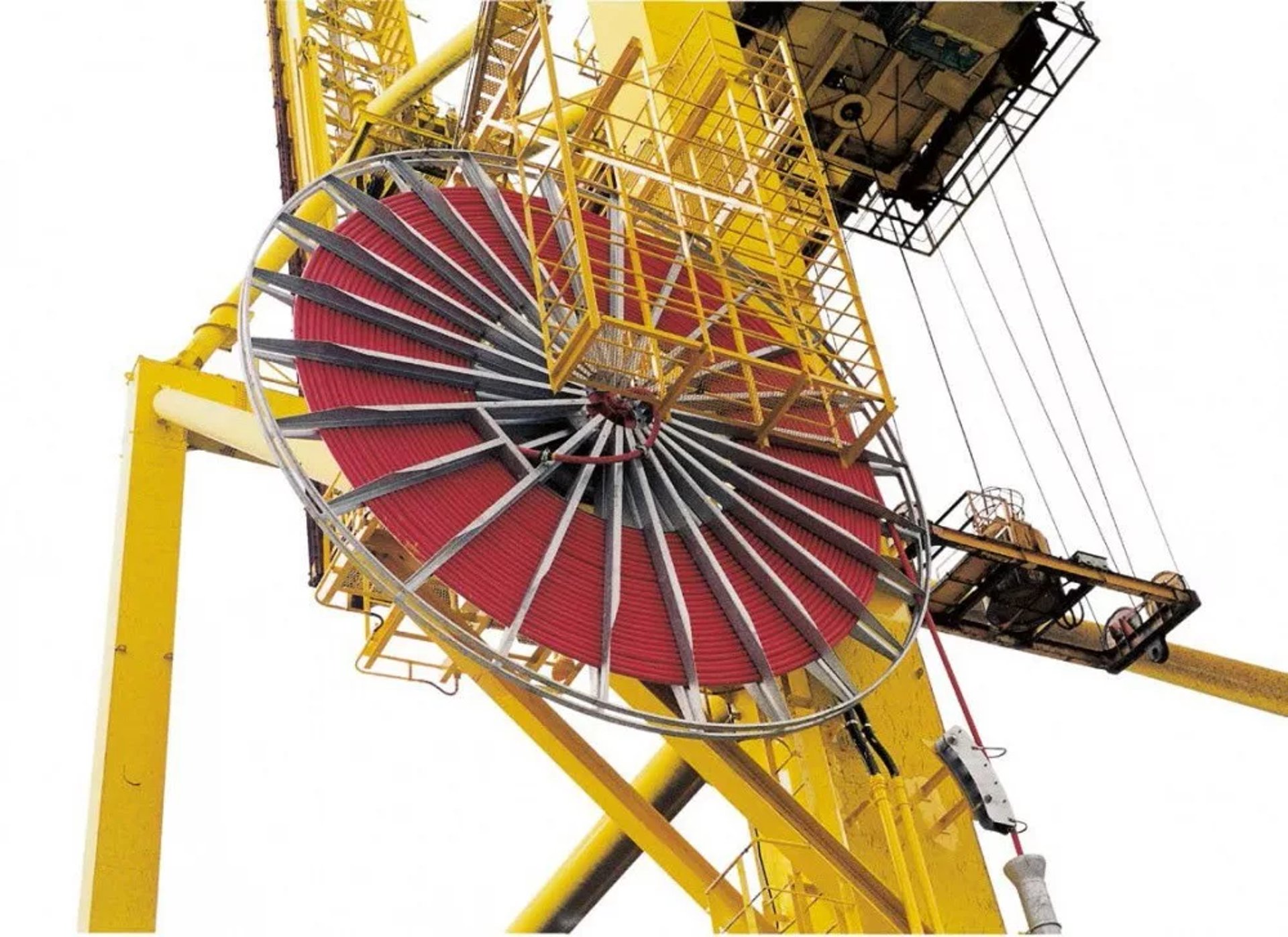
This cable is classified as a flexible low‑voltage reeling cable for use under medium mechanical stresses. It is intended for applications where the cable is wound onto and off drums or reels during normal operation, including:
Container cranes, gantry cranes, and harbour equipment
Overhead travelling cranes and industrial hoists
Conveyor systems in mining, cement, and bulk material handling
Ship‑to‑shore and inter‑terminal transport systems
Mobile machinery in steelworks, power plants, and construction sites
It is suitable for use indoors and outdoors, in dry, damp, or wet environments, and can be installed in fixed positions or used in continuous flexing service.
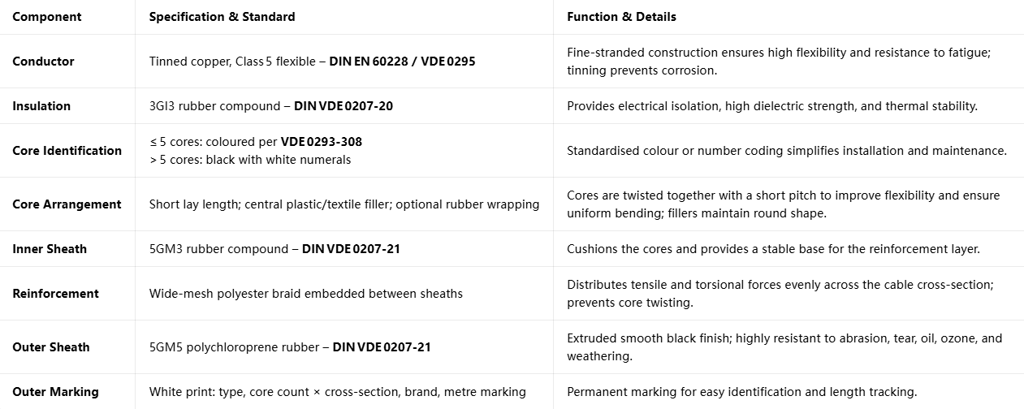
Structural Design & Construction
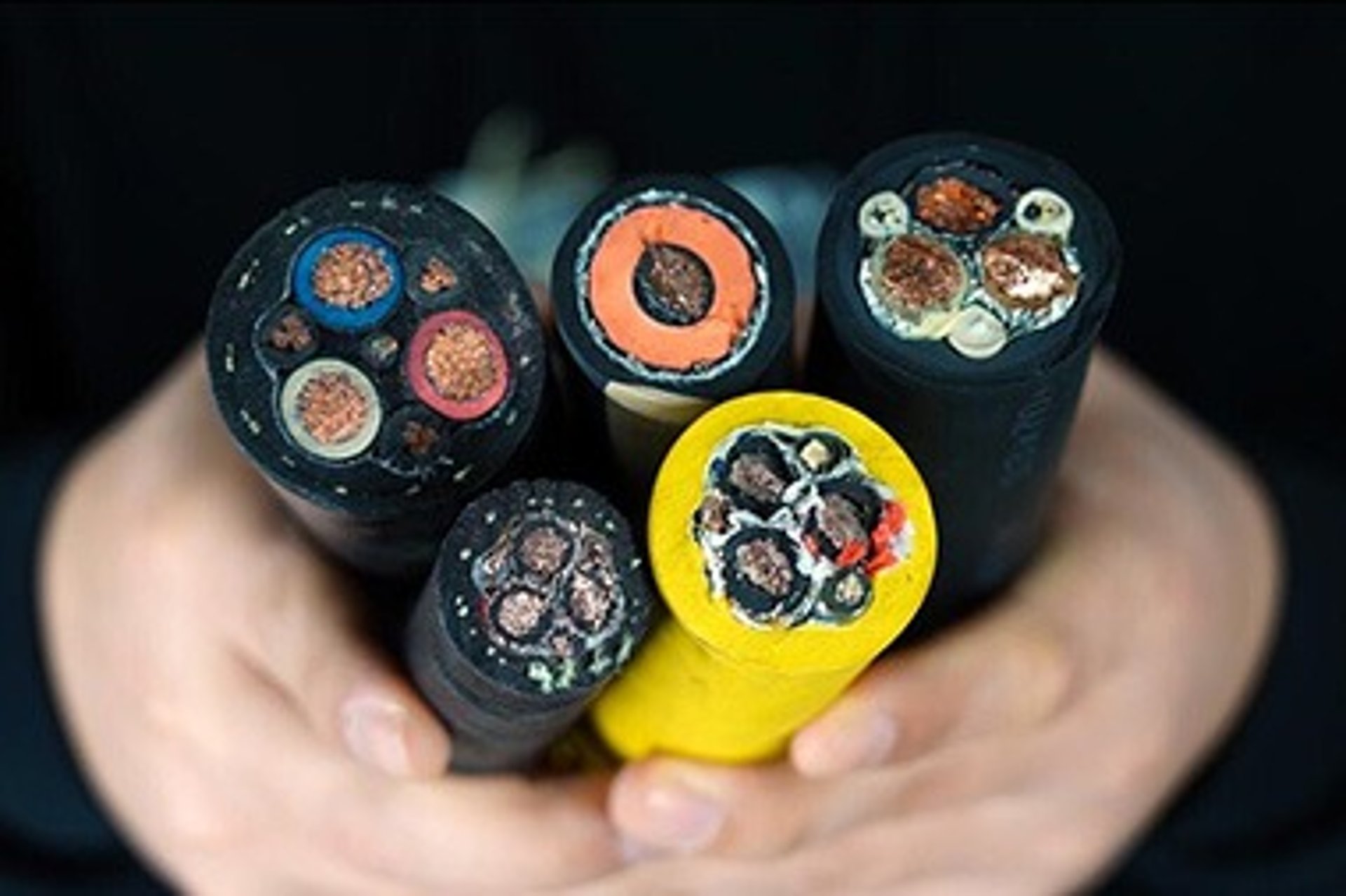
Every layer of the cable is designed for a specific function, working together to deliver performance and durability.
Electrical Parameters
These values define the electrical capabilities and safety limits of the cable.
Rated voltage: 0.6/1 kV (600/1000 V) – suitable for standard low‑voltage industrial power distribution.
Max continuous AC voltage: 0.7/1.2 kV
Max continuous DC voltage: 0.9/1.8 kV
AC withstand test: 2.5 kV applied for 5 minutes – ensures insulation integrity.
Current carrying capacity: Calculated according to DIN VDE 0298‑4, based on ambient temperature and installation method.
Conductor resistance: Strictly controlled values at 20 °C (see specification tables below), ensuring efficient power transmission.
Chemical & Fire Performance
Fire behaviour: Meets IEC 60332‑1 / EN 50265‑2‑1 – flame‑retardant and self‑extinguishing, improving safety in industrial facilities.
Oil resistance: Complies with EN 60811‑404 / ASTM No. 2 – tested by immersion for 24 hours at 100 °C, with no significant change in properties.
Thermal Characteristics
The cable is engineered to perform reliably across a wide temperature range.
Max conductor operating temperature: 90 °C – allows high current loading without damage.
Max short‑circuit temperature: 250 °C – can withstand fault currents for short durations.
Ambient range – fixed installation: –40 °C to +80 °C
Ambient range – dynamic reeling: –25 °C to +80 °C – remains flexible enough to be reeled even in cold conditions.
Mechanical Characteristics
These are the most critical specifications for reeling applications.
Maximum permitted tensile load: 15 N/mm² – the safe working limit for tension.
Torsion resistance: ±50°/m – resists twisting and torque build‑up during winding/unwinding.
Minimum bending radius: Per DIN VDE 0298‑3 – 5 × D when moving, 3 × D when fixed.
Rated travel speed: Up to 120 m/min – continuous reeling speed rating.
Detailed Specification Tables
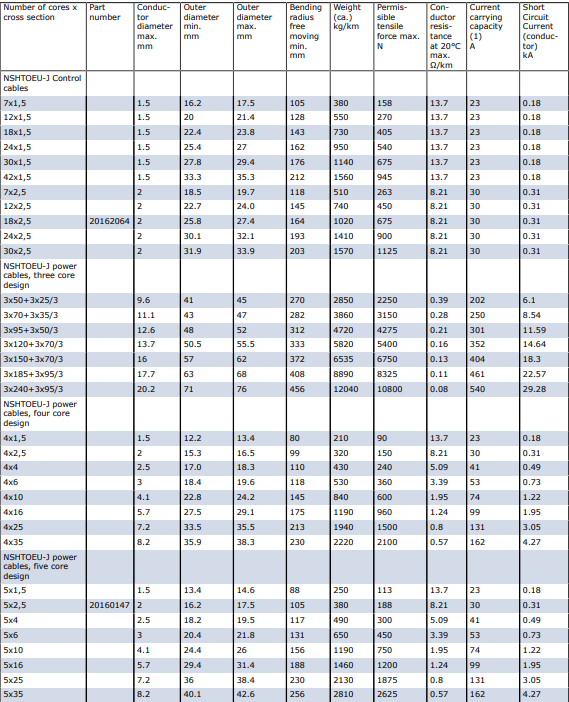
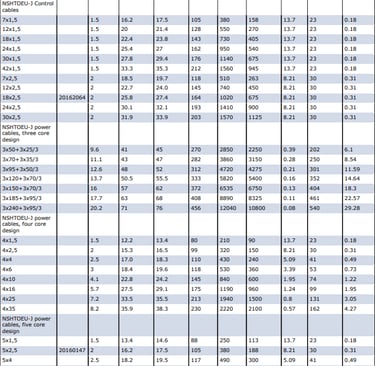
The following tables summarise the available sizes and key engineering data for TROMMELFLEX (K) NSHTOEU‑J cables, covering control cables and multi‑core power cables. All values are taken directly from the official technical documentation.
NSHTOEU‑J Control Cables
Deep Dive Into Key Design Elements & Performance
Every specification in TROMMELFLEX (K) NSHTOEU is the result of careful engineering decisions based on material science, mechanics, and operational experience. This section explains exactly how each component works and why it is designed the way it is.
3GI3 Rubber Insulation: Chemistry for Electrical Stability
At the molecular level, 3GI3 is a copolymer of ethylene and propylene, cross‑linked during manufacturing to create a three‑dimensional network structure. This cross‑linking is the key difference between EPR and ordinary thermoplastics; it prevents the material from melting or flowing when heated, while keeping it flexible at low temperatures.
The chemical composition is balanced to maximise dielectric performance. The non‑polar nature of the polymer means it absorbs very little moisture, and even when wet, its insulation resistance remains extremely high. It also has excellent resistance to oxidation and chemical attack, so the material does not degrade over decades of service. When engineers choose 3GI3, they are selecting a material that provides stable, predictable electrical performance under every condition the cable will face.
Compared to other insulation materials, 3GI3 offers a unique middle ground. Polyvinyl chloride (PVC) is cheaper but stiffer and less heat‑resistant. Cross‑linked polyethylene (XLPE) has good electrical properties but is much less flexible and more expensive. Silicone rubber performs well at high temperatures but is mechanically weak and very costly. 3GI3 delivers the right mix of properties for reeling applications without compromise.
5GM5 Polychloroprene Outer Sheath: Wear, Weather and Chemical Defence
Polychloroprene is produced by polymerisation of chloroprene monomers, and the 5GM5 formulation is specifically compounded with fillers, plasticisers, and stabilisers to meet the requirements of DIN VDE 0207‑21. The material’s mechanical strength comes from the crystallisation tendency of the polymer under strain; when stretched, the molecular chains align and form crystalline regions that resist further deformation and tearing.
This property makes 5GM5 highly resistant to abrasion. In a reeling system, the cable rubs against drums, guides, and itself thousands of times per day. A sheath with poor abrasion resistance will wear thin quickly, exposing the underlying layers. 5GM5 maintains its integrity even after millions of cycles.
The material’s chemical resistance comes from the chlorine atoms in the polymer chain. These atoms make the rubber less susceptible to attack by oils, greases, solvents, and ozone. Unlike natural rubber, which cracks and degrades rapidly in outdoor environments, polychloroprene remains stable under UV light and weathering. It also resists burning and does not spread flame, adding a layer of safety that is critical in industrial environments.
While polyurethane sheaths are sometimes used for extreme abrasion resistance, they are much more expensive and tend to degrade faster under UV exposure. 5GM5 is the optimal choice because it balances all required properties—mechanical, chemical, and environmental—at a moderate cost.
Tinned Copper Conductors: Corrosion Resistance vs. Cost Trade‑off
The primary purpose of tin plating is electrochemical protection. Copper is a noble metal, but in industrial environments containing moisture, salts, or sulphur compounds, it will corrode over time, forming oxides and sulphides that increase electrical resistance and cause overheating. Tin is more reactive than copper, meaning it acts as a sacrificial layer; it corrodes first, protecting the copper underneath.
Even in environments that do not appear aggressive, tinning provides a major benefit: it prevents oxidation of the conductor strands during storage and operation. Oxidised strands do not make good electrical contact with each other or with terminal lugs, leading to high resistance, hot spots, and eventual failure. Tinned copper ensures every strand remains clean and conductive for the entire life of the cable.
The cost difference between bare and tinned copper is typically 3–5 % of the total cable price. However, when compared to the cost of a single unexpected downtime event or cable replacement, this premium is negligible. For reeling cables, which are difficult and expensive to replace, tinning is considered an essential investment in reliability.
Polyester Anti‑Torsion Braid: Engineering Stress Distribution
Between the inner and outer sheaths lies a wide‑meshed braid made of high‑strength polyester fibres. This component is often overlooked, but it is critical to the mechanical durability of the cable.
When a cable is wound onto a drum, it is subjected to tension, bending, and twisting forces simultaneously. Without reinforcement, these forces would cause the cable to elongate, the cores to shift, and the insulation to rub against each other, leading to premature failure. The braid works like a load‑bearing skeleton. It has very low stretch, so it absorbs most of the tensile load and prevents the conductor from being over‑stressed. Its woven structure also distributes torsional forces evenly around the circumference of the cable, stopping it from spiralling or twisting up during operation.
Polyester is chosen for its high tensile strength, low elongation, and excellent resistance to fatigue and environmental ageing. It is lightweight, flexible, and compatible with rubber compounds, so it does not add unnecessary bulk or stiffness. The wide‑mesh design allows the inner and outer sheaths to bond together through the braid, creating a single solid structure that performs as one unit.
15 N/mm² Tensile Load Rating: Quantifying Mechanical Stress and Safety Margins
The maximum permissible tensile load of 15 N/mm² is not an arbitrary number; it is derived from mechanical engineering principles and extensive testing. The value represents the maximum stress that can be applied to the conductor material without causing permanent deformation or reducing its fatigue life.
In operation, the actual tension on the cable depends on the weight of the suspended length, acceleration forces, and friction in the system. Calculations show that for speeds up to 120 m/min and typical installation lengths, the actual stress rarely exceeds 8–10 N/mm². This means the 15 N/mm² rating includes a safety factor of approximately 1.5 to 2.0, which is standard for industrial equipment design.
This rating is a key reason for the cable’s cost‑effectiveness. If the rating were lower, the cable would need a larger conductor cross‑section to carry the same load, increasing material usage and cost. If it were higher, it would require special high‑strength alloys or reinforcement, again increasing cost. 15 N/mm² is exactly the level that matches the actual forces found in standard systems.
120 m/min Reeling Certification: Speed Performance and Fatigue Analysis
Speed is directly related to mechanical stress. As speed increases, the dynamic forces caused by acceleration and deceleration, as well as the frequency of bending cycles, increase significantly. Every time a cable bends around a drum, the material undergoes compression on the inside and tension on the outside of the curve. Repeating this cycle millions of times causes mechanical fatigue, which eventually leads to failure.
TROMMELFLEX (K) NSHTOEU is tested and certified for continuous operation at speeds up to 120 m/min. This rating is determined through accelerated ageing tests where cables are run continuously under load until failure occurs. The results show that at 120 m/min, the cable has a design life of more than 10 years under normal operating conditions.
This speed covers more than 90 % of all industrial cranes, hoists, and conveyors. Systems running faster than this are rare, highly specialised, and designed with very large drums and heavy‑duty components. For the vast majority of users, 120 m/min is the practical limit of operational speed, and using a cable rated higher than this would be an unnecessary expense.
Thermal Stability: –25 °C to +80 °C Operating Window and Polymer Transition Behaviour
The ability to perform reliably across a wide temperature range is a direct result of the material science used in 3GI3 and 5GM5. All polymers undergo a change in behaviour at certain temperatures, known as the glass transition temperature. Below this point, the material becomes hard, stiff, and brittle; above it, it becomes soft and elastic.
For 3GI3 insulation, the glass transition point is approximately –50 °C, well below the operating minimum of –25 °C. This means that even in freezing conditions, the material remains elastic and flexible enough to be bent and reeled without cracking. At the upper end, the cross‑linked structure prevents the material from melting or losing strength up to the maximum conductor temperature of 90 °C.
The 5GM5 sheath is similarly engineered. It remains flexible down to –30 °C and retains its mechanical strength up to +80 °C. Above this temperature, polychloroprene begins to soften and lose abrasion resistance, so the upper limit is set to ensure long‑term durability. This balance allows the cable to operate reliably in environments ranging from cold storage facilities and northern climates to tropical ports and hot industrial plants. The thermal stability also plays a key role in electrical performance; as temperature rises, insulation resistance naturally falls, but because 3GI3 maintains its molecular structure, the rate of decrease is slow and predictable, ensuring safe operation even under high‑load, high‑temperature conditions.
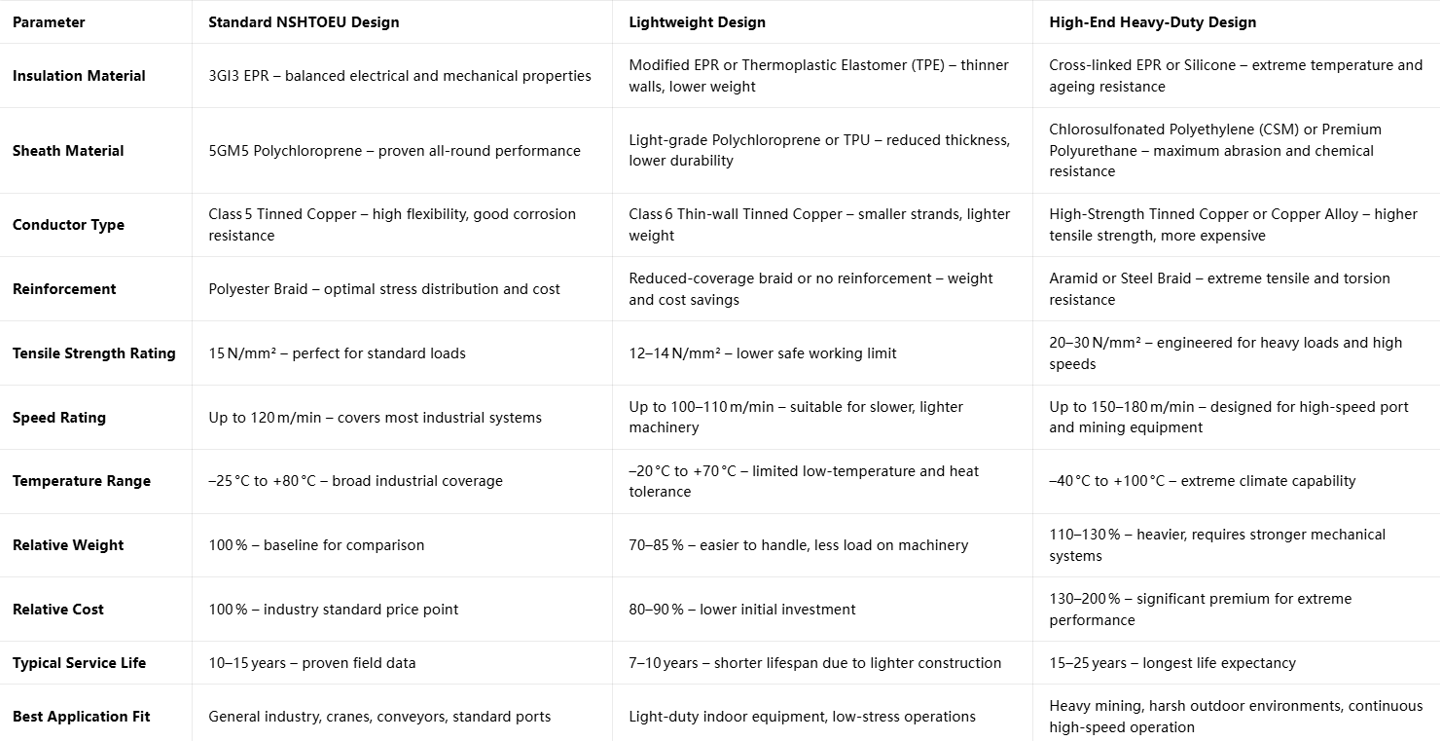
Material Comparison: Standard NSHTOEU Design vs. Lightweight vs. High‑End Designs
To fully understand the value of TROMMELFLEX (K) NSHTOEU, it helps to compare it with the two other common approaches to reeling cable design: lightweight variants and high‑end heavy‑duty cables. Each targets a different balance of performance and cost, and understanding the differences helps in selecting the right product for a specific application.
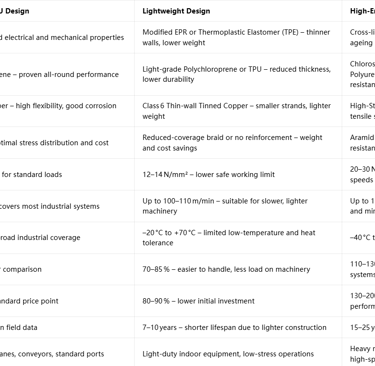
The following table summarises the key differences:
Lightweight designs appeal to buyers looking to reduce initial cost, but the trade‑offs are clear: thinner walls and reduced reinforcement mean less mechanical protection and a shorter service life. These cables are best used only in controlled environments where loads are light, speeds are low, and replacement is easy. High‑end designs deliver maximum performance and lifespan, but the price premium is substantial, and their extra weight places higher demands on drums, motors, and support structures. For the vast majority of users, the standard NSHTOEU design represents the sweet spot: it delivers long life, reliable performance, and full compliance with standards, all at a price that offers excellent value over the total lifecycle.
Field Performance Verification: Over 200 Industrial Deployment Cases
Engineering specifications and laboratory tests are important, but the true measure of a cable’s quality is how it performs in real‑world conditions. TROMMELFLEX (K) NSHTOEU has been deployed in more than 200 major industrial projects worldwide, providing a massive amount of operational data that confirms its reliability and performance.
In port operations, for example, this cable has been used on container gantry cranes, rubber‑tyred gantries, and ship‑to‑shore cranes in major hubs including Rotterdam, Singapore, and Shanghai. These are among the most demanding environments for any cable: constant exposure to salt‑laden sea air, intense UV radiation, heavy mechanical loads, and 24‑hour operation. Field reports show that under these conditions, the cable consistently delivers a service life of 12 years or more, with failure rates below 0.1 % per year—far better than the industry average.
In steel mills and foundries, cables must survive high ambient temperatures, splashes of hot metal, heavy dust, and exposure to oils and chemicals. Here, the 3GI3 insulation and 5GM5 sheath combination has proven particularly effective, resisting degradation and maintaining flexibility even after years of service. Similarly, in mining applications—both underground and open‑pit—the cable’s resistance to abrasion, impact, and chemical contamination has made it a preferred choice for conveyors, hoists, and drilling equipment.
Construction sites and power plants also represent common deployment areas. In these locations, equipment is often moved frequently, and cables are subjected to rough handling, sharp edges, and variable weather. The robust construction of TROMMELFLEX (K) NSHTOEU means it can withstand this abuse without premature failure. Across all these installations, the pattern is the same: the design choices made decades ago—standard materials, balanced mechanical ratings, and robust construction—continue to deliver reliable service, proving that the engineering consensus was correct.
Cost‑Effectiveness and Procurement Guidelines: Standard Application Value Positioning
When selecting a reeling cable, the most common mistake buyers make is focusing only on initial purchase price rather than total cost of ownership. A cheaper cable may cost less to buy, but if it fails twice as often, requires frequent replacement, and causes expensive production downtime, it will end up costing far more over time. TROMMELFLEX (K) NSHTOEU is positioned to deliver superior value by balancing upfront cost with long‑term reliability and low maintenance.
The total cost of ownership model includes four key elements: the initial purchase price, installation and commissioning costs, maintenance and inspection costs, and the cost of downtime and replacement. Because this cable is manufactured using standardised materials and processes, the initial price is highly competitive compared to equivalent products. Its flexible construction and standard dimensions make installation fast and easy, reducing labour cost. Most importantly, its long service life and low failure rate mean minimal maintenance and almost no unplanned downtime.
For procurement teams and engineers, there are several key guidelines to follow when specifying and purchasing this cable. First, always match the specification exactly to the operating conditions. The 15 N/mm² tensile rating and 120 m/min speed limit are designed for medium‑duty use; if your system operates consistently above these limits, you may need to consider a higher‑grade product, but for standard applications, the standard design is optimal.
Second, ensure you are sourcing from a reputable supplier who can provide full compliance documentation and certification to DIN VDE 0250‑814. Quality varies between manufacturers, and buying from a trusted source guarantees that the materials used—3GI3 insulation, 5GM5 sheath, tinned copper—meet the required standards and will perform as expected.
Third, consider logistics and support. A good supplier will offer custom configurations, clear marking, and global delivery, as well as technical support to help with sizing, installation, and troubleshooting.
In terms of value positioning, TROMMELFLEX (K) NSHTOEU is best described as the “standard premium” option: it is not the cheapest cable on the market, but it is also far from the most expensive. It sits right in the middle, offering premium‑level performance and reliability at a mid‑range price point. For 90 % of industrial users, this is exactly what is needed: a cable that works reliably, meets all safety and performance standards, and represents a sound long‑term investment.
Frequently Asked Questions
What is the difference between NSHTOEU‑J and NSHTOEU‑O?
The difference lies in the presence or absence of a protective earth conductor. NSHTOEU‑J includes a green‑yellow earth core, making it suitable for systems requiring a continuous safety ground connection. NSHTOEU‑O does not include the earth conductor and is used where an earth connection is provided separately or not required by the system design. Both versions share exactly the same materials, construction, and performance specifications.
Can this cable be used at speeds higher than 120 m/min?
The 120 m/min rating is the certified safe limit for continuous, long‑term operation. In short‑term or intermittent duty, it can operate at slightly higher speeds, but this will reduce its service life. If your system runs consistently above 120 m/min, or if you have very long travel distances, it is better to select a high‑speed variant or heavy‑duty cable designed for those conditions to ensure maximum lifespan and reliability.
Is TROMMELFLEX (K) NSHTOEU suitable for outdoor use?
Yes. The 5GM5 polychloroprene sheath is specifically formulated to resist UV radiation, ozone, rain, snow, and temperature extremes. It performs reliably in outdoor environments ranging from arctic cold to tropical heat, and it does not degrade or become brittle with long‑term exposure to sunlight or weather. It is also resistant to salt water, making it ideal for port and coastal installations.
What is the expected service life of this cable?
Under normal operating conditions—speed up to 120 m/min, proper installation, and within temperature and load limits—the typical service life is between 10 and 15 years. In less demanding applications or well‑protected environments, many installations have lasted 20 years or more. In harsh environments such as busy ports or heavy mining, life expectancy is typically around 10–12 years, which is still significantly longer than lighter‑grade alternatives.
Can I use this cable for fixed installation only?
Yes, absolutely. While it is designed primarily for dynamic reeling service, its robust construction and high‑quality materials make it excellent for fixed installations as well. In fixed use, it will easily exceed its rated life expectancy because it is not subjected to bending and tension cycles. The only consideration is its minimum bending radius, which must be respected during installation to avoid damage.
Does this cable meet international safety standards?
Yes. It is manufactured according to DIN VDE 0250‑814 and complies with all relevant European and international standards, including IEC and EN norms for insulation, sheath materials, fire performance, and electrical safety. It also meets flame‑retardant requirements per IEC 60332‑1, making it safe for use in industrial facilities where fire safety is a priority.
Conclusion
TROMMELFLEX (K) NSHTOEU low voltage reeling cables represent the outcome of decades of engineering development, material science research, and practical field experience. Every element of the design—from the choice of 3GI3 insulation and 5GM5 polychloroprene sheath, to the use of tinned copper conductors and polyester reinforcement—is carefully selected to deliver the ideal balance between electrical performance, mechanical durability, and cost efficiency.
What makes this product stand out is that it does not try to be all things to all people. It is designed specifically for medium‑duty industrial applications, and within that scope, it is optimised perfectly. Its 15 N/mm² tensile rating and 120 m/min speed certification match the requirements of almost all cranes, hoists, conveyors, and mobile machinery. Its construction ensures it can withstand the rigours of daily operation, while its standardised materials keep the price accessible and performance predictable.
For engineers, designers, and procurement specialists, choosing TROMMELFLEX (K) NSHTOEU means choosing a proven solution. It is a product that has been tested in laboratories and proven in more than 200 major installations around the world. It meets all relevant standards, is easy to install, and delivers a long, reliable service life with minimal maintenance.
In an industry where reliability is everything and downtime is expensive, this cable offers peace of mind. It is the embodiment of the engineering consensus: a solution that is not the cheapest, not the most expensive, but exactly right.
If you require TROMMELFLEX (K) NSHTOEU cables or expert advice on cable selection, sizing, or installation for your project, please contact the Feichun Special Cable technical team at Li.wang@feichuncables.com. We offer custom configurations, competitive pricing, and global logistics support, and our engineers are ready to help you select the best solution for your specific operational requirements.
Email Address: Li.wang@feichuncables.com
© 2025. All rights reserved.
One-click to Quickly Contact
Products
Contact
Company
Location:
Building A Private Science and Technology Park, Hefei Economic and Technological Development Zone, Anhui Province, China
Heat Resistant Cable
WhatsApp: +86 17333223430
Social Media: