Anhui Feichun Special Cable Co.,Ltd Email: Li.wang@feichuncables.com
Ultimate Guide to PROTOMONT(MSR) 2YSLGCGOEU 250V Control and Signaling Cables for Mining Installations – DIN VDE 0250 Standards, EMC Shielding & Proven Reliability at Richards Bay Minerals South Africa
PROTOMONT(MSR) 2YSLGCGOEU 250V is a purpose‑built twisted‑pair control, signal and bus cable engineered exclusively for open‑pit and underground mining. Manufactured to DIN VDE 0250‑1 / 812, with 2YI1 polyethylene insulation, EM2 chlorinated rubber sheaths and tinned copper braid shielding, it delivers stable signal transmission, wide temperature tolerance, oil/ozone/UV resistance, and long service life. Field‑proven in heavy‑mineral sands operations at Richards Bay Minerals (RBM) South Africa, this guide covers standards, construction, material science, engineering principles, specifications, performance comparison, equivalent alternatives, and practical selection advice.
Li.Wang
6/24/20269 min read
Introduction
Mining remains one of the most demanding industrial environments in the world, and nowhere is this more evident than across South Africa, where operations range from vast open‑pit coal and platinum mines in Mpumalanga and the Bushveld Complex to coastal heavy‑mineral sands at Richards Bay Minerals. These sites operate 24 hours a day, 365 days a year, with equipment exposed to continuous vibration, extreme temperature swings, dust, moisture, hydraulic oil, ozone, and intense ultraviolet radiation.
At the heart of every modern automated mine lies a complex network of cables that carry control signals, sensor data, and communication commands. When these cables fail, the consequences go far beyond simple replacement costs. Unplanned shutdowns on conveyor systems can stop material flow for hours, safety systems may lose functionality, and automation accuracy drops, leading to reduced productivity and increased risk to personnel.
Standard industrial cables designed for factory use are rarely up to the task. They typically use PVC insulation and sheaths, have limited flexibility, poor resistance to weathering, and insufficient electromagnetic shielding. In South African mines, such cables often fail within 18 to 24 months, requiring frequent replacement and causing significant operational disruption.
This is where PROTOMONT(MSR) 2YSLGCGOEU 250V enters as a specialized solution. It is not simply a reinforced version of a standard cable; it is a system engineered across four critical dimensions: electrical performance, mechanical strength, material durability, and safety compliance. This guide explains exactly how it is built, why it works, and how it has proven its value in real‑world mining applications.
Standards, Approvals and Compliance
A reliable mining cable must meet strict technical and safety standards, especially in South Africa, where regulations are enforced under the Mine Health and Safety Act and referenced through SANS specifications.
Core Design Standards
The PROTOMONT(MSR) 2YSLGCGOEU is built around DIN VDE 0250‑1 and DIN VDE 0250‑812, the German industrial standards widely recognized as benchmarks for heavy‑duty electrical cables. These standards define minimum requirements for construction, materials, electrical performance, and mechanical endurance that exceed general‑purpose cable specifications.
Complementing these are key IEC standards:
IEC 60228 / IEC 60028: Specifies Class 5 flexible copper conductors, ensuring both conductivity and flexibility.
IEC 60332‑1‑2: Single‑core vertical flame retardancy, preventing flame spread and reducing fire risk.
IEC 60811‑404: Oil resistance, critical for environments where hydraulic fluids and lubricants are common.
The cable also carries EAC certification, confirming compliance with technical regulations across Eurasian markets, and aligns with SANS 10142, making it acceptable for use throughout South African mining operations.
Why DIN VDE 0250‑812 Matters
Unlike standards for general‑use cables, DIN VDE 0250‑812 mandates higher tensile strength, better torsion resistance, and more robust environmental stability. This ensures that the cable maintains its electrical and mechanical properties even after years of exposure to vibration, movement, and harsh weather. Major operators including Anglo American, BHP, Rio Tinto, and Richards Bay Minerals prefer cables built to this standard because they deliver predictable performance and simplify regulatory approval.
Full Technical Specifications
All specifications below are taken directly from the official Prysmian technical data sheet dated 22 March 2019.
Electrical Characteristics
Rated voltage: 250 / 250 V
Maximum permissible AC operating voltage: 0.350 kV (peak)
Maximum permissible DC operating voltage: 0.350 kV (peak)
AC test voltage: 1.5 kV
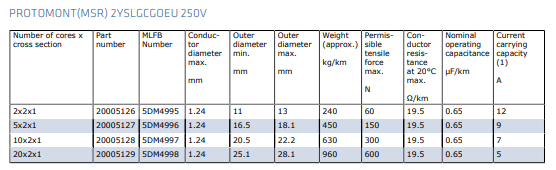
Maximum conductor resistance at 20 °C: 19.5 Ω / km for 1 mm²
Nominal operating capacitance: 0.65 μF / km
Current‑carrying capacity: 12 A for 2 × 2 × 1; 5 A for 20 × 2 × 1
Thermal Ratings
Maximum continuous conductor temperature: 60 °C
Maximum short‑circuit conductor temperature: 150 °C
Ambient temperature, fixed installation: −40 °C to +60 °C
Ambient temperature, fully flexible operation: −25 °C to +60 °C
Mechanical Properties
Maximum tensile load on conductor: 15 N / mm²
Torsion resistance: ±25° / m
Minimum bending radius: According to DIN VDE 0298‑3
Permissible tensile force: 60 N for 2 × 2 × 1; 150 N for 5 × 2 × 1; 300 N for 10 × 2 × 1; 600 N for 20 × 2 × 1
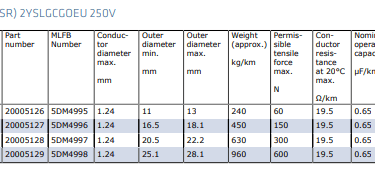
Standard Configurations and Dimensions
Construction and Material Science – Layer‑by‑Layer Analysis
Every layer of the PROTOMONT(MSR) 2YSLGCGOEU is designed with a specific purpose, following clear electrical, mechanical, and chemical principles.
Conductor
The innermost layer consists of Class 5 finely stranded bare copper, complying with IEC 60228. High‑purity annealed copper offers the highest electrical conductivity available, minimizing signal loss and heat generation. The fine‑strand structure allows the cable to bend and twist repeatedly without metal fatigue, a critical requirement near moving conveyors and reclaimers.
Insulation
Each conductor is insulated with 2YI1 polyethylene (PE) compound. PE has a low dielectric constant of approximately 2.3, resulting in low capacitance and minimal signal attenuation – essential for maintaining signal integrity over longer distances. It is also chemically inert, resisting moisture absorption and electrical breakdown, even at elevated temperatures.
Core Arrangement and Serving
Insulated cores are twisted into pairs, then layered and wrapped in a non‑hygroscopic serving material. Twisting the two conductors of each loop creates a balanced transmission system, which significantly reduces crosstalk and electromagnetic interference. The non‑absorbent layer prevents moisture from migrating into the core assembly, which would otherwise degrade insulation resistance over time.
Inner Sheath
Over the cabled core sits an EM2 chlorinated rubber compound inner sheath. This layer provides a smooth, uniform surface for the shielding, cushions mechanical stress, and creates a barrier between the insulation system and the braid. Chlorinated rubber is chosen here for its inherent resistance to oil, ozone, and heat, while remaining flexible at low temperatures.
EMC Shielding
Between inner and outer sheaths is a braid of tinned copper wires. This forms a continuous Faraday cage, blocking external electromagnetic noise from motors, VFDs, and high‑power cables – a major source of signal instability in mines. Tin plating prevents oxidation and sulfidation, which is vital in humid, salt‑laden coastal environments such as Richards Bay. The braided construction also maintains electrical continuity even when the cable is flexed or twisted.
Outer Sheath
The outermost layer is again EM2 chlorinated rubber compound, the same high‑performance material used for the inner sheath. This formulation is engineered to meet multiple demands simultaneously: it is flame‑retardant, highly resistant to mineral oils, impervious to ozone and UV radiation, and remains flexible down to −40 °C. Unlike PVC, which becomes brittle and cracks under sunlight and ozone exposure, EM2 maintains its physical properties for years, protecting the cable from abrasion and chemical attack.
Integrated Design Philosophy
The combination of materials and structure creates a system where each layer supports the others:
Electrically: Twisted pairs + shield = common‑mode rejection ratio above 40 dB, ensuring clean signals.
Mechanically: Flexible stranding + elastic rubber sheaths distribute stress evenly, preventing fatigue failure.
Environmentally: 2YI1 + EM2 resists degradation from moisture, chemicals, and radiation, resulting in a service life two to three times longer than standard cables.
Performance Advantages Over Ordinary Cables
The difference between PROTOMONT(MSR) 2YSLGCGOEU and standard industrial cables becomes clear when measured against the actual challenges of mining.
Solving the Three Main Failure Modes
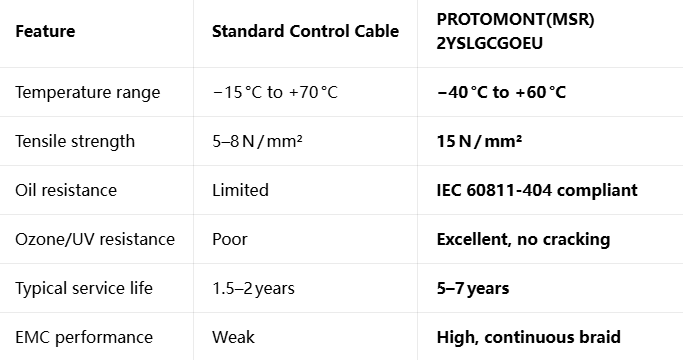
Signal Instability: Standard LiYCY cables use thin aluminum‑foil shields that tear easily under vibration. Without proper shielding, control signals drift, causing false alarms or erratic automation. The tinned copper braid in this model maintains protection even in continuous motion.
Jacket Degradation: Ordinary PVC or low‑grade rubber sheaths crack within two years when exposed to South Africa’s intense UV and ozone. EM2 sheaths resist this photochemical attack, remaining intact and flexible for 5–7 years.
Core Breakage: Low‑tensile conductors (5–8 N / mm²) fatigue quickly near conveyor drives. The 15 N / mm² rating and Class 5 stranding of this cable allow it to withstand ±25° / m torsion without breaking.
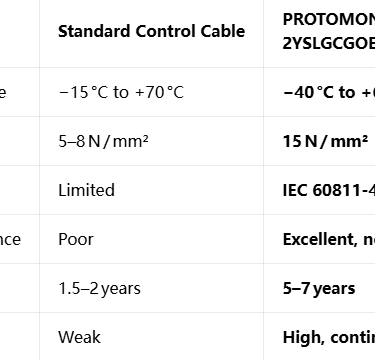
Comparative Overview
Applications and Operating Conditions
The PROTOMONT(MSR) 2YSLGCGOEU is specifically designed for open‑pit and underground mining, with its most common placement alongside conveyor belts and on material handling equipment.
Primary Use Cases
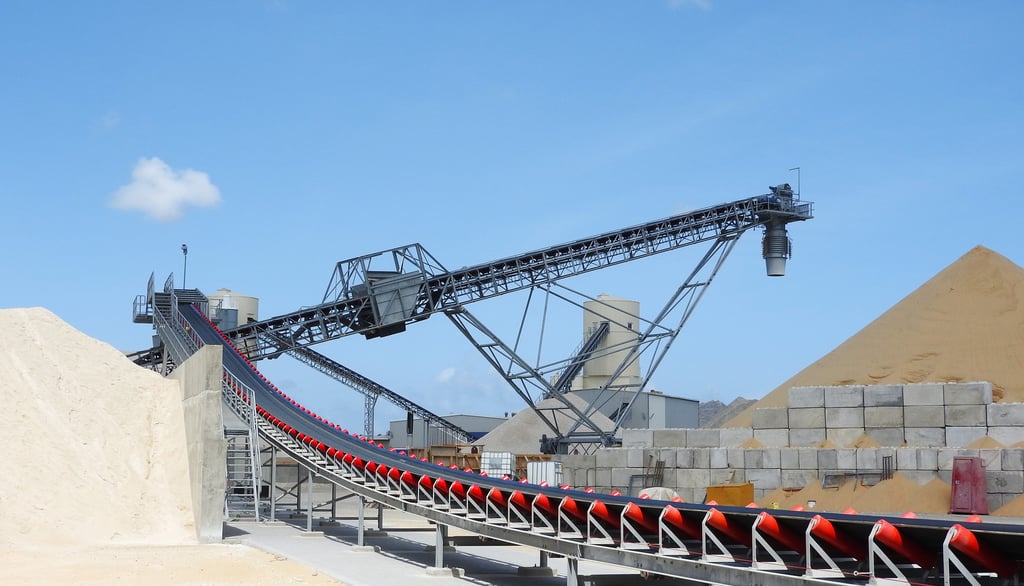
Open‑pit mining: Conveyor belt monitoring, stacker/reclaimer controls, mobile crusher automation, and dust suppression systems.
Underground mining: Signal circuits for PLCs, gas sensors, ventilation controls, and auxiliary equipment.
Process automation: Transmitting measured values, temperature, pressure, and flow data to central control rooms.
Typical Environment
In South African mines, the cable encounters:
Continuous vibration from heavy machinery and conveyor rollers.
Dust, mud, and high humidity, often with salt content at coastal sites.
Spills of hydraulic oil, grease, and mineral‑processing chemicals.
Wide temperature swings, from freezing nights in high‑altitude mines to hot summer days.
High levels of ozone and UV radiation, which accelerate degradation of ordinary materials.
The combination of wide temperature range, oil resistance, and mechanical flexibility makes it uniquely suited for these dynamic locations, where cables must move and flex while remaining fully operational.
Case Study: Richards Bay Minerals, South Africa
Richards Bay Minerals (RBM), a Rio Tinto‑operated heavy‑mineral sands operation in KwaZulu‑Natal, provides one of the best examples of how this cable performs in the field.
Site Conditions
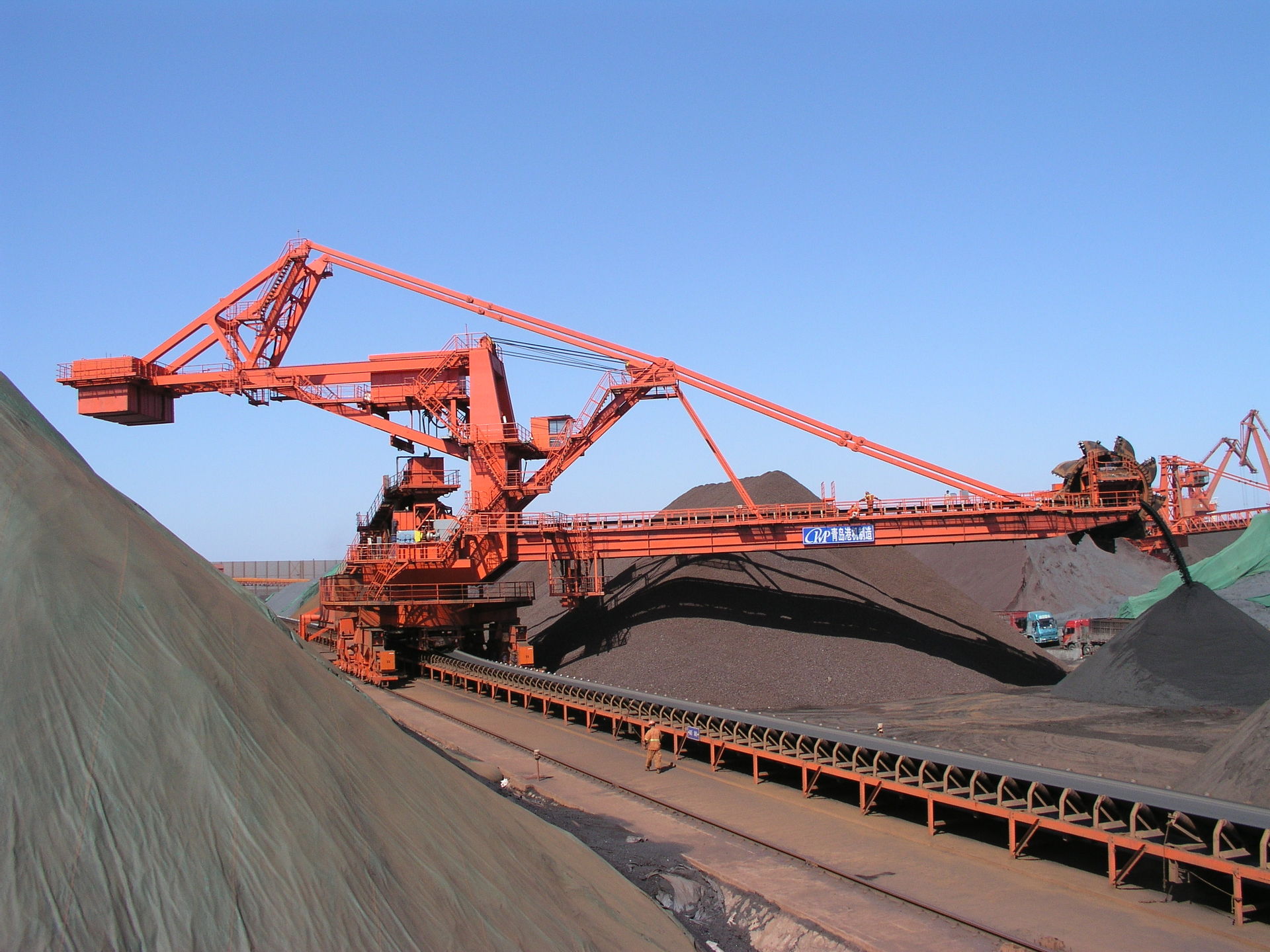
RBM’s operations involve extracting and processing large volumes of sand, with a vast network of overland conveyors, bucket‑wheel reclaimers, and stackers. Located on the coast, the environment is particularly aggressive: high humidity, salt‑laden air, year‑round sunshine, and elevated ozone levels.
Before and After
For many years, the site used standard industrial control cables. Maintenance logs showed these cables typically lasted 18–24 months. Outer jackets became brittle, cracked, and delaminated, allowing moisture and contaminants to enter. Signal drift was common, requiring frequent recalibration and replacement, which meant downtime and increased maintenance labor.
After switching to PROTOMONT(MSR) 2YSLGCGOEU, the operational picture changed. Installations made five years ago remain in service with no reported core failures or significant sheath degradation. Maintenance teams report that the cable maintains its flexibility, and control signals remain stable without drift.
Economic Impact
While the initial purchase price is approximately 20 % higher than standard cables, the longer service life reduces replacement frequency by a factor of three. Combined with fewer unplanned shutdowns, the total cost of ownership drops significantly. Similar results have been recorded across coalfields in Mpumalanga and platinum mines in the Bushveld, where service life has extended to 5–7 years and downtime reduced by roughly 70 %.
Equivalent Alternative: Feichun PROTOMONT(MSR) 2YSLGCGOEU
For many South African and African mining projects, availability and lead times are as important as technical performance. The Feichun version of PROTOMONT(MSR) 2YSLGCGOEU offers a fully equivalent alternative with distinct commercial advantages.
Full Technical Equivalence
Feichun’s construction follows the same specifications:
Class 5 bare copper conductors.
2YI1‑type PE insulation.
EM2‑grade chlorinated rubber inner and outer sheaths.
Tinned copper braid shielding.
Identical electrical, thermal, and mechanical parameters.
Compliance with DIN VDE 0250‑812, IEC standards, and EAC certification, with documentation accepted for import and installation in South Africa.
Key Benefits
Cost: Typically 20–35 % lower than European‑sourced equivalents.
Lead time: 15–30 working days, compared to 8–12 weeks for many international brands.
Flexibility: Smaller minimum order quantities and direct export support, making it suitable for both large expansions and replacement projects.
Quality Assurance: Factory testing includes conductor resistance, insulation resistance, high‑voltage withstand, flame retardancy, oil immersion, ozone exposure, and torsion cycling, ensuring consistent performance.
Selection Guide and Engineering Best Practices
Choosing the right configuration ensures optimal performance and economy.
Choosing the Right Configuration
2 × 2 × 1 mm²: Ideal for simple I/O loops, single sensors, and short control runs.
5 × 2 × 1 mm²: Suitable for multi‑sensor groups and smaller PLC networks.
10 × 2 × 1 mm²: Best for complex control systems and longer transmission distances.
20 × 2 × 1 mm²: Designed for large bus systems and installations where multiple signals share one cable.
Installation Guidelines
Bending radius: Minimum 6 × outer diameter for fixed installation; 10 × outer diameter for continuous flexing.
Tensile force: Do not exceed the rated values listed in the specifications.
Shield grounding: Use single‑end grounding for low‑frequency analog signals; double‑end grounding where high‑frequency noise is present.
Avoid damage: Protect from sharp edges and excessive crushing when routing near heavy equipment.
Storage and Handling
Store reels in a dry, covered area, away from direct sunlight or rain. Uncoil carefully to avoid twisting, and install within recommended time limits to preserve material properties.
Frequently Asked Questions
Q: Can this cable be used underground in coal mines?
A: Yes, provided it meets local safety regulations. Its flame‑retardant, oil‑resistant, and low‑smoke characteristics make it suitable, though specific regional certifications may be required in addition to the listed standards.
Q: Is the braid shield effective near variable‑frequency drives?
A: Yes. The high‑coverage tinned copper braid provides excellent protection against both electric and magnetic fields generated by VFDs, keeping control signals stable.
Q: What is the difference between 2YSLGCGOEU and 2YSLGCGÖU?
A: The designation varies slightly by region, but the construction and material specifications remain consistent under DIN VDE 0250‑812.
Q: Does the Feichun version meet South African requirements?
A: Yes. It carries all necessary compliance documentation and has been successfully supplied to projects across Southern Africa, meeting both SANS and project specifications.
Q: How long can it be expected to last in South African conditions?
A: Under normal operating conditions, service life ranges from 5 to 7 years, compared to 1.5–2 years for standard cables.
Conclusion
The PROTOMONT(MSR) 2YSLGCGOEU 250V is more than a cable; it is an engineered solution designed specifically to solve the unique challenges of mining environments. It is not simply a reinforced version of standard industrial cables but a system optimized across four dimensions:
Standard‑compliant: Built to DIN VDE 0250‑812 and IEC, with full traceability and safety approvals.
Material‑matched: 2YI1 insulation and EM2 rubber sheaths deliver low electrical loss and long‑term environmental stability.
Structurally sound: Twisted pairs and integrated shielding ensure signal integrity, while flexible construction withstands mechanical stress.
Proven in practice: At Richards Bay Minerals and across South Africa’s mining regions, it has demonstrated the ability to reduce failures, extend replacement intervals, and lower overall operating costs.
For mine operators, maintenance managers, and procurement teams, the initial investment is quickly offset by reduced downtime, fewer replacements, and greater reliability. As mining continues to become more automated and digitalized, the need for robust signal transmission infrastructure will only grow. In this context, PROTOMONT(MSR) 2YSLGCGOEU represents not just a component, but a foundation for safe, efficient, and sustainable mining operations.
If you are looking for PROTOMONT(MSR) 2YSLGCGOEU 250V or its fully equivalent Feichun version, our engineering team is ready to assist. We can provide detailed technical data sheets, compliance certificates, and competitive pricing tailored to your project requirements.
📧 Email: Li.wang@feichuncables.com


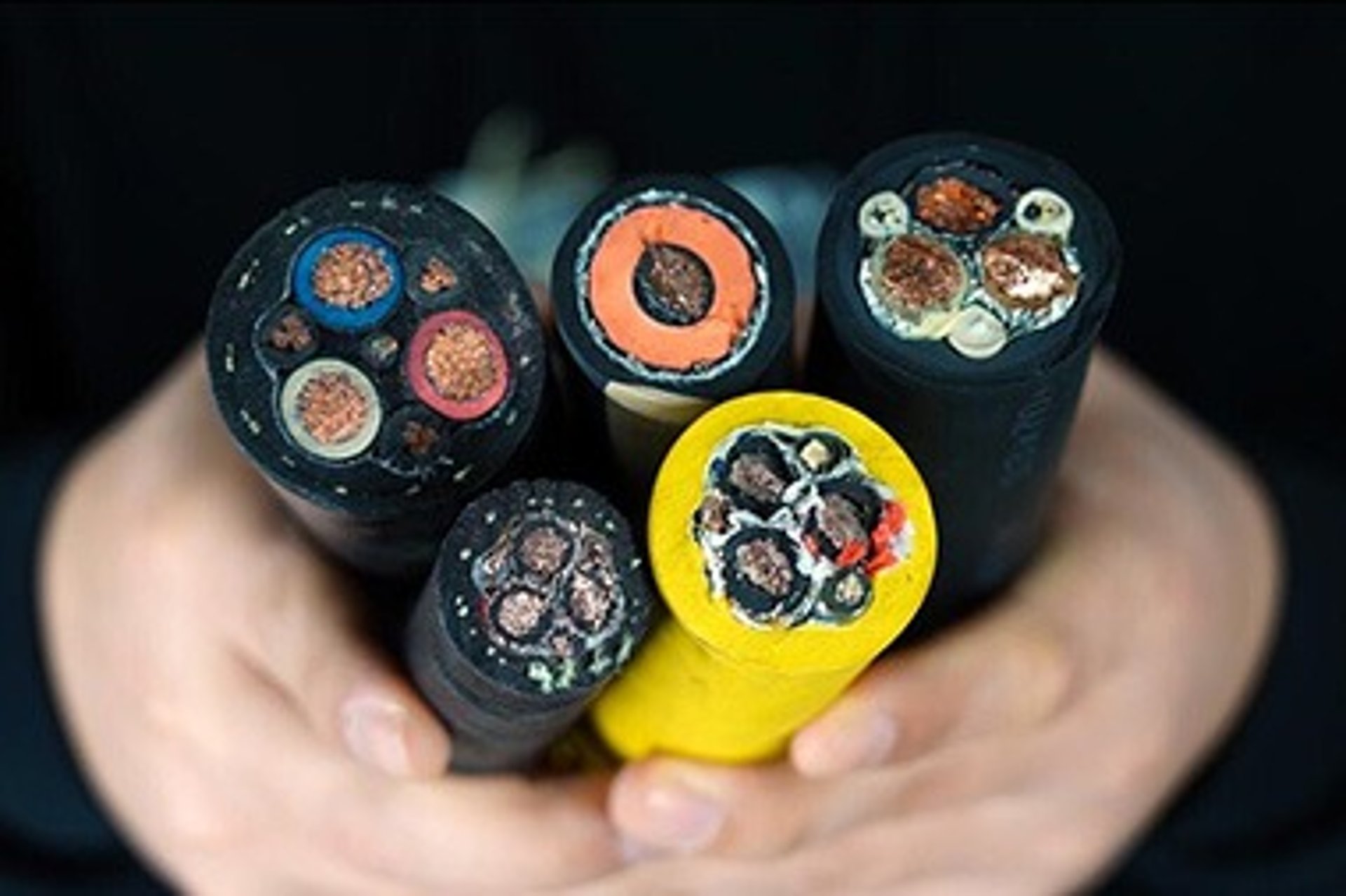
Email Address: Li.wang@feichuncables.com
© 2025. All rights reserved.
One-click to Quickly Contact
Products
Contact
Company
Location:
Building A Private Science and Technology Park, Hefei Economic and Technological Development Zone, Anhui Province, China
Heat Resistant Cable
WhatsApp: +86 17333223430
Social Media: