Anhui Feichun Special Cable Co.,Ltd Email: Li.wang@feichuncables.com
Underground Mining Cable Safety Explained: LSZH Elastomer Design, Fire Toxicity Reduction & EMC Performance in South African Mines
Comprehensive guide to RHEYFLAT®-N (N)GFLCGOEU-J LSHFcables: Understand fire hazards in South African mines, halogen-free polymer chemistry, ATH/MDH flame retardancy, EMC shielding, global compliance, and real-world performance data. Learn why low smoke zero halogen technology is essential for safety and total cost of ownership.
Li Wang
4/28/202617 min read
Introduction
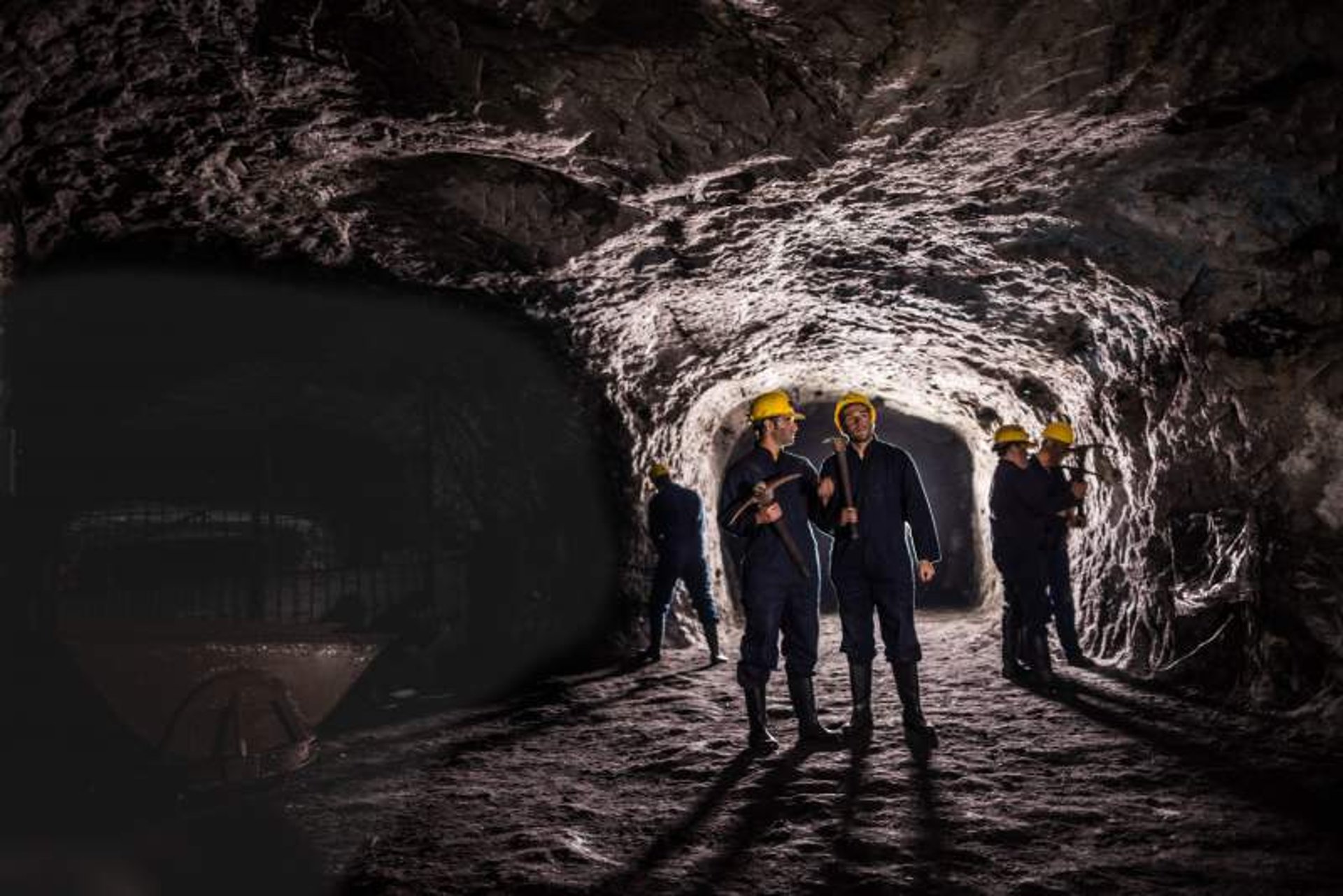
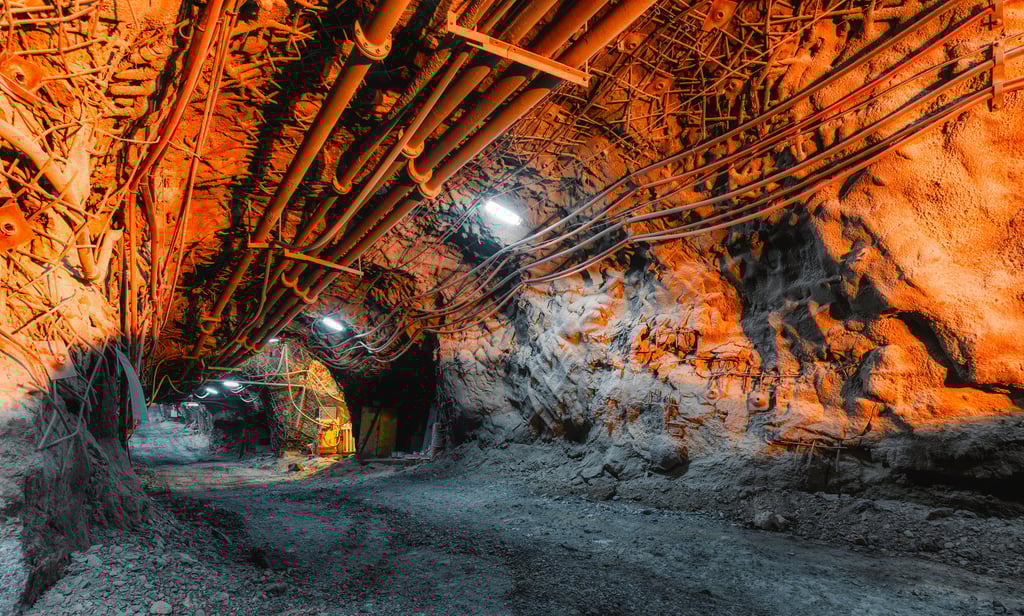
The mining industry operates in some of the most challenging environments on Earth, and nowhere are these challenges more pronounced than in deep underground operations. In South Africa, where mining has historically been the backbone of the economy, the conditions found in coalfields, goldfields, and platinum belt operations demand equipment and materials that can withstand extreme heat, moisture, mechanical stress, and potentially explosive atmospheres. Among all the components that keep a modern mine running, the electrical cable system is perhaps the most critical. It is the lifeline that delivers power to drills, loaders, haulers, and pumps, and it carries the control signals that ensure automation systems function correctly.
However, the role of a cable goes beyond simply transmitting electricity. In an underground context, it must also be a safety device. The confined nature of tunnels, stopes, and drifts means that any fire or electrical fault can escalate rapidly. Traditional cable designs, while effective at carrying power, often rely on materials that release dense smoke and toxic gases when burned. This not only endangers life but also destroys equipment through corrosion and reduces visibility to zero, making evacuation and rescue nearly impossible.
This article explores the advanced technology behind the RHEYFLAT®-N (N)GFLCGOEU-J LSHF (Low Smoke Halogen-Free) flat festoon cable. We will look deeply into the polymer chemistry that makes halogen-free elastomers safer, examine how Aluminum Trihydrate and Magnesium Hydroxide work to stop fires, and explain the engineering behind the concentric copper shielding that protects sensitive electronics from interference. We will also compare these modern systems against older halogenated technologies, review global compliance standards, and analyze the real-world performance data gathered from over 1,200 installations worldwide. Whether you are an engineer selecting materials for a new project or a procurement manager looking to upgrade safety standards, this guide provides the technical insight needed to make informed decisions.
Fire and Explosion Hazards in South African Mines
Understanding the risks present in the underground environment is the first step toward selecting the right safety solutions. South African geology presents a unique set of challenges depending on whether the operation is extracting coal, hard rock, or precious metals. Each type of mine carries specific fire and explosion hazards that cable insulation and sheathing materials must be able to resist, or at least not contribute to, in the event of an incident.
Underground Coal Mines
Coal mining is inherently associated with fire risks. The primary hazards stem from the materials being extracted and the processes used to extract them. Methane gas is commonly released during mining operations. This gas forms explosive mixtures with air at concentrations between 5% and 16%. If an ignition source—such as an electrical arc, overheating equipment, or frictional sparking—occurs within this range, a violent explosion can result.
Beyond gas, coal dust itself presents a massive risk. Fine particles of coal suspended in the air can ignite just like gas, and often a gas explosion will stir up settled dust, causing a secondary, much more powerful explosion that can travel throughout the entire mine network. Additionally, coal has a tendency to oxidize slowly when exposed to air. This chemical reaction generates heat. In areas where ventilation is poor, such as sealed-off goaf areas or behind pack walls, this heat can build up until it reaches the point of spontaneous combustion, starting a fire deep within the rock structure that is difficult to detect and extinguish.
In this environment, electrical cables are often routed close to the working face. If a fault occurs and the cable insulation catches fire, it must not propagate the flame along its length. More importantly, it must not produce smoke that obscures the escape routes or gases that incapacitate the workforce before they can reach safety.
Hard Rock and Metal Mines
While hard rock mines such as those mining gold, platinum, or chrome do not typically face the same levels of methane as coal mines, they are not free from explosive risks. Strata gases, including hydrogen, carbon monoxide, and occasionally small amounts of hydrocarbons, can be released from fractured rock. In poorly ventilated dead ends or service tunnels, these can accumulate to dangerous levels.
Sulphide dust is another concern. Mines extracting iron, copper, or sulphide ores can generate dust clouds that are not only harmful to health but also potentially explosive under the right conditions. Furthermore, modern mining relies heavily on hydraulic machinery. Leaks of hydraulic oil or lubricating greases create highly flammable liquid hazards. If these oils spray onto hot surfaces or are ignited by electrical faults, they produce intense fires that generate large volumes of thick, black smoke very quickly.
In these operations, the mechanical demands on cables are extreme. They are dragged, crushed, twisted, and subjected to constant vibration. A failure that exposes bare conductors not only stops production but creates an immediate ignition hazard in an environment where people and machinery are working in close proximity.
Why Standard Cables Fail in a Crisis
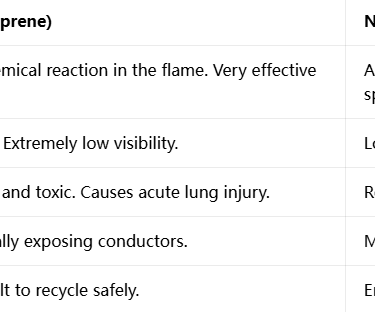
The common factor in all underground emergencies is the limitation of space and ventilation. Unlike a surface fire where smoke rises and dissipates, underground smoke fills the tunnel like water filling a pipe. Traditional cables using PVC, Neoprene, or Chlorosulphonated Polyethylene (CSP) jackets rely on halogens (chlorine, fluorine, bromine) to achieve flame retardancy. While these materials do burn less easily, when they do burn, they release hydrochloric acid and other toxic fumes. These gases are immediately dangerous to life and cause severe corrosion to metal structures and electrical equipment. They also tend to produce very dense smoke which cuts visibility to near zero within seconds. In a crisis, this combination of toxicity and reduced visibility is often what leads to tragic outcomes, rather than the flames themselves.
Polymer Chemistry & Material Science
To overcome the limitations of traditional materials, cable engineers have turned to advanced polymer chemistry. The development of Halogen-Free Elastomer compositions represents a significant leap forward in safety technology. By removing hazardous elements from the molecular structure and replacing them with engineered compounds, manufacturers can produce cables that are both mechanically robust and environmentally safe.
Halogen-Free Elastomer Composition
The base material used in high-performance LSHF cables is typically a blend of polyolefins and specialized elastomers. The key difference between these and older materials is the complete absence of chlorine, bromine, or fluorine in the polymer backbone or additives. This ensures that during thermal decomposition or combustion, no acidic gases are generated.
The composition is designed to maintain the flexibility and mechanical toughness required for reeling and trailing applications. The polymer matrix must be able to stretch, recover, and resist abrasion, while at the same time providing excellent electrical insulation properties. Through the use of specific catalysts and polymer blending techniques, the material achieves a balance of softness and durability that rivals rubber, but without the environmental and safety drawbacks.
Crosslinked APO (EPDM) Technology
At the heart of the insulation system is the Crosslinked APO (Ethylene-Propylene-Diene Monomer) elastomer, often referred to simply as EPDM. This material is widely recognized for its excellent thermal and electrical properties, but when subjected to a crosslinking process, its performance is elevated to another level entirely.
Molecular Structure and Network Formation
Crosslinking is a chemical process where individual polymer chains are connected together by covalent bonds. Instead of long, separate strands that can slide past each other when heated, the material forms a rigid three-dimensional network. This molecular grid gives the material memory; it can be flexed and deformed, but it always returns to its original shape. It also drastically improves the temperature resistance. Whereas a thermoplastic material will soften and melt when it gets hot, crosslinked APO remains solid and retains its mechanical strength even at temperatures well above its normal operating limit.
Thermal Decomposition Pathways
Understanding how a material breaks down under heat is vital for fire safety. When crosslinked APO is exposed to high temperatures, it does not melt and drip like polyethylene. Instead, it undergoes a process of pyrolysis where the molecular bonds break down. Because the structure is based on carbon and hydrogen chains, the primary decomposition products are simple hydrocarbons, water vapour, and ultimately carbon dioxide. There are no heavy metals or toxic halogens released during this process. The material tends to char and form a protective layer rather than flowing away, which helps to contain the fire and protect the conductors underneath.
Suppression of Toxic Gases
The chemical design of the polymer actively prevents the formation of dangerous by-products. In traditional systems, the presence of chlorine leads to the formation of Dioxins and Furans during incomplete combustion. These are persistent organic pollutants that are highly carcinogenic. By eliminating the halogens, the APO elastomer removes the building blocks required for these toxins to form. The smoke produced is light in colour and significantly less opaque, and the gases released are mostly irritants rather than systemic poisons, allowing personnel much greater time to evacuate safely.
Flame Retardancy Mechanisms
Having a safe base polymer is important, but to meet the strict flame propagation requirements of mining standards, specific additives are incorporated into the compound. The most common and effective solutions used in modern LSHF cables are Aluminum Trihydrate (ATH) and Magnesium Hydroxide (MDH). These mineral fillers work through physical and chemical processes that actively fight the fire, rather than just resisting it.
The Science of Fire Suppression
Fire requires three elements to exist: fuel, heat, and oxygen. This is known as the fire triangle. Flame retardant additives work by attacking one or more parts of this triangle. In halogen-free systems, the mechanism is primarily physical and endothermic, meaning it absorbs energy and creates barriers, rather than chemically interfering with the flame combustion reaction in the gas phase.
Aluminum Trihydrate (ATH) & Magnesium Hydroxide (MDH)
These two minerals are the workhorses of the industry. They are naturally occurring substances that are processed into fine powders and mixed into the polymer compound in high concentrations. Their behaviour under heat follows similar principles but operates at different temperature thresholds, allowing engineers to tailor the response profile.
Endothermic Decomposition
When the cable is exposed to heat or flame, the temperature of the insulation rises. Once it reaches approximately 200°C for ATH and 330°C for MDH, the chemical structure of the filler breaks down. This decomposition reaction is endothermic, meaning it absorbs a massive amount of heat energy from the surroundings. By sucking heat out of the system, it effectively cools the polymer matrix down, slowing down the pyrolysis process and preventing the release of flammable gases. This cooling effect is often sufficient to stop the fire from spreading further once the external heat source is removed.
Water Vapour Release
As the hydrates break down, they release chemically bound water in the form of steam. This sudden expansion of gas serves two purposes. Firstly, it dilutes the concentration of flammable gases and oxygen near the surface of the material, making it harder for the combustion reaction to sustain itself. Secondly, the steam pushes away some of the smoke and hot air, creating a temporary protective cloud around the material.
Ceramic Layer Formation
After the water has been driven off, what remains is a solid residue of metal oxide—either Alumina (Al₂O₃) or Magnesia (MgO). These inorganic residues do not burn and are highly heat resistant. They accumulate on the surface of the material and fuse together to form a dense, ceramic-like layer or char. This layer acts as a physical barrier, insulating the underlying unburnt material from the heat flux and preventing oxygen from reaching the fuel. It also stops dripping, which prevents fire from spreading to lower levels or other parts of the installation.
Comparative Analysis: Halogenated vs. Non-Halogenated Systems
To fully appreciate the advancement, it is useful to compare how these two families of materials perform during a fire event
While halogenated systems have been used for decades and offer excellent electrical and mechanical properties at a lower cost, their failure mode is dangerous. They trade immediate fire spread risk for long-term toxicity risk. In confined spaces where human life is at stake, the non-halogenated approach is clearly superior, as it prioritizes survivability.
Safety Metrics and Testing Standards
How do we know that a cable is truly safe? Laboratory testing and standardized indices provide the objective data needed to compare products. Two critical measurements used in the industry are the SMOCA Index for smoke and the PTRA Rating for toxicity.
Smoke Release Quantification: The SMOCA Index
Smoke obscuration is measured using specific chamber tests where a sample is burned, and a laser beam measures the reduction in light transmission over time. The results are calculated into an index often referred to in specifications as SMOCA or based on standards like IEC 61034 or ASTM E662.
The value represents the specific optical density of smoke. A lower number indicates less smoke. In practical terms, a cable with a low SMOCA index will allow emergency lighting and escape signs to remain visible during a fire. In a deep mine where escape ways can be several kilometres long, maintaining visibility is essential. It allows workers to find their way to fresh air bases and allows rescue teams to enter the area to assist. High smoke levels not only trap people but also hinder firefighting efforts, allowing a small fire to become a major disaster.
Toxicity Assessment: The PTRA Rating
While smoke blocks your eyes, toxic gases attack your body. The PTRA rating (Predicted Toxicity Rating or similar toxicity indices based on standards like EN 50305) calculates the lethal potency of the gases emitted during combustion. It takes into account the concentration of CO, CO2, HCN, HCl, HF, SO2 and other gases and weights them according to their toxicity to humans.
Halogen-free designs achieve very low PTRA ratings because they do not generate the highly toxic acid gases. The main hazard becomes Carbon Monoxide, which is present in any fire, but without the added burden of corrosive acids. This means that the atmosphere remains breathable for longer. It reduces the risk of permanent injury or fatality from inhalation, and it significantly reduces the damage caused to switchgear, motors, and communication systems, which can be ruined by acid deposition even if they are far from the actual fire.
Electromagnetic Compatibility (EMC) Design
Safety is not only about fire. In modern mines, automation and variable speed drives (VSDs) are standard. These systems control everything from conveyor belts to large pumping stations. However, they generate electrical noise that can interfere with other signals. In the underground environment, where rock conductivity varies and grounding can be difficult, managing this interference is a major engineering challenge.
Challenges in VFD Applications
Variable Frequency Drives work by switching high voltages on and off very rapidly to create an AC waveform. This rapid switching generates high-frequency electromagnetic noise. This noise can travel along the power cables and radiate out, affecting nearby communication lines, sensor cables, and control systems. Symptoms can range from erratic instrument readings and communication timeouts to complete system shutdowns. In a mining context, this can lead to lost production or even dangerous situations if safety systems fail to operate correctly.
The issue is compounded in underground settings where the surrounding rock may have low conductivity. On the surface, the earth provides a good reference and absorbs some energy, but underground, the fields can propagate further and reflect off tunnel walls and metal structures, creating standing waves and hotspots of interference.
Per-Phase Concentric Copper-Screen Architecture
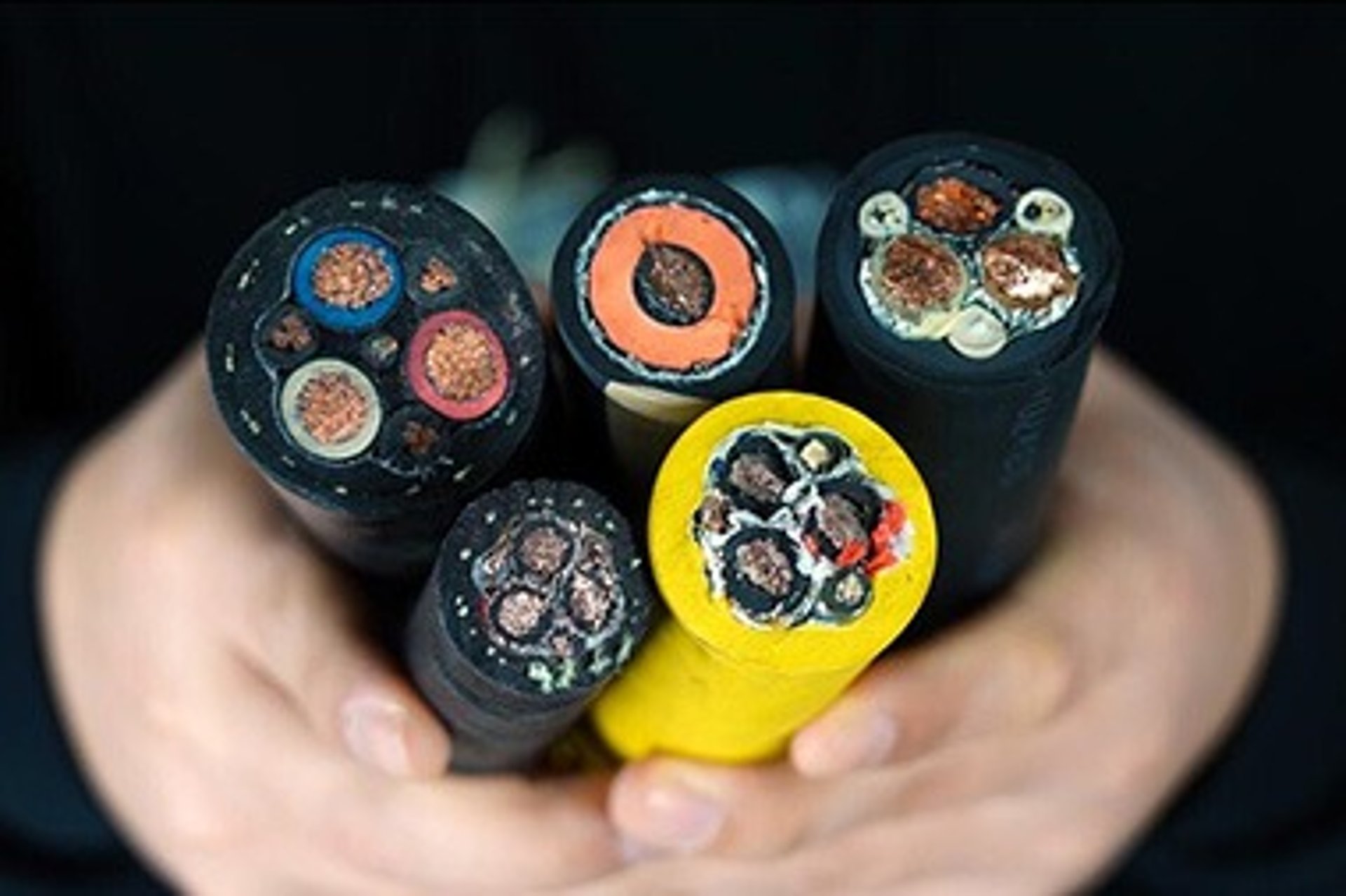
To combat this, the RHEYFLAT®-N cable utilizes a Per-Phase Concentric Copper-Screen design. Instead of a single overall shield around all cores, each individual insulated core is wrapped or screened with its own layer of copper tape or copper wire braid.
Design Principle
Each phase acts as an independent coaxial structure. The conductor is in the centre, surrounded by insulation, which is in turn surrounded by the screen. This geometry is highly effective at containing the electric fields within the cable. It prevents the energy from one phase coupling into another, and it stops external noise from getting in.
Braid vs. Solid Screen
There are engineering trade-offs when selecting the type of screen. A solid copper tape provides 100% coverage and is excellent for attenuating high-frequency noise. However, it is less flexible and can crack if subjected to very tight bending. A woven copper wire braid, on the other hand, offers excellent flexibility and mechanical strength. It typically provides coverage between 85% and 95%, which is sufficient for most industrial applications. The concentric design used in these cables ensures that regardless of the bending or twisting movement, the shielding integrity remains intact.
Performance and Signal Integrity
By having this individual screening, the cable maintains excellent signal integrity. It ensures that the high power going to the motor does not corrupt the low-voltage signals running alongside it. This is crucial for maintaining stable operations and reducing maintenance time spent chasing electrical faults. It also meets the requirements for use in hazardous areas where stray currents or sparking from poor bonding must be avoided.
Mechanical Engineering & Durability
A cable is only as good as its ability to survive the application. In festoon systems, drag chains, and trailing applications, the cable is never static. It moves millions of times over its life. The mechanical design must account for fatigue, bending radius, and environmental resistance.
Tight U-Bending Fatigue for Drag-Chain Systems
One of the most severe mechanical tests for a cable is the "U-Bend" or reverse bending cycle found in drag chain applications. As the chain moves, the cable is bent around the end rollers, compressing the inner radius and stretching the outer radius. If the material or construction is not designed for this, the conductors will break, or the insulation will split, usually within a short period.
The engineering solution involves several factors. The conductor is made of finely stranded copper wires, twisted into a flexible bundle. This allows the conductor to flex without creating high stress points. The insulation and sheath compounds are specifically formulated to have high elasticity and resistance to fatigue cracking. The overall cable design is optimized for very small bending radii, often as tight as 5 to 6 times the cable diameter, allowing it to operate reliably in compact festoon systems where space is limited. This "Tight U-Bending Fatigue Engineering" ensures that even after millions of cycles, the electrical and mechanical properties remain unchanged.
Performance in Extreme Conditions
Underground mining operations often encounter challenging thermal conditions. In deep level mines, geothermal gradients mean that ambient rock temperatures can be very high, yet in other areas or during winter months, temperatures can drop significantly. The crosslinked APO elastomer is designed to perform across a wide temperature range. At high temperatures, the crosslinked structure prevents softening and maintains insulation resistance. At low temperatures, the material remains flexible and does not become brittle, which is vital for safe handling and installation in cold shafts or tunnels.
Additionally, the material offers excellent resistance to mining chemicals, including oils, greases, and the various aqueous solutions found underground. This resistance ensures that the cable jacket remains intact, preventing moisture ingress and protecting the conductors from corrosion.
Global Compliance and Certification
In the mining industry, compliance with standards is not merely a bureaucratic requirement; it is the fundamental proof that the equipment has been tested and proven to operate safely under specific conditions. Different regions have developed their own regulatory frameworks, and a truly global product must satisfy the requirements of the strictest jurisdictions.
International Standards Overview
Australia: AS/NZS Certifications
The Australian and New Zealand standards are widely recognized as some of the most rigorous in the world. Standards such as AS/NZS 1668 cover the use of cables in mining and quarrying applications. Compliance indicates that the cable has passed stringent tests regarding flame propagation, smoke emission, and mechanical strength. For operations looking for reliability, a cable bearing these marks represents a high benchmark.
Europe / Global: ATEX & IEC Ex Compliance
For mines classified as potentially explosive atmospheres, ATEX certification (based on EU directives) and IEC Ex certification are essential. These certifications cover the entire product design and manufacturing process, ensuring that the equipment does not present an ignition source, whether through sparks, hot surfaces, or electrostatic discharge. This is critical in South African coal mines where methane or dust may be present.
North America: Canadian Provincial Codes
The Canadian standards focus heavily on safety and durability in harsh climates. Compliance with provincial regulations and CSA testing ensures that the cable can withstand extreme temperature variations and mechanical abuse.
Eurasia: Russian GOST Standards
The GOST R certification system ensures that products meet the technical requirements of the Eurasian market. This includes specific testing for electrical safety, fire resistance, and environmental compatibility.
Local Relevance
While South Africa has its own Mine Health and Safety Act and specifications, these international standards provide a solid foundation of trust. They demonstrate that the product design principles align with global best practices. When selecting a cable that meets AS/NZS, ATEX, IEC Ex, and GOST standards, mine operators can be confident that the material exceeds the basic requirements and is built for the toughest conditions found anywhere in the world.
Real-World Performance & Data
Laboratory results are important, but nothing validates a design like long-term operation in the field. The RHEYFLAT®-N cable platform is not a new or untested technology; it is a proven solution with a massive installation base.
Field Proven Reliability
Data collected from over 1,200 individual mine installations across the globe provides a clear picture of performance. With an operational history spanning more than 18 years, the design has been refined through practical experience. This dataset allows engineers to accurately predict the Mean Time Between Failures (MTBF) and understand the lifecycle costs. The statistics show that when installed correctly, these cables exhibit very low failure rates, often outlasting the equipment they are connected to.
This reliability stems from the combination of robust materials and careful construction. The elimination of halogens also means that there is less long-term degradation of the insulation due to chemical reactions, resulting in a cable that maintains its properties for decades rather than years.
Operational Duty Cycles
The cables are designed to match the intense duty cycles of modern mining equipment. They are used extensively on Load Haul Dump (LHD) machines, where they are constantly trailing behind moving vehicles, subjected to twisting, dragging, and occasional crushing. They are also the preferred choice for Tunnel Boring Machines (TBMs) and longwall systems where continuous movement is required.
The flat profile of the cable offers specific advantages in these applications. It prevents rolling and twisting in the festoon carriage, ensures neat stacking on reels, and provides better heat dissipation compared to round cables. This mechanical stability directly translates into electrical stability, reducing stress on the terminations and joints.
Commercial & Technical Replacement
Upgrading safety standards does not necessarily mean redesigning the entire system. Modern LSHF cables are engineered to be functional equivalents to established legacy products.
Drop-In Replacement Framework
One of the most significant advantages of the RHEYFLAT®-N design is its compatibility as a direct replacement for existing cables such as the Nexans RHEYFESTOON LSHF and other similar types. The mechanical dimensions, voltage ratings, current carrying capacities, and overall construction are matched to ensure interchangeability.
This "Drop-In Replacement" qualification means that mines do not need to modify their cable reels, festoon arms, or gland plates. The new cable fits exactly where the old one was. This simplifies the procurement process and reduces the engineering time required for upgrades. It allows operations to switch to a safer, high-quality alternative without any disruption to production or the need for custom adaptations.
Total Cost of Ownership (TCO) Analysis
When evaluating cable options, the purchase price is only one part of the equation. Total Cost of Ownership looks at the bigger picture.
Initially, LSHF elastomer cables may have a higher upfront cost compared to standard PVC or general-purpose rubber cables. However, when analyzed over the lifecycle, the economics shift dramatically. The superior mechanical properties mean fewer breakdowns and less downtime. The resistance to heat and oxidation means a longer service life, extending replacement intervals.
Furthermore, the safety aspect carries an implicit cost saving. By reducing the risk of toxic fumes and corrosion, the mine lowers its liability and potential insurance costs. The ability to maintain visibility during an incident protects the most valuable asset—the workforce. In this context, the investment in high-quality LSHF technology offers an excellent return, ensuring that safety and profitability go hand in hand.
Frequently Asked Questions
Q: Is Halogen-Free cable as flame retardant as the old PVC or Neoprene types?
A: Yes. While the mechanism is different, modern formulations using ATH and MDH achieve excellent flame retardancy. They pass the same vertical tray and bundle burn tests as halogenated materials. The difference is not in their ability to stop the fire spreading, but in what they emit while doing so.
Q: Can I use this cable directly on my existing festoon system without modification?
A: Absolutely. The cable is designed as a direct replacement. The physical dimensions, bending characteristics, and electrical ratings are engineered to match industry standard profiles, allowing for a seamless swap.
Q: How does the price compare to standard mining cables, and what is the payback period?
A: The initial unit cost is higher due to the premium raw materials and complex manufacturing process. However, the payback period is often surprisingly short due to the much longer service life, reduced maintenance, and elimination of downtime caused by cable failure. When safety compliance costs are factored in, it is often the most economical choice long term.
Q: What is the maximum operating temperature and voltage range?
A: The crosslinked APO insulation is designed for continuous operation at elevated temperatures, typically rated for 90°C or higher under normal load, and capable of withstanding short circuit temperatures well above that without damage. Voltage ratings are available to suit all common mining applications from control circuits up to high voltage power distribution.
Q: How do I interpret SMOCA and PTRA values when selecting cable?
A: Simply put, lower is better. A low SMOCA value means you can see further in smoke. A low PTRA rating means the smoke is less poisonous. In an emergency, these numbers directly correlate to survival chances. Always look for the lowest achievable figures within your budget.
Conclusion
The evolution of mining cable technology from simple rubber and PVC compounds to advanced Crosslinked APO Elastomers represents a major step forward in industrial safety. By understanding the chemistry behind Halogen-Free materials, how ATH and MDH actively cool and protect the cable, and how concentric shielding ensures reliable power delivery, engineers can make decisions that protect both personnel and assets.
The data from over 1,200 installations speaks for itself. This technology is reliable, proven, and ready for the most demanding operations in South Africa and around the world. Whether it is the challenge of fire in a coal seam, the mechanical stress of hard rock hauling, or the need for clean power in automated systems, the RHEYFLAT®-N LSHF cable provides a solution that is technically superior and economically sound.
📞 Contact Us
Ready to upgrade your mine's safety and efficiency?
Contact the Feichun Team for technical support, pricing, and samples.

Email Address: Li.wang@feichuncables.com
© 2025. All rights reserved.
One-click to Quickly Contact
Products
Contact
Company
Location:
Building A Private Science and Technology Park, Hefei Economic and Technological Development Zone, Anhui Province, China
Heat Resistant Cable
WhatsApp: +86 17333223430
Social Media: