Anhui Feichun Special Cable Co.,Ltd Email: Li.wang@feichuncables.com
Understanding DIN VDE 0250 Reeling Cables: The German Standard Powering Tough Industrial Applications Worldwide and in South Africa
Explore DIN VDE 0250, the ultimate standard for tough rubber-sheathed flexible reeling cables used in cranes, mining, and ports. This in-depth guide covers technical specs, applications, safety, maintenance, FAQs, and a South African platinum mine case study for reliable performance in harsh conditions.
Li.Wang
11/14/20257 min read
Introduction
In the world of heavy industry, where machinery operates under relentless mechanical stress, extreme weather, and constant movement, the reliability of power supply cables can make or break operations. Enter DIN VDE 0250 – the premier German standard that sets the benchmark for flexible electrical cables, especially tough rubber-sheathed reeling cables designed for cranes, material handling equipment, and mobile machinery. Originating from Germany, the only country with dedicated national regulations for such specialised flexible cables in crane and handling systems, DIN VDE 0250 has earned global acclaim as the go-to specification for cables that must endure high tensile loads, frequent bending, torsion, and rapid accelerations without failing.
This standard's influence extends far beyond Europe, finding eager adoption in regions like South Africa, where mining giants and bustling ports demand cables that can withstand dust-laden winds, scorching heat, corrosive moisture, and abrasive terrains. In South African operations, from the platinum belts of Rustenburg to the container terminals in Durban, DIN VDE 0250 reeling cables ensure uninterrupted power delivery, minimising downtime and enhancing safety in environments that test equipment to its limits. This comprehensive article aims to demystify DIN VDE 0250 for engineers, technicians, maintenance teams, and industry decision-makers. We'll delve into its technical depths, practical applications, compliance requirements, safety thresholds, usage precautions, troubleshooting, and frequently asked questions, all while highlighting real-world relevance, including a South African case study. By the end, you'll have a thorough understanding of why these cables are indispensable for demanding setups.
Overview of DIN VDE 0250 Standard
The DIN VDE 0250 standard traces its roots to Germany's rigorous engineering heritage, emerging as a specialised framework for flexible cables in cranes and material handling because no other nation had developed such targeted guidelines. Over decades, it has evolved into an international reference point, widely specified for projects requiring uncompromised performance in tough conditions. What sets it apart is its focus on rubber-sheathed cables that combine flexibility with robustness, making them ideal for reeling onto drums, festoon systems, or trailing behind mobile equipment.
The standard encompasses a broad spectrum of cable types to suit varied needs. For low-voltage scenarios, NSHTÖU cables stand out as tough rubber-sheathed flexible reeling options, perfect for general industrial use. In medium-voltage realms, variants like (N)TSCGEWÖU feature round constructions with metallic screens and semi-conductive layers, often branded as PROTOLON or TENAX for voltages from 6 to 20 kV. Specialised mining and tunnelling cables incorporate additional reinforcements, while YSLTÖE types handle festoon applications with ease. Voltage classifications are clearly delineated: DIN VDE 0250-812 covers cables up to 450/750 V for fixed installations and basic power supply; DIN VDE 0250-813 addresses medium-voltage trailing cables from 3.6/6 kV up to 18/30 kV for high-stress reeling; and DIN VDE 0250-814 specifies low-voltage trailing and festoon cables at 0.6/1 kV. This structured approach ensures engineers can select precisely the right cable without compromise, whether for a simple conveyor or a massive excavator in an open-pit mine.
Purpose and Key Applications
DIN VDE 0250 reeling cables are engineered for environments where standard cables would quickly falter – think high mechanical stresses from pulling, twisting, and speeding up or slowing down abruptly. Their primary purpose is to supply power reliably in cable drums, festoons, or trailing configurations, supporting sectors like port terminals, open-cast mining, and manufacturing facilities.
In ports, these cables power ship-to-shore cranes that lift containers at breakneck speeds, rubber-tyred gantry cranes (RTGs) shuttling across yards, and automated stacking cranes in shipyards. Open-cast mining relies on them for large excavators, dumpers, and crushers battling rocky terrains. Manufacturing plants use them in building machinery, conveyors, hoists, and overhead travelling cranes. What makes them shine is their adaptability to South Africa's unique challenges: in resource extraction, cables face abrasive dust and vibrations; in logistics hubs like Cape Town's ports, salt spray and humidity are constant threats; and in factories, extreme temperature swings from hot days to chilly nights demand resilience.
Benefits abound – superior durability reduces replacements, flame retardance per EN 60332-1-2 prevents fire spread, and some variants integrate fibre-optic cores (LWL) for simultaneous power and data transmission, enabling smart automation in Industry 4.0 setups. In South African contexts, this means safer, more efficient operations aligned with local demands for productivity in harsh climates.
Technical Characteristics and Performance
Navigating DIN VDE 0250 requires understanding its systematic designation system, where letters reveal construction details. The "N" denotes compliance with national standards, while "(N)" indicates derivation from them. "C" signals a metallic screen over stranded cores for shielding, "CE" over insulation for enhanced protection, and "CG" for semi-conductive covers controlling electric fields in higher voltages. Oil resistance comes with "Ö", weather resistance with "W", and heavy-duty mining capability with "SH". For instance, (N)SHTÖU combines standard compliance, heavy tough rubber sheath, and oil resistance.
Mechanically, these cables excel: tensile strength ranges from 15 to 30 N/mm², with mining variants hitting the upper end to support heavy loads. Elongation at break spans 125% to 300%, ensuring flexibility without snapping. Bending radii follow DIN VDE 0298-4, varying by installation – tighter for fixed, wider for reeling to avoid fatigue. Operating speeds reach 240 m/min for medium-voltage PROTOLON cables or 180 m/min with fibre-optics, crucial for fast-paced automation.
Electrically, insulation resistance must exceed 10 MΩ·km for low-voltage or 100 MΩ·km for medium-voltage at 20°C. Dielectric strength withstands 2.5 times the rated earth voltage plus 2 kV for five minutes. Current-carrying capacity factors in derating for ambient temperatures above 30°C, installation methods (reels dissipate heat poorly), and grouping, per DIN VDE 0298-4 tables. These parameters guarantee performance in South Africa's variable conditions, from dusty highs of 40°C to cooler coastal nights.
Material Structure and Construction
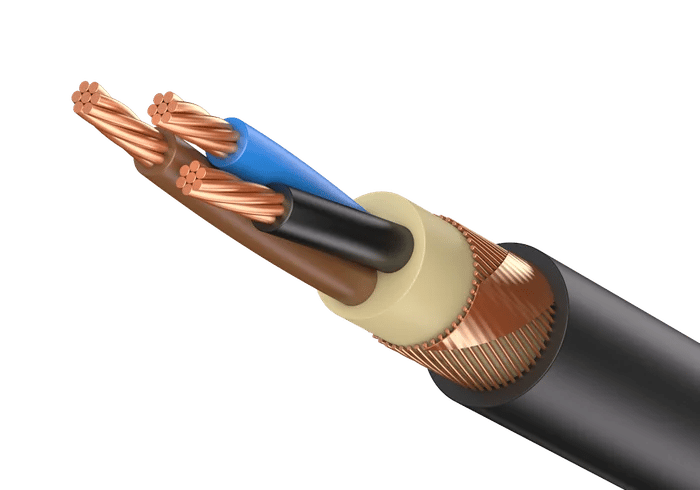
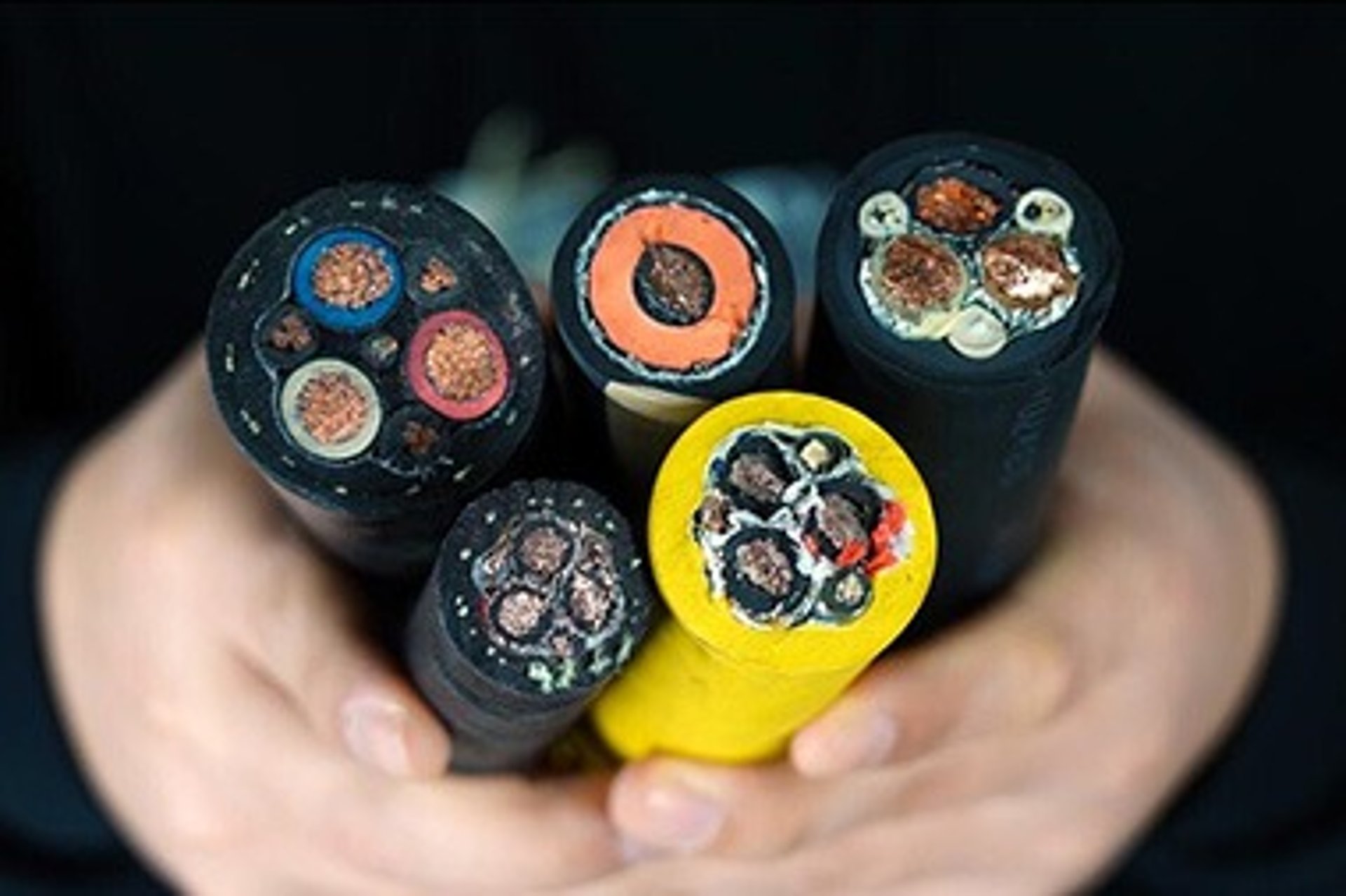
At the core are finely stranded copper conductors, compliant with DIN VDE 0295 Class 5 or 6, offering superior flexibility and conductivity to minimise resistance losses during flexing. Insulation varies by need: 3GI3 EPR operates from -70°C to +90°C with excellent electrical properties and flexibility; 2X XLPE handles high temperatures up to 90°C with aging resistance; PVC types like Y14/Y15 suit -40°C to +90°C in special variants for cost-effective setups.
Sheath compounds provide the outer armour: 5GM1b offers baseline tensile strength of 12.5 N/mm² and 150% elongation for standard use; 5GM3 adds flame retardance; 5GM5 boosts to 15 N/mm² tensile, 300% elongation, and 300 mm³ abrasion resistance for extreme conditions, plus oil immunity. Alternatives include CR neoprene for chemical and flame resistance in offshore or plants, TPU for abrasion in robots, and CPE for mining's oils and flames.
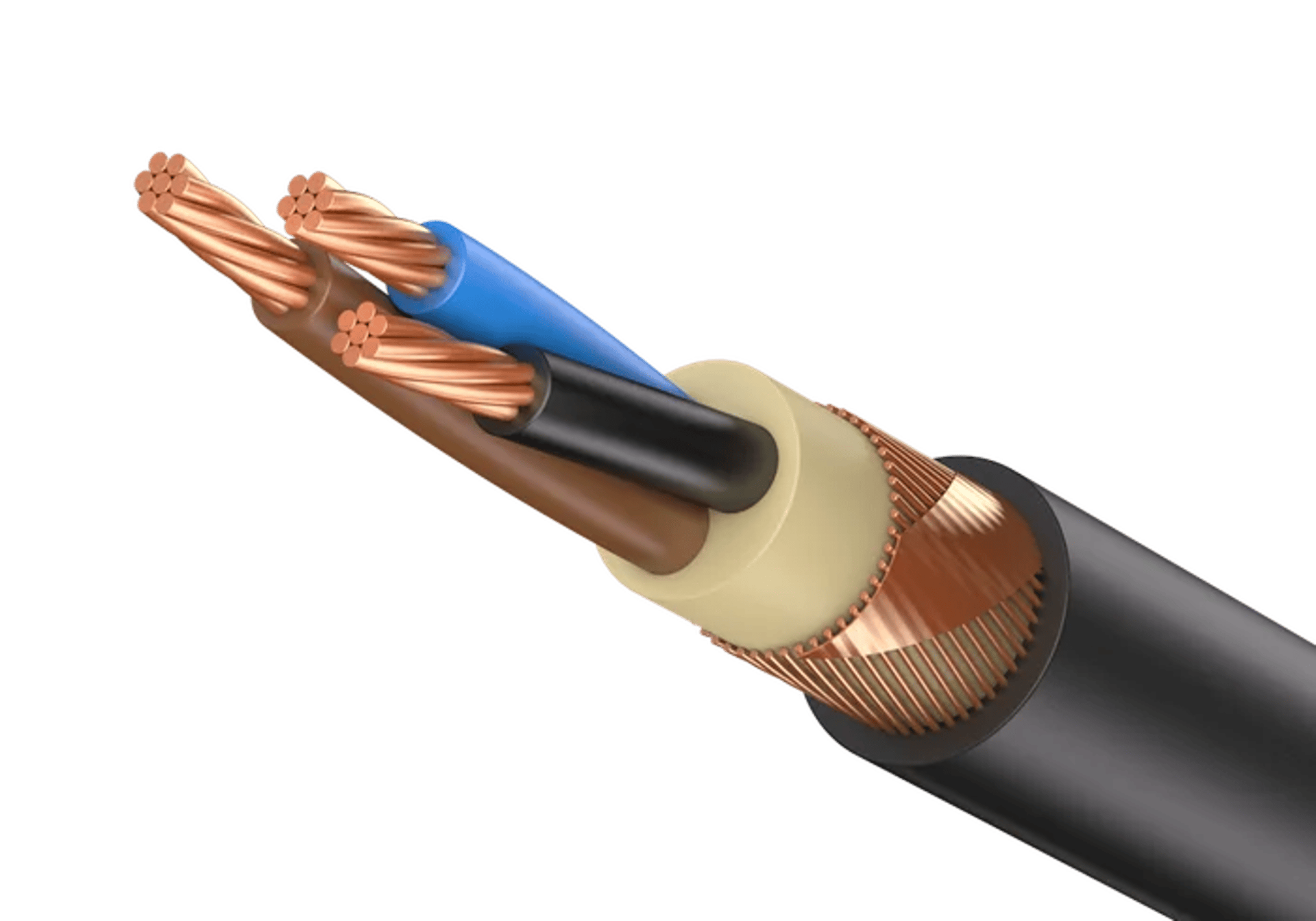
Special features elevate reliability: Kevlar-reinforced cradle separators prevent core deformation under 30 N/mm² tensile loads; concentric protective conductors ensure symmetrical grounding and monitoring; semi-conductive layers (resistivity ≤200 Ω·m) distribute voltage evenly in medium-voltage cables; and integrated fibre-optics enable IoT without separate lines. This layered construction makes DIN VDE 0250 cables a fortress against industrial rigours.
Compliance with Standards and Certifications
DIN VDE 0250 cables adhere to a robust standards ecosystem. Core documents include DIN VDE 0250-1 for general power cable requirements, DIN VDE 0207-20 for EPR insulation like 3GI3, and DIN VDE 0207-21 for sheaths such as 5GM5. Conductor stranding follows IEC 60228, flame tests EN 60332-1-2, and ampacity DIN VDE 0298-4. Harmonisation via HD 620 S2 aligns with European norms.
Testing is exhaustive: electrical includes dielectric strength, insulation resistance, and partial discharge for medium-voltage; mechanical covers tensile, elongation, abrasion (≤300 mm³ loss), and flex cycles; environmental tests oil immersion, ozone, UV, and temperature cycling. For South Africa, CE marking ensures EU conformity, RoHS limits hazards, and MSHA approval suits mining – often paired with GOST-R for exports. Alignment with SANS equivalents facilitates local regulatory compliance, giving confidence in global yet localised use.
Safety Standards and Thresholds
Safety is paramount in DIN VDE 0250. Electrically, insulation resistance prevents leaks (≥10 MΩ·km low-voltage), dielectric strength handles surges, and conductor temperatures cap at 90°C normal (250°C short-circuit for EPR, 5 seconds max) to avoid fires. Flame retardance self-extinguishes with char ≤540 mm. Earth continuity ≤1 Ω/100 m ensures fault paths.
Mechanically, bending radii (15× diameter medium-voltage installation, 20-25× reeling) avert fatigue; tensile limits with Kevlar prevent snaps; impact and abrasion resistance shield against shocks. Installation per DIN VDE 0100/0105 mandates supports every 1-1.5 m vertically, grounding screens, and overload avoidance. In South Africa, this mitigates risks in explosive mine atmospheres or stormy ports.
Precautions for Use, Maintenance, and Storage
Installation demands care: avoid below -5°C for rubber sheaths to prevent cracking; limit pulling to 50 N/mm² cross-section with socks and lubricants; uncoil correctly to avoid twists; maintain bending radii and support spacing.
Operationally, cap speeds at rated (e.g., 240 m/min), monitor currents against ampacity with deratings for >30°C ambients or reeling; shield from excess UV/chemicals unless W or specialised sheaths; avoid submersion without IP ratings.
Maintenance extends life: monthly visuals for damage; annual megohmmeter tests (≥10 MΩ·km); quarterly thermography (ΔT ≤15°C); semi-annual connections checks. Storage: 5-40°C, 40-70% humidity, upright reels rotated quarterly, away from contaminants – shelf life 3-5 years, test older stock.
FAQ
Mechanical woes top issues: sheath cracking from over-bending, UV, or chemicals – fix with sleeving or replacement, upgrade to UV-resistant. Conductor breaks via fatigue or corrosion – locate with TDR, re-terminate or replace, add strain relief. Core deformation from poor winding – rewind evenly, install monitors. Abrasion at rollers – align, lubricate, harden sheath to 5GM5.
Electrical: insulation breakdown from moisture/overload – de-energise, megger test (<1 MΩ critical), replace, seal better. Overheating signals excess load or poor connections – verify DIN VDE 0298-4, tighten, ventilate.
Operational: irregular winding from misalignment – realign, untwist. Noise/vibration – inspect rollers, lubricate.
FAQ:
What makes DIN VDE 0250 cables superior for South African mining?
Their 30 N/mm² tensile, 300 mm³ abrasion resistance, and MSHA compliance handle dusty, high-stress pits, outlasting alternatives by 60% in underground drags.
How do I select the right sheath compound?
Match exposure: 5GM5 for abrasion/oil in excavators; CR neoprene for chemicals in processing plants; TPU for high-cycle robots.
What if my cable overheats?
Check load vs. DIN VDE 0298-4 ampacity, derate for South Africa's hot ambients (e.g., 40°C), inspect connections, upsize conductors.
Can these cables handle South Africa's variable weather?
Absolutely – W-coded sheaths resist UV/ozone; EPR insulation spans -70°C to +90°C for coastal colds to inland heats.
How often should I test insulation?
Annually minimum; quarterly in wet/dusty mines, using 500V DC low-voltage or 2500V medium-voltage for ≥100 MΩ·km.
Industry Applications and Case Studies
Globally, DIN VDE 0250 powers port cranes at 6 kV, mining draglines spanning 100 m with 18/30 kV, and manufacturing AGVs with fibre-optics for data.
In South Africa, a 2023 case from a platinum mine near Rustenburg showcases excellence. Facing abrasive ore and vibrations, operators swapped to DIN VDE 0250-813 medium-voltage reeling cables with 5GM5 sheaths and Kevlar for continuous miners. Results: 50% downtime reduction, life extended to 8 years vs. 5 prior, yielding R2 million annual savings in replacements and boosted safety per local SANS alignment – proving cost-effectiveness in tough local conditions.
Conclusion
DIN VDE 0250 reeling cables embody engineering precision, offering unmatched reliability for cranes, mining, and beyond. From designation codes to Kevlar reinforcements, they tackle mechanical and electrical challenges head-on. In South Africa, their adoption in mines and ports underscores global versatility with local resilience. By selecting wisely, installing correctly, maintaining diligently, and troubleshooting proactively, industries secure longevity and safety. As innovations like sustainable compounds emerge, DIN VDE 0250 remains the gold standard – invest in it for operations that can't afford to fail.
Email Address: Li.wang@feichuncables.com
© 2025. All rights reserved.
One-click to Quickly Contact
Products
Contact
Company
Location:
Building A Private Science and Technology Park, Hefei Economic and Technological Development Zone, Anhui Province, China
Heat Resistant Cable
WhatsApp: +86 17333223430
Social Media: