Anhui Feichun Special Cable Co.,Ltd Email: Li.wang@feichuncables.com
What Are BS EN 50525-3-41 Cables and Why Are They Crucial for Fire-Safe Wiring in South Africa?
Explore BS EN 50525-3-41, the European standard for halogen-free, low smoke zero halogen (LSZH) cables with crosslinked insulation, ideal for low-voltage applications up to 450/750 V. Learn about types like H07Z-R and H05Z-K, their fire performance benefits, and South African applications in mining and urban infrastructure for enhanced safety.
Li.Wang
11/25/20256 min read
Introduction
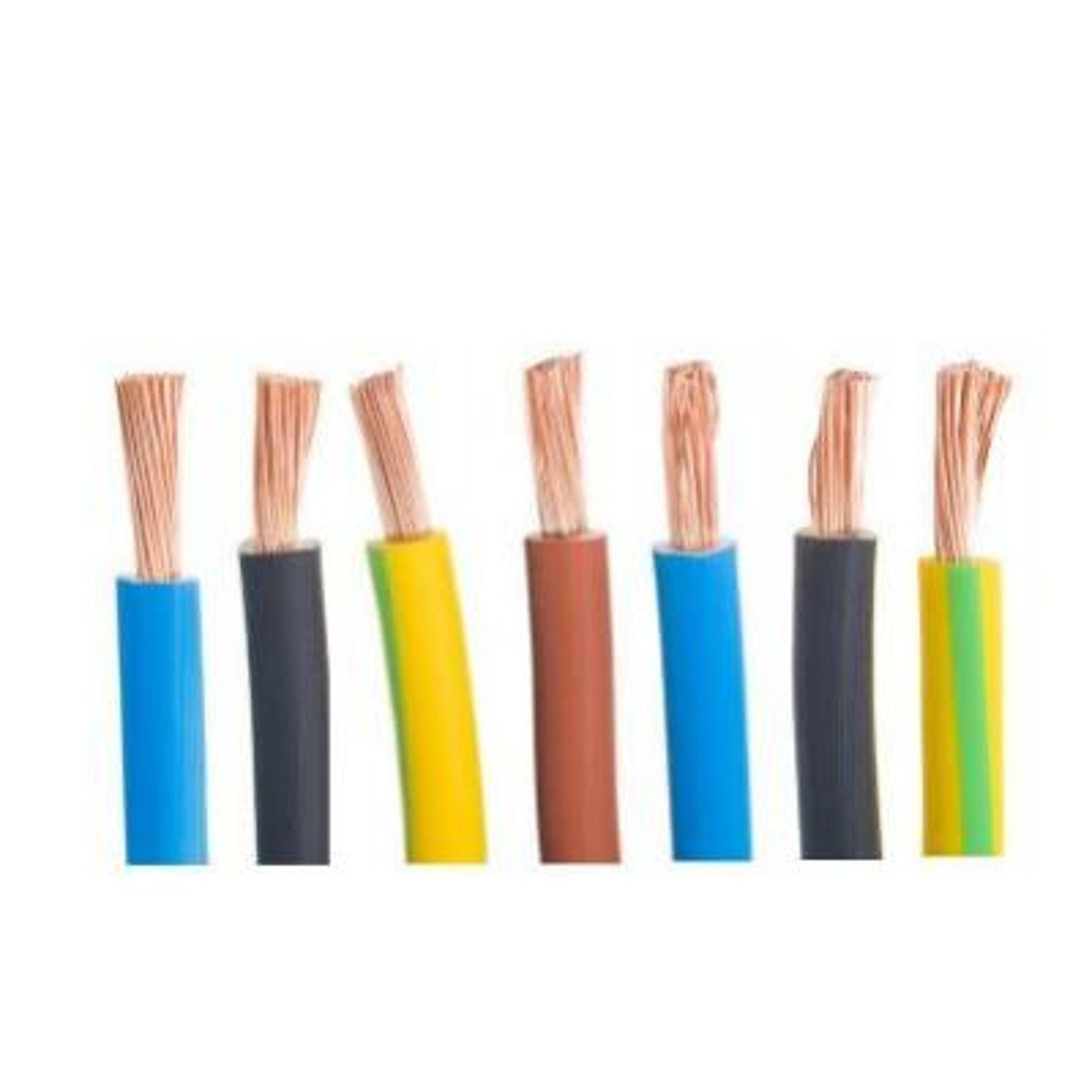
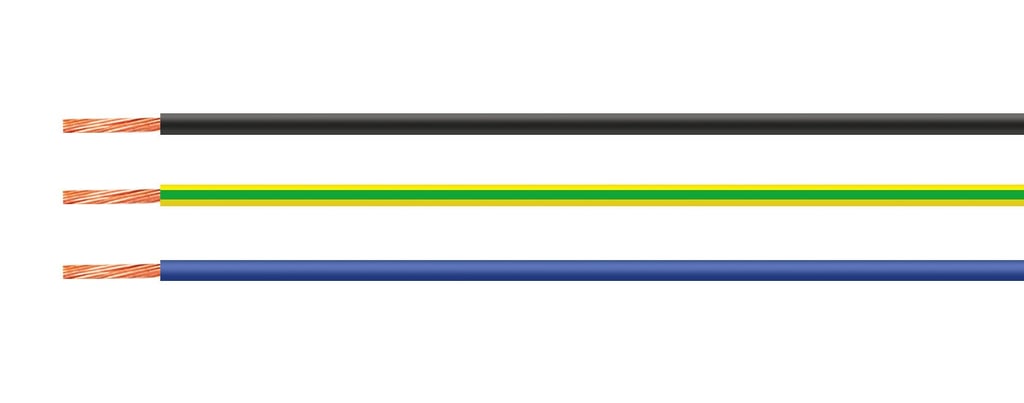
In the world of electrical engineering, standards like BS EN 50525-3-41 stand as guardians of safety, particularly when it comes to cables that must perform under fire conditions. This European standard, formally known as British Standard EN 50525-3-41, governs electric cables for low-voltage energy applications with rated voltages up to and including 450/750 V (U0/U). It focuses on single-core, non-sheathed cables featuring halogen-free crosslinked insulation, designed to emit low levels of smoke and corrosive gases during fires. These attributes make them indispensable in environments where human life and property are at stake, such as crowded buildings, tunnels, and industrial sites.
Why does this matter today? As urbanisation accelerates and fire risks escalate—think of the devastating blazes we've seen in high-density areas—standards like BS EN 50525-3-41 ensure that wiring doesn't exacerbate emergencies. In South Africa, where electrical fires contribute to thousands of incidents annually, this standard aligns seamlessly with local regulations. For instance, it complements the South African National Standard (SANS) 1507 series, which emphasises fire-resistant cabling in high-risk zones like mines, shopping centres, and residential complexes. Imagine a scenario in Johannesburg's bustling CBD or Cape Town's waterfront developments: using BS EN 50525-3-41 cables could mean the difference between a containable fire and a catastrophe, allowing safer evacuations and reducing toxic smoke inhalation. This article delves deep into the standard, its cable types, and its relevance to South African contexts, equipping electricians, engineers, and decision-makers with the knowledge to prioritise safety.
Historical Background and Development
The journey of BS EN 50525-3-41 traces back to the evolution of electrical standards in Europe, driven by a need for harmonisation and enhanced safety. It partially replaces the older British Standard BS 7211, which covered thermosetting insulated, non-armoured cables with low smoke and corrosive gas emissions. BS 7211, introduced in the late 20th century, addressed the growing concerns over traditional PVC cables that released harmful halogens and dense smoke in fires. However, as the European Union pushed for unified standards under the Low Voltage Directive (2014/35/EU), BS EN 50525 emerged as a multi-part series in 2011, with Part 3-41 specifically targeting cables with special fire performance.
This harmonisation wasn't just bureaucratic; it was a response to real-world tragedies, like the King's Cross fire in London (1987), where halogenated cables contributed to toxic fumes. Globally, this influenced markets beyond Europe, including South Africa. Here, the South African Bureau of Standards (SABS) has adopted similar principles through SANS 1507, incorporating LSZH requirements for cables in public and industrial settings. The key driver? A shift towards low smoke zero halogen (LSZH) materials, which minimise fire propagation and environmental harm. In South Africa, this resonates with our history of mining disasters and urban fires, such as the 2018 Johannesburg bank building blaze, prompting stricter codes. By adopting BS EN 50525-3-41 equivalents, local manufacturers like Aberdare Cables and CBI Electric ensure products meet international benchmarks, fostering safer infrastructure amid our rapid development.
Core Specifications of BS EN 50525-3-41
At its heart, BS EN 50525-3-41 defines cables engineered for reliability and fire resilience. The standard specifies rated voltages U0/U up to 450/750 V, with a note that these cables can operate at 600/1000 V in fixed installations with mechanical protection, such as within switchgear or control gear, as per HD 516 guidelines. This flexibility is vital for diverse applications, from household wiring to industrial panels.
A critical aspect is the conductor operating temperature. While some references might erroneously mention 70°C—likely a confusion with PVC-based standards—the standard clearly stipulates a maximum of 90°C for continuous operation. This higher rating stems from the thermosetting, crosslinked insulation, which enhances thermal endurance without compromising integrity.
The insulation itself is a halogen-free crosslinked compound, ensuring low emission of smoke (verified via EN 61034-2 for smoke density) and corrosive gases (confirmed by halogen absence tests in Annex B of EN 50525-1). These cables are single-core and non-sheathed, meaning they lack an outer protective layer, making them suitable for protected fixed wiring rather than exposed runs. Construction involves plain annealed copper conductors, with the insulation providing mechanical strength and electrical isolation. Overall, these specs prioritise safety in fire-prone scenarios, reducing the risk of acid gas release that could damage equipment or harm occupants.
Types of Cables Covered
BS EN 50525-3-41 encompasses a range of harmonised cable types, each tailored for specific uses while sharing the LSZH and crosslinked insulation traits. These were previously under BS 7211 but now stand as standardised options for global adoption.
Starting with the 450/750 V rated cables for fixed wiring:
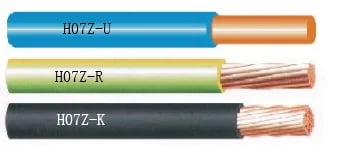
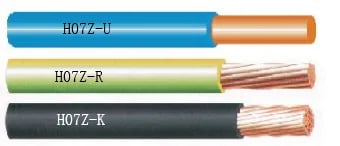
H07Z-U: Features a solid class 1 conductor (rigid, single-strand), heat-resistant thermosetting insulation. Available in sizes from 1.5 mm² to 630 mm², it's ideal for permanent installations where minimal flexibility is needed, offering high current-carrying capacity.
H07Z-R: Uses a stranded class 2 conductor (multiple strands for moderate flexibility), also heat-resistant. Commonly referred to as 6491B cable, it spans the same size range and is popular for general fixed wiring due to its balance of durability and ease of handling.
H07Z-K: Employs a flexible class 5 conductor (fine strands for high flexibility), suited for fixed wiring in vibrating environments. Like its counterparts, it's sized from 1.5 mm² to 630 mm², providing versatility in complex installations.
For lower voltage internal wiring at 300/500 V:
H05Z-U: Solid class 1 conductor, designed for compact internal circuits in appliances or panels, in sizes 0.5 mm² to 1.0 mm².
H05Z-K: Flexible class 5 conductor, known as 2491B cable, for similar internal applications where bending is required.
In contrast, BS 7211 retains national types like the sheathed 6181B (single-core, 450/750 V, 1.0 mm² to 35 mm²) and multi-core variants (e.g., 6182B twin-core). These sheathed options offer added protection but lack the full harmonisation of BS EN 50525-3-41. All types under this standard are thermosetting insulated, non-armoured, emphasising LSZH properties to prevent halogen release, making them superior for fire-sensitive areas.
Technical and Performance Aspects
Delving deeper, the technical prowess of BS EN 50525-3-41 cables lies in their fire safety and robustness. The halogen-free crosslinked insulation—typically ethylene-propylene rubber (EPR) or similar compounds—undergoes crosslinking to form a stable, heat-resistant matrix. This process boosts mechanical strength, abrasion resistance, and longevity, withstanding temperatures up to 90°C without degradation.
Fire performance is paramount: Low smoke emission per EN 61034-2 ensures visibility during evacuations, while zero halogen content minimises corrosive acid gases that could etch metal structures or irritate lungs. Testing involves rigorous protocols, including flame propagation (IEC 60332) and smoke density measurements, ensuring compliance.
Mechanically, these cables resist environmental stressors like moisture and chemicals, with conductor classes dictating flexibility—class 1 for rigid setups, class 5 for dynamic ones. Size ranges accommodate varying ampacities: A 1.5 mm² H07Z-R might handle 20-30 A in conduits, scaling to hundreds of amps for 630 mm² versions. Environmentally, their LSZH nature reduces toxic waste, aligning with sustainability goals.
Applications and Installation Guidelines
These cables shine in fixed wiring scenarios, from building conduits to control panels. In South Africa, they're apt for mining shafts (per SANS 1507-3), where fire risks are high, or urban developments like Sandton's skyscrapers.
Installation demands care: Use mechanical protection (e.g., conduits) for non-sheathed designs, adhere to minimum bending radii (typically 4-6 times diameter), and ensure compatibility with SANS 10142-1 wiring codes. Compared to PVC cables in BS EN 50525-2-31, they offer superior toxicity reduction, crucial in confined spaces like Gauteng's underground trains.
Benefits, Advantages, and Environmental Impact
Safety tops the list: LSZH reduces fire fatalities by 50% in some studies, per EU data.
Economically, their 90°C rating extends lifespan, cutting replacement costs.
Environmentally, halogen-free materials lessen pollution, supporting South Africa's green initiatives in Cape Town's eco-buildings.
Comparison with Related Standards
Versus BS 7211: Non-sheathed types migrated here, while sheathed remain.
Against BS EN 50525-2-31: LSZH trumps PVC in fire performance.
Globally, it harmonises with IEC 60228, influencing SABS certifications.
Cases
In Europe, these cables aided evacuations in high-rises.
In South Africa, H07Z-R cables upgraded Johannesburg's Gautrain, slashing smoke risks in tunnels per 2020 audits. Post-2021 Durban riots, LSZH cables in industrial plants curbed fire spread, saving equipment.
Frequently Asked Questions (FAQ)
What is the difference between H07Z-U and H07Z-K cables?
H07Z-U has a solid class 1 conductor for rigid setups, while H07Z-K's class 5 offers flexibility for bends.
Can these cables be used outdoors in South Africa?
Mainly indoor; outdoors need SANS-compliant protection against UV and weather.
How do they compare to standard PVC cables in terms of cost and performance?
Higher cost but better fire safety and durability.
What is the maximum temperature rating?
90°C for conductors.
Are these cables compliant with South African regulations?
Yes, via SANS equivalents for LSZH.
How to identify genuine BS EN 50525-3-41 cables?
Check markings like H07Z-R and SABS labels.
Conclusion
BS EN 50525-3-41 advances cable safety, urging South African pros to adopt it for resilient installs. Stay updated via SABS resources.
Email Address: Li.wang@feichuncables.com
© 2025. All rights reserved.
One-click to Quickly Contact
Products
Contact
Company
Location:
Building A Private Science and Technology Park, Hefei Economic and Technological Development Zone, Anhui Province, China
Heat Resistant Cable
WhatsApp: +86 17333223430
Social Media: