Anhui Feichun Special Cable Co.,Ltd Email: Li.wang@feichuncables.com

What Are Telecommunications Cables and How Do They Power South Africa's Digital Future?
Discover the world of telecommunications cables, from coaxial and twisted pair to fibre optic types, their applications in everyday life, and their pivotal role in South Africa's connectivity, including submarine projects like SEACOM that bridge the digital divide.
Li.Wang
11/21/20258 min read
Introduction
Telecommunications cables form the backbone of modern communication, serving as the essential infrastructure that enables long-distance, two-way exchanges of data, voice, video, and electrical signals. These cables facilitate the seamless transfer of information from one location to another, making it possible for us to make phone calls, stream videos, access the internet, and even broadcast television programmes. At their core, telecommunications cables are designed to carry signals with minimal loss or interference, ensuring reliable connectivity in an increasingly digital world.
The concept of telecommunications cables traces back to the invention of the telephone, which revolutionised how people communicated over distances. Today, these cables have evolved far beyond simple voice transmission. They now support complex digital networks that integrate computers, televisions, and mobile devices, allowing for the exchange of not just audio but also high-definition videos and vast amounts of data. This evolution has been driven by technological advancements, transforming early analogue systems into sophisticated digital ones that underpin global economies.
In South Africa, telecommunications cables are particularly vital, supporting the nation's burgeoning digital economy. With a population of over 60 million and a growing reliance on technology, these cables connect urban hubs like Johannesburg and Cape Town to rural areas in provinces such as Limpopo and the Eastern Cape. They enable mobile networks operated by providers like MTN and Vodacom, facilitate broadband access for homes and businesses, and drive sectors like e-commerce, education, and healthcare. For instance, during the COVID-19 pandemic, reliable telecommunications cables were crucial for remote learning and work-from-home setups, highlighting their role in fostering digital inclusion. As South Africa pushes towards a more connected society through initiatives like the SA Connect programme, understanding telecommunications cables becomes key to appreciating how they bridge geographical divides and empower communities.
History and Evolution of Telecommunication Cables
The history of telecommunications cables is a story of innovation, beginning in the late 19th century. In 1881, Alexander Graham Bell invented the twisted pair cable, a simple yet effective design consisting of two parallel wires twisted together to reduce electrical interference, or crosstalk. This invention laid the foundation for telephone networks, allowing voice signals to travel reliably over wires. Just a year earlier, in 1880, English engineer Oliver Heaviside developed the coaxial cable, featuring an inner conductor surrounded by an insulating layer and an outer shield, which minimised signal loss and external noise. These early cables were primarily copper-based and focused on analogue voice transmission, enabling the first long-distance calls.
As the 20th century progressed, telecommunications cables evolved to meet growing demands. The transition from analogue to digital systems in the mid-1900s introduced higher-frequency transmissions, expanding capacity for data alongside voice. By the late 20th century, fibre optic technology emerged as a game-changer. Developed in the 1970s and commercialised in the 1980s, fibre optic cables use light pulses transmitted through glass or plastic fibres to carry information at speeds far surpassing copper wires. This shift to light-based transmission reduced attenuation—the weakening of signals over distance—and virtually eliminated electromagnetic interference, paving the way for broadband internet and high-definition media.
In South Africa, the evolution of telecommunications cables mirrors the country's socio-political changes. During the apartheid era, infrastructure was largely copper-based and concentrated in urban, white-dominated areas, with limited access for the majority. Post-1994, with the liberalisation of the telecom sector, rapid advancements occurred. Telkom, the state-owned provider, expanded copper networks but soon pivoted to fibre optics to support digital growth. Companies like Vodacom and MTN invested heavily in fibre backbones, enabling mobile broadband. By the early 2000s, submarine cables like SEACOM connected South Africa to global networks, slashing latency and costs. Today, this evolution continues with 5G rollouts, where fibre optics play a central role in backhaul infrastructure, ensuring South Africans can access high-speed services even in remote townships.
Types of Telecommunication Cables
Telecommunications cables come in various types, each tailored to specific needs based on structure, materials, and performance. Understanding these differences helps in selecting the right cable for applications ranging from home networking to industrial systems.
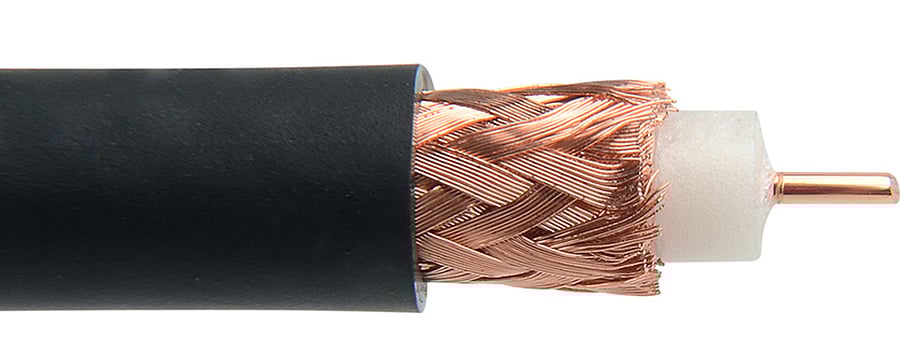
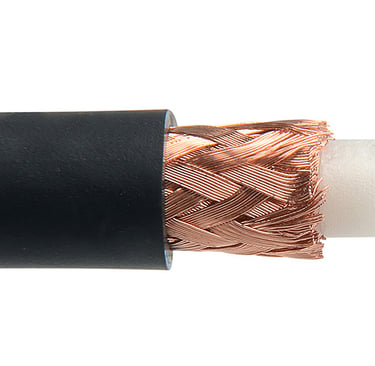
Coaxial cables, often called coax, consist of an inner conductor that carries the signal, surrounded by an insulating dielectric layer, a metallic shield, and an outer jacket. The concentric design shares a common axis, hence the name. Types include RG-59, primarily for video signals in CCTV or analogue TV; RG-6, suited for satellite communications due to its thicker conductor; and RG-11, used in BNC-style local area networks (LANs) for broader bandwidth. Shielding varies: single-shielded offers basic protection, dual-shielded adds a foil layer for better noise rejection, and quad-shielded provides maximum interference resistance with double weaves and foils. Markings on the jacket reveal materials, such as PE for solid polyethylene (durable for outdoor use), FE for foam polyethylene (lighter and flexible), FS for foam polystyrene (low-loss for high frequencies), ASP for air space polyethylene (improved insulation), ST for solid Teflon (high-temperature resistance), or AST for air space Teflon (enhanced dielectric properties). Advantages include excellent long-distance signal transfer and resistance to electromagnetic interference, but they cost more than twisted pair cables and less than fibre optics.
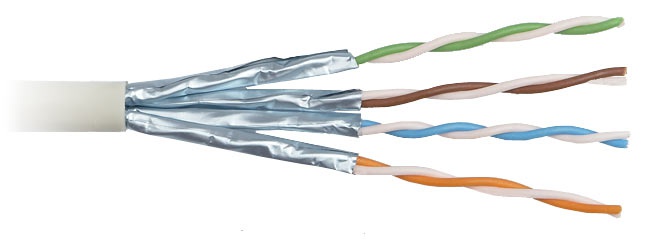
Twisted pair cables feature pairs of insulated wires twisted together to minimise crosstalk and external noise. They are categorised into shielded twisted pair (STP), which includes a foil or braided shield for added protection in noisy environments, and unshielded twisted pair (UTP), the more common and cost-effective option. Markings provide key information: UL indicates compliance with Underwriters Laboratories fire safety standards, ETL signifies adherence to Electrical Testing Laboratories requirements, distance ratings show signal travel limits before degradation, and "shielded" denotes RF emission reduction. Commonly used for telephone connections and Ethernet, twisted pair cables are inexpensive but suffer from high attenuation, requiring repeaters for long runs.
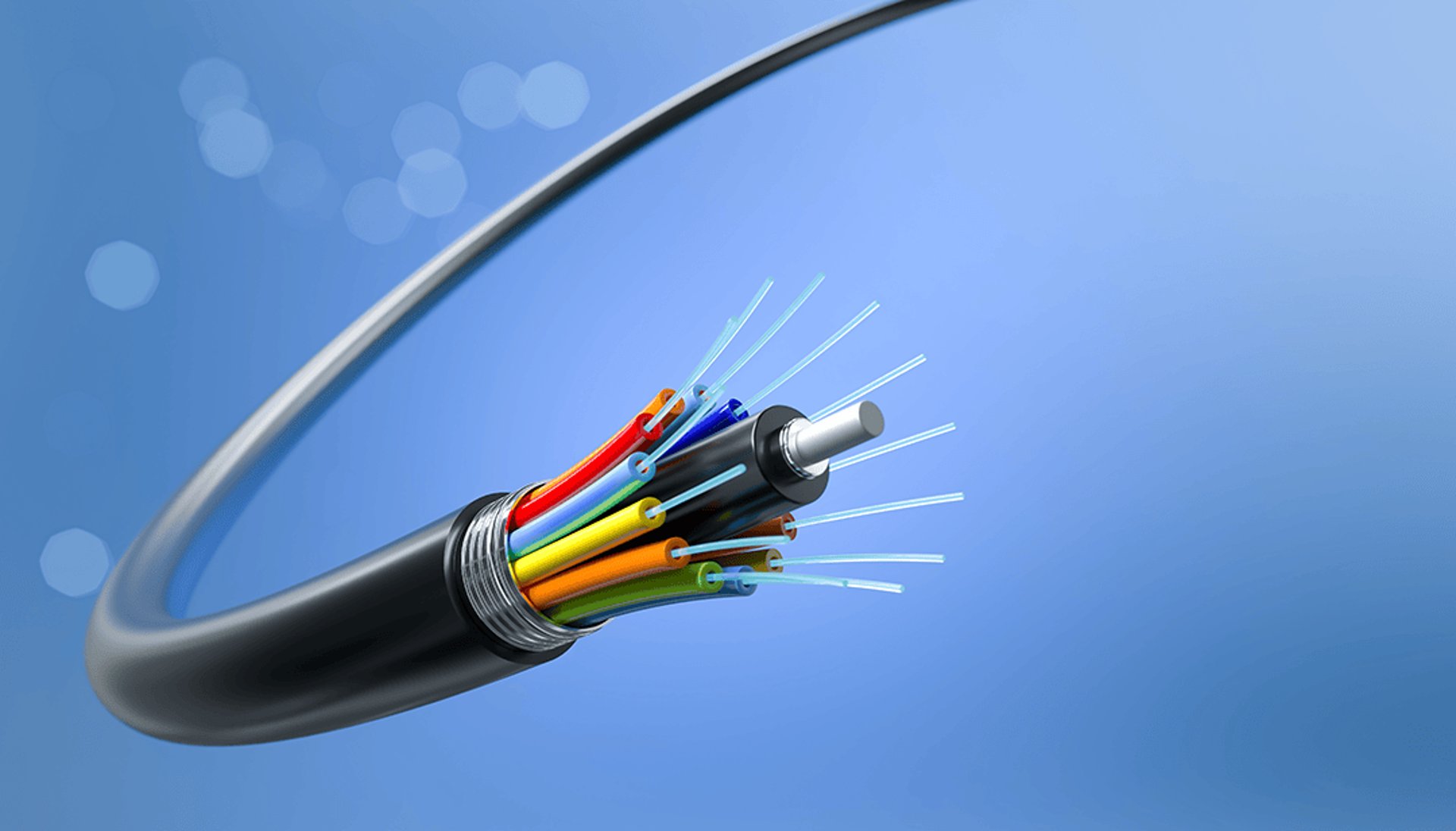
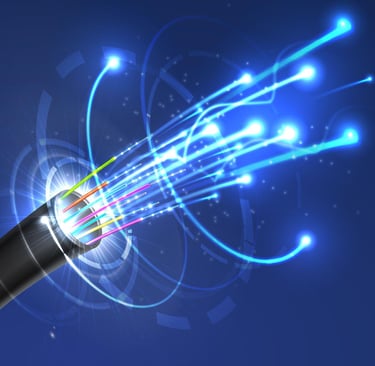
Fibre optic cables represent the pinnacle of modern telecommunications, using light to transmit data through a core of glass or plastic fibres encased in cladding and an outer casing. The core size determines the mode: single-mode cables have a small core (typically 9 microns) for low attenuation over vast distances, ideal for long-haul networks; multimode cables feature a larger core (50-62.5 microns) for shorter runs with higher attenuation but easier light coupling. Sheathing colours aid identification—aqua or orange for multimode, yellow for single-mode. Jacket markings include PVC for polyvinyl chloride (flexible and flame-retardant), PE for polyethylene (weather-resistant), PUR for polyurethane (abrasion-resistant), PBT for polybutylene terephthalate (chemical-resistant), or PA for polyamide (tough for industrial use). Benefits encompass ultra-fast speeds, immunity to interference, and reliability, though installation costs are higher due to specialised equipment.
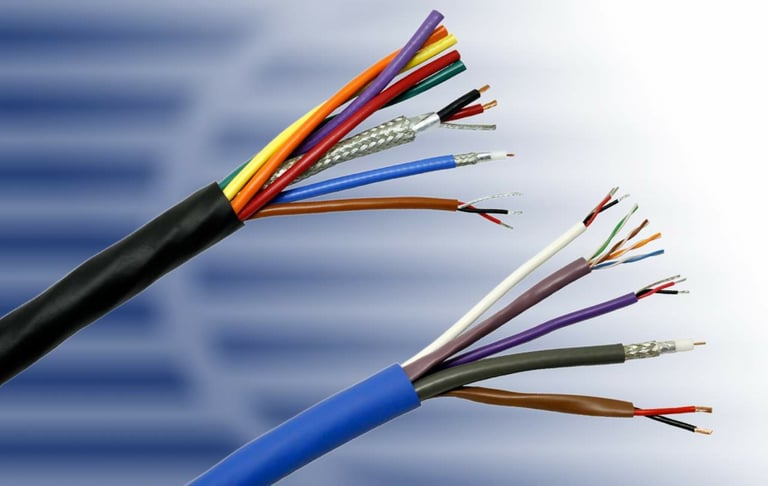
Other types include Ethernet cables, evolved forms of twisted pair: Cat 5e supports up to 100 MHz for basic networking; Cat 6 handles gigabit Ethernet at 250 MHz; Cat 6a/e augments to 500 MHz; Cat 7, always shielded, reaches 600 MHz for 10 Gbps over 100 metres; and Cat 8 pushes 2000 MHz for 40 Gbps short-haul. Telephone cables, often twisted pair variants, come in indoor (flexible), outdoor (weatherproof), and modular forms for voice. Ribbon cables are flat, multi-wire assemblies for internal electronics, available in round-to-flat or twisted pair flat configurations. Electronic cables encompass multi-conductor, multi-pair, or triad designs, differentiated by gauge, conductor count, and jacket for specialised circuits.
Common Applications of Telecommunication Cables
Telecommunications cables are ubiquitous, powering a wide array of everyday and specialised uses. In homes, Ethernet cables connect computers and routers for internet access, while coaxial cables deliver cable TV signals and support CCTV for security. Fibre optic cables form the backbone of high-speed broadband, enabling streaming services like Netflix or DStv.
In business and industrial settings, these cables transmit data in fire alarms, where fire-resistant types ensure reliability during emergencies; security systems, using coax for video feeds; and sound systems, relying on low-interference twisted pair. They also facilitate electronic circuits in manufacturing and data centres, where high-bandwidth fibre optics handle massive data flows. For radio and television broadcasting, coaxial and RF cables carry signals with minimal distortion.
Specialised environments demand tailored cables: outdoor and underground variants feature robust sheaths to withstand moisture and mechanical stress, while fire-resistant options like CMR (communications riser, for vertical shafts) or CMP (communications plenum, for air-handling spaces) comply with building codes.
In South Africa, telecommunications cables drive national initiatives. Fibre-to-the-home (FTTH) projects in Johannesburg and Cape Town have boosted e-learning platforms and e-commerce, with providers like Vumatel laying fibre networks to connect over a million households. In rural areas, hybrid copper-fibre systems support mobile towers, enhancing access to services like mobile banking via apps such as Capitec or FNB.
Laying Methods and Installation Considerations
Laying telecommunications cables involves various methods, chosen based on terrain, environment, and purpose. Overhead or aerial installation suspends cables on poles, ideal for quick deployment in rural South Africa but vulnerable to weather. Direct burial buries cables underground for protection against vandalism, common in urban expansions. Pipeline laying uses conduits for easy access and maintenance, while underwater or submarine methods deploy armoured cables across oceans or rivers.
Factors like moisture resistance, mechanical protection, and sheaths (e.g., armoured for harsh conditions) influence choices. Maintenance requires fault detection tools like time-domain reflectometers, with markings aiding identification during repairs.
In South Africa, the SEACOM submarine fibre optic cable exemplifies these considerations. Landed in Mtunzini, KwaZulu-Natal in 2009, this 17,000 km system connects South Africa to Europe and Asia via Mozambique and Tanzania. With an initial capacity of 1.28 Tbps, it reduced latency from 800 ms to under 200 ms, boosting internet speeds and economic growth by enabling faster data for businesses. Challenges include cable theft in rural areas and vandalism, costing millions in repairs, addressed through community patrols and buried reinforcements.
Classification by Usage and Technical Features
Telecommunications cables are classified by usage into city communication cables (paper-insulated or polyolefin-sheathed for local telephony), long-distance symmetrical cables (copper or foam polyethylene for frequency-specific transmission), coaxial for RF signals, submarine for international links, fibre optic for broadband, and RF for wireless.
Technical features include voltage tolerance (e.g., low for data, high for power-integrated), shield materials (foil, braid), twisted pair counts (affecting bandwidth), and resistance to temperature or fire (e.g., CMP-rated). Structures vary: symmetrical for balanced signals, coaxial for high-frequency, integrated for multi-function.
Compared to overhead wires, these cables offer superior capacity, stability, confidentiality, and interference resistance from natural or electromagnetic sources.
Advantages, Disadvantages, and Emerging Trends
Advantages of telecommunications cables include vast capacity for data-heavy apps, reliability in diverse environments, and adaptability. Disadvantages encompass high installation costs for fibre, physical vulnerability, and repair challenges in remote setups.
Trends feature 5G-compatible fibre, hybrid copper-fibre systems, and sustainable materials like recyclable jackets. In South Africa, SA Connect uses fibre to bridge the digital divide, extending broadband to underserved areas in Limpopo, combating issues like load-shedding with resilient designs.
South African Telecommunication Cable Projects
The SEACOM submarine cable, spanning 17,000 km from South Africa to Europe and Asia, landed in 2009 with 1.28 Tbps capacity. It created ICT jobs, reduced costs, but faced shark bites and seismic risks, mitigated by armoured designs.
EASSy, a 10,000 km fibre system landing in Durban in 2010, enhanced East African connectivity, supporting mobile money and e-government with bandwidth growth from 320 Gbps to over 10 Tbps.
Telkom's Gauteng fibre rollout overcame regulatory hurdles under ICASA, sharing infrastructure to connect townships, boosting economic activity.
Frequently Asked Questions (FAQ)
What is the difference between coaxial and fibre optic cables?
Coaxial cables use copper conductors with shields for signals like TV, offering good interference resistance but limited speeds. Fibre optics transmit light for ultra-high speeds and immunity to noise, ideal for broadband.
How do I identify the type of cable I have?
Check markings: PE or PVC for jackets, Cat ratings for Ethernet, colours like yellow for single-mode fibre, or RG for coax.
Are telecommunications cables safe for home use?
Yes, with fire ratings like CMR/CMP ensuring safety; minimal interference risks if properly installed.
Why are fibre optic cables more expensive?
Higher material and installation costs, but benefits like superior speed and reliability outweigh them long-term.
What are common issues in South Africa with these cables?
Theft, load-shedding disruptions, and rural access gaps, addressed through security and government programmes.
How has submarine cabling changed SA's internet?
SEACOM and EASSy improved speeds and affordability, reducing costs by 80% and enabling global business.
Can I install these cables myself?
No, professional installation is advised due to technical specs, tools, and ICASA regulations.
Conclusion
Telecommunications cables are indispensable for connectivity, evolving from copper to fibre to meet digital demands. In South Africa, they drive inclusion and growth. Stay informed on advancements like 6G for a brighter future.

Email Address: Li.wang@feichuncables.com
© 2025. All rights reserved.


One-click to Quickly Contact
Products
Contact
Company
Location:
Building A Private Science and Technology Park, Hefei Economic and Technological Development Zone, Anhui Province, China
Heat Resistant Cable
WhatsApp: +86 17333223430
Social Media: