Anhui Feichun Special Cable Co.,Ltd Email: Li.wang@feichuncables.com
What Are Telephone Cables and How Do They Shape Communication in South Africa?
Discover the fundamentals of telephone cables, their diverse types, primary uses in voice and data transmission, and practical applications tailored to South Africa's unique challenges, including installation guides, case studies, and FAQs on telephone cable wiring and maintenance.
Li. Wang
11/19/20258 min read
Introduction
In an era dominated by wireless technologies and fibre optics, telephone cables remain the unsung heroes of modern communication infrastructure. These unassuming bundles of wires have evolved from simple conduits for voice calls to versatile enablers of data, internet, and even multimedia services. At their core, telephone cables facilitate the transmission of low-voltage, low-current signals, ensuring reliable connectivity in homes, offices, and beyond. But what exactly are they, and why do they continue to matter in a digital world?
In South Africa, where the telecommunications landscape blends rapid urban expansion with persistent rural connectivity gaps, telephone cables play a pivotal role. Initiatives like SA Connect, launched by the government to bridge the digital divide, have highlighted the need for robust infrastructure. In rural areas of provinces like Limpopo and the Eastern Cape, where fibre rollout is slow due to terrain and cost barriers, traditional telephone cables still provide essential links for voice services and basic internet. Meanwhile, in bustling cities like Johannesburg and Cape Town, they support hybrid systems integrating with high-speed networks. This article delves deeply into telephone cables, exploring their definitions, uses, types, and practical aspects, with insights tailored for South African users. Whether you're a homeowner troubleshooting a faulty line or a business owner upgrading your setup, this comprehensive guide aims to equip you with the knowledge to make informed decisions.
What is Telephone Cable?
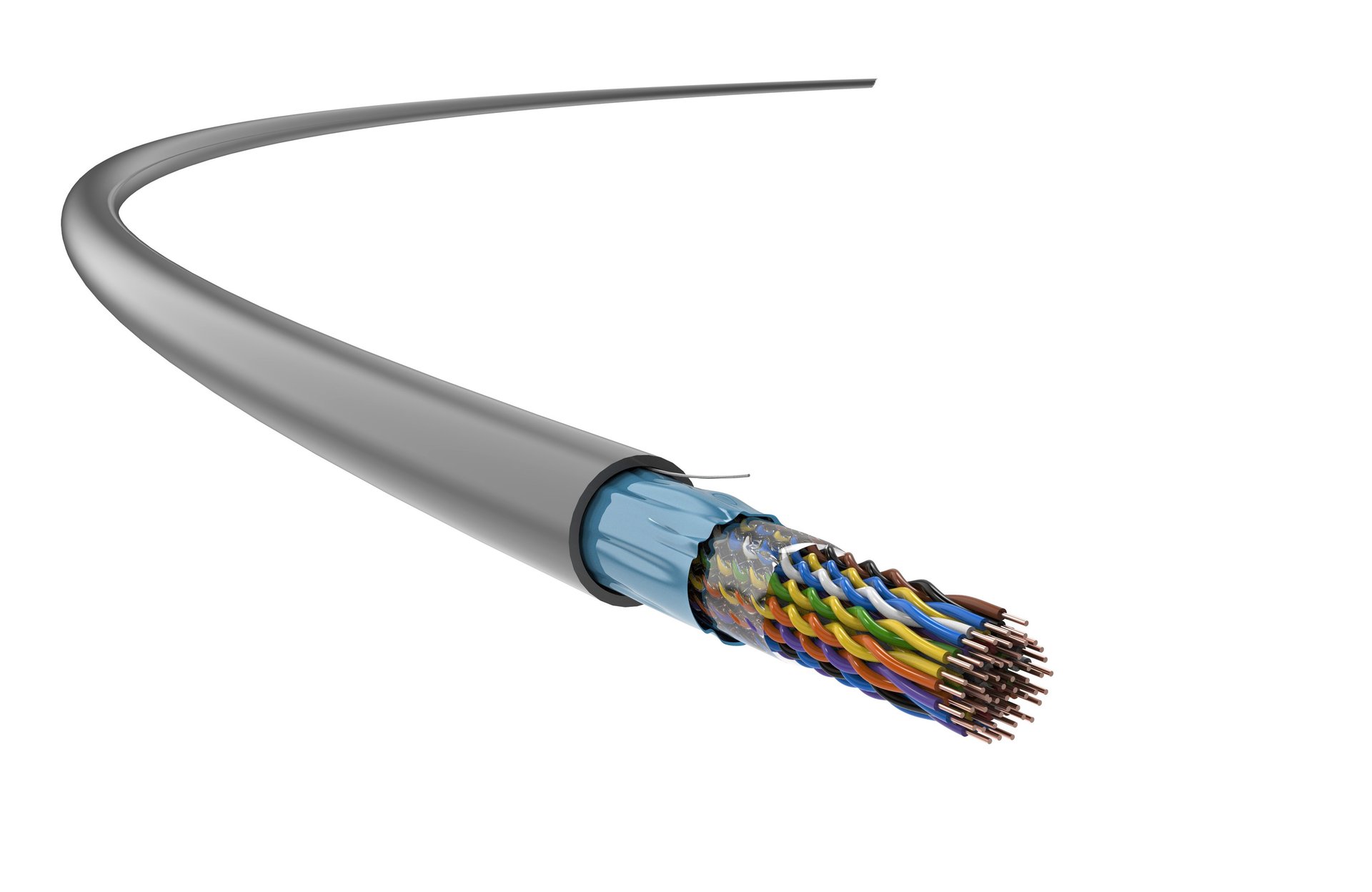
Telephone cable, often simply called phone cable, is a specialised multi-conductor cable designed primarily for transmitting analogue or digital signals in telecommunication systems. It typically consists of twisted pairs of copper wires, each with a diameter ranging from 0.3 to 0.9 millimetres, insulated with materials like polyvinyl chloride (PVC) or polyethylene (PE). These wires operate at frequencies below 300 kilohertz, carrying low-voltage and low-current signals that enable voice communication, data transfer, and more.
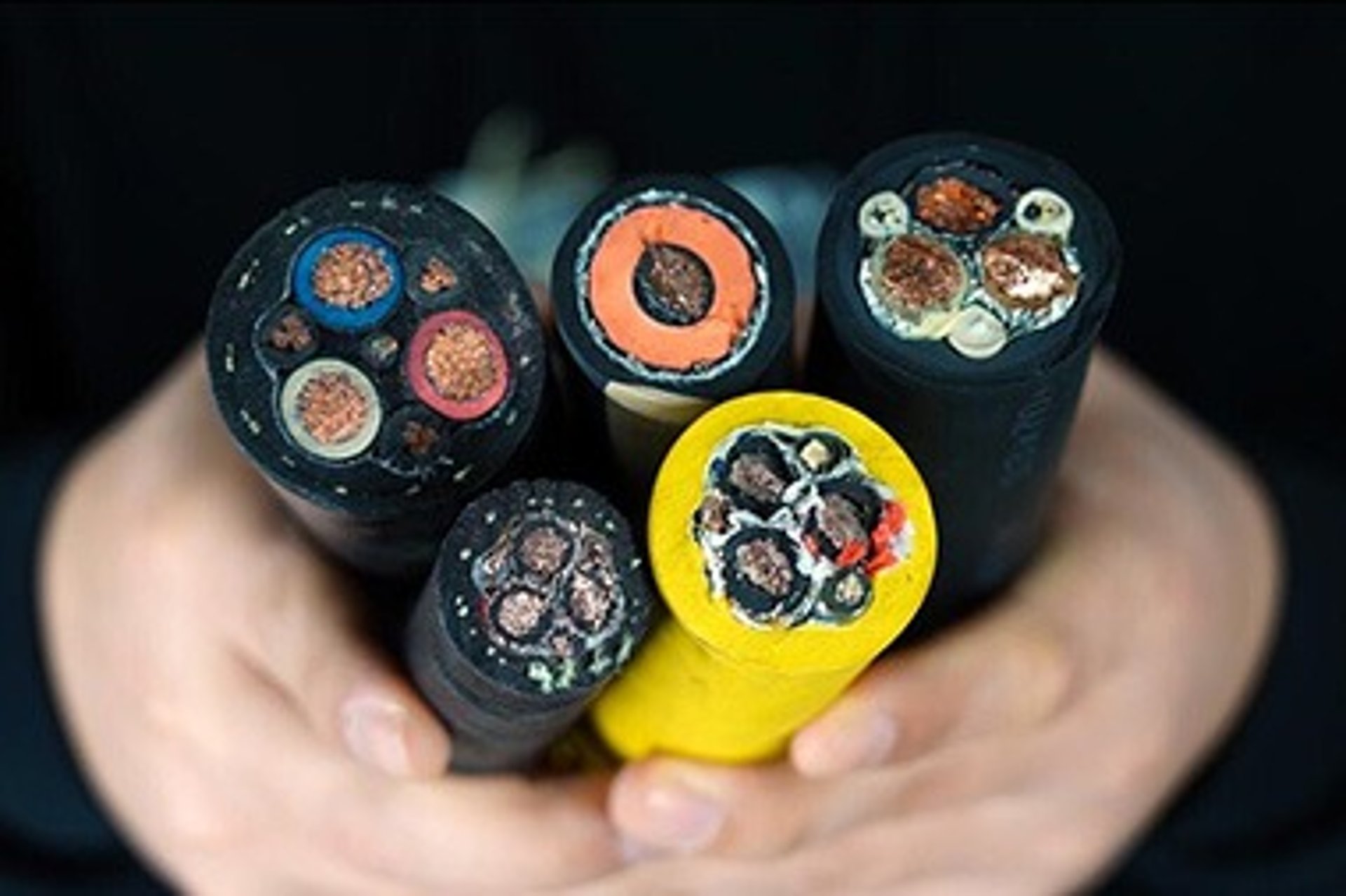
The key components of a telephone cable include the conductors, which are usually made of copper for its excellent conductivity, though aluminium alloys are gaining traction for their lighter weight and cost-effectiveness—often doubling in size to match copper's performance. Insulation surrounds each conductor to prevent short circuits and signal interference, with advanced options like low smoke and fume (LSF) variants that reduce hazardous emissions during fires, or low smoke zero halogen (LSOH) sheathing that eliminates toxic halogen gases like hydrogen chloride, which can cause respiratory issues or form corrosive acids when mixed with water. The outer sheath provides mechanical protection, varying in thickness and material based on the cable's intended environment.
Historically, telephone cables trace back to the late 19th century with the advent of the Public Switched Telephone Network (PSTN), which connected users via central exchanges. In South Africa, their significance grew post-apartheid in the 1990s, following telecom deregulation that spurred competition and infrastructure investment. Companies like Telkom expanded PSTN links to integrate with Private Branch Exchange (PBX) systems in businesses, laying the groundwork for today's hybrid networks. Even as fibre optics advance, telephone cables persist due to their affordability and reliability in legacy systems, forming the backbone of South Africa's communication evolution.
Primary Uses of Telephone Cables
While the name suggests a singular focus on telephones, telephone cables boast a surprisingly broad array of applications, adapting to technological shifts while remaining indispensable.
At their most basic, telephone cables facilitate traditional telephony by connecting handsets to wall sockets for voice calls. In South African homes and offices, this includes setting up extensions across rooms, allowing multiple devices to share a single line without interference. For instance, a coiled cord might link a receiver to a base unit, while flat cords run from the wall to the device, ensuring clear dial tones and speech transmission.
Beyond voice, these cables are crucial for internet and data transmission. They enable Digital Subscriber Line (DSL) services, such as Asymmetric Digital Subscriber Line (ADSL), where download speeds outpace uploads due to frequency allocation. In South Africa, where affordable broadband is key for households in townships or suburbs, ADSL via telephone cables offers a cost-effective alternative to fibre, operating alongside landline services without disruption. This higher-frequency data transmission coexists with voice signals, making it ideal for remote areas under SA Connect's rural rollout.
Telephone cables also support wired networking in environments where Wi-Fi falters. Modified versions, like Ethernet cables with RJ45 connectors, create Local Area Networks (LANs) for high-speed data between computers. In South Africa's mining sites or vast farms, where signal interference from machinery or distance hampers wireless options, these cables ensure stable connections. You can even adapt a phone jack for Ethernet by connecting a modem via proper cabling, bridging old and new tech.
Other uses extend to security systems, where cables transmit alarm signals to monitoring centres, triggering responses in real-time. Medical equipment, such as electrocardiogram (EKG) machines, relies on them to send patient data to monitoring stations, critical in South Africa's overburdened healthcare facilities. Cable television via Hybrid Fibre-Coaxial (HFC) networks uses telephone cables for the coaxial segment, delivering TV signals to homes. Emerging applications include integration with Voice over IP (VoIP) systems, where telephone cables carry digital voice packets, supporting South Africa's burgeoning digital economy in sectors like call centres and e-commerce.
Types of Telephone Cables
The diversity of telephone cables stems from their adaptation to various environments, designs, and functions, ensuring they meet specific needs in South Africa's varied climates and terrains.
By environment, cables are classified as internal, external, or internal/external. Internal types are flexible and slim, perfect for routing through walls or tight spaces in homes and offices. External variants feature thicker, weatherproof sheathing resistant to moisture, UV light, and temperature swings—essential in South Africa's hot summers and rainy seasons. Internal/external cables offer versatility, blending flexibility with durability for mixed indoor-outdoor setups, such as connecting a rural homestead to a nearby utility pole.
Design-wise, flat cords are straight and pliable, ideal for linking devices to wall sockets. Coiled cords, often with RJ9 or RJ22 connectors, connect handsets to bases and can stretch significantly—a one-metre coiled length might extend to six metres, providing mobility. Round cables, with their bundled multi-pair construction, suit large-scale installations like apartment blocks or businesses requiring multiple lines. Modular flat cables, available in 4-core, 6-core, or 8-core configurations, simplify connections with plug-and-play ends.
Wiring distinguishes straight-through cables, where pin arrangements match on both ends for data applications like fax machines, from reverse cables, which mirror connections to optimise voice transmission and minimise crosstalk. Specialised types include twisted pair cables—unshielded for basic use or shielded to combat electromagnetic interference (EMI) in noisy environments. Coaxial cables, with a central conductor and shielding, handle broadband and TV signals. Multi-pair cables bundle up to 25 lines for call centres, while fibre optic alternatives use light for high-speed, long-distance transmission, increasingly vital in South Africa's fibre expansion.
Adhering to BT specifications, common in South Africa through imported tech, CW1308 cables feature 2 to 200 pairs of 0.5mm copper conductors with PVC, LSF, or LSOH insulation. CW1308B adds reinforcement for outdoor use, and CW1128 provides armouring for underground burial, protecting against soil shifts in flood-prone areas.
Connector Types and Standards
Connectors are the critical endpoints of telephone cables, ensuring compatibility and secure links. The Registered Jack (RJ) series dominates globally, including in South Africa.
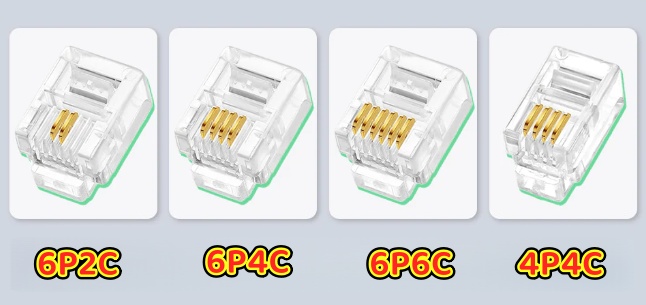
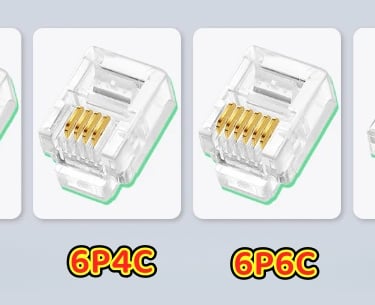
RJ11, an international standard, uses 6P2C or 6P4C configurations—six positions with two or four contacts—for single-line connections in homes and businesses. Its transparent plastic body houses pins that align with sockets, supporting basic telephony. RJ12 advances this with 6P6C (six contacts) for multi-line or digital signals, offering backward compatibility with RJ11. RJ14 and RJ25 handle two and three lines respectively, with similar rectangular designs.
The British Standard (BS) 6312, introduced in 1981, features square connectors like 431A (four pins) and 631A (six pins), with side hooks to prevent dislodging—prevalent in older South African setups from British colonial influences. Adaptors bridge BS to RJ systems, and extension kits combine cables, sockets, and splitters for adding lines. Other connectors include 4P4C for coiled cords (informally RJ9/RJ22) and 8P8C (RJ45) for Ethernet adaptations.
Standards emphasise interference reduction through pair twisting and stranding, with core counts from two (one pair) to ten (five pairs) dictating capacity. In South Africa, compliance with these ensures minimal induction and crosstalk, vital for reliable service.
Colour Codes and Wiring Practices
Colour coding standardises wiring, aiding installation and troubleshooting in South Africa's diverse telecom setups.
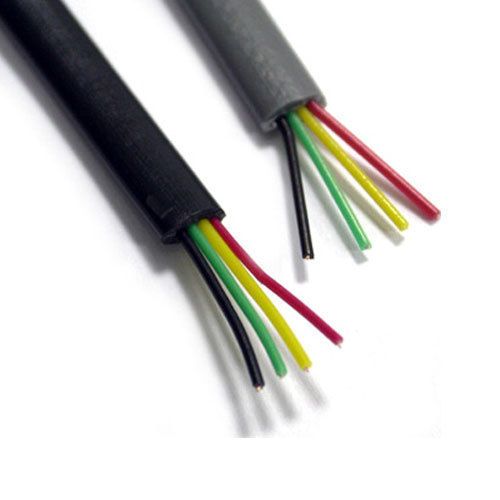
The BT code, widely adopted here, assigns pin 2 (blue) and pin 5 (orange) for dial tone and speech, with pin 3 (brown) activating extensions. Older variants use blue with white bands for pin 2, orange with white bands for pin 3, and white with blue bands for pin 5—electricians often swap these during upgrades. RJ11 cables typically feature green/red for the first pair and black/yellow for the second, ensuring polarity.
Straight wiring duplicates pin orders on both ends for data, while reverse mirrors them for voice, reducing interference. Proper adherence minimises induction (excess current buildup) and crosstalk (signal bleed), with twisting enhancing noise cancellation. South African professionals stress documenting codes during rewiring of legacy systems, especially in post-1990s infrastructures.
Installation and Maintenance Guide
Installing telephone cables requires precision to ensure longevity and performance.
For attaching a 6P6C connector: Start by stripping the jacket with a wire tool, avoiding nicks to conductors. Organise wires per the colour code—trim evenly to fit the plug length. Insert into the modular plug, then crimp firmly with an all-in-one tool, ensuring contacts pierce insulation. Repeat on the other end: reverse for voice, straight for data. Test with a multimeter or continuity checker.
Essential tools include strippers, crimpers, snips, and testers. For outdoor runs, like overhead on poles in rural South Africa, use weatherproof variants and secure against wind. Maintenance involves inspecting for wear, cleaning connectors, and replacing damaged sections.
Safety aligns with South African National Standards (SANS), mandating LSOH in fire-prone buildings and professional certification for installations.
Applications in South Africa
South Africa's telecom challenges have spawned innovative telephone cable deployments.
In Limpopo's rural areas, Telkom's SA Connect initiative (2020–2025) used external multi-pair cables to extend DSL, connecting over 500 underserved households despite rugged terrain. This reduced the digital divide, enabling remote education and e-services with minimal signal loss over kilometres.
A Johannesburg call centre, via MTN Business, upgraded from RJ11 to Cat6 shielded twisted pair for VoIP, cutting EMI from urban infrastructure and saving 20% on downtime costs, enhancing call quality for international clients.
In KwaZulu-Natal, post-2022 floods, armoured CW1128 cables buried underground maintained medical and security links in flood-hit communities, proving resilience against water ingress and ensuring emergency communications.
Common Challenges and Solutions
Interference plagues telephone cables: Crosstalk from untwisted pairs or EMI from nearby devices. Solutions include tighter twisting, shielding, or LSOH sheathing for durability.
Compatibility issues arise mixing RJ and BS; adaptors resolve this. South Africa's climate—intense heat, humidity, and UV—degrades cables; opt for reinforced external types with moisture barriers.
Frequently Asked Questions (FAQ)
What is the difference between RJ11 and RJ12 cables?
RJ11 uses four conductors for single lines, while RJ12 employs six for multi-line or digital signals, with backward compatibility for versatile use.
Can telephone cables be used for internet?
Yes, through DSL like ADSL, common in South Africa for affordable access, though fibre offers superior speeds for demanding applications.
How do I identify a faulty telephone cable?
Look for no dial tone, static noise, or intermittent connections; use a multimeter to check continuity or replace suspect segments.
Are coiled cords suitable for outdoor use?
No, they're designed for indoor flexibility; choose external flat or round cables with weatherproof jackets for exterior applications.
What's the maximum length for a telephone cable without signal loss?
For voice, up to 5–6 kilometres depending on wire gauge; DSL shortens this due to higher frequencies.
How does South Africa's climate affect cable choice?
Harsh sun and rain necessitate UV-resistant, moisture-proof external cables to prevent degradation and maintain reliability.
Conclusion
Telephone cables embody versatility, evolving from voice enablers to multifaceted tools in data, security, and beyond, even as fibre rises. In South Africa, they bridge gaps in a fibre-dominant future, supporting inclusive growth.
For optimal results, consult SABS-certified professionals to navigate installations, ensuring compliance and efficiency in your unique context.
Email Address: Li.wang@feichuncables.com
© 2025. All rights reserved.

One-click to Quickly Contact
Products
Contact
Company
Location:
Building A Private Science and Technology Park, Hefei Economic and Technological Development Zone, Anhui Province, China
Heat Resistant Cable
WhatsApp: +86 17333223430
Social Media: