Anhui Feichun Special Cable Co.,Ltd Email: Li.wang@feichuncables.com

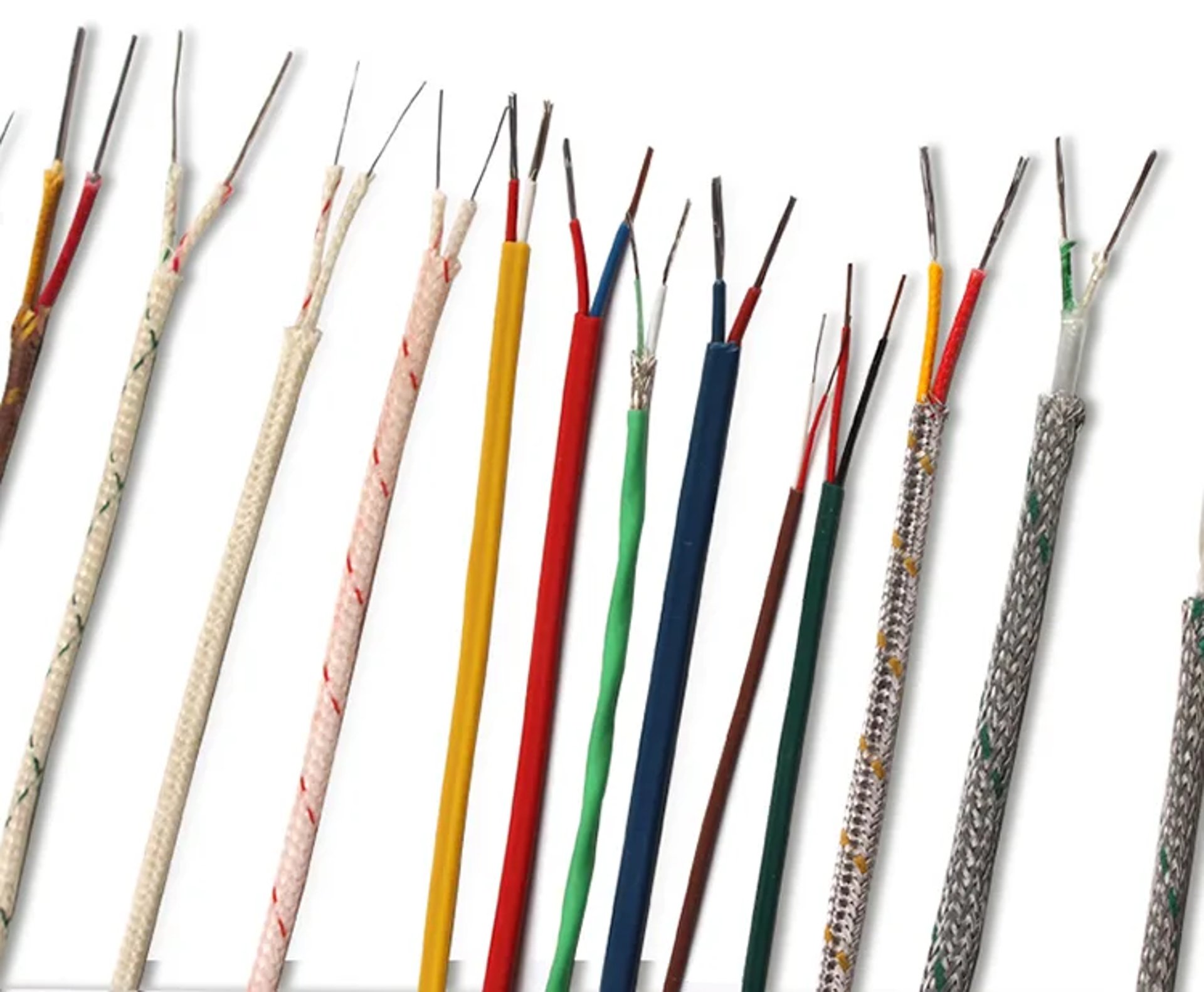
What Are Thermocouple Cables and Why Are They Crucial for Accurate Temperature Measurement?
Explore the world of thermocouple cables, essential heat-resistant wires for precise temperature sensing in industries like mining and energy. This guide covers types, applications, selection tips, and FAQs on thermocouple cable technology, tailored for South African contexts.
Li.Wang
11/20/20258 min read
Introduction
Thermocouple cables are specialised wires designed to measure temperature by harnessing the thermoelectric effect, where two dissimilar metals joined together generate a voltage proportional to the temperature difference between their junctions. At its core, a thermocouple cable consists of positive and negative conductors made from specific alloys, enabling it to detect and transmit temperature data reliably. This technology plays a pivotal role in modern temperature measurement, converting thermal energy into electrical signals that can be interpreted by instruments like controllers or data loggers.
In today's industries, thermocouple cables are indispensable for ensuring safety, efficiency, and precision in processes that involve extreme heat or variable environments. Their importance is particularly pronounced in South Africa's resource-driven economy, where sectors such as mining and energy rely heavily on robust temperature monitoring. For instance, in the mining industry, which contributes significantly to the country's GDP, thermocouple cables help monitor equipment temperatures to prevent overheating and failures in underground operations. Similarly, in the energy sector, they support the management of power plants, aligning with South Africa's push towards sustainable energy solutions amid challenges like load shedding.
The history of thermocouple technology dates back to the early 19th century when Thomas Seebeck discovered the thermoelectric effect in 1821. This paved the way for the development of practical thermocouples by Leopoldo Nobili in the 1830s. Over time, advancements in metallurgy and insulation materials have evolved thermocouple cables from basic wire pairs to sophisticated, insulated systems capable of withstanding harsh conditions. In South Africa, the adoption of this technology accelerated during the industrial boom of the mid-20th century, driven by the needs of gold and diamond mining operations. Today, innovations continue to enhance their durability and accuracy, making them a cornerstone of industrial instrumentation.
The Basics of Thermocouple Cables
Thermocouple cables operate on the principle of the Seebeck effect, where a junction of two dissimilar metals—typically a positive conductor and a negative one—produces a small voltage when exposed to temperature changes. For example, in a common setup, the positive wire might be made of copper, while the negative is nickel, creating a thermoelectric current at the measurement junction. This voltage is then measured at a reference point, known as the cold junction, and correlated to the actual temperature at the hot junction, or sensing point.
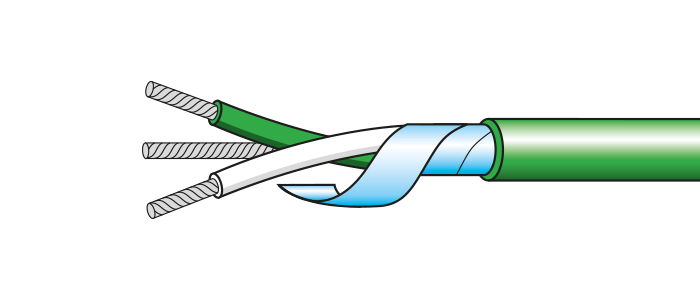
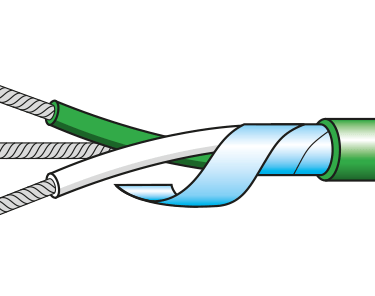
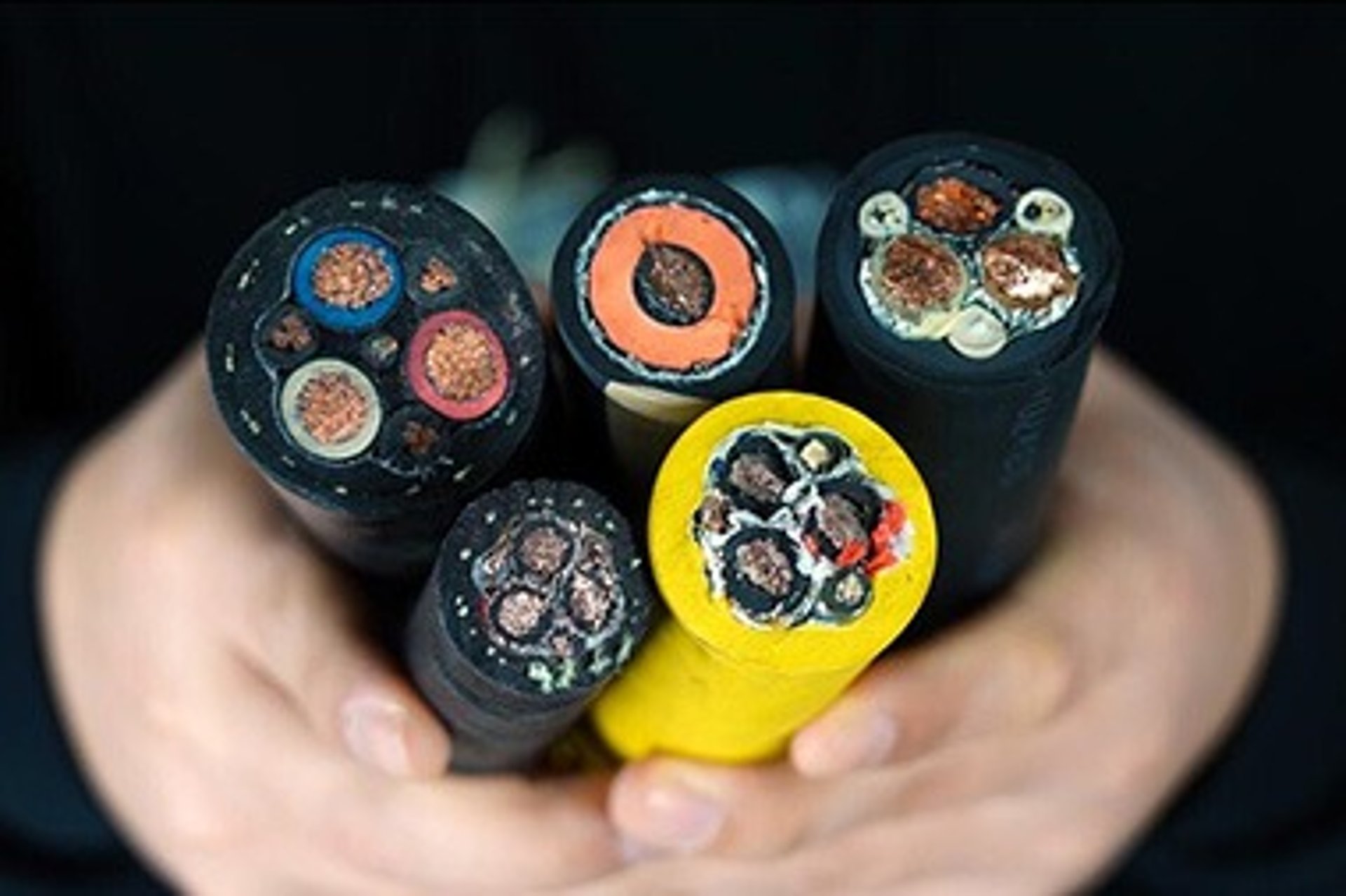
Key components include the hot junction, where temperature sensing occurs; the cold junction compensation (CJC) end, which accounts for ambient temperature variations to ensure accurate readings; and the cable construction itself, which involves insulated conductors to protect the signal. The cable's design minimises interference and maintains signal integrity over distances.
A critical distinction lies between thermocouple-grade wire and extension-grade wire. Thermocouple-grade wire is used directly at the sensing point to form the thermocouple itself. It is composed of exact thermoelectric alloys tailored to the specific type, such as nickel-chromium (Chromel) and nickel-aluminium (Alumel) for Type K, ensuring high accuracy across wide temperature ranges. This grade is versatile, capable of handling extreme conditions like those in industrial furnaces, and is essential for users building custom thermocouples.
In contrast, extension-grade wire serves to transmit the signal from the probe to remote instruments. It uses alloys with looser tolerances, making it more cost-effective but limited to lower ambient temperatures, typically up to 200°C. It cannot be used for direct sensing, as its materials are not calibrated for high-heat exposure. For instance, while thermocouple-grade wire might operate at over 1000°C in a kiln, extension-grade wire connects it to a controller in a milder environment, reducing costs for long runs.
Performance factors include ambient temperature limits, which restrict extension-grade wire to avoid physical degradation; accuracy tolerances, where standard limits allow broader errors (e.g., ±2.2°C for Type K) compared to special limits of error (SLE) with tighter specs (e.g., ±1.1°C); and environmental resistance, influenced by insulation that shields against moisture, chemicals, and abrasion. Mismatching materials can introduce errors, as the voltage-temperature correlation relies on precise alloy properties.
Types of Thermocouple Cables
Thermocouple cables are categorised by their alloy combinations, each suited to specific temperature ranges and applications. Common types include Type E, made from Chromel and Constantan, which offers excellent accuracy in moderate ranges from -200°C to 900°C, ideal for cryogenic and laboratory use. Type J uses Iron and Constantan, handling -210°C to 760°C, and is popular in oxidising atmospheres like food processing. Type K, with Chromel and Alumel, covers -200°C to 1260°C, making it the most versatile for high-temperature industrial settings. Type T, composed of Copper and Constantan, spans -200°C to 350°C and excels in moist environments due to its stability.
Overall, thermocouple types can measure from -200°C to +1800°C, though individual ranges vary. Extension wire variants extend these signals and are denoted by an 'X' suffix. For example, BX extension wire supports certain high-temperature transmissions; EX uses Nickel-Chromium and Copper-Nickel with individual screening for noise reduction; JX for Iron-Constantan setups; KX for Chromel-Alumel; SX for specialised refractory applications; and TX for Copper-Constantan, available with collective screening (CAM) or individual and collective screening (ICAM), sometimes armoured with double steel tape for rugged use.
Insulation materials are crucial for protection and are identified by codes. PVC insulation, coded as PP (or EXPP for extension), uses polyvinyl chloride overall and on conductors, rated from -40°C to 105°C, offering good abrasion resistance, excellent flexibility, and fair solvent resistance. FEP or Neoflon, coded FF (EXFF), provides excellent ratings across abrasion, water submersion, and chemical resistance, spanning -200°C to 200°C. PFA or Neoflon (TT/EXTT) extends to -267°C to 260°C with similar superior properties. Kapton (KK) handles -267°C to 316°C, excelling in flame resistance but with good overall ratings. Glass Braid (GG/EXGG) covers -73°C to 482°C, strong against solvents and flames but poor in abrasion and water. Nextel Braid (XC) reaches -73°C to 1204°C, ideal for extreme heat with excellent solvent and flame resistance, though flexibility is good and abrasion poor.
Wire gauge affects performance significantly. Thicker gauges, like 14 AWG, reduce resistance per foot, allowing longer runs and better durability in high temperatures or noisy environments. Thinner gauges, such as 24 AWG, increase resistance, potentially degrading signals over distance but offer greater flexibility and lower cost, suitable for compact installations.
Industrial and Commercial Applications
Thermocouple cables' versatility makes them essential across diverse sectors, where they withstand high temperatures, chemicals, vibrations, and electromagnetic interference (EMI). In manufacturing, they optimise processes by monitoring temperatures in refineries and plants, ensuring efficiency and preventing downtime. HVAC systems use them for precise regulation in buildings, enhancing comfort and energy savings. Food processing relies on them for maintaining temperatures during cooking and storage to ensure safety and quality.
In medical equipment, they enable accurate readings in thermometers and incubators; automotive applications monitor engines and exhausts for performance; aerospace deploys them in extreme environments for spacecraft and aircraft; power generation tracks boilers and turbines; laboratories use them for experiments; energy management optimises usage; and safety systems detect fires or hazards.
In South Africa, these applications are amplified by the country's industrial landscape. In the mining sector, thermocouple cables are vital for underground operations. A case study from Anglo American's platinum mines in the Rustenburg area highlights their use in monitoring conveyor belt temperatures and ventilation systems. In extreme heat and dust exceeding 40°C, Type K cables with Nextel insulation provided reliable data, reducing equipment failures by 25% and improving worker safety amid the sector's high-risk environment.
The energy sector, dominated by Eskom's coal-fired plants like Medupi, employs thermocouple cables for boiler and turbine monitoring. In one instance, extension-grade KX cables with armoured screening helped detect overheating early, preventing a potential blackout and enhancing efficiency in a grid strained by demand. This aligns with South Africa's Integrated Resource Plan for reliable power.
In renewable energy, the Northern Cape's solar thermal plants, such as the Khi Solar One project, integrate Type K cables for precise control of heat transfer fluids. A study by the Council for Scientific and Industrial Research (CSIR) showed that these cables maintained accuracy in temperatures up to 500°C under intense solar radiation, boosting energy output by 15% and supporting the transition to green energy in arid regions.
Selecting the Right Thermocouple Cable
Choosing the appropriate thermocouple cable involves evaluating several criteria to match application needs. Start with the temperature range and accuracy: For high-heat scenarios, select Type K with SLE for tighter tolerances like ±1.1°C, ensuring precision where standard ±2.2°C might suffice for general use.
Assess environmental conditions, such as moisture in humid areas or EMI in industrial zones, opting for shielded variants like ICAM for TX wires. Insulation material is key—PVC for mild settings, Kapton for high-heat flexibility. Consider cable construction for flexibility in tight spaces or durability in vibrations.
Balance cost and quality: Higher-grade SLE wires cost more but reduce long-term errors. Ensure future scalability by choosing compatible systems. In South Africa, adhere to SANS (South African National Standards) for safety, like SANS 10142 for electrical installations.
Avoid pitfalls like mismatching grades, which causes errors, or exceeding loop resistance—keep under 100 ohms by calculating based on gauge and length, using transmitters for long runs.
Installation and Maintenance Tips
Proper installation begins with planning: Position cables near sensing points but away from heat sources or interference. Handle gently to avoid damaging junctions, securing with clamps to prevent stress without overtightening.
Maintain polarity—positive to positive, as reversals invert readings. Ground properly to reduce noise, and protect with conduits against hazards like chemicals. Verify connections for security.
For maintenance, calibrate regularly per manufacturer guidelines, inspecting for wear like frayed insulation. Clean gently, document activities, and train staff on procedures. In South African contexts, like Durban's humidity, combat corrosion with moisture-resistant insulations; troubleshoot noise with shielded wires or transmitters for long runs in EMI-heavy mines.
Frequently Asked Questions (FAQs)
How long do thermocouple wires last?
The lifespan varies by type, environment, and maintenance—several years under normal conditions, but shorter in high-heat or chemical exposure. Factors include mechanical stress and proper installation; regular checks extend durability.
What temperature range can thermocouple wires measure?
It depends on type: Type K up to 1260°C, with overall ranges from -200°C to +1800°C. Accuracy may decline at extremes, so select based on needs.
Why is thermocouple wire important?
It ensures precise voltage-temperature correlation; mismatches in alloys lead to measurement errors, critical for system integrity.
What is the maximum length of thermocouple wire?
Generally under 100 feet with 20 AWG in low-EMI areas; factors include loop resistance (keep under 100 ohms) and noise avoidance with shielding.
How are insulated thermocouple cables identified?
By colour coding: red for negative leads; positive matches the type (e.g., green for Type K positive); brown jackets for thermocouple grade; tracers in white for high-temperature wires.
What is the difference between Standard and Special Limits of Error (SLE) wire?
SLE provides tighter accuracy, like ±1.1°C or ±0.4% for Type K, versus standard's ±2.2°C or ±0.75%, ideal for precision applications.
What is the difference between thermocouple-grade and extension-grade wire?
Thermocouple-grade forms the sensing probe with exact alloys for high temperatures; extension-grade transmits signals at lower temps, cheaper but not for direct exposure.
How many feet of thermocouple wire can I run?
Limit to keep resistance under 100 ohms; thicker gauges allow longer runs, use transmitters in noisy environments.
How do I properly install thermocouple wire?
Maintain polarity to avoid errors; use non-thermocouple wire only as specified, and shield in EMI areas.
What type of wire (solid, stranded, twisted/shielded) and gauge is needed?
Solid for stability, stranded for flexibility; twisted/shielded for noise resistance; thicker gauges for durability and long runs, thinner for cost and flexibility.
Conclusion
Thermocouple cables remain vital for accurate temperature measurement, blending reliability with adaptability in demanding environments. In South Africa, their role in mining, energy, and renewables underscores their economic impact.
Looking ahead, advancements in nanomaterials and smart integrations promise enhanced durability and wireless capabilities, potentially revolutionising applications in emerging sectors like green hydrogen production.
Email Address: Li.wang@feichuncables.com
© 2025. All rights reserved.


One-click to Quickly Contact
Products
Contact
Company
Location:
Building A Private Science and Technology Park, Hefei Economic and Technological Development Zone, Anhui Province, China
Heat Resistant Cable
WhatsApp: +86 17333223430
Social Media: