Anhui Feichun Special Cable Co.,Ltd Email: Li.wang@feichuncables.com
What Exactly Is IEC 60502 and Why Should Every South African Care About This Power Cable Standard?
Discover IEC 60502, the global benchmark for extruded-insulated power cables from 1 kV to 30 kV. Explore its scope, materials like XLPE and HEPR, system categories, testing, and South African applications in Eskom networks, solar farms, and mines. Includes FAQs and NRS 056 comparisons.
Li. Wang
10/29/20257 min read
Why IEC 60502 Matters to Every South African Using Electricity?
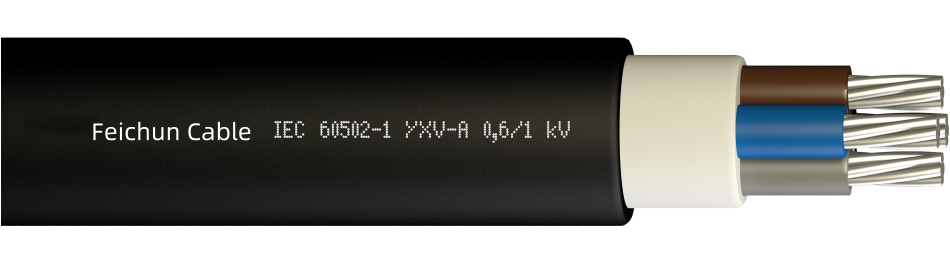
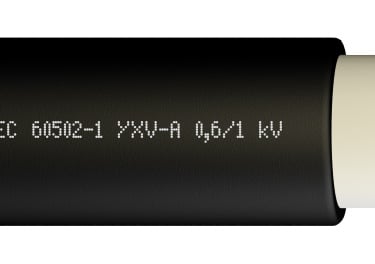
Published by the IEC, this standard isn't just a dusty document; it's the backbone ensuring your home's low-voltage feed from the street pole or the medium-voltage lines snaking through rural KwaZulu-Natal farmlands don't let you down. In South Africa, IEC 60502 aligns seamlessly with NRS 056 (the national rationalised specification for distribution cables), Eskom's rigorous technical specs, and SANS 10142-1 wiring regulations. It mandates extruded solid insulation—think cross-linked polyethylene (XLPE) or high-modulus ethylene propylene rubber (HEPR)—that withstands our harsh climates, from coastal salt spray in Durban to the dusty heat of the Northern Cape.
The payoffs? Enhanced safety during earth faults (crucial in our lightning-prone storms), minimised voltage drop over those long rural feeders stretching 50 km or more, and low-smoke zero-halogen (LSZH) options for confined spaces like underground mines in Rustenburg or high-rise buildings in Sandton. For electricians on site, it means fewer callbacks; for homeowners, reliable power even when Eskom's grid is under strain.
This article dives deep into IEC 60502 clause-by-clause, contrasts it with local South African norms, showcases real-world applications from Soweto ring mains to Northern Cape solar farms, and tackles the burning questions sparkies ask over a braai. By the end, you'll see why specifying IEC 60502-compliant cables isn't optional—it's essential for a resilient grid.
Historical Evolution and South African Adoption
IEC 60502 didn't appear overnight. Its roots trace back to the 1970s, when the IEC sought to harmonise global cable specs amid rising electrification. The first edition emerged in 1978, focusing on extruded-insulated cables to replace older paper-insulated types prone to moisture failure. Fast-forward through revisions: IEC 60502-1 hit its latest in 2021, emphasising modern materials like HEPR for flexibility, while IEC 60502-2 got an amendment in 2020 (A1) for better water-blocking in medium-voltage (MV) applications.
South Africa's journey with IEC 60502 mirrors our post-apartheid push for international alignment. In the 1990s, the South African Bureau of Standards (SABS) via Technical Committee 066 began adopting IEC standards to replace outdated British BS 5467 norms. By 1998, the City of Cape Town mandated IEC 60502 for new suburban reticulation, slashing cable failures in wet winters. The 2010 renewable energy boom—think REIPPP projects—made it compulsory for interconnects, ensuring 22 kV XLPE cables could handle solar inverters' harmonics.
The pinnacle? 2023's full alignment with IEC 60502-1:2021 for solar farm cabling, driven by Eskom's grid code updates. As Eskom senior engineer Thabo Mokoena recalls from the 2022 KZN floods: "Category B earthed systems per IEC 60502 allowed our 11 kV feeders to operate with one phase earthed for up to 8 hours without catastrophic insulation breakdown. Pre-standard cables would've melted—saving millions in repairs and keeping Pietermaritzburg powered."
Timeline snapshot:
1978: IEC 60502 first edition.
1998: Cape Town municipal adoption.
2010: Mandatory for renewables.
2021/2023: Latest editions integrated into NRS 056 and Eskom specs.
This evolution underscores IEC 60502's adaptability, making it the default for tenders from eThekwini to Polokwane.
Scope and Part-by-Part Breakdown
IEC 60502's scope is precise: power cables with extruded solid dielectric insulation for fixed installations, voltage-rated 1 kV (U₀/U) to 30 kV, including accessories. It excludes overhead lines, mining-specific (use "generally to" phrasing), nuclear, marine, or submarine cables—those fall under IEC 60508 or 60287 derivatives.
The standard splits into parts:
Part 1 (IEC 60502-1:2021, 1–3 kV):
Covers low-voltage (LV) heavyweights for distribution and industrial fixed lays. Construction basics: Class 2 compacted stranded conductors (copper or aluminium per IEC 60228), triple-extruded insulation (conductor screen + XLPE/HEPR + insulation screen), PVC or PE inner bedding, optional steel wire armour (SWA), and PVC/ST2 or LSZH oversheath. For 1.9/3.3 kV township reticulation—like in Alexandra—the triple-layer extrusion ensures uniform electric stress, preventing partial discharges. Flame-retardant or LSZH variants reduce spread in fires, vital for informal settlements.
Part 2 (IEC 60502-2:2014/A1:2020, 6–30 kV):
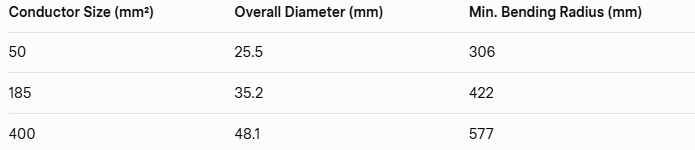
Medium-voltage territory, globally recognised on datasheets. Key extras: longitudinal water-blocking (swellable tapes/powders) for wet trenches, copper wire screens for fault current return, and semi-conductive layers for stress control. Example dimensions for N2XSY 11 kV single-core (Cu/XLPE/SCS/PVC):
Part 4:
Accessory-focused—heat-cycle (100 cycles at 95 °C), impulse withstand (75 kV for 11 kV), and partial discharge (<5 pC) tests for joints/terminations.
Part 3:
Reserved—whispers of future hydrogen pipeline cables, but nothing yet.
In SA, Eland or Feichun Cables can cross-reference to national specs for compliance.
System Categories and Fault Behaviour
IEC 60502-1 defines three system categories based on earth fault duration, critical in SA's varied grids:
Category A: Fault cleared <1 minute—auto-reclose in urban 11 kV ring mains (e.g., Sandton CBD). Cables need high impulse strength.
Category B: Up to 8 hours/occasion, ≤125 hours/annum—rural wooden-pole lines where isolation's tough (common in Limpopo). Insulation must handle prolonged earth contact.
Category C: Everything else—industrial with continuous monitoring (e.g., Sasol plants).
Worked example: 3.3 kV cable, 300 mm² aluminium conductor, Category B fault for 6 hours. Touch voltage calculation (per IEC 60479-1): Fault current ~1.5 kA (assuming 2 Ω earth resistance), step voltage = (ρ × I × K) / (2πL), where ρ=100 Ωm soil, K=0.15. Result: ~45 V—safe under 50 V limit with proper earthing, but SWA essential for mechanical protection.
This categorisation prevented meltdowns in KZN's flooded 2022 networks.
Material Selection and Performance Requirements
Material choices dictate longevity in SA's extremes:
Insulation Compounds:
Thermoplastic: PVC/A (≤70 °C, LV only).
Thermosetting: XLPE (90 °C continuous, 250 °C short-circuit), HEPR (hard grade >70 °C, flexible for bends), EPR/EPDM.
Sheathing:
PVC/ST2 (UV-resistant for coastal), PE (chemical-resistant), HFFR/LSZH (public buildings).
Conductors: Class 1/2 plain or metal-coated copper/aluminium; Class 5 flexible copper.
Armour: Galvanised SWA for multi-core; aluminium wire armour (AWA) for single-core to cut eddy currents.
Performance tests: Partial discharge ≤5 pC at 1.5 U₀; tan δ <0.004 for XLPE ageing; water penetration (IEC 60502-2 Table 11/12) for Durban's high water table. Thermal: 90 °C XLPE, derate for 40 °C ambient.
Local availability: Aberdare or CBI-electric stock these, SABS-marked.
Testing Regimes—From Factory to Site
IEC 60502 demands rigorous checks (Table 15 Part 1, Annex B Part 2):
Type Tests: One-off—high-voltage AC (3.5 U₀/5 min), impulse, thermal stability.
Routine Tests: Every reel—conductor resistance (≤0.01% deviation at 20 °C), insulation thickness (micrometer ≥ nominal), sheath spark (6 kV).
Sample Tests: Batch—tan δ, water immersion.
Site checklist for SA contractors:
Visual inspection for damage.
Continuity and phasing.
Megger insulation resistance (>1 GΩ).
VLF high-pot if MV.
Case study: A Cape Town manufacturer in 2021 caught undersized 11 kV XLPE (185 mm² actual 170 mm²) via routine tan δ (>0.005)—averting a R2 million Atlantis substation blaze. Early detection saved the day.
Common Cable Types and South African Nomenclature
Popular IEC 60502 configs in SA:
LV: 600/1000 V PVC/SWA/PVC—equivalent to SANS 1507, used in residential estates.
MV: 6.35/11 kV N2XSY (Cu/XLPE/copper screen/PVC); 12.7/22 kV N2XS(F)2Y (water-blocked PE sheath for solar).
Cross-reference: SANS 1339 Type A1 matches IEC 60502-1 Table 3 but adds local UV tests.
Nomenclature tip: "N" = copper, "2X" = XLPE, "S" = screen, "Y" = PVC.
Comparison with South African and Regional Standards
IEC 60502 vs locals:
SANS 1574: LV flexibles—similar insulation but IEC mandates extruded screens.
NRS 056: Accepts IEC 60502-2 + UV for KZN coast (extra 500-hour xenon test).
BS 6622: Overlaps XLPE but stricter bending (15D vs IEC 12D); BS tapes armour bedding, IEC allows extruded.
Venn: Shared—XLPE 90 °C, SWA; Diverge—IEC flexible water-blocking, BS heavier screens.
This harmony eases imports from Europe while meeting Eskom.
Practical Applications in South Africa
Municipal: 11 kV XLPE/SWA in Soweto ring mains—fault-tolerant for load shedding.
Renewables: 22 kV water-blocked N2XS(F)2Y in Northern Cape solar (e.g., Jasper farm)—handles 45 °C sand, derated per IEC 60287.
Mining: "Generally to IEC 60502-2" + SANS 1411 FR sheath for Anglo plats—LSZH mandatory underground.
Tips: Bend radius 12D MV; trench sand 100 mm bedding per SANS 10142-1; pulling tension <70 N/mm² conductor.
Frequently Asked Questions (FAQ)
Can I use IEC 60502-1 cables for 3.3 kV Eskom pole-top transformers?
Ja, no problem—specify Category B, SWA for bird/tamper protection, and aluminium conductors for cost.
What’s the difference between XLPE and HEPR?
XLPE: Cross-linked PE, 90 °C rating, rigid but excellent dielectric. HEPR: Hard-grade EPR, 90 °C too but more flexible for tight bends in factories.
Do I need water-blocking for underground cables in Durban?
Absolutely—below water table, mandate swellable tapes + radial barrier (aluminium foil) to prevent treeing.
How do I calculate current rating for a 185 mm² 11 kV cable in duct?
IEC 60287: Base 400 A air; derate 0.85 ducts, 0.9 for 40 °C ambient, SA soil ρ=1.2 K.m/W → ~320 A installed.
Are LSZH cables compulsory in shopping malls?
Yes—SANS 10142-1 Table 4.2 demands HFFR in public escape routes for smoke control.
What does “generally to IEC 60502-2” mean on a mining cable datasheet?
Core electrical compliance, but adds SANS 1411 impact/flame tests for shaft use.
How long is the warranty on IEC 60502 cables?
Standard 10 years manufacturing defects; insist on SABS certification for claims.
Can I joint 11 kV heat-shrink and cold-shrink terminations on the same cable?
Yes—if type-tested per IEC 60502-4 combo; mix brands risky without proof.
What’s the maximum pulling tension for 240 mm² 3-core SWA?
6 kN/core (18 kN total)—stocking grip, swivel, lubricant essential.
Where do I find the official IEC 60502 documents in South Africa?
SABS Standards Sales (Pretoria), IEC webstore, or NRS mirrors—R500–R2000 per part.
Conclusion
IEC 60502 isn't just a standard—it's the blueprint for South Africa's electrified future, from load-shedding resilience to green energy grids. By mandating robust extruded insulation like XLPE, fault-tolerant categories, and stringent tests, it safeguards lives, cuts downtime, and aligns with SANS/NRS norms. Whether you're an electrician in Polokwane specifying SWA for rural feeders or a project manager in Cape Town tendering solar interconnects, embrace IEC 60502. Consult suppliers like Feichun or Aberdare, verify SABS marks, and build a grid that lasts. In a nation powering ahead, this standard lights the way.
Email Address: Li.wang@feichuncables.com
© 2025. All rights reserved.

One-click to Quickly Contact
Products
Contact
Company
Location:
Building A Private Science and Technology Park, Hefei Economic and Technological Development Zone, Anhui Province, China
Heat Resistant Cable
WhatsApp: +86 17333223430
Social Media: