Anhui Feichun Special Cable Co.,Ltd Email: Li.wang@feichuncables.com
What Is a 2YSLCY-J Cable and Where Is It Used? Applications, Specifications, and Comparisons Explained
Discover what a 2YSLCY-J cable is, where it is used, and how it compares to other screened motor cables. Learn about structure, specifications, applications, installation tips, and FAQs for frequency converter power cables.
Li Wang
1/8/20266 min read
What Do Users Want to Know About 2YSLCY-J Cables?
In modern industrial environments, especially those using frequency converters and variable frequency drives (VFDs), cable selection is no longer just about voltage and current. Engineers, plant managers, and system integrators increasingly ask deeper questions:
Why is the 2YSLCY-J cable so frequently specified for inverter-driven motors?
What real problems does electromagnetic interference (EMI) cause in factories and process plants?
When is a screened motor cable genuinely necessary, and when is a standard PVC power cable not enough?
How does 2YSLCY-J compare with alternatives like YSLY, 2YSLCYK-J, or conventional motor cables?
In South Africa, these questions are particularly relevant. Industries such as automotive manufacturing, food processing, HVAC, mining-related automation, and chemical processing rely heavily on frequency-controlled drives to improve energy efficiency and process stability. However, without proper EMC-designed cabling, these same systems can suffer from nuisance tripping, signal interference, premature motor failure, and non-compliance with EMC regulations.
This article provides a deep, structured, and professional explanation of the 2YSLCY-J cable, covering its construction, electrical characteristics, applications, comparisons, installation practices, and real-world performance. Whether you are specifying cables for a new project or troubleshooting EMI issues in an existing installation, this guide is designed to give you clear, reliable answers.
What Is a 2YSLCY-J Cable?
What does the designation “2YSLCY-J” mean?
The designation 2YSLCY-J follows European and harmonised cable naming conventions, commonly recognised in South Africa’s industrial sector due to the widespread use of IEC, EN, and VDE-based standards.
In practical terms:
2Y indicates polyethylene (PE) core insulation, known for excellent electrical properties.
S denotes a screened construction, essential for EMC control.
LCY identifies a power and control cable with copper screening, typically used for motor supply.
-J confirms the presence of a green-yellow protective earth (PE) conductor.
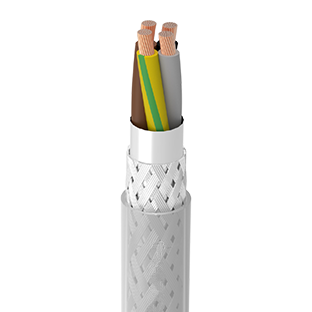
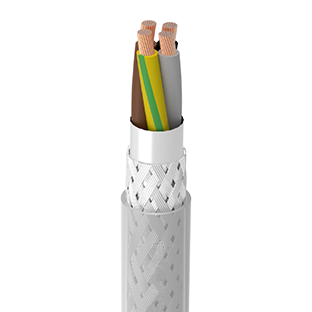
Together, this means that a 2YSLCY-J cable is a screened low-voltage motor supply cable, specifically designed for use with frequency converters and inverter-fed motors.
Is 2YSLCY-J considered a screened motor supply cable?
Yes—2YSLCY-J is explicitly designed as a screened motor supply cable.
Unlike unscreened PVC power cables, it incorporates a double screening system consisting of:
Aluminium-polyester (Al-PES) tape with 100% coverage
Tinned copper wire braid
This combination significantly reduces:
Radiated electromagnetic emissions
Conducted interference along the cable
Susceptibility to external electrical noise
As a result, 2YSLCY-J cables are widely accepted as a reliable EMC-compliant solution for inverter-driven systems.
How does it differ from unscreened PVC power cables?
Standard PVC power cables are suitable for direct-on-line (DOL) motors and basic power distribution. However, when used with VFDs, they often fail to control:
High-frequency switching pulses
Common-mode currents
Voltage reflections
A 2YSLCY-J cable, by contrast, is engineered specifically to address these challenges, making it far superior in signal stability, motor protection, and EMC compliance.
Where Are 2YSLCY-J Cables Commonly Used?
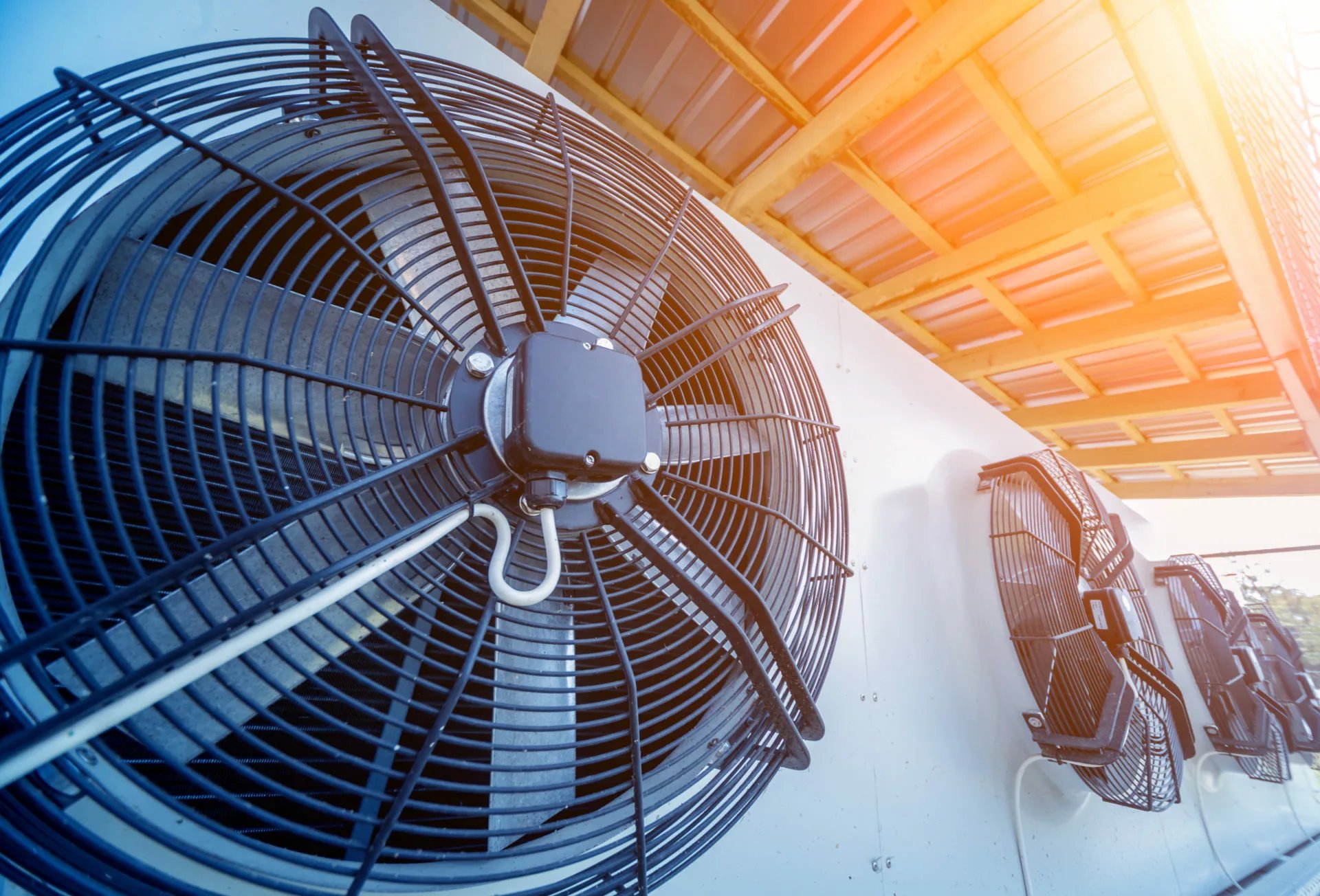
Why Are 2YSLCY-J Cables Ideal for Frequency Converters and VFDs?
Frequency converters generate high-frequency PWM (pulse-width modulation) signals, which can:
Create electromagnetic interference
Damage motor insulation
Disrupt nearby control and communication systems
The screening system of a 2YSLCY-J cable provides a controlled return path for interference currents and limits electromagnetic emissions. This is critical in modern plants where PLCs, sensors, and data networks operate alongside high-power motor drives.
In short, 2YSLCY-J cables help ensure that VFD performance improvements do not come at the cost of system instability.
Which Industries Most Commonly Use 2YSLCY-J Cables?
In South Africa, 2YSLCY-J cables are widely used across multiple sectors:
Automotive manufacturing lines – robotic arms, conveyor drives, and paint shop ventilation
Air conditioning and HVAC systems – variable-speed fans and pumps
Packaging and automated machinery – precision motion control
Chemical processing plants – controlled mixing and pumping systems
Food and beverage production – hygienic, inverter-driven processing lines
These industries share a common requirement: stable motor control with minimal electrical interference.
Can 2YSLCY-J Cables Be Used in Wet, Oily, or Damp Conditions?
Yes. Thanks to its PVC TM2 outer sheath, the 2YSLCY-J cable is suitable for:
Dry indoor environments
Wet or damp industrial areas
Oily machine surroundings
However, it is designed for medium mechanical stress. It is not intended for heavy trailing, continuous reeling, or extreme abrasion, where specialised PUR or rubber trailing cables would be more appropriate.
How Is a 2YSLCY-J Cable Constructed? (Cable Structure Explained)
What Type of Conductor Is Used in 2YSLCY-J Cables?
2YSLCY-J cables use electrolytic annealed, class 5 stranded plain copper conductors.
Class 5 stranding offers:
Excellent flexibility for installation
Reduced risk of conductor fatigue
Reliable current-carrying performance
For corrosive or high-humidity environments, tinned copper conductors are available on request, offering enhanced resistance to oxidation.
What Insulation Material Does 2YSLCY-J Use and Why?
Each conductor is insulated with a polyethylene compound (EN 50290-2-23).
Polyethylene insulation provides:
Low dielectric losses
High insulation resistance
Improved performance under high-frequency conditions
This makes it particularly suitable for inverter-fed motor applications, where electrical stress is higher than in conventional power circuits.
How Does the Double Screening System Work?
The 2YSLCY-J cable uses a two-layer screening concept:
Al-PES tape (100% coverage)
Acts as an electrostatic shield
Reduces capacitive coupling and high-frequency noise
Tinned copper wire braid
Provides low-impedance grounding
Improves EMC performance over a wide frequency range
Together, these layers help the cable meet EMC requirements in sensitive industrial installations.
Why Is a PVC TM2 Outer Sheath Used?
The PVC TM2 sheath (EN 50363-4-1) offers:
Mechanical protection
Resistance to oils and industrial chemicals
Good flame retardancy for indoor use
The transparent sheath allows visual inspection of the braid and core condition, which is highly valued by maintenance teams. A black sheath version (2YSLCYK-J) is available when UV resistance or aesthetic considerations are required.
What Are the Electrical and Operating Characteristics of 2YSLCY-J Cables?
Key electrical characteristics include:
Rated voltage: 600/1000 V (U₀/U)
AC test voltage: 4 kV
Operating temperature: −30 °C to +70 °C
Short-circuit temperature: 160 °C (max. 5 seconds)
Minimum installation temperature: −5 °C
Bending radius: According to VDE 276-603 and HD 603 S1 Part 4
Current-carrying capacity: IEC 60364-5-52 Table B12
These specifications ensure reliable performance in typical South African industrial environments.
What Technical Sizes and Configurations Are Available for 2YSLCY-J Cables?
What Are the Common Cross-Section Options?
2YSLCY-J cables are available in:
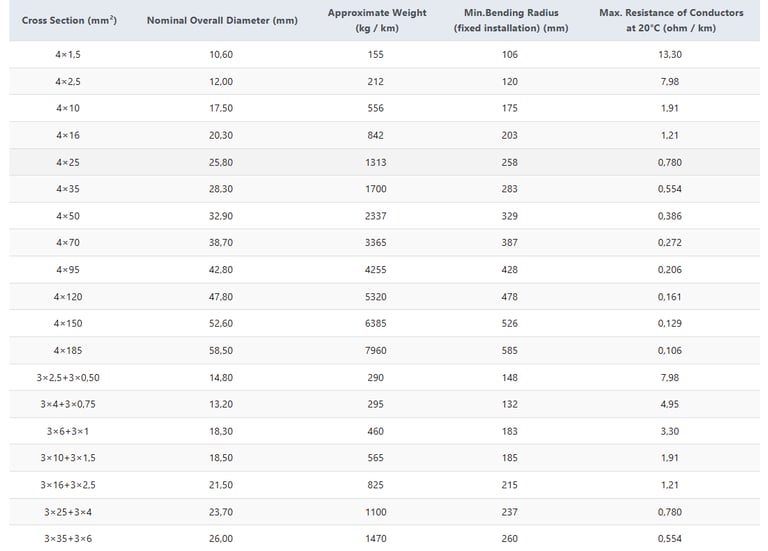
4-core power designs: 4×1.5 mm² up to 4×185 mm²
Combined power + control versions: such as 3×25 + 3×4 mm²
This allows a single cable to supply power and auxiliary signals, reducing installation complexity.
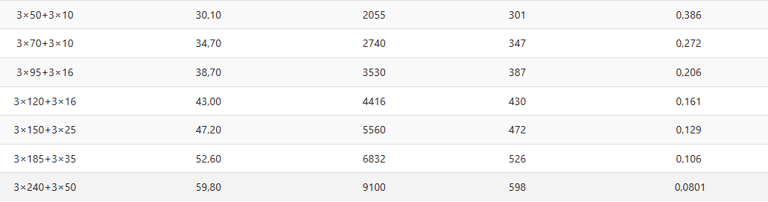
How Do Diameter, Weight, and Bending Radius Change with Cable Size?
As cross-section increases:
Cable diameter and weight increase significantly
Minimum bending radius becomes larger
Installation planning becomes more critical
Larger sizes require proper cable trays, adequate support spacing, and careful handling during installation.
Technical Specification Table
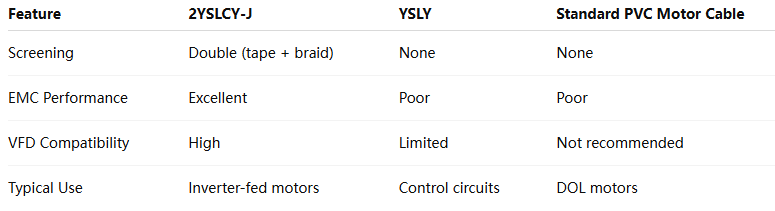
How Does 2YSLCY-J Compare with Similar Cables?
2YSLCY-J vs YSLY – Which One Should You Choose?
YSLY: Unscreened, suitable for basic control and power
2YSLCY-J: Screened, designed for EMC-sensitive motor drives
For VFD applications, 2YSLCY-J is clearly the safer and more compliant choice.
2YSLCY-J vs 2YSLCYK-J – What Is the Difference?
The difference lies mainly in the outer sheath colour:
2YSLCY-J: Transparent sheath
2YSLCYK-J: Black sheath (better UV resistance)
Electrically and mechanically, they are identical.
Is 2YSLCY-J Better Than Standard PVC Motor Cables?
Yes. Advantages include:
Reduced EMI emissions
Improved motor lifespan
Higher system reliability
Easier compliance with EMC directives
Comparison Table
How Should a 2YSLCY-J Cable Be Installed Correctly?
What Are the Key Installation Guidelines to Follow?
Ensure 360-degree screen termination at both ends
Bond the screen properly to earth
Maintain minimum bending radius
Avoid pigtail grounding, which reduces EMC effectiveness
Can 2YSLCY-J Cables Be Used in Fixed and Flexible Installations?
Yes, for fixed installation or occasional movement. They are not designed for continuous flexing or reeling.
How Does 2YSLCY-J Perform in an Automated Packaging Plant?
In a Gauteng-based food packaging facility, repeated PLC faults and sensor failures were traced to EMI from inverter-driven conveyor motors. After replacing standard PVC motor cables with 2YSLCY-J screened cables, the plant reported:
Elimination of nuisance trips
Stable PLC communication
Reduced maintenance downtime
This case highlights how correct cable selection directly impacts operational reliability.
Frequently Asked Questions About 2YSLCY-J Cables (FAQ)
What is the main purpose of shielding in a 2YSLCY-J cable?
To reduce electromagnetic interference and ensure EMC compliance.
Can 2YSLCY-J cables be used outdoors?
Only with protection from UV exposure or by using the black-sheathed 2YSLCYK-J version.
Are these cables suitable for oily and damp environments?
Yes, within medium mechanical stress conditions.
How do I choose the correct cross section for my motor?
Based on motor current, installation method, and voltage drop requirements.
Is 2YSLCY-J compliant with IEC and EN standards?
Yes, it aligns with relevant IEC, EN, and VDE standards.
Can the cable be customised?
Yes—sheath colour, conductor type, and configurations can be adapted.
When Should You Choose a 2YSLCY-J Cable?
You should specify a 2YSLCY-J cable when:
Using frequency converters or VFDs
EMC compliance is required
System reliability and signal integrity are critical
Looking for the right 2YSLCY-J cable for your frequency converter or motor system?
Request a detailed technical datasheet
Get expert support for cable size selection
Receive a tailored quotation for your industrial project
Email Address: Li.wang@feichuncables.com
© 2025. All rights reserved.
One-click to Quickly Contact
Products
Contact
Company
Location:
Building A Private Science and Technology Park, Hefei Economic and Technological Development Zone, Anhui Province, China
Heat Resistant Cable
WhatsApp: +86 17333223430
Social Media: