Anhui Feichun Special Cable Co.,Ltd Email: Li.wang@feichuncables.com

What Is a Type MP-GC Three-Conductor Mine Power Feeder Cable (5kV), and Where Is It Best Used in Modern Mining Operations?
Discover what a Type MP-GC Three-Conductor Mine Power Feeder Cable (5kV) is, how it is constructed, where it is used in South African mining operations, and how it compares with other mining feeder cables. Learn about specifications, applications, standards, installation practices, and real-world case studies from underground and surface mines.
Li Wang
12/29/20256 min read
Introduction
In modern mining operations, electrical reliability is not just a matter of efficiency — it is a matter of safety, compliance, and production continuity. Across South Africa’s gold, platinum, coal, and base metal mines, medium-voltage power distribution systems are the backbone that keeps crushers, conveyors, pumps, and underground substations running day and night.
Among the most widely specified feeder cables for fixed mine power distribution is the Type MP-GC Three-Conductor Mine Power Feeder Cable, CPE Jacket, 5kV. Designed specifically for harsh mining environments, this cable addresses many of the long-standing challenges faced by mine electrical engineers: moisture ingress, mechanical damage, ground faults, and premature insulation failure.
This article provides a deep, practical, and engineering-focused explanation of Type MP-GC 5kV cables. You will learn:
What “MP-GC” actually means and why it matters
How these cables are constructed and why each layer is critical
Key electrical, mechanical, and thermal specifications
Typical conductor sizes and ampacity options
Where MP-GC cables are best used in underground and surface mines
How they compare with SHD-GC and medium-voltage reeling cables
Relevant international standards and certifications
Best installation practices and common mistakes
A real-world South African mining case study
Answers to the most frequently asked questions
What Does “Type MP-GC” Mean in Mining Power Feeder Cables?
What Is the Role of a Mine Power Feeder Cable in a Distribution System?
A mine power feeder cable is a fixed-installation cable used to distribute electrical power from one point in the mine’s electrical network to another. Typical connections include:
Surface substations to underground substations
Underground substations to section transformers
Switchgear to fixed plant equipment such as crushers, pumps, and conveyor drives
Unlike trailing or reeling cables, which must flex and move with mobile equipment, feeder cables are generally installed in ducts, conduits, cable trays, or directly buried. Their primary design focus is electrical stability, mechanical robustness, and long-term reliability, rather than extreme flexibility.
In South African mines, feeder cables typically operate in the 3.3kV to 11kV range, depending on the size of the operation and power demand. The 5kV class, where Type MP-GC sits, is commonly used for medium-load distribution networks.
What Does the “GC” (Ground Check) Feature Do and Why Is It Mandatory in Mines?
The “GC” in Type MP-GC stands for Ground Check, a safety feature that is essential in mining environments.
A ground check conductor allows continuous monitoring of the grounding circuit. If the ground continuity is lost — due to cable damage, loose terminations, or corrosion — the protection system can immediately trip the circuit, preventing:
Electric shock to personnel
Equipment damage
Fire or explosion risks in hazardous areas
In South African underground mines, where conditions are often wet, humid, and conductive, ground check systems are not optional — they are a core element of mine electrical safety philosophy.
How Is a Type MP-GC 5kV Cable Constructed?
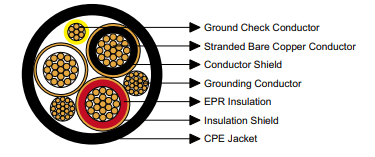
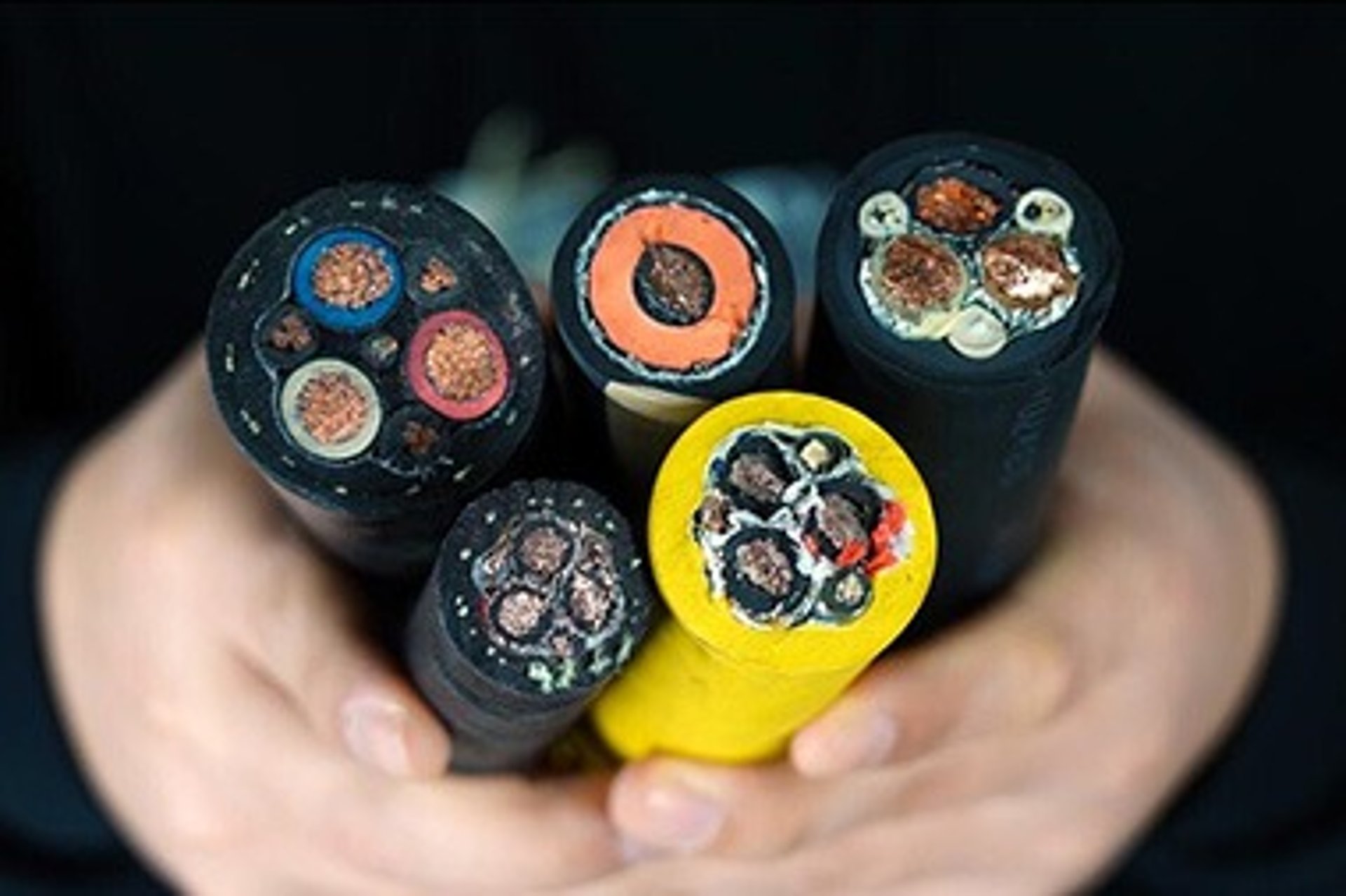
The reliability of a Type MP-GC cable lies in its multi-layered construction, with each component engineered for a specific electrical or mechanical function.
Why Are Stranded Annealed Copper Conductors Used?
Type MP-GC cables use stranded annealed bare copper conductors, rather than solid conductors.
Key advantages include:
Improved flexibility, reducing stress during installation
Better resistance to vibration, common near crushers and conveyors
High current-carrying efficiency, thanks to copper’s excellent conductivity
Annealing softens the copper, making it less prone to work-hardening and cracking over long service periods.
What Is the Function of Conductor and Insulation Shields?
Each phase conductor is surrounded by a conducting shield layer, followed by an insulation shield consisting of a conducting layer and copper tape.
These shields serve several critical functions:
Control and smooth the electric field
Reduce partial discharge within the insulation
Contain fault currents and improve safety during ground faults
Improve compatibility with protective relays
In medium-voltage mining systems, proper shielding is essential for long-term insulation performance.
Why Is EPR Chosen as Insulation for 5kV Mining Cables?
The insulation material used in Type MP-GC cables is Ethylene Propylene Rubber (EPR).
EPR is widely regarded as one of the best insulation materials for mining applications because it offers:
High dielectric strength, suitable for 5kV operation
Excellent thermal stability, with a maximum conductor temperature of 90 °C
Superior resistance to moisture, a critical factor in underground shafts and declines
Good chemical resistance, important in mines with acidic or alkaline water
Compared to PVC or XLPE, EPR maintains flexibility and electrical performance even in damp and aggressive environments.
How Do Grounding and Ground Check Conductors Improve Safety?
In addition to the three phase conductors, Type MP-GC cables include:
A tinned copper grounding conductor, providing a low-resistance path for fault currents
A ground check conductor, insulated with yellow polypropylene for easy identification
Tinning improves corrosion resistance, which is particularly important in South African mines where groundwater chemistry can be highly aggressive.
Why Is a CPE Jacket Preferred in Harsh Mining Conditions?
The outer jacket of a Type MP-GC cable is made from Chlorinated Polyethylene (CPE).
CPE jackets are preferred in mining because they provide:
Excellent oil and grease resistance
Strong abrasion and cut resistance
High moisture resistance
Good flame retardancy
While alternative jacket materials such as CSP, PCP, NBR, PVC, or TPU are available on request, CPE remains the industry standard for fixed mine feeder installations.
What Are the Key Technical Specifications of a Type MP-GC 5kV Cable?
What Voltage and Temperature Ratings Should You Expect?
Type MP-GC cables are rated for 5kV, making them suitable for medium-voltage mine distribution systems.
Key ratings include:
Voltage class: 5kV
Maximum conductor operating temperature: 90 °C
Ambient temperature for ampacity calculations: 40 °C
These ratings align well with typical South African mine conditions.
How Do Bending Radius and Mechanical Limits Affect Installation?
The minimum bending radius for Type MP-GC cables is 12 × overall diameter (OD).
This requirement has practical implications:
Tight bends in shafts or tunnels must be carefully planned
Excessive bending during pulling can damage insulation and shields
Proper rollers and pulling techniques are essential
Ignoring bending radius limits is one of the most common causes of premature cable failure.
How Is Ampacity Calculated for MP-GC Cables?
Ampacity values for Type MP-GC cables are calculated in accordance with ICEA S-75-381, based on:
90 °C conductor temperature
40 °C ambient air temperature
Free-air or typical installation conditions
This provides realistic current ratings for mining applications.
What Sizes and Ampacity Options Are Available for Type MP-GC Cables?
How Do Different Conductor Sizes Affect Current-Carrying Capacity?
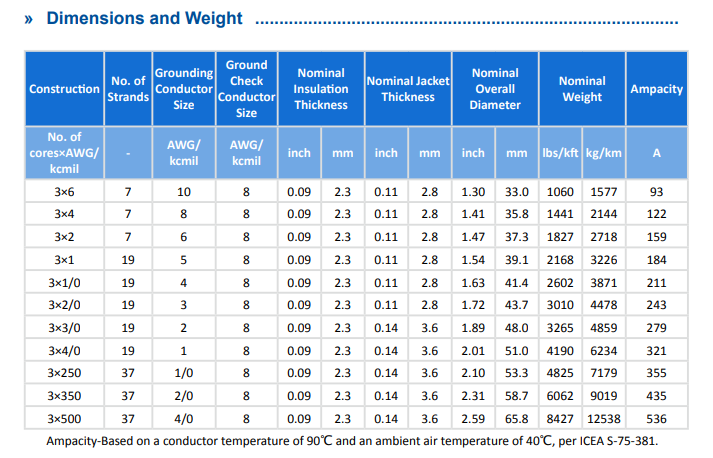
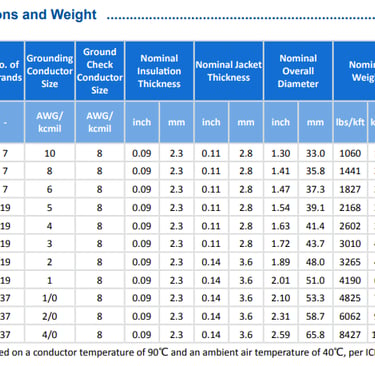
Type MP-GC cables are available in a wide range of sizes, from 3 × 6 AWG to 3 × 500 kcmil, allowing engineers to match cable size precisely to load requirements.
Which Size Should You Choose for Your Load Requirements?
Typical Size and Ampacity Overview
Selecting the correct size requires consideration of load current, voltage drop, installation method, and future expansion.
Where Are Type MP-GC 5kV Mine Power Feeder Cables Commonly Used?
Can MP-GC Cables Be Used in Underground Mines?
Yes. Type MP-GC cables are widely used in:
Vertical shafts
Declines and ramps
Haulage tunnels
Pump stations and underground substations
Their moisture-resistant construction makes them ideal for wet underground environments.
Are These Cables Suitable for Surface and Open-Pit Mining?
Absolutely. On the surface, MP-GC cables are commonly installed:
Between surface substations and crushers
Along conveyor routes
In fixed plant areas
The CPE jacket provides excellent resistance to sunlight, oils, and mechanical abuse.
Can Type MP-GC Cables Be Directly Buried?
Yes. These cables are designed for direct burial in both wet and dry locations, provided proper bedding and mechanical protection are used.
How Does Type MP-GC Compare with Other Mining Feeder Cables?
Type MP-GC vs Type SHD-GC: What’s the Difference?
MP-GC: Fixed installation, 5kV, feeder-focused
SHD-GC: Portable or semi-portable, higher flexibility, often higher voltage
MP-GC is not intended for continuous movement.
Type MP-GC vs MV Reeling Cables: Which Should You Choose?
FeatureMP-GCSHD-GCMV Reeling CableVoltage5kVUp to 15kV6–11kVInstallationFixedPortableDynamicGround CheckYesYesOptional
What Standards and Certifications Apply to Type MP-GC Cables?
Why Are ICEA and NEMA Standards Important?
ICEA S-75-381 / NEMA WC 58 define construction, testing, and performance requirements for mine power cables.
What Do ASTM B-8 and CSA C22.2 No.96 Cover?
ASTM B-8: Copper conductor stranding quality
CSA C22.2 No.96: Safety and performance requirements
Compliance ensures consistency, safety, and global acceptance.
What Are the Best Installation Practices for MP-GC 5kV Cables?
How Should These Cables Be Installed in Ducts and Conduits?
Control pulling tension
Use appropriate rollers
Properly ground all shields
What Common Installation Mistakes Should Be Avoided?
Exceeding bending radius
Incorrect shield termination
Poor jointing practices
Frequently Asked Questions About Type MP-GC 5kV Cables (FAQ)
What Is the Difference Between MP-GC and G-GC Cables?
MP-GC is a medium-voltage feeder cable; G-GC is typically low-voltage.
Can Type MP-GC Cables Be Used Above Ground?
Yes, they are suitable for both underground and surface installations.
Is a CPE Jacket Better Than TPU for Fixed Installations?
Yes. CPE offers better long-term abrasion and oil resistance for fixed use.
How Long Do MP-GC Cables Typically Last?
With proper installation, 15–25 years is common.
Are Custom Jacket Materials Available?
Yes. CSP, PCP, NBR, PVC, and TPU options are available upon request.
How Do You Select the Right Type MP-GC Cable for Your Mine?
Confirm load current and voltage
Assess environmental conditions
Ensure compliance with standards
Balance upfront cost with lifecycle performance
Call to Action (CTA)
Need help selecting or customising a Type MP-GC Three-Conductor Mine Power Feeder Cable (5kV) for your mining project?
Contact our technical team for datasheets, sizing support, and mining-specific recommendations tailored to South African conditions.

Email Address: Li.wang@feichuncables.com
© 2025. All rights reserved.


One-click to Quickly Contact
Products
Contact
Company
Location:
Building A Private Science and Technology Park, Hefei Economic and Technological Development Zone, Anhui Province, China
Heat Resistant Cable
WhatsApp: +86 17333223430
Social Media: