Anhui Feichun Special Cable Co.,Ltd Email: Li.wang@feichuncables.com
What Is an (N)TSCGEWÖU Cable and Why Is It Used in Heavy-Duty Mining & Tunnelling Applications?
What is an (N)TSCGEWÖU cable? This in-depth guide explains the construction, standards, electrical performance, and mining applications of (N)TSCGEWÖU cables in heavy-duty mining and tunnelling projects, with real South African case studies.
Li Wang
1/5/20266 min read
Introduction
Engineers, procurement specialists, and mining project managers frequently search for “(N)TSCGEWÖU cable” when they are dealing with mobile medium-voltage power supply in some of the harshest operating environments on earth. In South Africa, where both deep-level underground mining and large open-cast operations dominate the mining landscape, cable failure is not just an inconvenience — it is a direct threat to safety, productivity, and regulatory compliance.
Mining and tunnelling power systems face a unique combination of challenges:
Continuous movement and travel
Repeated torsion and twisting
High mechanical stress and tensile loads
Exposure to oil, grease, moisture, and abrasive dust
Elevated thermal and electrical stress
Strict fire safety and operational reliability requirements
Standard rubber-sheathed medium-voltage cables are often unable to withstand this combination over long service periods. This is precisely where the (N)TSCGEWÖU cable has earned its reputation.
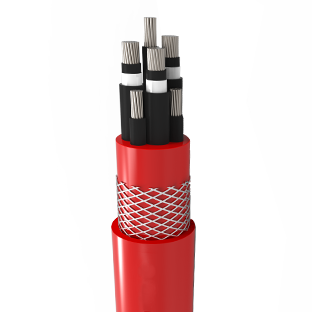
Designed specifically for heavy-duty mobile applications, (N)TSCGEWÖU cables combine medium-voltage electrical performance, exceptional torsion resistance, and robust mechanical reinforcement, making them a preferred solution for mining equipment, tunnelling machinery, and large material-handling systems.
This article provides a comprehensive, technically accurate explanation of the (N)TSCGEWÖU cable — from its internal construction and electrical characteristics to its real-world use in South African mining and tunnelling projects.
What Is an (N)TSCGEWÖU Cable and How Does It Work?
What Does the (N)TSCGEWÖU Designation Mean?
The designation (N)TSCGEWÖU originates from DIN VDE cable nomenclature, which precisely describes the cable’s design philosophy and performance capabilities rather than acting as a simple product name.
In practical terms, an (N)TSCGEWÖU cable is a medium-voltage, flexible, torsion-resistant mining cable designed for:
Continuous movement
High mechanical loads
Rotational and travelling equipment
Harsh industrial and underground environments
The optional “(N)” prefix indicates compliance with VDE standards for harmonised or nationally recognised designs, depending on project requirements.
Is (N)TSCGEWÖU a Medium-Voltage Flexible Mining Cable?
Yes. (N)TSCGEWÖU cables operate in medium-voltage ranges from 3.6/6 kV up to 12/20 kV, placing them firmly in the category of medium-voltage flexible mining cables.
Unlike rigid MV power cables used in fixed installations, (N)TSCGEWÖU cables are engineered for dynamic service, where bending, twisting, and travel occur continuously during operation.
How Does Its Design Support Continuous Movement and Torsion?
The defining feature of an (N)TSCGEWÖU cable is its ability to withstand ±25° per metre of torsion, combined with high tensile strength and abrasion resistance. This is achieved through:
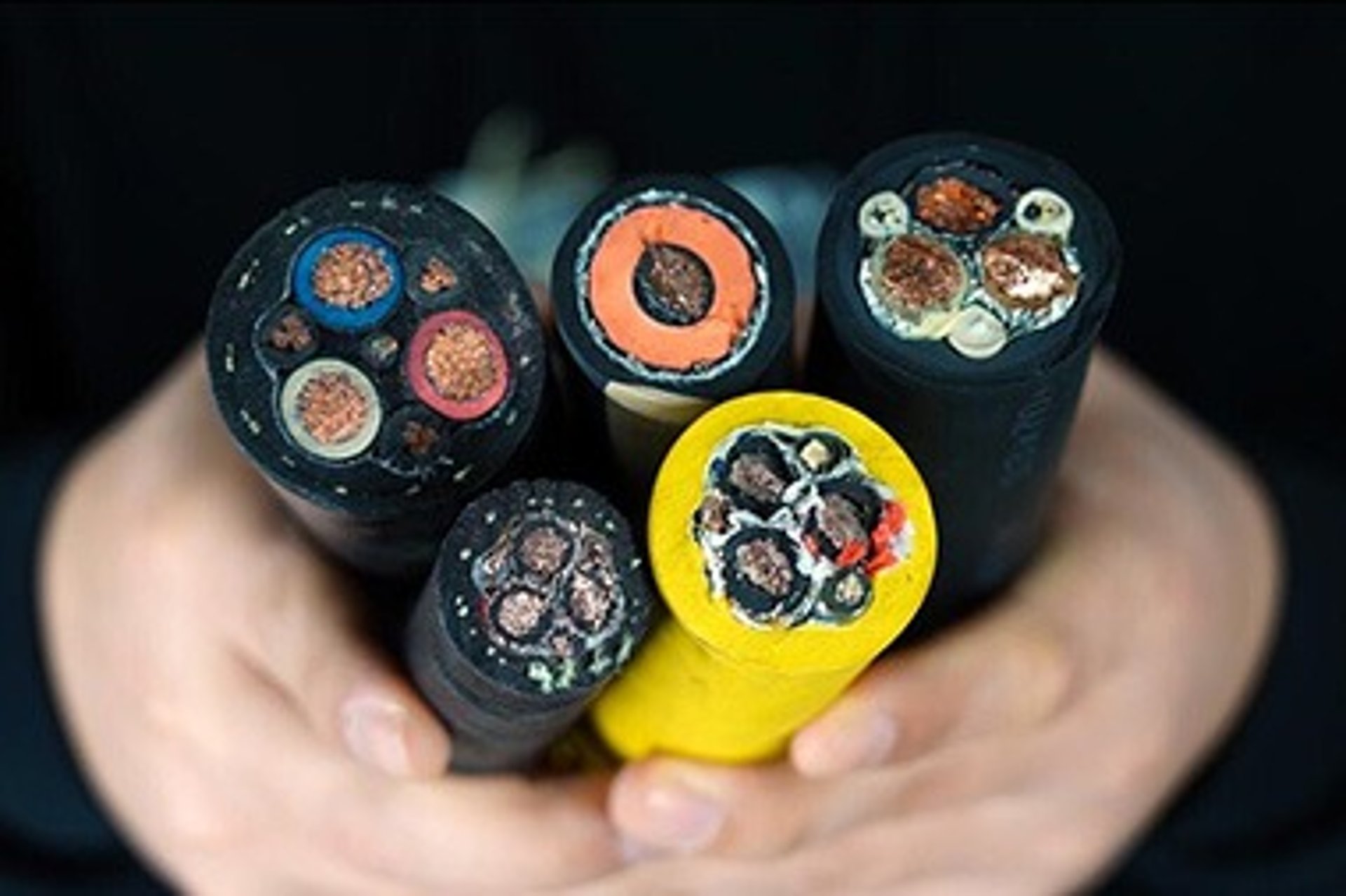
Finely stranded Class 5 tinned copper conductors
Elastic EPR insulation and inner sheaths
An embedded anti-torsion synthetic braid
A tough 5GM5 elastomer outer sheath
Together, these elements allow the cable to flex, twist, and travel without suffering conductor fatigue, insulation cracking, or premature sheath failure.
Where Are (N)TSCGEWÖU Cables Commonly Used in Industry?
Why Are (N)TSCGEWÖU Cables Ideal for Mining Equipment?
In South African mining operations — from platinum mines in Rustenburg to coal fields in Mpumalanga — large mobile equipment depends on reliable medium-voltage power.
Typical applications include:
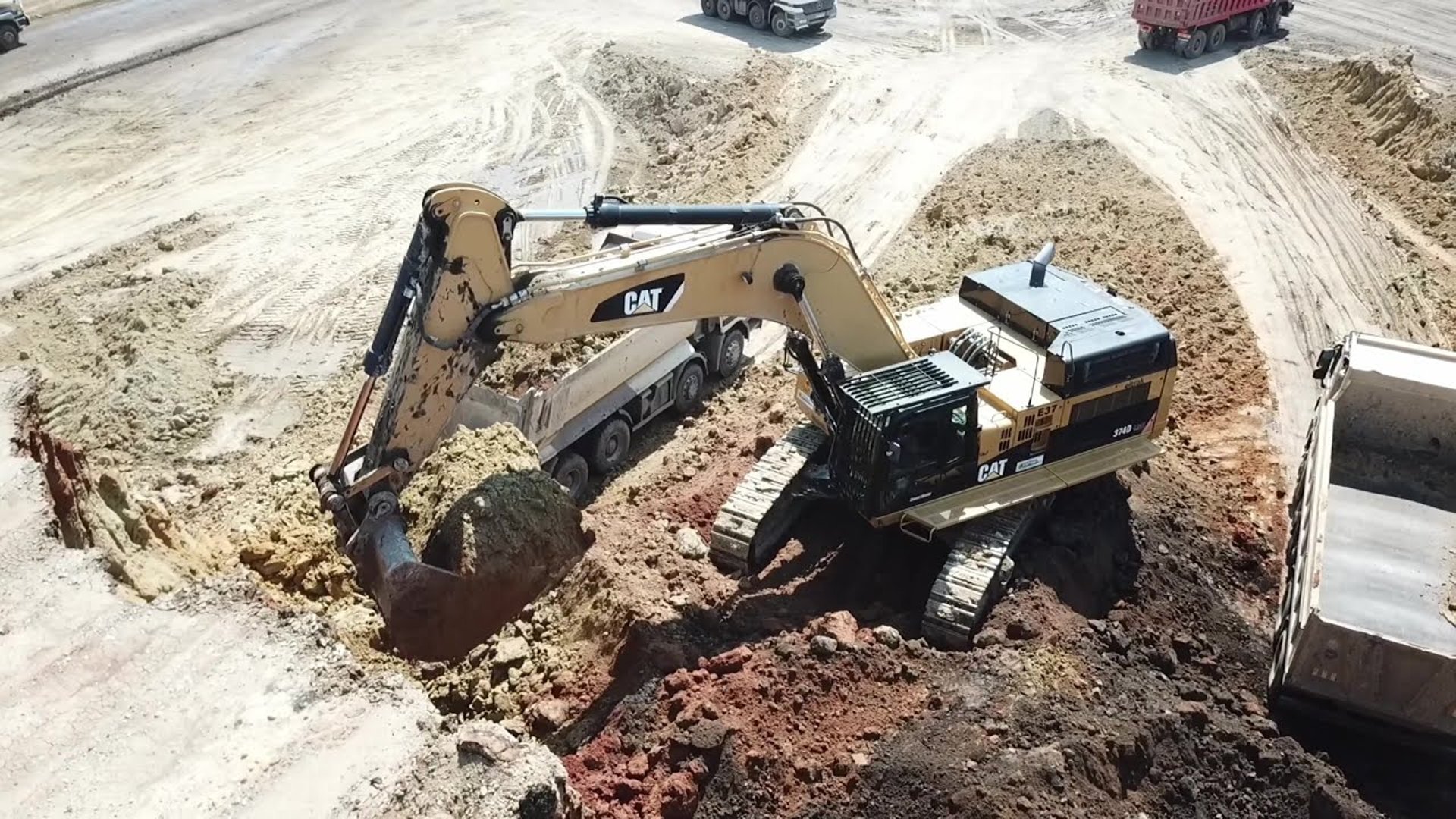
Electric excavators
Large dumpers
Mobile crushers and screens
Stackers and reclaimers
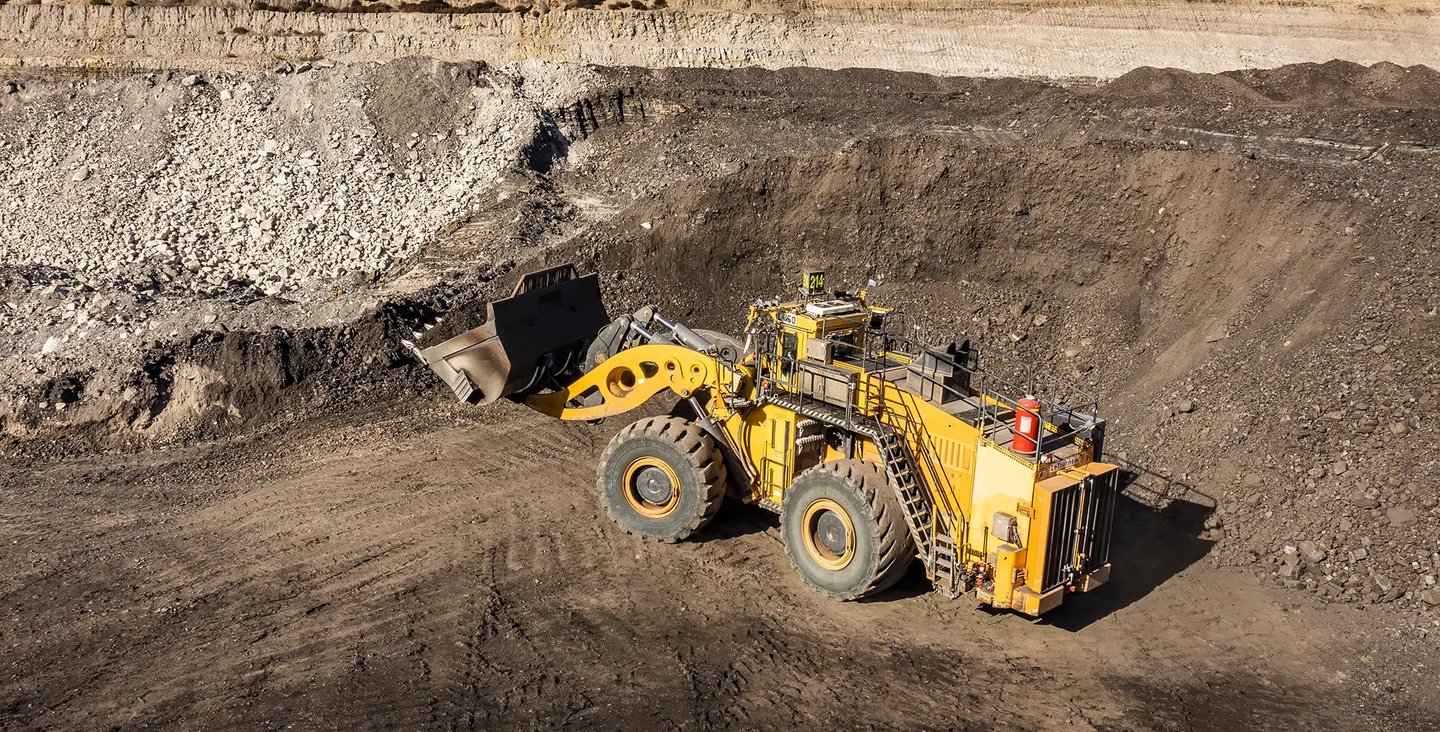
Drill rigs and loaders
These machines move constantly, change direction frequently, and often operate in oil-contaminated or abrasive environments. The torsion resistance and mechanical strength of (N)TSCGEWÖU cables directly address these conditions.
How Are (N)TSCGEWÖU Cables Used in Tunnelling Projects?
South Africa’s infrastructure expansion — including transport tunnels, water transfer schemes, and underground access tunnels for mines — has increased demand for cables that can survive confined, demanding conditions.
In tunnelling, (N)TSCGEWÖU cables are commonly used for:
Tunnel boring machines (TBMs)
Mobile underground substations
Conveyor belt drives
Ventilation and pumping systems
The cable’s flame-retardant elastomer sheath, oil resistance, and excellent bending performance make it well-suited to long underground runs where maintenance access is limited.
How Is an (N)TSCGEWÖU Cable Constructed Internally?
Why Is Tinned Copper Used as the Conductor?
The conductor is made from electrolytic, stranded, tinned copper in accordance with DIN VDE 0295 Class 5.
Key advantages include:
High flexibility, reducing conductor fatigue during movement
Improved corrosion resistance, especially in humid or chemically aggressive environments
Stable electrical conductivity over long service life
Tinning significantly slows oxidation, which is particularly important in South African underground mines, where moisture and heat accelerate corrosion.
What Role Does the EPR Electrical Field Control Layer Play?
Each conductor is surrounded by a 3GI3 type EPR (Ethylene Propylene Rubber) electrical field control layer.
This layer:
Smooths the electric field around the conductor
Reduces partial discharge risk
Improves long-term insulation reliability at medium voltages
In dynamic mining applications, where micro-movements occur constantly, effective stress control is essential to prevent insulation degradation.
How Does the Semiconductive Protective Earth System Improve Safety?
Safety is enhanced through an inner and outer semiconductive rubber layer forming the protective earth system.
Benefits include:
Controlled fault current paths
Reduced electrical stress concentration
Improved protection during earth faults
This design aligns with best practices in South African mining safety, where earth continuity and fault control are critical for personnel protection.
Why Is an Anti-Torsion Reinforcement Embedded in the Cable?
One of the most distinctive features of the (N)TSCGEWÖU cable is its embedded synthetic anti-torsion braid.
This reinforcement:
Absorbs torsional stress
Prevents conductor twisting
Maintains geometric stability under rotation
Supports torsion of ±25° per metre
This makes the cable suitable for rotating excavators, travelling cranes, and mobile machinery where standard reeling cables fail prematurely.
What Makes the 5GM5 Elastomer Outer Sheath Suitable for Harsh Sites?
The outer sheath is manufactured from 5GM5 type elastomer compound, coloured red for visibility and safety.
Key properties include:
Excellent oil and grease resistance
High abrasion and tear resistance
Flame-retardant performance
Flexibility at low temperatures
In South African mines, where oil contamination and mechanical damage are common, this sheath significantly extends service life.
What Are the Electrical and Mechanical Characteristics of (N)TSCGEWÖU Cables?
What Voltage Ratings Are Available for (N)TSCGEWÖU Cables?
(N)TSCGEWÖU cables are available in the following rated voltages:
3.6/6 kV
6/10 kV
8.7/15 kV
12/20 kV
This wide range allows engineers to select the optimal voltage level for different mining and tunnelling power systems.
How Do AC and DC Test Voltages Ensure Reliability?
Each voltage class is verified using high AC test voltages, ensuring insulation integrity under severe electrical stress.
Typical values include:
AC test voltages up to 29 kV
Maximum operating AC voltages up to 24 kV
Maximum operating DC voltages up to 36 kV
These tests are critical for preventing insulation breakdown in medium-voltage mining networks.
What Are the Temperature, Bending, and Mechanical Limits?
Operating temperature (fixed): –40°C to +80°C
Operating temperature (mobile): –30°C to +80°C
Minimum bending radius: According to DIN VDE 0298-3
Maximum tensile load: 15 N/mm²
Maximum travel speed: Up to 200 m/min (horizontal)
Minimum direction-change distance: 20 × cable diameter
These characteristics make the cable suitable for both slow-moving underground machinery and fast-travelling surface equipment.
What Standards and Certifications Does the (N)TSCGEWÖU Cable Comply With?
Which DIN VDE Standards Govern Its Design and Testing?
(N)TSCGEWÖU cables comply with a comprehensive set of DIN VDE standards, including:
DIN VDE 0250-813 – Construction
DIN VDE 0250-1 – General requirements
DIN VDE 0298-3 – Installation guidance
DIN VDE 0472 series – Electrical and non-electrical testing
These standards are widely accepted in South African mining projects, especially where European equipment is used.
How Is Fire and Oil Resistance Verified?
Flame retardancy: IEC / EN 60332-1-2
Oil resistance: IEC 60811
Fire performance: DIN VDE 0472-803 / 804
Compliance ensures safer operation in confined underground environments.
What Technical Sizes and Configurations Are Available?
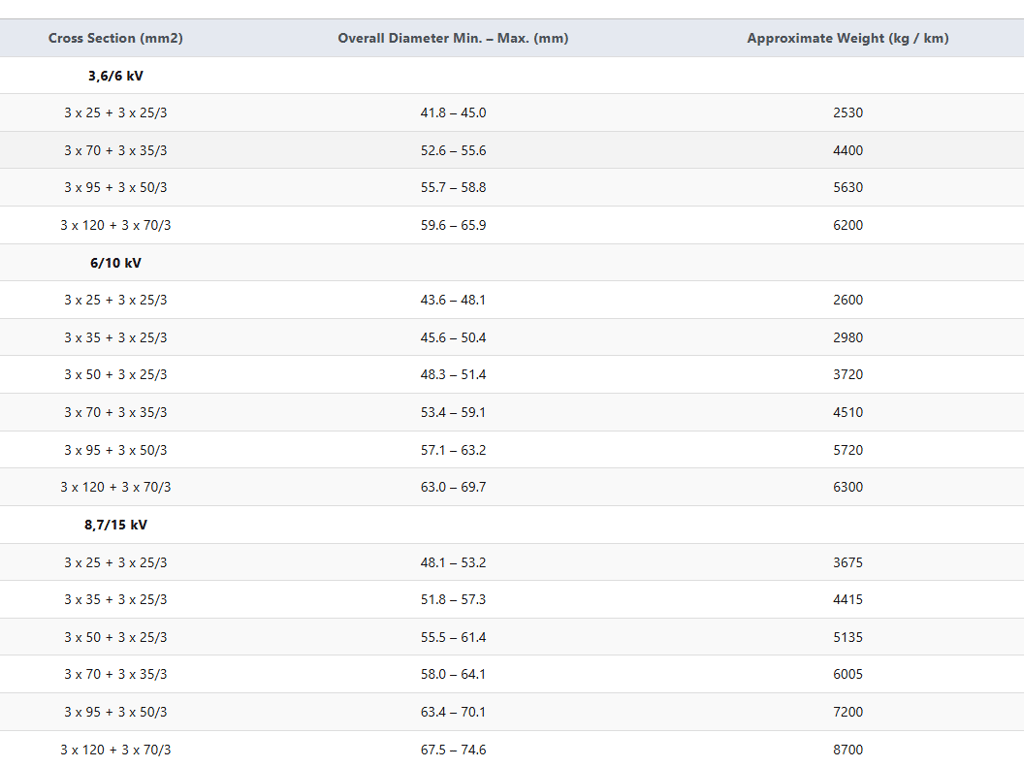
How Do Cross-Section, Diameter, and Weight Affect Selection?
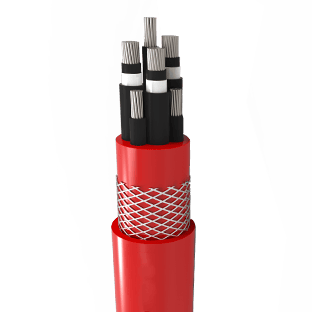
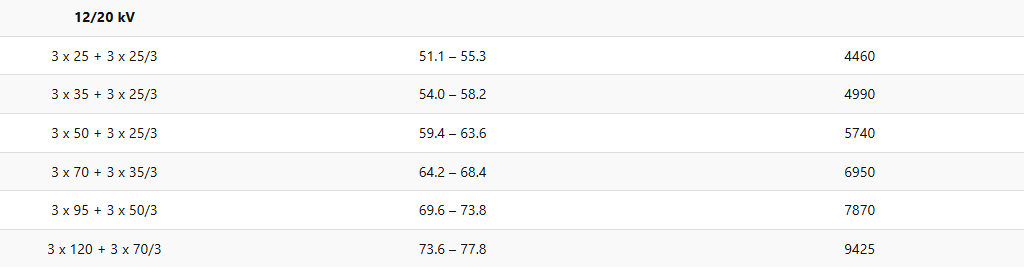
(N)TSCGEWÖU cables are typically supplied with conductor cross-sections from 25 mm² to 120 mm², with:
Three main power conductors
Three control cores laid in the outer interstice
Larger cross-sections increase current-carrying capacity but also affect:
Cable weight
Installation handling
Mechanical stress on equipment
📊 Technical Specification Overview
How Does (N)TSCGEWÖU Compare with Other Flexible Mining Cables?
(N)TSCGEWÖU vs Standard Reeling Cables
Feature(N)TSCGEWÖUStandard Reeling CableTorsion resistance±25°/mLimitedReinforcementAnti-torsion braidSteel textile onlyVoltage rangeUp to 20 kVTypically ≤ 12 kVService lifeLongModerate
When Should You Choose (N)TSCGEWÖU over Rubber-Sheathed MV Cables?
Choose (N)TSCGEWÖU when:
Equipment moves continuously
Torsion is unavoidable
Downtime is costly
Safety and longevity are critical
How Should (N)TSCGEWÖU Cables Be Installed and Maintained?
Best Installation Practices
Avoid pre-twisting during installation
Respect minimum bending radius
Use suitable cable handling equipment
Maintain correct direction-change distances
Extending Operational Lifetime
Inspect outer sheath regularly
Monitor torsion points
Replace cable before conductor exposure occurs
FAQ
Is (N)TSCGEWÖU suitable for continuous dynamic movement?
Yes, it is specifically designed for continuous movement and torsion.
Can it be used in oil-contaminated areas?
Yes, the 5GM5 sheath provides excellent oil resistance.
What makes it different from standard MV rubber cables?
Anti-torsion reinforcement, higher flexibility, and longer service life.
How do I choose the right voltage and cross-section?
Based on load current, distance, voltage drop, and mechanical conditions.
What is the expected service life?
With proper installation, often 10–15 years in mining applications.
Why Choose a High-Quality (N)TSCGEWÖU Cable for Your Project?
Enhanced safety
International standard compliance
Reduced downtime
Long-term cost efficiency
Looking for the Right (N)TSCGEWÖU Cable for Your Mining or Tunnelling Project?
Request technical datasheets
Get professional cable selection support
Custom lengths and configurations
Speak with experienced mining cable engineers
A well-selected (N)TSCGEWÖU cable is not just a component — it is a long-term investment in operational reliability and safety.
Email Address: Li.wang@feichuncables.com
© 2025. All rights reserved.
One-click to Quickly Contact
Products
Contact
Company
Location:
Building A Private Science and Technology Park, Hefei Economic and Technological Development Zone, Anhui Province, China
Heat Resistant Cable
WhatsApp: +86 17333223430
Social Media: