Anhui Feichun Special Cable Co.,Ltd Email: Li.wang@feichuncables.com


What Is AS/NZS 2802 Type 440 Mining Cable and Where Is It Used as a Reeling or Trailing Cable in High-Voltage Applications?
AS/NZS 2802 Type 440 1.1 to 22 kV mining cable is a high-flexibility reeling and trailing cable designed for demanding open-cast and underground mining applications in Southern Africa, offering superior electrical performance, mechanical durability, and safety compliance for high-voltage mobile equipment.
Li Wang
12/31/20256 min read
Introduction
Across Southern Africa, mining operations are becoming larger, more mobile, and increasingly power-hungry. From massive draglines in Mpumalanga’s coalfields to bucket wheel reclaimers in the Northern Cape’s iron-ore operations, modern mines require reliable high-voltage power delivery to moving equipment. This is where AS/NZS 2802 Type 440 mining cables have earned their reputation.
But why is AS/NZS 2802 Type 440 so frequently specified for reeling cables and trailing cables in South African mining projects? The answer lies in its unique combination of high flexibility, robust electrical design, and proven performance at voltages ranging from 1.1 kV up to 22 kV.
South African mines operate in some of the harshest environments globally. Open-cast mines expose cables to UV radiation, abrasion, and extreme temperature swings, while underground operations demand resistance to moisture, mechanical damage, and continuous movement. In both settings, cable failure is not just a maintenance issue—it is a safety and production risk.
AS/NZS 2802 Type 440 mining cables are specifically engineered to support safe, flexible high-voltage power supply for mobile and semi-mobile mining machinery. Their design aligns well with South African operational realities, which explains why procurement teams, consulting engineers, and EPC contractors continue to specify Type 440 cables for demanding reeling and trailing applications.
What Does AS/NZS 2802 Type 440 Mean in Mining Cable Classification?
How Is Type 440 Defined Under AS/NZS 2802?
Under AS/NZS 2802, mining cables are classified by type numbers that define their construction, flexibility class, voltage rating, and intended application. Type 440 refers to a Class 2 flexible mining cable designed primarily for high-voltage trailing and reeling applications.
Type 440 cables are available in multiple voltage subclasses, commonly referenced as:
Type 440.1 – 1.1/1.1 kV
Type 440.3 – 3.3/3.3 kV
Type 440.6 – 6.6/6.6 kV
Type 440.11 – 11/11 kV
Type 440.22 – 22/22 kV
This broad voltage coverage allows the same basic cable design philosophy to be used across low, medium, and high-voltage mining feeders, simplifying spares management and engineering standardisation.
Unlike fixed installation cables, Type 440 is explicitly designed for continuous flexing, dragging, and reeling, making it suitable for equipment that moves repeatedly during normal operation.
Why Is Type 440 Commonly Used as a Trailing and Reeling Cable?
Type 440 has become a preferred choice for trailing and reeling applications because it addresses the three most critical challenges faced by mobile mining cables:
Mechanical Flexibility – The cable must withstand repeated bending, torsion, and tension without conductor fatigue.
Electrical Integrity – High-voltage stress must be controlled even under movement and vibration.
Operational Safety – Continuous earth monitoring and interlocking are essential in mining environments.
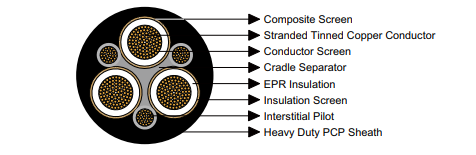
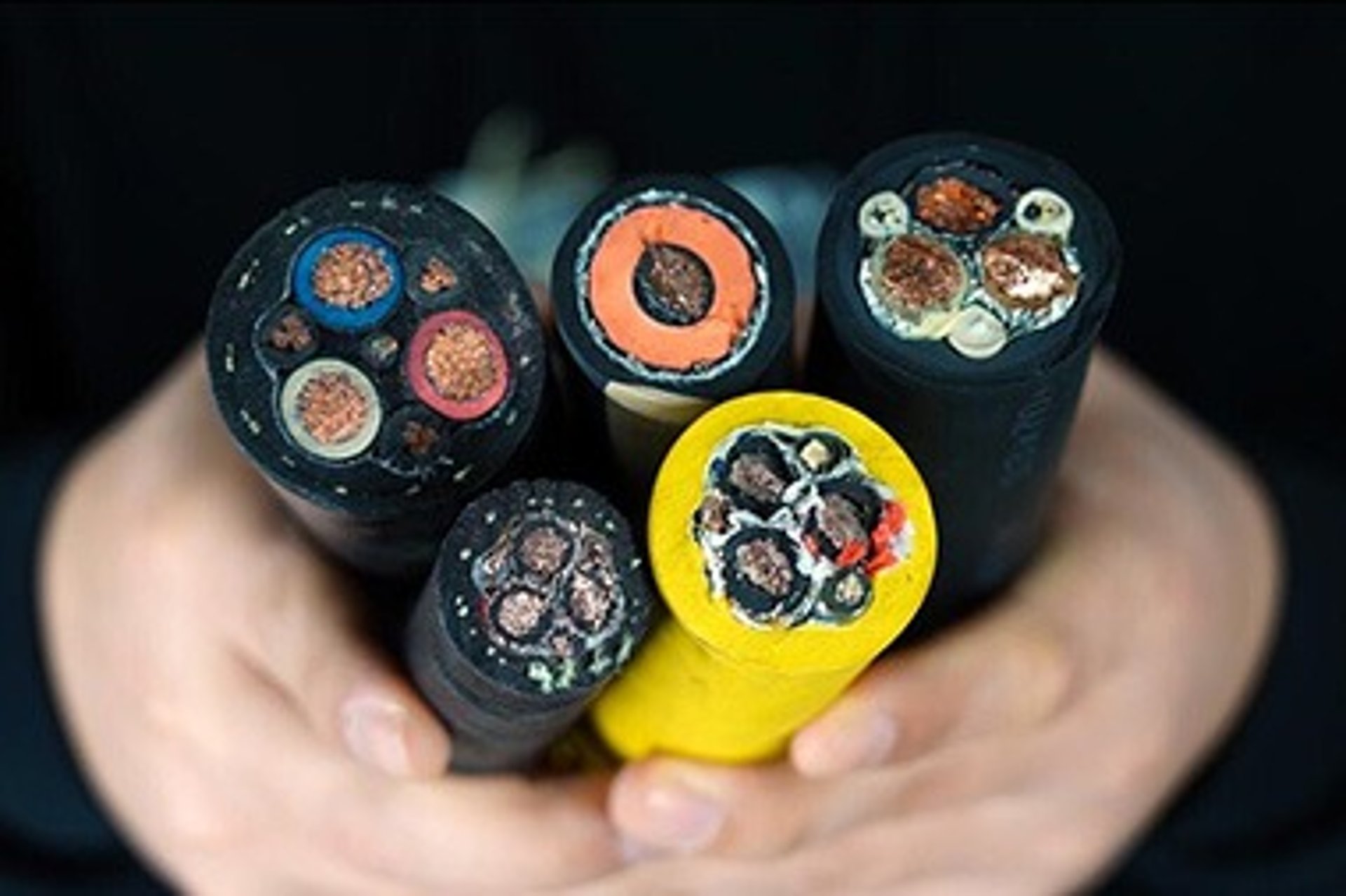
To achieve this, Type 440 cables incorporate flexible copper conductors, EPR insulation, semiconductive screens, and three pilot cores, all supported by a central semiconductive cradle that maintains geometry during movement.
How Is an AS/NZS 2802 Type 440 Mining Cable Constructed?
What Conductor Design Is Used in Type 440 Cables?
AS/NZS 2802 Type 440 mining cables use flexible stranded tinned annealed copper conductors. This conductor design offers several critical advantages in mining applications:
High flexibility, reducing stress during bending and reeling
Improved fatigue resistance, essential for continuously moving cables
Enhanced corrosion resistance, particularly important in damp or chemically aggressive environments
Tinning the copper strands helps protect against oxidation, which is especially valuable in South African underground mines where moisture ingress is common.
Why Is EPR Insulation Used for High-Voltage Mining Applications?
Ethylene Propylene Rubber (EPR) is the insulation material of choice for Type 440 cables. EPR provides excellent electrical and mechanical performance across the full voltage range from 1.1 kV to 22 kV.
Key advantages of EPR insulation include:
Stable dielectric properties under high electrical stress
Superior heat resistance, supporting higher operating temperatures
Outstanding flexibility, even at larger conductor sizes
Compared with PVC, EPR offers significantly better thermal and electrical performance. While XLPE is common in fixed installations, EPR remains superior for flexible mining cables due to its elasticity and resistance to cracking under repeated movement.
What Is the Function of the Semiconductive Screens and Cradle Separator?
For cables rated 3.3 kV and above, Type 440 incorporates both conductor screens and insulation screens made from semiconductive compounds. These layers ensure a uniform electric field around each conductor, reducing electrical stress and preventing partial discharge.
A distinctive feature of Type 440 is the central semiconductive cradle separator, which serves multiple functions:
Maintains conductor geometry during bending and reeling
Provides mechanical support to the power cores
Enhances stress control within the cable assembly
This design significantly extends cable service life in demanding reeling applications.
How Do Pilot Cores Improve Safety in Mining Operations?
Type 440 cables include three interstitial pilot conductors, each insulated with EPR and made from flexible stranded tinned copper. These pilot cores are critical for:
Earth continuity monitoring
Control and interlocking circuits
Fault detection and equipment shutdown
In South African mines, where regulations place strong emphasis on electrical safety, pilot cores are a non-negotiable requirement for high-voltage trailing cables.
What Sheath Materials Are Available and How Do They Affect Performance?
The standard outer sheath for Type 440 cables is a heavy-duty PCP (Polychloroprene) compound. PCP offers:
Excellent abrasion resistance
Good flexibility
Resistance to moisture and moderate oils
For more aggressive environments, CPE or CSP sheaths can be specified. These materials provide enhanced resistance to oils, chemicals, UV radiation, and heat, making them suitable for exposed open-cast operations in regions such as Limpopo and the Northern Cape.
What Are the Electrical and Technical Specifications of Type 440 Cables?
What Voltage Ratings and Conductor Sizes Are Available?
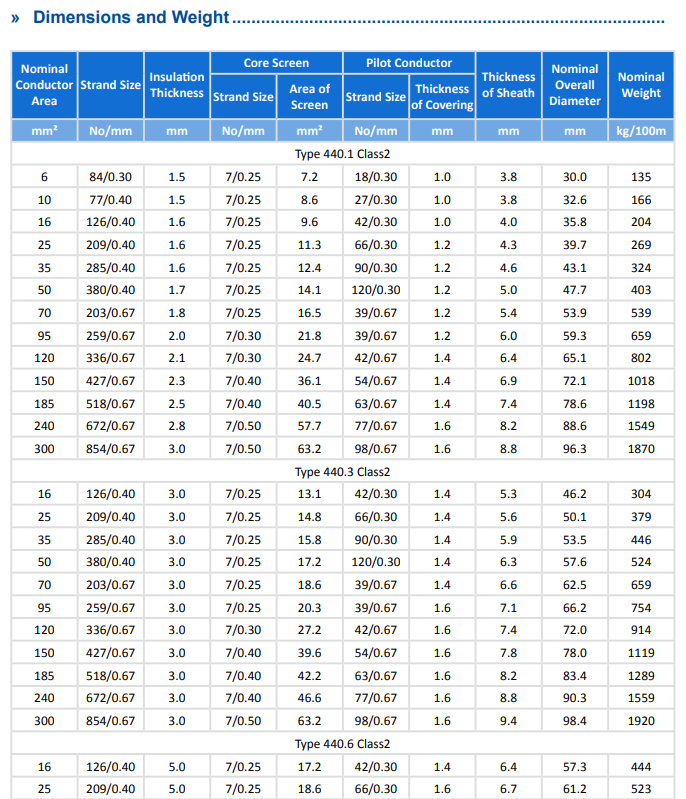
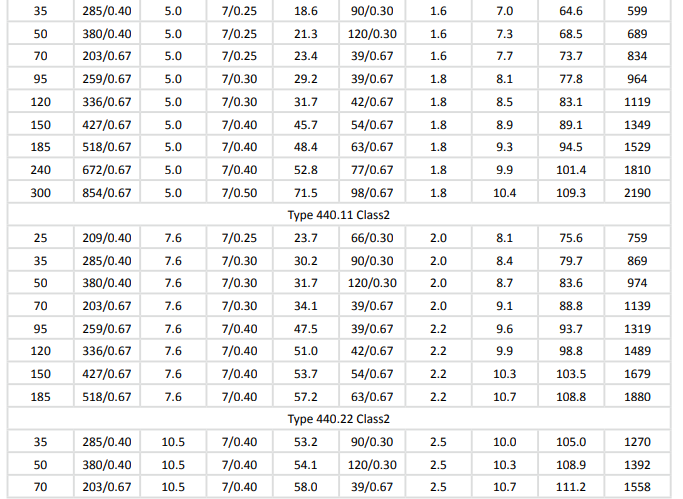
AS/NZS 2802 Type 440 cables cover a wide voltage range from 1.1 kV up to 22 kV, with conductor sizes typically ranging from 6 mm² to 300 mm², depending on voltage class.
This flexibility allows engineers to select the optimal cable for:
Small auxiliary feeders
Medium-voltage mobile equipment
High-power primary feeders to large machines
How Do Dimensions and Weight Affect Cable Selection?
In reeling applications, overall diameter and weight are critical design considerations. Larger conductor sizes increase cable weight, which directly affects:
Reeling drum size
Tension requirements
Wear on cable handling systems
Incorrect selection can lead to premature mechanical failure, highlighting the importance of accurate engineering calculations during project design.
What Standards Must Type 440 Mining Cables Comply With?
Type 440 cables are manufactured in compliance with:
AS/NZS 2802 – Mining cable construction and performance
AS/NZS 1125 – Conductors
AS/NZS 3808 – Insulating materials
AS/NZS 5000.1 – General cable requirements
These standards are widely accepted by South African consulting engineers, particularly for projects involving international EPC contractors.
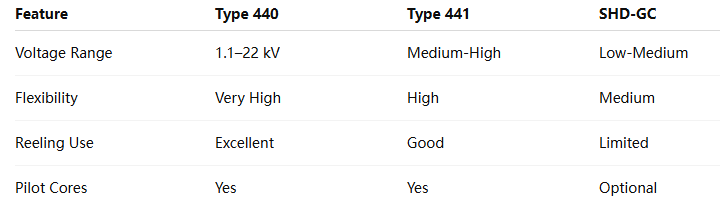
How Does Type 440 Compare with Other Mining Cables Used in South Africa?
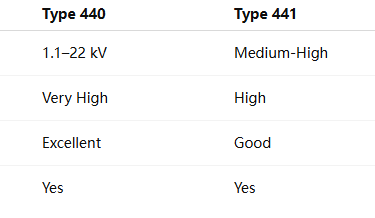
Type 440 vs Type 441: Which Is Better for Reeling Applications?
While both are flexible mining cables, Type 440 is generally preferred for continuous reeling due to its cradle design and enhanced mechanical support.
Type 440 vs Type 450: Flexibility vs Fixed Installation
Type 450 cables are better suited for fixed installations, whereas Type 440 excels in applications involving movement and reeling.
Type 440 vs SHD-GC and Type G Cables
Where Are AS/NZS 2802 Type 440 Cables Typically Used in Practice?
Which Mining Equipment Commonly Uses Type 440 Trailing Cables?
Type 440 cables are commonly used to supply power to:
Draglines
Electric shovels
Bucket wheel reclaimers
Large overland and shiftable conveyors
Is Type 440 Suitable for South African Open-Cast and Underground Mines?
Yes. In open-cast mines, Type 440 withstands abrasion and UV exposure, while in underground environments it performs reliably under moisture, heat, and mechanical stress.
What Installation and Handling Practices Are Recommended for Type 440 Cables?
How Should Type 440 Reeling Cables Be Installed Correctly?
Best practices include:
Respecting minimum bending radius
Correct drum alignment
Controlled tension during operation
What Are Common Installation Mistakes to Avoid?
Common errors include:
Over-twisting during installation
Crushing damage from incorrect handling
Using undersized reeling drums
How a Type 440 Reeling Cable Improved Reliability in a Southern African Mine
In an open-cast coal mine in Mpumalanga, a dragline operation experienced frequent cable failures with standard medium-voltage trailing cables. Downtime was averaging 12–15 hours per month, directly impacting production.
After upgrading to AS/NZS 2802 Type 440 11 kV reeling cables, the mine reported:
A 40% reduction in cable-related downtime
Improved earth continuity reliability
Extended service life exceeding 30 months
The investment paid for itself within the first year through reduced maintenance and lost production.
Frequently Asked Questions About AS/NZS 2802 Type 440 Mining Cables
Can Type 440 Cables Be Used Above 11 kV in Mining Operations?
Yes. Type 440.22 cables are specifically designed for 22 kV applications.
What Is the Difference Between Type 440.3 and Type 440.11?
The difference lies in insulation thickness, screening requirements, and voltage rating, not in basic construction philosophy.
Is Type 440 Suitable for Continuous Reeling Applications?
Absolutely. Type 440 is engineered specifically for continuous reeling and trailing duty.
How Do I Choose the Correct Conductor Size for My Equipment?
Conductor size should be selected based on load current, voltage drop, ambient temperature, and reeling conditions.
Can Type 440 Cables Be Customised with CPE or CSP Sheaths?
Yes. CPE or CSP sheaths can be specified for harsh environmental conditions.
Why Is AS/NZS 2802 Type 440 a Reliable Choice for High-Voltage Mining Cables?
AS/NZS 2802 Type 440 mining cables combine electrical excellence, mechanical robustness, and operational safety. Their proven performance in African mining environments makes them a trusted solution for high-voltage mobile power supply.
CTA – Call to Action
Looking for AS/NZS 2802 Type 440 Mining Reeling or Trailing Cables?
Speak to experienced mining cable engineers for technical datasheets, application-specific selection support, and customised solutions tailored to South African and export mining projects.
Email Address: Li.wang@feichuncables.com
© 2025. All rights reserved.


One-click to Quickly Contact
Products
Contact
Company
Location:
Building A Private Science and Technology Park, Hefei Economic and Technological Development Zone, Anhui Province, China
Heat Resistant Cable
WhatsApp: +86 17333223430
Social Media: