Anhui Feichun Special Cable Co.,Ltd Email: Li.wang@feichuncables.com
What Is BS 6708 Type 14 Trailing Cable and Why Is It Critical for Explosive Mining Environments?
Discover how BS 6708 Type 14 trailing cable ensures safe and reliable power supply for heavy mining equipment in South Africa’s coal mines and quarries. Learn its structure, materials, technical specifications, and safety advantages.
Li Wang
4/23/20266 min read
Introduction: Power Reliability in High-Risk Mining Operations
Mining is one of the most demanding industrial sectors in the world, particularly in regions where harsh environmental conditions and operational risks intersect. In South Africa, mining operations—especially in coal extraction—require not only powerful machinery but also highly reliable electrical infrastructure capable of withstanding extreme mechanical stress and hazardous atmospheric conditions.
Among all electrical components used in mining, trailing cables play a crucial role. These cables are responsible for supplying continuous electrical power to mobile equipment such as coal cutting machines, excavators, shuttle cars, and crushers. Unlike fixed power cables, trailing cables are subjected to constant movement, dragging, bending, twisting, and mechanical impact.
Within this category, BS 6708 Type 14 trailing cable is specifically engineered for the most challenging environments—those where explosive gases and combustible dust are present. Designed under the British Standard BS 6708, this cable type combines electrical safety, mechanical robustness, and operational flexibility, making it indispensable in modern mining operations.
This article provides a comprehensive and in-depth analysis of BS 6708 Type 14 cable, focusing on its design philosophy, structure, material composition, technical specifications, and real-world applications in South African mining environments.
Operating Conditions in South African Mining Environments
Underground Coal Mining
South Africa’s coal mining industry is concentrated in regions such as Mpumalanga, where large underground operations extract coal from deep seams. These environments present a unique combination of electrical, mechanical, and environmental challenges.
One of the most critical hazards is the presence of methane gas (CH₄). Methane is naturally released during coal extraction and can accumulate in confined spaces. When mixed with air in concentrations between approximately 5% and 15%, it becomes highly explosive. Even a small electrical spark can trigger a catastrophic explosion.
In addition to methane, coal dust is another major risk factor. Fine coal particles suspended in the air can ignite easily, creating secondary explosions that are often more destructive than the initial blast.
Environmental conditions underground further complicate cable performance. High humidity, water ingress, and temperature fluctuations can degrade insulation materials over time. Mechanical stresses are equally severe: cables are continuously dragged across rough surfaces, exposed to sharp rocks, and subjected to crushing forces from heavy equipment.
In such an environment, any failure in a cable system—whether electrical or mechanical—can lead not only to equipment downtime but also to serious safety incidents.
Surface Quarry Operations
While underground mines present explosion risks, open-pit quarries and surface mining operations pose their own set of challenges. Equipment such as excavators and crushers operate in exposed environments where cables must endure:
Intense ultraviolet radiation
Wide temperature variations
Dust accumulation
Oil and chemical exposure
Long trailing distances
In these conditions, cables must maintain flexibility and durability while resisting abrasion and environmental degradation.
The Need for Explosion-Proof Cable Design
The combination of methane gas, coal dust, and electrical equipment creates a highly sensitive environment where ignition sources must be strictly controlled.
Electrical cables can become ignition sources due to:
Insulation breakdown
Mechanical damage exposing conductors
Electrical arcing during faults
To mitigate these risks, cables like BS 6708 Type 14 are designed with:
Advanced screening systems to control electrical fields
Robust insulation to prevent leakage currents
Flame-retardant outer sheaths
The goal is to minimise the probability of spark generation and contain electrical faults, thereby significantly reducing explosion risk.
Understanding BS 6708 Type 14 Trailing Cable
BS 6708 Type 14 trailing cable is a low-voltage, flexible mining cable designed for use in mobile equipment operating in hazardous environments.
It is typically rated at 640/1100V, making it suitable for high-power applications such as:
Coal cutting machines
Heavy-duty excavators
Crushing and processing equipment
What sets Type 14 apart from other mining cables is its unique conductor screening configuration. The cable incorporates three individually screened phase conductors, while the pilot and earth conductors remain unscreened. This design achieves a balance between electrical safety, mechanical flexibility, and overall cable weight.
The result is a cable that is not only safer in explosive environments but also easier to handle and more durable under continuous movement.
Structural Design of BS 6708 Type 14 Cable
The structure of a Type 14 cable is carefully engineered to meet the dual demands of electrical safety and mechanical performance.
Core Configuration
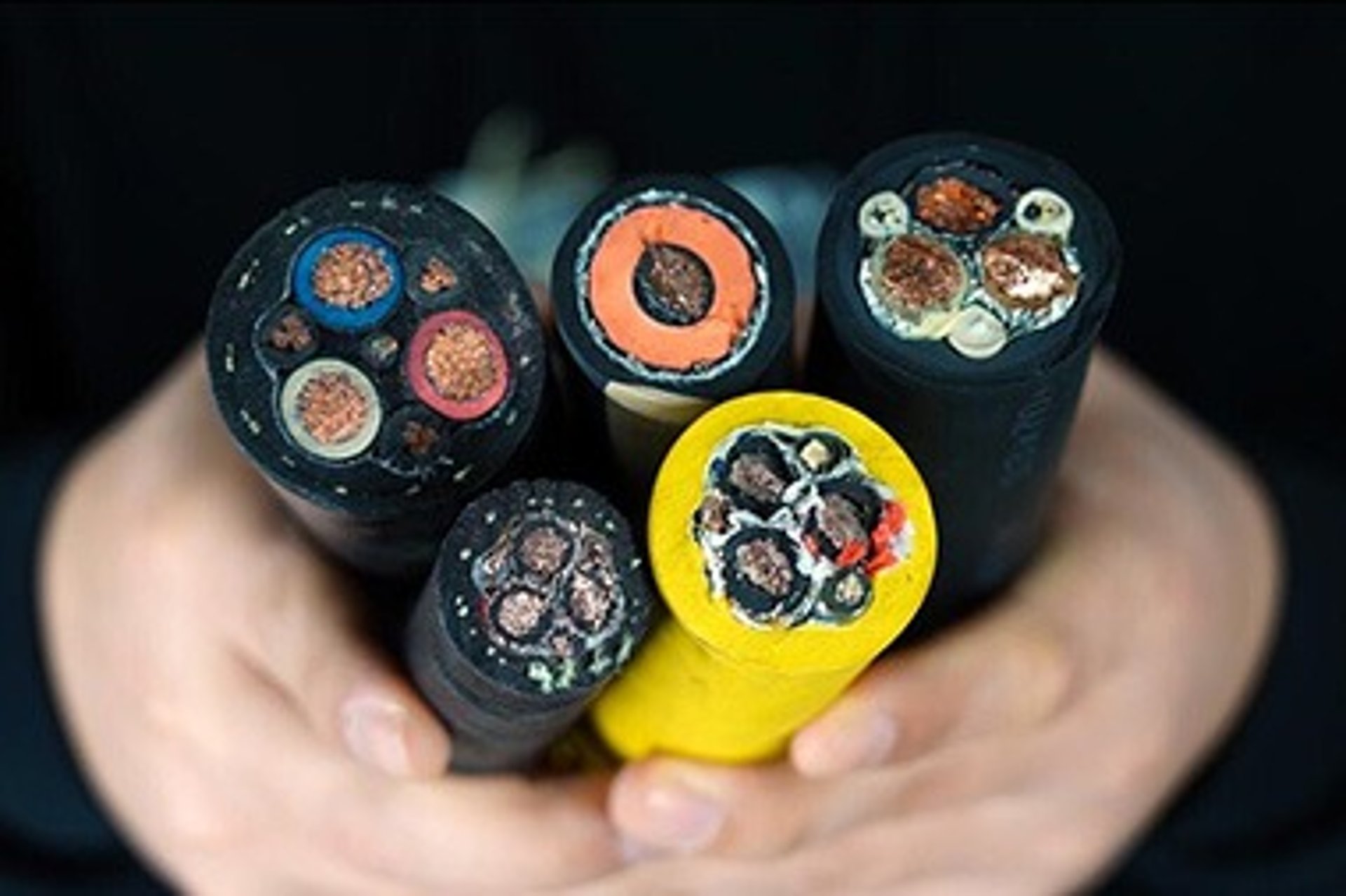
The cable typically consists of:
Three power conductors (phase cores), each individually screened
One pilot core used for monitoring and control functions
One earth conductor for grounding
This configuration ensures that the main current-carrying conductors are properly shielded, while auxiliary functions are maintained without unnecessary complexity.
Seven-Layer Construction System
The cable is built using a multi-layer design, each layer serving a specific function:
Conductor – Flexible copper strands for electrical transmission
EPR Insulation – Provides electrical insulation and thermal stability
Semi-conductive Layer – Ensures uniform electric field distribution
Metallic Screen – Controls electrical stress and prevents arcing
Filler Materials – Maintain cable shape and flexibility
Inner Sheath – Adds mechanical protection
Outer Sheath – Protects against environmental and mechanical damage
Key Structural Advantages
This layered design provides several benefits:
Enhanced electrical safety through controlled electric fields
Improved flexibility for trailing applications
Resistance to mechanical fatigue
Reduced cable weight compared to fully screened designs
Type 14 vs Type 11
Understanding the difference between Type 14 and Type 11 cables is essential for proper cable selection.
Screening Configuration
The most significant difference lies in the screening:
Type 11 cables typically have all cores screened
Type 14 cables have only phase cores screened
Performance Implications
This difference results in:
Lower weight for Type 14
Greater flexibility
Easier handling and installation
Selection Criteria
Type 14 is preferred when:
High flexibility is required
Equipment is frequently moved
Explosion risk is significant
Type 11 may be used in less demanding environments where full screening is necessary.
Purpose and Applications of Type 14 Cable
The primary purpose of BS 6708 Type 14 cable is to provide a safe, reliable power supply to heavy mining equipment operating in hazardous conditions.
Core Applications
Coal cutting machines
Excavators
Crushers
Conveyor systems
Deployment Areas
Underground coalfaces
Open-pit mining operations
Dust- and gas-prone environments
Power Transmission Capability
With a voltage rating of 640/1100V, Type 14 cables are capable of delivering high current levels required by heavy machinery. Their design ensures stable power transmission even under dynamic load conditions.
Material and Construction Analysis
Conductor
Type 14 cables use Class 5 flexible copper conductors, compliant with IEC 60228. These conductors are composed of fine strands, allowing the cable to bend repeatedly without breaking.
EPR Insulation
Ethylene Propylene Rubber (EPR) is used due to its:
High dielectric strength
Resistance to moisture
Excellent thermal performance
Composite Screening System
The screening system typically consists of copper wires combined with textile reinforcement. This structure:
Reduces electromagnetic interference
Provides a path for fault currents
Enhances overall safety
Chloroprene Outer Sheath
The outer sheath is made of chloroprene rubber, offering:
Flame resistance
Oil and chemical resistance
High abrasion resistance
Technical Specifications and Electrical Performance
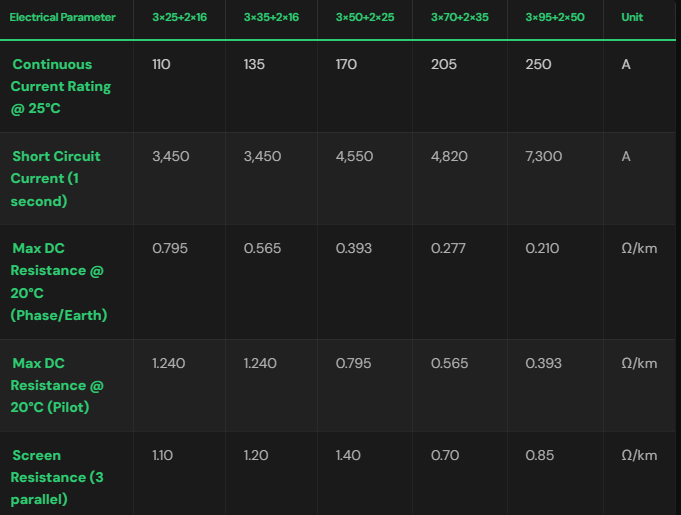
Typical specifications include:
Rated voltage: 640/1100V
Test voltage: approximately 3kV
Operating temperature: up to 90°C
Short-circuit temperature: up to 250°C
Mechanically, the cable is designed to withstand repeated bending, tension, and abrasion.
Compliance with Standards
BS 6708 defines the construction and performance of mining cables. In addition, Type 14 cables align with:
IEC 60228 (conductor standards)
Flame retardant requirements
Mining safety regulations
Compliance ensures that the cable meets both electrical performance and safety requirements.
Safety Thresholds and Operational Guidelines
Temperature Limits
Normal operation: ≤90°C
Short circuit: ≤250°C
Mechanical Safety
Avoid excessive:
Tension
Twisting
Crushing
Explosion Safety
Maintain proper grounding
Ensure screen integrity
Avoid damaged sheaths
Installation Best Practices
Use cable reels
Avoid sharp bends
Protect cables from mechanical damage
Monitoring and Maintenance
Regular checks should include:
Insulation resistance testing
Visual inspection
Thermal monitoring
Common Faults and Troubleshooting
Typical issues include:
Sheath damage from abrasion
Insulation degradation due to moisture
Electrical faults caused by screen damage
South African Application
Underground Coal Mine in Mpumalanga
A mining operation faced frequent cable failures and safety concerns due to ignition risks. After switching to Type 14 cables, the operation reported:
Improved safety compliance
Reduced downtime
Enhanced operational reliability
Open-Pit Quarry
A quarry operation dealing with high abrasion and long trailing distances experienced frequent cable replacements. The adoption of Type 14 cables resulted in:
Longer cable lifespan
Lower maintenance costs
Improved productivity
Frequently Asked Questions (FAQ)
Q1: What is BS 6708 Type 14 cable used for?
It is used to power heavy mining equipment in hazardous environments.
Q2: What is the main difference between Type 11 and Type 14?
Type 14 has screened phase conductors only, improving flexibility and reducing weight.
Q3: Is Type 14 suitable for explosive environments?
Yes, it is specifically designed for such conditions.
Q4: What voltage does it support?
640/1100V.
Q5: What insulation is used?
EPR insulation.
Conclusion
BS 6708 Type 14 trailing cable represents a critical advancement in mining cable technology. Its unique design, combining safety, flexibility, and durability, makes it the ideal solution for high-risk mining environments.
In South Africa’s demanding mining sector, where safety and reliability are paramount, Type 14 cables play a vital role in ensuring continuous, safe, and efficient operations.
Call to Action
If you require BS 6708 Type 14 trailing cables for your mining project:
📩 Contact: Li.wang@feichuncables.com
Get expert support, technical datasheets, and customised solutions tailored to your mining operation.
Email Address: Li.wang@feichuncables.com
© 2025. All rights reserved.
One-click to Quickly Contact
Products
Contact
Company
Location:
Building A Private Science and Technology Park, Hefei Economic and Technological Development Zone, Anhui Province, China
Heat Resistant Cable
WhatsApp: +86 17333223430
Social Media: